
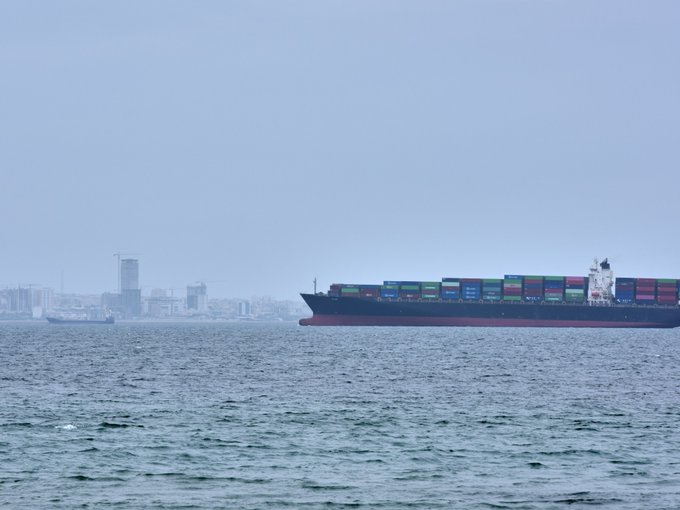
Bulk carrier reports being attacked by multiple small craft off Iran : UKMTO
LONDON : A bulk carrier reported being attacked by multiple small craft while transiting north about 11 nautical miles west of Iran’s Sirik on Sunday, the United Kingdom Maritime Trade Operations agency said, adding that all crew were safe and no environmental impact was reported. Later on Sunday, Iran’s semi-official Fars news agency said the ship was not seized and that it was stopped by the Iranian navy to check documents as part of supervisory procedures.
A bulk carrier transiting northward through the Strait of Hormuz reported coming under attack from multiple small craft while approximately 11 nautical miles west of Sirik on Iran’s southern coast, the United Kingdom Maritime Trade Operations agency confirmed. All crew were reported safe and no environmental damage was recorded. The vessel left the area following the incident.
UKMTO logged the report as incident 050-26 and advised vessels to transit the area with caution and report any suspicious activity while authorities investigated.
Iran offered a sharply different account. The country’s semi-official Fars news agency said the ship was not seized and that the Iranian navy had stopped the vessel as part of routine supervisory procedures to check its documentation, a framing that directly contradicts the attack report submitted to UKMTO.
The incident occurred against a backdrop of sustained pressure on commercial shipping in the Hormuz corridor. The UKMTO’s latest 72-hour operational summary noted that traffic through the strait remains significantly reduced. Mine reports in and near the traffic separation scheme continue to persist, and sporadic GNSS interference, while lower than levels recorded in March, has not been fully resolved. Merchant vessels in the wider Gulf of Oman and Arabian Sea have been advised to maintain prudent standoff distances from naval units, with blockade enforcement activity reported in the area.
On the same day, vessel masters anchored near Ras Al Khaimah in the UAE reported receiving VHF broadcasts directing them to move from their anchorages, an incident UKMTO logged separately and said was under investigation.
Further south, the piracy threat off the Somali coast remains at severe level, with an oil products tanker and a general cargo ship still held, and extended-range pirate action group operations continuing via mothership-enabled skiffs.
The divergence between UKMTO’s account of the Sirik incident and Iran’s official explanation illustrates the difficulty of verifying events in a waterway where military activity, conflicting narratives, and degraded navigational conditions have become routine features of the operating environment.
Another incident in the Strait of Hormuz corridor reinforces how precarious the waterway remains for commercial shipping, even as a broader ceasefire nominally holds. Iran’s framing of the episode as a routine document inspection will do little to reassure shipowners and insurers already navigating elevated war-risk premiums. With Hormuz traffic already significantly reduced and GNSS interference persisting in the area, each new incident adds to the pressure on freight rates and regional energy flows.