


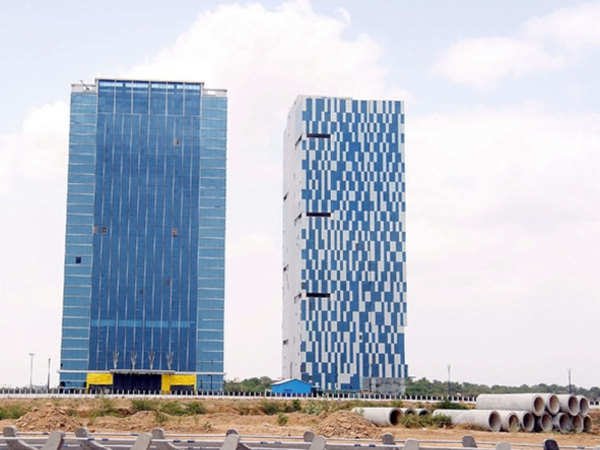
GANDHINAGAR : GIFT City is looking to position itself as a global hub for commodity trading, with its regulator seeking legal changes that would allow international trading, hedging and financing of commodities such as crude oil, gold, metals and agricultural products to take place from India’s financial services centre.
The International Financial Services Centres Authority (IFSCA) has written to the Finance Ministry seeking formal recognition of commodity trading as a financial activity under the law governing GIFT City, IFSCA Chairperson K Rajaraman told Moneycontrol.
The proposal forms part of IFSCA’s broader strategy to expand GIFT City’s offerings beyond banking, fund management and insurance by bringing global commodity trading businesses back to India.
“Despite being one of the largest consumption markets and largest importers of many commodities, most commodity traders are executing trades from other financial centres rather than from India,” Rajaraman said.
Many Indian commodity trading firms currently operate out of Singapore, Dubai and Switzerland, where established regulatory frameworks, tax incentives and banking infrastructure support international commodity trading.
“We believe GIFT IFSC has the potential to become a global commodity trading hub, given that it already possesses the characteristics of a global financial centre, a strong banking network, and a more favourable tax regime than other financial centres. The initial objective is to onshore Indian firms that have migrated to global commodity trading hubs,” he said.
“IFSCA has forwarded the recommendations to the Ministry of Finance for consideration,” Rajaraman added.
At present, commodity trading is not recognised as a financial activity under the IFSCA Act, limiting the regulator’s ability to frame regulations, license market participants and establish a comprehensive legal framework for the sector.
The proposal follows the model adopted for bullion trading. Before 2020, bullion trading also lacked statutory recognition under the IFSCA framework. The government subsequently notified it as a financial activity, paving the way for the launch of the India International Bullion Exchange (IIBX) in GIFT City in 2022. IIBX was inaugurated by the Prime Minister in GIFT City in 2022, and has since expanded from spot gold and silver trading to futures contracts. IFSCA now wants that same recognition extended to a wider range of commodities.
According to Rajaraman, similar recognition for commodities would enable electronic trading, hedging through commodity derivatives, trade financing, merchanting and re-invoicing of global commodity transactions.
“The purpose is to permit electronic trading, hedging, commodity derivatives, trade financing, re-invoicing, merchanting, etc.,” he said.
GIFT City-based firms could start buying and selling commodities and using contracts to protect against price swings, financing large commodity trades with loans and credit, handling trades where goods are bought from one country and sold to another without passing through India, and managing the billing and paperwork side of such cross-border trades.
He clarified that IFSCA would regulate only the financial aspects of commodity trading, while physical infrastructure such as warehousing and logistics would continue to remain under the existing Free Trade Warehousing Zone (FTWZ) and SEZ framework.
“IFSCA does not intend to regulate physical parts of commodities such as warehousing, logistics, etc., which will still continue to follow the Free Trade Warehousing Zone (FTWZ), SEZ framework,” Rajaraman said.
Banking assets at GIFT City have already crossed $111-$114 billion, while commitments to non-retail investment funds have reached $39.3 billion, underscoring the financial centre’s expanding scale.