
India to send empty tankers to West Asia for Refill
NEW DELHI : India is planning to send empty tankers to West Asia to load and bring back energy supplies, even as talks are underway for approximately five more Indian-flagged ships to transit the Strait of Hormuz in the coming week. The Ministry of External Affairs, Indian Navy, and the Shipping Ministry are in active coordination on both fronts. This information is available to The Sunday Guardian exclusively. The Indian Navy has deployed more than half a dozen frontline warships—including Visakhapatnamclass destroyers and frigates—in the Gulf of Oman to escort India-bound tankers out of the conflict zone surrounding the Strait of Hormuz.
MEA spokesperson Randhir Jaiswal told the media that four Indian ships carrying LPG have crossed the Strait and arrived safely in India. Of the 24 India-flagged ships originally stranded at the Strait of Hormuz, 20 remain. “We continue to be in touch with all concerned countries for the safe transit of our ships to meet our energy requirements,” he said.
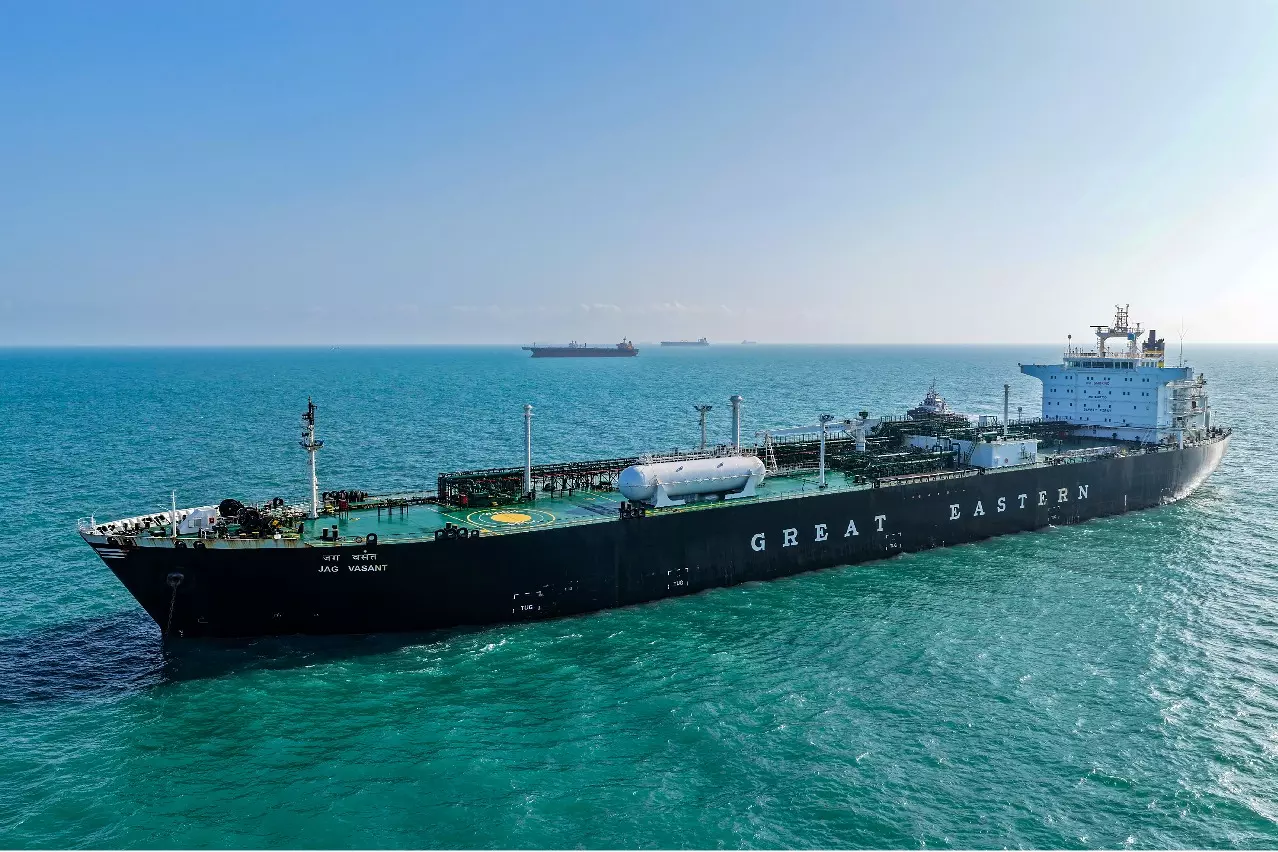
The four LPG carriers that have returned—Shivalik, Nanda Devi, Pine Gas, and Jag Vasant—carried a combined load of close to two lakh metric tonnes of liquefied gas. Crude oil tanker Jag Laadki has also been escorted out of the danger zone.
The Navy’s warships are positioned east of the Strait of Hormuz and are not entering the waterway itself. Once vessels clear the Iranian-controlled zone, naval ships escort them through the Gulf of Oman into the Arabian Sea. The Navy is providing real-time route guidance using hydrographic charts and maintaining constant communication with merchant crews. Iran has been forcing ships to deviate from the normal Traffic Separation Scheme and sail closer to its coastline, making precise, ship-by-ship guidance critical.
“Given the dynamic and rapidly evolving nature of this conflict—whose reverberations are being felt across the region and beyond—Indian Navy has undertaken several proactive measures to safeguard India’s energy imports and protect the lives of seafarers aboard merchant vessels. However, for operational reasons, certain details cannot be disclosed at this stage,” a top Indian Navy official told The Sunday Guardian.
Over 600 Indian seafarers remain aboard the 20 vessels still stranded at the Strait.
The threat is not limited to surface dangers. Concerns have been raised about the possible presence of underwater mines in and around the Strait, adding urgency to the Navy’s hydrographic support for transiting vessels. In moments such as these, where civilian agencies have neither the reach nor the capability to respond, the Indian Navy’s role as an armed force plays a central role. The crisis was triggered when the United States and Israel launched coordinated strikes on Iran under Operation Epic Fury, targeting military facilities, nuclear sites, and leadership, resulting in the death of Supreme Leader Ali Khamenei. Iran’s IRGC responded by issuing warnings restricting vessel passage through the Strait of Hormuz, causing tanker traffic to drop significantly. The Strait of Hormuz is the principal artery for oil and gas supplies bound for Asian countries.
Prime Minister Narendra Modi spoke with Iranian President Masoud Pezeshkian on March 12, pressing for the safety of Indian nationals and the unimpeded movement of energy supplies. On March 26, Iranian Foreign Minister Abbas Araghchi announced that ships from five nations—India, China, Russia, Iraq, and Pakistan—would be permitted to transit the Strait of Hormuz, describing them as countries Iran considers friendly.
India’s diplomatic outreach was not limited to Tehran alone. India’s diplomatic outreach has been extensive, with the country’s leadership actively engaging all nations in the region—whether directly involved in the conflict or affected by its fallout—the latest being Prime Minister Modi’s conversation with Saudi Crown Prince Mohammed bin Salman. PM Modi, in a post on X on Saturday, March 28, said, “Spoke with Crown Prince and PM of Saudi Arabia, HRH Prince Mohammed bin Salman and discussed the ongoing conflict in West Asia. I reiterated India’s condemnation of attacks on regional energy infrastructure. We agreed on the need to ensure freedom of navigation and keeping shipping lines open and secure. Thanked him for his continued support for the welfare of the Indian community in Saudi Arabia.”
NAVY’S INDISPENSABLE ROLE
The Indian Navy has long been the silent guardian of India’s energy lifeline, operating across the vast expanse of the Indian Ocean Region in both peacetime and periods of crisis. Whether it is patrolling against piracy off the Horn of Africa, conducting anti-smuggling operations, or ensuring the safe passage of merchant vessels through volatile chokepoints, the Navy’s mission has always extended far beyond war-fighting. India is known to import over 85% of its crude oil requirements by sea, making the uninterrupted flow of maritime trade a strategic priority as well as an economic imperative. The Navy’s ability to project power, gather intelligence, and provide real-time navigational guidance to merchant crews represents the invisible backbone upon which India’s energy security and, by extension, its economic stability, rests.
The ongoing crisis at the Strait of Hormuz has brought this role into sharp focus. The Navy’s institutional memory of such crises runs deep—its anti-piracy missions in the Gulf of Aden, which protected hundreds of merchant vessels over more than a decade, and its role in evacuating Indian nationals from conflict zones, have long established it as India’s first and most reliable responder when the seas turn hostile.
Source ; The Sunday Guardian