MEA calls for “unimpeded, safe navigation” through Hormuz, hopes US attacks on vessels “Come To An End”
NEW DELHI : India has once again stressed the importance of maintaining free and secure maritime movement through the Strait of Hormuz, one of the world’s most critical shipping corridors, amid escalating tensions in West Asia.
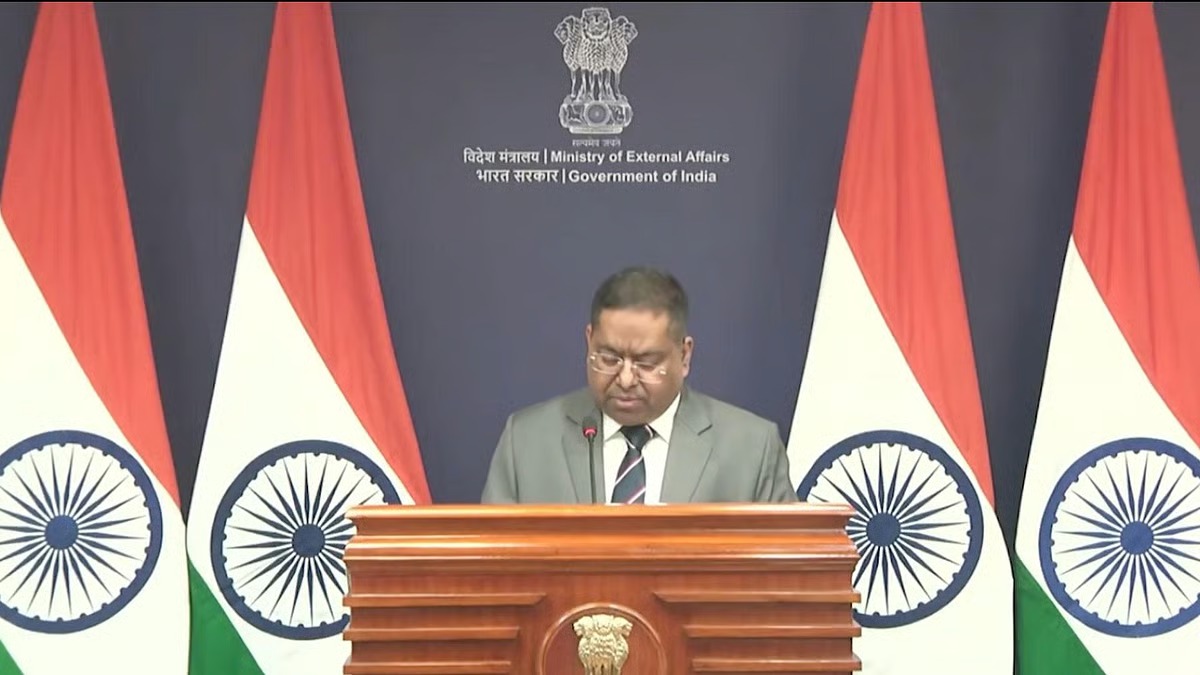
Speaking at a special briefing on Prime Minister Shri Narendra Modi’s upcoming visit to France and Slovakia, Ministry of External Affairs (MEA) spokesperson Randhir Jaiswal underlined India’s longstanding position on maritime security.
“We have stated our position in the Strait of Hormuz. We would like, we want, and we have urged that there be unimpeded and safe navigation through the Strait of Hormuz, keeping with international law. So that is our position. This is a topic which will come up for discussion, and we’ll put our points across,” Jaiswal said.
The Strait of Hormuz is a narrow but strategically vital waterway connecting the Persian Gulf with the Gulf of Oman and the Arabian Sea. A significant share of the world’s crude oil and liquefied natural gas exports passes through this route.
Any disruption in shipping through the strait can impact global energy supplies, freight costs, and oil prices, making developments in the region a matter of international concern.
What Prompted India’s Latest Statement?
India’s remarks came amid growing concerns over recent US military actions against commercial vessels in the Gulf of Oman.
The MEA expressed concern over attacks on ships carrying Indian crew members and called for an end to the incidents. “We are deeply concerned at these attacks and hope and expect these will come to an end,” Jaiswal said.
The concern follows a series of US actions against foreign-flagged vessels accused of transporting Iranian oil in violation of a US-imposed blockade.
What Happened to MT Jalveer?
On Thursday, the US Central Command (CENTCOM) confirmed that American forces had struck the Guinea-Bissau-flagged oil tanker MT Jalveer, which had 20 Indian seafarers on board. According to CENTCOM, the vessel attempted to transport Iranian oil and allegedly ignored repeated instructions from US forces.
“U.S. Central Command (CENTCOM) acted against Guinea-Bissau flagged M/T Jalveer as it attempted to transport oil from Iran through the Gulf of Oman. A U.S. aircraft fired two Hellfire missiles into the ship’s engine room after the crew repeatedly failed to comply with directions from U.S. Forces,” the statement said.