Home Blog Page 232

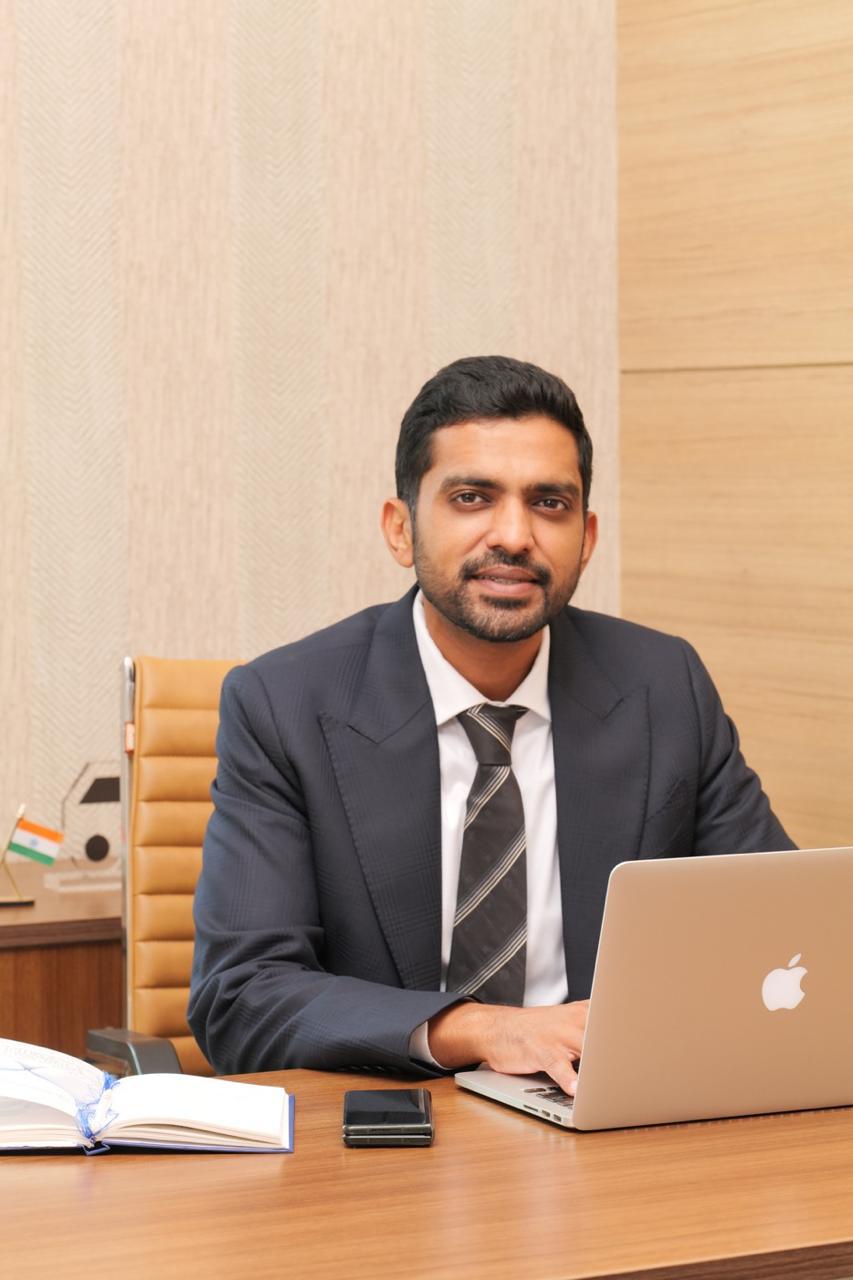
Multimodal Logistics Driving India’s Supply Chain Transformation: Nikhil Agarwal, President, CJ Darcl Logistics

NEW DELHI: On the occasion of National Logistics Day, Mr. Nikhil Agarwal, President, CJ Darcl Logistics, highlighted the transformational role of multimodal logistics in reshaping India’s supply chain ecosystem. He emphasized that the country’s logistics landscape is witnessing a fundamental shift driven by stronger connectivity, faster cargo movement, digital integration, and resilient infrastructure.

According to him, India’s growing manufacturing base, rising consumption, and increasing demand for operational efficiency are accelerating the transition towards integrated logistics solutions. Government-led initiatives such as PM Gati Shakti, the National Logistics Policy (NLP), Dedicated Freight Corridors (DFCs), and the development of Multimodal Logistics Parks (MMLPs) are playing a pivotal role in connecting road, rail, ports, and airports into a unified logistics network.

He noted that these reforms are helping reduce transit times, optimize logistics costs, improve infrastructure planning, and promote seamless cargo movement across multiple modes of transport. The shift towards rail-based freight through dedicated freight corridors and multimodal cargo terminals is also strengthening capacity, easing congestion, and contributing to India’s sustainability objectives.

Mr. Agarwal further observed that multimodal logistics has evolved from being merely an operational advantage to becoming a strategic business imperative. The integration of road and rail transportation enables businesses to achieve greater efficiency, cost optimization, improved service reliability, and lower environmental impact, thereby enhancing their competitiveness in an increasingly complex supply chain environment.

Highlighting CJ Darcl Logistics’ commitment to multimodal transportation, he said the company continues to leverage technology-driven operations, an extensive pan-India network, and integrated road-rail solutions to deliver agile and future-ready supply chains for its customers.

Original Quote

“India’s supply chains are entering a new era, defined by connectivity, speed, and resilience. As manufacturing expands, consumption grows, and businesses seek greater efficiency, the way goods move across the country is undergoing a fundamental shift. At the center of this transformation is multimodal logistics.

Traditionally, freight movement in India operated in silos, with road, rail, ports, and airports functioning independently. Today, initiatives such as PM Gati Shakti, the National Logistics Policy, Dedicated Freight Corridors (DFCs), and the development of Multimodal Logistics Parks (MMLPs) are bringing these networks together to create a more integrated logistics ecosystem. The focus is clear: reduce transit times, lower logistics costs, and enable seamless movement of cargo across modes.

This transformation is already delivering results. The National Logistics Policy aims to bring India’s logistics costs closer to global benchmarks while improving efficiency through digital integration and coordinated infrastructure planning. At the same time, dedicated freight corridors and multimodal cargo terminals are accelerating the shift of freight from road to rail, enhancing capacity, reducing congestion, and supporting sustainability goals.

For businesses, multimodal logistics is no longer just an operational advantage, it is a strategic necessity. The ability to combine the flexibility of road transport with the efficiency and scale of rail enables faster deliveries, optimized costs, improved reliability, and reduced environmental impact. As supply chains become more complex, integrated transportation networks are becoming critical to maintaining competitiveness.

At CJ Darcl Logistics, we have long believed in the power of multimodal transportation. By leveraging the strengths of both road and rail, supported by technology-enabled operations and a strong pan-India network, we help customers build agile, efficient, and future-ready supply chains. Our focus is not simply on moving cargo, but on creating smarter logistics solutions that drive business growth.

On National Logistics Day, we celebrate the sector’s contribution to India’s economic progress and recognize the role of multimodal logistics in shaping the future of supply chains. As infrastructure, technology, and connectivity continue to converge, India is building a logistics ecosystem that is faster, more sustainable, and better equipped for the opportunities ahead.”
‘Excellent Condition, Shelf Life’: Singapore Praises Indian Banganapalle Mangoes Exported Via First Sea Shipment

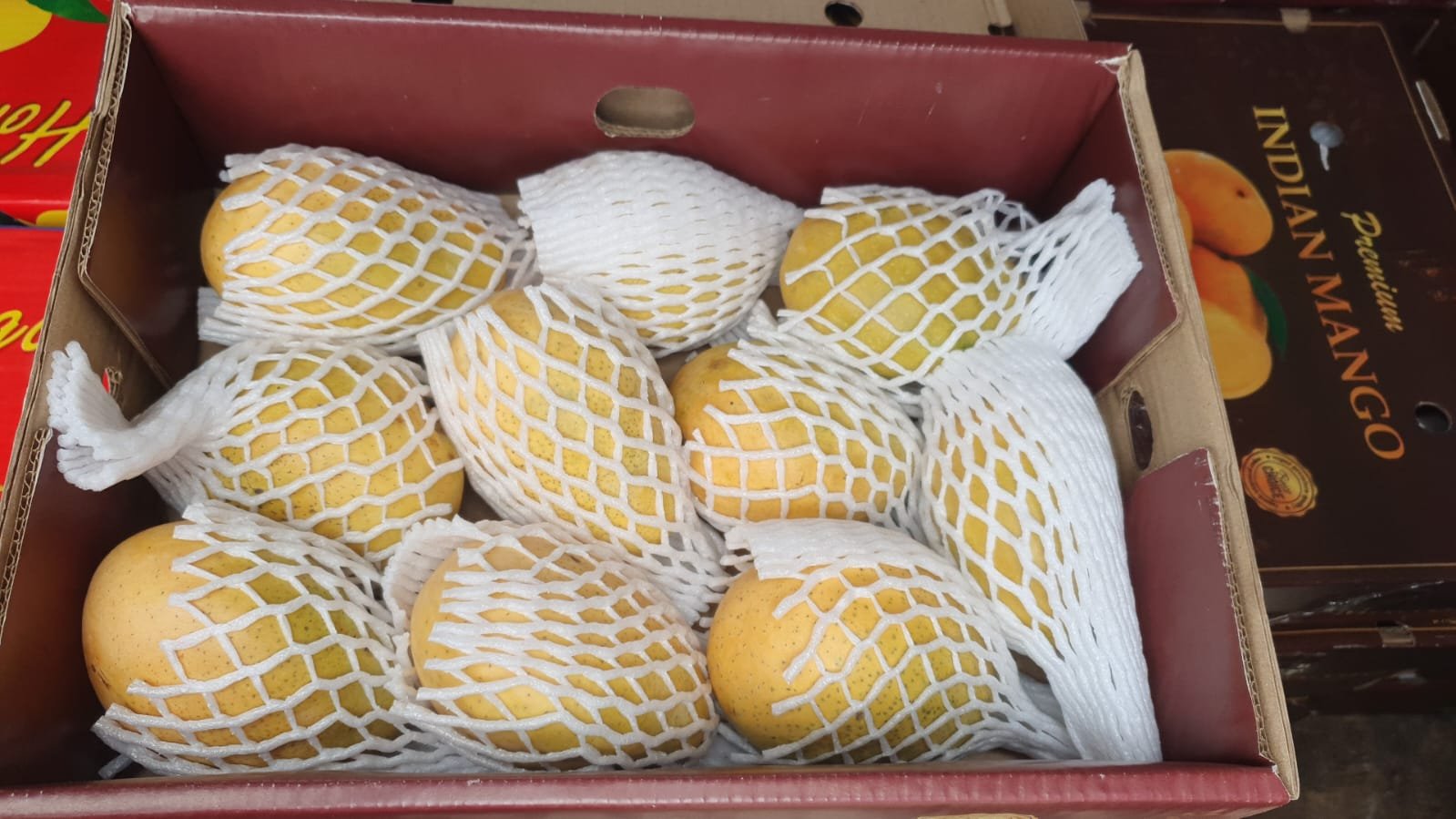
SINGAPORE : For mango lovers in Singapore, there is more reason to celebrate this season. India’s prized Banganapalle mangoes have reached Singapore through the first-ever commercial sea shipment. The 5-metric-tonne consignment, facilitated by the Agricultural and Processed Food Products Export Development Authority (APEDA), was exported on June 11 and arrived in Singapore on June 24.

Singapore welcomes the first commercial sea shipment of premium Banganapalle mangoes from India.

The 5 MT shipment facilitated by APEDA and ICAR–Central Institute for Subtropical Horticulture (CISH), Lucknow, is an important milestone in promoting cost-effective and sustainable export for India’s horticultural produce.

“The successful shipment marks an important milestone in promoting cost-effective and sustainable export logistics for India’s horticultural produce while expanding market access for premium Indian mangoes,” the Indian government said in a statement. Sourced from GAP-certified orchards in Andhra Pradesh and packed at an APEDA-recognised packhouse in Karnataka, the consignment fully complied with Singapore’s quality and phytosanitary requirements.

Importer EC-Links Pte Ltd, Singapore, confirmed the fruit arrived in excellent condition, citing sweetness, uniform ripening, good shelf life and phytosanitary compliance. Meeting all import standards confirmed the success of scientific post-harvest handling and cold-chain logistics by sea, the statement noted.

The export delivered strong financial gains for farmers. With domestic prices at Rs 25 to Rs 26 per kg, the export mango shipment fetched around Rs 50 per kg. That nearly doubled farm-gate earnings and gave growers better value. The shipment also showed that sea freight is becoming a practical option for fresh fruit exports. It is cost-effective, more sustainable and commercially scalable. “The successful shipment to Singapore is expected to encourage wider adoption of maritime transport for horticultural exports and further strengthen India’s reputation as a reliable supplier of high-quality agricultural products in global markets,” the statement added.

Why People Love Banaganapalle Mangoes

Banaganapalle mangoes are a premium variety originating from the town of Banaganapalle in the Nandyal district of Andhra Pradesh. Celebrated as the official state fruit, it dominates over 70% of Andhra’s total mango cultivation area and was officially awarded a coveted Geographical Indication (GI) tag in May 2017. They are recognised by their large, obliquely oval shape, golden-yellow skin and fibre-free flesh that is exceptionally sweet, aromatic and juicy. Banaganapalle mangoes are a late-season crop, peaking from mid-April through June.

US & Iran agree to halt Counter-Strikes and Resume Talks in Doha

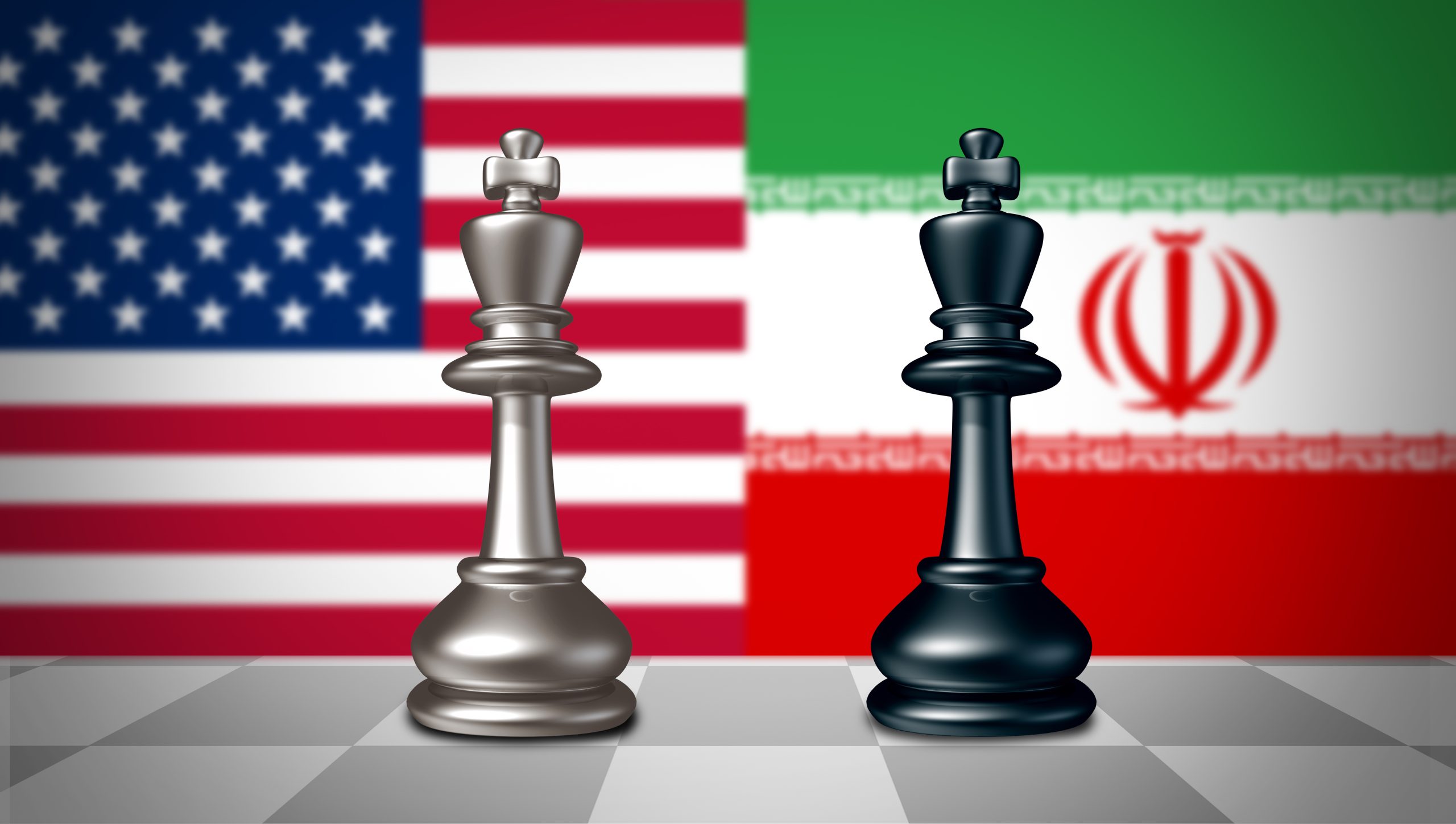
DOHA: The United States and Iran have agreed to halt counter-strikes and resume talks in Qatar’s capital, Doha, tomorrow. The move is aimed at resolving their dispute over the Strait of Hormuz after days of military escalation threatened to derail the fragile ceasefire. The announcement came after multiple rounds of strikes around the Strait of Hormuz.

The US carried out strikes on Iranian military targets after accusing Tehran of violating the ceasefire by attacking commercial vessels. Iran responded by launching ballistic missiles and drones at US military bases in Bahrain and Kuwait, while both sides exchanged fresh warnings over further escalation. A second US official said both sides would stand down for now and that vessels can move freely while discussions continue.

The renewed fighting stemmed from differing interpretations of the memorandum of understanding (MoU) signed earlier this month to end the conflict, particularly Article 5 dealing with navigation through the Strait of Hormuz. Under the agreement, Iran committed to making its best efforts to ensure the safe passage of commercial vessels through the strategic waterway, while the United States agreed to lift its blockade of Iranian ports.

During negotiations in Switzerland, the US delegation, led by Vice President JD Vance, also agreed to establish a direct hotline between the US military and Iran’s Islamic Revolutionary Guard Corps (IRGC) to coordinate shipping traffic through the Strait of Hormuz. However, US officials said the communication channel is still not operational as Iran renewed its insistence that ships must coordinate their passage with Tehran.

The technical talks were originally scheduled to take place in Switzerland and focus on Iran’s nuclear programme. However, the recent escalation shifted both the venue to Doha and the agenda to resolving the Strait of Hormuz dispute.

Iran seeks “insurance mechanism” to reduce risks for ships transiting through Hormuz

TEHRAN: Senior Iranian leader and former commander in Iran’s Islamic Revolutionary Guard Corps (IRGC) Major General Mohsen Rezaei has called for the establishment of an “insurance mechanism” for ships transiting the Strait of Hormuz, saying vessels involved in incidents should be covered to reduce risks while arguing that the associated costs should be borne by oil transporters rather than the Iranian people.

Speaking in an interview with US-based NewsNation last week, Rezaei, who also serves as a senior adviser to Iran’s Supreme Leader, Mojtaba Khamenei, outlined Tehran’s position on the future of the strategic waterway amid ongoing discussions over regional security.

Responding to a question on how the Iranian leadership views the future of the Strait of Hormuz as negotiations progress with the US, Rezaei said there were ongoing discussions over fees and service costs related to the passage.

“Regarding fees, there is a cost to mention in this matter. There is a tolls discussion and a fees discussion. There is a discussion about service costs in the Strait of Hormuz,” he said.

Rezaei said Iran wants to ensure security and environmental protection in the strategic maritime corridor while proposing an insurance framework for commercial vessels.

“Yes, we want to maintain the security of the Strait of Hormuz. We want to protect the environment of the Strait of Hormuz. We must establish an insurance mechanism so that ships involved in incidents or encountering problems are covered to reduce their risk,” he added.

He further stated that the financial burden of such measures should not fall on Iran.

“When we provide all of this, these costs cannot come out of the pockets of the Iranian people. These costs must be collected from those who are transporting oil through the Strait of Hormuz,” Rezaei said.

The issue of levying fees on vessels transiting the Strait of Hormuz has emerged as a key point of contention between Tehran and Washington as part of their talks.

Iran has argued that ships using the strategic waterway should contribute towards security and related services, while the United States has repeatedly rejected any proposal for tolls or maritime transit fees, maintaining freedom of navigation through the international shipping lane.

US President Donald Trump has reportedly slammed the idea by Tehran, saying that it would be “unacceptable” to him if the Iran deal included any kind of fees on shipping or maritime activities in the Strait of Hormuz.

Trump, while talking to reporters during his meeting with the NATO Secretary General, Mark Rutte, on last Wednesday, said, “It would be unacceptable to me because we have numerous straits that, if you did that for them, you’d have to do for other people. You have other straits; well, I wouldn’t allow it there either. Yeah, it would be a game changer.”

Trump earlier also claimed that Tehran has given formal assurances to Washington on not imposing transit charges on vessels navigating the vital Strait.

The Strait of Hormuz, a global maritime chokepoint that facilitates nearly 20 per cent of the world’s seaborne oil trade, has been a source of volatility following reports of potential Iranian regulation of traffic.

Seeking to calm industry fears, Trump took to Truth Social to relay the commitment from Tehran.

“Iran has informed us that there will be ‘NO TOLLS, NO INSURANCE COSTS, & NO OTHER CHARGES OF ANY KIND’ on commercial shipping,” the post read.

He underscored the gravity of the pledge with a clear diplomatic ultimatum: “If this is false information, negotiations would end, immediately!” (ANI)

Hormuz traffic flows despite ship attack as Trump accuses Iran of ‘foolish’ ceasefire breach

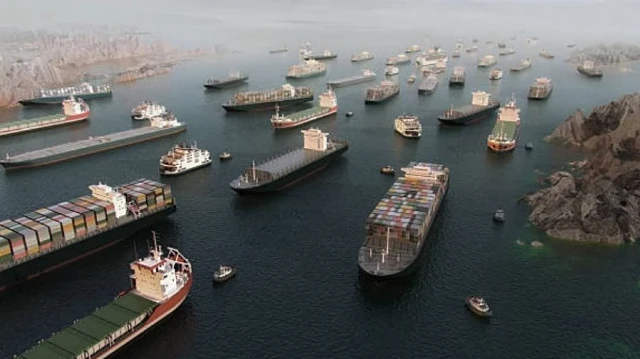
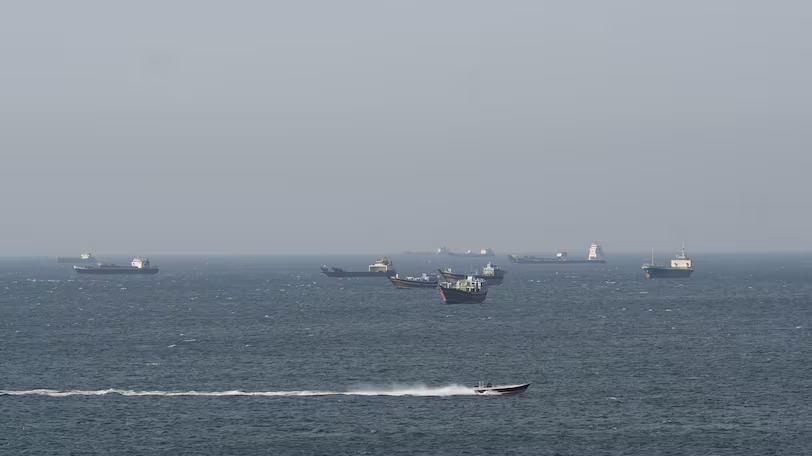
A trickle of marine traffic was passing through the Strait of Hormuz on Friday despite an attack on a ship in the vital waterway a day earlier, as Iran reiterated its warnings for ships to follow a Tehran-approved route.

A flow of vessels transiting via an alternative route close to Oman in recent days has drawn Iran’s ire, as it works to maintain its grip on the key trade route despite the United States’ assertion that the strait is open.

The two sides have been engaged in a public dispute over the future of the waterway as they clash over the terms of their initial deal to end the war, with Iran intent on maintaining its leverage while American and global officials insist transit must be free.

At least 37 vessels had transited the strait or are in the process of doing so since Thursday’s incident involving a container ship from Taiwan-based shipping giant Evergreen Marine, an NBC News review of MarineTraffic data showed.

Despite Iran’s threats, 20 of those ships had taken a route far south of Iran that hugs the coastline of the United Arab Emirates and bends along Oman’s Musandam Peninsula, avoiding Iranian waters.

Iran has warned that it cannot guarantee safety for ships not following a specified route close to the Iranian coastline. Its newly-formed Persian Gulf Strait Authority warned Thursday that such ships will not be covered by safe passage guarantees and warned that any “consequences” will be the responsibility of the vessels and their owners.

Iran’s semi-official Mehr News Agency said Friday that three oil tankers had altered their course and returned toward the Persian Gulf after receiving warnings from Iran’s naval forces.

The International Maritime Organization (IMO), the U.N.’s maritime agency, had coordinated the alternative route. The body announced a plan this week to evacuate 11,000 sailors, but suspended the operation after the attack on Ever Lovely.

Is the Strait of Hormuz open or closed?

IMO Secretary-General Arsenio Dominguez said the struck vessel “did not transit under IMO’s evacuation framework.”

The Singapore-flagged Ever Lovely was sailing close to Oman on Thursday and was along its northernmost coast when it was struck on its starboard side by an “unknown object,” its owner company, Evergreen Marine, said in a statement to the Taiwanese stock exchange on Friday.

The ship sustained damage to its bridge windows, but no injuries were reported, and the cargo onboard was safe, the company said. “The main engine and all navigation equipment continued to operate,” and its seaworthiness was not impacted as it departed the Strait of Hormuz, it added.

Iran has not publicly acknowledged the incident. In a Truth Social post on Friday, President Donald Trump said that Iran had fired four drones at ships.

He wrote: “One of the Drones solidly hit the upper deck of a large and very expensive Cargo Carrying Ship. Damage was done, but the Ship was able to proceed on its way. We knocked down three other Drones.”

“Obviously, this is a foolish violation of our Ceasefire Agreement,” Trump added.

Singapore’s Maritime and Port Authority said in a statement that it was “deeply concerned about the incident, which was unprovoked, unjustifiable, and a breach of international law.”

The memorandum of understanding signed by the U.S. and Iran last week stated that Iran would “make arrangements using its best efforts for the safe passage of commercial vessels with no charge for 60 days only from the Persian Gulf to the Sea of Oman and vice versa.”

The differences between the U.S., which says that ships must be able to pass freely, and Iran, which insists that ships can only move through Iranian waters, have since exploded in public, with Iran’s navy issuing stern warnings to ships moving through other routes, and the U.S. blasting Iran for continuing to control the traffic.

Iran’s Deputy Foreign Minister Kazem Gharibabadi said Friday that safe passage through the strait “cannot be guaranteed through vague arrangements, parallel routes, or decision-making conducted outside of Iran’s considerations as a coastal state.”

He said that “any valid framework must be based on coordination with Iran.”

“Otherwise, the result will be the suspension of the designated parallel route.”

His comments followed a meeting of Secretary of State Marco Rubio and the Gulf Cooperation Council on Thursday, after which a joint statement said: “Ministers rejected any tolls, fees, or attempts to assert control over the Strait.

US says will not ignore attacks on Hormuz shipping as both sides trade strikes

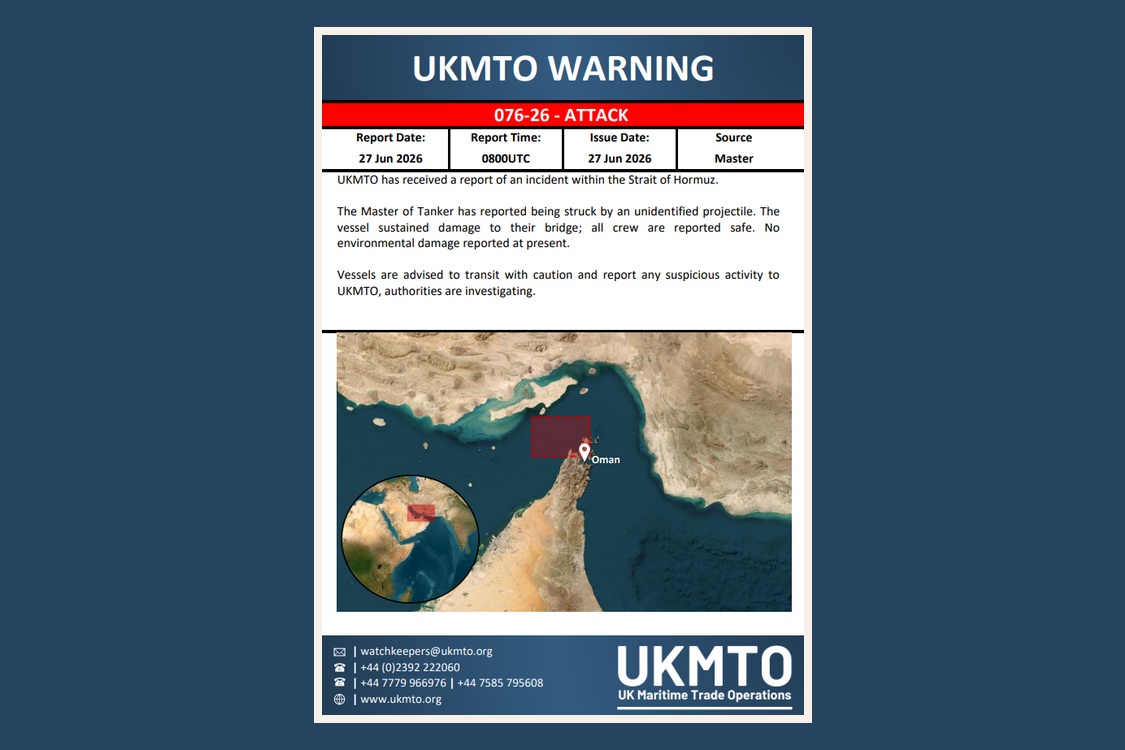
LONDON: A tanker came under attack in the Strait of Hormuz on Saturday, just after Bahrain said that Iran launched an attack targeting the kingdom.

The British military’s United Kingdom Maritime Trade Operations (UKMTO) center reported the attack, saying the ship’s crew was safe and no environmental damage was reported.

No one immediately claimed the attack. However, Iran attacked a ship Thursday off Oman trying to get out of the Arabian Gulf.

The US military said its forces struck Iranian missile and drone storage sites and coastal radar locations on Friday night in response to the Thursday attack.

The US Central Command (CENTCOM) told Al Arabiya it would not ignore any future Iranian attacks on commercial shipping in the Strait of Hormuz, while stressing that freedom of navigation remains a core US objective.

A CENTCOM spokesperson told the network that US forces would continue to protect international shipping lanes and respond to any threats against commercial vessels.

“We will not ignore Iranian attacks on commercial ships,” the spokesperson said, adding that safeguarding maritime traffic is essential to regional and global security.

CENTCOM also said that the US remained committed to de-escalation but would respond when commercial shipping is targeted.

Iran on Saturday accused the US of a “blatant violation” of the peace deal reached between the two sides to end the Middle East war after the latest American strikes on the country.

“These brutal attacks, which targeted Iranian coastal surveillance facilities, are a blatant violation” of the memorandum of understanding to end the war, the Iranian foreign ministry said in a statement.

The strikes show the danger of the Iran war again spinning out of control, even after Iran and the US reached an interim deal to try and reach a final accord to end the conflict.

Bahrain said Saturday that Iran launched a drone attack on the island just after Tehran said it targeted American military installations to retaliate for overnight airstrikes.

The strikes on Bahrain show the danger of the Iran war again spinning out of control, even after Iran and the US reached an interim deal to try and reach a final accord to end the conflict.

The US had launched its airstrikes in response to an Iranian drone attack on a ship trying to get out of the Strait of Hormuz on Thursday, continuing a string of attacks that have shaken the uneasy ceasefire in the war.

Sea route near Oman is expanding

A maritime body overseen by the US Navy said Saturday that a route through the Strait of Hormuz near Oman’s shores is expanding to allow for both inbound and outbound traffic.

The announcement by the Joint Maritime Information Center serves as another warning to Iran that the US is pushing to reopen the strait.

Iran has insisted ships must obey its orders and is warning it will start charging fees for transit through the strait, through which a fifth of all oil and natural gas once passed.

The US and Gulf Arab states have rejected Iran’s demands. The strait is considered around the world as an international waterway, despite being the territorial waters of Iran and Oman.

Source: Arab News

Drewry: World Container Index up 5% last week

LONDON: For many years, World Container Index (WCI) has been the go-to, independent, global reference for index-linked contracts. If your organisation requires regional visibility/coverage beyond the eight trade lanes provided below, contact the team.

Spot rates continue to rise, pushing up WCI to a 22-month high.

Our detailed assessment for Thursday, 25 Jun 2026
The Drewry World Container Index (WCI), the benchmark widely referenced by procurement teams, jumped 5% to $4,166 per 40ft container, supported by an increase in rates on the Transpacific trade route. The composite index reached its highest level since September 2024.

On the Transpacific trade route, spot rates continued to strengthen, with those on Shanghai to New York rising 6% to $7,149 per 40ft container and Shanghai to Los Angeles increasing 12% to $5,750 per 40ft container. According to Drewry’s Container Capacity Insight, only four blank sailings have been announced on the Transpacific trade route for the next week, reflecting tight capacity. Transpacific demand remains robust as importers continue frontloading shipments ahead of potential tariff changes and higher bunker-related costs. In addition, GRIs and PSS are expected to be implemented in July. Hence, Drewry expects rates to increase further in the coming weeks.

On the Asia–Europe trade route, spot rates were stable this week, with rates on Shanghai to Rotterdam rising 1% to $4,392 per 40ft container, while those on Shanghai to Genoa remained unchanged at $5,759 per 40ft container. According to Drewry’s Container Capacity Insight, only three blank sailings have been announced on the Asia to Europe trade route for the next week, indicating constrained capacity. Carrier pricing remains firm amid continued cargo front loading ahead of the 1 July bunker fuel adjustment. CMA CGM has announced higher FAK rates of $6,300 per 40ft container from Asia to Europe and $7,700–$8,500 per 40ft container from Asia to the Mediterranean. In addition, it has introduced PSS of $1,000 per 20ft container on the Asia–Europe trade and $1,400 per 20ft container on the Asia–Mediterranean trade, effective 1 July. Hence, Drewry expects rates to rise in the coming weeks.

The US–Iran ceasefire has eased disruption risks around Strait of Hormuz transits, though conditions remain fragile. At the same time, congestion at key Asian and European hubs continues to limit vessel availability, while strong cargo demand is sustaining tight capacity across major trade lanes. As a result, carriers are successfully implementing surcharges, including higher FAK levels and PSS, creating upward pressure on spot rates. Shippers are likely to face continued space constraints and should anticipate further short-term volatility in pricing.

Source: Drewry

Goa sets new benchmark in maritime development with inauguration of modern Captain of ports terminal at Panaji

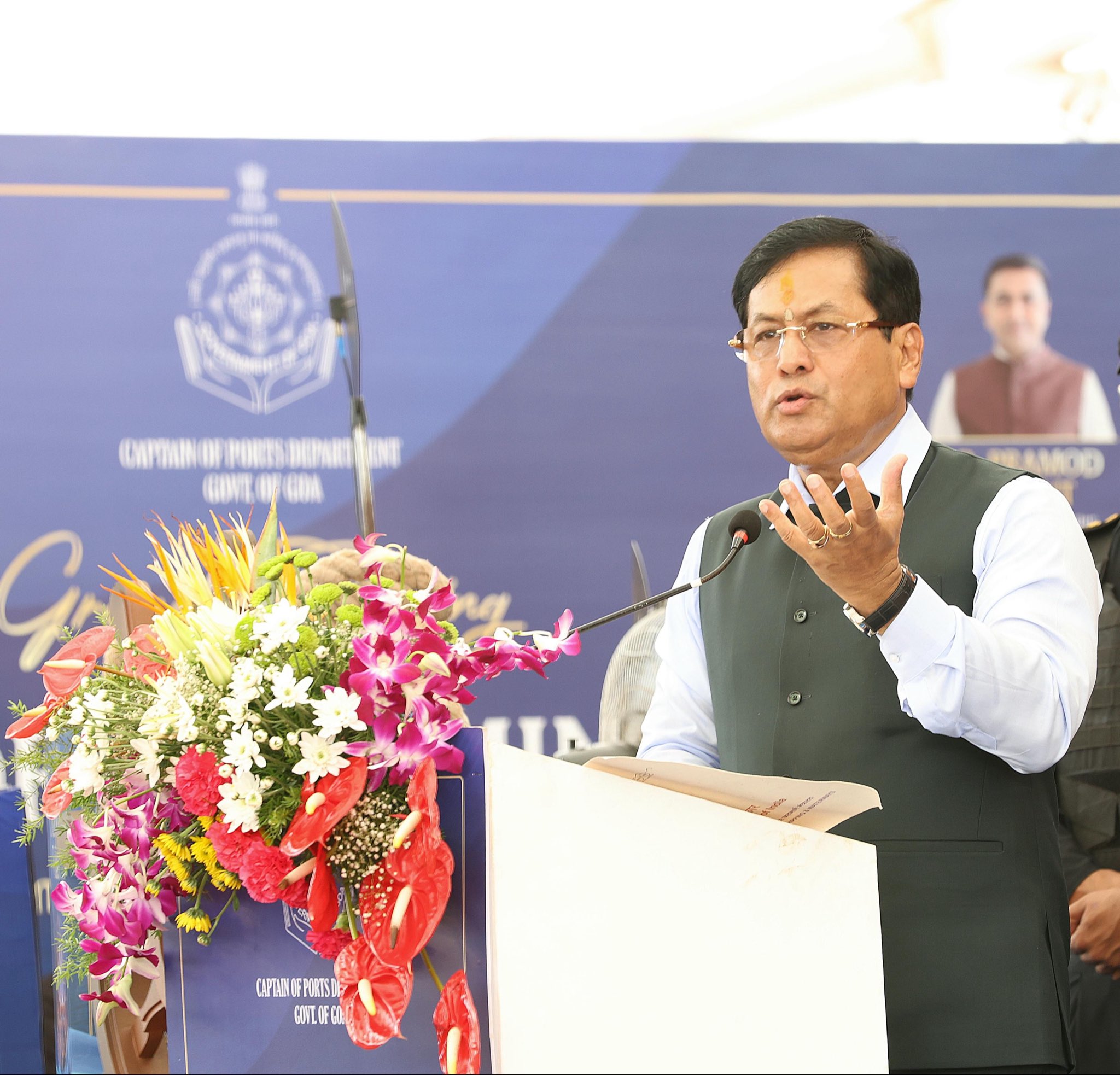
PANAJI : Goa marked a significant milestone in its maritime development journey with the inauguration of the state-of-the-art Captain of Ports Terminal Building at Panaji, reinforcing its commitment to sustainable, modern and integrated water transport infrastructure.

The new terminal was inaugurated by Union Minister of Ports, Shipping and Waterways Shri Sarbananda Sonowal, along with Goa Chief Minister Dr. Pramod Sawant, in the presence of Union Minister of State for Power and New & Renewable Energy Shri Shripad Yesso Naik, Goa Ministers Shri Digambar Kamat, Shri Subhash Phal Dessai and other dignitaries.

Describing the facility as the “Gateway to the Riverbanks of Goa,” Shri Sonowal said the iconic terminal celebrates Goa’s rich maritime heritage while laying the foundation for a future driven by sustainable connectivity, tourism and inland water transport.

Highlighting the transformation of India’s maritime sector under the leadership of Prime Minister Shri Narendra Modi, the Union Minister said the sector has emerged as a key pillar of the country’s economic growth over the past twelve years through unprecedented investments in ports, waterways and coastal infrastructure.

Shri Sonowal noted that Goa has emerged as a national leader in maritime reforms by becoming the first state in the country to implement the Inland Vessels Act, 2021. The legislation aims to establish uniform standards for inland vessel operations, enhance passenger safety and promote ease of doing business in inland water transport across India.

He further highlighted that Mormugao Port has become India’s first Green Port, reflecting the country’s growing focus on environmentally sustainable port operations, clean energy adoption and green logistics.

In another major announcement, Shri Sonowal said the ambitious Goa Water Metro project has been brought under Phase-I priority implementation. Inspired by the success of water-based urban mobility initiatives, the project is expected to provide an efficient, eco-friendly and seamless mode of transportation, while reducing road congestion, strengthening last-mile connectivity and boosting tourism across the state’s waterways.

The Minister expressed confidence that the combined initiatives would position Goa as a national model for sustainable, port-led development and inland water transport, while unlocking new opportunities for economic growth, employment generation and tourism.

He also thanked the Government of Goa, elected representatives and officials for their continued support in advancing the state’s maritime infrastructure and connectivity.

Piyush Goyal announces deployment of 1,000 Advisory Personnel across India to help businesses maximise India-UK CETA benefits

LONDON : Union Minister of Commerce and Industry Shri Piyush Goyal announced the deployment of 1,000 advisory personnel across the country and the upgradation of the trade portal to help businesses maximise the benefits of the Agreement.

Shri Goyal participated in a series of high-level engagements during the 10th Annual UK-India Week in London today, highlighting the opportunities arising from the forthcoming implementation of the India-UK Comprehensive Economic and Trade Agreement (CETA) on 15 July 2026.

As India’s most comprehensive free trade agreement to date, the India-UK CETA is projected to increase bilateral trade by GBP 25.5 billion annually.

Addressing the India Global Forum (IGF) Capital Frontiers Forum, Shri Goyal said that the India-UK partnership has expanded beyond traditional trade to encompass strategic sectors such as technology, sovereign AI, critical minerals, defence and clean energy. He observed that the evolving partnership reflects the growing depth and diversity of bilateral economic engagement.

At a reception hosted by the High Commission of India and FICCI, the Minister welcomed the largest and most geographically diverse Indian business delegation to visit the United Kingdom. The delegation included significant participation from enterprises based in Tier-2 and Tier-3 cities, along with several first-time exporters.

Highlighting the benefits of the India-UK CETA for Indian professionals, Shri Goyal said the Agreement provides a five-year exemption from social security contributions for eligible Indian professionals working in the United Kingdom, enabling them to redirect these savings into interest-bearing, tax-free provident fund accounts in India.

The Minister also emphasised the importance of strengthening sub-national economic partnerships and highlighted region-to-region linkages, including Birmingham-Gujarat and Manchester-Maharashtra, as important drivers of future bilateral growth.

Underscoring India’s emergence as the world’s fastest-growing major economy, Shri Goyal encouraged businesses to showcase Brand India with confidence, leverage the country’s strengths in manufacturing, services and innovation, and build enduring partnerships with businesses in the United Kingdom. He said the India-UK CETA would enhance market access, improve the competitiveness of Indian enterprises, facilitate greater mobility for professionals and create new opportunities across goods, services and investment.

Shri Goyal said that India today represents trust, talent, inclusive growth and a stable environment, adding that the country offers immense opportunities for global partnerships and co-creation. He emphasised that businesses should seize the opportunities emerging from India’s sustained economic growth and expanding global engagement.

The Minister further said that the India-UK partnership holds immense potential for growth. He encouraged Indian businesses to emerge as early movers, adopt international quality standards and showcase Brand India globally while strengthening trade and investment partnerships with the United Kingdom. He also underlined the role of Indian enterprises in contributing towards the country’s long-term economic growth aspirations.

Global rating agencies have been unfair to India, says Piyush Goyal; discusses trade, economic growth with industry leaders in UK

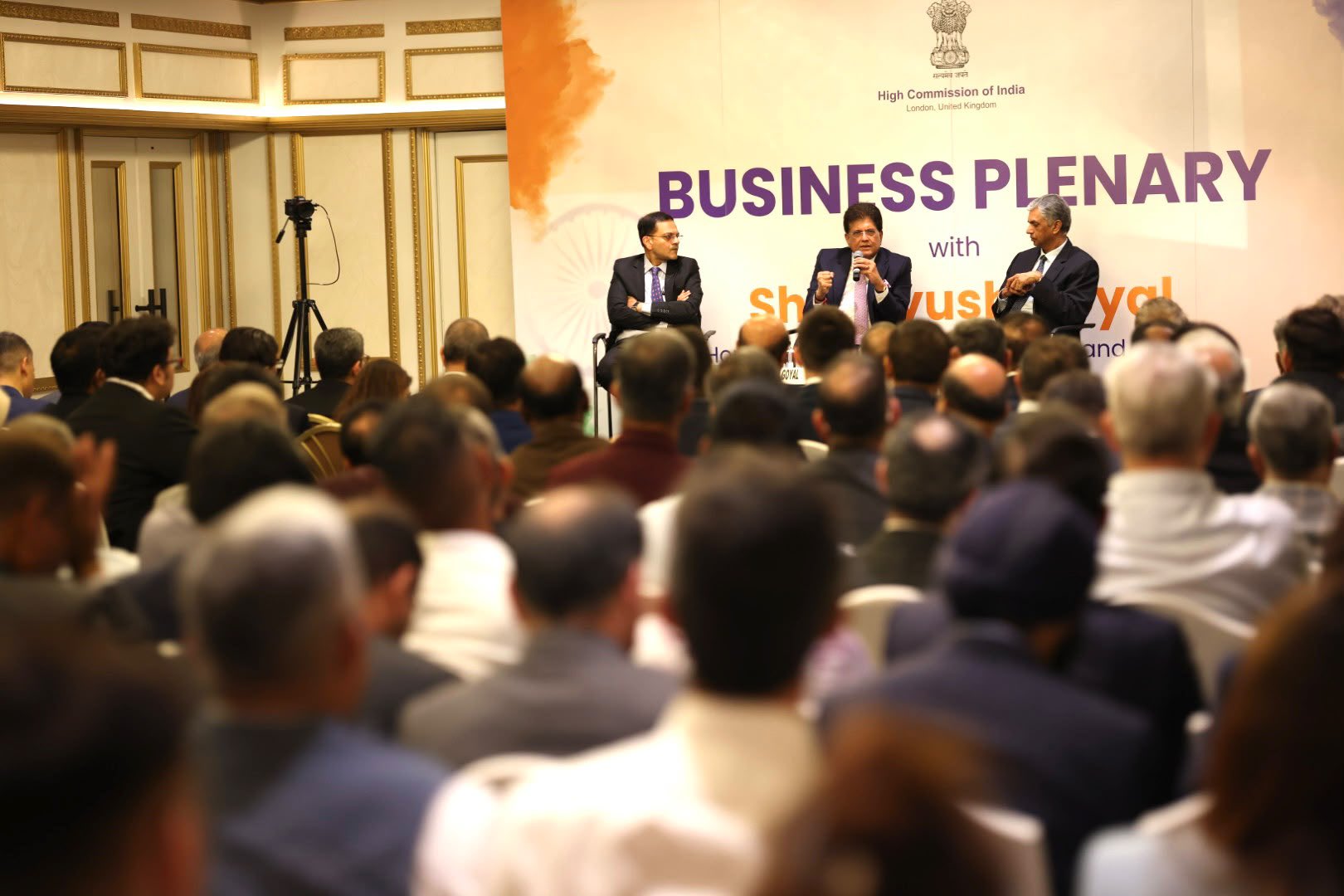
LONDON: Pitching for transformational growth and urging industry leaders to scale up and venture into hitherto uncharted territory, Commerce and Industry Minister Shri Piyush Goyal has said the world trusts that India can and must deliver.

The Union Minister, who is on a visit to the UK, attended the Business Plenary Session, where he interacted with industry leaders and stakeholders to discuss opportunities for trade, investment, and economic growth.

The Union Minister said that global rating agencies such as Fitch, Moody’s, and S&P have been unfair to India, have not adequately recognized the India growth story as also the country’s strong fundamentals and its capabilities.

He called for ramping up exports to the United Kingdom, stating that there is a lot of potential and there is need for India to have a larger market share.

The Union Minister highlighted the opportunities arising from the forthcoming implementation of the India-UK Comprehensive Economic and Trade Agreement (CETA) on July 15.

He stressed collaboration, cooperation, and partnerships as a way to move faster. The Minister spoke of the need to have high growth ambition and work accordingly.

“I do believe that what we will seize now will become very valuable. Very often in our cosy comfort, we lose track, time passes by. And then we get into the typical rut of claiming success when we have 5, 7, or 10% growth. International trade normally grows at 4 to 6%, or 5%. If that is the kind of level of ambition that we will keep as a nation, it’ll be completely a betrayal of the trust that the world has in us today,” he said

“And I’m not talking about the trust that we have in all of you. I’m not even talking about your capabilities here. I’m saying the world’s trust on you–India can deliver, that India must deliver. They want to engage with all of us; otherwise, they wouldn’t be doing these free trade agreements at this speed. And these are not just tariffs and rules of origin; these are very comprehensive, as I’ve said earlier. So transformational growth and entry into hitherto uncharted territory should also be a prime focus of this team and the message you take back home. And the message my British brothers and sisters in this room take to your companies and your colleagues here is going to be very important,” he added.

The Union Minister referred to CareEdge rating report and appreciated its team for their work.

“So far we only had Fitch, Moody’s and Standard & Poor’s. And I can say it on record, they have been unfair to India. They have not recognized the India growth story, the strong India fundamentals, and the sovereign’s capabilities–the Indian capability and future–and captured it as much as a rating agency should have done. I will not cast any motives to it, but I do express surprise at it,” he said.

“And I think what CareEdge has done is do their job extremely objectively. They have assessed much weaker economies than India with absolutely no future, to whom other agencies have given better ratings than India for reasons best known to them. And what he just spoke about–22 country ratings around the world being changed to converge with the findings of CareEdge–is a matter of deep pride for every Indian. In fact, I almost believe that we must support the Indian effort to bring objectivity to ratings,” he added.

Source: ANI