Home Blog Page 279

Iran’s IRGC says 28 ships passed through Hormuz in the last 24 hours

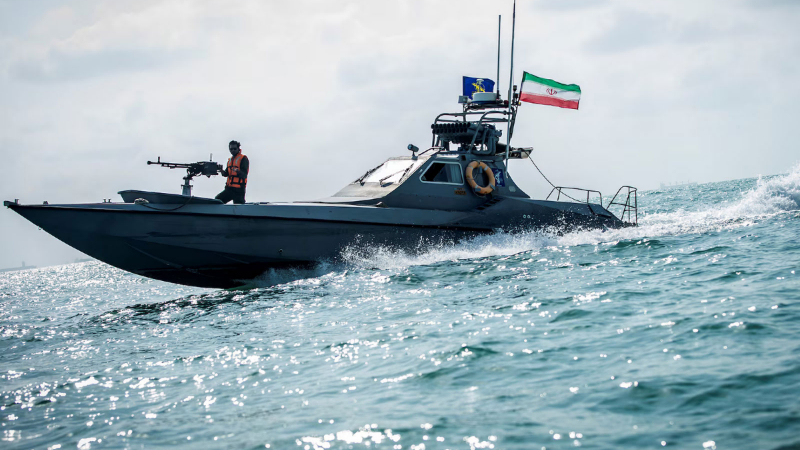
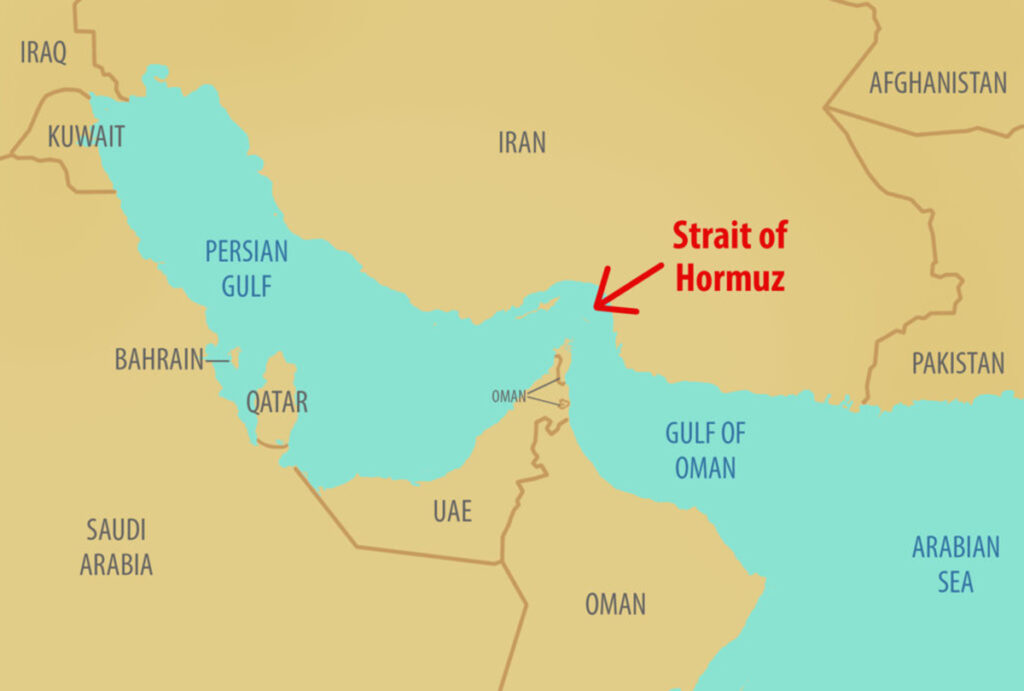
TEHRAN: Iran’s Islamic Revolutionary Guard Corps (IRGC) on Sunday said that 28 ships, including oil tankers, container vessels, and other commercial ships, passed through the Strait of Hormuz in the last 24 hours under the coordination and security of the IRGC Navy.

According to a statement carried by Iranian state media, Islamic Republic of Iran Broadcasting (IRIB), the vessels were allowed to transit after obtaining permission from the IRGC. The statement issued by the IRGC Navy’s Public Relations Office highlighted that the Persian Gulf is a strategic waterway belonging to Muslim countries in the region and attributed recent insecurity to the “aggression and evils of the American terrorist army”.

“Over the past 24 hours, 28 ships, including oil tankers, container ships, and other commercial vessels, passed through the Strait of Hormuz after obtaining permission with the coordination and security of the IRGC Navy,” the statement read.

“The Persian Gulf is a water area belonging to the Muslim countries of the region, and the aggression and evils of the American terrorist army are the most important reason for its insecurity these days,” it added

The IRGC added that it is conducting “intelligent control” of the Strait of Hormuz continuously, with firmness and authority, to ensure safe passage of commercial vessels.

On Saturday, the IRGC reported that 20 commercial vessels passed through the strait after securing permission and coordinating with the force.

In a separate statement, the IRGC Navy’s Public Relations Office confirmed that the 20 ships transited the strategic waterway over the past day with the force’s coordination.

According to Iranian state media Press TV, the passage of these vessels is managed by Iran’s newly introduced system to manage maritime traffic in the strategic Strait of Hormuz.

Iran announced the launch of a new regulatory body earlier this month, aimed at managing and monitoring operations related to the strategically important waterway, the Strait of Hormuz.

The top security establishment of the Islamic Republic, the Supreme National Security Council, reposted a post on X where it stated that the official X account of the “Persian Gulf Strait Authority” (PGSA) is now operational.

The announcement signalled the formal establishment of a dedicated body overseeing developments and operations linked to the Strait of Hormuz, one of the world’s most critical maritime trade routes for global oil and energy shipments.

Following this, the US imposed sanctions on the PGSA, accusing Tehran of using the body to “extort” commercial vessels transiting through the Strait of Hormuz and “funnelling” revenue to the IRGC.

The move, announced by the US Department of the Treasury’s Office of Foreign Assets Control (OFAC), adds the PGSA to the Treasury Department’s Specially Designated Nationals (SDN) list as part of the US President Trump’s administration’s intensified “Economic Fury” campaign aimed at increasing pressure on Iran amid ongoing regional tensions.

118 commercial vessels redirected, five disabled under Iran blockade: US military

FLORIDA: The United States Central Command (CENTCOM) has announced that American forces have redirected 118 commercial vessels and disabled five others as part of Washington’s active naval blockade aimed at Iranian ports.

American forces established a naval blockade of Iran on 13 April

The US military “has redirected 118 commercial vessels and disabled 5 as of May 31,” CENTCOM stated on Sunday in a post on X.

Following the implementation, US Central Command warned that they will continue blocking the movement of all ships heading both to and from Iranian ports.

This aggressive enforcement on the high seas unfolds even as diplomatic channels show signs of deep strain. Days after declaring a proposed agreement with Tehran “largely finalised”, US President Donald Trump has reportedly returned the draft text for extensive modifications, extending the diplomatic process and injecting fresh ambiguity into efforts aimed at halting the confrontation.

According to CNN, Trump requested tougher provisions on Iran’s nuclear commitments and the reopening of the Strait of Hormuz during a meeting with advisers.

The US President has reportedly also expressed concern over the extent of financial relief that could be offered to Tehran under any agreement, wary of comparisons with the Obama-era nuclear deal, which he has repeatedly criticised as too lenient.

The latest round of changes comes a week after Trump said the deal was “largely finalised” and indicated that an end to hostilities was imminent.

Since then, US officials have signalled progress towards an agreement that would halt fighting, reopen the strait, and allow for further detailed negotiations on Iran’s nuclear programme.

However, despite Trump stating he would make a “final determination” during Friday’s meeting and outlining some conditions on social media, the two-hour session concluded without a decision.

In his message, Trump said the US would seize Iran’s stockpile of highly enriched uranium and destroy it, though Iran has consistently said it is not discussing details of its nuclear programme under the current talks.

Trump also said there had been no discussion of exchanging money as part of the deal, while Iran has said financial provisions must be included in any agreement.

How these differences will be resolved remains unclear as negotiations continue over the wording of the deal.

Earlier, Axios also reported that Trump had sought revisions to the proposed agreement, including tougher language on the reopening of Hormuz in the deal with Iran.

The legislative leadership in Tehran has responded to the development with firm rhetoric. Iranian Parliament Speaker Mohammad Bagher Ghalibaf said on Sunday that no agreement with the US would be approved until Tehran’s “rights” are secured, according to the semi-official Tasnim news agency.

“The soldiers of the diplomatic battlefield have no trust in the words and promises of the enemy. What matters to us are tangible achievements that we must obtain, in exchange for which we will fulfil our commitments,” Iran’s Tasnim news agency quoted him as saying.

Meanwhile, Democratic Senator Chris Coons, who sits on the Senate Foreign Affairs Committee, said the terms outlined by Trump appear acceptable on paper but may be difficult to implement, particularly regarding the Strait of Hormuz.

‘Travel through designated routes’: Iran tightens grip on crucial Strait of Hormuz transit

TEHRAN : Iran has reasserted its sovereignty over the Strait of Hormuz, issuing a stern warning that both mercantile and naval vessels must strictly adhere to shipping protocols in the crucial maritime corridor or face potential repercussions.

According to a statement carried by Iranian media, the Khatam al-Anbiya Central Headquarters declared, “The management of the Strait of Hormuz is exercised with full authority by the Armed Forces of the Islamic Republic of Iran.”

The military command went on to emphasise that “all ships, commercial vessels, and tankers are only required to travel through the designated routes and obtain permission from the Islamic Revolutionary Guard Corps Navy. Any violation of these regulations will seriously jeopardise the security of their traffic.”

Tehran additionally cautioned international naval contingents deployed in the region, asserting that any disruption to shipping administration or vessel traffic would trigger a swift countermeasure.This warning coincided with Qatar renewing its stance against the implementation of any permanent maritime levies on vessels crossing the Strait of Hormuz.

Speaking at the Shangri-La Dialogue security summit in Singapore, Qatar’s Deputy Prime Minister and Minister of State for Defence Affairs, Sheikh Saoud bin Abdulrahman Al Thani, affirmed that Doha and its regional allies remain opposed to an indefinite tariff framework.

“Qatar and also the partners in the Gulf stated very clearly that charging fees will always impact the consumer, so we are against this,” Sheikh Saoud noted during the summit.

However, the Qatari minister suggested that temporary financial solutions could be open to negotiation under specific circumstances.

He observed, “But for certain times that they say they will use it for mine-clearing or some usage of the fees for a temporary time, this is something that is negotiable.”

These diplomatic exchanges unfolded while Iran and Oman engaged in ongoing discussions regarding a potential operational framework for vessel traffic through the critical international trading and energy corridor.

Concurrently, Oman’s Maritime Security Centre disclosed the discovery of a suspected naval mine floating west of the Inshore Traffic Zone within Omani sovereign waters.
In a social media statement published on X, the security centre advised mariners to maintain high vigilance.

The security body noted, “The Maritime Security Center urges all sea-goers, fishermen, and vessels to exercise the utmost caution and vigilance while navigating, to steer clear of any suspicious objects, and to report them immediately to the competent authorities.”

Geopolitical anxieties have deepened across the region, with the Joint Maritime Information Centre (JMIC) maintaining that the threat level within the Strait of Hormuz remains “critical” due to the ongoing American naval blockade targeting Iranian-linked port infrastructure.

Concurrently, the UK Maritime Trade Operations issued an advisory regarding escalated naval activity in the area.

The British maritime body stated, “Mariners should expect increased naval presence, enhanced force protection postures, potential VHF hailing, and congestion near anchorage areas.”

Mohsen Rezaei, a member of Iran’s Expediency Council, adviser to Supreme Leader Mojtaba Khamenei, and former commander of the IRGC, levelled sharp criticism at US President Donald Trump for undermining ongoing diplomatic initiatives.

Taking to X, Rezaei claimed Trump was “betraying diplomacy for the third time”, further noting, “By continuing the naval blockade and making excessive demands in negotiations, he has once again proven that he is not inclined toward negotiation and is pursuing other objectives.”

At the security forum in Singapore, US Secretary of War Pete Hegseth indicated that Washington could resume direct military operations if diplomatic channels collapse. Meanwhile, CENTCOM confirmed via X that American forces “remain present and vigilant across the region.”

Diplomatic friction has intensified following US military strikes on Iran’s Bandar Abbas port facility and Tehran’s subsequent retaliation. The state-run IRNA news agency reported that Iranian air defence units successfully brought down an unmanned aerial vehicle “belonging to the US-Zionist aggressor enemy.”

President Trump has maintained that any potential diplomatic resolution must ensure Iran never acquires nuclear weapons capability and guarantees the unrestricted reopening of the Strait of Hormuz.

However, Iranian Foreign Ministry spokesperson Esmaeil Baqaei dismissed these prerequisites, asserting that the Islamic Republic “said goodbye to the language of ‘must’ 47 years ago”, while maintaining that “no final agreement has been reached.”

Trump further asserted that Tehran would undertake mine-clearance operations, restore normal shipping traffic with “no tolls”, and assist in dismantling its enriched uranium reserves, noting that “no money will be exchanged, until further notice.”

In contrast, Iran’s Fars news agency reported that Tehran is demanding “the immediate release of $12 billion” before moving forward with any diplomatic arrangements.

The domestic news outlet added that “no such clause appears in the text of the agreement” concerning toll-free access through the Strait of Hormuz, while characterising Trump’s public statements regarding Iran’s nuclear stockpiles as “fundamentally baseless.”

Separately, the ISNA news agency quoted Iranian lawmaker Alireza Salimi, who revealed that a legislative proposal “to implement Iran’s management and sovereignty over the Strait of Hormuz will soon be approved by parliament.”

Meanwhile, Tasnim news agency reported that the US-led naval blockade remains fully operational, with commercial vessels receiving direct orders from CENTCOM “to stop and not cross the blockade line.”

Further west, military frictions persist along Israel’s northern border. Israel has issued mandatory relocation orders for civilian residents across seven southern Lebanese villages after Prime Minister Benjamin Netanyahu announced that Israeli ground forces had advanced deeper into Lebanese territory.

During a diplomatic telephone conversation with US Secretary of State Marco Rubio, Lebanese President Joseph Aoun emphasised “the need to exert all efforts to reach a ceasefire.”

Despite a formal cessation of hostilities between Israel and Hezbollah coming into effect on April 17, both factions have repeatedly traded allegations of violating the armistice.

Cross-border tensions originally spiked after Hezbollah launched rocket salvos into Israel in early March following a joint US-Israeli operation that killed Iran’s supreme leader, sparking extensive Israeli airstrikes across Lebanon and a subsequent land incursion.

Direct negotiations between Israel and Lebanon got underway in April, with a fourth session of talks anticipated next week.

Source : Republic

JNPA celebrated 37 years of serving the nation through maritime excellence in the presence of Union Minister of Ports, Shipping and Waterways

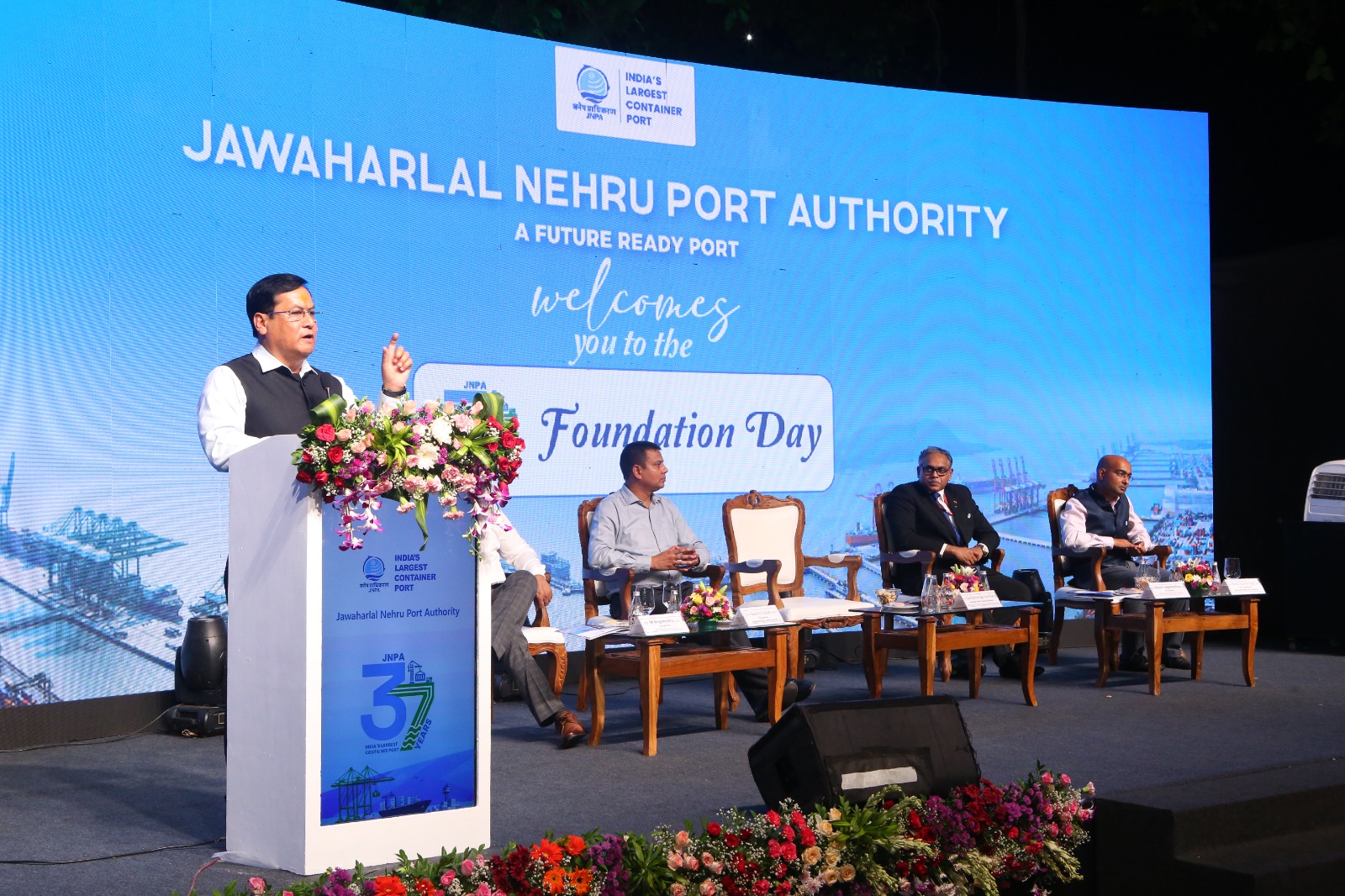
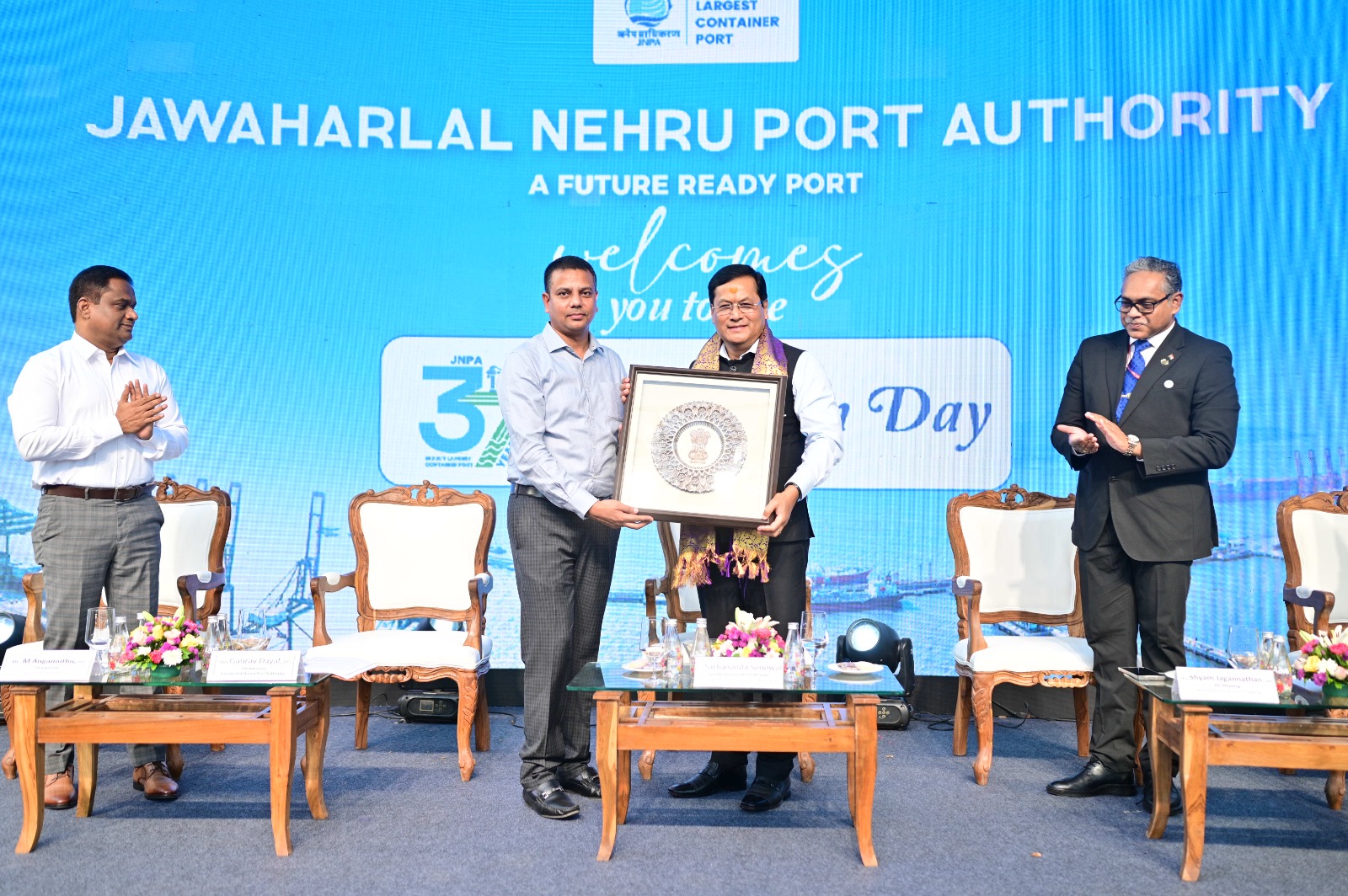
MUMBAI : Jawaharlal Nehru Port Authority (JNPA) – India’s Largest Container Port, celebrated its 37th Foundation Day with great enthusiasm and grandeur in the esteemed presence of Hon’ble Shri Sarbananda Sonowal, Union Minister of Ports, Shipping and Waterways along with other dignitaries.

During the event, JNPA’s corporate film showcasing the port’s journey, achievements, infrastructure capabilities, sustainability initiatives, and future vision was screened before the distinguished gathering. The celebration was followed by an Award Ceremony, where JNPA stakeholders were felicitated by the Hon’ble Union Minister for their exceptional contribution as JNPA achieved its highest-ever container throughput of 8.17 million TEUs in the financial year 2025-26, registering a robust 11.94% growth. JNPA also marked the highest ever overall throughput of 102 MMT signifying their dedicated service towards the port’s growth and operational excellence.

The Hon’ble minister also inaugurated JNPA’s newest innovation—NIVIDA. Developed by JNPA in collaboration with AI Transmute Solutions, NIVIDA is India’s first AI-driven tender evaluation engine. The Indigenous Vessel Traffic Services (iVTS) system was also inaugurated, marking a significant step towards strengthening indigenous maritime technology capabilities through its installation, management, and training initiatives.

Speaking at the occasion Hon’ble Union Minister of Ports, Shipping and Waterways, Shri Sarbananda Sonowal, said, “On this proud occasion of the 37th Foundation Day, I extend my heartfelt congratulations to the entire JNPA family — its leadership, officers, employees, workers, and stakeholders — for their dedication and contribution to the nation’s growth story. What is truly commendable about JNPA is its continuous pursuit of transformation and improvement. The MoUs being exchanged today and the inauguration of new technologies and initiatives are a reflection of this progressive mindset. In a sector where precision, speed, and adaptability are critical, even focus on incremental advancements have the potential to create significant impact across the entire maritime and logistics ecosystem.”

He added, “Under the visionary leadership of Hon’ble Prime Minister Narendra Modi, India’s maritime sector is witnessing unprecedented growth and modernisation through landmark initiatives that remain essential in achieving India’s vision of becoming a global maritime powerhouse. I am confident that JNPA will continue to set new benchmarks in operational efficiency, sustainability, innovation, and customer-centric services in the years ahead.”

The Foundation Day celebration also witnessed the signing and exchange of several Memorandums of Understanding (MoUs), reinforcing JNPA’s commitment towards infrastructure development, innovation, sustainability, and stakeholder collaboration. One MoU was signed between JNPA and CSIR- National Environmental Engineering Research Institute (NEERI) for environmental planning, assessment, pollution control, climate resilience and ESG initiatives. This MoU establishes a framework for institutional engagement between the JNPA and CSIR-NEERI to support sustainable and environmentally compliant port development.
Another MoU is signed between JNPA and Commissioner of Customs (General), Jawaharlal Nehru Custom House (JNCH)
 for safe, scientific, environmentally compliant and time-bound destruction of perishable cargo through in-situ biodegradation/composting/biogas processes. This MoU establishes a framework for cooperation between the JNPA and JNCH for efficient disposal of such cargo in compliance with statutory and environmental norms.

An MoU was signed between JNPA and Convergence Energy Services Limited (CESL)
for the development of EV Charging Stations and Battery Swapping Stations (BSS) within JNPA premises, including promotion of electric mobility, sustainable logistics, and green infrastructure.

Other important collaboration took place between JNPA and REC Power Development and Consultancy Limited through MoU for Providing Project Management Consultancy (PMC) services for extension of Shore Power Supply system at NSFT, NSICT, BMCT and NSIGT terminals at JNPA. Energy Efficiency Services Limited (EESL)
also signed an MoU with JNPA for Implementation of energy efficiency, solar power projects, BESS, lighting systems, and related infrastructure across JNPA buildings, ports, and colonies through PMC mode.

Indian Institute of Technology Madras (IITM) has associated with JNPA thorugh MoU for the development of collaborative solutions for the port and maritime sector, including modelling, simulation, dredging, navigation, monitoring systems, digital twins, Just –In-Time (JIT), iVTS and related indigenous technologies for JNPA and allied maritime facilities.

Shri Gaurav Dayal, IAS, Chairperson, JNPA, expressed his thoughts saying, “On the occasion of JNPA’s 37th Foundation Day, I extend my sincere gratitude to all our stakeholders, trade partners, terminal operators, board members, employees, and the entire port fraternity whose continued trust and collaboration have been integral to JNPA’s growth journey. As global trade corridors evolve and new economic opportunities emerge, the responsibility on JNPA becomes even greater. I am certain that with its institutional strength, progressive outlook, and collective commitment of all stakeholders, JNPA will continue to shape not just maritime growth but the broader trajectory of India’s development journey in the decades ahead.”

Several stakeholders from the maritime, logistics, trade, and port community also conveyed their wishes and appreciation on the occasion, acknowledging JNPA’s contribution towards strengthening India’s maritime sector and economic growth.The event concluded with the felicitation of the JNPA employess and a vote of thanks presented by Shri Ravish Kumar Singh, IRTS, Dy. Chairperson, JNPA, expressing gratitude to the dignitaries, board member, stakeholders, employees, and all associated partners for their continued support and participation in JNPA’s remarkable journey. In line with the guidance of the government of India during the prevailing Middle East situation, JNPA ensured that the event and associated activities were conducted with utmost responsibility, adhering strictly to all prescribed rules, protocols, and regulatory guidelines.

Special Recognitions for the year – 2025-26

  1. Container Terminal for handling highest container volume at JN Port in a year during 2025-26: m/s. Bharat Mumbai Container Terminals Pvt. Ltd. (BMCT) – 2.69 million teus.
  2. Container terminal for best vessel berth productivity at jn port in a year during 2025-26: m/s. Apm terminals-mumbai (apmt) – highest berth productivity of 114.86 moves/hour.
  3. Container terminal for best vessel crane productivity at in port in a year during 2025-26: m/s. Dp World (nsigt) – highest crane productivity of 30.15 moves /hour.
  4. Container terminal for highest growth in container handling volumes at jn port during 2025-26: m/s. Nhava sheva freeport terminal (nsft) – highest container voume growth of 40.87%.
  5. Terminal for contribution to modal shift at jn port in a year during 2025-26 :- m/s. Nhava sheva distribution terminal (nsdt) coils/slabs/rails/pipes) -1.13 million tonnes break bulk cargo (steel
  6. Centralized parking plaza for best direct port entry initiative at jn port in a year during 2025-26 m/s. Divvya cpp pvt. Ltd. Universal e-seal reader implementation with ocr/anpr camera for full gate automation.
  7. Shipping company for highest container volume handled at jn port in a year during 2025-26:- m/s. Msc agency india pvt ltd. 1.01 million teus.
  8. Company for highest steel coil volumes handled at jn port in a year during 2025-26:- m/s. Arcelor mittal nippon steel ltd 0.9 million mt.
  9. Container freight station (cfs) for highest import containers handled at jn port in a year during 2025-26: m/s. Allcargo terminals ltd. – 2,20,229 teus.
  10. Consignee for highest dry bulk cargo handled at jn port in a year during 2025-26: m/s. Ultratech cement ltd. – 1.96 million tonnes.
  11. Consignee for highest liquid cargo handled at jn port in a year during 2025-26: m/s. Indian oil corporation ltd. (Iocl)- 0.99 million tonnes.
  12. Tankfarm operator for highest liquid cargo handled at jn port in a year during 2025-26: m/s. Ganesh benzoplast ltd.- 1.23 million tonnes.
  13. Highest number of liquid vessels handled by a terminal operator in 2025-26-m/s. Bpcl-390 vessels.

India unveils Port Performance Index, maritime digital reforms to boost global competitiveness

Sarbananda Sonowal launches Unified Ship Recycling Portal for Ship Recycling Credit scheme to boost Indian shipbuilding

MUMBAI : India took another step towards modernising its maritime sector on Thursday with the launch of the Logistics Port Performance Index (LPPI) for FY 2024-25 and FOUR major digital initiatives aimed at improving governance, transparency and ease of doing business across the shipping ecosystem. The initiatives were launched by Union Minister of Ports, Shipping and Waterways (MoPSW), Sarbananda Sonowal during the 37th Foundation Day celebrations of the Jawaharlal Nehru Port Authority (JNPA) in Mumbai, Maharashtra.

The LPPI, developed under the Sagar Aankalan framework, is a national benchmarking mechanism designed to assess and improve the operational performance of Indian ports. The index aligns with the PM Gati Shakti National Master Plan, Maritime India Vision 2030 and Maritime Amrit Kaal Vision 2047, and seeks to strengthen India’s position in global logistics and maritime trade.

Speaking on the occasion, Sarbananda Sonowal said, “We have introduced the Logistics Port Performance Index (LPPI) for FY 2024-25. It is a major step towards improving the efficiency, transparency & global competitiveness of Indian ports. By promoting continuous improvement & global benchmarking, it will strengthen India’s position as a leading maritime power.”

The LPPI evaluates ports across three cargo segments dry bulk, liquid bulk and container cargo using operational indicators such as cargo handled, vessel turnaround time, berth idle time, pre-berthing waiting time, container dwell time and ship berth day output. The framework assigns equal weightage to absolute performance and year-on-year improvement, encouraging continuous enhancement of port operations.

Alongside the LPPI, Sonowal launched four digital initiatives developed by the Directorate General of Shipping (DGS) to improve service delivery, transparency and accountability for seafarers and maritime stakeholders.

The initiatives include a 24×7 Grievance Redressal Module under the e-Navik platform, a Ship Registration Module on the e-Samudra platform, a Medical Practitioner Module and a Unified Ship Recycling Credit Note Module.

Describing the grievance redressal platform as a major welfare measure for Indian seafarers, Sonowal said the system would allow grievances to be filed through multiple channels, including the e-Navik portal, toll-free helplines, WhatsApp and dedicated email services from anywhere in the world.

“Seafarers work far away from home, often under difficult and uncertain conditions. An effective grievance redressal mechanism is not merely an administrative necessity but a critical welfare and protection framework. It reflects the Modi Government’s responsibility as a maritime nation and reinforces India’s commitment to the principles of the Maritime Labour Convention, 2006,” Sarbananda Sonowal said.

The Union Minister described the digital ship registration module as an important flagging reform that would simplify vessel registration procedures and bring India’s maritime administration in line with major global shipping nations. The Medical Practitioner Module, Sonowal said, would streamline the registration and monitoring of doctors authorised to certify seafarers, while reducing the risk of fraudulent certifications.

Another key reform unveiled during the event was the Unified Ship Recycling Portal for Ship Recycling Credit scheme, part of the Government’s ₹70,000-crore maritime development package announced in 2025. Under the scheme, ship owners recycling vessels at Hong Kong Convention-compliant Indian yards can receive a credit note equivalent to 40 per cent of the vessel’s scrap value, redeemable against new shipbuilding projects in India.

The Union Minister Sarbananda Sonowal also lauded JNPA’s performance, noting that the port crossed 8 million TEUs and handled more than 102 million metric tonnes of cargo during FY 2025-26.

“Over the last 37 years, JNPA’s journey has mirrored the transformation of India’s maritime sector itself from a conventional port ecosystem to a globally competitive logistics and trade gateway. Today, with the Modi Government’s sustained effort to modernise, mechanise & digitise our ports, JNPA stands as a symbol of India’s growing economic strength, its renewed position as a key global player and with strong maritime capability,” Sonowal said.

The Union Minister added that initiatives such as the launch of the indigenous Vessel Traffic Service (VTS), the AI-powered tender evaluation platform NIVIDA, and multiple strategic MoUs signed during the event reflected the port’s commitment to innovation, sustainability and operational excellence.

“Under the dynamic leadership of Prime Minister Shri Narendra Modi ji, as India widens its stake in global trade evolution with newer emerging economic opportunities, India’s ports must continue to embrace technology, efficiency and sustainability to sustain the momentum. The reforms launched today will further strengthen India’s maritime ecosystem and support our vision of becoming a global maritime powerhouse,” the Union Minister said.

Among major performers, Paradip Port Authority topped the Dry Bulk Cargo category handling more than 5 million tonnes, while Sikka Port and Terminals led the Liquid Bulk Cargo segment. Mundra Port emerged as the highest-ranked port in the Container Cargo category handling more than 0.5 million TEUs. Jawaharlal Nehru Port Authority secured the second position among major container ports in the same category.

During his speech, the Union Minister underscored that India’s performance in global logistics rankings has improved significantly in recent years. Sonowal highlighted that India’s ranking in the World Bank’s Logistics Performance Index improved from 44th to 22nd position in the International Shipments category, while seven Indian ports featured among the world’s top 100 ports in the World Bank’s Container Port Performance Index 2024.

The event was attended by senior officials from the Ministry of Ports, Shipping and Waterways, the Directorate General of Shipping, Mumbai Port Authority, JNPA and representatives from the maritime, logistics and trade sectors.

Piyush Goyal holds high-level business and investment engagements with top global industry leaders in New York

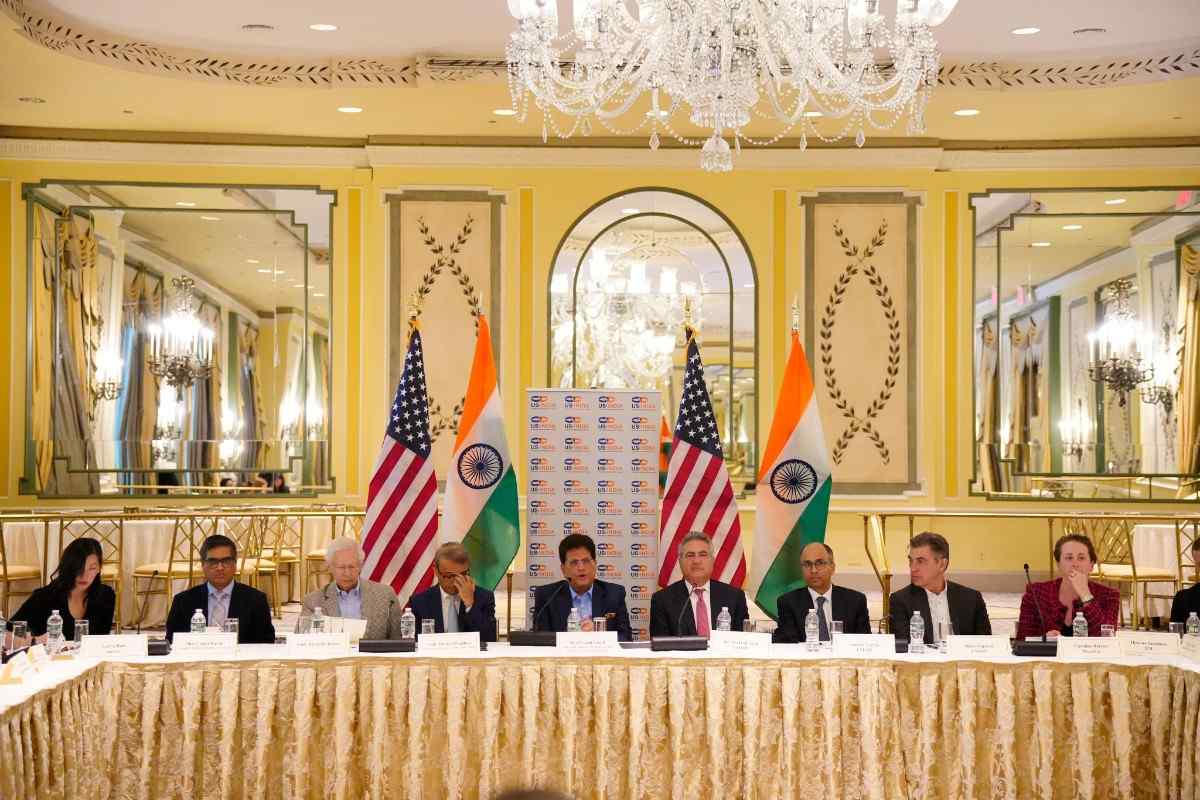
NEW YORK : Union Minister of Commerce And Industry, Shri Piyush Goyal, held a series of high-level business and investment engagements in New York on 28 May 2026 during his transit through the city.

During the visit, the Minister held one-to-one meetings with CEO of Carlyle Group, Mr. Harvey Schwartz; Chairman and CEO of Morgan Stanley, Mr. Ted Pick; Chairman of Warburg Pincus, Mr. Charles Kaye; Co-founder and CEO of Amneal Pharmaceuticals, Mr. Chintu Patel; and CEO of Mastercard, Mr. Michael Miebach.

The discussions focused on strengthening India–U.S. trade and investment linkages, expanding opportunities for global businesses in India, enhancing supply chain resilience, and advancing cooperation in areas such as financial services, healthcare, digital payments, manufacturing, innovation, artificial intelligence, and emerging technologies. The discussions also highlighted India’s growing attractiveness as a global investment destination.

The Minister also addressed a gathering of over 50 prominent business leaders from the investment and trade community at a business interaction organised in collaboration with the US-India Strategic Partnership Forum. The interaction provided an opportunity to exchange views on India’s strong growth trajectory, ongoing economic reforms, ease of doing business, sectors with potential for collaboration, and emerging investment opportunities across key sectors.

The engagements underscored growing global confidence in India’s economic outlook and reaffirmed the importance of deeper industry-to-industry collaboration between India and the United States.

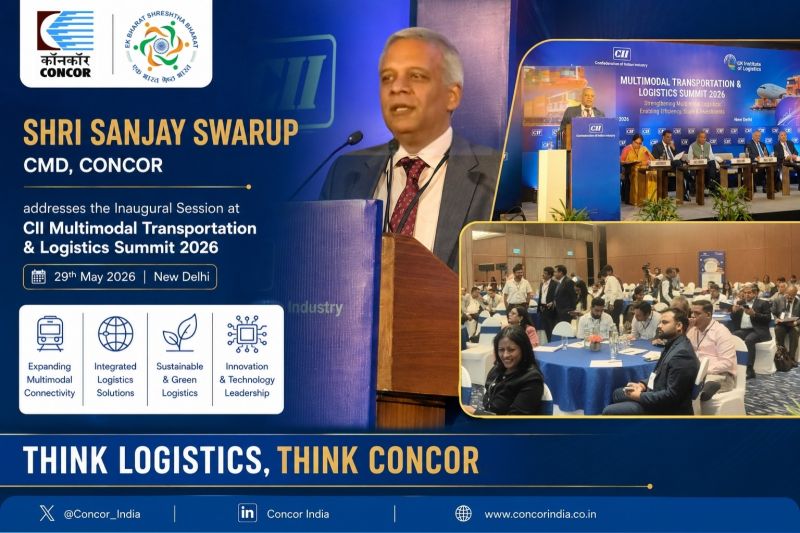
CONCOR Showcases Multimodal Growth Strategy and Green Logistics Vision at CII Multimodal Transportation & Logistics Summit 2026

NEW DELHI : Shri Sanjay Swarup, CMD, CONCOR, addressed the inaugural session of the CII Multimodal Transportation & Logistics Summit 2026 held here in New Delhi, themed “Strengthening Multimodal Logistics: Enabling Efficiency, Scale & Investments.”

During his address, Shri Swarup highlighted CONCOR’s expanding role in strengthening India’s multimodal logistics ecosystem through enhanced connectivity, infrastructure development, innovation, and sustainable logistics solutions.

He underscored CONCOR’s growing multimodal capabilities, including the enhanced Dedicated Freight Corridor (DFC) connectivity between NCR and JNPT, effective from June 1, 2026, aimed at improving efficiency, reducing transit time, and boosting cargo movement across key trade corridors. He also highlighted the company’s ongoing infrastructure expansion initiatives, indigenous container manufacturing efforts, and the strategic development of the Bharat Container Shipping Line (BCSL) to further strengthen integrated logistics services.

Emphasizing CONCOR’s customer-centric approach, Shri Swarup spoke about the organization’s comprehensive end-to-end logistics solutions supported by robust First Mile–Last Mile integration, enabling seamless and efficient cargo transportation across the supply chain.

Highlighting CONCOR’s commitment to sustainable and technology-driven logistics, he noted the deployment of LNG-powered trailers, Electric Vehicles (EVs), and Electric Reach Stackers (RSTs) as part of the company’s green mobility initiatives. He also emphasized the role of seamless IT-enabled solutions in enhancing operational efficiency, visibility, and customer service delivery.

Further, Shri Swarup outlined CONCOR’s collaborative initiatives with Indian Railways, including the launch of assured transit Container Train Services via Agra and Kanpur, Door-to-Door Parcel Services, and the development of the Integrated Logistics Hub at Sonik, aimed at strengthening multimodal connectivity and supporting India’s rapidly evolving logistics landscape.

Reaffirming CONCOR’s commitment to driving efficiency, scalability, and innovation in the logistics sector, Shri Swarup stated that the company remains focused on supporting India’s vision of developing a world-class, resilient, and sustainable multimodal logistics network.

Sagarmala Finance Corporation, India’s maritime lender set to launch country’s first blue bond

NEW DELHI : Sagarmala Finance Corporation is set to issue the country’s first ‘blue bond’, as it looks to diversify funding sources to lend towards developing maritime and coastal ​infrastructure, a top executive told Reuters on Friday.

A blue bond is a debt ‌security aimed at raising funds for ocean- and water-related projects, targeting investors that have a mandate to invest in bonds that have an environmental focus. While ‘green bonds’ used to fund climate change-related projects have seen a considerable pick-up, Sagarmala’s ​debt would be a first-of-its-kind blue bond in India.

Globally, just over $15 billion in blue bonds ​had been issued by mid-2025, according to World Bank data. In 2020, the Bank ⁠of China had issued Asia’s first blue bond, while some island nations like Seychelles ​have also raised debt via such securities.

Sagarmala, India’s state-owned maritime-focused lender, plans to raise up ​to 10 billion rupees ($105.08 million), including a greenshoe option of 5 billion rupees, Managing Director L.V.S. Sudhakar Babu told Reuters.

While the exact tenor and rate are yet to be decided, the company plans to use the bond ​issue for longer term borrowing. Sagarmala’s existing term loans have an average tenor of 3.5 ​years, while the average tenor of loans it disburses is about 12 years, creating an asset-liability mismatch, Babu said.

Trust Capital, AK ‌Capital ⁠and Tipsons have been appointed as advisers to the bond issue, for which a date is yet to be finalized.
“This will happen when the market is conducive and yields stabilise,” Babu said. India’s benchmark 10-year yield has risen around 35 basis points since the start of the U.S.-Iran war, denting ​activity in the bond ​market.

Established in 2016 ⁠under India’s Ministry of Ports, Shipping and Waterways, Sagarmala received a non-banking financial company licence in June 2025. Reuters had earlier reported that Sagarmala plans to ​raise as much as 100 billion rupees in financial year 2027 ​to finance projects ⁠that strengthen India’s maritime ecosystem, including greenfield and brownfield ports, last-mile port connectivity, shipbuilding, inland waterways and coastal road networks.

The company also administers the government’s 250-billion-rupee Maritime Development Fund, which includes ⁠a ​50-billion-rupee Interest Incentivisation Fund, allowing it to provide interest subsidies ​to borrowers. Sagarmala is also seeking a 20-billion-rupee equity infusion from the government to maintain a healthy debt-to-equity ratio as ​it expands its loan book.

Source : Reuters

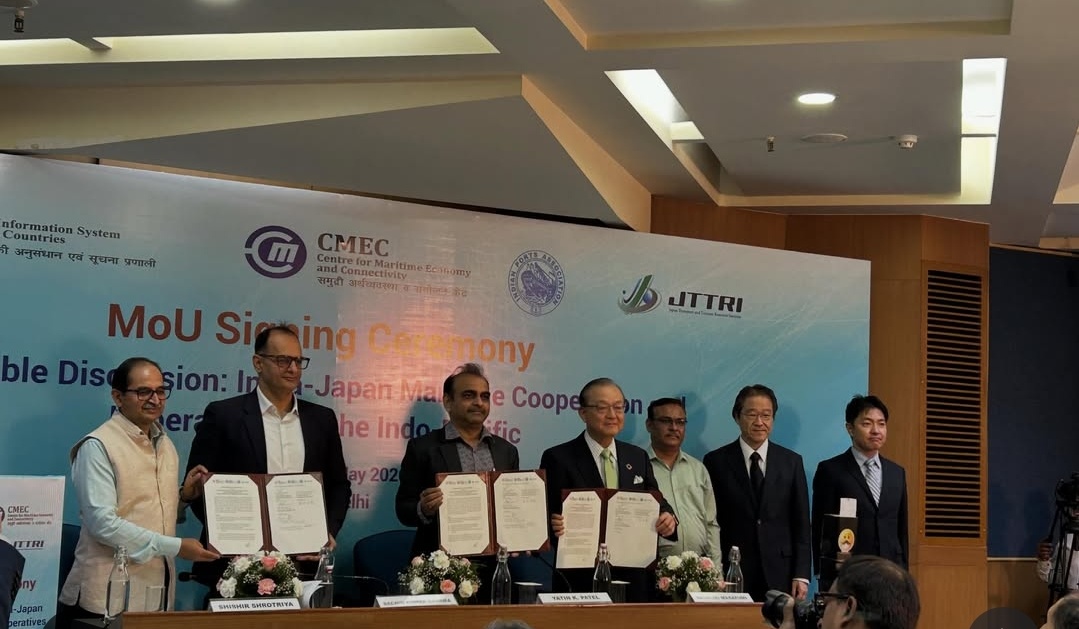
IPA, CMEC and JTTRI sign MoU to strengthen India–Japan Maritime Cooperation and Research Collaboration

NEW DELHI : A significant milestone in maritime cooperation as the Indian Ports Association (IPA), Centre for Maritime Economy and Connectivity (CMEC), and Japan Transport and Tourism Research Institute (JTTRI) have signed a Memorandum of Understanding (MoU).

The partnership seeks to strengthen cooperation in the areas of ports, maritime economy, logistics, transport connectivity, and sustainable maritime development. Through this collaboration, the three institutions will work together to promote academic exchange, undertake joint research initiatives, and facilitate knowledge sharing between India and Japan’s maritime and transport sectors.

The MoU is expected to create a robust platform for collaborative studies, policy dialogue, capacity building programmes, expert interactions, seminars, workshops, and exchange of best practices in port management, maritime trade, infrastructure development, and multimodal transport connectivity.

The agreement reflects a shared commitment to advancing innovation, enhancing technical expertise, and supporting evidence-based policymaking to address emerging opportunities and challenges in the global maritime ecosystem. It also underlines the importance of strengthening institutional linkages to drive resilient, efficient, and future-ready maritime and logistics networks.

By bringing together leading institutions from India and Japan, the collaboration aims to contribute towards sustainable maritime growth, improved regional connectivity, and stronger bilateral engagement in the maritime domain, further reinforcing the strategic partnership between the two countries.

The initiative marks another important milestone in expanding international cooperation in the maritime sector and promoting collaborative approaches to shaping the future of global transport and port-led economic development.

RBI and State Bank of Vietnam sign MoU on May 5, 2026 to strengthen digital payments and financial innovation

NEW DELHI : The Reserve Bank of India and the State Bank of Vietnam on 05.05.2026 signed a Memorandum of Understanding (MoU) to promote cooperation in financial innovation and digital payments, including information sharing, regulatory coordination, and payment system connectivity for cross-border QR Code-based merchant payments.

The MoU marks a forward-looking and substantive step towards strengthening bilateral cooperation in financial innovation and digital payments, with potential to enhance cross-border payment linkages and position India as a major fintech hub.

With the approval of the Union Cabinet, the Reserve Bank of India (RBI) and the State Bank of Vietnam (SBV) signed a Memorandum of Understanding (MoU) on 05.05.2026 for cooperation in financial innovation and digital payments. The Reserve Bank of India (RBI) and the State Bank of Vietnam (SBV) aim to deepen cooperation in areas of financial innovations and digital payments by facilitating potential joint innovation and digital payment programs and projects, including the development of connectivity in payments system to enable cross-border transactions between the two countries for QR code-based merchant payments.

Brief of the MoU

The MoU is a statement of intent between RBI and SBV to cooperate in the area of financial innovation and digital payments. It is intended to provide a broad framework for collaboration, information exchange and implementation support, to the extent permitted by the applicable laws, rules and regulations governing the two Parties.
The scope of cooperation under the MoU covers, inter alia, information sharing on emerging market trends and developments, standards and best practices in digital payments and innovative technologies, regulatory frameworks pertaining to innovations, and the development and oversight of digital payments in financial services. The MoU also provides for potential joint programmes and projects, including payment system connectivity for cross-border QR Code-based merchant payments between India and Viet Nam.
MoU is expected to enable greater efficiency in processing of cross-border transaction between two countries and make these transactions a transparent (upfront display of charges), convenient, real-time manner, and more cost-efficient. Also, facilitate trade and tourism between two countries to provide greater export opportunities to businesses in India.
The Deputy Governor, RBI and the Deputy Governor, SBV, have signed the MoU.
Major impact, including employment generation potential

This Memorandum of Understanding between the Reserve Bank of India and the State Bank of Vietnam, is primarily a regulatory cooperation framework that is essential for maintaining smooth cross-border financial activities. It essentially envisages a mechanism for cooperation and information exchange in the area of fast payment systems, messaging system and card switches.