Home Blog Page 614

Women in Maritime Leadership: IMO-WMU-WISTA Training Course equips future leaders

LONDON : Breaking the glass ceiling in the maritime sector requires a wide range of skills, including strong leadership capabilities. This is precisely the focus of the Women’s Leadership and Empowerment (WLE) training course, commissioned by the International Maritime Organization (IMO) and developed by the World Maritime University (WMU).

Held in a hybrid format, with five remote days and five in-person days at WMU in Malmö, Sweden, (6-10 October) the course brought together 13 women from developing countries sponsored by the IMO, along with two additional private sector participants sponsored by the Women’s International Shipping & Trading Association (WISTA International) and two WMU PhD students.

The programme is designed to cultivate confident, capable leaders who can navigate complex maritime challenges, motivate their teams, and foster innovative solutions across the industry.

The WLE course covers a variety of modules, including critical thinking, gender mainstreaming, strategic thinking, entrepreneurship, and leadership. But what sets this course apart is its integrated approach, blending technical project management training with the development of interpersonal and managerial skills. Collaborative learning and group activities are central to the programme, enabling participants to translate theoretical concepts into practical applications.

This initiative supports gender equality and empowerment efforts in maritime, contributing to Sustainable Development Goal 5 (Gender Equality).

Looking ahead, these women will carry the valuable lessons learned back to their home countries, inspiring positive change and innovation in the maritime sector. Their experience also reinforces a powerful truth: they belong in this industry and are key drivers of its future.

Asia-Europe container freight collapses to multiyear Lows

NEW YORK: The third quarter of 2025 marked a dramatic reversal for the European container freight market, with spot rates sliding steadily to their lowest levels since late 2023. Carriers attempted to offset falling load factors with blank sailings and general rate increases (GRIs), but persistent oversupply and weakening demand left sentiment firmly bearish heading into Q4.

July: GRIs falter as summer lull sets in
The quarter began with some early strength, as successful GRIs and capacity constraints lifted rates in the first half of July. PCR1 – North Asia to North Europe – reached $3,500/FEU in early July before easing to $3,100/FEU by month-end. PCR3 – North Asia to Mediterranean – fell more sharply, from $3,800/FEU at the start of the month to $3,000/FEU by July 31, reflecting weaker southern European demand.

Market participants cited muted peak-season volumes and operational bottlenecks as key drivers of the decline. Blank sailings and congestion at Rotterdam, Antwerp, and London Gateway added to volatility.

August: Relentless erosion to sub-$2,000 levels
August delivered sustained weakness across both trades. PCR1 dropped from $2,900/FEU at the start of the month to $2,000/FEU by Aug. 30, marking seven consecutive weeks of decline. PCR3 initially held steady at $2,500/FEU, but pressure built as redeployed tonnage weighed on volumes.

“Rates are chaotic – extra loaders have undercut the market, and carriers are being forced to chase cargo with ever-lower FAK levels,” one carrier said.

The fallout from the Aug. 13 fire on the Marie Maersk also heightened uncertainty. Forwarders reported little difficulty in securing space, with sub-$2,000/FEU levels seen increasingly likely into September.

September: Collapse to new lows, GRIs announced
September brought the sharpest falls of the year, pushing rates to fresh multiyear lows. PCR1 fell from $1,700/FEU in early September to $1,300/FEU by Sept. 26, with forwarders reporting deals as low as $1,100–$1,200/FEU on base port runs. PCR3 mirrored the trend, dropping from $2,100/FEU in early September to $1,600/FEU at month-end.

“We can’t afford to keep rate levels at $1,300 – even the big boys need $1,800/FEU to break even,” a carrier source said. Forwarders were unconvinced by attempts to lift rates, with one noting, “Carriers are dreaming as always. Where are the cargoes going to come from? Even Chinese New Year isn’t until February.”

Carriers announced GRIs targeting $2,000/FEU to North Europe for the second half of October, alongside deeper blank sailing programs. But sources said the measures were unlikely to stick until seasonal cargo flows returned in November.

Operational dynamics and tenders
Congestion eased at North European ports by late September, with waiting times reduced to less than a day as the summer peak ended. But weather disruptions in China and northern Vietnam kept Asian congestion elevated.

The volatility also strained contract negotiations. “When you start talks with rates around $1,200/FEU, you’re coming from a weak point. Carriers are pushing back on tenders because they need a GRI to strengthen their position,” a forwarder said, noting that the major shippers are pressing for lower rates. Some BCOs were already targeting $1,300–$1,400/FEU for 2026 contracts.

Long-term rate launch
On Oct. 1, Platts, part of S&P Global Commodity Insights, launched a new long-term container freight assessment covering the North Asia-North Europe front-haul trade. Published weekly, the assessment captures contracted rates between carriers and shippers, offering increased transparency alongside existing spot benchmarks. The new price series comes as tender season intensifies, providing market participants with an independent view of longer-term freight market dynamics.

Outlook: Skepticism into Q4
Market participants expect bearish sentiment to dominate into October, with any recovery contingent on successful GRIs and a seasonal pickup in demand by November.

“At one point carriers will have to push the rate up to create a suitable market environment for 2026 – but right now, it’s far too early,” a London-based forwarder said.

Source: Platts

dnata logistics and Trade Tech Partner to meet Critical UAE MPCI requirements for WACO Members

DUBAI : dnata logistics, WACO member for the UAE, is partnering with Trade Tech, a global logistics platform and WACO vendor member. Together, they will provide seamless and secure cargo filing for the Maritime Preload Cargo Information (MPCI) regulations now in place for all ocean freight cargo imports into the United Arab Emirates.

As the UAE becomes the latest country to introduce new cargo security requirements, dnata logistics and Trade Tech will play vital roles in ensuring full compliance for shipments destined for the UAE, including those handled on behalf of WACO. The MPCI program mandates the electronic submission of containerized cargo information at least 24 hours prior to cargo loading from the port of loading outside the UAE, enhancing cargo visibility and security.

“dnata logistics’ role as the UAE member for WACO highlights the importance of trusted local expertise to navigate evolving regulatory landscapes,” said Mark Simon, Commercial Director at dnata logistics. “Our partnership with Trade Tech enables us to offer our clients, including WACO members, a streamlined platform that simplifies MPCI filings and ensures compliance.”

Trade Tech’s cloud-based logistics platform offers a single point of visibility and control for forwarders and logistics providers. It delivers robust functionality to reduce errors, improve efficiency, and mitigate risk. This collaboration enables dnata logistics and WACO to confidently meet MPCI obligations and maintain smooth cargo flow into the UAE market.

“Compliance with MPCI is non-negotiable for importers and freight forwarders. Trade Tech is committed to supporting industry partners like dnata logistics and WACO with reliable solutions that make filing easier and more accurate. Each new 24-hour regulation highlights the growing need for visibility across the supply chain. As data remains difficult to access from origin, the industry should view these compliance programs as an opportunity to improve transparency and efficiency,” said Bryn Heimbeck, Trade Tech’s President and Co-Founder.

“Collaboration is at the core of WACO’s success – our network connects companies, allowing them to leverage their strengths and share their expert knowledge, to support their growth and that of other members,” said Richard Charles, CEO of WACO, the global network for collaborative logistics. “This is an excellent example of WACO in action.”

This partnership underscores the growing importance of integrated digital platforms and local expertise in adapting to evolving global trade security standards, especially as the UAE-based entity remains legally liable for all MPCI filings, making reliable compliance solutions essential. It also highlights the benefits of being a WACO member, as the independent network of 120 organizations was created to facilitate global cooperation in freight and logistics.

About dnata logistics

dnata logistics is an international freight forwarder and logistics provider, located in Dubai (UAE). The location offers premium logistics services to businesses worldwide. Our personal service and expert knowledge of freight forwarding is unrivalled.

We provide seamless integration of various transportation modes such as Sea freight, Airfreight and Road freight, as well as diversified logistics services in Warehousing, Material Handling, (Re-) Packaging with 24/7 security service. dnata logistics can deal with every type of transportation job, beginning with worldwide door-to-door delivery including custom clearance and special goods handling for bulky, dangerous or perishable goods.

About Trade Tech

Since 1997, Trade Tech, Inc. has provided global logistics solutions that connect shippers, importers, Customs House Brokers, NVOCCs, carriers, global logistics providers, truckers, and warehouses. The company enables full visibility across the supply chain. With its multi-tenant, cloud-based platform, Trade Tech enhances connectivity, reduces operational costs, and minimizes errors for clients worldwide, without the need for software downloads.

About WACO

WACO is the global network for collaborative logistics, connecting independent freight and logistics companies since 1973. Today, WACO supports over 120 carefully selected members in more than 115 countries, enabling them to share resources, local expertise, and collaborate worldwide. Together, WACO members form a trusted network that delivers seamless, global logistics solutions, generating a combined annual turnover of USD 4 billion. WACO connects more than 21,000 freight professionals and moves over one million tonnes of air freight cargo annually.

Baltic hits two-week high after China pledges additional port fees on US ships

LONDON: The Baltic Exchange’s dry bulk sea freight index, which monitors rates for vessels moving dry bulk commodities, hit a two-week high on Monday on expectations of higher shipping costs after China pledged to charge additional ports fees for U.S. ships.

The main index, which factors in rates for capesize, panamax and supramax shipping vessels, rose 208 points, or 10.7%, to 2,144 points, its highest since September 29.

China will slap port fees on U.S.-owned, operated, built, or flagged vessels on Tuesday as a countermeasure to U.S. port fees on China-linked ships starting the same day, China’s transport ministry said on Friday.

“The latest geopolitical developments are creating the potential for further disruption. Container freight rates… are seeing some near-term upside as operators raise rates in anticipation of a disruption,” analysts at Jefferies said in a note.

The capesize index rose 593 points, or 21.2% to 3,392 points, touching its highest since September 29.

Average daily earnings for capesize vessels, which typically transport 150,000-ton cargoes such as iron ore and coal, increased by $4,916 to $28,132.

Iron ore futures gained as robust steel exports in top consumer China, along with lower ore shipments, outweighed concerns over renewed Sino-U.S. trade tensions.

The panamax index rose 42 points to 1,806 points.

Average daily earnings for panamax vessels, which usually carry 60,000-70,000 tons of coal or grain, rose by $384 to $16,257.

Among smaller vessels, the supramax index fell 2 points to 1,400 points.
Source: Reuters

Black Sea littoral countries target better enforcement of IMO liability and compensation conventions

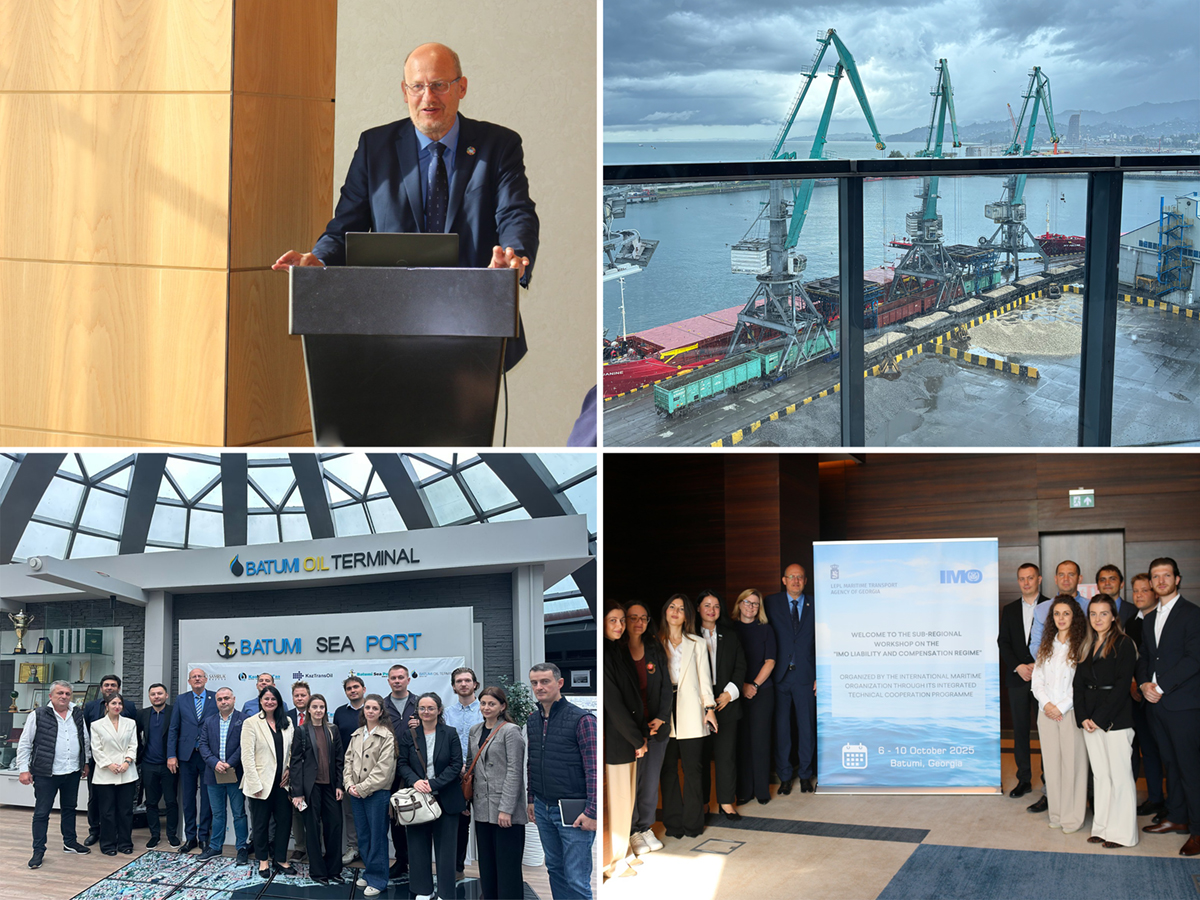
BATUMI : Maritime stakeholders from Georgia, Republic of Moldova, Türkiye and Ukraine have strengthened their capacity to enforce the IMO liability and compensation regime, following a workshop held in Batumi, Georgia (6-11 October).

The IMO liability and compensation regime ensures that victims of maritime incidents receive prompt and adequate compensation, while establishing clear, uniform and limited liability rules for shipowners to ensure a level playing field for safe and clean shipping in the region.

The Maritime Transport Agency of Georgia, in cooperation with IMO, hosted the Sub-regional workshop, bringing together representatives of maritime administrations and legal practitioners in the Black Sea region to enhance their understanding and improve application of key international conventions governing maritime liability and compensation, including:

the International Convention on Civil Liability for Oil Pollution Damage (1992 CLC);
the International Convention on the Establishment of an International Fund for Compensation for Oil Pollution Damage (1992 Fund Convention);
the Protocol on Liability and Compensation for Damage in Connection with the Carriage of Hazardous and Noxious Substances by Sea (2010 HNS Convention);
the International Convention on Civil Liability for Bunker Oil Pollution Damage (2001 Bunkers Convention);
the Nairobi International Convention on the Removal of Wrecks (2007 Nairobi WRC); and
the International Convention on Salvage (1989 Salvage Convention).
Opening the workshop, Maritime Transport Agency of Georgia representative Mr. David Varshanidze encouraged all participating Member States to accede to and fully implement all relevant IMO instruments on liability and compensation for maritime transport. This would help ensure that costs arising from maritime incidents are properly covered and also enhance sustainable shipping, noting recent incidents where compensation for damages was inadequate or where ships just lacked the relevant insurance coverage.

Presentations were delivered by a team from the IMO Legal and External Relations Division, the IOPC Funds Secretariat, and the P & I Clubs, alongside contributions from national representatives highlighting their domestic law-making and implementation processes. These exchanges highlighted national experiences and challenges in aligning with IMO conventions.

The workshop is expected to contribute to the ratification, implementation and enforcement of the IMO’s liability and compensation instruments across all participating Member States.

MoPSW Secretary reviews operational performance and future plans at SMP Kolkata

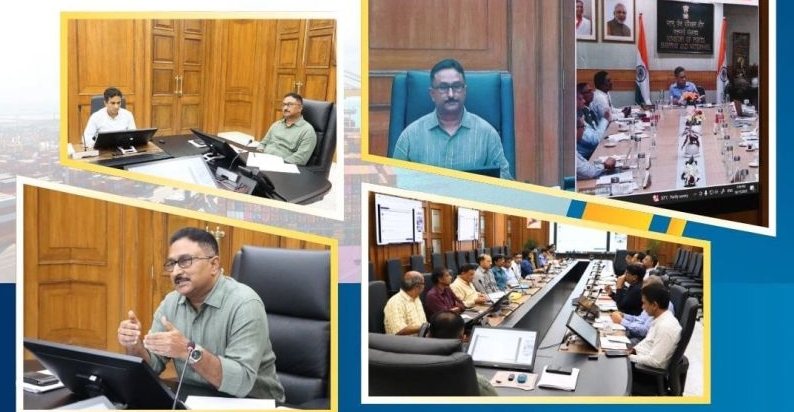
KOLKATA: Shri Vijay Kumar, IAS, Secretary, Ministry of Ports, Shipping and Waterways (MoPSW), chaired a high-level Port Operations Review Meeting at Syama Prasad Mookerjee Port, Kolkata (SMPK) on last Saturday ( 11 September, 2025), aimed at assessing progress, enhancing operational efficiency, and setting the roadmap for future growth.

During the meeting, SMPK Chairman Mr. Rathendra Raman presented key updates on the port’s ongoing infrastructure projects, operational improvements, and forward-looking logistics strategies designed to align with India’s Maritime Amrit Kaal Vision 2047. The review focused on initiatives that promote modernization, digitalization, and sustainability across the port’s operations.

Mr. Samrat R., Deputy Chairman of SMPK, along with senior officials from the Kolkata Dock System and Haldia Dock Complex, participated in the discussions. The deliberations underscored the ministry’s continued emphasis on driving efficiency, improving cargo handling performance, and strengthening multimodal connectivity to support India’s growing trade ecosystem.

The meeting reaffirmed the collective commitment of MoPSW and SMPK to steering towards smarter, faster, and more efficient port operations — ensuring that Kolkata remains a pivotal gateway for maritime trade in the eastern region.

IAS Gaurav Dayal appointed as Chairperson of JNPA

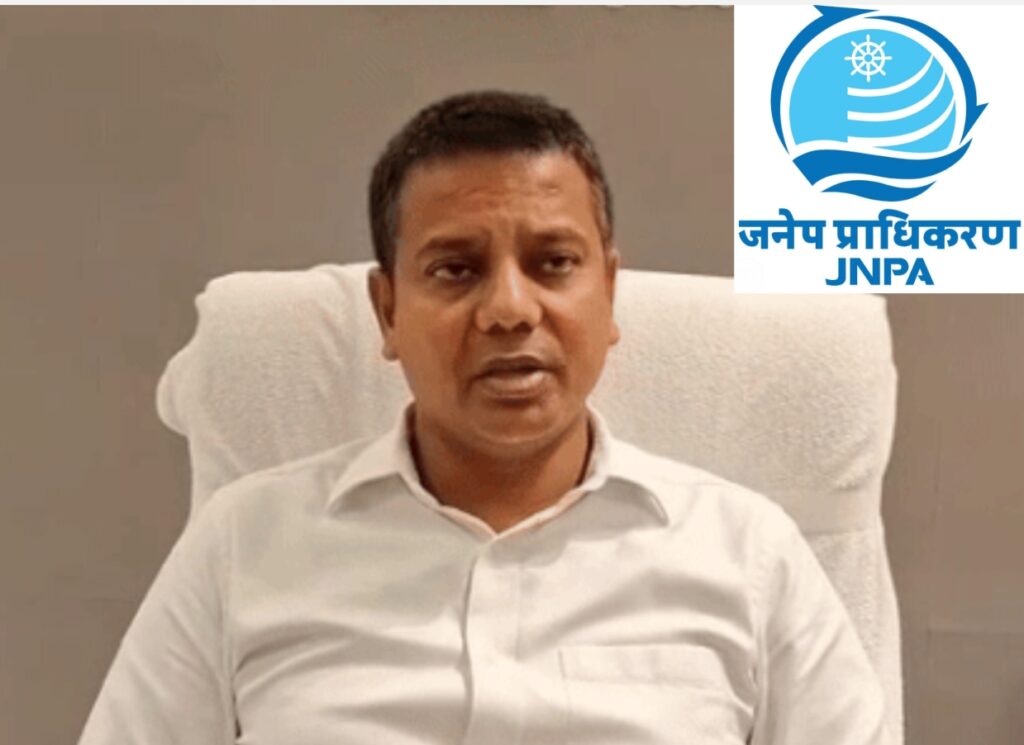
NAVI MUMBAI : Senior Indian Administrative Service (IAS) officer Gaurav Dayal has been appointed as the new Chairperson of the Jawaharlal Nehru Port Authority (JNPA), Navi Mumbai. His appointment was formally cleared by the Appointments Committee of the Cabinet (ACC), as per an official order issued by the Department of Personnel and Training (DoPT) on October 11, 2025.

Mr Dayal, who was serving as Secretary to the Government of Uttar Pradesh in the Home and Vigilance Department, replaces Sanjay Sethi , who completed his five-year term in January 2024. Since then, the post was being handled as an additional charge by JNPA’s Deputy Chairman, Unmesh Wagh.

Second Successive Non-Maharashtra Cadre IAS Officer at Helm

The appointment of Gaurav Dayal marks the second recent instance of an IAS officer from outside the Maharashtra cadre being chosen to lead JNPA – India’s busiest state-owned container port. Historically, the Chairperson roles at JNPA and Mumbai Port Authority have been held by officers from the Maharashtra cadre. However, exceptions are becoming more common.

Previously, L Radhakrishnan from the Kerala cadre led JNPA between 2009 and 2013. More recently, M Angamuthu, an IAS officer from the Assam-Meghalaya cadre, was appointed as Chairman of the Mumbai Port Authority.

A Distinguished Career in Public Administration

Born on July 27, 1979, Gaurav Dayal is an IAS officer from the 2004 batch of the Uttar Pradesh cadre. A graduate with a B.Sc. in Physics, Dayal is proficient in English and Hindi. Over the years, he has held several key positions in Uttar Pradesh’s state administration.

His vast experience includes serving as District Magistrate in multiple districts such as Ayodhya, Etah, Jaunpur, Muzaffarnagar, and Jhansi. He has also served as Divisional Commissioner in Chitrakoot, Aligarh, and Ayodhya divisions. In addition, he has held various responsibilities as Special Secretary across several departments within the state government.

His elevation to a strategic post at the national level is being seen as a recognition of his administrative acumen and successful tenure in multiple challenging roles in the state bureaucracy.

As per the DoPT order, Dayal’s appointment to JNPA is at the Joint Secretary level and is for a period of five years from the date he assumes charge, or until further orders — whichever is earlier.

The Jawaharlal Nehru Port Authority is a critical hub in India’s maritime and logistics sector, and the appointment of a full-time Chairperson is expected to provide leadership stability and policy continuity after a prolonged vacancy.

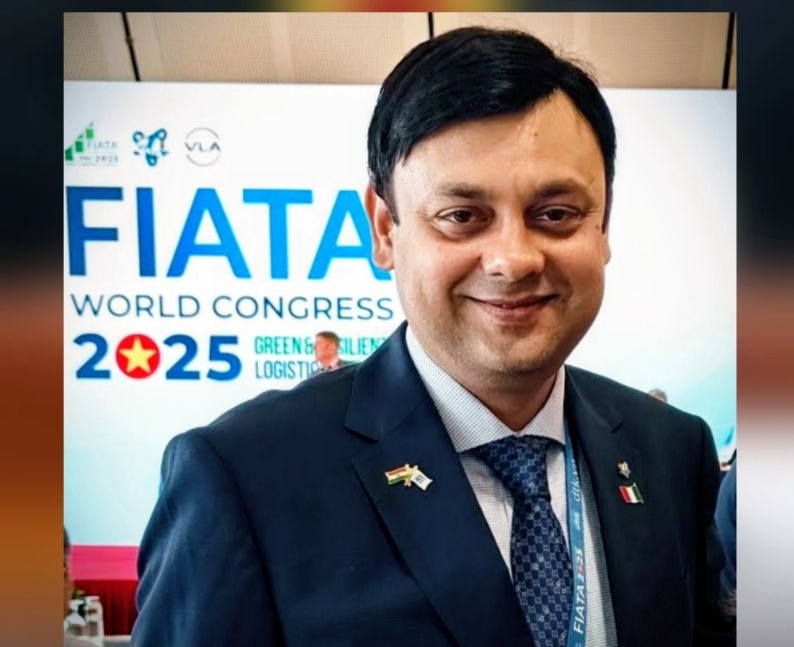
Tej Contractor, President of IIFF, Elected as Vice President of FIATA for the Term 2025–2027

HANOI/MUMBAI: A Proud Moment for India and the Freight Forwarding Fraternity.

The FFFAI – FEDERATION OF FREIGHT FORWARDERS’ ASSOCIATIONS IN INDIA is delighted to announce that Mr. Tej Contractor, President of the Indian Institute of Freight Forwarders IIFF – the training arm of FFFAI – has been elected as Vice President of the FIATA (International Federation of Freight Forwarders Associations) for the term 2025–2027, at the FIATA General Meeting held in Vietnam, informs a FFFAI communique.

This momentous occasion marks a proud milestone for India, as the Vice President position returns to FFFAI’s fold after his father, Late Mr. Mayur C Contractor who was Senior Vice President of FIATA in 2007.

Mr. Contractor’s election stands as a testament to his visionary leadership, unwavering dedication to professional education in logistics, and his active engagement within FIATA’s global network. Through his initiatives with IIFF, he has been instrumental in promoting capacity building, skill enhancement, and international collaboration in the freight forwarding industry.

The FFFAI fraternity extends its heartiest congratulations to Mr. Tej Contractor on this significant achievement, which not only brings pride to Indian freight forwarders but also enhances India’s representation at the highest global platform for hashtag#logistics and hashtag#freightforwarding.

FFFAI Chairman Mr. Amit Kamat , Immediate Past Chairman Mr. Dushyant Mulani , Chairman Elect Mr. S. Nataraja, along with other Office Bearers and Executive Committee members congratulated Mr. Contractor, expressing confidence that his presence on the FIATA Board will further strengthen India’s voice and contribute to the advancement of the global logistics community.

FIATA Members Elect New Team of Freight Forwarding Leaders to Shape the Future of Global Logistics

HANOI: FIATA International Federation of Freight Forwarders Associations (FIATA) is pleased to announce the election of a new team of freight forwarding leaders to its Presidency, Extended Board, and Chairs of Institutes, Regions, and Advisory Bodies. This election also marks a historic milestone for FIATA, with the election of the first woman to the FIATA Presidency.

Elected during the 2025 FIATA Electoral General Meeting held on 10 October 2025, this new team brings together a diverse group of industry leaders committed to advancing FIATA’s mission and shaping the future of logistics.

FIATA Presidency

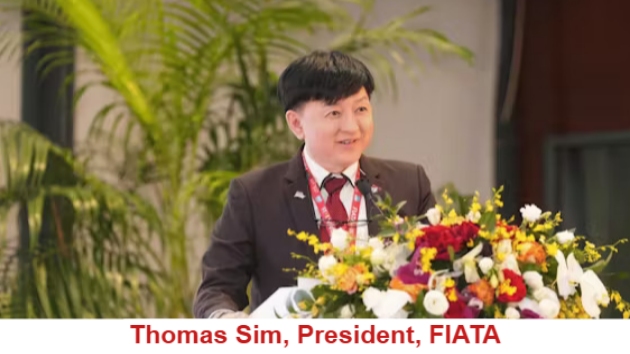
President: Thomas Sim, Singapore Logistics Association (SLA), Singapore

Immediate Past President: Turgut Erkeskin, Association of International Forwarding and Logistics Service Providers (UTIKAD), Türkiye

Senior Vice Presidents:

  • Jens Roemer, FORWARD Belgium W.E.B., Belgium
  • Nadia Abdul Aziz, National Association of Freight and Logistics (NAFL), United Arab Emirates
  • Yukki Hanafi Nugrahawan, Indonesian Logistics and Forwarders Association (ILFA), Indonesia

Treasurer: Neil Taylor, Asociacion Logistica de Chile (ALOG), Chile

Secretary General: Keshav Tanna, Air Cargo Agents Association of India (ACAAI), India

FIATA Extended Board

The Extended Board is composed of Vice Presidents and Chairs of Institutes, Advisory Bodies and Regional Bodies:

Vice-Presidents

  • Stephen Adjokatcher, Ghana Institute Of Freight Forwarders (GIFF), Ghana
  • Tej Contractor, Federation of Freight Forwarders’ Associations in India (FFFAI), India
  • Mauro Da Ros, Federazione Nazionale delle Imprese
    di Spedizioni Internazionali (FEDESPEDI), Italy
  • Dao Trong Khoa, Vietnam Logistics Business Association
     (VLA), Vietnam
  • Guillermo Gonzalez Larsen, Federación Colombiana de Agentes Logísticos en Comercio Internacional (Fitac), Colombia
  • Kaoutar Guessous, Association des Freight Forwarders du Maroc (AFFM), Morocco
  • Ahmed Khaleel Mustafa, Egyptian International Freight Forwarding Association (EIFFA), Egypt
  • Sheila Mashiri, The Shipping & Forwarding Agents’ Association of Zimbabwe (SFAAZ), Zimbabwe
  • Farid Saffarzadeh, International Transport Companies Association of Iran (ITCA), Iran
  • Angel Sanchez, Asociación Panameña de Agencias de Carga (APAC), Panama
  • Edward John Urio, Tanzania Freight Forwarders Association (TAFFA), Tanzania
  • Adelaide Yang, Taiwan Freight Logistics Association (TFLA), Chinese Taipei

FIATA’s Institutes, Advisory Bodies, and Regional Bodies, play a vital role in advancing the organisation’s technical expertise, regional coordination, and policy engagement. Through these entities, FIATA ensures that the voice of freight forwarders is represented globally, fostering knowledge exchange, capacity building, and harmonised standards across the international supply chain.

Institutes

  • Chair of the Air Freight Institute (AFI): Dawit Woubishet, Ethiopian Freight Forwarders and Shipping Agents Association (EFFSAA), Ethiopia
  • Chair of Customs Affairs Institute (CAI): Steve Parker,  British International Freight Association (BIFA), United Kingdom
  • Chair of the FIATA Logistics Institute (FLI): Alperen Guler, Turkish Forwarding and Logistics Association (UTIKAD), Türkiye
  • Chair of the Multimodal Transport Institute (MTI): Mark Bromley, British International Freight Association (BIFA), United Kingdom


Advisory Bodies

  • Chair of the Advisory Body on Legal Matters (ABLM): Yuntao Yang, China International Freight Forwarders Association (CIFA), China
  • Chair of the Advisory Body on Safety and Security (ABSS): Niels Beuck, Bundesverband Spedition und Logistik (DSLV), Germany


Regions

  • Chair of the FIATA Region Africa and the Middle East (RAME): Ali Al Mesned, Qatar Association for Freight Forwarding and Logistics (QAFL), Qatar
  • Vice-Chair of the FIATA Region Africa and the Middle East (RAME): Ahmad Abdul Razeq, National Association of Freight and Logistics (NAFL), United Arab Emirates
     
  • Chair of the FIATA Region Americas (RAMs): Miguel Espinosa, Federación Colombiana de Agentes Logísticos en Comercio Internacional (Fitac), Colombia
     
  • Chair of the FIATA Region Asia-Pacific (RAP): Minh Duy Nguyen, Vietnam Logistics Business Association (VLA), Vietnam
  • Vice-Chair of the FIATA Region Asia-Pacific (RAP): Samir Shah, Air Cargo Agents Association of India (ACAAI), India
     
  • Chair of the FIATA Region Europe (REU): Antonella Straulino, Federazione Nazionale delle Imprese di Spedizioni Internazionali (FEDESPEDI), Italy
  • Vice-Chair of the FIATA Region Europe (REU): Tomas Arvidsson, Swedish International Freight Association (SIFA), Sweden

The outgoing President, Turgut Erkeskin, expressed his confidence in the presidency of Mr Thomas Sim and pledged his full support. FIATA extends its sincere appreciation to Mr Turgut Erkeskin and the outgoing Presidency, Extended Board, and Chairs for their leadership, dedication, and service to the global freight forwarding community. With their support, FIATA has strengthened its position as the global voice of freight forwarders, advancing digitalisation, sustainability, and collaboration across the logistics sector.

As the newly elected Presidency, led by Dr Thomas Sim, begins its mandate, FIATA looks forward to building on these achievements and continuing to foster unity, innovation, and representation across all regions.

Reflecting on his election, Dr Sim shared his vision for the Federation and the freight forwarding community: “As your President, I pledge to continue serving with humility, transparency, and dedication—to be a bridge between cultures, sectors, and generations with collaborative spirit, ensuring that our Federation (FIATA) remains not just relevant, but indispensable in shaping the future of logistics and trade. In this interconnected world, FIATA’s strength lies in our diversity and our shared vision of facilitating trade for prosperity. Our true strength lies in unity—in the collaboration of thousands of members across continents who believe in the same mission: to connect the world through logistics, to facilitate trade, and to create prosperity.”

This diverse and experienced leadership team reflects FIATA’s commitment to representing the global freight forwarding community and driving collaboration across all regions. With renewed vision and unity, the new FIATA Presidency and governance structure will continue to advance the interests of freight forwarders worldwide and support the industry’s sustainable growth and digital transformation.

About FIATA
FIATA International Federation of Freight Forwarders Associations is a non-governmental, membership-based organisation representing freight forwarders in some 150 territories. FIATA’s membership is composed of 111 Associations Members and more than 6,000 Individual Members, overall representing an industry of over 40,000 freight forwarding and logistics firms worldwide. Based in Geneva, FIATA is ‘the global voice of freight logistics’.

Vietnam PM addresses FIATA World Congress 2025

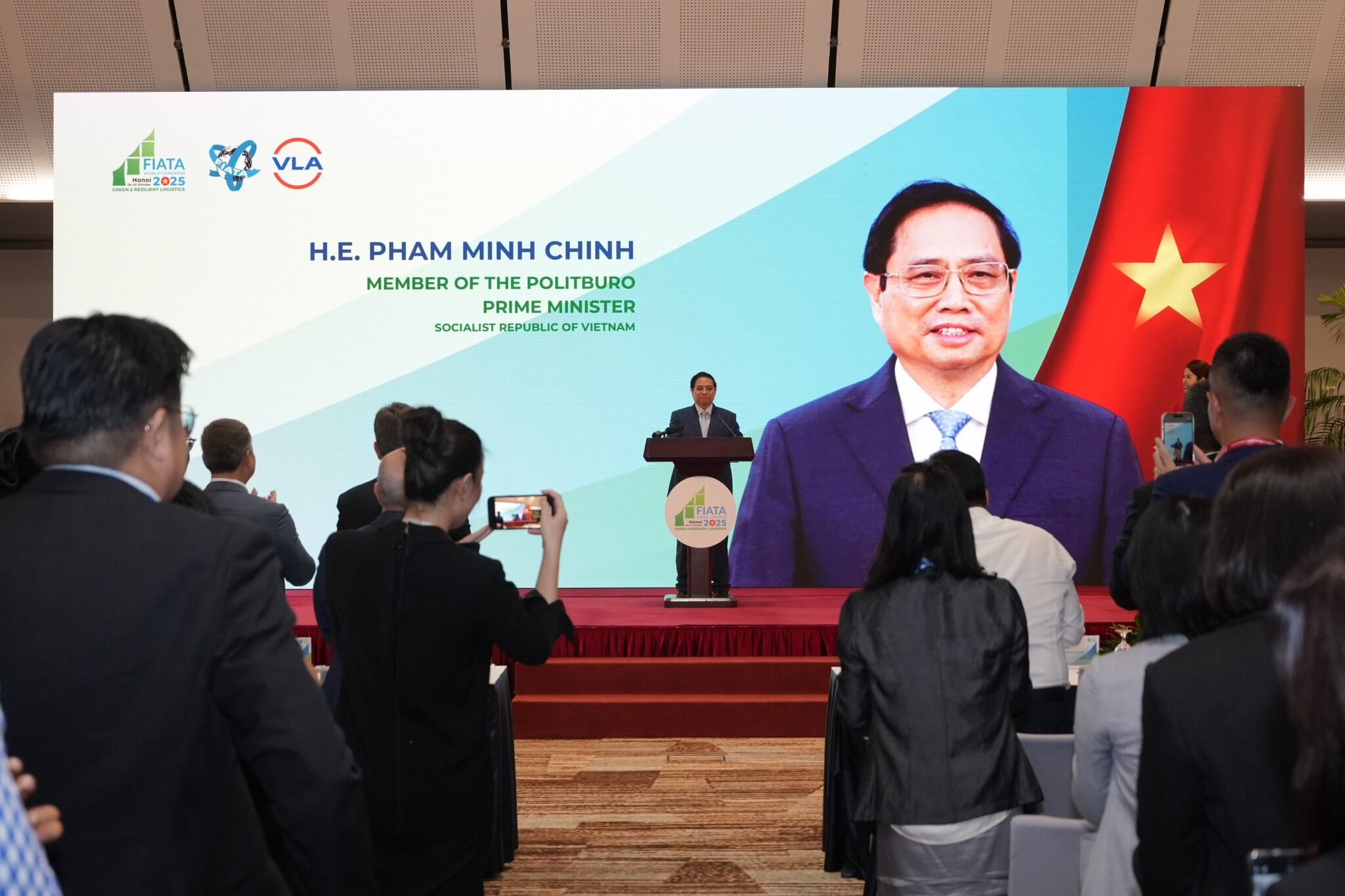
HANOI: Vietnam’s Prime Minister Phạm Minh Chính attended and addressed the FIATA World Congress 2025 in Hà Nội on October 8, affirming Vietnam’s strong commitment to building a modern, green, and sustainable logistics industry aligned with global trends.

Themed “Green and Resilient Logistics,” the Congress brought together over 1,200 delegates from more than 150 countries and territories, including leaders from international logistics associations, government bodies, and major global enterprises.

In his keynote address, the Prime Minister emphasized that the FIATA World Congress serves not only as a forum for collaboration and knowledge exchange but also as a platform to explore innovative, digital, and sustainable solutions for the logistics industry amid rapid global change.

“The decision of FIATA to choose Vietnam as the host country reflects the international community’s confidence in Vietnam’s role, potential, and aspirations in the logistics sector,” he said.

Prime Minister Chính outlined five priority areas for global cooperation — digital transformation, green logistics development, human resource training, multimodal connectivity, and regional linkages — urging all stakeholders to work together for a more resilient and environmentally responsible logistics ecosystem.

He reiterated Vietnam’s readiness to be a reliable partner for international logistics businesses, ensuring favorable conditions for investment, innovation, and partnership in the sector.

The FIATA World Congress 2025 marks the first time Vietnam has hosted this prestigious global logistics event, further reinforcing its growing position as an emerging logistics hub in the Asia-Pacific region.