Home Blog Page 616

US sanctions over 50 firms, including Indian Nationals, over Iran oil trade

WASHINGTON : The US Department of the Treasury’s Office of Foreign Assets Control (OFAC) announced sanctions against more than 50 individuals, entities, and vessels for facilitating Iranian oil and liquefied petroleum gas (LPG) sales and shipments from Iran, including Indian nationals involved in trading activities linked to Iran’s energy sector.

According to a release by the US Department of the Treasury, these actors have collectively enabled the export of billions of dollars’ worth of petroleum and petroleum products, providing critical revenue to the Iranian regime and its support for terrorist groups that threaten the United States. The action targets a network moving hundreds of millions of dollars’ worth of Iranian LPG, along with nearly two dozen shadow fleet vessels, a China-based crude oil terminal, and an independent refinery.

“The Treasury Department is degrading Iran’s cash flow by dismantling key elements of Iran’s energy export machine,” said Secretary of the Treasury Scott Bessent. “Under President Trump, this administration is disrupting the regime’s ability to fund terrorist groups that threaten the United States.”

According to the release, Indian nationals Varun Pula, Soniya Shrestha, and Iyappan Raja have been sanctioned under Executive Order 13902 for acting, or purporting to act, directly or indirectly, for or on behalf of shipping firms involved in transporting Iranian petroleum products and LPG.

The release stated that Varun Pula owns Marshall Islands-based Bertha Shipping Inc., which operates the Comoros-flagged vessel PAMIR (IMO 9208239) that has transported nearly four million barrels of Iranian LPG to China since July 2024.

Iyappan Raja owns Evie Lines Inc., also based in the Marshall Islands, which operates the Panama-flagged SAPPHIRE GAS (IMO 9320738). The vessel has transported over a million barrels of Iranian LPG to China since April 2025, the release added.

The Treasury Department noted that Soniya Shrestha owns India-based Vega Star Ship Management Private Limited, which operates the Comoros-flagged NEPTA (IMO 9013701). The vessel has transported Iranian-origin LPG to Pakistan since January 2025.

The US Department of the Treasury stated that the sanctions freeze all property and interests in property of the designated persons that are in the United States or under the possession or control of US persons. Any entities owned 50 per cent or more by one or more blocked persons are also blocked.

According to the release, OFAC’s regulations prohibit all transactions by US persons or within the United States that involve any property or interests in property of blocked persons unless specifically authorized. Violations of US sanctions may result in the imposition of civil or criminal penalties on US and foreign persons.

The release further noted that the ultimate goal of the sanctions is to bring about a positive change in behavior, and individuals or entities designated may seek removal from the sanctions list in accordance with established legal procedures.

Maersk and CATL forge global strategic partnership in Supply Chain Electrification and International Logistics

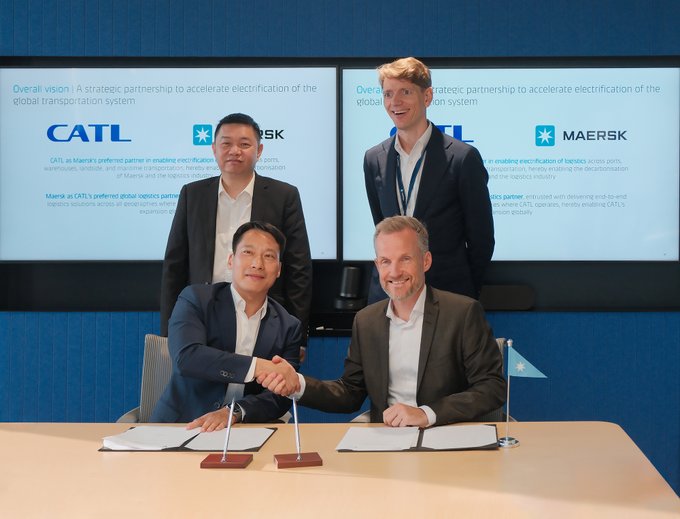
BEIJING : A.P. Moller – Maersk, an integrated logistics company, and Contemporary Amperex Technology Co., Limited (CATL), a global leader in new energy innovative technologies, have signed a strategic Memorandum of Understanding (MoU) to jointly advance decarbonisation across global supply chains and further strengthen CATL’s global logistics.

The signing ceremony, held on 9 October in Hong Kong, was attended by senior executives from both companies. The MoU was signed by Morten Bo Christiansen, Senior Vice President, Global Head of Energy Transition of A. P. Moller – Maersk, and Akin Li, Executive President of Overseas Car Business of CATL, and was witnessed by Robert Maersk Uggla, Chairman of A.P. Moller – Maersk, and Libin Tan, Chief Customer Officer, Co-President of Sales & Marketing of CATL, along with other senior leaders and representatives from both organisations.

Supporting CATL’s Global Ambitions Through End-to-End Logistics
The MoU builds on the five-year collaboration between Maersk and CATL, across ocean transportation, intermodal and other logistics solutions. Under this new agreement, Maersk will serve as CATL’s preferred global logistics partner, delivering integrated services including ocean freight, air freight, project logistics, and warehousing. The two parties will also explore effective and scalable models to help CATL maintain supply chain resilience in a rapidly evolving global landscape. Tailored solutions will be developed to meet the specific needs of diverse markets. These joint efforts aim to drive operational excellence across CATL’s supply chains and support its international growth ambitions.

Accelerating the Transition to Lower Greenhouse Gas Logistics
Maersk and CATL will also collaborate to electrify key nodes across the supply chain by leveraging CATL’s advanced battery technologies. This includes exploring the electrification of container shipping and the port ecosystem, inland transportation and warehousing. These initiatives will be supported by electric system design, energy management, and end-of-life battery recycling solutions. Under this agreement, CATL will be regarded as a preferred battery technology partner to support Maersk’s decarbonisation roadmap.

Maersk has an ambitious target of achieving net-zero greenhouse gas emissions across its entire business by 2040. While reducing greenhouse gas emissions is a shared goal among many companies, this partnership will contribute to the transition by co-developing scalable electrification solutions that support a lower emissions future for the logistics industry.

The collaboration between Maersk and CATL has continued to expand and evolve. We’re pleased to enter this new phase of partnership, combining CATL’s cutting-edge battery technologies with our integrated logistics capabilities to redefine what’s possible in logistics. This partnership presents a powerful opportunity to accelerate the decarbonisation of global logistics – not only for Maersk, but also for our customers and the broader industry.

Morten Bo Christiansen
Senior Vice President, Global Head of Energy Transition, A. P. Moller Maersk
CATL is committed to becoming a zero-carbon technology company, focusing on three strategic business areas including transportation electrification, industrial decarbonisation, and zero-carbon grid. CATL plans to achieve carbon neutrality in its core operations by 2025 and across the battery supply chain by 2035.

As a global giant of integrated logistics, A.P. Moller – Maersk, just like CATL, is committed to promoting energy transition and achieving a net-zero emissions future. At this new stage of development, both parties aim to deepen collaboration in shipping, end-to-end supply chain, digitalisation, and new energy applications, working together to accelerate decarbonisation in the global logistics industry.

Libin Tan
Chief Customer Officer, Co-President of Sales & Marketing of CATL
Leveraging Maersk’s global logistics network and CATL’s industry-leading energy technologies, the two companies aim to jointly develop scalable electrification solutions, setting a new benchmark for decarbonising logistics and accelerating the industry’s energy transition.

About CATL
Contemporary Amperex Technology Co., Limited (CATL) is a global leader in new energy technology innovation, committed to providing premier solutions and services for new energy applications worldwide.

In June 2018, the company went public on the Shenzhen Stock Exchange with stock code 300750 and is also listed on the Hong Kong Stock Exchange with stock code 03750 in May 2025. In 2024, CATL’s EV battery consumption volume has ranked No.1 in the world for eight consecutive years, and it has ranked first in the market share of global energy storage battery shipments for four straight years. CATL also enjoys wide recognition by global EV and energy storage partners.

Committed to making an outstanding contribution to the energy transition of mankind, CATL in 2023 announced its strategic goals of achieving carbon neutrality in core operations by 2025 and across the battery supply chain by 2035.

About Maersk
A.P. Moller – Maersk is an integrated logistics company working to connect and simplify its customers’ supply chains. As a global leader in logistics services, the company operates in more than 130 countries and employs around 100,000 people. Maersk is aiming to reach net zero GHG emissions by 2040 across the entire business with new technologies, new vessels, and reduced GHG emissions fuels*.

Tariffs at Sea: What Freight Forwarders Need to Know

LONDON: For ocean freight forwarders, tariffs are not abstract policy tools. Every new duty or exemption can disrupt sailing schedules, alter customer demand, and reshape contract economics. In recent months, tariff changes have even led shippers to cancel or postpone shipments, demand contract renegotiations, and rethink their long-term relationships with logistics partners.

With margins already razor-thin, forwarders cannot afford to treat tariffs as an occasional nuisance. Instead, they must embed tariff resilience into the heart of their operations. As FIATA recently emphasized, today’s shifting trade dynamics are forcing companies to build stronger collaboration and regional adaptability, recognizing that tariffs are just one lever in a larger landscape of geopolitical and economic pressures.

To navigate this volatility, forwarders should focus on five interconnected areas: market intelligence, contract management, routing flexibility, compliance readiness, and customer communication.

Market Intelligence: See the Shifts Before They Hit
Tariff announcements don’t happen in isolation. They ripple through the entire ocean freight market. As Xeneta has highlighted, new duties between the U.S. and China have repeatedly triggered “Liberation Day” spikes and sudden collapses in spot rates, creating waves of uncertainty for both shippers and forwarders.

The challenge is that tariffs don’t just add cost to importers; they alter demand patterns. Some shippers frontload cargo to avoid new duties, distorting seasonal flows. Others divert to alternative origins, forcing carriers to adjust vessel deployments. The result is volatile rates, unexpected blank sailings, and a planning puzzle for forwarders.

To stay ahead, forwarders need to continuously track:
• Spot and contract rate trends – so they can anticipate cost swings before customers feel the impact.
• Carrier reactions – such as GRIs or blank sailings in response to tariff-driven demand shifts.
• Geopolitical signals – trade negotiations, tariff reprieves, or retaliations that may trigger sudden shifts.

Logistics companies that systematically monitor tariff-related trends, and model their downstream effects on freight flows, are better equipped to provide stability to customers and protect margins, as BCG recently noted.

Contract Management & Visibility: Turn Complexity Into Clarity
Tariff changes expose a painful truth in freight forwarding: most contracts are not built for volatility. Buy- and sell-side agreements often assume stable cost structures, leaving forwarders either absorbing unexpected duties or scrambling to renegotiate after the fact.
IIFA warns that global tariff strategies increase the risk of “errors and omissions,” especially when forwarders lack visibility into which contract terms apply to which shipment. Misapplied terms don’t just erode profit — they can damage customer trust and lead to costly disputes.

The solution lies in contract management and full visibility. Forwarders should:
• Maintain structured contract breakdowns that detail every tariff, surcharge, and validity period, such as working with contract management tools.
• Provide operational teams with shipment-level visibility into applicable terms, so they can quickly explain charges to customers.
• Use contract transparency as a tool for customer communication — showing clients exactly how tariffs affect their shipments, and what mitigation strategies are possible.

By linking tariff clauses directly to container movements, forwarders not only prevent revenue leakage but also empower teams to plan proactively and manage customer expectations with confidence.

Routing Flexibility: Build Options Into Every Plan
Tariffs don’t just raise costs; they redirect trade flows. When U.S. duties on Chinese goods rose in recent years, shippers rerouted through Southeast Asia or Mexico to take advantage of different tariff regimes.

These shifts can happen overnight. A tariff reprieve might unleash a rush of bookings, while a new duty might suddenly make a lane uncompetitive. Forwarders that rely on a single routing or fixed capacity risk being blindsided.

Instead, resilience requires:
• Alternative port and routing options – maintaining relationships and capacity access across multiple corridors.
• Scenario planning – preparing contingency plans for tariff changes, including volume swings and customer rerouting requests.
• Customer education – explaining the trade-offs between cost, duty exposure, and transit times when alternative routes are required.

As FIATA has observed, regional collaboration is becoming increasingly important. Forwarders who can flexibly shift between trade corridors — while maintaining service quality — will be better positioned to win business in tariff-driven markets.

Compliance Readiness: Stay Accurate, Stay Trusted
Compliance is where tariffs meet reality. Every new duty requires accurate classification, updated documentation, and consistent audit trails. A single misstep — a wrong HS code, an outdated tariff rate, or a missing log — can lead to fines, delays, or reputational damage.

The IIFA highlights that the pace of tariff changes is the greatest challenge, leaving operators exposed to errors if they lack up-to-date references.

To remain compliant and credible, forwarders should:
• Maintain updated tariff tables that reflect the latest duties and exemptions.
• Keep detailed audit logs for all tariff applications, ensuring disputes can be resolved quickly.
• Build in-house expertise – staff trained to interpret tariff changes, update processes, and communicate with customs authorities and customers alike.

Compliance is more than paperwork; it is a foundation of trust. Shippers need to know their forwarder won’t expose them to regulatory risk.

Customer Communication: From Reactive to Proactive Partner
Perhaps the most underestimated impact of tariffs is on customer relationships. A sudden duty can push customers to cancel shipments, postpone orders, or demand renegotiation. How a forwarder communicates in these moments determines whether the relationship is strengthened or lost.

Freight forwarders have stressed that it’s crucial to develop clear, consistent language to explain tariff impacts — not just to operations teams, but to shippers who may be unfamiliar with the intricacies of trade policy.

The goal is not only to react, but to anticipate. Forwarders should:
• Proactively update customers when tariff changes are announced, outlining the likely operational and financial impacts.
• Provide scenario-based guidance, showing alternative routes or cost structures under different tariff outcomes.
• Reassure customers that the forwarder is not just processing shipments, but actively monitoring policy and planning responses.
In a volatile tariff environment, customer communication becomes a differentiator. As Xeneta noted in its analysis of tariff ripple effects, shippers value forwarders who can translate market chaos into clear, actionable insights.

From Turbulence to Trust
Tariffs will continue to shape the ocean freight market — sometimes predictably, often not. What matters for forwarders is how they respond. By embedding resilience across market intelligence, contract management, routing, compliance, and customer communication, forwarders can transform tariffs from a threat into an opportunity.

• See sooner: Monitor rate movements and policy announcements before they hit customer costs.
• Plan smarter: Use contract visibility and routing flexibility to keep operations agile.
• Stay compliant: Maintain updated tariff knowledge and audit trails.
• Communicate clearly: Build trust by being proactive, transparent, and consultative with customers.

As FIATA put it, navigating today’s trade dynamics demands collaboration and adaptability across the logistics ecosystem. Forwarders who embrace these priorities can safeguard their margins while strengthening customer trust in an era where tariffs have become the new normal.
Source: Windward

35% of ships subject to additional fees due to tariffs: BIMCO

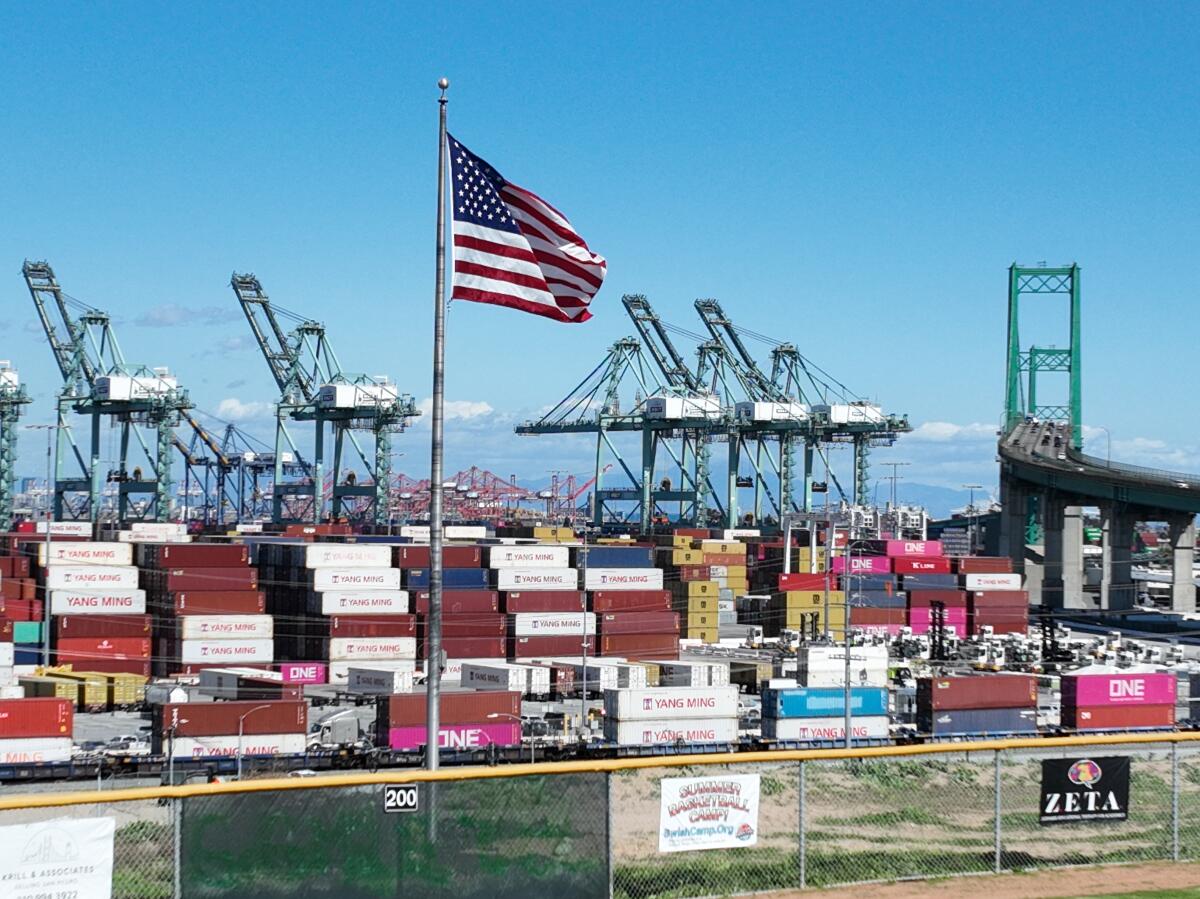
LONDON: In last week’s “Shipping Number of the Week” from BIMCO, Chief Shipping Analyst, Niels Rasmussen, looks at the possible effect of fees from the Office of the United States Trade Representative (USTR) targeting Chinese dominance of the maritime sector as they are set to come into effect on 14 October.

According to Rasmussen, when fees from the Office of the United States Trade Representative (USTR) targeting Chinese dominance of the maritime sector come into effect 14 October, 35% of ships in the combined bulk, crude tanker, product tanker and container fleet could be subject to additional fees when calling a US port. Even though these ships provide 44% of the combined fleet’s capacity, US importers and exporters should not expect increasing freight rates. 

Of the ships that could be subject to the port fees, 70% are either Chinese owned or operated while 30% are built in China. More than half of the Chinese built ships are exempt due to their size or US ownership.

“Bulk carriers are more exposed to the increasing costs as 45% of the ships could be subject to the USTR fees. Because more ships are exempt, or because fewer ships are Chinese owned or operated, only 30% of crude tanker and container ships, and 19% of product tankers, could be subject to the fees when arriving at a US port”, said Niels Rasmussen.

Although between 19% and 45% of bulkers and tankers could be subject to the fees, the global impact may be minimal. So far this year, the US markets make up only 9-19% of each sector’s global ship demand and only 16-24% of US exports and imports have historically been catered to by ships that could face USTR fees.

While future redeployment could reduce the exposure, a review of the planned sailings on east/west container trades by the 10 largest operators reveal that less than 20% of ships scheduled to call the US would be subject to the new fees. Most of those ships are owned or operated by COSCO Shipping Lines or Orient Overseas Container Line or owned by Chinese leasing banks. Despite this, COSCO Shipping Lines has committed to maintaining services and competitive rates while several other liner operators have already confirmed that the fees will not lead to freight surcharges.

“As several liner operators have already committed to not increase rates and COSCO Shipping Lines likely must follow suit to remain competitive, we expect no freight rate increases in the container market. In the bulker and tanker sectors, we expect that most ships subject to USTR fees will leave US trades as they cannot remain competitive”, Rasmussen explained, concluding that freight rate increases will therefore likely be avoided in these sectors as well. Implementation confusion could, however, cause rate increases in the short-term. 

Vibrant Gujarat Regional Conference: 1200 MoUs signed for Rs 3.24 lakh cr investment

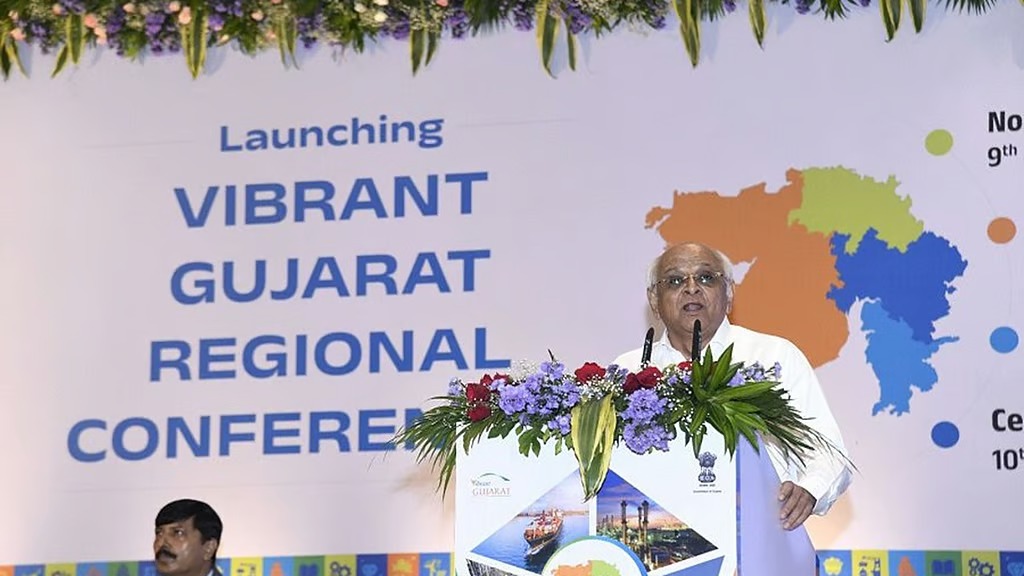
AHMEDABAD : Over 1,200 Memorandums of Understanding (MoUs) for an estimated investment of Rs 3.24 lakh crore have been signed during the first edition of Vibrant Gujarat Regional Conference (VGRC) held in Mehsana district, an official said on Friday.

An official release said Chief Minister Shri Bhupendra Patel delivered his address at the concluding ceremony of the two-day event held at Ganpat University at Kherva village.

Citing the adage “well begun is half done”, Patel said the success of this first regional conference has strengthened Prime Minister Shri Narendra Modi‘s vision of building a global village and promoting ‘vocal for local’.

CM Patel emphasised that PM Modi has seamlessly connected people with the government, leading India to achieve remarkable progress across every sector ranging from Swachhata to semiconductors.
“A total of 1,212 MoUs were signed during this Regional Conference. Through these MoUs, an estimated investment of Rs 3.24 lakh crore is expected in north Gujarat in the near future, giving new momentum to the region’s development,” he said.

The Vibrant Gujarat Regional Conferences are being organised to realize the PM’s vision of inclusive growth, ensuring development is not confined to cities but reaches every village and region through active public participation, Patel added.

The Mehsana edition was the first of four Regional Conferences the state government has planned to organise on the lines of the Vibrant Gujarat Global Summit (VGGS), first launched in 2003 when Modi was chief minister, he said.

Discussions, seminars, presentations, and MoUs during this two-day conference will mark a new chapter in regional development, Patel asserted. “The event held on the theme ‘Regional Aspirations, Global Ambitions’ will create new opportunities for industry, investment, and employment in north Gujarat. It has proven significant in establishing the state as a role model for innovation, sustainability, and inclusive development,” said state Industries minister Balvantsinh Rajput in his address.

Rajput said approximately 30,000 people participated in this regional Vibrant Conference, including delegates from 72 countries. “Industrialists and organisations from various countries came to participate in this Vibrant Summit, and meetings were also held with them regarding the export of Gujarat’s products, with an estimated trade of Rs 500 crore generated from these meetings. The conference has brought new opportunities for north Gujarat,” he said.

“Under PM Modi ji, Indians achieved economic strength and social justice in a decade of good governance:” Sarbananda Sonowal

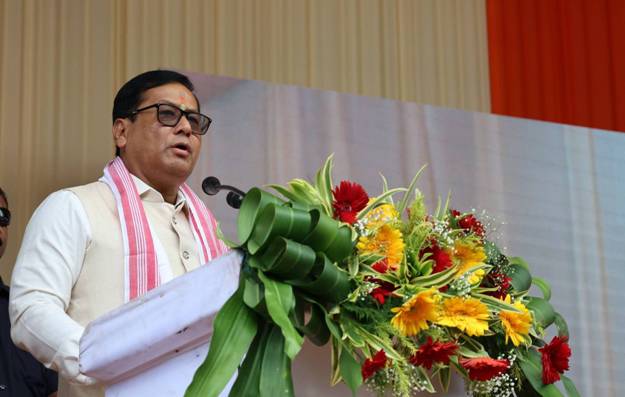
DIBRUGARH : The Union Minister of Ports, Shipping & Waterways (MoPSW) and Member of Parliament for Dibrugarh LSC, Shri Sarbananda Sonowal, along with Chief Minister Dr. Himanta Biswa Sharma, distributed capital assistance under the “Chief Minister Women Entrepreneurship Campaign” in Dibrugarh. More than 14,000 women in the Dibrugarh LAC benefited from the initiative, receiving an amount of ₹10,000 each as seed capital.

Empowering Women to Strengthen the Nation
Speaking on the occasion, Union Minister Sarbananda Sonowal said, “Strengthening women’s power fortifies the foundation of national development. Under the ‘Chief Minister Women Entrepreneurship Campaign,’ women across Assam — particularly in Dibrugarh — will drive forward the vision of a developed and self-reliant Bharat under the strong leadership of Prime Minister Shri Narendra Modi.”

image00251M8 "Under PM Modi ji, Indians achieved economic strength and social justice in a decade of good governance:” Sarbananda Sonowal

Shri Sarbananda Sonowal added, “Through this event, we aim to send a message to upcoming generations and the nation: for a country to be truly strong, every household and every woman must become financially empowered and independent. The central government has taken resolute steps over the past eleven years to advance this mission, and today those steps are proving successful. Through the ‘Sabka Saath, Sabka Vikas’ ethos, Prime Minister Modi has laid strong foundations for inclusive progress. India has risen to become the world’s fourth-largest economy, and by 2029 we aim to be among the top three. In this journey, women’s empowerment has been prioritised through transparent, effective, and timely policies.”

Union Minister Sarbananda Sonowal also praised the Assam government’s developmental schemes under Chief Minister Dr Himanta Biswa Sarma and applauded the women who diligently participated and ensured the successful implementation of these programs. He expressed deep gratitude to every woman for their responsible use of government support, stating that their efforts strengthen society. Sonowal contrasted the prior Congress-led administrations with the present government, emphasising that in just eleven years, Indian citizens have achieved economic independence and social justice under Prime Minister Modi’s leadership. “India will not look back now. By 2047, as we complete 100 years of independence, India will stand as the world’s most advanced, self-reliant nation — and women will play a significant and lasting role in that journey,” Shri Sonowal asserted.

Also present at the event were Assam Government Minister and local MLA Prasant Phukan, Guardian Minister of Dibrugarh Jogen Mohan, Ministers Ranjit Kumar Das and Bimal Bora, MLAs Binod Hazarika, Terash Gowalla, Taranga Gogoi, Chakradhar Gogoi, Pontoon Barua, along with the District Commissioner Bikram Kairi, the Mayor of DMC, Saikat Patra, and other dignitaries.

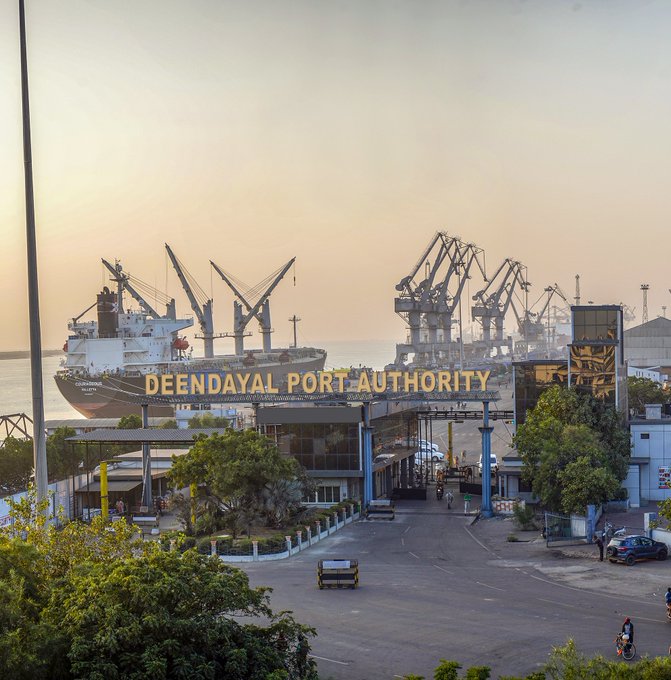
Deendayal, V.O. Chidambaranar, and Paradip Ports identified for development as strategic Hydrogen Centres

NEW DELHI : The Ministry of New and Renewable Energy (MNRE) has formally recognised three major ports Deendayal Port Authority (Gujarat), V.O. Chidambaranar Port Authority (Tamil Nadu), and Paradip Port Authority (Odisha) as Green Hydrogen Hubs under the National Green Hydrogen Mission (NGHM). This recognition marks a significant step towards creating an integrated hydrogen ecosystem and advancing India’s transition towards clean energy.

The National Green Hydrogen Mission, launched by the Government of India, aims to position the country as a global hub for the production, utilisation, and export of green hydrogen and its derivatives. The Mission promotes the development of large-scale hydrogen hubs to serve as focal points for production and consumption, thereby facilitating the establishment of a sustainable and competitive hydrogen economy.

Welcoming the development, the Union Minister of Ports, Shipping & Waterways (MoPSW), Shri Sarbananda Sonowal said, “This recognition marks a defining moment in India’s maritime journey as we transition to become a modern, capable and leader in the global maritime segment. Under the visionary leadership of Prime Minister Shri Narendra Modi ji, we are working towards building an ecosystem of sustainable development that will power India towards realising the vision of becoming net zero by 2070. Ports are an important nodes in this transition. As Green Hydrogen hubs, our ports will act as catalysts of clean energy innovation. As a maritime leader, India’s ports will not only empower their own country but also leverage its strategic positions along the eastern and western trade routes to drive the region towards sustainable logistics.”

Recognising the logistical and technical challenges associated with long-distance hydrogen transport, the Mission adopts a cluster-based development model. This approach enhances early-stage project viability, enables infrastructure convergence, and helps achieve economies of scale in identified regions.

The revised scheme guidelines for setting up Hydrogen Valley Innovation Clusters (HVIC) and Green Hydrogen Hubs, issued on 27th June 2025, provide the framework for identifying and supporting potential regions capable of large-scale hydrogen activity. Under Component B2 of these guidelines, MNRE may recognise locations as Green Hydrogen Hubs without direct financial assistance, thereby facilitating access to incentives and benefits available under other central or state government schemes.

In accordance with these provisions, the competent authority has approved the recognition of Deendayal, V.O. Chidambaranar, and Paradip Port areas as Green Hydrogen Hubs. Projects established within these designated zones will be eligible for benefits available under other relevant schemes and policies of the Central and State Governments, including those linked to the National Green Hydrogen Mission.

The recognition of these ports is expected to catalyse industrial participation, attract green investments, and promote innovation in clean fuel technologies, supporting India’s broader vision of achieving energy self-reliance and net-zero emissions by 2070.

This recognition has been issued with the approval of the competent authority.

India’s Rs 72,000-cr Great Nicobar project aims to be the Jebel Ali of the east, says maritime historian

When Dubai built the Jebel Ali Port in the late 1970s, skeptics called it a folly in the desert. Today, it is the cornerstone of the Gulf’s economic success. Drawing that parallel, maritime historian Nick Collins wrote on X, “When Dubai built Jebel Ali, many thought it madness. Now it anchors the Gulf economy. India’s Nicobar project may not be as momentous, but it’s a bold move and part of a potential maritime focus in which Delhi’s bureaucracy lets Indian entrepreneurship take India forward.”

His words capture the ambition — and the risk — behind India’s Rs 72,000-crore Great Nicobar Project, one of the country’s most audacious infrastructure ventures in recent decades.

Strategic Bet

Approved by the Union Cabinet in 2021, the Holistic Development of Great Nicobar Island aims to turn a remote, biodiversity-rich island into a bustling transshipment and trade hub. The plan covers 166 sq km — roughly 10% of the island’s area — and combines four massive components:

A transshipment port at Galathea Bay, capable of handling up to 14.5 million TEUs (20-foot equivalent units) annually, intended to rival Singapore’s throughput near the China-influenced Malacca Strait, which channels nearly a quarter of global trade.
A greenfield international airport with a 3,300-metre runway for wide-body aircraft, improving connectivity to India’s eastern seaboard and beyond.
A 450 MW power plant, blending gas-based and solar energy to ensure energy independence.
A planned township spanning 16,569 hectares, designed to accommodate up to 65,000 residents, including workers and migrants.
The project, led by the Andaman and Nicobar Islands Integrated Development Corporation (ANIIDCO), is envisioned to unfold over 30 years.

Economic gateway

Experts see the project as a move to capture 20-30% of regional cargo currently routed through foreign hubs, reducing India’s dependence on ports like Singapore and Colombo.

But beyond commerce, the project carries a strategic undertone. Situated at the southeastern edge of the Indian archipelago, Great Nicobar sits close to the Six Degree Channel, a crucial shipping corridor. The port could serve as India’s frontline base in the eastern Indo-Pacific, enhancing surveillance and response capacity amid increasing Chinese naval activity.

“This is India’s counter to China’s ‘string of pearls’ — not through confrontation, but by creating hubs of connectivity and commerce,” said Collins, adding that the island’s deep natural harbour gives it a logistical edge.

Balancing development & ecology

However, the ambition comes with ecological and ethical challenges. The island is part of one of the world’s most biodiverse regions and home to the Shompen Tribe, a Particularly Vulnerable Tribal Group (PVTG) with a population of barely 300. Conservationists have raised alarms about deforestation, coastal erosion, and risks to endemic flora and fauna.

Environmental clearances have been partially opaque — with sections of the NITI Aayog’s pre-feasibility report (2021) blurred or redacted on the official clearance portal. Critics argue that the fragile ecosystem could face irreversible impacts.

Test of India’s maritime vision

The Great Nicobar Project reflects India’s intent to emerge as a maritime power in the Indo-Pacific, in step with initiatives like Sagarmala and Gati Shakti. Whether it becomes India’s Jebel Ali — as Collins suggests — will depend on how deftly New Delhi manages the balance between development, defence, and ecology.

If successful, Great Nicobar could turn India’s geographic advantage into a strategic and economic engine — a new anchor for the Bay of Bengal and beyond.

Source : BT

Keshav Tanna elected as Secretary General of FIATA

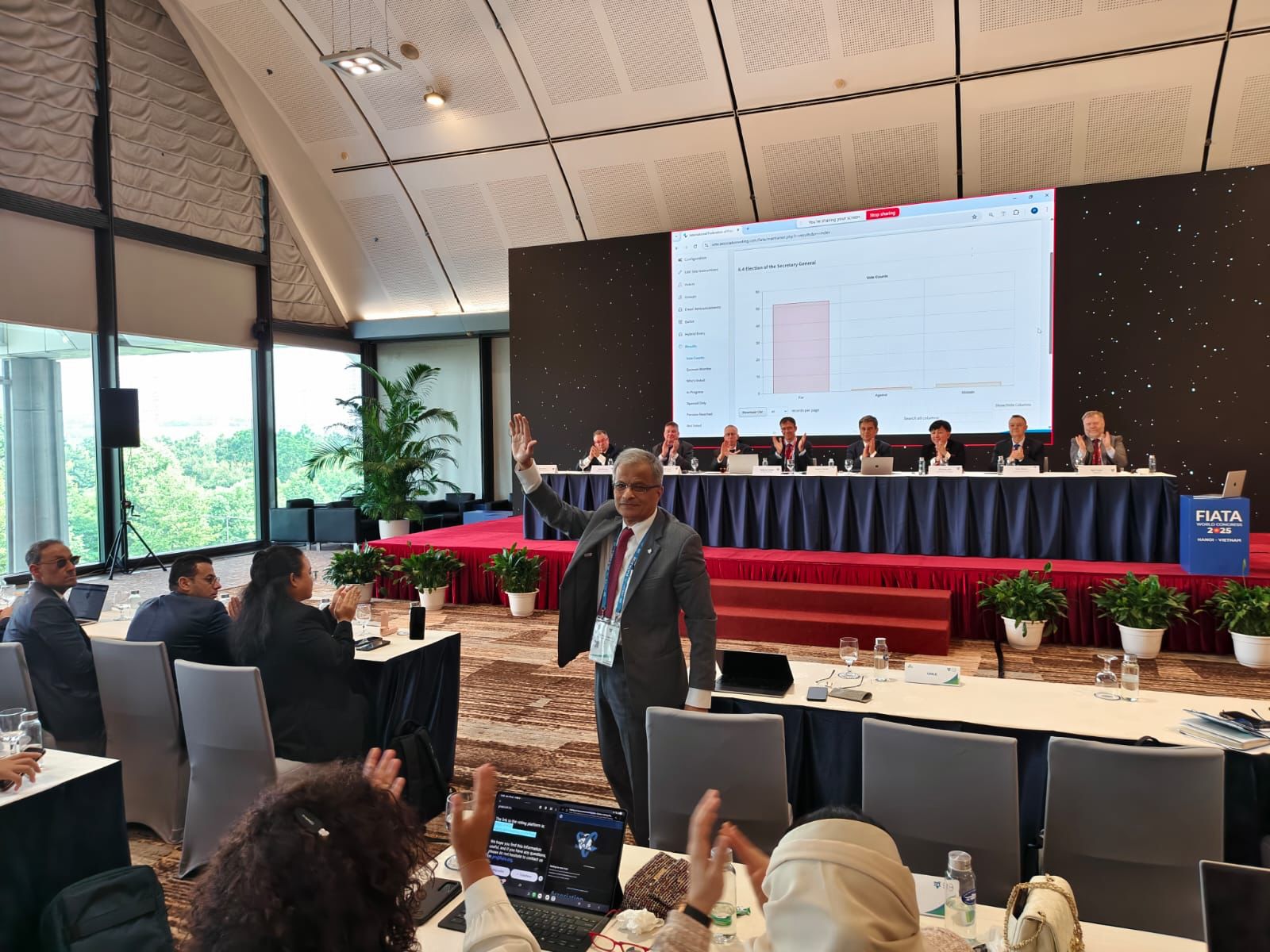
HANOI : In a proud moment for India’s logistics and freight forwarding community, Mr. Keshav Tanna, Past President and Member of the Board of Advisors of the Air Cargo Agents Association of India (ACAAI), has been elected unopposed as the Secretary General of FIATA (International Federation of Freight Forwarders Associations). The announcement was made during the FIATA World Congress 2025, currently underway in Hà Nội, Vietnam.

Mr. Tanna’s unopposed election underscores the global recognition of his leadership, professional integrity, and long-standing contribution to the freight forwarding industry. Over the years, he has played a pivotal role in strengthening India’s presence in global logistics forums and fostering collaboration among international stakeholders.

Extending its congratulations, ACAAI lauded Mr. Tanna’s achievement as a milestone not only for the association but for India’s logistics fraternity at large. “This achievement is a testament to his exceptional leadership, dedication, and enduring commitment to the global freight forwarding community,” ACAAI stated.

As Secretary General, Mr. Tanna will bring his extensive experience to FIATA’s mission of advancing international logistics, promoting sustainable growth, and enhancing cooperation among freight forwarders worldwide.

C.K. Govil honoured with FIATA Certificate of Achievement for Hosting Regional Asia Pacific Meeting in Delhi

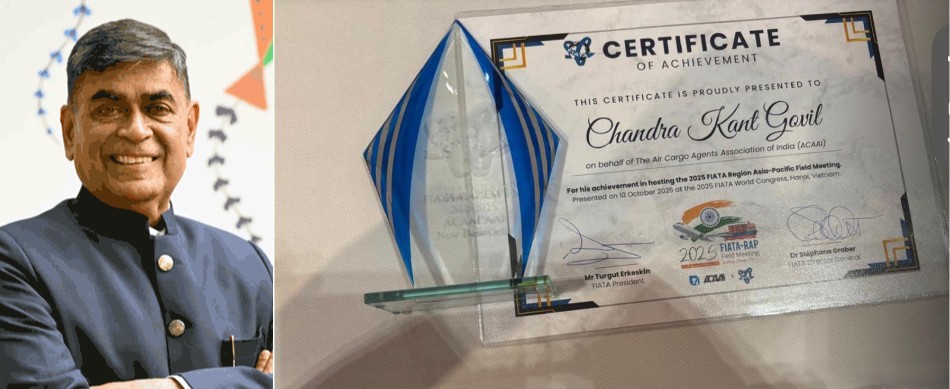
HANOI: Mr. C.K. Govil, Immediate Past President of The Air Cargo Agents Association of India (ACAAI) and Chairman & Managing Director of Activair, has been honoured with the FIATA Certificate of Achievement for his exemplary contribution in hosting the FIATA Regional Asia Pacific (RAP) Field Meeting held in Delhi in May 2025 during ongoing FIATA World Congress 2025 at Hanoi, Vietnam.

The recognition was conferred by Mr. Turgut Erkeskin, President of FIATA, and Dr. Stéphane Graber, Secretary General of FIATA, acknowledging Mr. Govil’s leadership and successful coordination of the prestigious international event during his tenure as ACAAI President.

The FIATA RAP Meeting in Delhi brought together key stakeholders and logistics professionals from across the Asia-Pacific region, strengthening collaboration and advancing discussions on air cargo growth, trade facilitation, and industry innovation.

Expressing his pride and gratitude, Mr. Govil described it as a “proud moment” to be recognized by FIATA for ACAAI’s role in organizing the event, which showcased India’s growing prominence in the global logistics and freight forwarding ecosystem.

The honour highlights ACAAI’s continued commitment to engaging with the international freight community and positioning India as a pivotal hub in regional logistics development.