LONDON: Tanker freight rates for shipping Urals crude from Russia’s western ports to India rose further in late September and early October, tracking a sharp increase in loadings last month, industry sources said.
Indian refiners continue to buy Russian oil despite punitive U.S. tariffs on goods imported from India after it defied a demand for it to stop the Russian imports.
Crude exports from Russia’s western ports of Primorsk, Ust-Luga and Novorossiisk rose by 500,000 barrels per day in September from August to a record 2.5 million bpd, driven by unplanned refinery maintenance.
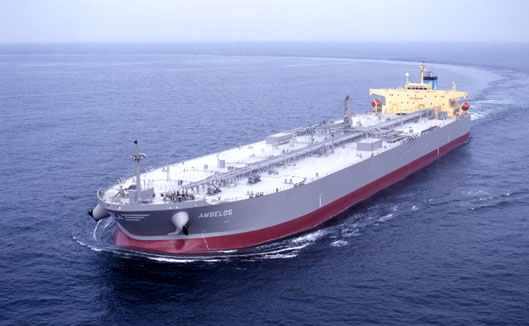
Freight costs for transporting Urals from the Baltic ports of Primorsk and Ust-Luga to India for late October loading have climbed to around $7 million for Aframax tankers, up from $6–6.5 million for one-way voyages in late August to mid-September, the sources said.
Rates for similar shipments from the Black Sea port of Novorossiisk on Suezmax tankers, which carry around 140,000 metric tons, rose to about $6.2–6.5 million, compared with roughly $6 million a month earlier.
Sources told Reuters that both “shadow fleet” tankers and Greek shipowners were currently involved in transporting Urals from Russian ports.
“The Greeks who were working are still working. No one has left the market,” one trader said.
The Group of Seven nations’ finance ministers said on October 1 they would take joint steps to increase pressure on Russia by targeting those who are continuing to increase their purchases of Russian oil and those that are facilitating circumvention.
Early in October, France detained tanker Boracay loaded with 100,000 tons of Urals crude sourced by Russian state company Rosneft from the port of Primorsk and destined for India’s Vadinar port.
France’s detention of a tanker suspected of operating for Russia’s “shadow fleet” is part of a new European strategy to block revenue funding Moscow’s war effort in Ukraine, President Emmanuel Macron said.
Russian President Vladimir Putin condemned France’s boarding of the tanker, calling the operation an act of piracy.
Freight rates remain elevated compared to January 2025 levels, when shipping costs from Baltic ports to India ranged between $4.7 million and $4.9 million per voyage. Source: Reuters
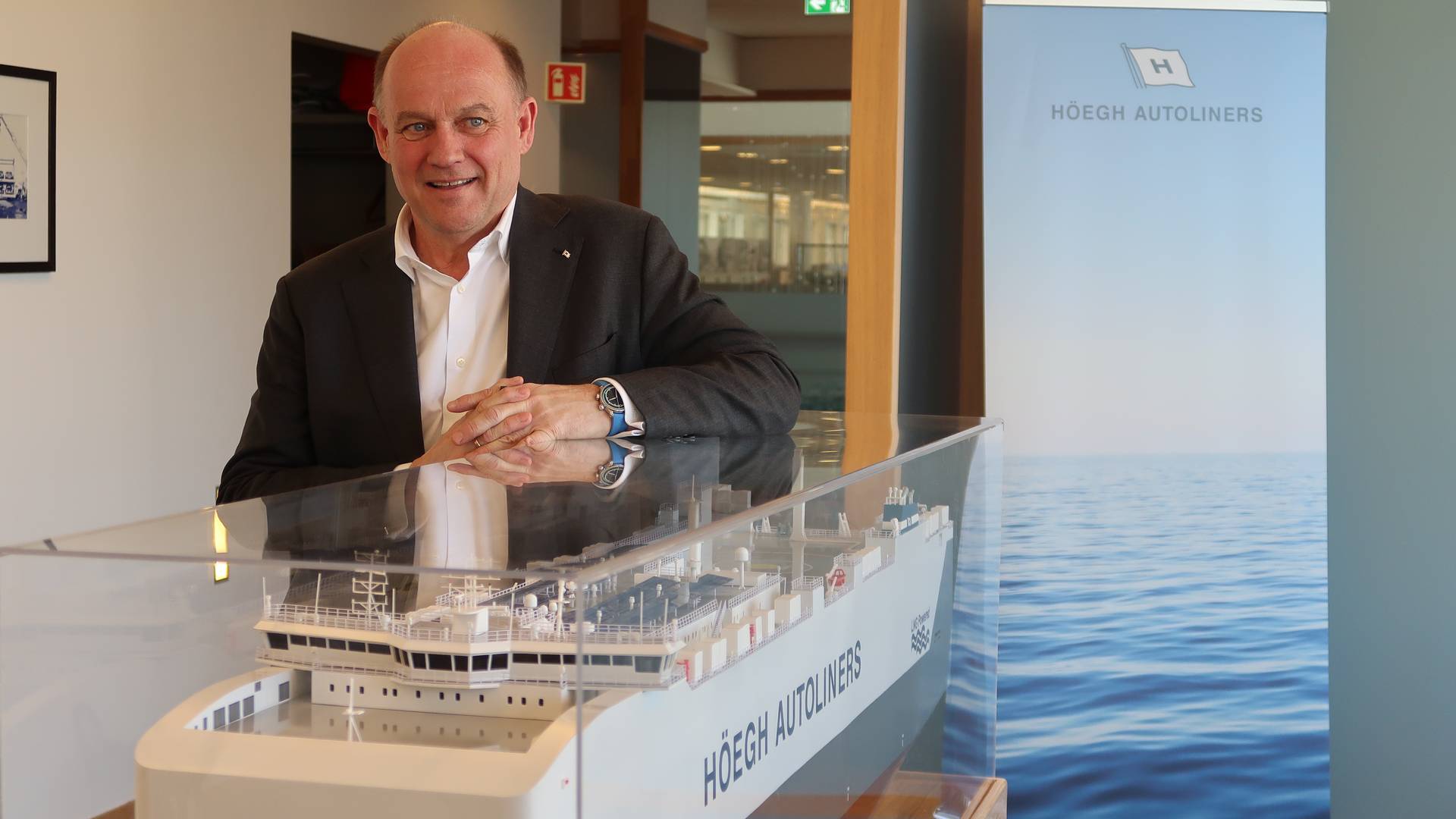
NORWAY: In September 2025, Höegh Autoliners transported 1.3 million cbm of cargo on prorated basis. Transported volume in the third quarter (July – September) was 4.0 million cbm.
Average prorated gross freight rate in September 2025 was USD 90.3 per cbm (-2.2% compared to average gross rate in the last three months). Average prorated gross freight rate in the third quarter was USD 92.3 per cbm.
Average prorated net freight rate in September 2025 was USD 78.5 per cbm (-2.3% compared to average net rate the last three months). Average prorated net freight rate in the third quarter was USD 80.3 per cbm.
HH/BB share of prorated volumes carried in September was 22%. Last three months the prorated HH/BB share was 21%.
Andreas Enger, CEO Höegh Autoliners, comments: “Our September performance was stable. However, Q3 has been impacted by weakening trade balance which is likely to continue. We have increased short-term charter exposure and cost through 2025 to maintain our lifting capacity. We continue to monitor implementation of USTR port fees which is likely to add cost pressure in coming months if implemented as planned.
We expect Q3 EBITDA to be in the low end of our communicated guiding per Q2 (22 August 2025).” Source: Höegh Autoliners
MAJURO: Experts advising Pacific states at the International Maritime Organization (IMO) warn that biofuels are not a long-term solution for decarbonising shipping, highlighting threats to food security, supply constraints, and rising costs for vulnerable economies.
Micronesian Center for Sustainable Transport technical advisers stress that the shipping industry risks locking itself into unsustainable pathways if biofuels are rewarded by the Net-Zero Framework.
“First-generation biofuels come from food and feed crops. That competes with food supply and land, which is risky for developing countries,” said Micronesian Center for Sustainable Transport (MCST) legal adviser John Kautoke.“Even advanced biomass is supply-constrained, and aviation is already targeting it for sustainable aviation fuels.
“For our region, importing those fuels would just add cost layers. We need solutions suited to Pacific realities — wind-propulsion, high-efficiency designs, and scalable e-fuels from renewable electricity — rather than locking in costly imports.”
The Pacific submission, which is co-sponsored by Fiji, the Republic of the Marshall Islands, Tuvalu and Vanuatu, to the IMO calls for a clear, stringent definition of “zero and near-zero fuels” (ZNZs) that prioritises technologies capable of scaling to net zero by 2050, such as wind propulsion and e-fuels from renewable electricity, while explicitly excluding biomass feedstocks.
IMO members are meeting next week in London to vote on the adoption of the Net-Zero Framework.
Experts note that while biofuels can play a limited role in the transition, they are unlikely to meet the sector’s long-term needs. The aviation sector is already competing for the same feedstocks, creating a high risk that scarce resources will be diverted away from shipping.
Climate science underscores the urgency of focusing on scalable, long-run solutions. The latest assessments show global warming has already averaged 1.54°C above pre-industrial levels in 2024, with highly disruptive tipping points that are likely to be triggered between 1.5–2°C. “Investing in fuels that cannot scale wastes precious time we do not have,” Kautoke warns.
Instead, Pacific countries are pushing the IMO to design the Net-Zero Fund’s reward system to incentivise true zero-emission options – using mechanisms like auctions or contracts-for-difference to provide certainty for investors while ensuring accessibility for low-income countries.
“Member state priorities and preferences differ significantly when it comes to defining ZNZs. Our message is clear: the NZF needs to steer the environmental integrity of the long-term energy transition while ensuring food security. That means not rewarding the use of biofuels,” says Kautoke.
Source: Micronesian Center for Sustainable Transport (MCST)
LEVALLOIS-PERRET: GEODIS, a leading global logistics provider, Tuesday announced a significant milestone for its dedicated freighter network, celebrating the 500th successful flight on its route from Asia to Guadalajara, Mexico. Through a long-term partnership with Atlas Air, the leading global provider of outsourced aviation logistics solutions, GEODIS has established a service with proven safety, consistency and reliability. This achievement highlights the service’s success in providing secured capacity, reduced lead times and end-to-end reliability, solidifying it as a foundational element of GEODIS’ regional strategy and a critical component of its customers’ supply chains.
Launched in 2019, the dedicated freighter service was designed to provide a consistent and secured cargo solution from Asia to Mexico. The service operates two weekly flights, one each from Shanghai and Hong Kong, China, directly to Guadalajara. Demonstrating the resilience of this route, and the commitment to its clients, GEODIS has maintained the service through the unpredictable COVID-19 pandemic as well as the recent geopolitical disruptions to worldwide supply chains.
“Reaching 500 flights is an incredible achievement and proves our unwavering commitment to our customers in Mexico and the Latin American region,” said Miguel Muñoz, Managing Director at GEODIS in Mexico. “This milestone is a clear signal that GEODIS Mexico has strengthened its position in the local market, and it would not have been possible without the great collaboration between our teams in Mexico and Asia as well as our corporate headquarters in Paris and our regional headquarters in the U.S. We look forward to building on this momentum and are committed to reaching the 1,000-flight mark, continuing to serve as a growth partner for our customers.”
A Seamless End-to-End Solution:
The dedicated freighter service offers an integrated, end-to-end solution for customers. This 500-flight milestone reinforces Mexico’s position as a strategic gateway for GEODIS, strengthening logistics links between Asia and South America. This reflects GEODIS’ Air Freight vision to deliver innovative, flexible and high-quality solutions that connect global markets and support customers’ growth. While flights from Shanghai and Hong Kong land in Guadalajara, the service is complemented by a robust intra-Mexico ground network, providing daily scheduled deliveries to major cities including Mexico City and Monterrey. For added flexibility, shipments can either clear customs directly in Guadalajara or be moved bonded to their final destination before clearing. This seamless air-to-ground connectivity ensures the speed and reliability of the flights are maintained throughout the supply chain.
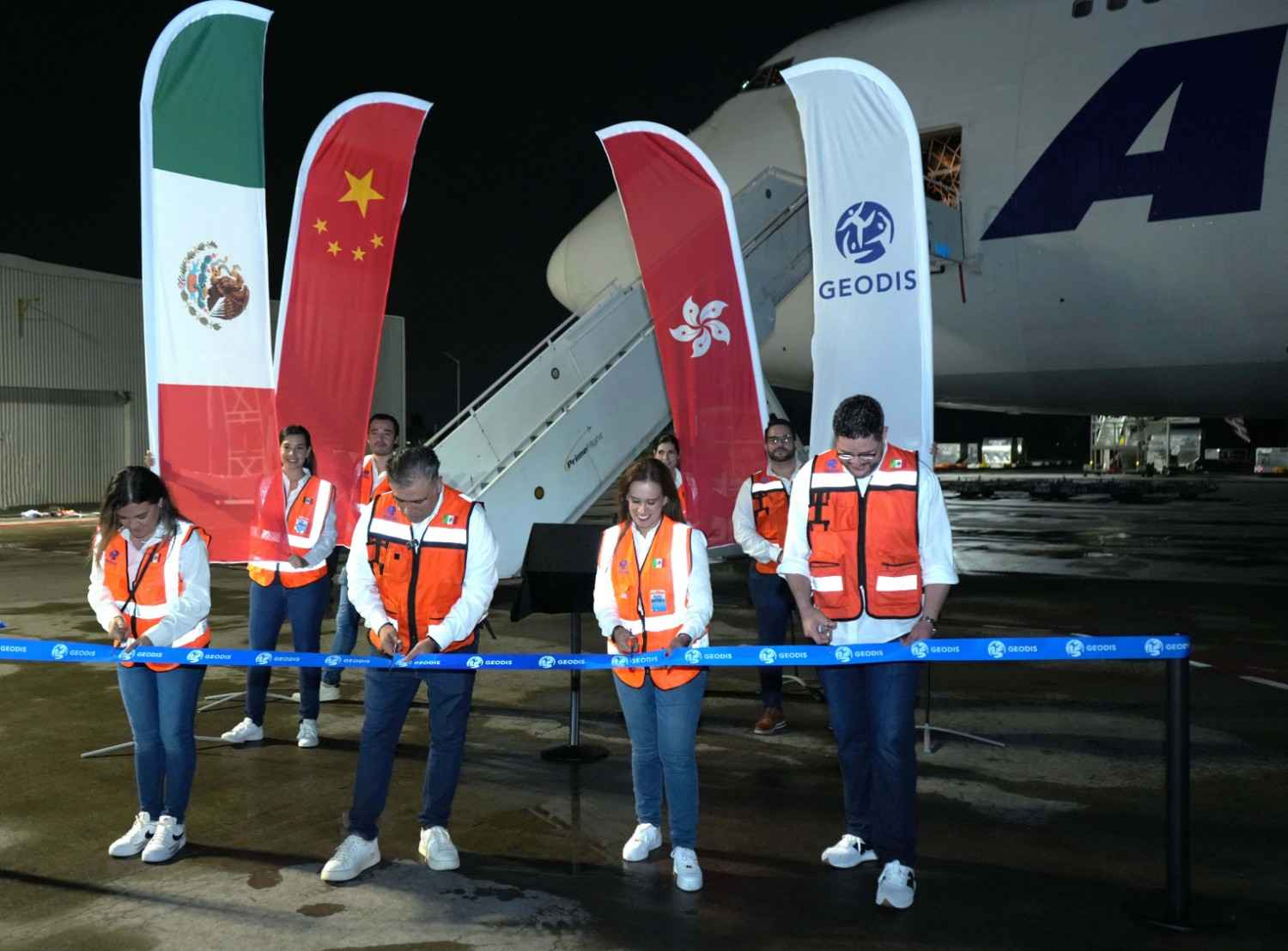
The 500th flight was celebrated with a ceremony at the Guadalajara airport upon the flight’s arrival, which included a ribbon cutting with GEODIS leaders and the unveiling of a commemorative plaque.
LONDON: Lloyd’s Register (LR) has released updated guidance for the installation of fuel cells on ships, offering shipowners and shipbuilders a comprehensive framework to support the safe deployment of alternative power systems.
Fuel cells powered by hydrogen or ammonia are viewed as options for achieving zero or near net-zero tank-to-wake emissions. LR’s updated guidance corresponds to the 2024 Rule changes for fuel cell installations and presents revised safety concepts for onboard integration.
The guidance introduces two safety concepts for fuel cell spaces: emergency shutdown-protected fuel cell spaces and gas-safe fuel cell spaces. The gas-safe fuel cell space concept enables installation of fuel cell power systems within conventional machinery spaces and simplifies retrofitting, while ensuring compliance with fire protection, explosion prevention, and hazardous zone requirements.
The document also addresses lifecycle considerations such as degradation, maintenance, and end-of-life performance, as well as operational topics such as power conditioning, thermal management, and inert gas purging. Specific recommendations are provided for installation locations, access, and environmental resilience. The updated guidance highlights the importance of risk assessments tailored to each installation, considering hazards including fire, explosion, toxicity, and electric shock.
Thomas Bayer, Lead Specialist Fuel Cell Technology, Lloyd’s Register, said:“This new guidance is intended to provide detailed information for supporting the safe integration and reliable operation of fuel cell technologies on board ships.
“By meticulously detailing the framework for safe integration and operation of fuel cell technologies, we are not just providing guidance for understanding and implementing of LR rules; we are fostering innovation and building confidence in the next generation of propulsion systems.”
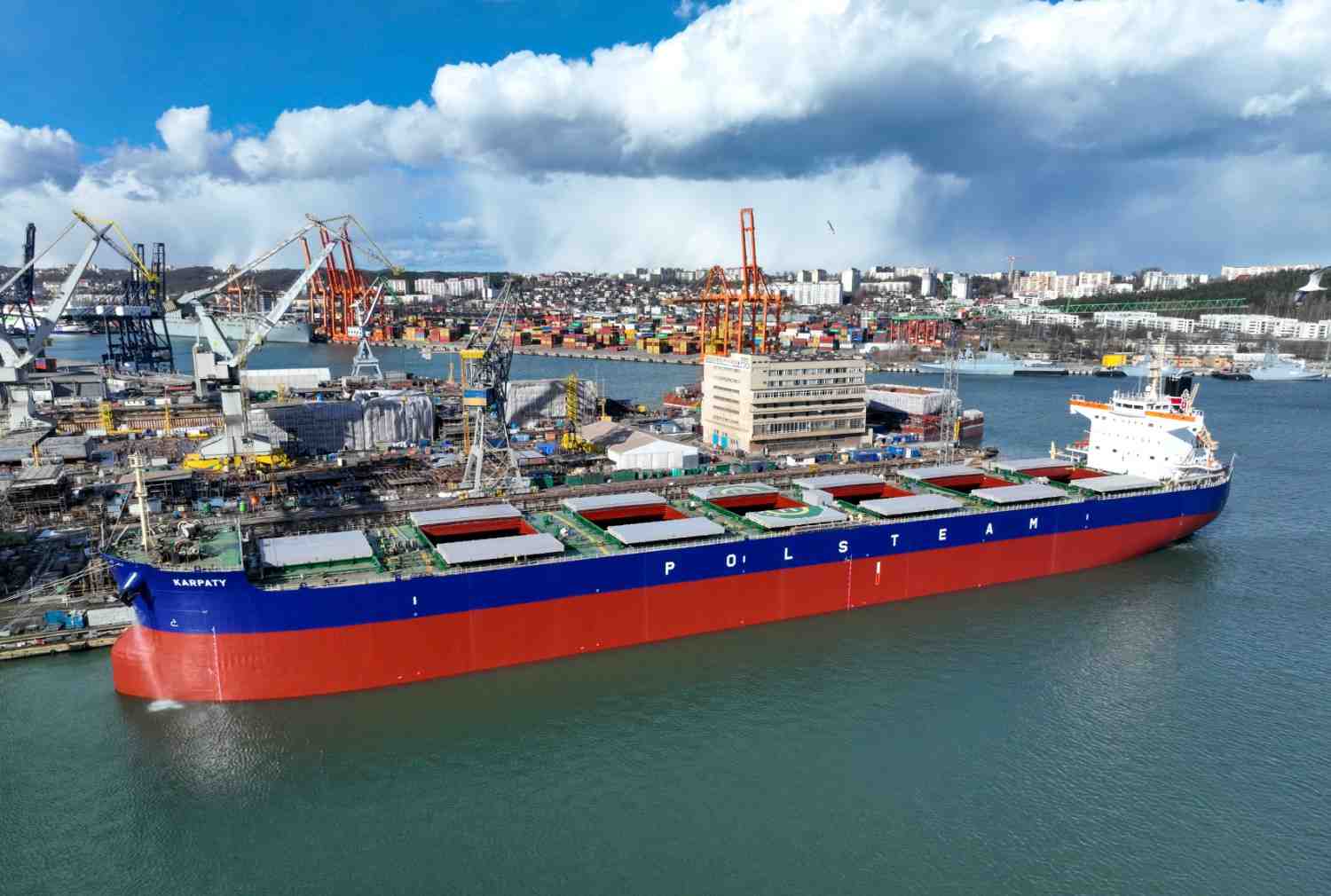
OSLO: Marlink, a leader in managed services for business-critical ICT solutions, has upgraded connectivity and cyber security solutions onboard 50 vessels controlled by leading bulk carrier operator Polsteam.
The SealinkNextGen hybrid network solution is a critical pillar in Marlink’s possibility platform which will support the company’s transition to digitalised shipping operations, enhancing safety and efficiency while enabling high quality crew communications. Polsteam will also utilise Marlink’s Unified Threat Management (UTM) solution to enhance the cyber resilience of its vessel operations.
Marlink will leverage its experience as a managed services provider to upgrade the hybrid network solution onboard, integrating LEO Starlink internet with traditional VSAT, managed by its XChange platform to enhance options available for business applications and improving connectivity available for crews.
The solution provides Polsteam with numerous benefits including:
High bandwidth, low latency communications via Sealink NextGen to support digitalised fleet operations;
Enhanced cyber security including application control, web filtering, intrusion protection and anti virus cyber solutions;
Hybrid solution designed for remote operations offers improved uptime and reliability with secure communications and data transfer;
The largest dry bulk vessel operator in Eastern Europe, Polsteam has a legacy of 70 years of uninterrupted activity in international shipping. Beginning in 1951 with shipping in the Baltic Sea and North Seas, today Polsteam manages ships transporting cargo around the world based on close relationships with important global cargo owners. “Our internationally trading fleet requires us to maintain a high level of interaction between masters and managers, using increasingly advanced tools for collaboration,” said Adam Rogucki, Technical Director, Polsteam.“The Marlink solution enables us to enhance our remote operations in a secure environment, increasing efficiency and leisure solutions for our crews.”
“Polsteam has a reputation as a committed long term player in the dry bulk market, with a requirement for high quality solutions from trusted partners,” said Tore Morten Olsen, President, Maritime, Marlink.“By addressing their needs for quality, security and enhanced connectivity options we are able to unlock opportunities and deliver tangible service enhancements.”
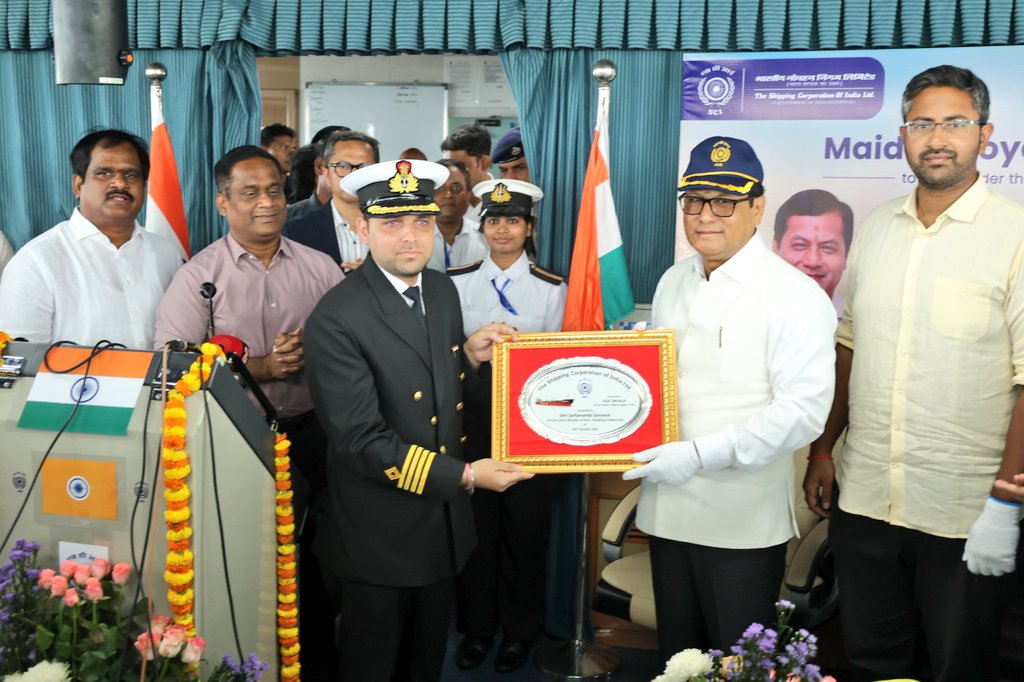
VISAKHAPATNAM : The Union Minister of Ports, Shipping and Waterways (MoPSW), Shri Sarbananda Sonowal received country’s third Very Large Gas Carrier (VLGC) “Shivalik” under the Indian flag marking a proud milestone in India’s maritime resurgence and energy security, as envisioned by Prime Minister Shri Narendra Modi under the Maritime Amrit Kaal Vision 2047.
Welcoming the vessel at Visakhapatnam Port, Shri Sonowal said the induction of ‘Shivalik’ by the Shipping Corporation of India Ltd. (SCI) reflects India’s growing capacity for “Atmanirbharata” (self-reliance) in the shipping sector and its increasing participation in the global energy trade.
“The arrival of Shivalik under our national flag is not just a fleet expansion , it is a statement of confidence in India’s maritime resurgence under the visionary PM Shri Narendra Modi and our growing strength as a leading global maritime nation,” Shri Sarbananda Sonowal said. “It symbolises the resilience, capability, and ‘Atmanirbharta’ that our beloved PM Modi has envisioned for Bharat. This initiative reinforces India’s commitment to building a strong, self-reliant, and globally competitive shipping sector to set the economy sail towards Viksit Bharat.”
The 82,000 CBM VLGC Shivalik, named after the Himalayan range, was inducted into SCI’s fleet on Sept. 10, 2025, and joins Sahyadri and Anandamayi as the corporation’s third VLGC. Built in South Korea, the 225-meter-long carrier represents cutting-edge maritime engineering with segregated tanks, advanced temperature control, and compliance with global safety and efficiency standards.
‘Shivalik’ completed her maiden voyage by loading more than 46,000 metric tonnes of liquefied petroleum gas (LPG) — comprising propane and butane — at Ruwais, UAE, before arriving in Visakhapatnam for discharge operations for Indian Oil Corporation Ltd. (IOCL).
The Ministry said the vessel’s arrival under the Indian flag has “immense strategic significance” as it strengthens India’s energy connectivity with the Arabian Gulf and ensures secure, efficient, and reliable LPG transportation to the nation.
“Our seafarers are the ambassadors of India’s maritime might,” Sonowal said, addressing the 29-member crew led by Capt. Bhaskar Tandon. “The Shivalik stands as a beacon of our determination to expand Indian-flag tonnage and reduce dependence on foreign carriers for critical energy cargo.”
He added that under Prime Minister Modi’s leadership, India is moving strongly toward becoming one of the world’s top five maritime nations by 2047.
“We are in the midst of the golden era for India’s maritime sector,” Sonowal said. “From policy reform to infrastructure creation, the transformation we are witnessing today is unprecedented. India’s maritime renaissance is well underway.”
The Union Minister outlined how this milestone aligns with the government’s larger strategy for maritime expansion and energy resilience. SCI’s ongoing collaborations with Oil and Steel PSUs, under the guidance of the Ministries of Ports, Shipping & Waterways (MoPSW) and Petroleum & Natural Gas (MoPNG), are paving the way for a new era of Indian-owned and Indian-flagged vessels.
“SCI is currently working with Oil PSUs to aggregate demand for 112 vessels and form a joint venture (JV) for long-term fleet augmentation. The initiative is expected to contribute to the nation’s efforts to save $75 billion (₹6 trillion) in foreign exchange paid annually towards freight charges to foreign shipping lines:” confirmed Shri Sarbananda Sonowal. Similarly, SCI’s partnership with Steel PSUs aims to strengthen the dry bulk segment, while its plan to establish the Bharat Container Shipping Line (BCSL) will boost India’s footprint in container shipping — enhancing EXIM efficiency and competitiveness.
“These initiatives not only reinforce India’s energy security and maritime capacity but also boost domestic shipbuilding, repair, and ancillary industries,” He added. “They will create high-quality employment and position India as a maritime power with resilience, innovation, and pride.”
The Minister highlighted a series of transformative policy measures undertaken by the government to build a robust maritime ecosystem. Sonowal said the ₹69,725 crore comprehensive package for the maritime and shipbuilding sectors will accelerate shipbuilding, modernisation, and competitiveness. The government has also extended the Shipbuilding Financial Assistance Scheme (SBFAS) till 2036 with a corpus of ₹24,736 crore, ensuring sustained support for Indian shipyards.
In addition, a Maritime Development Fund (MDF) worth ₹25,000 crore — comprising a ₹20,000 crore investment fund and a ₹5,000 crore interest incentivisation fund — has been established to enable long-term financing and strengthen the industry’s global competitiveness. The Shipbuilding Development Scheme (SbDS), with an outlay of ₹19,989 crore, aims to expand India’s domestic shipbuilding capacity to 4.5 million gross tonnage annually, boosting employment and skill development.
Shri Sonowal said these measures, coupled with infrastructure status for large vessels, customs duty exemptions for shipbuilding components, and reforms such as the extension of the tonnage tax regime to inland vessels, are “laying the foundation of a globally competitive maritime ecosystem.
“Our vision is to make India a design–build–finance–own–repair–recycling powerhouse,”. A future where a far larger share of India’s EXIM cargo sails on Indian-built and Indian-owned vessels. We are fixing historic cost disadvantages, creating world-class clusters, and accelerating the green transition that will power Viksit Bharat 2047.”
The Minister concluded by urging all stakeholders to seize this moment of transformation.
“The arrival of Shivalik symbolises India’s march toward maritime self-reliance and strength. Together, we are scripting a new chapter in India’s maritime destiny — one that sails under the proud tricolour, with confidence, courage, and conviction.”
The vessel was received in the presence of the Union Minister of Ports, Shipping and Waterways, Shri Sarbananda Sonowal along with Visakhapatnam MP Mathukumili Sribharat, MLA (Visakhapatnam South) Ch. Vamsi Krishna Srinivas, Visakhapatnam Port Authority (VPA) Chairman Madhaiyaan Angamuthu, and SCI Chairman and Managing Director Capt. B. K. Tyagi. Senior officials from SCI and VPA also attended the event.
The dignitaries were given a guided tour of the vessel’s Navigational Bridge and Cargo Control Room by Capt. Bhaskar Tandon, Master of Shivalik, and Chief Officer Vivek Tyagi. The visit underscored the government’s commitment to supporting Indian-flagged shipping and strengthening the country’s maritime presence.
Equipped with segregated tanks and advanced temperature management systems, Shivalik represents cutting-edge maritime engineering and operational efficiency. Capt. Tyagi said SCI is working closely with oil public sector undertakings (PSUs) to expand Indian tonnage, reduce dependence on foreign carriers, and enhance operational reliability and cost efficiency.
SCI’s fleet currently comprises 58 owned vessels, totalling 5.26 million DWT, across segments including crude carriers, product tankers, bulk carriers, container vessels, LPG carriers, and offshore support vessels.
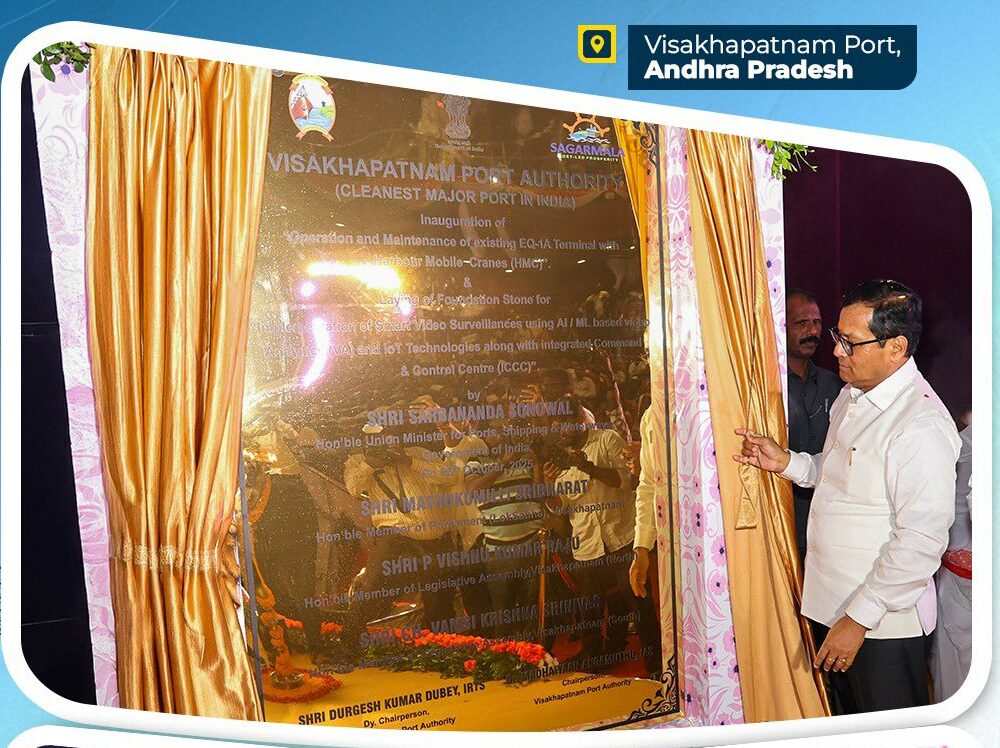
VISAKHAPATNAM: In a significant step towards realizing the Maritime Amrit Kaal Vision 2047, Shri Sarbananda Sonowal, Hon’ble Union Minister of Ports, Shipping & Waterways, inaugurated several key initiatives of the Visakhapatnam Port Authority (VPA) aimed at enhancing port infrastructure, improving operational efficiency, and fostering sustainable development.
Among the major projects inaugurated were the EQ-1A Terminal (Operation & Maintenance contract) developed with an investment of ₹130 crore, and the Smart Video Surveillance Project worth ₹37.53 crore. The new EQ-1A facility, equipped with two 120-tonne Harbour Mobile Cranes, will add 3 million tonnes per annum (MMTPA) of capacity, improve cargo handling efficiency, and create new employment opportunities. The advanced surveillance system will integrate AI/ML analytics and IoT-enabled monitoring through a centralized command and control centre, ensuring enhanced port safety and operational intelligence.
During the visit, the Minister also flagged off India’s first Very Large Gas Carrier (VLGC) ‘Shivalik’, marking a major milestone in India’s maritime energy logistics under the Indian flag.
Speaking on the occasion, Shri Sonowal said, “These projects reflect our commitment to creating world-class, green and technology-driven ports that support India’s economic growth and sustainability goals under the Maritime Amrit Kaal Vision 2047.”
These developments underscore Visakhapatnam Port’s growing role as a strategic hub on India’s eastern seaboard and reaffirm the Ministry’s focus on building a future-ready, sustainable maritime ecosystem that supports trade, employment and environmental responsibility.
MUMBAI : The India Maritime Week (IMW) 2025, scheduled to be held here during October 27-31, will bring together over 100 countries and several ministerial delegations with a focus on partnerships and generating investment opportunities worth Rs 10 lakh crore in the maritime and allied sectors, JNPA Chairman Unmesh Sharad Wagh said on Monday.
IMW is the flagship event of Ministry of Ports, Shipping, and Waterways. Jawaharlal Nehru Port Authority (JNPA) is the biggest stakeholder in the event. Wagh said the biennial event will showcase India’s rapid progress in ports, inland waterways, and the maritime industry.
“We want to showcase how fast the maritime sector is progressing. We have done a great job in ports and inland waterways and want to show that we are ready for Viksit Bharat by 2047 — and much before that in the maritime sector,” Wagh told a group of journalists on a familiarisation tour organised by the Press Information Bureau’s unit in Jammu and Kashmir.
All green players — whether in shipping lines, ports, or other related sectors — will participate in the event, allowing Indian players to interact directly and gain from their knowledge, Wagh said. On the target of attracting investments worth Rs 10 lakh crore, Wagh said “all such summits have MoUs for industry. That is our target — Rs 10 lakh crore — and we will achieve it. Rs 1.70 lakh crore-plus will be achieved by this port and the upcoming Vadhavan port alone.”
He said the summit would also feature state-level sessions, panel discussions on logistics and infrastructure, and a special conference on women in the maritime sector. Known as India’s biggest container port, JNPA at Navi Mumbai is a premier container-handling port, accounting for around 50 percent of the total containerised cargo volume across India’s major ports.
Currently, five container terminals operate at JNPA — Nhava Sheva Free Port Terminals (NSFT), Nhava Sheva International Container Terminal (NSICT), Gateway Terminals India Pvt Ltd (GTIPL), Nhava Sheva International Gateway Terminal (NSIGT), and the newly commissioned Bharat Mumbai Container Terminals Pvt Ltd (BMCT).
JNPA is also developing a satellite port at Vadhavan and dry ports at Jalna and Wardha to promote industrialisation in the hinterland.
NEW DELHI : The Union Minister of Commerce and Industry, Shri Piyush Goyal, is on an official visit to Doha, Qatar on 6–7 October 2025 to co-chair the meeting of the India–Qatar Joint Commission on Economic and Commercial Cooperation along with H.E. Sheikh Faisal bin Thani bin Faisal Al Thani, Minister of Commerce and Industry of the State of Qatar.
The first day of his visit began with a floral tribute to the statue of Mahatma Gandhi at the Embassy of India in Doha, followed by the planting of a sapling under the “Ek Ped Maa Ke Naam” initiative, symbolizing India’s commitment to sustainability and environmental stewardship.
A bilateral meeting of Commerce and Industry ministers of both sides was also held, where both Ministers reviewed the overall trade and economic relationship, addressed existing trade barriers, and explored new areas for cooperation in sectors such as finance, agriculture, healthcare etc.
The two Ministers then jointly addressed the India–Qatar Joint Business Council (JBC) meeting, attended by senior representatives from FICCI, CII, ASSOCHAM, and the Qatar Chamber, along with members of the business community from both countries. The Commerce and Industry Minister of India highlighted that despite global economic headwinds and supply chain disruptions, India continues to demonstrate strong macroeconomic stability for a thriving start-up ecosystem creating a highly enabling environment for global businesses and urged the Indian and Qatari business to explore greater opportunities.
Union Minister of Commerce and Industry co-chaired the Qatar–India Joint Commission on Economic and Commercial Cooperation with H.E. Sheikh Faisal bin Thani bin Faisal Al Thani, Minister of Commerce and Industry of Qatar. The meeting focused on strengthening bilateral trade and investment ties, addressing existing trade barriers and non-tariff challenges, and identifying new opportunities to boost economic cooperation across key sectors. Both sides reaffirmed their shared commitment to pursuing an ambitious India–Qatar Comprehensive Economic Partnership Agreement. While appreciating Qatar’s energy exports, including the long-term LNG supply agreement of 7.5 million tonnes per year from 2028, Shri Goyal stressed the need to boost India’s exports to Qatar. Despite bilateral trade standing at around USD 14 billion, both leaders recognized significant untapped potential of doubling bilateral trade by 2030. He identified promising sectors such as electronics, automobiles, pharmaceuticals, processed food, textiles, gems and jewellery, IT, and emerging high-tech industries and solar energy. He also underscored the importance of greater business interactions, and the success of the first face-to-face Joint Business Council meeting in fostering deeper economic ties.
On the side lines of the Joint Commission, the Hon’ble Minister held a series of high-level business meetings with senior Qatari dignitaries and corporate leaders. These interactions provided an opportunity to discuss avenues for greater investment flows, technology partnerships, and joint ventures between Indian and Qatari enterprises. Minister also participated in the launch of the Unified Payments Interface (UPI) at Lulu Mall, The Pearl Island, marking a key milestone in India’s digital cooperation with Qatar and enabling seamless digital transactions for the Indian diaspora and local consumers.
Union Minister of Commerce and Industry Shri Piyush Goyal, during his first visit to Qatar, addressed the vibrant Indian community, appreciating their role as a strong pillar of India–Qatar relations. He highlighted the deepening bilateral ties under the leadership of Prime Minister Narendra Modi and His Highness the Amir of Qatar, including the recent decision to elevate the relationship to a strategic partnership and the goal of doubling trade by 2030. Minister acknowledged the Indian community’s significant contributions to Qatar’s development and India’s growing economic strength, emphasizing India’s emergence as the world’s fastest-growing major economy and its vision of becoming a Viksit Bharat by 2047. Reaffirming India’s commitment to inclusivity, innovation, and global cooperation, he urged the Indian diaspora to continue serving as an important bridge between the two nations and as key partners in realizing India’s growth vision.