Home Blog Page 672

Ahmedabad Airport unveils integrated cargo terminal to boost Gujarat’s export logistics

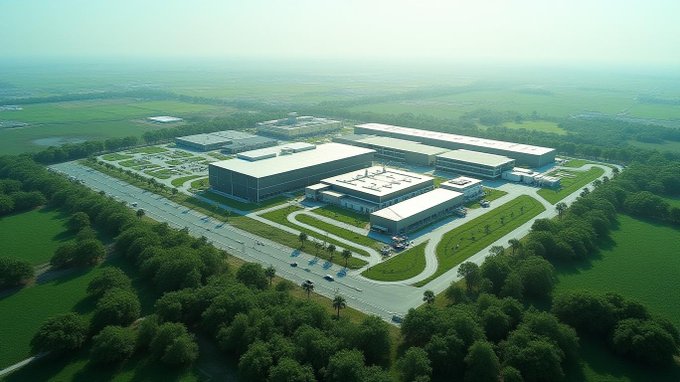
AHMEDABAD : Ahmedabad’s Sardar Vallabhbhai Patel International (SVPI) Airport has inaugurated an Integrated Cargo Terminal (ICT), significantly boosting its cargo handling capacity.

The new facility, spread over 20,000 square metres, can manage up to 200,000 tonnes of cargo annually – a fourfold increase from the previous 50,000-tonne capacity, sources said.

Ahmedabad International Airport Limited is managed by Adani Airport Holdings Limited (AAHL), India’s largest private airports operator. SVPIA is spread over 987 acres and is Gujarat’s busiest airport by passenger traffic. In FY 2024- 25, SVPIA had a footfall of 13.3 million passengers and managed nearly 280 Air Traffic Movements (ATMs) daily.

The new Integrated Cargo Terminal (ICT) at Ahmedabad’s SVPI Airport is designed to enhance efficiency and reliability in cargo movement, enabling faster and more dependable processing across its wider catchment areas in Gujarat, Rajasthan, and Madhya Pradesh.

Equipped with innovations like Automated Number Plate Recognition (ANPR) at truck gates, Handheld Terminal (HHT) operations, and barcode tracking, the facility offers real-time visibility for stakeholders-setting a new benchmark for supply chain technology in the region, sources said.

A dedicated cold-chain zone has been created to preserve product integrity, while advanced features – such as high dock counts, ball transfer decking and automated equipment – would boost efficiency during peak periods.

The ICT integrates world-class infrastructure with digital processes as a state-of-the-art platform.

Reflecting Gujarat’s dynamic industrial mix, the ICT handles a broad spectrum of cargo, including e-commerce, automotive parts, pharmaceuticals, valuables, and perishables.

Internationally, top exports include engineering goods, garments, pharmaceuticals, and chemicals. The terminal is prepared to manage emerging sectors and high-value cargo such as temperature-controlled shipments, electronic components, oversized equipment, live animals, and fast-moving e-commerce consignments to support the state’s growth, sources said.

SVPIA will continue to invest in infrastructure, digital systems, and multimodal connectivity to enhance speed, reliability, and cost efficiency, thereby giving the industries in Gujarat a significant boost. SVPI Airport remains dedicated towards establishing a modern, efficient, and resilient logistics ecosystem for Ahmedabad and the western region.
IMU ranks No.1 Maritime University in India in Outlook-ICARE Rankings 2025

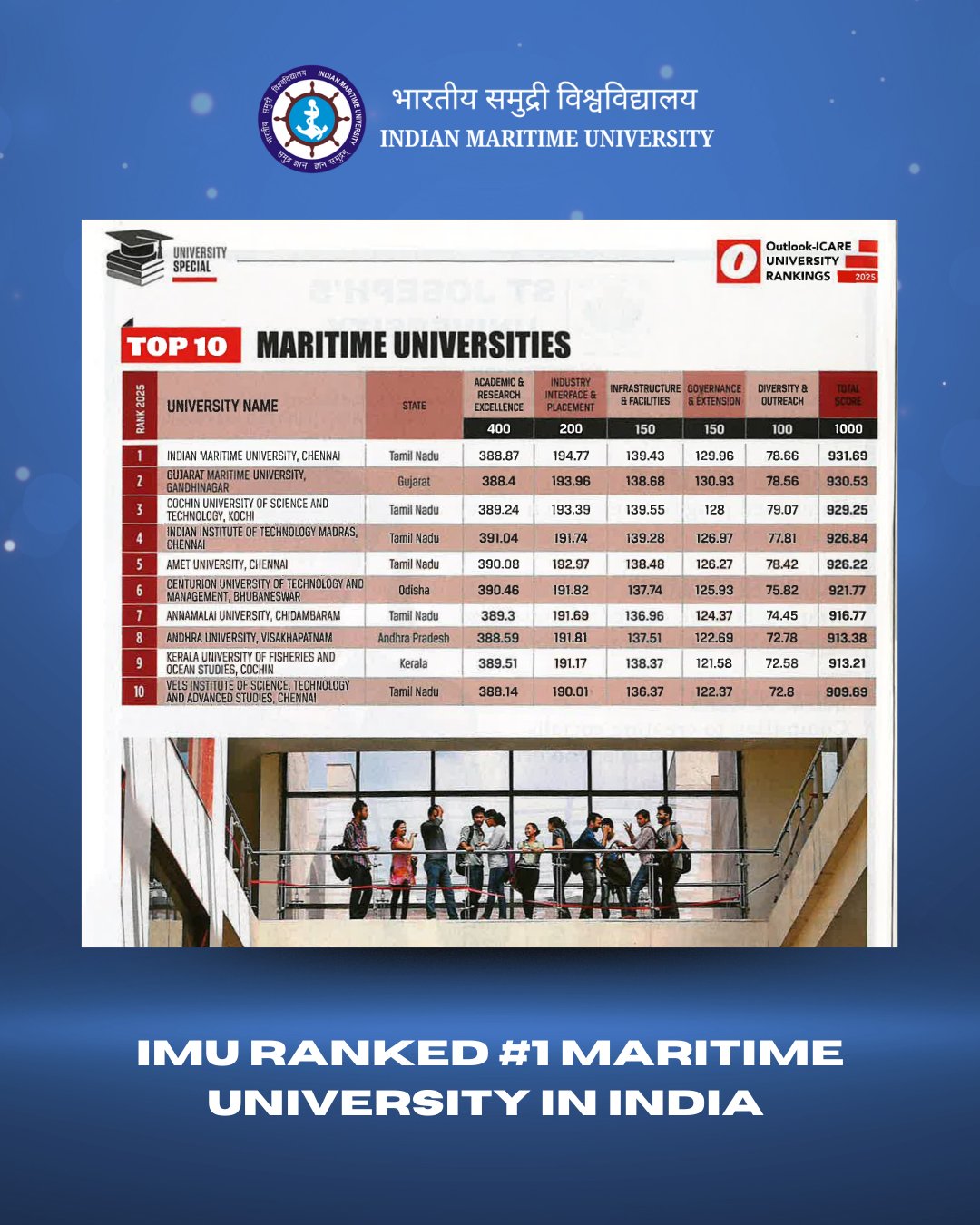
CHENNAI : Indian Maritime University (IMU) ranked No.1 Maritime University in India in Outlook-ICARE Rankings 2025.

The Indian Maritime University (IMU) has secured the top position among maritime universities in the country in the prestigious Outlook-ICARE University Rankings 2025. The recognition underscores IMU’s pivotal role in shaping India’s maritime education and strengthening the nation’s credentials as a global shipping and logistics hub.

Established in 2008 under the Ministry of Ports, Shipping and Waterways, IMU serves as the premier institution for maritime education, training, and research in India. With campuses in Chennai, Kolkata, Mumbai, Visakhapatnam, Cochin, and Navi Mumbai, the university offers undergraduate, postgraduate, and doctoral programs in diverse fields including marine engineering, nautical science, shipbuilding, logistics, and maritime law.

The Outlook-ICARE Rankings are widely regarded for their rigorous evaluation process based on academic reputation, research output, faculty quality, industry interface, and infrastructure. IMU’s No.1 ranking reflects its consistent focus on modernising curricula, enhancing industry partnerships, and investing in state-of-the-art simulation and training facilities.

Officials noted that the recognition comes at a time when India is pushing to expand its share in the global maritime trade and develop world-class human resources for the shipping sector. “This achievement is a testament to IMU’s commitment to excellence and its contribution to building a skilled maritime workforce that meets international standards,” said a senior IMU representative.

The university has also been expanding its collaborations with international maritime institutions and research centres, aiming to boost innovation in areas such as green shipping, port management, and digitalisation in logistics.

With this recognition, IMU has reaffirmed its leadership in maritime education, further strengthening its role as the backbone of India’s aspirations to become a global maritime power.

Udupi-CSL launches third vessel it built for Norway-based Wilson ASA

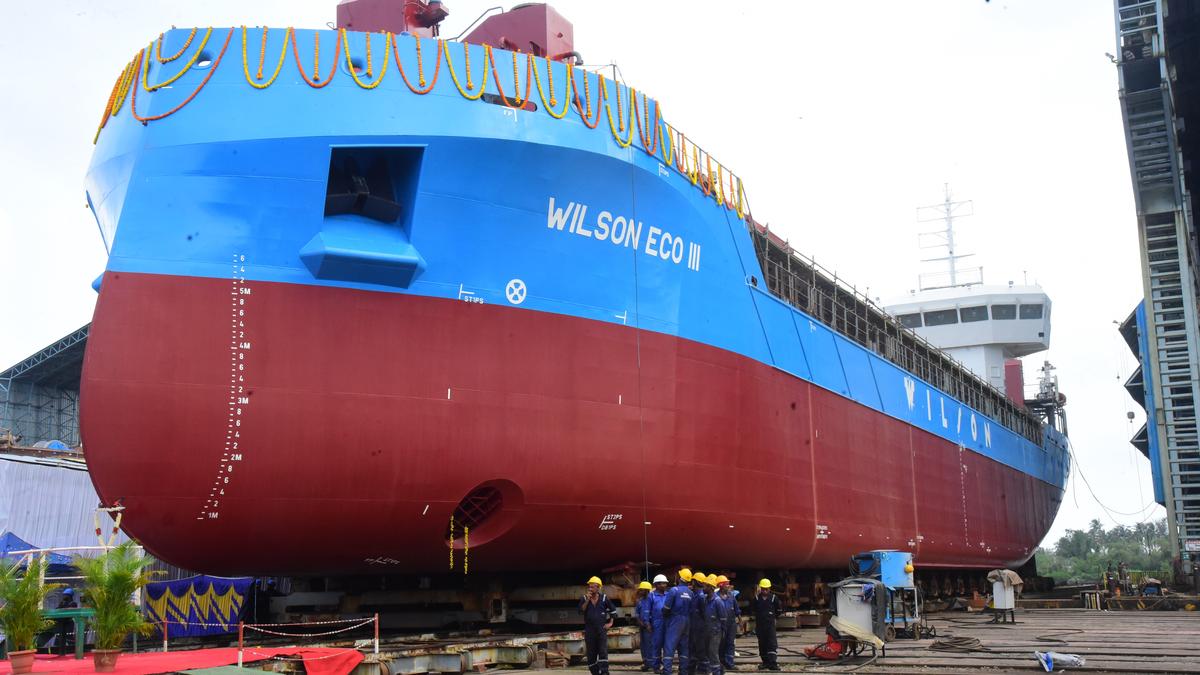
KOCHI : The Udupi Cochin Shipyard Limited (Udupi-CSL), a subsidiary of Cochin Shipyard Limited, has launched the third vessel in the series of six numbers of 3800 TDW general cargo vessel that was being built for Wilson ASA, a company headquartered at Bergen in Norway.

T.K. Swaroopa, Deputy Commissioner, Udupi district, launched the vessel at a ceremony in Udupi on Saturday. The vessel was 89.43 metres long with a breadth of 13.2 metre. It has a draft of 4.2 metre.

“The vessel, designed by Conoship International, Netherlands, is constructed as environment-friendly diesel electric vessels for the transport of general cargo in the coastal waters of Europe,” a release by the Udupi-CSL said.

The first vessel of the series, Wilson Eco I, was delivered to owners on April 23, 2025, and the second vessel, Wilson Eco II, will be delivered on September 11. The first vessel of the 3800 TDW general cargo vessel series has already been pressed into service in European waters.

“Wilson ASA is the leading short sea fleet operator in Europe, and transports about 15 million tonnes dry cargo across Europe. The company operates a fleet of around 130 vessels ranging from 1500 to 8500 DWT,” the release said.

Wilson ASA has further signed a follow-on order of eight numbers of 6300 TDW dry cargo vessels with the Udupi-CSL.

Since the takeover of the yard by the Cochin Shipyard Limited, the Udupi-CSL had delivered two 62T and 70T Bollard Pull Tugs each to renowned Indian tug operators. “The Udupi-CSL has order for 12 numbers of 70T Bollard Pull Tugs, which are in various stages of construction,” the company said.

Japanese major Fujifilm Electronic plans factory in Gujarat

DHOLERA : Signaling confidence in India’s semiconductor growth, Fujifilm Electronic Materials, a Japanese supply chain major, announced on Wednesday that it is keen to set up a factory in India.

According to a news report, Fujifilm, which supplies semiconductor materials used in wafer processing to clients such as TSMC and GlobalFoundries, said it is planning a facility in Dholera, Gujarat, marking its first large-scale investment in the country.

While the final plan is yet to be confirmed, the company is considering three options—setting up Fujifilm’s own production unit, licensed manufacturing by Indian firms, or a joint venture with semiconductor makers—the report quoted Tetsuya Iwasaki, General Manager of Fujifilm’s Electronic Materials Business Division, as saying on the sidelines of the Semicon India 2025 event.

Iwasaki added that Indian semiconductor companies have welcomed these collaborative models. Highlighting India’s strengths, he said the country has both technological expertise and skilled manpower, along with a fast-growing demand for chips in sectors such as automotive, electronics, data centers, and module packaging, making it a promising hub for the semiconductor industry.

DRDO organises conclave for capacity building of MSMEs for development of UP Defence Industrial Corridor

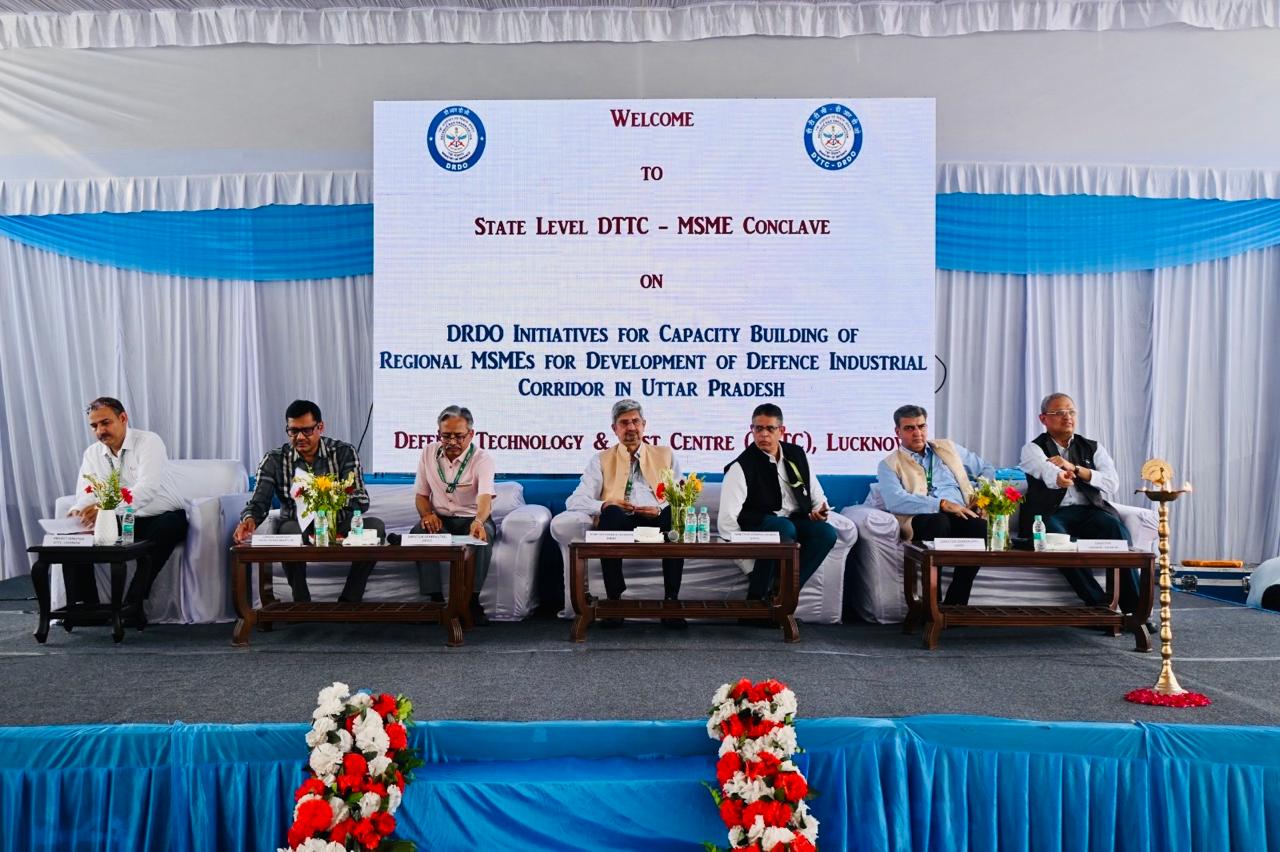
NEW DELHI : DRDO’s Defence Technology and Test Centre (DTTC), Lucknow conducted a conclave at Amausi Campus on September 06, 2025 to apprise and collaborate with MSMEs & start-ups for Defence R&D and production with an aim to further develop the Uttar Pradesh Defence Industrial Corridor. More than 100 participants from various MSMEs, Start-Ups and Laghu Udhyog Bharti deliberated upon aspects of Skill Development, Funding for R&D, Technical Consultancy and Technology Development & Transfer by DRDO.

PIC214B6CT DRDO organises conclave for capacity building of MSMEs for development of UP Defence Industrial Corridor

In his inaugural address, the DRDO Chairman described DTTC as a brainchild of Raksha Mantri Shri Rajnath Singh, which is today bearing fruits for the benefit of the industries. He informed the MSMEs about the various technologies & industry centric policies for the MSMEs and said that it is the opportune time for MSMEs to engage in Defence R&D. He assured that DRDO will provide all possible support to MSMEs to make the nation Aatmanirbhar Bharat leading to Viksit Bharat by 2047.

Raksha Mantri has complimented DRDO and the MSMEs for organising the conclave and appreciated the important role played by MSMEs to realise Prime Minister Shri Narendra Modi’s vision of Aatmanirbhar Bharat.

The dignitaries who attended the event include DG (Naval Systems & Materials) Dr RV Hara Prasad; DG (Technology Management) Dr LC Mangal and DG (Human Resources) Dr Mayank Dwivedi.

India reaffirms commitment to WTO – centred, fair trade system at SCO Trade Ministers’ Meeting

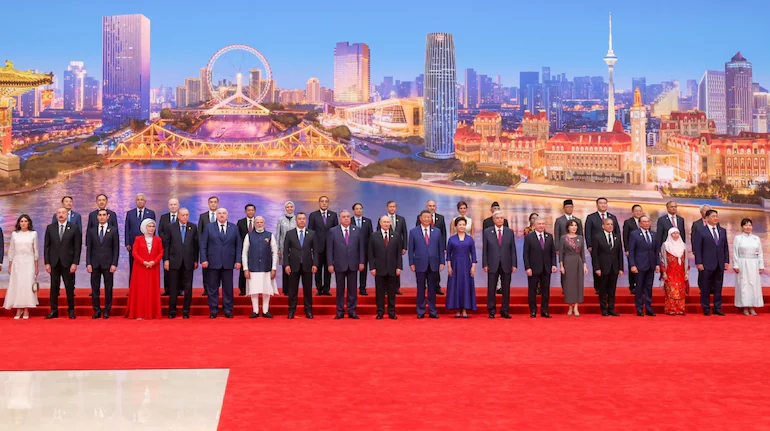
VLADIVOSTOK : India stressed the scope to leverage the Shanghai Cooperation Organisation’s (SCO) collective strengths for shared prosperity at the SCO Trade Ministers’ Meeting held in Vladivostok on 06 September 2025 and highlighted the need for export diversification, reducing dependency, and building resilient supply chains. With the SCO accounting for 42% of the world’s population and 17.2% of global trade, India emphasised the importance of coordinated action to enhance trade flows, address vulnerabilities, and support inclusive growth across the region.

Representing the Union Minister of Commerce & Industry, Shri Amitabh Kumar, Additional Secretary, Department of Commerce, underlined the need for an open, fair, inclusive and non-discriminatory multilateral trading system with the WTO at its core. He highlighted the importance of a development-centred agenda that includes a permanent solution on Public Stockholding (PSH) for food security purposes, effective Special & Differential Treatment (S&DT) for developing countries, and restoration of a fully functional two-tier WTO dispute settlement system. He also underlined the role of services trade and the temporary movement of skilled professionals, in line with national laws and transparency, to strengthen economic growth and support greater participation of MSMEs in global value chains.

India stressed the importance of diversifying and de-risking supply and production chains through geographical spread, interoperable logistics, predictable market access, and enhanced connectivity, while upholding principles of national sovereignty and territorial integrity. It noted that persistent trade imbalances must be addressed through better market access, cooperation on standards, and streamlined trade facilitation. India cautioned that export-related measures should not be weaponised or misused to create artificial scarcity, distort markets, or disrupt supply chains, and emphasised that their calibrated and transparent use is essential to maintain trust in international commerce.

On the digital economy, India proposed SCO workstreams focused on fair, transparent and predictable regulatory frameworks, voluntary cooperation on best practices, and capacity-building for secure, innovation-led digitalisation. India also showcased its achievements in Digital Public Infrastructure (DPI), including UPI for real-time payments, India Stack for identity and consent management, and ONDC for unbundled digital commerce. These initiatives were presented as low-cost, standards-based and replicable models to reduce MSME costs, expand access to markets, and enable real-time settlements, including through pilot projects among trusted partners.

On sustainable development, India emphasised equity and the principle of Common but Differentiated Responsibilities and Respective Capabilities (CBDR-RC). It highlighted the Mission LiFE (Lifestyle for Environment) initiative and underscored that climate action must be supported by finance and affordable technology flows. India also cautioned that trade-linked climate measures should not result in arbitrary or unjustified discrimination.

India spotlighted the AVGC sector (Animation, Visual Effects, Gaming and Comics) as an engine of employment, exports and inclusive growth. It recalled its successful hosting of the first-ever World Audio Visual and Entertainment Summit (WAVES 2025) earlier this year, which attracted participants from over 100 countries. The Summit catalysed multiple initiatives, including Waves Bazaar for global media collaboration, WaveX for creative start-up funding, and Creatosphere for talent development through the Create in India Challenge. Through the India Cine Hub, supported by simplified regulatory frameworks and 17 co-production agreements already in place, India is positioning itself as a global film production hub.

India thanked the Russian Presidency of the SCO Council of Heads of Government (Prime Ministers) for steering a substantive trade and economic agenda and advancing practical cooperation. It reaffirmed its commitment to collaborate under Tajikistan’s Chairmanship of the SCO CHG in 2026–27 to promote sustainable and inclusive economic growth across the region.

Maersk celebrates 50 years in the container shipping business

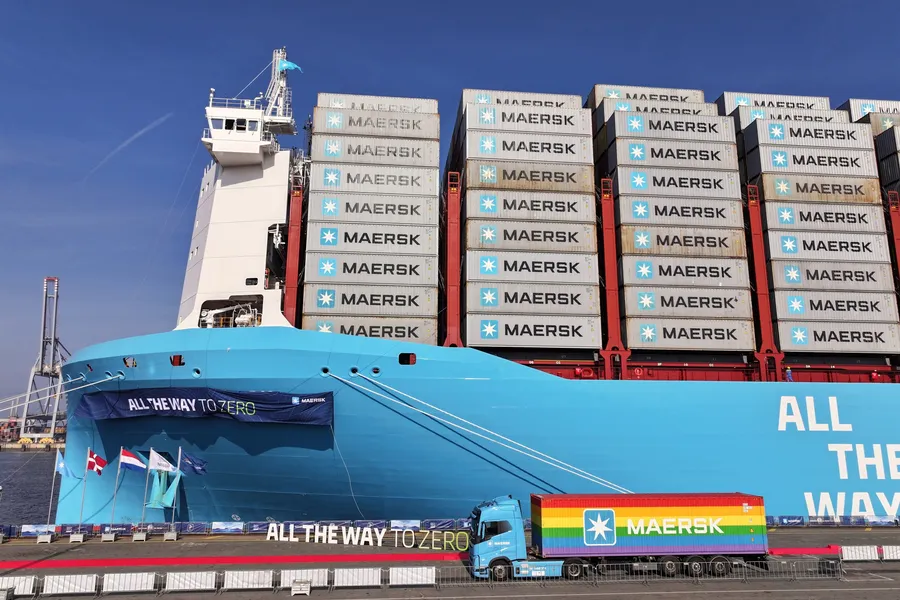
COPENHAGEN : AP Moller-Maersk celebrated 50 years Anniversary and entered the field of containerisation. The Danish giant got into the sector on 5 September 1975, when Maersk Mc-Kinney Moller inaugurated the first container service from the US East Coast to Asia. That moment marked the beginning of Maersk Line’s fully containerised services, notes Maersk historian Charlotte Andersen.

Maersk’s arrival in containers was late — considering that American entrepreneur Malcolm McLean had entered the sector in 1956. Competitors Sealand and NYK were already working on developing containers.“There were multiple factors to why we did not start a container service sooner,” Andersen told TradeWinds.

“ An internal study in 1970 had concluded a bit cautiously that the investment was too big to justify. “And since AP Moller had passed away in 1965, his son had launched many new businesses.”

Rather than take the plunge into containers, Maersk diversified into a wide range of industries, ranging from aviation to oil and gas. Taking on yet another huge investment was risky, as investment in containers requiring substantial capital for vessels and equipment.

“Then in 1972 another internal study concluded that the ‘threat’ was too great to ignore, and we had to move forward with it,” Andersen said. By May 1973, the company had ordered nine container vessels from German shipyards.

The first vessel, the 1,800-teu Adrian Maersk, was delivered in August 1975.

It was introduced on the Panama Line, a service Maersk had been running since 1928, connecting the US East Coast to Asia via the Panama Canal. In the 10 years following its container shipping debut, Maersk added 33 container or semi-container vessels to its fleet.

By 1985, it was the world’s third-largest container carrier, and most conventional liner services had either been containerised or were in the process of being transformed.

“In just a decade, Maersk had restructured its global operations around containerisation — an extraordinary pace of change for a company that had once hesitated to take the first step,” Andersen said.

Today, Maersk is the world’s second-largest container line.

The company was founded in 1904 by AP Moller with a single steamship. It grew into one of the biggest shipping companies in the world, with interests in containers, tankers, offshore drilling, shipbroking, shipbuilding, ports and more.

Source: TradeWinds

Chattogram Port sets new record in container handling, aims for 3.7 million TEUs by 2025

CHATTOGRAM : Chattogram Port has achieved a historic milestone in container operations, following a record-high performance at the New Mooring Container Terminal (NCT) in August. The port now aims to increase its annual handling capacity to 3.7 million twenty-foot equivalent units (TEUs) by the end of 2025.

Captain Md Zahid Hossain, Chief Operating Officer of NCT, announced the ambitious target during a press conference on September 3. He highlighted that the terminal processed 122,517 TEUs in August, representing a remarkable 27.6% increase compared to August 2024, when it handled 96,000 TEUs.

The improved performance is attributed to enhanced operational efficiency following the management takeover by Chittagong Dry Dock Limited (CDDL) on 7th July . Captain Hossain explained that streamlined procedures have significantly reduced vessel turnaround times and waiting periods at the outer anchorage, leading to higher productivity. These improvements have accelerated container and vessel handling, contributing to the record-breaking figures.

If this momentum continues, the port’s management is confident it can reach the 3.7 million TEU target by 2025, up from 3.275 million TEUs handled in 2024, a 7.4% increase from 2023’s 3.05 million TEUs. The success is supported by CDDL’s efficient management, optimal utilization of equipment, and rigorous maintenance practices, positioning Chattogram as a more competitive regional hub.

However, Captain Hossain noted that the decision regarding the long-term operation of the terminal by CDDL will depend on policymakers.

Despite the positive growth, Chattogram Port’s global ranking slipped slightly, falling from 58th in 2019 to 68th in the Lloyd’s List One Hundred Ports 2025. In 2025, the Port of Dammam in Saudi Arabia surpassed it with 3.29 million TEUs, moving into 67th place.

As Bangladesh’s primary gateway, handling over 90% of the country’s international trade, Chattogram Port remains vital to the national economy. The New Mooring Terminal, inaugurated in 2007 with five berths, is the port’s largest container facility.

The port has historically faced challenges such as congestion, vessel delays, and slow container delivery, which have affected exporters and importers. To address these issues, the government has been pushing reforms and encouraging public-private partnerships aimed at improving operational efficiency. The handover of the New Mooring Terminal to CDDL, a state-owned enterprise specializing in shipbuilding and dockyard operations, is part of this strategic effort to reduce vessel turnaround times, enhance container handling, and restore the port’s status as a reliable regional logistics hub.

DP World launches new Morocco-UK-Europe Service to cut export times for fresh produce

LONDON: DP World is launching a Morocco to UK and North Europe service that will cut export times for fruit and vegetable shipments in the UK by up to two days, offering retailers and consumers better quality produce at lower cost and with a significantly reduced carbon footprint.

The new “Atlas” serviceconnects key hubs at Agadir and Casablanca in Morocco, with DP World owned ports and terminals, London Gateway and Antwerp Gateway, using two dedicated vessels starting in November 2025. The service will also take improved quality produce into Antwerp for distribution in Europe.

By moving up to 150.000 tonnes of fresh produce from road to sea each year, the route delivers a scale, sustainable logistics solution that reduces emissions by up to 250kg CO₂/ton-km. This is a 70% reduction compared to traditional trucking.

Unlike road transport on the 3,000+km journey, the new shipping service avoids congestion, bouts of serious vandalism and delays at border crossings while offering a smoother passage for delicate produce such as tomatoes and blueberries, which are prone to damage on bumpy roads.

The sea route, leveraging DP World-owned Unifeeder’s vessels and refrigerated containers (reefer) also offers a sustainable alternative to the congestion experienced on the water crossings between Tangier and Algeciras and Calais and Dover for UK- bound cargo.

Rashid Abdulla, MD and CEO, at DP World Europe, said: “We are launching a bespoke solution from Morocco to the UK and the Continent. The key elements of this service — reliability, fast transit times and modern IT platform — will provide exporters and retailers with a viable alternative to the current transportation by truck and ensure improved quality produce at lower cost with a significantly reduced carbon emissions.”

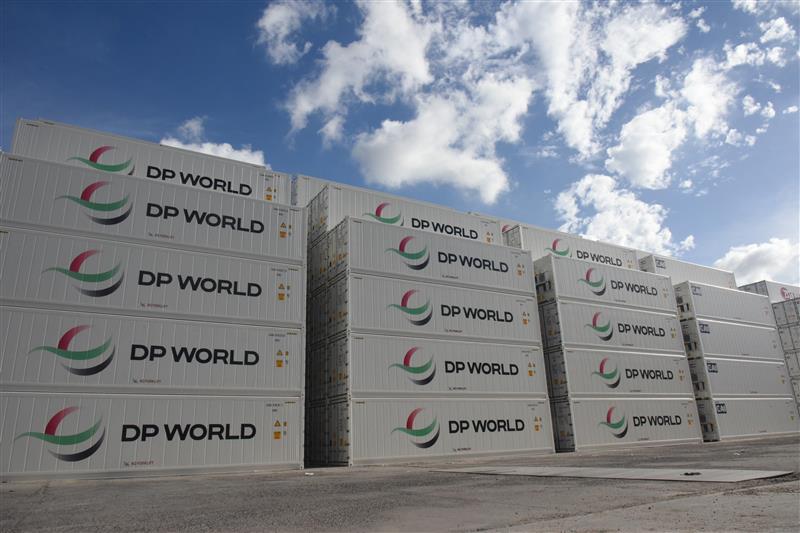
To guarantee condition and freshness, DP World has invested in a fleet of 1,250 brand new, modern reefers. In addition, a fleet of 1,000 4’ high cube and 750 20’ dry containers, will satisfy growing demand for general cargo flows between North Europe, the UK and Morocco. DP World will provide full visibility through its unique CARGOES digital platform to provide a true end-to-end supply chain.

Morocco exports over 6.5 million metric tonnes of fruit and vegetables annually to Western Europe, with volumes growing at over 20% year-on-year. Trade agreements and supportive policies are accelerating this momentum, making sea freight a timely and viable alternative to road.

Markus Rodatz, Chief Operating Officer, Freight Europe, at DP World, said: “We are committed to building smarter, more sustainable and more resilient supply chains. The new service gives growers and retailers the confidence that their produce will arrive fresher, faster and in peak condition, while cutting emissions by 70%. By investing in this Morocco to UK and the Continent, we are making trade flow and helping our customers meet their sustainability goals.”

DP World will formally launch the new shipping service an event in Agadir, Morocco, on 18 September.

US Economy on brink of recession, warns Moody’s Chief Economist

WASHINGTON : The state-level data in the US shows that the country is “on the edge of recession”, said Mark Zandi, chief economist at credit rating agency Moody’s.

According to Zandi, who was among the first economists to predict the 2008 financial crisis, the states that make up nearly a third of the US gross domestic product (GDP) are currently either in recession or at high risk of entering one.

“Based on my assessment of various data, states making up nearly a third of US GDP are either in or at high risk of recession, another third are just holding steady, and the remaining third are growing,” he wrote on social media platform X.

Further, in an interview with Newsweek, Zandi said: “For the average American, that risk shows up in two ways. It means higher prices at the store, and it means job disruption across industries tied to food, goods, and transportation.”

“Prices are already rising; you can see it in the data, but they’re going to rise to a degree that it will be impossible for people to ignore. They will see it clearly in the things that they’re buying on an everyday basis,” he added.

The economy is very close to a recession, based on data about spending, jobs, and manufacturing, he said, adding that he is worried about US tariffs hurting American companies’ profits and ongoing troubles in the US housing market.

Zandi also predicted that the annual inflation rate, currently at 2.7 per cent, will rise above 3 per cent and near 4 per cent by this time next year.

States experiencing recessions are spread across the country, but the broader DC area stands out due to government job cuts, Zandi said.

His analysis showed that southern states are generally the strongest, but their growth is slowing. California and New York, which together account for over a fifth of U.S. GDP, are holding their own, and their stability is crucial for the national economy to avoid a downturn

Wyoming, Montana, Minnesota, Mississippi, Kansas, and Massachusetts were some of the states at recession risk.

US consumers’ spending in 2025 until July has barely budged from last year’s end – worse than any year since 2008-09, indicating an economy on the brink of a recession, he noted.