Home Blog Page 692

MSC’s new ‘North India to Middle East’ Shipping Route adding Dammam

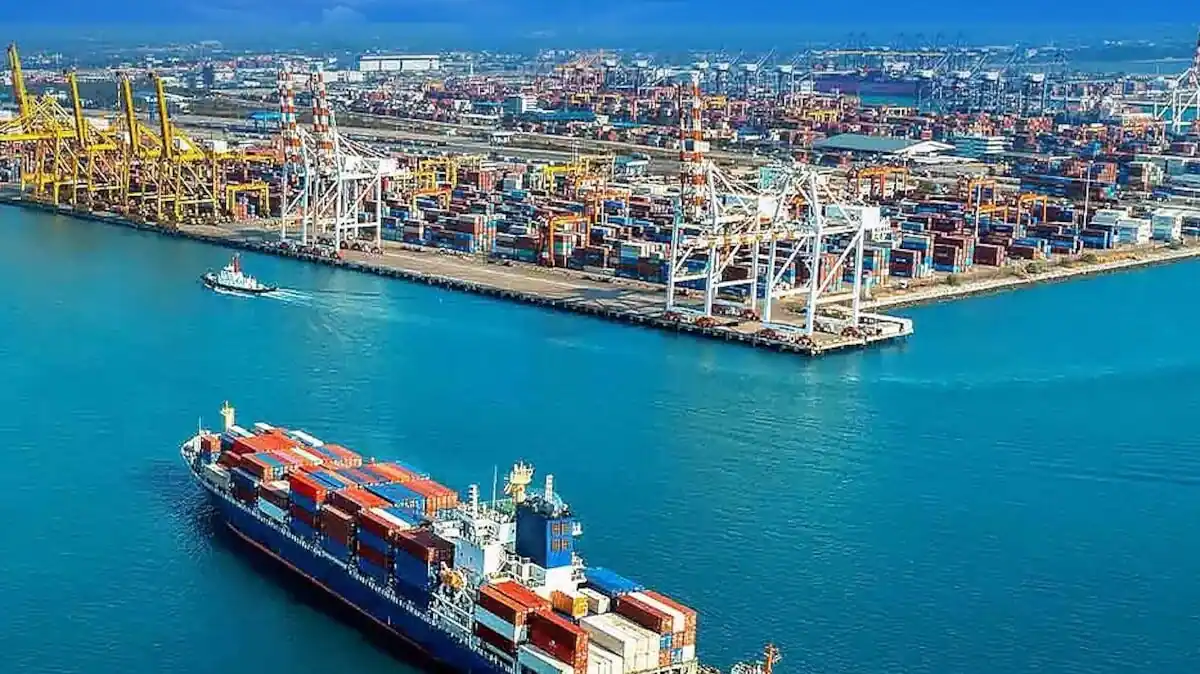
GENEVA : The Saudi Ports Authority (Mawani) has announced the addition of MSC’s new ‘North India to Middle East’ shipping service to King Abdulaziz Port in Dammam, aiming to enhance the kingdom’s role and boost its competitiveness regionally and internationally.

The new service connects King Abdulaziz Port in Dammam with the ports of Mundra, Nhava Sheva and Hazira in India, Sohar in Oman, Abu Dhabi in the UAE, with a handling capacity of up to 4,000 TEUs.
This step comes within Mawani’s efforts to improve the kingdom’s ranking in global performance indicators and enhance operational efficiency at King Abdulaziz Port in Dammam.

By doing so, Mawani supports the movement of national exports in line with the objectives of the National Transport and Logistics Strategy to establish the kingdom as a global logistics hub and a vital link between three continents.

King Abdulaziz Port in Dammam plays a key role in connecting the kingdom to the global economy and features fully equipped integrated infrastructure and logistics facilities attractive to major international companies, with 43 berths and a total capacity of up to 105 million tons of cargo and containers.

Höegh Autoliners announces Second quarter Results

NORWAY: Höegh Autoliners continued to report solid financial performance in the second quarter of 2025. The gross revenue was USD 367 million/NOK 3,785 million, operating profit (EBITDA) was USD 166 million/NOK 1,708 million, and net profit after tax was USD 123 million/NOK 1,268 million.

Highlights of the quarter

• Operating profit (EBITDA) of USD 166 million and net profit after tax of USD 123 million.
• A dividend for Q2 2025 of USD 137 million (USD 0.7181 per share) declared and will be paid out in September.
• Volume up 11% from Q1.
• Contract share of 81%, up from 73% in 2024.
• Q1 2025 dividend of USD 158 million paid in May 2025.
• The fifth Aurora Class vessel, Höegh Sunrise, was delivered from the yard in
• May, and the sixth vessel, Höegh Moonlight was delivered in June.

Subsequent events

  • Höegh Beijing sold for USD 43 million with delivery in Q3. The vessel is debt free.
  • Signed one three-year contract with an international car producer, contract value above USD 100 million

Andreas Enger, CEO of Höegh Autoliners, comments: “We are pleased to report another strong quarter despite ongoing global uncertainties and geopolitical tension. Our results reflect our strategy of ‘going long on cargo’ in late 2024, which has allowed us to steadily increase volume and increase our contract share from 73% in 2024 to 81% this year. We continue to see a resilient market and fleet utilisation remains high, however with increasing trade imbalances. We remain committed to our sustainability ambition and have announced a cooperation with Nordic Circles with the ambition of upcycling a vessel during 2026. As part of our ongoing commitment to delivering value to our shareholders, I’m pleased to announce a quarterly dividend of USD 137 million to be distributed in September”.

Outlook
Tariffs may over time result in lower volumes transported. New US port fees will be valid as of 14 October. The gross cost yearly impact is ~$30 million, the Company is working with its customers to mitigate the impact.

We expect Q3 to be in line with 1H 2025. Full report available here Full Report

Source: Höegh Autoliners

MISC Group financial Results for the Second Quarter of 2025

KUALA LUMPUR: Highlights of the MISC Group’s Financial Performance for the Second Quarter of 2025:
• Group revenue for the quarter ended 30 June 2025 and the period ended 30 June 2025 was lower than the corresponding quarter and the period ended 30 June 2024.
• Group operating profit and profit attributable to equity holders of the corporation for the quarter and period ended 30 June 2025 were lower than the corresponding quarter and period ended 30 June 2024.
• Group cash flows generated from operating activities for the period ended 30 June 2025 was higher than the corresponding period ended 30 June 2024.

Zahid Osman, MISC President and Group CEO said, “The second quarter of 2025 demonstrates how our delivering Progress strategy positions MISC to adapt, optimise, and capture value and opportunities in a dynamic market landscape. Through disciplined execution, we continued to generate healthy operating cash flows and maintained resilience across our business segments. Most importantly, we have made strides in achieving two additional key strategic milestones that established the foundation for our profitable new energy pillar in the Carbon Capture, Utilisation, and Storage (CCUS) space. I am proud of our team’s commitment to operational excellence and disciplined performance amid an increasingly competitive environment.

As we progress through the year, we will build on this momentum by reinforcing our core businesses, modernising our fleet, and accelerating growth in the new energy value chain. These efforts will ensure we continue to create long-term value for our stakeholders while playing an active role in shaping a sustainable future for the maritime industry.”

SUMMARY OF KEY FINANCIAL INFORMATION | 30 June 2025
Currency: Malaysian Ringgit (MYR)

Group Revenue, Operating Profit, Profit Attributable to Equity Holders of the Corporation for the Quarter Ended 30 June 2025

The Group revenue of RM2,721.3 million was RM608.1 million or 18.3% lower than the quarter ended 30 June 2024 (“corresponding quarter”) of RM3,329.4 million, mainly due to lower revenue from ongoing projects in the Marine & Heavy Engineering segment, coupled with lower earning days from contract expiries, vessel disposals and lower charter rates in the Gas Assets & Solutions segment.

The Group operating profit for the quarter ended 30 June 2025 of RM755.2 million was RM37.0 million or 4.7% lower than corresponding quarter’s profit of RM792.2 million due to lower margin from charter contracts and strengthening of RM against USD in the Petroleum & Products segment. In addition, the decrease in operating profit was also due to the lower level of project activities in the Marine & Heavy Engineering segment, reflecting new projects’ commencement phase. The decrease in operating profit was partially cushioned by profit contributions from an Floating, Production, Storage and Offloading unit (“FPSO”) in the Offshore segment, following its transition from the construction phase to the operational phase.

The profit attributable to equity holders of the corporation of RM464.4 million was RM76.5 million or 14.1% lower than the corresponding quarter’s profit of RM540.9 million due to the lower operating profit mentioned above.

Group Revenue, Operating Profit, Profit Attributable to Equity Holders of the Corporation and Cash Flows Generated from Operating Activities for the 6 Months Period Ended 30 June 2025

The Group revenue of RM5,537.4 million was RM1,430.3 million or 20.5% lower than the revenue for the 6 months period ended 30 June 2024 (“corresponding period”) of RM6,967.7 million mainly due to lower revenue from ongoing projects in the Marine & Heavy Engineering segment as several projects are nearing completion. The reduction in revenue is also attributable to lower earning days from contract expiries and vessel disposals as well as lower charter rates in the Gas Assets & Solutions segment and impact from strengthening of RM against USD in the current period.

The Group operating profit of RM1,612.4 million was RM61.8 million or 3.7% lower than the corresponding period’s profit of RM1,674.2 million mainly due to lower margins in the Petroleum & Products segment. In addition, the lower operating profit was also due to the lower level of project activities as new projects were at the beginning phases in the Marine & Heavy Engineering segment. The decrease in the operating profit was, however, offset by the higher profit in the Offshore segment, primarily contributed from the transition of an FPSO from the construction phase to the operational phase.

The profit attributable to equity holders of the corporation of RM1,170.1 million was RM54.2 million or 7.1% lower than the corresponding quarter’s profit of RM1,300.8 million in line with the lower operating profit as mentioned above, coupled with an impairment provision.

The Group recorded cash flows generated from operating activities of RM2,375.1 million for the period ended 30 June 2025, higher by RM812.5 million or 52.0% compared to RM1,562.6 million in the corresponding quarter due to higher collection from customers.

Moving Forward
In the GAS segment, LNG carrier charter rates are expected to remain soft through 2025, primarily due to continued robust fleet expansion and subdued tonne-mile demand. Despite the market headwind, the Gas Assets & Solutions sub-segment remained committed to improve operational efficiency and cost containment for existing steam vessels and strengthening its fleet rejuvenation strategy through the deployment of new, modern, eco-efficient LNG and ethane carriers. The segment is also actively exploring strategic options including vessel lay-ups and redeployment opportunities for vessels that are currently off charter.

In the Petroleum & Products segment, the crude tanker market is expected to remain relatively healthy through the remainder of 2025, underpinned by a balanced supply-demand outlook. This is supported by the prospects of increased OPEC+ exports, particularly heading into the seasonally stronger winter months, and modest fleet expansion, which is projected to remain limited and help sustain market stability. Nevertheless, the shipping market continues to face uncertainty amid a dynamic geopolitical environment and tightening regulatory requirements. The Petroleum & Products segment remains proactive in seeking opportunities to expand its contract portfolio and optimise fleet utilisation.

The Offshore segment continues to be supported by a positive outlook, underpinned by sustained global energy demand that is driving investment in upstream developments and exploration. These favourable market conditions are accelerating the growth of Floating Production Storage and Offloading (FPSO) activities, particularly in key regions such as South America, West Africa and the Asia-Pacific. The Offshore segment remains focused on strengthening its market presence and pursuing strategic growth opportunities to capture long-term value.

In the Marine & Heavy Engineering segment, escalating trade tensions and prolonged geopolitical conflicts and policy changes are expected to continue to weigh on global economic growth by disrupting supply chains, altering trade flows and contributing to a more cautious investment sentiment. Despite these challenges, the Heavy Engineering sub-segment is focused on building a well-balanced portfolio by strengthening its conventional energy business and progressively expanding into the new energy sector. Concurrently, the Marine sub-segment will continue to pursue vessel repair and conversion projects, while enhancing yard infrastructure and optimising operational efficiency to sustain long-term competitiveness.

Source: MISC Berhad

OrbitMI acquires Gale Force, Enhancing Voyage Optimization Platform with Integrated Advisory Services

NEW YORK: OrbitMI, a leading provider of maritime SaaS software, announced its acquisition of Gale Force, a respected provider of maritime advisory services. Gale Force specializes in voyage optimization, environmental compliance, and voyage execution support.

This acquisition represents a strategic step forward in OrbitMI’s mission to deliver a comprehensive, intelligent maritime platform that meets the evolving expectations of clients. By integrating Gale Force’s expertise directly into the Orbit platform, clients gain faster access to actionable insights through intelligent, connected workflows. OrbitMI remains fully committed to partnerships with leading technology and data providers, whilst recognizing that certain capabilities are best delivered directly within the Orbit platform to ensure tighter integration, faster responsiveness, and greater alignment with customer workflows.

Building on the recent acquisition of AI specialist AuQub, the Gale Force acquisition underscores OrbitMI’s belief that combining deep domain expertise with technology is key to delivering actionable insight, whether that expertise lies in machine learning or maritime routing.

“We’re building more than a platform, we’re building a partner in maritime decision-making,” said Ali Riaz, CEO of OrbitMI. “Bringing Gale Force into the OrbitMI family allows us to embed critical advisory services directly into daily workflows, helping our clients move from insight to action even faster.”

OrbitMI remains committed to an open and collaborative approach when it comes to weather services and we will continue to support integrations with a range of providers. Whether a client has a preferred weather partner in place or requires capabilities better matched by an alternative provider, OrbitMI’s goal is to ensure they have the flexibility to choose the solution that best fits their needs. “The client’s success continues to be our North Star,” added Riaz.

OrbitMI * Gale Force: A Powerful Combination of Technology and Expertise

Gale Force brings a unique blend of advanced analytics and hands-on maritime experience. The company’s route optimization services combine sophisticated algorithms with expert marine meteorologists, offering voyage plans that reduce fuel consumption, increase safety, and improve schedule reliability. Their emissions reporting tools ensure compliance with global regulations such as IMO DCS, EU MRV, and CII, while their flexible reporting templates integrate easily with existing shipboard systems.

“Gale Force brings practical maritime insight that sharpens our platform’s decision support capabilities,” said Alexandre Lapointe, Chief Product Officer at OrbitMI. “Their operational and environmental expertise lets us build tools that reflect the realities of day-to-day shipping.”

Through this acquisition, OrbitMI customers will benefit from:

  • Human-in-the-loop weather routing that balances efficiency with real-world operational conditions
  • High-accuracy fuel and emissions tracking, including CII ratings and EU/ETS reporting
  • Validated performance monitoring that isolates true vessel efficiency, adjusted for weather and sea state
  • Seamless data collection via integrated APIs or offline templates with built-in validation
  • Expert advisory support available in real time or post-voyage for performance claims and incident review

A Shared Vision for the Future of Maritime

Gale Force’s founder, Tom Sandberg, and his team will join OrbitMI, contributing decades of experience in naval architecture, marine meteorology, and shipping operations. With a global client base and offices in Sweden and Norway, Gale Force enhances OrbitMI’s regional footprint and technical depth.

“We’ve always believed that better data leads to better decisions—but only when it’s supported by the right expertise,” said Sandberg. “Joining OrbitMI allows us to bring our advisory model to a broader audience, embedded in a platform built for scale and impact.”

“Shipping Ministry to explore dedicated satellite technology for the Indian maritime sector” : Sarbananda Sonowal

NEW DELHI : The Union Minister of Ports, Shipping and Waterways (MoPSW), Shri Sarbananda Sonowal said the Ministry will explore the possibility of launching a dedicated satellite or acquiring a transponder to strengthen India’s maritime governance and port management infrastructure.

“Our Ministry should plan to launch a satellite of our own or acquire a dedicated transponder for the Indian maritime sector. This will strengthen India’s coastal and port management infrastructure through advanced space-based solutions,” Union Minister Shri Sarbananda Sonowal urged the top officials of the ministry on the occasion of National Space Day.

According to the Union Minister, the proposed system would provide exclusive coverage for Indian coastal waters, inland waterways and port regions, integrating with national maritime databases to offer real-time monitoring of vessel traffic, navigational safety and port operations.

“This will help in enhanced vessel traffic monitoring, real-time ship tracking across India’s coastline and EEZ, early identification of congestion and improved navigational safety. It will also improve preparedness for search-and-rescue, pollution control and disaster management, while reducing dependence on foreign navigation systems and supporting Atmanirbhar Bharat vision of PM Shri Narendra Modi ji,” Shri Sarbananda Sonowal added.

Highlighting India’s recent achievements in the space sector, the Minister said the country has emerged as a global leader in science and technology. “India has made remarkable progress as a nation in science and technology and has built one of the world’s most respected and efficient space programmes,” Shri Sarbananda Sonowal said.

The Union Minister Shri Sarbananda Sonowal recalled India’s journey in space research, its quest of knowledge for the betterment of humanity.

“We also launched Aditya-L1 in 2023, India’s first solar observatory to study the sun. More recently, Group Captain Shubhanshu Shukla became the first Indian to complete a mission to the International Space Station. Soon, thanks to the hard work of our scientists, India will launch the Gaganyaan mission and build its own space station. Under the visionary leadership of Prime Minister Shri Narendra Modi ji, India’s space programme has made remarkable progress in addressing diverse challenges and unlocking new frontiers of opportunity,” Shri Sarbananda Sonowal said, while recalling Prime Minister Shri Narendra Modi’s remarks as well as his leadership of India’s Space programme since 2014.

Extending his greetings, Shri Sarbananda Sonowal said: “Let me convey my best wishes to each and every Bharatiya on the occasion of National Space Day and let me also urge the youth of our nation to reach out not just to the sky but to space.”

Sarbananda Sonowal announces land parcel for Assam at Colaba, Mumbai; Lease of 60 years by MPA

MUMBAI ; In a boost to Assam’s development journey, Union Minister of Ports, Shipping and Waterways (MoPSW) Shri Sarbananda Sonowal announced that FOUR bighas of land have been allotted by the Mumbai Port Authority (MPA) on lease for a period of 60 years to the Government of Assam. Located at the prime real estate of Mumbai’s Colaba, the said parcel of land paves the way for the state to develop essential public infrastructure for the direct benefit of its citizens.

The decision follows a written request from the Chief Secretary of Assam to the Union Ministry, seeking allocation of land for a dedicated centre or infrastructure project that can serve the long-term needs of the people. With today’s announcement, the PM Shri Narendra Modi Government has reaffirmed its commitment to support Assam in designing and implementing people-centric projects in the fields of healthcare, education, and social welfare.

Speaking on the occasion, Shri Sarbananda Sonowal said, “This is a people-first initiative. By making this land available to the Government of Assam for 60 years, we are enabling the creation of critical infrastructure that will serve generations to come. The project will be developed in line with the needs and aspirations of the people of Assam. Located at the heart of Mumbai in Colaba, this will plug a big aspiration of the people of Assam to have an access in the Mumbai city that can serve the needs of people, be it patients, be it students or even entrepreneurs.”

The Union Minister further informed that he had personally spoken to Assam Chief Minister Dr Himanta Biswa Sarma regarding the development. “The Chief Minister expressed deep satisfaction and appreciated the Government of India’s support. He termed this step as a vital contribution to Assam’s growth story and a milestone in our shared commitment to improving the lives of the people,” Shri Sarbananda Sonowal added.

While the specific plans for development are under consideration, officials indicated that the focus will be on building infrastructure with high public utility — ranging from healthcare and educational needs to welfare and social service facilities as well as acting as an incubation centre for entrepreneurs. The 60-year lease ensures the government has ample time and flexibility to plan and execute sustainable projects.

Shri Sarbananda Sonowal underlined the vision guiding this initiative, “Prime Minister Narendra Modi ji has always emphasised that the Northeast must become a powerhouse of growth, driven by empowerment of its people. Today’s decision is another step towards realising that vision of an inclusive and sustainable Atmanirbhar Northeast. Mumbai is a financial hub. With the development of this land parcel, we are confident that the entrepreneurs from the state can also have access to the opportunities from the maximum city.” The newly allotted land will add fresh momentum to this development trajectory, ensuring that the benefits reach the grassroots.

SMP Kolkata turns deficit into ₹501 Crore surplus: Shantanu Thakur

KOLKATA : Syama Prasad Mukherjee Port (SMP Kolkata) has recorded a remarkable turnaround, shifting from a net deficit of ₹70.24 crore in FY 2013-14 to a surplus of ₹501 crore in FY 2023-24, marking a significant milestone in India’s maritime growth story.

The achievement was highlighted by Hon’ble MoS for Ports, Shipping and Waterways Shri Shantanu Thakur at the event “Unlocking India’s Future: Inclusive Port-led Industrial Growth”, organised by SMP Kolkata on Friday, August 22 as a precursor to India Maritime Week 2025.

Shri Thakur attributed the transformation to strategic investments, infrastructure upgrades, and policy reforms under flagship initiatives such as Sagarmala and Bharatmala, with over ₹5,000 crore allocated for port development. “This success reflects the Hon’ble Prime Minister’s visionary approach towards transforming India’s ports, shipping, and inland waterways sector,” he said.

As part of India’s maritime growth strategy, SMP Kolkata is set to play a pivotal role in enhancing trade competitiveness, accelerating industrial growth, and strengthening the country’s position as a global logistics hub.

EAM Jaishankar says Russian oil wrongly projected as issue in US Tariff row

NEW DELHI : External Affairs Minister Dr.S Jaishankar on Saturday said that US President Donald Trump has a very public way of conducting his foreign policy, including on trade matters. The Union minister indicated that the issue of India buying Russian oil was not discussed prior to Trump’s announcement, which raised tariffs on India to 50 percent.

Speaking at the Economic Times World Leaders Forum 2025, the EAM highlighted that Trump, in majority of the cases, conducts his foreign policy very publicly.

“We’ve not had a US President who’s conducted foreign policy as publicly as the current one. That itself is a departure that’s not limited to India,” said Jaishankar

The EAM added that there has not been a US president that conducts their domestic matters has publicly as Trump does.

“President Trump’s way of dealing with the world, even dealing with his own country, is a very major departure from the traditional orthodox manner of doing so,” he said.

Speaking on Trump’s tariff, the minister added that Trump’s use of tariffs for trade and non-trade matters is novel. The EAM added that the first pronouncement from the Trump admin is often made first in public, and then to the concerned party.

“The fact that a lot of this is said in public. Often, the first pronouncement in public is even more unusual. This is a situation which the entire world is facing,” said Jaishankar.

EAM highlights three key issues
The EAM highlighted three issues when it comes to Trump and India, the first being trade.

“Negotiations (India-US trade negotiations) are still going on. But the bottom line is we have some red lines. Negotiations are still going on in the sense that nobody said the negotiations are off. People do talk to each other. It’s not like there’s a ‘kutti’ there… Where we are concerned, the red lines are primarily the interests of our farmers and, to some extent, of our small producers,” said Jaishankar.

The second issue is “being presented” as an oil issue. As per the EAM, the ‘same arguments which are being used to target India have not been applied to the largest oil importer – China and the largest energy importer, which is the European Union.”

While referring to the percentage of India’s oil purchase made by US Treasury Secretary Scott Bessent, the EAM stated that – “If the argument is percentage of increase– yes, some countries have not increased their percentage because they have gone and bought oil from Iran, to which the Americans also have an objection,” said Jaishankar.

The union minister also shared that with the Biden administration knew about India’s oil trade with Russia through a series of “explicit conversations,” following which, a price cap came into being.

The third issue was regarding mediation, to which the minister said that the Indian government does not accept any external mediation, especially when it comes to its relationship with Pakistan.

JNPA eyes 100 hectares of Palghar Forest for stone quarry to build Vadhavan Port

MUMBAI : The Jawaharlal Nehru Port Authority (JNPA), in partnership with the Maharashtra Maritime Board, is advancing plans for the upcoming Vadhavan Port in Palghar district by seeking 100 hectares of forest land to establish a stone quarry. The quarry will serve as a key source of construction material for the port’s ambitious infrastructure, JNPA Chairperson Shri Unmesh Wagh confirmed.

Wagh explained that the stones would be used to build the offshore breakwater, port facilities and other supporting structures. “We have been allowed to conduct necessary tests to check the quality of stones,” he said, as quoted by the Hindustan Times.

Geo-technical Survey to be Done

On Wednesday, the state forest department issued a government resolution (GR) permitting JNPA to conduct a geo-technical survey across 295.23 hectares of dense forest land in Khanivade and Gargaon villages. The GR allows drilling of 20 boreholes for testing.

Officials clarified that the legal status of the land would remain unchanged during the testing phase and that no tree felling would be permitted. Based on the survey results, JNPA will select 100 hectares for quarrying. However, environmentalists have raised strong concerns over the move alleging that the planned quarry would damage the local ecology.

Details of Mega Project

The proposed Vadhavan Port is one of India’s largest greenfield maritime projects, requiring reclamation of nearly 1,448 hectares of land from the sea. The plan includes a 10.14-km offshore breakwater and extensive cargo and container storage facilities. Once completed, the port is projected to handle around 23.2 million TEUs (twenty-foot equivalents) annually, placing it among the top global ports.

The first phase of the project is expected to be ready by 2029. The port will feature nine container terminals, each 1,000 metres long, four multipurpose berths including a coastal berth, four liquid cargo berths, a roll-on/roll-off berth and a Coast Guard berth.

To support logistics, the port will be connected via a 32-km road to the Mumbai-Ahmedabad highway and a 22-km road to the Mumbai-Vadodara highway. A 12-km rail line will link it to the Delhi-Mumbai dedicated freight corridor, further boosting its role as a strategic maritime hub.

India-China-Russia: How Trump’s tariffs could give birth to a $54 trillion global powerhouse

NEW DELHI : Despite the Trump-Putin meeting and the Trump-Zelensky meeting, uncertainty over the Russia-Ukraine war persists, and disputes over trade tariffs are still ongoing. A strategic convergence is reshaping the world’s economic architecture in the corridors of power from Beijing to Moscow to New Delhi. What appears as diplomatic pleasantries masks one of our time’s most consequential trade realignments.

Amid news of Russian President Vladimir Putin visiting India by the end of 2025, Indian Prime Minister Shri Narendra Modi is poised to set foot in China for the SCO Summit, his first visit in seven long years. This isn’t routine diplomacy. It’s the stealthy forging of a strategic triad—Dragon, Bear, and Tiger—assembling beneath the radars.

According to experts, Trump’s tariffs are expected to do little in the current global merchandise trade, as we are not living in a unipolar economy. After the inception of the WTO, around three and a half decades ago, the global economy has turned multipolar. They said that countries are ready to leave their political egos and move with the business flow in the current economic setup. However, they also maintained that Trump’s tariff is expected to force a realignment in the geopolitical setup, and the recent trinity in the India-China-Russia should be seen from this angle. They said overdependence on the US dollar in the global economy is also a reason for the rising bonhomie in these three nations.

Speaking on the rising bonhomie in Russia-India-China, Manish Bhandari, CIIA & Founder of Vallum Capital, said, “Each nation brings unique strengths to this trinity: China’s manufacturing dominance, Russia’s energy supremacy, and India’s service economy and huge untapped markets. This convergence represents more than mere trade statistics. It embodies a fundamental shift from a unipolar to a multipolar world order, where traditional Western-controlled trade routes face unprecedented competition from Eurasian alternatives. The consequence of shifting trade to respective home currency will be momentous on the trade and financial markets, thereby reducing reliance on the US dollar by a major fold.”

Top 5 reasons for this trinity
1] Strength in unity: Speaking on the rising India-China-Russia trinity, Manish Bhandari said, “In a world of 8.2 billion people and $173 trillion in economic firepower, three ancient titans have risen to dominate the global stage. Chin-India-Russia. Together, they command $53.9 trillion in GDP (PPP)—nearly one-third of the planet’s economic output. Picture three mighty rivers of power and ambition, merging into a single, unstoppable force.” He said that Trump’s tariff is trying to alienate countries like India, China and Russia from the global merchandise. However, the White House move seems to have worked as a binding force for these three nations.

2] Dominance in export: “India-China-Russia together exports $5.09 trillion—almost one-fifth of global merchandise exports—flowing through continents, fueling global trade, connecting billions through innovation, technology, and industry. With $4.7 trillion in foreign reserves—38% of the world’s safety net—they’ve built an economic fortress, unshakable even in the fiercest storms. And with 3.1 billion citizens, representing 37.8% of the total population, they form the largest, hungriest consumer market in human history,” said Manish Bhandari.

3] Over dependence on the US dollar: “In the current business scenario, there is over dependence on the US dollar and Trump’s tariff is aimed at maintaining the status quo in the global merchandise. The US administration is trying to reprimand every country that has directly or indirectly supported the de-dollarisation drive by Russia and China. After the US and European countries’ sanctions on Russia, India and China bought Russian crude in local currency, enabling them to accumulate more dollars in their reserves. This is expected to help them in the currency war amid escalating trade war tension,” said Sandeep Pandey, Co-founder of Basav Capital.

4] Hit on US dominance in defence deals: Sandeep Pandey of Basav Capital said that Trump’s tariff aims to maintain its Dominance in the global defence deals. The US government is not just asking its trade partners to pay higher tariffs for their US exports; they are asking them to execute defence deals either with the US or with the European countries that belong to NATO. This is indirectly aimed at alienating Russia, China and to some extent India from the global defence market.

“India-China-Russia is not just growing. They’re flexing. $549 billion in military spending — 20.2% of the world’s defence budget. 35% of global energy consumption— powering their rise and lighting the way for others. This isn’t data. It’s destiny: the rise of three civilisations, echoing through markets, mega cities, and minds—the new heartbeat of the global economy,” said Manish Bhandari of Vallum Capital.

5] Renaissance of partnership in global order: “Looking at the USP (Unique Selling Proposition) of India-China-Russia, Russia can provide cheaper oil and energy, China is a manufacturing hub, and India is a service hub. So, India can easily combine with Russia and China. As India already has a strong bond with Russia, Trump’s tariffs have made an environment where both New Delhi and Beijing are looking at each other to find an avenue for the revenue to pare the export business they would be losing due to Trump’s tariffs,” said SEBI-registered Avinash Gorakshkar.

Manish Bhandari believes India will be a dominating partner in this trinity, “The convergence of China, Russia, and India represents more than an economic alliance—it embodies the emergence of a new world order where Eurasian powers shape global trade flows. Russia will supply cheap energy and allied resources to its economic partners, and China will enhance the game by investing in Indian entities, addressing new domestic and global markets. India, which remained out of the global export ecosystem, is set to rejoin it. The narrative of the future is going to be India+2 rather than China+1. Growing up, I always enjoyed the multi-starred movies. It’s time to watch another one.”

On how this trinity can help New Delhi to kill multiple sparrows with a single arrow, Gaurav Goel, Founder & Director at Fynocrat Technologies, said, “The trinity may help India to bargain with Beijing on its Belt and Road Initiative (BRI). And this is the right time, as rising tariffs from the United States under President Trump and new trade barriers in Europe are squeezing China’s exports. Many companies are also shifting supply chains to India, Vietnam and other countries, weakening China’s traditional manufacturing advantage.”

Source : MINT