Home Blog Page 739

New Lloyd’s Register assessment boosts containership fatigue life up to 15%

New methodology delivers more accurate fatigue life predictions for containerships and gas carriers through revision of worldwide trading routes.

LONDON : Lloyd’s Register (LR) has enhanced its Fatigue Design Assessment (FDA) methodology by updating worldwide trading patterns for containerships and gas carriers based on comprehensive analysis of Automatic Identification System (AIS) data from the past 11 years.  

This major revision represents the first update to FDA trading routes in over 12 years. The updated trading patterns reveal encouraging results for vessel operators, with the revised analysis showing increases in predicted fatigue life of up to 10-15% for containerships and up to 10% for gas vessels.  

These improvements result from incorporating routing factors obtained from extensive AIS data analysis, delivering more accurate structural assessments that reflect actual vessel operations rather than relying on historical estimates. LR’s updated approach enables more precise fatigue life calculations, supporting better-informed decisions regarding vessel design, maintenance scheduling, and operational planning. 

LR has also refined its containership categorisation to reflect the segmentation of modern container vessels. The updated classification system now includes Ultra Large Container Vessels (ULCVs) with capacity of 14,501 TEUs or greater, alongside revised categories for New Panamax (10,000-14,500 TEUs), Post-Panamax (5,101-10,000 TEUs), Panamax (3,001-5,100 TEUs), Feedermax (2,001-3,000 TEUs), and Feeder vessels (1,001-2,000 TEUs). 

Nick Gross, Global Containerships Segment Director, Lloyd’s Register, said: “This comprehensive update to our Fatigue Design Assessment methodology represents a significant advancement in how we evaluate vessel structural integrity. Our analysis of extensive AIS data revealed that ships are operating quite differently from our previous models, particularly in terms of route optimisation and weather routing. This translates directly into improved fatigue life predictions that shipowners can rely on for better operational and maintenance planning.” 

Gulftainer bolsters Iraq Container Terminal’s efficiency with latest addition of three new Kalmar Reach Stackers

UMM QASR : Gulftainer, a UAE-based global supply chain and logistics solutions provider, with an international footprint of ports, terminals, warehouses and transport facilities, has announced a significant expansion in its operational capacity at Iraq Container Terminal (ICT). The company recently received the delivery of three state-of-the-art Kalmar Reach Stackers, which will be deployed at ICT in the Port of Umm Qasr, located in southern Iraq.

The introduction of these advanced container handling machines comes as part of Gulftainer’s ongoing commitment to improving terminal efficiency in response to rising cargo volumes by reducing turnaround times for containers, optimising terminal space through high stacking capabilities, and ensuring reliable, timely delivery of goods. This strategic investment underscores the company’s dedication to providing the highest standards of service to its customers across the region.

These machines feature a rotating cabin, providing 360-degree movement for precise control and efficiency. They are fitted with adjustable spreaders to handle containers of different sizes, such as 20-foot and 40-foot units. Powered by hydraulic systems, they offer smooth, controlled lifting and stacking operations, while energy-efficient engines reduce fuel consumption. Additionally, their safety features like load-sensing technology, stability control, and cameras enhances operational safety.

Nic Gray Managing Director Gulftainer Iraq Gulftainer bolsters Iraq Container Terminal’s efficiency with latest addition of three new Kalmar Reach Stackers
Mr. Nic Gray

Nic Gray, Managing Director for Iraq Operations at Gulftainer, said: “The continued investment in our facilities highlights Gulftainer’s commitment to supporting Iraq’s expanding trade sector. These new reach stackers will further strengthen ICT’s ability to provide efficient and reliable service. Our customer service remains unparalleled in the region, which is clearly reflected in the terminal’s strong year-on-year performance.”

As the logistics and port infrastructure in Iraq continues to develop, Gulftainer remains at the forefront of the industry, actively investing in innovation and capacity to support Iraq’s economic growth and its integration into global trade networks.

This latest addition to Gulftainer’s fleet comes at a pivotal moment for the region, as the demand for more efficient and scalable solutions in the port sector continues to rise. With these new Kalmar reach stackers, Gulftainer is well-positioned to further enhance the efficiency and reliability of its operations, benefiting customers and stakeholders alike.

Baltic Index extends gains on strong Capesize Rates

LONDON : The Baltic Exchange’s main sea freight index rose for the third straight session on Thursday, driven by higher rates for capesize vessels.

The main index, which tracks rates for capesize, panamax and supramax shipping vessels, rose 138 points, or 6.5%, to 2,258 points, its highest level since March 2024.

The capesize index climbed to a one-year peak, gaining 451 points, or 13.5%, to 3,790.

Average daily earnings for capesize vessels, which typically transport 150,000-ton cargoes such as iron ore and coal, increased $3,741 to $31,429.

“We forecast that bulker deliveries will gradually increase this year and in 2026, reaching 41.2 million Deadweight Tonnes (DWT) and a six-year high,” Filipe Gouveia, shipping analysis manager at BIMCO, said in a note dated Wednesday.

“Bulker newbuilding contracting was strong in 2023 and 2024, and several of the ships ordered during this period are expected to be delivered during this and next year.”

Dalian iron ore futures prices closed lower, pressured by increasing supply from top miners Vale and Fortescue, and higher steel inventories at Chinese mills.

The panamax index slipped 23 points, or 1.2%, to 1,882.

Average daily earnings for panamax vessels, which usually carry 60,000-70,000 tons of coal or grain, decreased by $202 to $16,940.

Among smaller vessels, the supramax index shed 15 points, or 1.1%, to 1,298.

Source: Reuters

MoPSW to host Maritime Financing Summit 2025

NEW DELHI : The Ministry of Ports, Shipping & Waterways(MoPSW) is organizing the Maritime Financing Summit 2025 today (July 24, 2025) with a theme Seas of Opportunity, Streams of Investment: Maritime Financing Summit 2025.

The Summmit will be graced with the august presence of the Union Minister of MoPSW Shri Sarbananda Sonowal and Shri Shantanu Thakur.

Maritime Financing Summit 2025 MoPSW to host Maritime Financing Summit 2025

Hon’ble Prime Minister Shri Narendra Modi had said, “the government is working to bring together all stakeholders in the sector through maritime clusters. Ship-building and repair centers will be developed in many places. Make in India, Make for the World!”

The summit will discuss port financing, insurance, shipping, shipbuilding, leasing, and ownership, fostering global partnerships and reinforcing India’s position as a premier hub for maritime trade.

The summit is poised to:
. Catalyze innovative financing and digital transformation across India’s ports, shipping, and shipbuilding sectors to unlock investment and drive global competitiveness.
. Build consensus and actionable strategies among key stakeholders, bridging policy and market practice to realize India’s Maritime Amrit Kaal Vision 2047

The key area of focus will be :
. Shipbuilding in India – the Financial perspective
. Maritime Development Fund (MDF)
. Promoting / Enhancing Indian tonnage
. Vessel Leasing & Indian Flagging
. Financial Digital Maturity of Ports

National seminar on ‘India’s Maritime Vision’ to be held in New Delhi with focus on heritage, security & vision for Viksit Bharat by 2047

NEW DELHI : The Centre for Joint Warfare Studies, the Tri-Services think-tank under Headquarters Integrated Defence Staff, is organising a two-day national seminar on ‘India’s Maritime Vision’ in New Delhi on July 24-25, 2025. The event is being conducted in collaboration with Maulana Abul Kalam Azad Institute of Asian Studies, Ministry of Culture.

The seminar is aligned with the vision of a ‘Whole of Nation’ approach, bringing together strategic, cultural, and developmental stakeholders to explore India’s evolving maritime narrative. The event reflects the synergy of defence, diplomacy, academia, industry and cultural institutions – a hallmark of comprehensive national power in the making.

The seminar is designed to explore India’s maritime journey – from its ancient seafaring traditions and historical port networks to contemporary maritime challenges and opportunities in the Indo-Pacific. Sessions will delve into strategic connectivity, maritime security, economic linkages, blue economy and the role of coastal infrastructure and governance in shaping India’s future.

The event brings together an illustrious panel of speakers and participants, including senior serving officers from the Indian Navy & Indian Coast Guard; Scholars from leading universities & maritime research institutions; Representatives from the shipping & port infrastructure sectors; Experts from think-tanks, policy bodies & strategic affairs institutions; and Cultural historians & practitioners.

The seminar directly contributes to the national goal of achieving Viksit Bharat by 2047 as envisioned by Prime Minister Shri Narendra Modi. India’s aspiration to become a global maritime powerhouse by its centenary year of independence hinges on integrated thinking, sustained policy engagement and civil-military-academic collaboration.

India to gain from FTA with UK, 99% Indian exports to benefit from zero duty

NEW DELHI : Two months after India and United Kingdom concluded Free Trade Agreement (FTA), the two countries are poised to sign the mutually beneficial landmark trade pact during Prime Minister Shri Narendra Modi‘s visit to UK.

Ahead of PM Modi’s visit, the Union Cabinet approved the FTA on Tuesday. The deal, called the Comprehensive Economic and Trade Agreement (CEPA), is set to be signed on Thursday in presence of PM Modi and British Prime Minister Keir Starmer.

Commerce and Industry Minister Shri Piyush Goyal will also be in London for the crucial trade deal. India and UK had announced the conclusion of agreement on May 6 and the full text of the deal was held back pending final legal review.

The idea behind the trade deal is to eliminate or reduce tariffs on imports and exports between the two nations. This should make Indian products competitive in the UK and vice versa. Both nations desire to increase their trade to USD 120 billion by 2030.

As announced earlier, India is set to benefit from the elimination or reduction of tariffs on about 99 per cent of its exports to the UK post the FTA.

The FTA is expected to boost key sectors such as textiles, leather, footwear, sports goods and toys, marine products, gems and jewellery, engineering goods, auto parts and engines, and organic chemicals.

“The FTA ensures comprehensive market access for goods, across all sectors, covering all of India’s export interests. India will gain from tariff elimination on about 99% of the tariff lines covering almost 100% of the trade value offering huge opportunities for increase in the bilateral trade between India and the UK,” Commerce and Industry Ministry had said in its release on May 6.

India, in turn, will reduce tariffs on 90 per cent of its imports from UK (tariff lines) in phases, with 64 per cent seeing an immediate cut.

The British food and drinks sector will be among the immediate beneficiaries of the trade deal. Nearly 90 per cent of UK exports in this category are Scotch whisky, which currently faces a 150 per cent tariff. Under the new agreement, tariffs on whisky and gin will initially drop to 75 per cent, and further to 40 per cent over a period of ten years.

The agreement also includes commitments on services, covering IT/ITeS, financial and professional services (including architecture and engineering), as well as educational services.

It will simplify mobility for Indian professionals and provide a three-year exemption from social security contributions in the UK for temporary Indian workers and their employers. Social security contributions post FTA will be paid in India, rather than in both places.

Automotive tariffs is set to be cut from over 100 per cent to 10 per cent under a tariff rate quota system. This could pose a significant challenge to the Indian automobile sector and run counter to the ‘Make in India’ initiative.

The UK government announced on May 6, 2025 that the country had concluded a free trade agreement (FTA) with India describing it as a “huge economic win for the UK” and a “landmark trade deal”. It emphasised the potential of the Indian market with its economy expected to be the third largest in the world by 2028.

Some issues like details of auto quotas and carbon border taxes are still to be revealed. Politico earlier reported that the latter is being dealt with outside the trade deal in separate, ongoing negotiations. In addition, negotiations on a Bilateral Investment Treaty (BIT) are ongoing.

In his departure statement, PM Modi said that India and UK share a Comprehensive Strategic Partnership that has witnessed significant progress in recent years.

“Our collaboration spans a wide range of sectors, including trade, investment, technology, innovation, defence, education, research, sustainability, health and people-to-people ties,” he said.

PM Modi said that during his meeting with the UK Prime Minister, they will have the opportunity to further enhance our economic partnership, aimed at fostering prosperity, growth and jobs creation in both countries.

After UK, PM Modi will also visit Maldives in the second leg of his two-nation tour.

Vadhavan Port to add 23.2 million TEUs to India’s maritime capacity

MUMBAI : The Vadhavan Port, a major infrastructure initiative located on the India-Middle East-Europe Economic Corridor (IMEC), is expected to significantly boost India’s container handling capacity by 23.2 million TEUs (Twenty-foot Equivalent Unit). The development of this deep-draft port is set to strengthen India’s position as a leading global maritime hub.

The project is not only focused on enhancing port infrastructure but is also creating avenues for skill development and livelihood generation for local communities.

In a written reply to the Rajya Sabha, Union Minister of Ports, Shipping and Waterways, Shri Sarbananda Sonowal shared key updates on the progress of the Vadhavan Port Project. He said that the project is not only focused on expanding maritime infrastructure but also aims to create employment opportunities through targeted skilling initiatives in the region.

As part of these efforts, a Memorandum of Understanding has been signed between Vadhavan Port Project Ltd (VPPL) and Yashwantrao Chavan Maharashtra Open University (YCMOU) to promote education and training for local communities. Another MoU has been signed between the Jawaharlal Nehru Port Authority and the Directorate General of Shipping to provide skill development training to local residents and project-affected individuals through selected Maritime Training Institutes.

To support rural entrepreneurship and the agricultural value chain, VPPL has also entered into a strategic partnership with Sahyadri Farms. In addition, skill training programmes for heavy vehicle driving and mechanical work are being conducted in collaboration with non-governmental organisations in the region.

Further enhancing outreach, VPPL has launched a dedicated WhatsApp Chatbot to connect directly with the youth of Vadhavan. This platform enables interested candidates to easily access information and register for skilling programmes.

CONCOR’s Sweety Sharma clinches Gold at 2025 Asian-African-Pacific Powerlifting Championship in Japan

NEW DELHI : In a proud moment for the nation and the Container Corporation of India Ltd. (CONCOR), Ms. Sweety Sharma, a dedicated employee of CONCOR and accomplished athlete, has secured the gold medal at the prestigious 2025 Asian‑African‑Pacific Equipped Powerlifting Bench‑Press Championship held in Japan.

Ms. Sharma’s outstanding performance on the international stage is a testament to her unwavering determination, discipline, and athletic excellence. Competing against top contenders from across continents, she demonstrated exceptional grit and strength to emerge victorious in her category.

CONCOR, which has been a strong supporter of employee talent and development, proudly backed Ms. Sharma throughout her journey. In recognition of her remarkable achievement, Shri Sanjay Swarup, Chairman and Managing Director of CONCOR, extended heartfelt congratulations and felicitated her for the pride she has brought to the organization and to India.

“Ms. Sharma has not only made CONCOR proud but has also brought immense honour to the nation. Her success is a shining example of what dedication and perseverance can achieve,” said Shri Swarup.

The achievement has been widely celebrated within CONCOR and among the Indian sporting fraternity, with many hailing Ms. Sharma’s victory as an inspiration for aspiring athletes across the country.

CONCOR salutes her spirit and strength, and reaffirms its commitment to nurturing talent and empowering individuals to reach their full potential—both on and off the field.

GTRI warns India not to fall into ‘trap’, like imbalanced US-Indonesia trade deal

NEW DELHI : Claiming that the US-Indonesia trade deal was a “clear example of how aggressive US pressure can force” countries to ink one-sided agreements, think-tank Global Trade Research Initiative (GTRI) suggested India to be careful and not “fall into the same trap”.

The US-Indonesia trade deal was announced by the White House on July 22, 2025.

“The deal strongly favors the U.S., opens up Indonesia’s markets, weakens its domestic regulations, and damages its long-standing position at the WTO,” GTRI said in a report Wednesday.

For India, this US-Indonesia deal serves as a warning of what to avoid in trade negotiations with the US, GTRI asserted.

In the trade deal, Indonesia has agreed to eliminate 99 per cent of its tariffs on US exports, opening its market almost entirely to American industrial, tech, and agricultural goods. In return, the US will impose a 19 per cent tariff on Indonesian goods–reduced from an earlier proposal of 40 per cent. Additionally, US MFN (Most Favored Nation) tariffs will continue to apply on Indonesian exports.

Also, Indonesia has also agreed to buy USD 22.7 billion worth of US goods. This includes USD 15 billion in energy products (LPG, crude oil, gasoline), USD 4.5 billion in agricultural items (soybeans, soybean meal, wheat, cotton), and USD 3.2 billion in Boeing aircraft, according to the GTRI report.

“The U.S.-Indonesia trade deal forces Jakarta to give up key domestic regulations that have long protected its industries, food safety, and digital space,” GTRI said.

“Indonesia has agreed to eliminate local content requirements, which means U.S. companies can now operate in Indonesia without sourcing from local suppliers. This will hurt Indonesian MSMEs that rely on demand from larger firms. Making matters worse, there’s no rule requiring U.S. firms to disclose whether their inputs are sourced from China or other countries.”

“Indonesia will now accept U.S. vehicle safety and emissions standards. This allows American automakers to export directly to Indonesia without any local adjustments, while Indonesian vehicles would still have to comply with U.S. rules if they want to export there,” GTRI added.

“By agreeing to remove restrictions on remanufactured goods, Indonesia opens the door to a flood of low-cost, second-hand machinery and components from the U.S. This could severely impact local capital goods and engineering firms that cannot compete with cheaper refurbished imports,” the GTRI report read.

The US has been pushing for similar terms with India as well, GTRI asserted.

India now faces similar US demands, including allowing remanufactured goods, opening up agriculture and dairy, accepting genetically modified (GM) feed, and adopting US rules on digital trade and product standards.

“These are not small changes–they are major shifts that affect India’s long-term ability to manage its economy, protect public health, and support local industries,” GTRI opined.

It continued that India must stay alert, and any trade agreement should be based on clear, public assessments of costs and benefits.

“Concessions–especially on critical areas like food, health, digital, and IP–must be fair, reciprocal, and aligned with India’s development needs. Otherwise, India risks giving up long-term control for short-term gains, a decision it may regret later,” it supplemented.

In conclusion, it noted that it Washington continues to favor dominance over fairness, it may secure short-term wins–but at the cost of trust, and disruption of global trade, and genuine economic partnership.

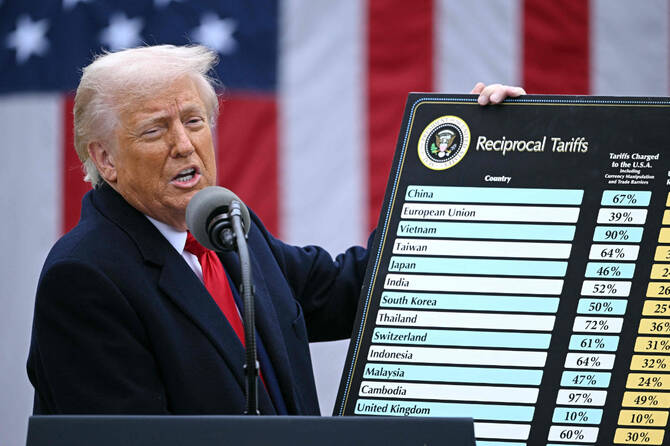
US President Donald Trump had imposed reciprocal tariffs on dozens of countries with which the US has a trade deficit.

Later, President Donald Trump decided to pause the tariffs for 90 days after many countries initiated talks with the US administration for a trade deal. In these 90 days, starting April 9, and ending on July 9, President Trump imposed a 10 per cent baseline tariff on all countries.

The Trump administration has deferred imposing additional tariffs on several countries, including India, till August 1.

Since assuming office for his second term, President Trump has reiterated his stance on tariff reciprocity, emphasising that the United States will match tariffs imposed by other countries, including India, to ensure fair trade.

A high-level team from India’s Commerce and Industry Ministry was in Washington DC, to take forward crucial negotiations for a Bilateral Trade Agreement (BTA) with the United States.

Trump strikes ‘massive’ trade deal with 15% reciprocal tariff on imports from Japan

WASHINGTON : President Donald Trump on Wednesday announced that the United States has finalised a sweeping new trade agreement with Japan, describing it as a “massive deal” that could be “the largest deal ever made”. Trump made the declaration on his social media platform Truth Social and reiterated the claim during a White House event with Republican lawmakers.

“We just completed a massive Deal with Japan, perhaps the largest Deal ever made. Japan will invest, at my direction, $550 Billion Dollars into the United States, which will receive 90% of the Profits,” Trump said, though he did not clarify how that figure would be determined or what it covers.

Under the agreement, the US will impose a 15% reciprocal tariff on Japanese imports. Trump claimed the deal would bring in USD 550 billion in Japanese investment to the US, although no official document detailing the terms has been released yet.

Speaking at the White House, Trump said, “I just signed the largest trade deal in history; I think maybe the largest deal in history with Japan. They had their top people here, and we worked on it long and hard. And it’s a great deal for everybody”.

JAPANESE ARE TOUGH: TRUMP
Negotiations for the deal were described by both sides as challenging. Back in June, when asked if an agreement was imminent, Trump told reporters, “They’re tough. The Japanese are tough”. On Tuesday, however, the US President struck a more optimistic note, calling it a “very exciting time for the United States of America” and assuring that the US will “continue to always have a great relationship with the Country of Japan”.

A major sticking point during the talks was rice. Trump has repeatedly criticised Japan for not importing enough American rice despite facing domestic shortages. “They won’t take our RICE, and yet they have a massive rice shortage,” he posted last month.

According to US trade data, Japan purchased USD 298 million worth of American rice in 2023 and an additional USD 114 million between January and April this year.

AUTOMOBILE AT THE HEART OF DISPUTE
Automobile imports have also emerged as a contentious issue. Trump has often claimed that Japan blocks US-made cars from its market. “We didn’t give them one car in 10 years,” he said earlier this month. However, according to CNN, Japan imported 16,707 American vehicles last year.

Last week, US Treasury Secretary Scott Bessent met Japanese Prime Minister Shigeru Ishiba in Tokyo to iron out final details. After the meeting, Bessent said, “A good deal is more important than a rushed deal, and a mutually beneficial trade agreement between the United States and Japan remains within the realm of possibility”.

Japan remains one of America’s largest trading partners, ranking as the fifth-largest source of US imports. In 2024, Japan exported USD 148 billion worth of goods to the United States, including automobiles, auto parts, farm equipment, and construction machinery.

Earlier this year, Trump imposed a temporary 24 per cent tariff on Japanese imports, which he paused in April. A minimum 10 per cent tariff has remained in place since then. Trump had warned Japan earlier this month that a 30 per cent tariff would take effect on August 1 if no agreement was reached.