Home Blog Page 743

Throughput in the port of Rotterdam declines in first half year

ROTTERDAM : Throughput in the port of Rotterdam decreased by 4.1% in the first half of 2025. This brought the total throughput to 211.0 million tonnes. The largest decline was in dry bulk (-8.9%) and liquid bulk (-5.3%) segments. Container throughput showed growth of 2.7% in TEU.

In terms of tonnage, the container segment showed a decline of 1.0%. The lack of investment in the industry by the market is a cause for concern for the Port Authority. Although the government has taken positive steps recently to bring the playing field for Dutch industry more in line with that of neighbouring countries, additional measures are necessary. The announced closure of a number of chemical companies, and with it the loss of hundreds of jobs in the first half of 2025, confirms these concerns. The Port Authority’s financial results and investments show stable development.

Weakened competitive position of European industry remains a cause for concern

  • Cargo throughput decreased by 4.1%
  • Container throughput increased in TEU (2.7%) and decreased in tonnage (1.0%)
  • Investments in industry lag behind due to lack of favourable conditions
  • Port Authority continues developing a resilient and safe port
  • Operating result for Port of Rotterdam Authority stable

Boudewijn Siemons, CEO of Port of Rotterdam Authority: “In recent months, we as a port have been confronted with economic uncertainties, lagging investments, and disruptions in supply chains. In these turbulent times, as a port, we must ensure that the security of supply of energy, food, and other essential materials in Europe remains guaranteed. It is also very important that industry in the port remains competitive so as not to weaken Europe’s strategic autonomy.”

Making ports and industry more sustainable

Despite the challenging economic conditions, a large number of projects are underway to create a future-proof port with net zero CO2 emissions by 2050. The construction of infrastructure is necessary for making society and industry more sustainable. Much progress has been made in this area during the first half of the year, including continuing construction of the Porthos CCS project. The construction of the land pipeline has been completed and work has now started on the offshore infrastructure. The former gas production platform in the North Sea is being converted for the injection of CO2 for permanent storage in gas fields under the North Sea. Porthos is expected to be operational in 2026.

Another important part of the energy transition is the installation of shore power. On 31 March, 2025, Cruise Port Shore Power’s shore-power system at the Holland Amerikakade officially entered operation. This means that Cruise Port Shore Power is staying ahead of European regulations, which stipulate that cruise ships in European ports must use shore power by 2030. The shore-power system for cruise ships is a unique sustainability project realized at the interface of city and port. Cruise Port Shore Power expects 75% of cruise ships in Rotterdam to connect to the shore-power system in the first year.

City and port

In March of this year, Portlantis, the port experience centre was officially opened by Mayor Schouten. Since opening to the public on 22 March, Portlantis has welcomed 25,000 visitors. Besides, 8,000 pupils and students were introduced to the port in an interactive way. The Port Authority also aims to reach young people through a partnership with the Jeugdeducatiefonds (Youth Education Fund). Until 2028, Port of Rotterdam Authority will support the Youth Education Fund with volunteers and a contribution of €150,000 per year to improve the development opportunities of children growing up in poverty in Rotterdam South.

Safety and resilience

The security situation around the world has deteriorated in recent times. The Netherlands is therefore strengthening its defence, and this will be noticeable in many places across the country in the coming years. The port of Rotterdam is also preparing to contribute to this. The port plays an important role as a logistics hub for Europe and wants to be able to support defence logistics when necessary. This support requires space, mooring and transshipment capacity from the port to enable the handling of ships and transportation of goods to the hinterland by rail, road, and water. It is also possible that exercises will take place more frequently in the port.

The digital threat to the port of Rotterdam remains as serious as ever. In 2025, there were no incidents affecting critical systems, but a robust cybersecurity strategy remains crucial. Port of Rotterdam Authority is working with partners to ensure a safe and resilient digital infrastructure. Since the beginning of the year, the FERM Foundation has been transformed into a national platform that acts as a coordinator, connector, and advocate for the five seaports of national importance. Structural cooperation with government agencies and chain partners is increasing the resilience of crucial digital processes. This joint approach is essential at a time when geopolitical tensions and stricter regulations require a higher level of digital preparedness.

Drones are increasingly being used by companies and government agencies in the port to support their business processes. This is causing the airspace above the port area to become increasingly congested. To manage this growth effectively, the Port Authority has been conducting tests with the digital airspace management system for several years. This prototype not only provides support in coordinating both unmanned and manned air traffic, but also offers possibilities for security against unwanted drone use.

Investments and financials

Port of Rotterdam Authority has had a stable financial half-year. The Port Authority’s revenues rose by 5.2% in the first half of the year to €462.3 million. In terms of contract revenues (3.8%), this is mainly due to inflation and a balance of various new and expiring contracts. Port dues rose by 5.4% in 2025. This is partly due to indexation and partly the effect of a lower call size, which leads to a higher price per tonne. Additionally, the gross rates and various discounts have been adjusted. Operating expenses increased by €19.4 million. This is mainly due to an increase of €7.0 million in personnel costs as a result of a Collective Bargaining Agreement change in 2024 and €11.2 million in operating expenses. Operating expenses will increase partly due to changes in the IT capitalization policy in 2025. This is leading to an increase in operating costs and a decrease in investments. Additionally, the prices of many of the contracts are higher due to indexation.

Earnings before interest, taxes, depreciation, and amortization (EBITDA) increased by 1.1% to €295.0 million. This amount is the yardstick for the Port Authority’s capacity to continue investing in the development of the port industrial complex through its own balance sheet. Net income declined by €4.7 million to €143.6 million. Due to the change in the processing of IT costs, there will be higher costs in 2025 compared to last year. Additionally, in 2024, the tax burden was lower once due to application of the energy investment deduction. The Port Authority has invested €136.1 million so far in 2025, which is 17% less than in the same period last year. This is partly due to a timing difference in project realization and a one-time acquisition of nitrogen rights in 2024.

Throughput

Dry bulk

The throughput of dry bulk cargo has fallen by 8.9% this year. The throughput of agribulk rose by 18.6%. This segment is always strongly influenced by global demand and harvests. In the first few months of this year, there was a sharp increase in imports of oilseeds such as soybeans, soybean meal, and rapeseed. This led to a sharp increase in Dutch imports. The supply of iron ore and scrap fell by 12.2%. This is linked to lower production in the German steel industry which is influenced by ongoing economic uncertainty and trade restrictions. Coal throughput decreased by 21.1%. This was mainly due to lower supplies of coking coal, which is used in blast furnaces for steel production.

Liquid bulk

The liquid bulk segment declined by 5.3% to 96.2 million tonnes. The throughput of crude oil increased by 2.6% to 50.1 million tonnes due to increased transport to German refineries. The throughput of mineral products showed a decline of 21.5% and 6.2 million tonnes. There are a multitude of reasons, which contribute to a reduction in throughput. The market has mainly been in ‘backwardation’, which makes storage unprofitable. Arbitrage between regions has been limited, making (spot) transport less attractive. LNG throughput increased by 9.0% as gas stocks in Europe continued to be replenished during the summer. The throughput of other liquid bulk cargo fell by 5.9%. This is mainly due to lower supplies of biodiesel from China as a result of anti-dumping duties and reduced use of palm oil as a raw material for biodiesel production in Europe.

Containers and breakbulk

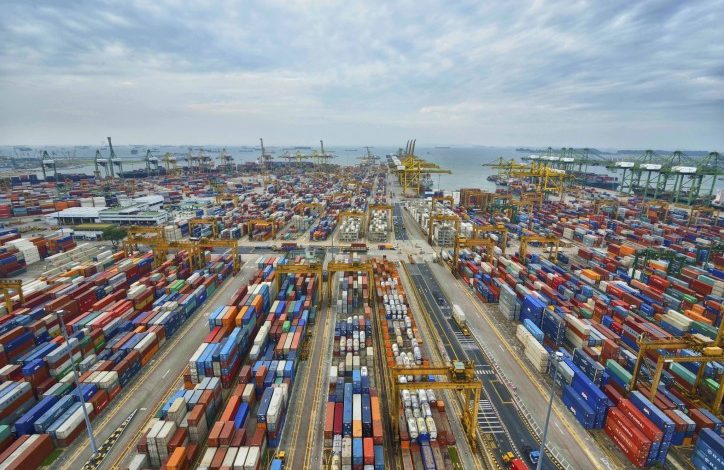
Container throughput rose by 2.7% in TEU to 7.0 million TEU in the first half of 2025. The growth in TEU can be explained by the upturn in European consumption. As a result, imports from Asia increased by 8.4%. Throughput to and from North America increased by 9.1%. The main reason for this is the increase in the number of services since the alliance structure was changed in February of this year. Expressed in tonnes, container throughput fell by 1.0% to 66.5 million tonnes. This decrease can be explained by the fact that more empty export containers were shipped. The number of full export containers has decreased by 5%. This decline can be explained by the continuing weak competitive position of European industry. Total throughput in the breakbulk segment (Roll-on/Roll-off and other breakbulk) increased by 1.3% to 16.0 million tonnes. RoRo throughput increased by 0.9% to 12.9 million tonnes. Volumes to and from the United Kingdom have not yet recovered from the sluggish economy. The second quarter does show cautious signs of recovery. Other general cargo increased by 3.0% to 3.2 million tonnes. This increase was partly due to the delivery of offshore wind foundations, steel pipes for the Porthos project, and an increase in the throughput of steel plates for the offshore industry.

Busy container handling

The port of Rotterdam has faced exceptional congestion in the handling of container flows this year. Various causes, such as the transition to new sailing schedules (phasing in and out of services), high call sizes, changing alliances, work interruptions, and challenging weather conditions at the beginning of the year have led to increasing waiting times on the land side of the deep-sea terminal operations. As a result, the inland shipping sector and road transport in particular are experiencing longer waiting times than usual. The situation on the sea side is under control: The number of large container ships waiting is very limited. The reliability of the sailing schedules has improved and time spent at the quay has decreased since the beginning of this year. Water levels on the Rhine and import duties imposed by the United States on exports from Europe and China have not yet had a demonstrable negative effect on container handling in the first half of the year.

The arrival of more than 100 container ships with a call size exceeding 12,000 TEU this half year underscores the urgency of the situation. Solutions to make the entire system more efficient and resilient must be sought in structural cooperation within the chain. Port of Rotterdam Authority is in constant dialogue with all parties in the logistics container chain about this. One of the structural changes being discussed is the smarter use of existing infrastructure, for example by shifting more road transport to off-peak hours, bundling and exchanging containers on so-called inland waterway corridors, and sharing data via digital platforms.

Port Authority calls on politicians to maintain focus on improving the investment climate for industry

The highly integrated industrial cluster of the Port of Rotterdam makes an important contribution to the security of supply of energy, raw materials, and goods. However, the current investment climate in the Netherlands means that companies are increasingly postponing or cancelling their investments, including those in sustainability, despite the Rotterdam port’s good starting position. At the same time, production is increasing in countries outside Europe, where conditions are more favourable.

The government has recently taken steps to level the playing field for Dutch industry with neighbouring countries. For example, the plastic levy has been scrapped and the Indirect Cost Compensation ETS (IKC-ETS) subsidy scheme has been reinstated. Additionally, a correction factor of 1.0 has been announced for the use of renewable hydrogen in refineries. This makes the use of green hydrogen more attractive for large-scale users. The government is also looking into suspending the Dutch CO2 tax. Despite these positive measures, Dutch industry is severely hampered by nitrogen issues, grid congestion, high energy costs, and high net tariffs compared to neighbouring countries. Port of Rotterdam Authority will therefore continue to highlight the importance of the industry for strategic autonomy, earning capacity, and high-quality employment in the Netherlands.

Source: Port of Rotterdam
SeaCube Cold Solutions partners with The Wonderful Company to establish Primary California Depot in Shafter

NEW JERSEY : SeaCube Cold Solutions (SCS), an affiliate of SeaCube Container Leasing and a leading provider of portable cold storage, announces a new partnership with The Wonderful Company. Under this agreement, The Wonderful Company’s Shafter facility will serve as the primary California depot for SCS, providing reefer storage and maintenance and repair services in the region.

As part of SeaCube Container Leasing, SCS is backed by over 30 years of experience in refrigerated equipment, providing unmatched reliability and innovation in cold chain logistics. This new facility in Shafter represents a significant step forward in SeaCube’s investment in strategically located infrastructure to support its growing SCS customer base.

“Partnering with The Wonderful Company at the Shafter depot marks a significant step in strengthening our presence in a key logistics corridor,” said James Armstrong, Senior Vice President of SeaCube Cold Solutions. “We’re excited to launch operations at the Shafter, California depot, where we are establishing a significant refrigerated container presence to support not only California’s Central Valley but also a 250-mile radius. This location strategically extends our reach across the West Coast, including Arizona and Nevada. With the addition of Shafter, SeaCube Cold Solutions now has full coverage over the entire Southwest Region.”

The Shafter depot will serve as a hub for both storage and maintenance of SeaCube refrigerated containers. Its strategic location offers direct access to key customers in California’s Central Valley, while its position within a less congested logistics park provides efficient transportation routes to the Los Angeles basin, Arizona, and Nevada. SeaCube is the first—and currently the only—reefer operation at the facility.

“SeaCube’s portable cold storage solution offers tremendous flexibility during seasonal market fluctuations. We are pleased to have their support and involvement in the Wonderful Logistics Center,” said Sepehr Matinifar, Vice President of Logistic Services at the Wonderful Company.    

SeaCube Containers

SeaCube is one of the largest purchasers and lessors of refrigerated containers in the world and is committed to investing in technologically advanced and innovative equipment solutions that safeguard cargo, improve service reliability, and help its clients reduce their carbon footprints while increasing profitability. SeaCube pairs its differentiated offering with an experienced team of industry professionals to create customized rental, lease and financing programs, provide premier customer support, and deliver added value. For more information, visit https://seacubecontainers.com/cold-solutions/

The Wonderful Company

The Wonderful Company is a privately held $6 billion global company dedicated to harvesting health and happiness around the world. Its iconic brands include FIJI Water, POM Wonderful, Wonderful Pistachios, Wonderful Halos, Wonderful Seedless Lemons, Teleflora, and JUSTIN Vineyards & Winery, Landmark Vineyards, and Lewis Cellars. The Wonderful Company’s connection to consumers has health at its heart and giving back in its DNA. To learn more about The Wonderful Company, its products, and its core values, please visit wonderful.com or follow.

Parliament passes ‘Bills of Lading, 2025’ Bill on the first day of Monsoon Session, replaces 169 years old Colonial-Era Shipping Law

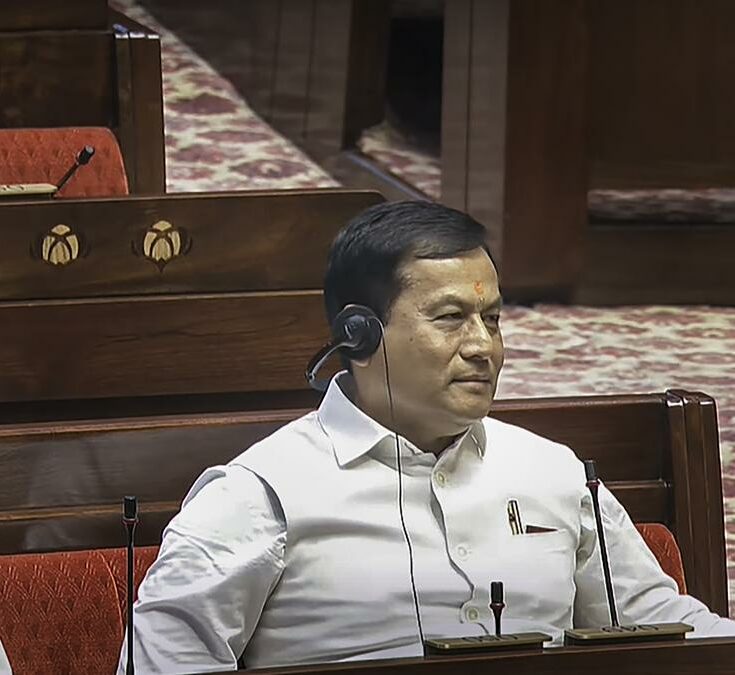
NEW DELHI : On the first day of monsoon session, the ‘Bills of Lading, 2025’ bill was passed by the Rajya Sabha paving the way for Presidential Assent. Tabled by the Union Minister of Ports, Shipping & Waterways (MoPSW), Shri Sarbananda Sonowal at the upper house on Monday (21st July, 2025), it marks a watershed moment for India’s maritime sector. 

The bill, already passed by the Lok Sabha, now awaits Presidential assent to become law. Once enacted, it will replace the 169 years-old colonial era Indian Lading Act, 1856 with a modern, simplified, and globally aligned legal framework for maritime shipping documentation in India.

Tabling the bill to the house, the Union Minister, Sarbananda Sonowal said, “As we gather here, we are reminded of our visionary and dynamic Hon’ble Prime Minister, Shri Narendra Modi Ji, who has articulated a profound vision for our nation: to transform India into a developed country, or Viksit Bharat, by the year 2047. This vision is not merely aspirational; it is a call to action, urging us to align our efforts and aspirations with the promise of a new and prosperous Bharat. In the words of the Hon’ble Prime Minister, ‘India must act with speed and scale to reform its systems and transform its future’.”

The new law replaces archaic terminology with clear & business friendly language, streamlining rights & obligations for carriers, shippers and lawful holders; reducing ambiguity in shipping documentation to lower litigation risks as well as strengthening India’s position in global trade by aligning with international norms.

Speaking further, Sarbananda Sonowal said, “Today, as we reflect on the 76th year since the adoption of the Indian Constitution, it is the perfect moment to cast aside the remnants of colonial and pre-constitutional legacies that hinder our progress. ‘Swarnim Bharat’ needs a statute that is contemporary, crafted by our own people, and capable of addressing the challenges of the modern era.”

The bill renames the outdated law, symbolising a decisive move away from India’s colonial past. It simplifies legal language, restructures complex provisions, and introduces an enabling clause empowering the Central Government to issue directions for effective implementation. By incorporating a standard repeal and saving clause, the legislation ensures continuity and legal validity of past actions under the old Act. These reforms aim to enhance clarity, promote ease of understanding, and enable smoother enforcement in line with contemporary trade and legal standards enabling Ease of Doing Business (EODB) in India.

Calling the members of the House to pass the Bill, Sarbananda Sonowal said, “‘The Bills of Lading, 2025’ bill reflects our constitutional values and marks a vital step in replacing outdated colonial laws with a modern, accessible framework. As our maritime sector expands rapidly, this reform will boost ease of doing business, reduce disputes, and strengthen India’s global trade standing. As the saying goes — ‘Whoever rules the waves, rules the world’ — it’s time India leads from the front.”

Negotiators return from US as tariffs suspense lingers

NEW DELHI : India’s negotiating team returned from Washington recently after concluding a fifth round of trade talks without any significant breakthrough beyond the agreed format of negotiations, as the August 1 deadline for potential tariffs looms and President Donald Trump intensifies pressure on trading partners worldwide, including India.

The four-day discussions, led by chief negotiator Rajesh Agrawal, failed to resolve persistent disputes over agriculture, automobiles and — in what has emerged as a potentially new domain — digital trade, policies that have stalled negotiations since March, leaving India’s fate uncertain as Trump’s self-imposed deadline for higher new duties on exporting to America approaches.

According to people aware of the matter, India remains committed to reaching a deal before August 1 if possible, the country will not compromise its core positions under deadline pressure, maintaining that any agreement must be “balanced, long-term, strategic and mutually beneficial.”

The person stressed that negotiators “cannot commit beyond their mandate irrespective of the US tariff threats,” maintaining that any agreement must be “balanced, long-term, strategic and mutually beneficial.”

Negotiations are being held on the basis of two formally agreed frameworks — one is the joint statement of February 13 that proposed a Bilateral Trade Agreement (BTA) by the fall of 2025, and the second is the terms of reference (TORs) agreed between the two parties on April 21 during US Vice-President JD Vance’s India visit, this person added.

“Like America, India is also a vibrant democracy where the people’s will is supreme,” said a second person, speaking anonymously. “While certain subsistence sectors still need protection from global competition to save the livelihood of millions of poor, there are some sensitive sectors that have legal protection in the national interest.”

The first person cited above said the “best-case scenario” would be finalising an interim goods-only deal before August 1, but emphasised that India would not accept asymmetrical arrangements like the one with Indonesia, where “the US got zero-duty access, but imposed a 19% additional tariff on Indonesian goods.”

“Bilateral deals are not done in anticipation and good faith that the other side may reciprocate similar concessions in future,” this person said.

The inconclusive talks come as Trump escalates demands across multiple fronts, targeting multiple countries. On Friday, the Financial Times reported that Trump has intensified pressure on the European Union, pushing for minimum tariffs of 15% to 20% even with an agreement – a significant increase from earlier 10% baseline discussions.

The EU faces the same August 1 deadline, with Trump threatening 30% tariffs on all European imports unless a deal is reached.

Despite five rounds of face-to-face negotiations since March, fundamental disagreements persist between India and the US over market access issues.

India continues to resist American demands for “unfettered access for agricultural goods,” particularly genetically modified crops like soybean and corn, which are banned domestically. The country has also refused to fully open its dairy sector, citing both the subsistence-level nature of farming and religious sensitivities.

Similarly, India has balked at providing “duty-free access in the automobile sector” without corresponding US commitments to withdraw punitive tariffs on Indian steel, aluminium and auto parts.

The people cited above stressed that India expects Washington to adhere to the bilateral framework agreed during Prime Minister Shri Narendra Modi’s February visit, when both leaders committed to negotiating the first tranche of a bilateral trade agreement by fall 2025.

“Both India and the US are following formal processes of BTA negotiations, hence, the effective deadline is by fall of 2025,” the second person said. “If some deal is achieved in the interim, well and good, but the first tranche of BTA is not contingent upon any interim deal.”

India faces multiple tariff threats as Trump escalates his trade pressure campaign. Beyond potential August 1 levies, Trump has threatened a 10% tariff on all Brics members – including India – for challenging US dollar dominance.

The Trump administration has already sent ultimatum letters to more than two dozen countries, imposing levies ranging from 25% to 50% from August 1.

India has so far been spared from these letters, raising hopes that negotiations remain viable.

Mahindra Logistics Q1FY26 Revenue up by 14.4% YoY at Rs.1,625 crores

MUMBAI : Mahindra Logistics Ltd. (MLL), one of India’s integrated logistics & mobility solutions providers, announced its unaudited consolidated financial results for the quarter ended 30th June, 2025.

Q1 FY26 (Consolidated) performance compared with Q1 FY25

  • Revenue Rs. 1,625 crores as compared to Rs. 1,420 crores.
  • EBITDA Rs.76 crores as compared to Rs.66 crores.
  • PBT Rs. (5.8) crores as compared to Rs. (2.5) crores.
  • PAT loss Rs. 10.80 crores compared to Rs. 9.32 crores.
  • EPS (Diluted) Rs. (1.50) as compared to Rs. (1.29).

Q1 FY26 (Consolidated) performance compared with Q4 FY25

  • Revenue Rs. 1,625 crores as compared to Rs. 1,570 crores.
  • EBITDA Rs.76 crores as compared to Rs.78 crores.
  • PBT Rs. (5.8) crores as compared to Rs. 0.9 crores.
  • PAT loss Rs. 10.80 crores compared to Rs. 6.75 crores.
  • EPS (Diluted) Rs. (1.50) as compared to Rs. (0.93)

Q1 FY26 MLL Standalone compared with Q1 FY25

  • Revenue Rs.1,346 crores as compared to Rs.1,157 crores.
  • EBITDA Rs.79 crores as compared to Rs.72 crores.
  • PBT Rs.8.7 crores as compared to Rs. 13.7 crores
  • PAT Rs.6.44 crores as compared to Rs.10.22 crores.
  • EPS (Diluted) Rs 0.89 as compared to Rs.1.42

Q1 FY26 MLL Standalone compared with Q4 FY25

  • Revenue Rs.1,346 crores as compared to Rs.1,293 crores.
  • EBITDA Rs.79 crores as compared to Rs.80 crores.
  • PBT Rs.8.7 crores as compared to Rs. 17.5 crores
  • PAT Rs.6.44 crores as compared to Rs.13.12 crores.
  • EPS (Diluted) Rs 0.89 as compared to Rs. 1.82

Key Highlights for Q1FY26

·      Consolidated Revenue for Q1FY26 registered a 14% year-on-year growth, driven by strong performance in 3PL, Last Mile Delivery (LMD)and the Express segments

·      The Express business achieved a significant milestone by crossing ₹100 crore in quarterly revenue for the first time. EBITDA and PAT improved by 14% and 3% year-on-year respectively, although yields remained under pressure due to an evolving customer mix.

·      The Freight Forwarding segment reported a modest YoY revenue increase. Growth was moderated by ongoing geopolitical disruptions and tariff related challenges impacting cross-border flows.

·      The Mobility business reported improved profitability over the same period last year, due to new clients and improved efficiency with quality fleet.

·      The warehouse space under management stood at 21.1 million square feet. The newly inaugurated Cummins India Logistics Centre in Phaltan, a flagship facility, was recognized as Cummins’ “Best Supplier of the Year- Indirect Sourcing”, underscoring operational excellence and customer partnership. The sites in Pune and Agartala also went live in Q1FY26.

Commenting on the performance, Mr. Hemant Sikka, Managing Director and CEO of Mahindra Logistics Ltd. said,

“At Mahindra Logistics, we focus on navigating complexity with intent—mobilising our strengths, channelling collective potential, and challenging limits to drive meaningful progress together. Over the last quarter, we emphasised on strategic execution, architecting capabilities to scale our integrated solutions ecosystem and accelerate the transition toward future readiness. Our performance this quarter reflects the momentum of our shared purpose with the Express Business crossing ₹100 crore in revenue. Reflecting the direction we continue to pursue, our consolidated revenue grew 14% year-on-year, supported by good performance in 3PL, Last Mile Delivery, and the Express segments. Performance in the Freight Forwarding segment remained stable, while the Mobility business delivered improved profitability—driven by a sharper focus on operating discipline. Our new sites in Pune and Agartala also went live this quarter, reinforcing our footprint and improving network agility.”

Cruise Tourism on National Waterways gains momentum with infrastructure boost

NEW DELHI : The river cruise tourism sector in India has witnessed notable growth, with the number of river cruise voyages on National Waterways increasing from 371 in 2023-24 to 443 in 2024-25. This 19.4% growth underscores the rising appeal and operational efficiency of river cruises in India’s inland waterways.

Adding to this momentum, Viking Cruises has announced its entry into India’s river cruise market with Viking Brahmaputra, an 80-guest vessel scheduled to begin operations in late 2027, signalling heightened interest and investment in India’s river cruise tourism sector. Viking Brahmaputra, to be indigenously developed by Hooghly Cochin Shipyard Limited in Kolkata, will operate on National Waterway-2.

In line with Prime Minister Shri Narendra Modi’s vision and guidance of Minister of Ports, Shipping and Waterways Shri Sarbananda Sonowal, the Inland Waterways Authority of India (IWAI) is making strides in promoting river cruise tourism and developing sustainable water transport system in India.

image002F28G Cruise Tourism on National Waterways gains momentum with infrastructure boost

The sector has witnessed exceptional growth over the last 11 years. From just five vessels on three waterways in 2013–14, river cruise operations have expanded to 25 vessels across 13 national waterways in 2024–25. This growth is attributed to the proactive efforts of IWAI under the Ministry of Ports, Shipping and Waterways in enhancing navigational safety and infrastructure on National Waterways. IWAI has facilitated smoother and safer navigation for river cruise vessels by developing terminals, on-shore and off-shore facilities, ensuring adequate depth in waterways, and providing 24-hour navigation aids and pilotage services. These measures have collectively enhanced the passenger experience, improved operational logistics, and boosted operator confidence, contributing to the growth of the sector.

Notably, the MV Ganga Vilas, flagged off by Prime Minister Shri Narendra Modi in January 2023, undertook the world’s longest river cruise from Varanasi to Dibrugarh, covering 3,200 km through 27 river systems in five Indian states and Bangladesh. This historic voyage earned a place in the Limca Book of Records. Other popular cruise circuits like Sundarbans in West Bengal, Brahmaputra in Assam, and Alappuzha in Kerala are also gaining traction.

IWAI plans to develop 51 new river cruise circuits on 47 national waterways across 14 states and three union territories by 2027. With the launch of the Cruise Bharat Mission, the government aims to increase river cruise passengers from 0.5 million to 1.5 million. The mission focuses on upgrading cruise terminals, ports, and related infrastructure, promoting eco-friendly tourism practices using green vessels, and creating numerous employment opportunities in the cruise industry in the coming two years.

IWAI has recently signed agreements with several state governments to promote cruise tourism on National Waterways, including partnerships with the Governments of Gujarat and Madhya Pradesh for cruise tourism on River Narmada, with the Delhi Government for operating ferries and cruises on the Yamuna River, and with the Government of Jammu and Kashmir for sustainable tourism on the Jhelum, Ravi, and Chenab rivers.

Besides, IWAI is developing dedicated cruise terminals on the Ganga and Brahmaputra rivers, with three cruise terminals planned in Varanasi, Guwahati, Kolkata, and Patna. In the Northeast, four more cruise terminals at Silghat, Biswanath Ghat, Neamati, and Guijan are proposed to be developed by 2027.

GRSE launches the 8th and last ship in a series of ASW SWCs

KOLKATA : GRSE Rolls Out Final ASW SWC ‘Ajay’Kolkata : Garden Reach Shipbuilders and Engineers (GRSE) Ltd launched the 8th and last ship in a series of Anti-Submarine Warfare Shallow Water Crafts (ASW SWCs), it is building for the Navy, on Monday, 21 July 25.

The ship, named Ajay, was launched by Smt Priya Deshmukh, wife of Vice Admiral Kiran Deshmukh, AVSM, VSM, Chief of Materiel, Indian Navy. Vice Admiral Deshmukh was the Chief Guest at the occasion. Among the others present were CMDE P R Hari IN (Retd), Chairman and Managing Director, GRSE, Cdr Shantanu Bose, IN (Retd), Director (Shipbuilding), GRSE, Shri Abhishek Ranjan, IOFS, CVO, GRSE, and senior officials from Indian Navy & GRSE.

This launch connects past with present: INS Ajay, originally delivered in 1961 as India’s first indigenous warship built by GRSE, set the path for domestic defence shipbuilding. Today’s Ajay, carries forward that proud heritage of GRSE’s shipbuilding process.

The first warship of this series of ASW Shallow Water Crafts, INS Arnala, was commissioned into the Navy on June 18, 2025. Androth, the second ship, has also completed its contractor sea trials successfully and is ready to be delivered. Ajay was launched less than nine months after the launch of Abhay, the 7th vessel in the series. This highlights GRSE’s efforts to maintain delivery schedules.

While the primary role of these unique ASWSWCs is to keep the waters near the coasts clear of enemy submarines, they are versatile platforms and can participate in a variety of operations. These ships are designed and built with low draughts and they are thus capable of coastal operations. They are equally capable of Low Intensity Maritime Operations (LIMO) and laying mines.

These 77.6-metre-long and 10.5-metre-wide extremely potent warships are also capable of full-scale sub-surface surveillance in coastal waters and can carry out operations against surface platforms as well. They can carry out coordinated anti-submarine operations with aircraft.

These warships pack a lethal anti-submarine suite comprising lightweight torpedoes, ASW rockets and mines. They are also armed with 30 mm Close-in Weapons System and 12.7 mm Stabilised Remote-Control Guns. They are fitted with a Hull Mounted Sonar and a Low-Frequency Variable Depth Sonar for effective underwater surveillance. Vice Admiral Kiran Deshmukh mentioned that GRSE has progressed leaps and bounds and become one of the premier defence shipyards of the country, having a unique distinction of building more than 110 warships.

He further said, “Commissioning of Arnala, the first of the class last month and the second one inching towards delivery now, reinforces GRSE’s strong partnership with the Indian Navy, the Indian industry and quest to become a modern blue water Navy. Needless to say that GRSE has designed and built the highest number of warships, delivered by any other Indian shipyard. I am glad to note that in addition to ASW shallow water craft, shipyard is constructing P-17 Alpha, survey vessel large, NGOPV as well as the list of large number of special projects that GRSE is steering. This proves the versatility of GRSE and its status as a major shipyard in the country.”

CMDE Hari noted how the years to come will be extremely crucial for GRSE as several ships are now at various stages of outfitting and will be delivered subsequently.“With 16 Warships under construction for the Indian Navy and many more orders for Warships expected, I am confident of GRSE delivering a Century of Warships to Indian Navy within a decade.” CMDE Hari said.

Gita Gopinath returns to economics faculty after historic IMF leadership

WASHINGTON : Gita Gopinath will resume her place on the Harvard faculty this fall, returning from a long-term public service leave of absence. In 2018, she was named the first female chief economist at the International Monetary Fund. She was promoted to the IMF’s first Deputy Managing Director in 2022.

“I now return to my roots in academia,” announced Gopinath, who first arrived on Harvard’s campus as a visiting professor in 2005. “I look forward to continuing to push the research frontier in international finance and macroeconomics to address global challenges, and to training the next generation of economists.”

Gopinath returns as the inaugural Gregory and Ania Coffey Professor of Economics, with a new slate of course offerings available next spring.

“Gita’s academic work has fundamentally shaped our understanding of exchange rates, international capital flows, and the global financial architecture,” said David M. Cutler, dean of social science and Otto Eckstein Professor of Applied Economics. “Having her back strengthens our standing as a top university for international macroeconomics. She is also an exceptional teacher and intellectual partner. We can’t wait to welcome her home.”

Founded in 1945, the IMF works to promote economic and financial stability in 191 member countries worldwide. The Washington, D.C.-based institution provides financial assistance when countries face critical shortfalls.

“It has been an opportunity of a lifetime to work with my incredible colleagues at the IMF and to serve the global community,” she said.

“I am the guilty one who raided Harvard University from one of their top talents, Gita Gopinath, a class-act economist, and a wonderful person, gracious, kind, elegant and of course extremely smart,” said former IMF Managing Director Christine Lagarde, now president of the European Central Bank. “She also proved a great leader at the IMF, a demanding institution, also full of smart economists.”

As chief economist, Gopinath directed the IMF’s research department and was responsible for its “World Economic Outlook” publication, which helps guide economic policy decisions across countries. She also co-authored a pandemic plan that hastened global cooperation on COVID-19 vaccine access and spearheaded an “Integrated Policy Framework” that now underpins IMF’s policy advice to countries on their response to international capital flows.

In her current role as first deputy managing director, she has overseen several departments working on research, fiscal affairs, strategy, policy, and more. She is also responsible for global economic monitoring and analytical work, has been deeply involved in large IMF programs including those for Argentina and Ukraine, and represents the IMF at high-level engagements including G7 and G20.

“[Gita’s] analytical rigor was paired with practical policy advice to the membership during an especially challenging period, which included the pandemic, wars, the cost-of-living crisis, and major shifts in the global trading system,” said IMF Managing Director Kristalina Georgieva. “Gita’s departure will be a loss for the Fund, but a gain for Harvard and for the many students and faculty who will benefit from her experience, knowledge, and passion for learning.”

Regional Plant Quarantine Station, Kandla, successfully concludes 3-Day refresher training on Crucial Plant Health Standards

GANDHIDHAM : The Regional Plant Quarantine Station (RPQS), Kandla, successfully organized and concluded a comprehensive three-day Refresher Training Programme on “NSPM-12 and AFAS Methodology 3.0” from July 16th to 18th, 2025. The vital training, aimed at enhancing and updating the knowledge of plant health professionals, was held at the Conference Hall of the Kandla Timber Association in Gandhidham, Gujarat.

A total of 38 participants actively engaged in the programme, which focused on critical aspects of the National Standards for Phytosanitary Measures (NSPM-12) and the newly introduced AFAS Methodology 3.0. These standards are crucial for ensuring the safe import and export of plant products, preventing the spread of pests and diseases, and facilitating international trade.

The opening ceremony on July 16th was graced by the esteemed presence of Dr. J. P. Singh, Plant Protection Advisor, Directorate of Plant Protection, Quarantine & Storage (DPPQS), Faridabad, who addressed the participants virtually, emphasizing the significance of continuous learning in the dynamic field of plant quarantine.

The training sessions were expertly led by a team of highly experienced key speakers and master trainers, including Dr. C. S. Patni, Deputy Director & Officer-in-charge, RPQS, Kandla, Mr. Uday Menon, Master Trainer, and Mr. Rajeev Kumar Sharma, Master Trainer. Their insightful presentations and interactive sessions ensured that participants gained a deeper understanding of the complexities of NSPM-12 and the practical application of the new AFAS Methodology 3.0.

The primary objective of the training was to equip participants with enhanced and updated knowledge, enabling them to effectively implement the latest guidelines and contribute to strengthening India’s plant biosecurity framework.

The valedictory function on July 18th saw the presence of distinguished guests, Shri Navneet R. Gajjar, President, Kandla Timber Association, Gandhidham, and Shri Deepak Maheshwari, President, Kandla Fumigators Association. Both dignitaries lauded RPQS Kandla’s initiative in organizing such a crucial training program and highlighted its importance for the local timber and fumigation industries.
The successful conclusion of the Refresher Training Programme underscores RPQS Kandla’s commitment to continuous professional development and its dedication to upholding the highest standards of plant health and biosecurity in the region.

Over-dependence bulk freight hamstrings Railway revenues : Study

NEW DELHI : The Indian Railways‘ over-dependence on bulk commodities like coal, iron ore and cement is hurting its growth potential and exposing it to the competitive pressure from other modes of freight transportation, a PwC-FICCI report said.

Strategic Opportunities
The unreliable services coupled with inflexible routes and poor timeliness are affecting the railways’ potential to grab a bigger market share in the “high-value” non-bulk commodities space, it said.

Even though the rail transport, particularly over long distances, offers inherent cost efficiencies compared with road transport, its infrastructure, terminal operations, and rolling stocks are not designed to handle the fast-growing segments like E-Commerce, pharmaceuticals, FMCG, consumer durables and automobiles.

“These commodities demand more flexible, time-sensitive, door-to-door logistics, which road transport is better equipped to provide, rendering rail less competitive for such segments,” the report noted.

In the past five years, a large part of the railways’ freight volume growth – 5.6% CAGR – is contributing by a narrow set of traditional bulk commodities. Currently, coal dominates the railways’ freight basket accounting for arounf 50% of the freight volumes, followed by cement and iron ore, contributing around 10% each. But the growth in these bulk commodities are slowing down due to the structural limitations within rail logistics. On the other hand, the growth in emerging non-bulk commodities stood at 10% over the same period.

“A network that is optimised for bulk train operations may struggle to accommodate growing demand for parcel/lightweight goods or automobile transport, leading to capacity mismatches and service shortfalls,” it adds.

However, the report said that targeted interventions can boost the movement of lightweight commodities and enable greater diversification of the rail freight portfolio. “In India, more than 90% of the non-bulk freight market is transported by road. By contrast, in developed countries such as the US, 66% of non-bulk freight is moved by road, with rail or rail-intermodal systems accounting for a substantial 30%. This modal imbalance presents a strategic opportunity for IR to expand its footprint in the non-bulk segment,” the report noted.

Challenges
Though the railways has made efforts in the recent years to promote non-bulk segment. For instance, Joint Parcel Product–Railways Cargo Service (JPPRCS) scheme was introduced in 2023 to provide end-to-end logistics solutions for parcel. Similarly, Parcel Cargo Express Train (PCET) was launched this year to boost the transport of commodities like rubber and pineapples. But the modal share of rail for parcel-based cargo and lightweight commodities still remains low. The report further said that railways needs to adopt a commodity-specific approach to terminal planning, asset deployment and service design to diversify its commodity portfolio.

“Another opportunity lies in the automobile sector, specifically two-wheelers and passenger vehicles, which fall under the low rail share category but exhibit strong growth forecasts. The railways has focused on this segment by modifying the AFTO scheme, introducing modern rolling stock (NMG and BCACBM coaches) and assisting the development of new automobile loading terminals. These efforts have increased the modal share of rail in automobile transport from 1.2% in FY14 to approximately 20% in FY24,” the report said.

Source : FE