




MUNDRA: Container movement at Mundra Port has come under significant pressure following a strike by empty-container yard operators, with industry estimates suggesting that around 5,000 containers a day are being held up amid disruptions to the return, storage and repositioning of empty boxes.
The disruption follows a decision by Adani Ports and Special Economic Zone (APSEZ) to freeze empty-yard codes for facilities located outside the Mundra Port and SEZ limits from September 1, 2026. Under the revised arrangement, shipping lines are required to nominate empty containers to designated yards operating within the Mundra Port SEZ.
The decision has triggered strong opposition from external empty-container yard operators, who suspended services in protest, leading to a wider disruption across the container logistics chain.
Exporters Face Shortage of Empty Containers
One of the most immediate impacts has been on exporters dependent on empty containers for factory stuffing. With affected yards suspending operations, the availability and release of empty containers for export cargo has been disrupted.
At the same time, importers and transporters are facing difficulties in returning empty containers after cargo de-stuffing, creating congestion and delays across the logistics network.
The situation has raised concerns over missed vessel cut-offs, shipment rollovers and potential additional costs for exporters and importers if the disruption continues.
Several major shipping lines have issued customer advisories regarding the operational challenges. MSC and Ocean Network Express (ONE) have advised customers to review their export plans and make alternative arrangements where possible to minimise potential delays. Other carriers have also highlighted restrictions affecting empty-container releases and returns at impacted facilities.
Transporters Join the Disruption
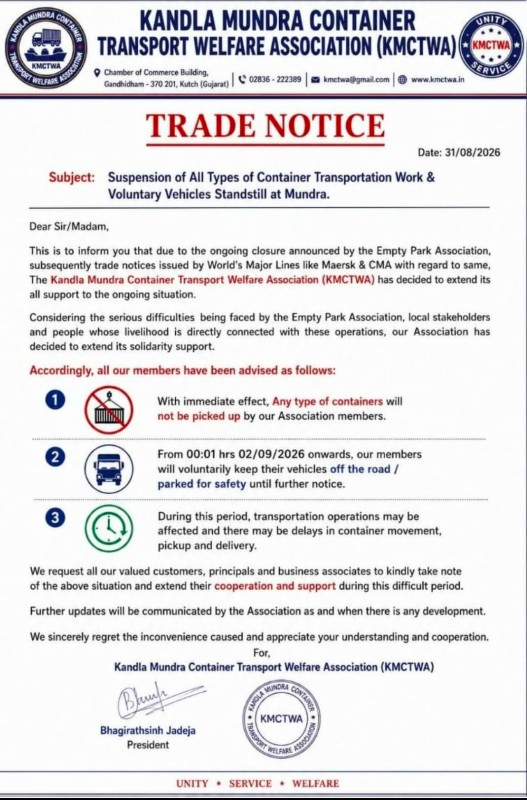
The situation has further intensified with container transporters extending support to the striking empty-yard operators. Reports indicate that a large number of transporters serving the Mundra logistics ecosystem have halted or restricted container movements, adding further pressure to the already disrupted supply chain.
This has widened the impact beyond empty-container yards, affecting the movement of containers between factories, container freight stations, depots and port terminals.
However, some logistics activities continue to remain operational. Cargo stuffing and gate-in operations through Container Freight Stations (CFSs) have continued, providing exporters with an alternative route for moving cargo through Mundra, although factory stuffing operations remain among the most affected segments.
Different Views Over the New Empty Container System
APSEZ has maintained that the new arrangement is aimed at creating a more integrated empty-container management system within the Mundra ecosystem.
According to the company’s stated objectives, the move is expected to help reduce road congestion, improve truck turnaround times, shorten container movements, enhance safety and security controls and reduce emissions associated with longer road movements.
However, external depot operators and sections of the logistics community have raised concerns about the sudden impact of the transition on existing container handling arrangements.
Industry stakeholders argue that shipping lines require operational flexibility in deciding where their empty containers are stored, inspected, repaired and positioned for future export movements.
The dispute has therefore developed into a broader issue involving port operations, empty-container depots, shipping lines, transporters, customs brokers and exporters.
Trade Bodies Seek Urgent Resolution
The disruption has prompted calls from industry bodies for an early resolution to prevent further impact on India’s export-import trade.
Customs brokers and freight forwarders have expressed concerns over additional logistics costs, stranded vehicles, delays in container returns and the risk of exporters missing planned vessel sailings.
Stakeholders have also sought measures to ensure that importers and exporters are not burdened with detention charges or other additional costs arising from circumstances beyond their control.
With Mundra serving as one of India’s most important gateways for containerised trade, a prolonged disruption could affect supply chains serving manufacturing and export centres across Gujarat and northern and western India.
Focus Turns to Restoration of Normal Container Flows
The key challenge now is restoring the seamless circulation of empty containers between importers, depots, factories, CFS facilities and port terminals.
The empty container is a critical link in the export supply chain. Any disruption in its availability can quickly affect factory stuffing schedules, inland transport planning and vessel connections.
As discussions continue among port authorities, depot operators, shipping lines and trade stakeholders, the industry will be closely watching for a resolution that can restore normal container flows while addressing concerns surrounding the new empty-container management system.
For now, exporters and importers moving cargo through Mundra are being advised to closely monitor carrier advisories, review shipment schedules and coordinate with shipping lines and logistics partners to reduce the risk of operational delays.