Stay in regular contact with DG Shipping’: IFC-IOR urges vessels at Strait of Hormuz
NEW DELHI : The premier maritime security hub hosted by the Indian Navy has advised all vessels operating in the Arabian Gulf, Strait of Hormuz (SoH), and Gulf of Oman to provide transit details to the centre and maintain regular contact with it, besides maritime security centres and DG Shipping in Mumbai.

The Information Fusion Centre-Indian Ocean Region (IFC-IOR) termed the security environment across the region at a critical threat level.
In a latest analysis report on the West Asia conflict, the IFC-IOR said that 29 incidents and 23 vessels hit since February 28 underline the scale and persistence of hostilities. Recent attacks confirm that earlier lulls were tactical pauses, not de-escalation.
The IFC-IOR was established by the central government in 2018 to promote collaboration for maritime safety and security.
The Ministry of External Affairs recently said that as many as 20 Indian vessels are stranded amid the West Asia conflict. According to the analysis report, 29 maritime security threats (hybrid) incidents involving commercial vessels and offshore infrastructure have been recorded.
“The threat has evolved from initial strikes in the Strait of Hormuz to a broader operational footprint extending into the northern Arabian Gulf, UAE territorial waters and key port approaches,” it said.
The campaign reflects a coordinated, multi-vector approach employing projectiles, UAVs, USVs and indirect effects such as debris from interceptions. Furthermore, it has reduced Strait of Hormuz traffic by over 96 per cent against the historical daily average.
The non-state actors in Yemen have declared alignment with the ongoing campaign. While no confirmed maritime attacks have been recorded in this phase, their demonstrated capabilities and intent present a credible risk of spillover into the Red Sea, Bab el-Mandeb Strait and Gulf of Aden, the analysis said.
Current threat environment
The present threat environment has three interlocking dimensions: a sustained kinetic campaign across the Arabian Gulf and Strait of Hormuz; declared Houthi re-entry from the south; and pervasive GPS jamming degrading navigation and situational awareness region-wide.
The analysis further said that the nine-day lull was not a ceasefire, a diplomatic development or an indication of campaign exhaustion. “It was likely a deliberate pause. All three areas remain at critical threat level. Recent attacks on MV EXPRESS ROME, MV AL SALMI, and MV AQUA 1 confirm the preceding lull was a tactical pause, not a cessation. The campaign’s pattern is established: concentrated strikes, deliberate intervals, and renewed strikes,” it said.
The centre has monitored a total of 29 attacks since February 28 to date. “Recent maritime security incidents indicate that commercial vessels may face risks from a range of hostile activities, including missile or projectile strikes, uncrewed aerial vehicle (UAV) attacks, armed approaches by unidentified craft and collateral damage arising from regional hostilities,” it said.
According to IFC-IOR, persistent GPS/GNSS interference continues across the Strait of Hormuz approaches, Gulf of Oman, and Arabian Gulf, impacting navigation reliability, AIS integrity, and situational awareness.
“These threats may manifest with minimal warning and may target vessels irrespective of flag, ownership or cargo profile. Vessels at anchor, awaiting orders or operating in proximity to strategic chokepoints, may remain particularly vulnerable due to limited manoeuvrability,” it said.
Current SoH traffic and analysis of attacks
Traffic through the Strait of Hormuz has reduced drastically, as low as approximately four to five vessels per day (last seven days), per current automatic identification system-derived observations. Historical averages stand at approximately 130-140 vessel transits per day.
Multiple days have recorded near-zero inbound or outbound movements, reflecting heightened operator risk aversion.
The IFC-IOR said that the current threat environment is characterised by unpredictability, expanded geographic scope and indiscriminate targeting of commercial shipping irrespective of flag, cargo, or ownership.
“Attacks have occurred both underway and at anchor, including within port limits and during ship-to-ship operations. Vessels with limited manoeuvrability remain particularly vulnerable,” it said.
The Indian-flagged vessel, Libra Trader, was hit by a missile on March 3 at night. As many as 22 foreign-flagged vessels were hit by either a drone or a missile since February 28 in the Strait of Hormuz.
As per the analysis, the cumulative impact of this campaign on maritime trade, global energy supply, and port infrastructure has been severe and, in several respects, without precedent in the modern era.
“The Strait of Hormuz, through which approximately 21 million barrels of oil flow per day, with no viable alternative exit route for Gulf producers, is effectively closed for the majority of commercial shipping,” it said.
Stating that unknown projectiles, drones, and USVs are being used, the analysis further said strikes often target engine rooms or above the waterline to cause fires and explosions, leading to abandonment or sinking.
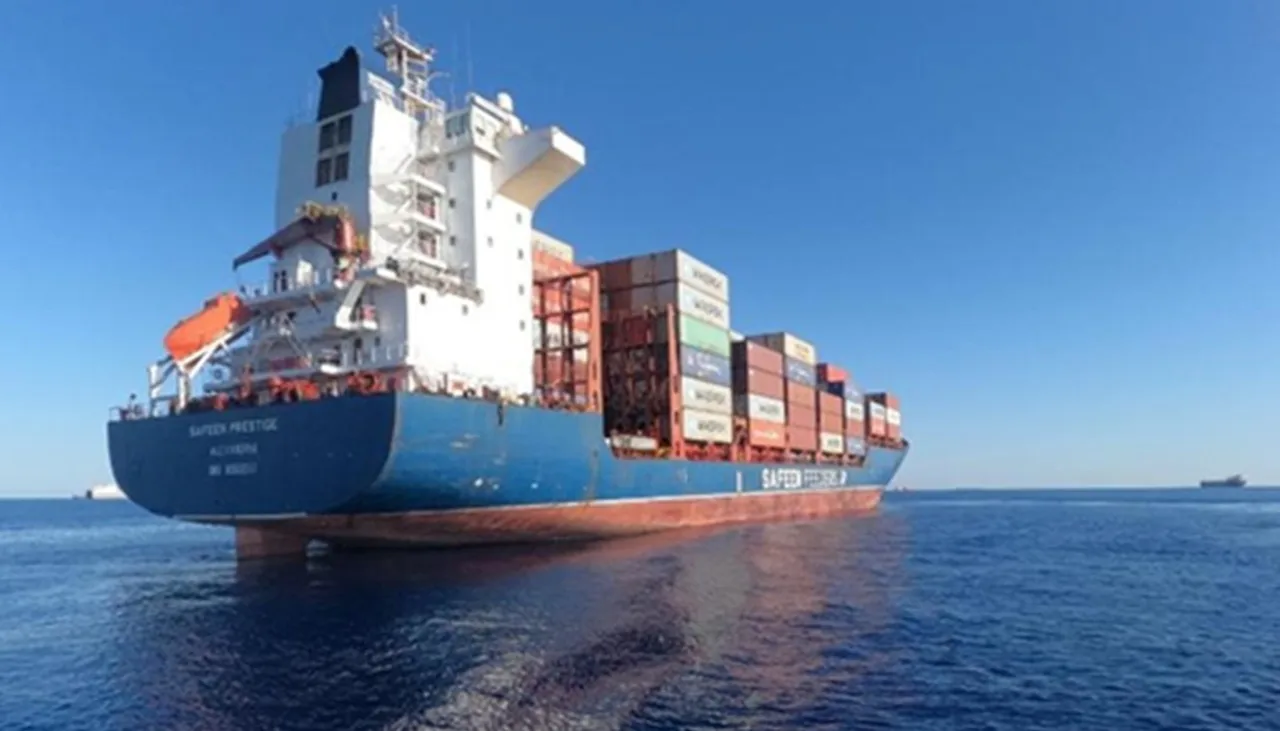
“The breakdown of vessel types confirms there is no ‘safe’ category. Crude oil product tankers, container ships, bulk carriers and salvage support vessels were targeted in the attacks. Most of the attacks occurred during daylight or at unspecified times, but patterns suggest opportunistic strikes on transiting vessels, often in the morning or afternoon,” it said.
Available option for safe ferry
It said that rerouting via the Cape of Good Hope is operationally the safest available option, but adds high costs and voyage times and places additional strain on bunkering infrastructure at Cape ports.
“Some crude shipments are being routed via the Saudi East-West Pipeline to Yanbu for onward loading. This provides short-term capacity but is a choke point in its own right, subject to threat from Yemeni nonstate actors,” the IFC-IOR said.
Duqm, Oman, is also explored by some operators as an alternative STS and transhipment hub given its position outside the immediate Arabian Gulf threat zone.
The IFC-IOR aims at strengthening maritime security in the region by building a common, coherent maritime situation picture and acting as a maritime security information-sharing hub. Since its inception, the Centre has established 76 linkages in 28 countries.
Source : ETV Bharat