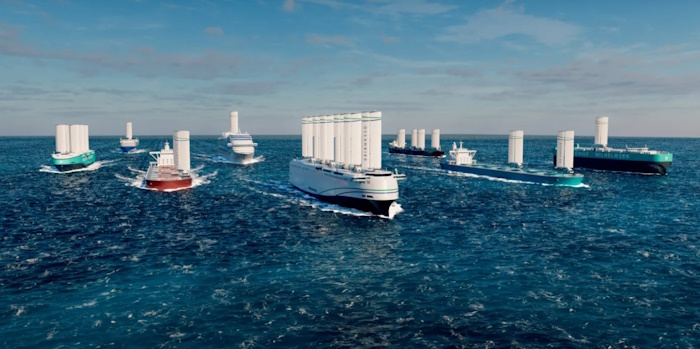
Wind tech could help decarbonise cargo shipping
Inhabitants of the Marshall Islands—a chain of coral atolls in the center of the Pacific Ocean—rely on sea transportation for almost everything: moving people from one island to another, importing daily necessities from faraway
Indian Register of Shipping reflects on 2024 and sets Ambitious Goals for 2025
MUMBAI : Indian Register of Shipping (IRS) concludes 2024 with remarkable achievements across sustainability, innovation, and maritime safety, making its Golden Jubilee year a testament to its legacy and vision. From spearheading decarbonisation projects
SeaCube and Greensee launch Revolutionary Green Leasing Solutions for Refrigerated Transport
NEW JERSEY : SeaCube, a global leader in refrigerated intermodal equipment leasing, has partnered with Greensee to launch innovative solutions that redefine sustainability in the refrigerated transport sector. This collaboration introduces SeaCube’s Green and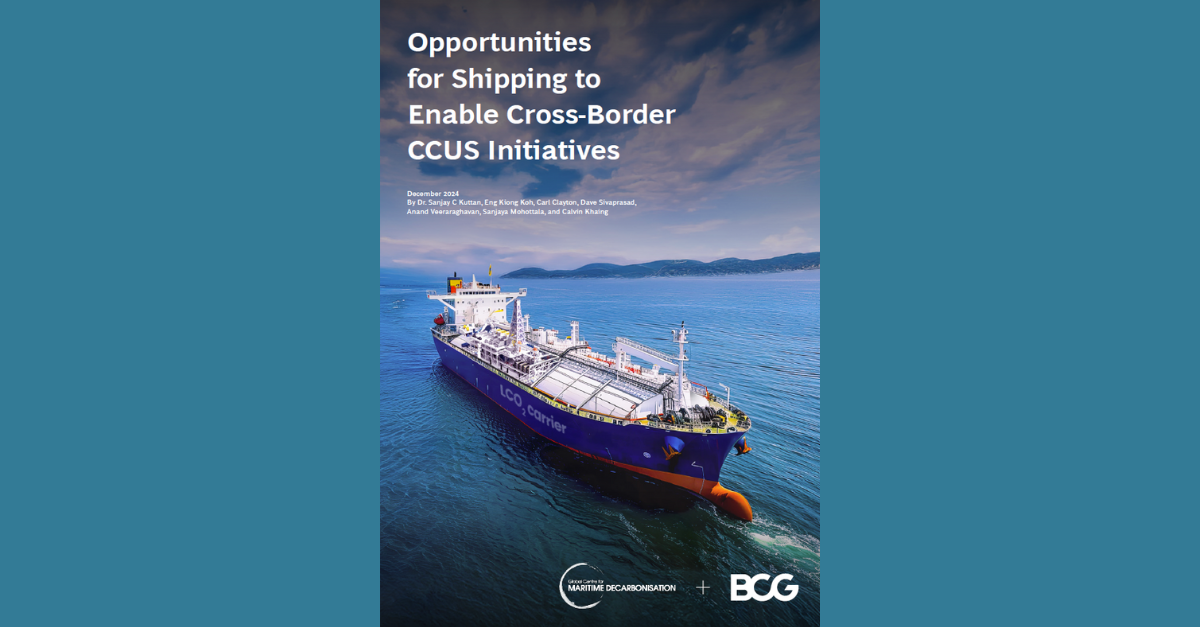
Shipping poised to play a vital role in APAC cross-border CCUS initiatives, with annual CO2 shipping volumes projected to reach 100 MtPA by 2050
SINGAPORE : A joint study by the Global Centre for Maritime Decarbonisation (GCMD) and Boston Consulting Group (BCG) has identified shipping to play a key role in enabling CCUS initiatives, particularly when there is
Hapag-Lloyd concludes long-term offtake agreement for green methanol
HAMBURG : Hapag-Lloyd has reached an agreement with Goldwind, a global strategic partner in clean energy with headquarters in Beijing, China, for the delivery of 250,000 tonnes of green methanol per year. The green
FuelEU Maritime fully integrated in BSM’s emission management services
HAMBURG : The countdown for the new FuelEU Maritime regulation is on. It will come into force from 2025. Bernhard Schulte Shipmanagement (BSM) has developed comprehensive FuelEU Maritime measures and digital tools, integrated in
Mark Zuckerberg’s Meta strikes biofuel deal with shipowner Norden
DENMARK : Danish tanker and bulker owner Norden has clinched an agreement with Mark Zuckerberg’s Meta to use sustainable maritime fuels in its supply chain. The operator said the owner of Facebook has signed
Maritime Industry’s Green Future: KR’s latest Magazine reveals Key Decarbonization Insights
BUSAN : KR (Korean Register) has released insightful analysis of Carbon Intensity Indicator (CII) ratings across its fleet in the fall edition of KR Decarbonization Magazine, offering crucial insights for maritime companies navigating the