


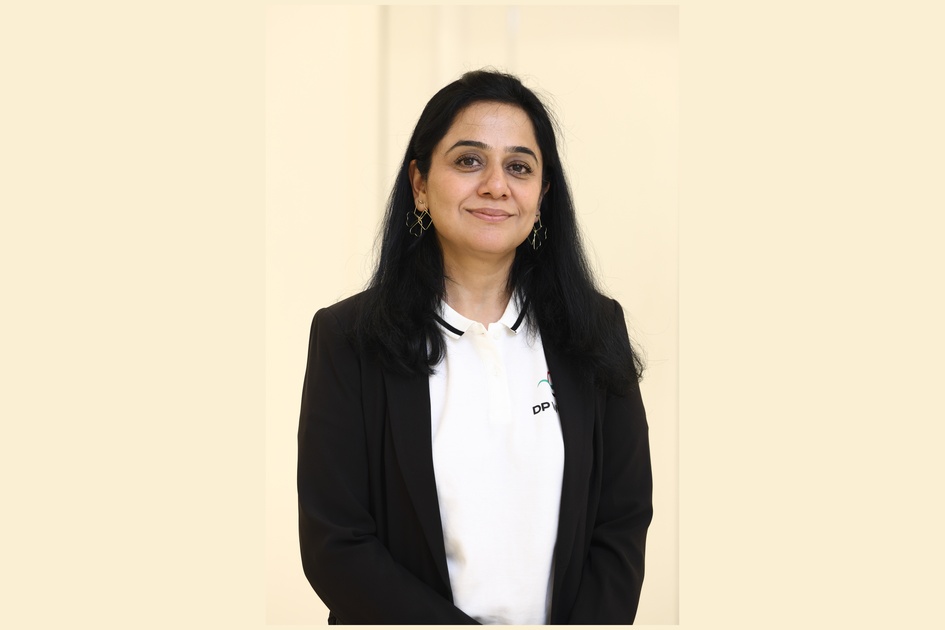
As global trade patterns shift and supply chains face growing demands for greater visibility, flexibility and resilience, freight forwarding is taking on a far more strategic role than simply moving cargo from one destination to another. For integrated logistics providers, the challenge lies in connecting infrastructure, multimodal transportation, warehousing and digital capabilities to deliver seamless end-to-end solutions. In an exclusive interaction with India Shipping News, Ms. Manisha Malhotra, Vice President – Freight Forwarding, Logistics, SCO (India), DP World, shares her perspective on the changing dynamics of freight forwarding, the importance of integrated logistics networks, and the role of technology in building more agile and resilient supply chains. She also discusses opportunities for Indian exporters and importers to expand into global markets, particularly through stronger trade corridors linking India with the Middle East and Africa, and explains how integrated logistics can help strengthen India’s competitiveness in global trade.
Q: For many years, freight forwarding was largely perceived as a transactional service focused on moving cargo from one point to another. Today, however, it has evolved into a strategic component of supply chain management. How do you see the role of freight forwarding changing in the era of integrated logistics, and what should businesses expect from a modern freight forwarding partner?
- A: Today, customers increasingly expect real-time shipment visibility, predictive insights, digital documentation and proactive exception management that enable faster, better-informed decisions. In this scenario, flexible freight forwarding services will need to be built around customers’ cargo needs and technology enabled.
DP World views freight forwarding as a critical link within our integrated logistics ecosystem. By combining our global network of ports, terminals, inland logistics, rail, warehousing and freight forwarding, we enable cargo infrastructure and information to move together through one connected platform. This reduces coordination with multiple stakeholders, shortens transit times and improves supply chain efficiency.
From here on, businesses should expect a freight forwarding partner to act as a strategic advisor beyond just moving cargo efficiently. This will help them optimize supply chains, respond quickly to disruptions, access new markets and build long-term resilience in an increasingly dynamic global trade environment.
Q: DP World has steadily transformed itself from a global port operator into an end-to-end logistics solutions provider. How does freight forwarding complement your broader logistics ecosystem comprising port terminals, inland container depots, rail connectivity, warehousing and multimodal transport to create a seamless customer experience?
- A: DP World’s integrated approach enables smoother transitions across transport modes, reduces dwell times and improves overall supply chain efficiency.
Freight forwarding helps connect customers directly to our physical infrastructure, while our digital platforms, real-time cargo visibility and integrated warehouse technologies help them manage inventory more effectively and make faster, better-informed operational decisions, across the entire logistics journey.
In India, we operate through 11 freight forwarding offices, delivering end-to-end solutions for both containerised and project cargo across ocean and air freight. Combined with strong shipping line connectivity, global container availability, extensive trade lane coverage and specialised air freight network, we help customers navigate global trade with greater confidence, reliability and flexibility. With our global network of 300 + Freight Forwarding offices we are highly equipped to support businesses to reach new markets and achieve scale.
Q: Supply chains today are expected to deliver not only speed but also predictability, visibility and resilience. From your experience, what are the biggest operational challenges customers face today, and how does DP World’s integrated logistics network help them overcome these challenges?
A: In an increasingly dynamic trade environment, businesses diversify sourcing and expand into new markets, they are looking for integrated logistics partners that can simplify complexity and provide greater flexibility. Gartner research reinforces this shift, finding that only 29% of supply chain organisations[1] have developed the capabilities needed for future readiness, including agility, resilience and integrated ecosystems.
DP World enables customers to build resilient supply chains by connecting every stage through our own assets. Our port terminals, rail services, warehousing, multimodal transport, economic zones and contract logistics provide seamless end‑to‑end cargo movement and informed operational decision‑making. In India, this integrated network is strengthened by Free Trade Warehousing Zones in Nhava Sheva, Chennai and Cochin, supported by dedicated rail and multimodal infrastructure that enhance connectivity, flexibility and resilience.
This is complemented by our global network across more than 80 countries and partner operations, giving customers greater visibility and control over cargo. The advantage of owning assets is not only improved transparency but also the ability to navigate complex challenges. In times of disruption, it allows us to support businesses with flexible choices and dependable visibility throughout the supply chain.
Q: India is witnessing unprecedented investments in logistics infrastructure through initiatives such as PM Gati Shakti, Dedicated Freight Corridors and the National Logistics Policy. How is DP World aligning its freight forwarding strategy with these national initiatives, and what opportunities do you foresee for Indian exporters and importers?
- A: As per DP World’s Global Trade Observatory Annual Outlook Report 2026, more than half of businesses now prioritise supply chain diversification, while reaching new markets is their top growth objective. They are also evaluating new trade routes based on cost, connectivity and faster cargo clearance.
DP World is aligning its freight forwarding strategy by embedding Indian exporters into global corridors through initiatives such as Bharat Mart in JAFZA, this transformative marketplace will Indian businesses to 1.2 billion consumers across the Middle East.
At the same time, our own multimodal assets across India and Africa position us to strengthen the India–Africa trade corridor. With India–Africa trade already valued at nearly USD 94 billion, DP World’s integrated terminals, free trade zones and logistics parks provide exporters and importers with seamless access to high‑growth African markets. DP World freight forwarding network provides credibility to customers those who are looking at expanding in their operations in Africa region. Considering it’s a new market, the freight forwarding solutions can help navigate customers through regulatory challenges and provide optimum visibility of their cargo.
By leveraging our infrastructure in both regions, we are enabling Indian businesses particularly MSMEs to diversify supply chains, manage cargo flows efficiently, and capture new opportunities in global trade. This alignment ensures that as India advances its logistics ambitions, DP World continues to support exporters and importers with reliable, scalable and future‑ready freight forwarding solutions.
Q: Digitalisation is rapidly reshaping global logistics. From real-time shipment visibility and predictive analytics to digital documentation and customer platforms, technology is becoming a key differentiator. Which digital capabilities do you believe will define the next generation of freight forwarding services?
- A: India has made significant progress in digitizing logistics through initiatives such as ULIP, ICEGATE digital customs processes and paperless documentation. The next phase is focused on creating intelligent, connected supply chains where data moves as seamlessly as cargo.
Globally, technology is enabling shippers to anticipate disruption, optimise cargo flows and complete documentation digitally. At DP World, we are advancing this transformation through our Virtual Trade Corridor, which connects customs authorities, ports and customers on a single digital platform. This innovation reduces clearance times dramatically and allows cargo to move seamlessly across borders. Additionally, we have our own patented technology to deliver predictive analytics and integrated documentation across our global network.
Q: As global supply chains continue to diversify and businesses adopt the ‘China Plus One’ sourcing strategy, India has a unique opportunity to emerge as a preferred global manufacturing and export hub. In your view, what role will integrate logistics providers such as DP World play in strengthening India’s global competitiveness over the next decade?
- A: Global supply chains are diversifying, and India is emerging as a preferred hub. UNCTAD’s 2026 report highlights India gaining investment in electronics and electric vehicles, while Production Linked Incentive schemes have already catalysed trillions in exports and billions in manufacturing investment. Yet this success depends on reliable logistics, ensuring output reaches ships as seamlessly as it leaves factories.
DP World’s integrated ecosystem is designed for precisely this role. With terminals at Mundra and Nhava Sheva, a rail network linking key industrial centres, and the upcoming Tuna Tekra terminal adding 2.19 million TEUs of capacity, we provide the last mile between India’s manufacturing renaissance and global markets.
As supply chains grow more complex, freight forwarding is evolving into end‑to‑end orchestration combining multimodal transport, bonded warehousing, customs facilitation and digital visibility. With operations in over 80 countries, handling around 25% of India’s container trade and 10% of global trade, DP World is uniquely positioned to simplify supply chains, strengthen resilience and connect Indian businesses to new opportunities worldwide.
[1] Gartner Survey Shows Only 29% of Supply Chain Organizations Have Built Necessary Capabilities to Deliver on Future Performance