

NEW DELHI: The Federation of Indian Export Organisations (FIEO) has taken note of the tariff measures proposed by the United States Trade Representative (USTR) on Indian goods following the Section 301 investigation into structural excess capacity and production in the manufacturing sector. The proposal leaves room for lower tariffs through negotiations and discussions addressing the findings of the investigation.
Welcoming the balanced response of the Government of India, Shri Ralhan said that the Ministry of Commerce and Industry is reviewing the USTR’s notice and reiterated that trade-related concerns should be addressed through the ongoing Bilateral Trade Agreement (BTA) negotiations. The Government has also made its position clear to the US authorities that India does not have any additional infrastructure capacity in any sector.
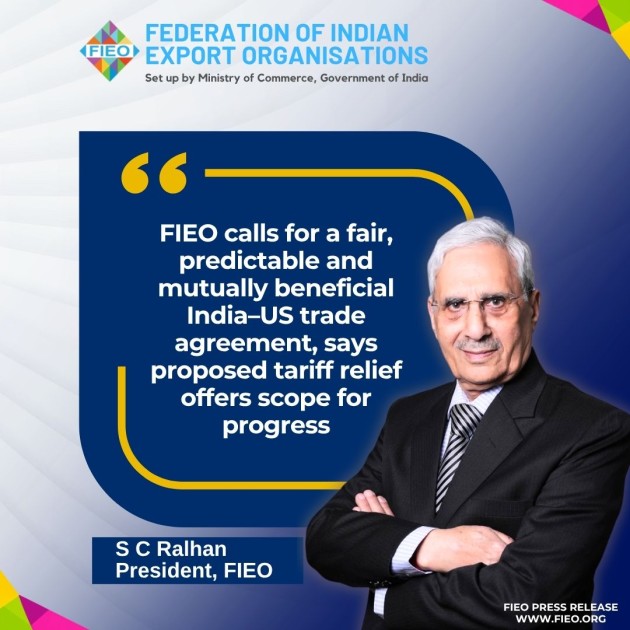
Mr. Ralhan said that FIEO supports the government’s efforts to finalize a bilateral trade agreement at the earliest. The agreement should be balanced and mutually beneficial, which protects India’s long-term economic and developmental interests and ensures that Indian exporters can compete on an equal footing with suppliers from other countries in the US market.
The uncertainty created by this development has undoubtedly worried the business community, but there is no panic among exporters. They also sought clarity on how the proposed measures would fit in with the existing duties under Sections 301 and 232 and how the exemptions for specific products in the USTR notice would apply. Clear rules on the duty payable on each product would help exporters price with confidence and avoid the burden of double tariffs.
Mr. Ralhan added that India’s growing manufacturing capabilities, improving quality standards and increasing participation in global value chains have strengthened India’s position as a reliable sourcing partner. A well-planned agreement can further leverage these strengths by expanding bilateral trade and creating opportunities for investment and technology collaboration.
FIEO has urged negotiators to ensure a competitive tariff regime for Indian products, remove non-tariff barriers and improve market access. The organisation has sought special attention to MSMEs, which have less capacity to bear sudden increases in duties and compliance costs. The federation has also called for close consultation between the government and industry to assess the impact on individual sectors and prepare submissions for the USTR’s public consultation process.