



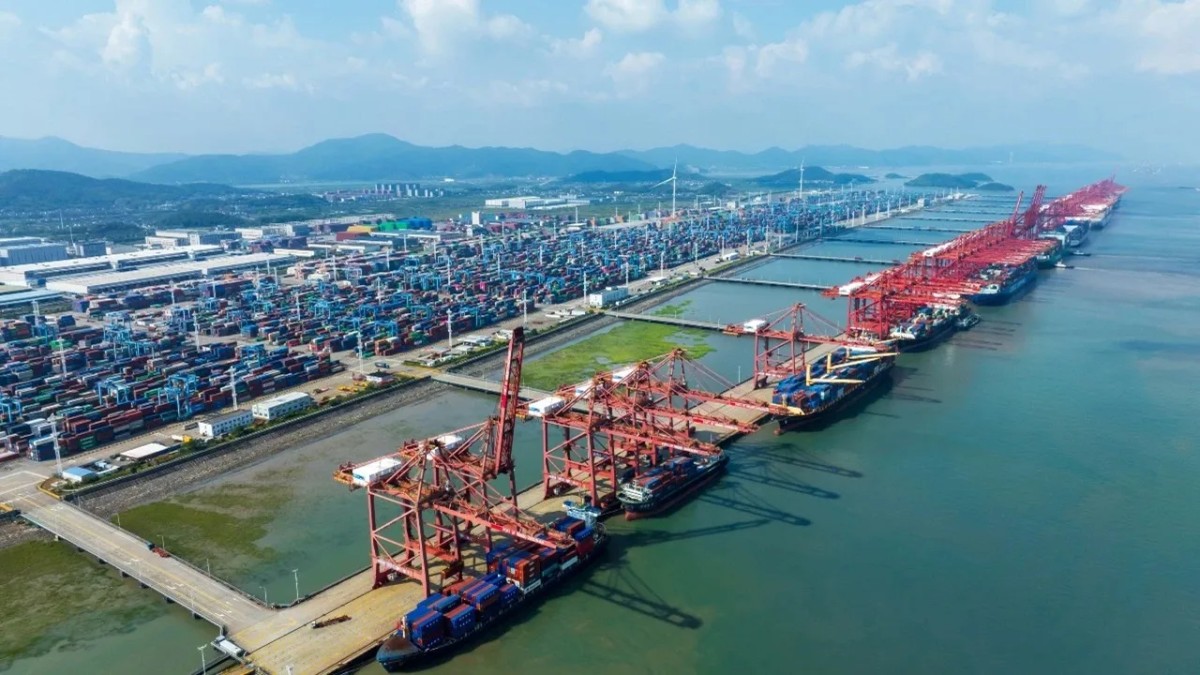
BEIJING: China’s Ningbo-Zhoushan Port has overtaken Singapore to claim the position of the world’s second-busiest container port in the first half of 2026, according to shipping analyst Alphaliner.
Ningbo-Zhoushan handled 22.90 million TEUs during the January–June 2026 period, registering an 8.8% year-on-year increase. Singapore Port, meanwhile, recorded 22.74 million TEUs, up 4.7% compared with the corresponding period of 2025.
The difference between the two ports was relatively narrow at around 160,000 TEUs, highlighting the increasingly close competition for the second position in the global container port rankings.
Shanghai Retains Global Leadership
Shanghai Port continued to hold the top position, handling 28.74 million TEUs during the first six months of 2026. Its throughput increased by 6.2% year on year, maintaining Shanghai’s position as the world’s busiest container gateway.
The strong performance of Ningbo-Zhoushan reflects the port’s continued expansion and growing role in international container trade.
Jintang Expansion Supports Growth
The development of the Jintang container hub has emerged as an important contributor to Ningbo-Zhoushan’s increasing container volumes. The second phase of the Jintang project was completed in July 2026, bringing all five operational container berths within the expanded development.
During the first half of 2026, Jintang added 17 international shipping routes, while container throughput at the facility increased by 23.4%.
The expansion is strengthening the port’s capacity and international connectivity while supporting the wider Ningbo-Zhoushan port complex in handling growing cargo demand.
Two Decades of Rapid Expansion
Ningbo-Zhoushan has recorded substantial growth in container traffic over the past two decades. Its annual container throughput crossed 1 million TEUs in 2001, reached 5 million TEUs in 2005 and surpassed 10 million TEUs in 2008.
The port crossed the 20-million-TEU mark in 2015 and exceeded 30 million TEUs in 2021. In 2025, Ningbo-Zhoushan achieved another major milestone by handling more than 40 million TEUs for the first time.
By the end of 2025, the port was connected by 309 container services to more than 700 ports across over 200 countries and regions. Its overall cargo throughput reached approximately 1.432 billion tonnes.
The port’s present corporate structure dates back to 2016, when Ningbo Port Co Ltd acquired Zhoushan Port Co Ltd and the company subsequently adopted the name Ningbo Zhoushan Port Co Ltd.
Singapore Remains a Strong Contender
Despite Ningbo-Zhoushan’s strong first-half performance, the competition with Singapore remains extremely close. The full-year 2025 figures had placed Singapore in second position after it handled a record 44.66 million TEUs, while Ningbo-Zhoushan ranked third with 43.87 million TEUs.
Ningbo-Zhoushan’s 2025 throughput represented an 11.63% year-on-year increase, demonstrating the pace at which the Chinese port has been expanding.
With only a small difference separating the two ports in the first half of 2026, the battle for second place is expected to remain highly competitive through the remainder of the year. Alphaliner has indicated that Ningbo-Zhoushan’s growth rate could moderate in the second half, potentially allowing Singapore to regain the position.
The latest figures underline the dynamic nature of global container shipping, where port capacity expansion, network connectivity, vessel calls and changing trade flows continue to reshape the rankings of the world’s leading container gateways.