


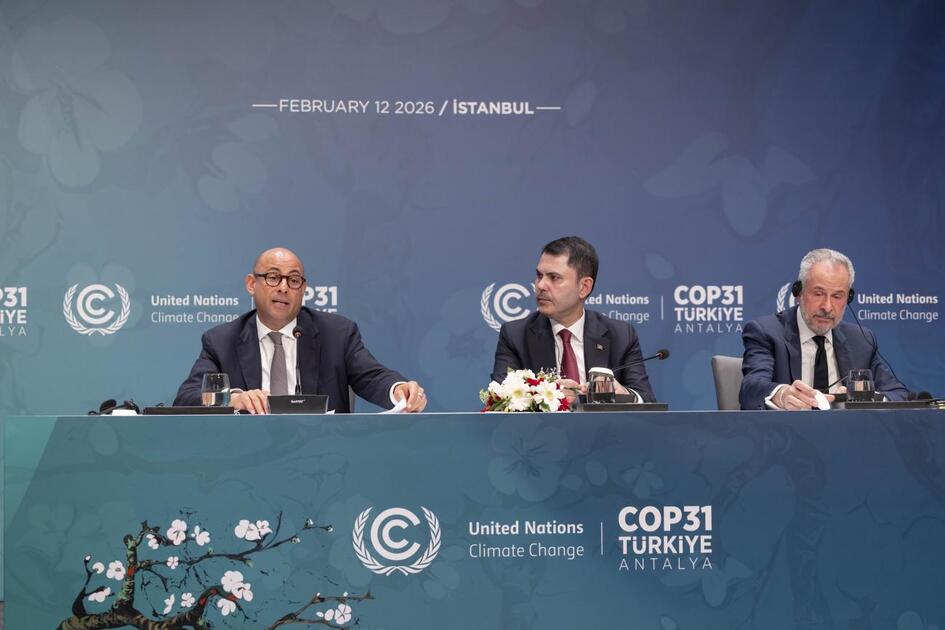
LONDON: Two days after COP31 ended without an overarching climate agreement, international experts and advocates called on governments to seize a new opportunity for global climate action: adopting a landmark agreement to cut emissions from international shipping.
During a virtual media briefing Tuesday, speakers outlined the prospects for adopting the International Maritime Organization’s (IMO) Net-Zero Framework, which countries approved in draft form in April 2025 but postponed formally adopting last October following threats from the Trump administration.
Unlike the UN climate negotiations, where a lack of consensus derailed an agreement at COP31, the IMO does not require unanimity. If countries cannot reach consensus, the framework can be adopted by a two-thirds majority of eligible parties present and voting. With negotiations underway and a potential adoption decision scheduled for December 4, advocates argued that countries have a realistic path to delivering the climate agreement that eluded negotiators in Turkey.
Em Fenton, Senior Director of Climate Diplomacy at Opportunity Green, said: “The Net-Zero Framework is a hard-fought multilateral compromise and – if adopted – could accelerate the global transition to the truly sustainable fuels and technologies of the future whilst delivering justice and equity for all. International negotiations on climate change are complex, fraught, infuriating and essential. A positive outcome at the IMO can protect the very fabric of multilateralism, deliver on states’ legal obligations with respect to climate and reinforce their legal duty to cooperate in the global best interest. We look to them to learn the lessons of COP31 and adopt the Framework without further delay.”
“COP31 showed what happens when a few countries use a consensus based process to stand in the way of global progress. But the Net-Zero Framework will come down to a one country, one vote democratic vote,” said Andrew Nazdin of the Glasgow Actions Team. “It’s been negotiated, approved in draft, defended under heavy pressure, and still enjoys majority support from countries around the world. The question now becomes will world leaders stand up to Trump and the petrostates to get this thing approved, including protecting the vulnerable countries they’ll try to bully into voting against it.”
Speakers also highlighted the dramatically changed political landscape since October 2025, when the Trump administration threatened countries supporting the framework with tariffs, sanctions, and visa restrictions. Following Trump’s midterm defeat and a Supreme Court ruling limiting his ability to impose tariffs under emergency economic powers legislation, the administration faces diminished leverage and the prospect of increased congressional scrutiny.
Meanwhile, the economic case for action is growing stronger. New research from Zero Carbon Analytics estimates that international shipping emissions between 1990 and 2020 have caused $963 billion in global economic damages. The analysis warns that continued emissions could ultimately impose costs greater than those of implementing the framework, particularly as climate impacts intensify. “We need to be clear that there is a cost of inaction, and that the evidence stacks up against that pathway,” said Tom Grylls, Opportunity Green Director of Analytics.
Sebastian Grajales of Climate Reality pointed to a new report finding that clean shipping and port electrification can support over 110,000 new jobs in the United States, as well as a new executive order aimed at strengthening domestic shipbuilding and maritime workforce. “Shipping is about to become one of the biggest clean energy markets on Earth,” Grajales said. “But investment needs certainty. The IMO Net-Zero Framework would provide that certainty. Once adopted, it would set a clear global fuel standard, reward zero- and near-zero-emission fuels and raise an estimated $11 billion to $12 billion a year in its early years for clean-fuel production, port upgrades, seafarer training, and support for developing countries.”
Even the shipping industry is calling for global action. On November 18, nine major international maritime trade associations, including the International Chamber of Shipping, BIMCO, and the World Shipping Council, issued a joint statement urging governments to establish stable, enforceable global regulations to support shipping decarbonization and provide certainty for investment.
Speakers stressed that the stakes extend far beyond the shipping industry, particularly for developing countries already confronting the impacts of climate change.
Dola Oluteye, Senior Fellow at University College London’s Energy Institute, said: “For Africa, climate inaction is existential. COP31 failed to produce an agreed text, and the IMO talks must not repeat that failure. The continent is home to most of the world’s least developed countries and depends heavily on shipping for its trade, yet owns little of the fleet. Surrounded with vast natural resources that can transform the continents fortunes with a global policy that can catalyse industrial growth. This shipping decarbonisation policy offers Africa a reset: the chance, given her abundant resources, to industrialise along a green pathway. That promise holds only if the transition is just and equitable, and if African states help to design its architecture instead of taking instructions from others. Africa must exercise her sovereign right to choose her own future, and the future worth choosing is green.”
Soujanya Chitumadugula, sustainability practitioner and community leader, shared about her personal experience of a climate event which stayed with her and shaped her views in understanding and participating in climate action. In October 2014, Cyclone Hudhud hit Visakhapatnam. In a few hours, much of the city’s tree cover was lost, buildings were badly damaged, and it took years to build back. Along other coastlines, families woke up to a new shoreline. “Hudhud wasn’t caused by shipping,” Chitumadugula said. “But it showed what the new reality looks like, and who feels it first… We don’t have to wait for another disaster to take action. My ask to governments is simple: adopt strong rules, make major polluters pay, and put frontline communities at the table when the money is allocated. Now is the time to follow through.”
Source: Glasgow Actions Team