



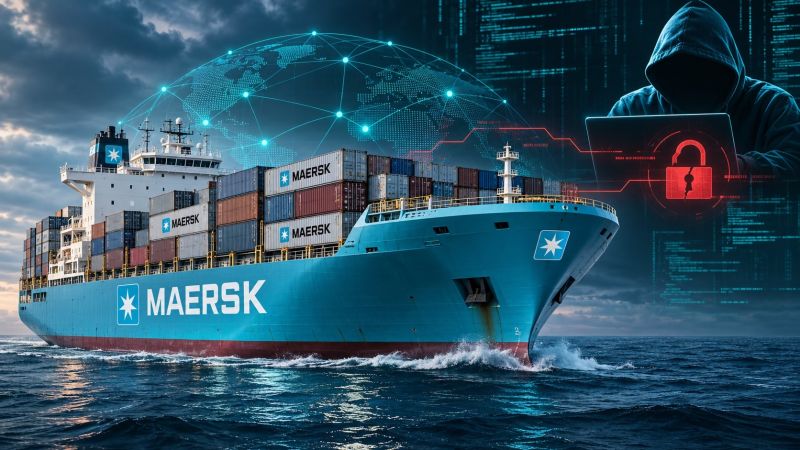
COPENHAGEN: A.P. Moller–Maersk, one of the world’s leading integrated shipping and logistics companies, has confirmed a cybersecurity incident involving unauthorised access to and extraction of data from a local legacy IT system inherited through a previous acquisition.
The incident was confirmed by the company on 11 November 2026. Following the discovery, Maersk initiated an investigation and implemented security measures to protect the affected system and prevent further unauthorised access.
According to the company’s preliminary findings, there is strong indication that no sensitive information has been disclosed. Maersk has also reported that it has found no evidence of any impact on its other IT systems or on customer and partner systems connected through Application Programming Interfaces (APIs) and Electronic Data Interchange (EDI) platforms.
The company has further indicated that it does not anticipate any disruption to its customer-facing operations arising from the incident. Customers can continue using Maersk’s digital platforms and services to book shipments, manage cargo movements and access regular shipping and logistics services as usual while the investigation remains underway.
Renewed Focus on Maritime Cybersecurity
The latest incident has once again brought cybersecurity risks in the global shipping and logistics industry into focus, particularly concerning legacy IT infrastructure inherited through mergers and acquisitions. Such systems can present additional security challenges when integrated into the technology environments of large multinational shipping companies.
Maersk experienced one of the most significant cyberattacks in the maritime industry’s history in June 2017, when the NotPetya malware attack severely disrupted its global IT infrastructure, affecting operations across multiple locations and business units. The incident caused widespread operational challenges and highlighted the vulnerability of interconnected global supply chains to cyber threats.
While the latest incident appears to be limited to a local legacy system, it underscores the importance of continuous cybersecurity monitoring, infrastructure modernisation and robust data protection measures across the maritime and logistics ecosystem.
As shipping companies increasingly depend on digital platforms, automated processes and interconnected supply chain networks, safeguarding IT infrastructure has become a critical component of operational resilience and business continuity.
Maersk’s ongoing investigation will provide further clarity on the nature and extent of the incident.