



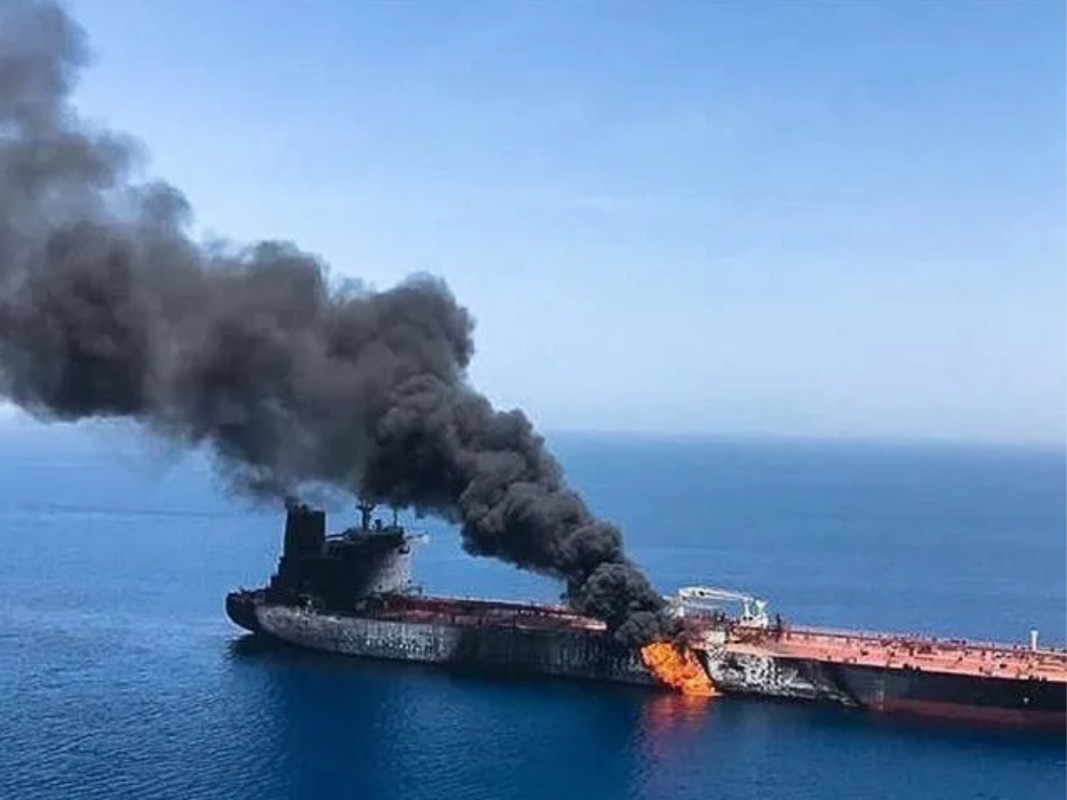
OMAN : An oil tanker exploded in the Strait of Hormuz after striking a naval mine on July 26, 2026. According to reports, the explosion occurred after the vessel allegedly deviated from the strict navigation corridor designated by Iranian authorities.
Iranian media reports state the vessel operated as a “rogue” tanker outside the approved maritime safe zones, leading to its collision with a submerged sea mine. However, no immediate independent information has been made public regarding the identity of the ship, its flag, ownership, destination, or potential casualties.
Iranian forces previously warned that any vessel transiting the strategic waterway without direct coordination or departing from Tehran-approved channels would “bear the consequences”.
Despite the severe blast, Iranian officials stated that maritime traffic through the heavily monitored energy corridor remained unaffected.
US-Israel-Iran War Latest News: Regional Escalation
The explosion follows months of intense military exchanges between the United States and Iran. Iran had heavily restricted traffic through the vital economic chokepoint, through which roughly 20% of the world’s petroleum and LNG passes.
The incident took place during a fragile, two-day pause in airstrikes between the U.S. and Iran. While military spokesmen from Iran indicated they had temporarily suspended retaliatory operations to match the U.S. lull, the mine explosion highlights the persistent and lethal dangers lingering in the water.
Simultaneously, regional diplomatic talks between Iran and Oman have reportedly seen progress regarding future navigation and management mechanisms for the strait.
US-Israel-Iran War Latest News: Dispute Over ‘Approved Routes’
Iran’s Mandate: On June 26, Iran’s military declared that shipping through the Strait is “only allowed” via corridors designated by Tehran. Iran insists all vessels must use a channel hugging its coastline under a state-run management system.
The Western Stance: The United States and international maritime bodies reject this, calling for unrestricted transit through the international waterway.
The “Rogue” Narrative: Iranian media, specifically Mehr News Agency and Tasnim News Agency, emphasized that the vessel drifted into a minefield because it failed to coordinate with Iranian authorities and ignored prior warnings.
US-Israel-Iran War Latest News: Underlying Tensions
The explosion did not happen in a vacuum. It follows a multi-month conflict that erupted in February 2026 with massive U.S.-led operations.
Failed Peace Efforts: Tensions flared again on July 8, when U.S. President Donald Trump declared a recently signed memorandum of understanding with Iran “over”. This deal originally tasked Iran with demining operations. Without it, both sides blame each other for the unmapped explosives floating in the waters.
Preceding Clashes: Just days before this explosion, the Islamic Revolutionary Guard Corps (IRGC) claimed that three other tankers attempted to cross an unauthorized southern route. The IRGC stated that one struck an explosive device, forcing the remaining two to turn back.
The Caspian Sea Flashpoint: Adding to Tehran’s agitation, Ukraine recently conducted long-range strikes against Iranian cargo vessels in the Caspian Sea. Iran has fiercely protested, summoning Ukrainian diplomats just as the Hormuz mine blast occurred.
US-Israel-Iran War Latest News: Strategic Play or Accident?
Iran may be allowing or leveraging these mine explosions to prove that the U.S.-backed southern shipping channels are dangerously unsafe, thereby forcing commercial traffic to obey Iranian coastal lanes.
Since conventional naval skirmishes have degraded much of Iran’s standard fleet, the state may no longer possess the capability to safely clear loose sea mines, turning the entire Strait into a literal minefield.
Source : The Sunday Guardian