


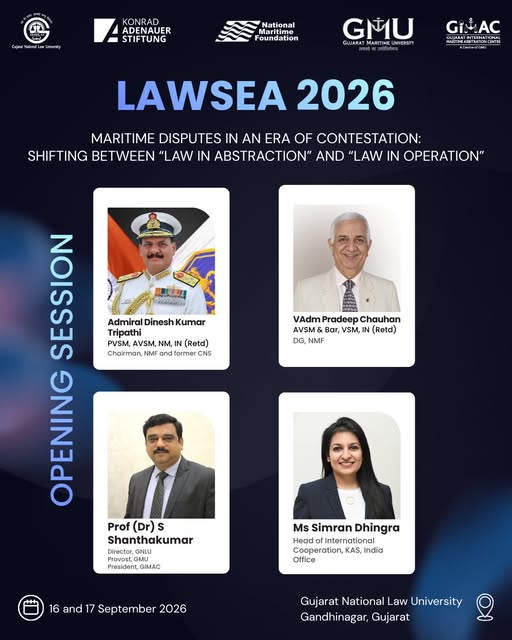
GANDHINAGAR : Gujarat Maritime University (GMU), Gujarat International Maritime Arbitration Centre (GIMAC), Gujarat National Law University (GNLU) and The National Maritime Foundation (NMF), New Delhi, in partnership with the Konrad-Adenauer-Stiftung (KAS) India, recently hosted the 2nd edition of the Public International Maritime Law Conference – LAWSEA 2026 at GNLU, Gandhinagar, Gujarat.
The conference examined the theme “Maritime Disputes in an Era of Contestation: Shifting Between ‘Law in Abstraction’ and ‘Law in Operation’,” bringing together maritime law scholars, naval and security experts, international lawyers, policymakers and practitioners to discuss how established maritime law is being tested by contemporary geopolitical, technological and operational developments.
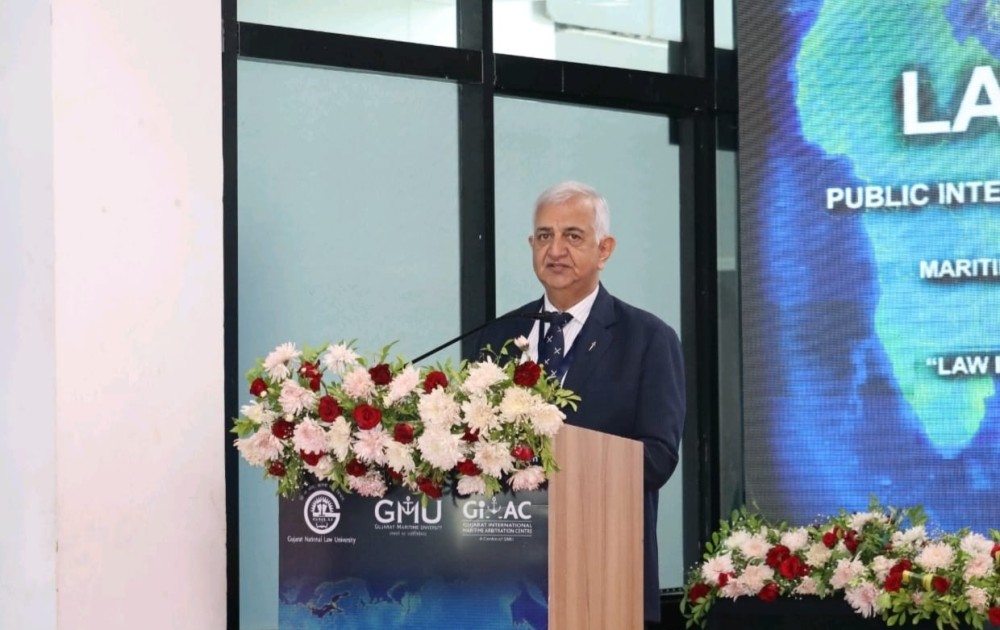
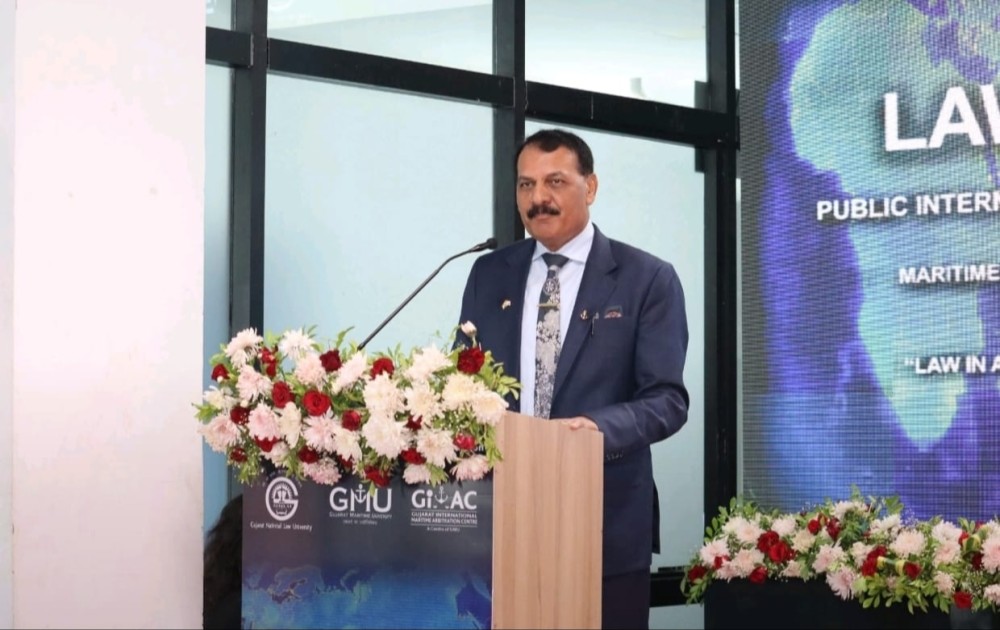
Opening Session
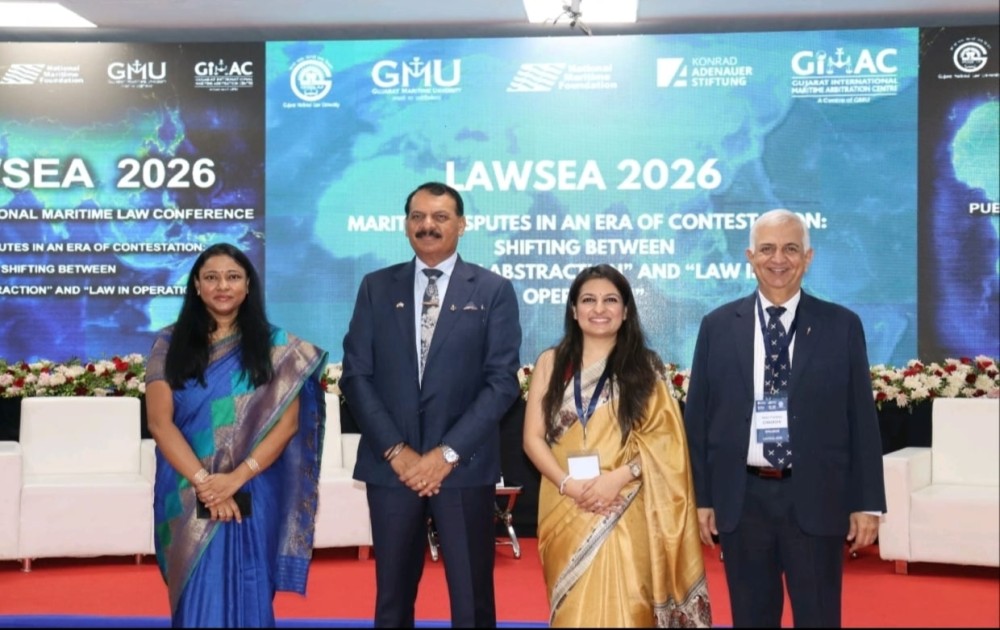
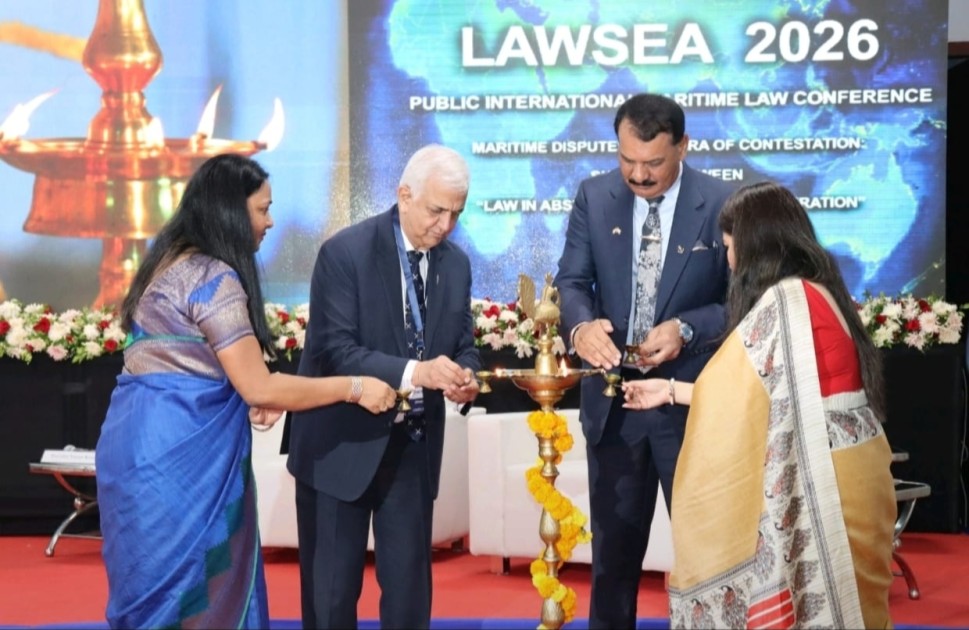
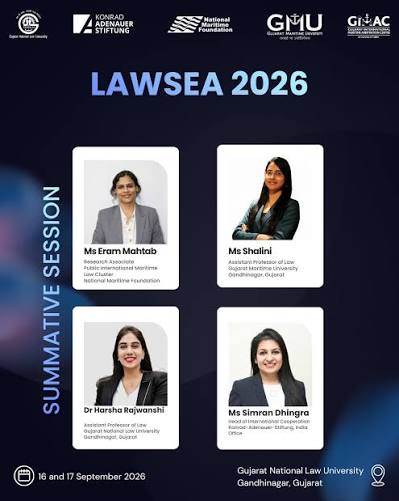
The conference was inaugurated by Admiral Dinesh Kumar Tripathi, PVSM, AVSM, NM, IN (Retd), Chairman, NMF and former Chief of the Naval Staff; Vice Admiral Pradeep Chauhan, AVSM & Bar, VSM, IN (Retd), Director-General, NMF; Prof. (Dr.) Tanuja Kaushik, Dean, Academic Affairs, GMU; and Ms. Simran Dhingra, Head of International Cooperation, KAS India. Speakers underscored the gap between established legal frameworks, particularly UNCLOS, and the realities of maritime operations, strategic competition and emerging technologies, and highlighted the changing character of maritime disputes and the need to translate legal principles into operational practice.
Conference Structure
The two-day programme comprised six professional sessions. Day One, themed “Legal Foundations & Emerging Fault Lines,” covered UNCLOS under pressure, maritime boundaries and sovereignty claims, military and scientific activities in the EEZ, and technology as a dispute multiplier. Day Two, themed “Dispute Management, Lawfare & Policy Choices,” focused on strategies for managing disputes and preventing escalation.
Session I – UNCLOS under Pressure
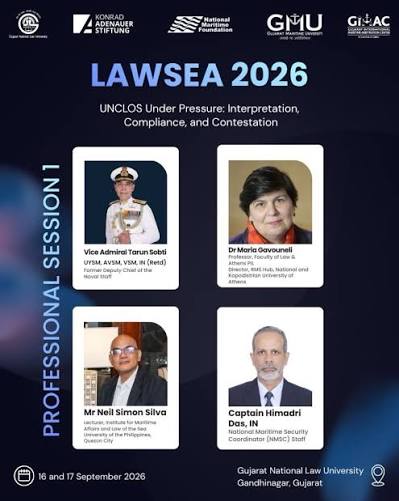
Moderated by Vice Admiral Tarun Sobti, UYSM, AVSM, VSM, IN (Retd), the session examined UNCLOS interpretation, compliance and contestation. Dr Maria Gavouneli (University of Athens) addressed boundary delimitation and State practice; Mr Neil Simon Silva (University of the Philippines) examined compliance in South and East Asia and grey-zone practices; and Captain Himadri Das, IN, discussed legal regimes beyond UNCLOS and capacity-building for Global South States.
Session II – Maritime Boundaries, Baselines and Sovereignty Claims
Moderated by Dr Abhay Singh (Director of School of Maritime Law and Policy, GMU), the session explored coastal geography, science and State practice. Speakers included Ms Fretti G. Ganchoon (Philippines Department of Justice) on contiguous-zone jurisdiction, Rear Admiral Peush Pawsey on hydrographic evidence, and Dr Nguyen Ba Cuong (Vietnam) on baseline systems and the evidentiary value of maps.
Session III – Military Activities, Marine Scientific Research and Surveillance in the EEZ
Moderated by Dr Harsha Rajwanshi (GNLU), the session examined coastal-State rights versus foreign military and scientific activity. Wg Cdr (Dr) U C Jha (Retd) discussed restrictions on foreign military activities; Mr Aristyo R. Darmawan (Australian National University) examined navigation freedoms versus security interests; and Mr Himanil Raina addressed reconciling operational necessity with legal restraint.
Session IV – Technology as a Dispute Multiplier
Moderated by Commodore Manish Kumar Sinha, IN (Retd), the session covered legal grey zones created by new technologies. Commander Abhimanyu Singh, IN, examined autonomous maritime systems; Ms Antara Jha addressed drones, jamming and spoofing; and Ms Shalini Singh (Assistant Professor, GMU) discussed grey-zone competition and maritime cyber vulnerabilities.
Day Two – Opening Address
Prof. Manimuthu Gandhi, Vice President, Indian Society for International Law, delivered a special address, “Law as Compass: Managing Maritime Disputes without Escalation,” examining UNCLOS’s role in navigation, interdiction, IUU fishing and pollution disputes.
Session V – Lawfare and Maritime Disputes
Moderated by Vice Admiral Pradeep Chauhan, the session explored law and strategic narrative as instruments of statecraft. Commodore Seshadri Vasan, IN (Retd), discussed “manufactured legitimacy” through narrative competition; Ms Raaga Manjari (MIMA) examined lawfare through legislation and cartography; and Dr Christian Schultheiss (Max Planck Institute) discussed combined legal strategies including negotiation and arbitration.
Session VI – Beyond Courts: Managing Maritime Disputes in the Indo-Pacific
Moderated by Commodore Jai Bedi, IN, the session examined provisional arrangements and cooperative mechanisms. Professor Yoshifumi Tanaka (University of Copenhagen) discussed conciliation and joint development under UNCLOS Articles 74(3) and 83(3); Dr Madhumita Kothari addressed what governments require from maritime lawyers; and Mr Martin Egknud Petersen (Embassy of Denmark) discussed Denmark-India cooperation on port State control and green shipping.
Closing Session
The conference concluded with summative remarks by Vice Admiral Pradeep Chauhan and closing remarks by Admiral Dinesh Kumar Tripathi, who reflected on translating maritime legal principles into effective maritime governance.
Conclusion
LAWSEA 2026 brought together legal scholarship, naval experience and policy perspectives across two days, progressing from UNCLOS, maritime boundaries and EEZ issues to technology, lawfare and Indo-Pacific cooperation – reinforcing the value of legally grounded dialogue and institutional cooperation in maritime governance.