



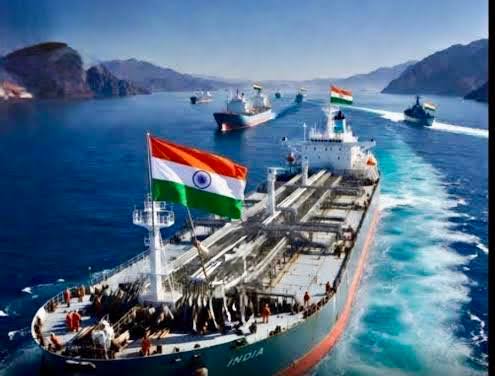
NEW DELHI: The escalating geopolitical crisis in West Asia has significantly disrupted India’s crude oil shipping economics, with tanker freight rates on some Gulf-to-India routes climbing nearly fivefold compared with February levels. The surge in transportation costs has weakened the traditional freight advantage of sourcing crude oil from Gulf producers and made alternative supplies from distant markets increasingly expensive.
According to Drewry Maritime Research, freight rates for crude shipments from Fujairah in the UAE to India’s west coast increased to approximately US$7.51 per barrel in October, compared with US$1.57 per barrel in late February, representing a rise of nearly 377%. The rates also climbed sharply from US$4.76 per barrel in September, reflecting the growing impact of geopolitical uncertainty and changing shipping arrangements in the region.
The increase has been partly attributed to greater reliance on ship-to-ship (STS) transfers in the Gulf of Oman as shipping companies and oil suppliers seek alternative arrangements to move crude while navigating disrupted maritime corridors.
Before the conflict, transporting crude oil from the Gulf to India was among the most economical international oil trades because of the relatively short sailing distances. Freight rates for Saudi Arabian and other Gulf crude shipments on Suezmax tankers, which typically carry around one million barrels, were generally in the range of US$0.95 per barrel during January and February. War-risk insurance premiums were also relatively modest, at approximately 0.1–0.25% of a vessel’s insured value.
The current disruption has substantially altered this cost structure, narrowing the traditional freight-cost advantage enjoyed by Gulf suppliers over producers in the Atlantic Basin.
India Diversifies Crude Sourcing Amid Rising Freight Costs
The increase in shipping expenses comes at a time when Indian refiners are diversifying their crude procurement sources, with supplies from Russia, the United States, West Africa and Latin America supplementing traditional Gulf imports.
India’s crude oil imports are estimated to have reached a record 5.6 million barrels per day (bpd) in October, according to data from energy intelligence firm Kpler.
Russian crude arrivals increased by approximately 100,000 bpd month-on-month to 1.97 million bpd, accounting for nearly 35% of India’s total crude imports. However, the volume remained below the July peak of 2.82 million bpd, when Russian supplies represented around 55% of India’s crude purchases.
The transportation of Russian crude has also become considerably more expensive. Freight rates for shipments from the Baltic Sea ports of Primorsk and Ust-Luga to India’s west coast increased from approximately US$8–12 per barrel before the conflict to around US$25–30 or higher in October. These two ports account for nearly 90% of India’s Russian crude imports.
Longer Shipping Routes Tighten Global Tanker Availability
One of the major factors driving the increase in freight rates is the diversion of vessels away from high-risk maritime corridors. Disruptions affecting commercial shipping through the Strait of Hormuz, a strategic passage handling approximately 20% of global oil supplies, have forced shipowners, charterers and energy companies to reconsider established transportation routes.
Heightened security concerns and rising war-risk exposure have also reduced the number of vessels willing to operate in and around the Gulf, tightening the availability of crude oil tankers.
The impact is extending well beyond West Asia. Very Large Crude Carrier (VLCC) freight rates on the West Africa-to-Asia route have also climbed to record levels as shipping companies increasingly consider longer alternative routes.
Diversions around the Cape of Good Hope in South Africa are adding substantially to voyage distances and operating expenses. Vessels using this route may cover an additional 3,500–4,000 nautical miles, adding approximately 10–14 days to sailing schedules.
Longer voyages result in higher bunker fuel consumption, increased operating costs and reduced vessel turnaround times. Consequently, fewer voyages can be completed by individual tankers, effectively reducing the available global shipping capacity and putting further upward pressure on freight rates.
Impact Extends to Refined Petroleum and Gas Shipping
The disruption is also affecting India’s refined petroleum exports. Product tankers are facing similar challenges arising from higher war-risk insurance premiums, longer voyages and limited vessel availability.
India is an important supplier of diesel to European markets, which continue to depend on imported middle distillates following the reduction in Russian petroleum product supplies. However, rising freight charges, higher bunker fuel expenses and extended sailing schedules are increasing the delivered cost of Indian diesel, potentially affecting the competitiveness of Indian refiners in international markets.
The impact is also being felt in liquefied natural gas (LNG) and liquefied petroleum gas (LPG) transportation. Amid uncertainty surrounding the Strait of Hormuz, Indian buyers have increased spot purchases from alternative suppliers, including the United States.
However, these alternative supplies involve longer voyages and greater vessel utilisation. A growing proportion of US-to-Asia LPG shipments is being routed around the Cape of Good Hope, tightening the availability of Very Large Gas Carriers (VLGCs) and increasing freight costs in the global gas shipping market.
Strait of Hormuz to Determine Future Freight Trends
The future direction of tanker freight rates will depend significantly on the restoration of normal commercial shipping through the Strait of Hormuz.
According to Drewry Maritime Research, a normalisation of transit conditions in 2027 could ease freight pressures as more vessels return to Gulf trading routes and war-risk insurance premiums gradually decline.
However, prolonged geopolitical tensions and continued disruption to regional oil flows could keep transportation costs elevated, particularly if crude cargoes continue to face delays, diversions or alternative shipping arrangements.
The expected addition of new vessels to the global tanker fleet in 2027 could provide some relief by improving vessel availability and moderating freight rates.
For India, the sharp increase in maritime transportation costs has wider implications for energy security, crude procurement strategies and refining economics. Higher freight expenses raise the delivered cost of imported crude, extend inventory cycles and increase working capital requirements for refiners.
The current crisis also highlights the growing importance of secure maritime trade routes, diversified energy sourcing and adequate global tanker capacity.
As India continues to expand its energy imports from different regions, the stability of the Strait of Hormuz and the wider West Asian maritime corridor will remain critical to controlling shipping costs and ensuring the uninterrupted movement of crude oil and petroleum products.