Home Blog Page 174

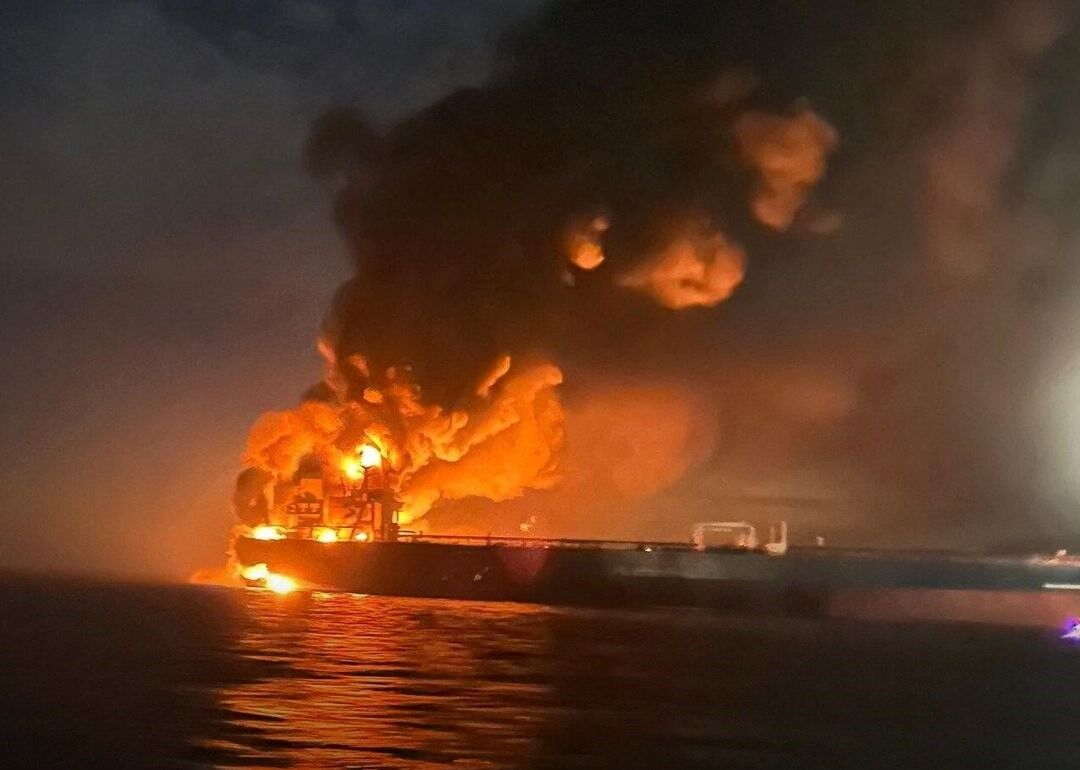
Explosion reported near tanker off Oman coast, crew safe: UKMTO

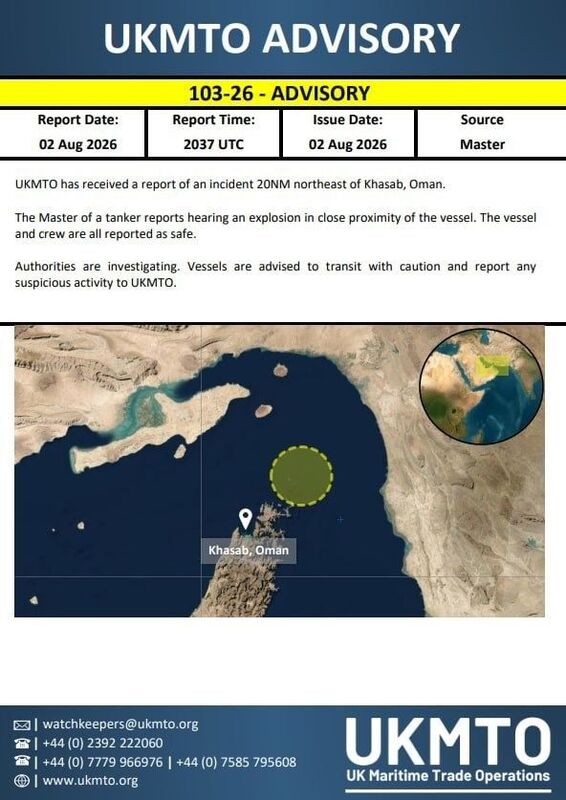
MUSCAT: The United Kingdom Maritime Trade Operations (UKMTO) reported an explosion in close proximity to a tanker off the coast of Oman on Sunday.
UKMTO 02 08 1 Explosion reported near tanker off Oman coast, crew safe: UKMTO

According to UKMTO, the incident occurred approximately 20 nautical miles northeast of Khasab, Oman. It confirmed that all crew members and the vessel are reported to be safe following the incident.

Maritime authorities have launched an investigation into the event. Meanwhile, the UKMTO has advised all vessels transiting the area to exercise caution and immediately report any suspicious activity to the agency.

The maritime security scare comes as Iranian Foreign Minister Abbas Araghchi stated that negotiations between Tehran and Muscat regarding the management of the strategic Strait of Hormuz are “nearing completion”. Updating the Cabinet on the status of discussions with Oman on Sunday, Araghchi highlighted significant headway in the dialogue, according to Iran’s state-run IRNA news agency, remarking that the parleys are “in their final stages” while withholding further specifics.

Elaborating on the diplomatic track, Iranian Foreign Ministry spokesperson Esmaeil Baqaei told state television that an understanding with Oman, which shares the strategic passage, over a revised shipping lane was imminent.

“We are now going to reach an understanding on a route acceptable to both sides, neither the northern route nor the southern route, but one that respects the sovereign rights of both sides and safeguards our national interests and security,” Baqaei said, while clarifying that any prospective agreement with Muscat would not automatically translate into the full reopening of the strategic waterway.

The dispute over transit rights through the vital waterway triggered the latest round of military strikes last month after Tehran restricted shipping to a channel hugging the Iranian coastline. Meanwhile, maritime intelligence firm Kpler reported on Friday that vessel movement through the Strait of Hormuz has registered a sharp decline.

These regional developments coincide with US President Donald Trump announcing that Washington and Israel have concurred on deferring planned military strikes on Iran, maintaining that the “parameters” of a potential agreement have been established. Military hostilities between the adversary nations erupted on February 28 following surprise joint strikes by the US and Israel on Iranian targets, with subsequent rounds of intermittent diplomacy producing periods of fragile calm.

Fears of a fresh regional escalation had surged last month following a resurgence in strikes. Trump had previously threatened to target Iran “very hard”, with reports indicating potential strikes on key energy infrastructure, putting American diplomatic missions across the Middle East on high alert.

However, the US President signalled a shift in strategy following intense diplomatic engagements. Speaking to reporters on board Air Force One, Trump confirmed that discussion channels were active and that negotiations with Iran, expected to take place through intermediaries, are scheduled to commence on Monday afternoon.

“We are talking to them [the Iranians] in the form of a negotiation; it begins tomorrow afternoon, and we’ll see how it goes. I’d love to do that. It’ll save a lot of lives, a lot of unnecessary power, to be honest with you. We are ready to go whenever we want. Would I rather make a deal? I’m not looking to kill people, because a lot of people die; we don’t want that. So they asked us, Iran specifically, but the other three, they asked us,” Trump said.

The US President revealed that diplomatic engagements involving Saudi Arabia, the United Arab Emirates, Qatar and Iran led him to halt what was originally planned as a “massive attack” on Friday, including a key conversation with Saudi Arabia’s Crown Prince Mohammed bin Salman.

Taking to his Truth Social platform, Trump elaborated, “We have just been asked by Iran, and other Middle Eastern Countries, to hold off any attack in that the parameters of a deal have been agreed to.”

He added, “Based on this request, I have agreed, for the future benefit of the WORLD and, likewise, the survival of a successful and prosperous Iran, to cancel the attack, subject to being able to rapidly make a DEAL.”

While the exact parameters of the diplomatic negotiations referenced by the US leader remain unclear, Iranian media outlets refuted assertions that Tehran had solicited a pause in American military action.

The Strait of Hormuz, a critical maritime corridor for global oil and gas transport, continues to sit at the core of these diplomatic efforts. Prior to the outbreak of hostilities, the waterway permitted unhindered commercial transit. Following the conflict’s onset, Iran shut the maritime passage, demanding continued oversight and transit tolls, an arrangement firmly rejected by Washington.

Outlining the conditions for any prospective resolution, Trump emphasised that a final agreement must incorporate the “Immediate, Complete and Total OPENING OF THE HORMUZ STRAIT, and an end to Iran’s nuclear threat”.

At the conflict’s commencement, the US administration maintained that military action was imperative to neutralise Iran’s nuclear ambitions. Western powers contend that Tehran is pursuing nuclear weapons capabilities, whereas Iranian authorities maintain that the programme remains strictly designated for civilian purposes.

Trump further indicated that an agreement could be reached regarding the management of the Strait of Hormuz, while asserting that an accord would be established concerning the denuclearisation of Iran.

Source: ANI
Indonesia ferry tragedy: 5 killed, 41 missing after vessel catches fire

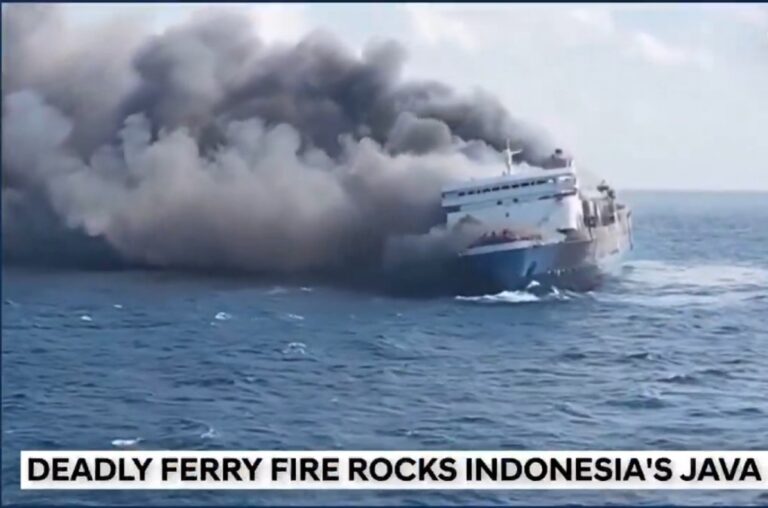
MADURA ISLAND : At least five people have died and 41 remain missing after a ferry carrying 271 passengers and crew caught fire while sailing off Indonesia on Sunday, according to search and rescue officials cited by AFP.

The ferry, KMP Mutiara Sentosa 2, was travelling from Surabaya in East Java to Makassar in South Sulawesi when its captain reported the fire, Indonesia’s National Search and Rescue Agency (Basarnas) said.

Of the 271 people aboard, 225 had been rescued by Sunday afternoon, according to agency data cited by Reuters.

Several nearby vessels joined the rescue operation as passengers were evacuated from the burning ferry.

Rescue operation underway
Nanang Sigit, head of the Surabaya Search and Rescue Office, said vessels including TB Hasnur 26 and British Mentor were helping rescue passengers who had jumped into the sea.

“Four vessels are now alongside the ferry,” Nanang was quoted as saying by Jakarta Global.

The search-and-rescue vessel SAR 249 Permadi was also heading to the site, although officials estimated it would take around six hours to reach the ferry.

Thick smoke seen as flames spread
Videos circulating on social media appeared to show thick black smoke rising from the ferry’s upper decks as flames spread across the vessel. Passengers wearing life jackets could be seen gathered on one side of the ferry as rescue efforts continued.

Source : Firstpost

A second Qatari LNG Carrier struck as 22 Chinese Vessels Cross the Red Sea unharmed

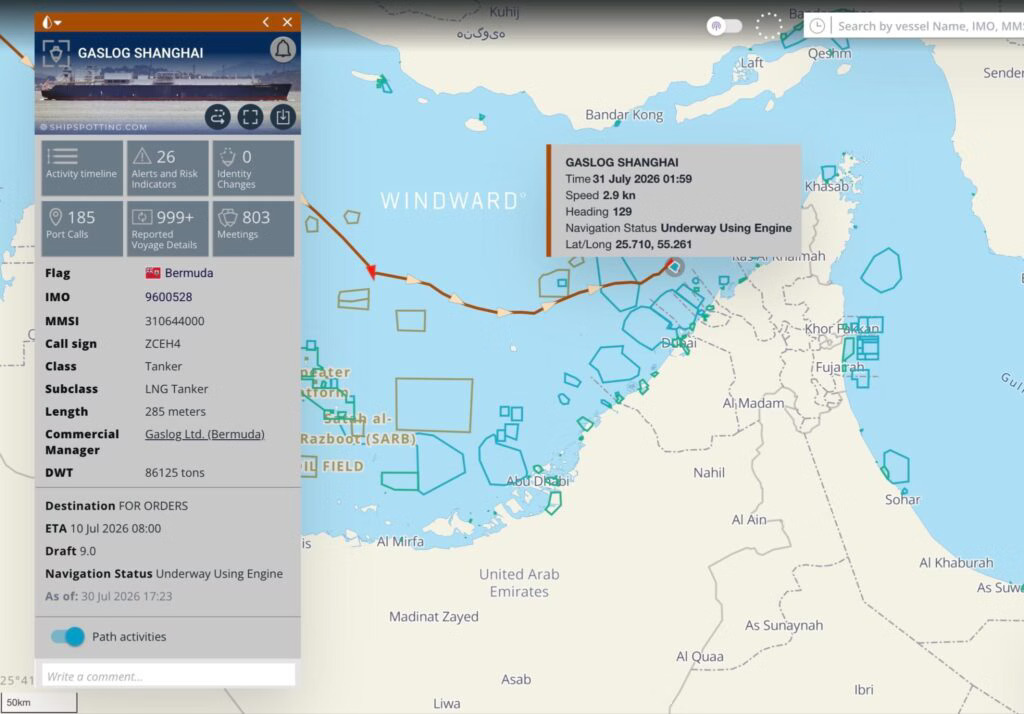
LONDON: GASLOG SHANGHAI, a Bermuda-flagged LNG tanker carrying Qatari LNG, was struck by a likely Iranian projectile approximately 11 nautical miles northeast of Limah on July 31, marking the second confirmed hit on Qatari LNG cargo in a month. The IRGC claimed it struck and disabled two tankers attempting the southern corridor under U.S. air escort and forced four more to turn back after warnings. MINOAN GLORY was forced into a real-time U-turn by the IRGC Navy in a video the IRGC released itself.

In the Red Sea, 22 Chinese-linked vessels transited Bab el-Mandeb and called at Saudi ports between July 20 and August 2 without a single incident, while the Houthis struck four Saudi tankers in the same window. Saudi Arabia announced a 14-country maritime coalition headquartered in Riyadh, and six Saudi-flagged VLCCs are now diverting via the Cape of Good Hope. Yanbu King Fahd port has sustained fully dark operations continuously since July 27.

The Damietta drone strike on two LNG tankers on July 29 is assessed as an Iranian retaliatory operation linked to the Ukraine-Caspian strike rather than the Houthi campaign, extending Iranian action beyond the Gulf and Red Sea theaters for the first time.

Windward assesses the operational risk environment across the Strait of Hormuz, Red Sea, Gulf of Aden, northern Arabian Gulf, and eastern Mediterranean as critical, with kinetic escalation now spanning three theaters simultaneously, differential access rules visibly operating for Chinese-linked tonnage on both fronts, and structural commercial disruption compounding across the region.

At a Glance
GASLOG SHANGHAI, a Bermuda-flagged LNG tanker carrying Qatari LNG, was struck by a likely Iranian projectile approximately 11 nautical miles northeast of Limah, Oman, on July 31, the second confirmed hit on Qatari LNG cargo in a month.
The IRGC claimed it struck and disabled two tankers attempting the southern corridor under U.S. air escort and forced four more to turn back after warnings.
MINOAN GLORY, a Liberia-flagged bulk carrier, was forced into a real-time U-turn by the IRGC Navy and has been AIS-dark since July 31.
Twenty-two Chinese-linked vessels transited Bab el-Mandeb and called at Saudi ports between July 20 and August 2 without a single incident.
Over the same window, the Houthis struck four Saudi tankers, including ENCELIA, LAYLA, NCC MASA, and NCC GHAZAL.
Saudi Arabia announced a 14-country multinational maritime coalition on July 30, headquartered in Riyadh and mandated to protect the Bab el-Mandeb, Red Sea, and Gulf of Aden.
Six Saudi-flagged tankers are routing via the Cape of Good Hope, with one Taiwan-to-Yanbu voyage roughly doubling from 24 to 56 days.
Yanbu King Fahd Industrial Port has sustained fully dark operations continuously since July 27.

Source: WINDWARD

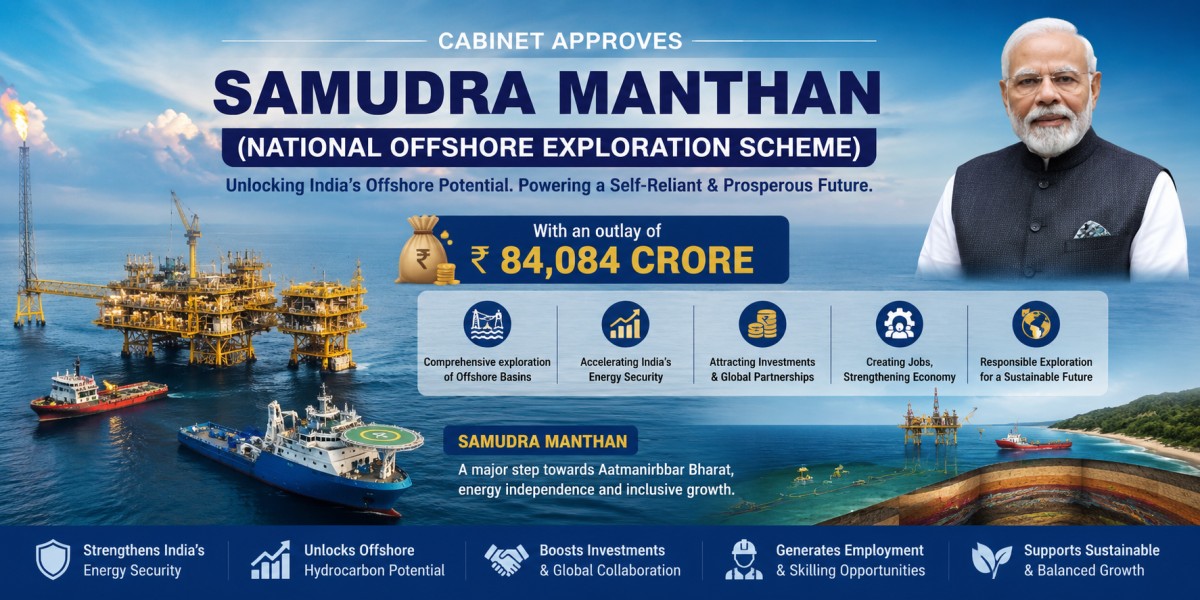
Cabinet approves ‘Samudra Manthan’ (National Offshore Exploration Scheme) with an outlay of Rs.84,084 crore

NEW DELHI : The Union Cabinet chaired by the Prime Minister Shri Narendra Modi has approved ‘Samudra Manthan’ – the National Offshore Exploration Scheme, a Central Sector Scheme of the Ministry of Petroleum & Natural Gas with an approved outlay of Rs.84,084 crore for implementation up to FY 2030–31.

The Scheme translates the Prime Minister’s vision, articulated from the Red Fort on Independence Day 2025, of a modern-day Samudra Manthan to unlock India’s vast offshore energy potential. It marks a landmark step towards strengthening India’s energy security, accelerating domestic exploration and production, promoting technological leadership, and advancing the vision of Viksit Bharat.

The Scheme encompasses a comprehensive set of interventions across the offshore exploration value chain. It provides for large-scale acquisition, processing and interpretation of high-quality seismic data, accelerated deepwater and ultra-deepwater exploratory drilling, scientific drilling in frontier basins, development of common offshore production and evacuation infrastructure, and establishment of an integrated Oil & Gas Manufacturing and Services Zone. It also includes dedicated provisions for digital programme management, capacity building, technology adoption, stakeholder engagement and international outreach, creating an integrated ecosystem to accelerate offshore exploration and production in the country.

Samudra Manthan is expected to catalyse reserve accretion of over 600 Million Metric Tons of Oil Equivalentv(MMTOE), substantially increase offshore exploration activity, promote higher domestic oil and gas production, generate large-scale employment, strengthen indigenous manufacturing under Make in India and Atmanirbhar Bharat, and foster a globally competitive ecosystem for offshore technologies and services. The Scheme is also expected to stimulate significant investments across the exploration and production value chain, creating long-term opportunities for industry, innovation and economic growth.

As India progresses towards becoming a developed nation, Samudra Manthan represents a transformational national initiative that will unlock the country’s offshore energy resources, strengthen long-term energy security, deepen technological capabilities, and create enduring value for the economy and future generations.

Over the past decade, the Government has undertaken transformative reforms across the upstream sector, including opening almost the entire offshore acreage for exploration, modernising the legislative and contractual framework, and strengthening the National Data Repository. Building on these reforms, Samudra Manthan will usher in a new era of accelerated offshore exploration through strategic public investment, cutting-edge technologies and world-class infrastructure.

Cabinet approved revised Policy for Award of Waterfront and Associated Land to Port Dependent Industries (PDI) in Major Ports

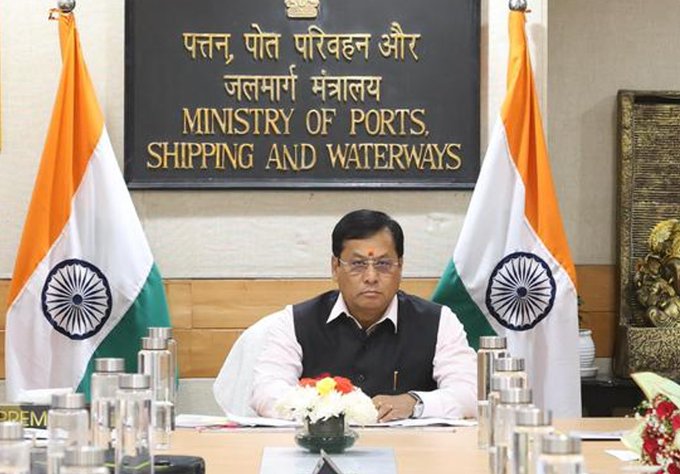
NEW DELHI : Union Minister for Ports, Shipping and Waterways (MoPSW) Shri Sarbananda Sonowal said that the Union Cabinet has approved a revised Policy for Award of Waterfront and Associated Land to Port Dependent Industries (Captive Policy), introducing a series of reforms aimed at accelerating private investment through the Public Private Partnership (PPP) model, improving operational flexibility and strengthening infrastructure development across India’s major ports, and the revised policy reflects the government’s commitment to creating a predictable, transparent and investor-friendly framework for port-led industrial growth.

The revised policy updates the existing Captive Policy of 2016 by enabling existing captive users to expand capacity through new berths, jetties, terminals and single buoy moorings (SBMs), while also providing a framework for extending concession agreements, awarding waterfront to eligible government entities and addressing changes arising from evolving business and regulatory conditions.

“The revised Captive Policy is a major reform that balances investor confidence with public interest. By providing long-term certainty to existing operators, facilitating capacity expansion and creating a transparent framework for future investments, we are strengthening India’s maritime infrastructure to support the country’s rise as a global trade and logistics hub under the visionary leadership of Prime Minister Shri Narendra Modi,” Sonowal said.

The policy is expected to provide greater certainty to investors, facilitate capacity augmentation and improve ease of doing business in the port sector without any financial implication for the Government.

One of the key reforms allows Major Port Authorities to renew or extend concession agreements of existing Port Dependent Industries (PDIs) for up to 30 years without requiring a fresh tender process. The renewal will be undertaken at either the prevailing market rate or the indexed revenue payable under the existing concession agreement, whichever is higher, protecting port revenues while providing long-term certainty to investors.

The policy also creates a structured mechanism for capacity expansion by existing captive users. Major Port Authorities will undertake price discovery through competitive bidding, while providing the existing concessionaire a Right of First Refusal (RoFR) to match the highest bid. Participation will be restricted to eligible Port Dependent Industries handling the same cargo profile, ensuring competitive price discovery while maintaining operational continuity. To prevent misuse of the expansion route for extending concession tenure, the concession period for any additional berth or terminal developed under the expansion proposal will remain co-terminus with the maximum permissible concession period of the existing facility.

Waterfront Access for Government Bodies

For the first time, the policy provides a framework for awarding waterfront and associated land to eligible government organisations without resorting to competitive bidding, subject to availability and prescribed safeguards. Eligible entities include Central and State Government departments, statutory authorities, autonomous bodies, Central and State Public Sector Undertakings (CPSUs and SPSUs), and government-controlled joint ventures operating in sectors such as fertilizers, food, petroleum, oil and gas, coal, steel and other sectors notified by the Ministry of Ports, Shipping and Waterways.The concessions will be awarded at the notified floor price.

Recognising the evolving nature of global trade, the revised policy introduces provisions for Change in Law and Unforeseen Events, allowing business plans and cargo profiles to be revised where regulatory changes or unforeseen circumstances affect project viability.

“The maritime sector operates in a dynamic global environment. This policy provides the flexibility needed to adapt to changing realities while ensuring continuity of investment, trade and port operations,” said Union Minister Shri Sarbananda Sonowal.

The revised policy addresses key gaps in the 2016 framework by providing long-term certainty for investors, enabling capacity expansion in line with industrial demand and introducing greater operational flexibility for captive facilities. It also permits changes in cargo profile after the prescribed lock-in period, or immediately where necessitated by a change in law, ensuring business continuity in a dynamic global trading environment.

The Government expects the reforms to catalyse fresh investment in port infrastructure, strengthen supply chains, reduce logistics risks for port-dependent industries and generate employment through expansion of port-led industrial activity. The policy will be implemented across all Major Ports and is expected to increase cargo throughput, improve utilisation of waterfront assets and generate sustained revenue for ports without any financial implication for the Government of India.

The policy will be implemented across all Major Ports for captive facilities and is expected to improve cargo throughput, optimise utilisation of waterfront assets and generate sustained revenue for ports without any financial implication for the Government of India.

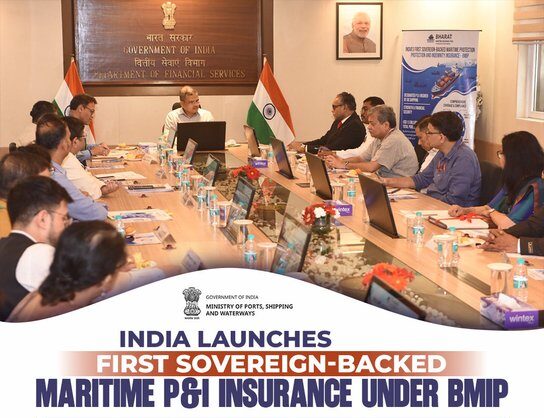
India launches first sovereign-backed P&I Insurance Product under BMIP

NEW DELHI : India strengthens its maritime insurance ecosystem with the launch of the country’s first sovereign-backed Protection & Indemnity (P&I) Insurance Product under the Bharat Maritime Insurance Pool (BMIP).

Since its operationalisation on 12 May 2026, BMIP has helped reduce war risk premium rates by approximately 35–40%, while issuing 1,608 Cargo and Hull War Risk policies as on 29 July 2026, reinforcing India’s journey towards a resilient and self-reliant maritime sector.

The Department of Financial Services (DFS) has launched India’s first sovereign-backed Protection and Indemnity insurance product under Bharat Maritime Insurance Pool (BMIP). Addressing the launch event in New Delhi on Friday, DFS Secretary Sanjay Lohiya congratulated all stakeholders involved in the process of formulation of the insurance product for achieving this milestone for India’s maritime sector. He also handed over the first Protection and Indemnity policy document to Shipping Corporation of India Limited.

The Ministry of Finance said with the introduction of BMIP, the war risk premium rates have decreased approximately by 35-40 percent, from the levels observed at the height of West Asia conflict. It added that as of yesterday a total of 1 thousand 608 policies covering Cargo War risks and Hull War risks have been issued under the Pool. The Ministry noted that the BMIP mechanism ensures the continuity of maritime war risk insurance coverage, fosters the development of domestic underwriting capacity, and enhances confidence among India’s shipping and trade stakeholders. It added that extending the pool to include Protection and Indemnity coverage would further strengthen India’s maritime risk management framework and improve the resilience of its maritime insurance ecosystem.

CONCOR bids a heartfelt farewell to Sanjay Swarup, CMD, as he concludes a transformative tenure

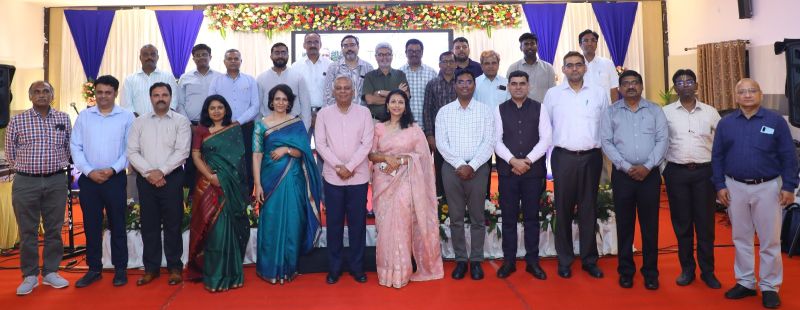
NEW DELHI : Container Corporation of India Ltd. (CONCOR) bid a warm and emotional farewell to its Chairman & Managing Director, Shri Sanjay Swarup, as he demitted office after an illustrious tenure marked by visionary leadership, operational excellence and an unwavering commitment to organisational growth.

Employees across the organisation, particularly from CONCOR Area III, expressed their deep gratitude and admiration for a leader whose tenure not only transformed the organisation but also inspired countless employees through his humility, integrity and people-centric approach.

During his leadership, CONCOR witnessed a new phase of growth and strategic transformation. Under Shri Swarup’s guidance, the organisation strengthened its market presence, expanded customer engagement, enhanced operational efficiency and embraced innovative business opportunities. One of the most significant milestones of his tenure was CONCOR’s strategic foray into the shipping sector, reflecting his foresight in positioning the company as an integrated logistics solutions provider in an increasingly competitive global logistics ecosystem.

His vision was aptly reflected in the inspiring corporate motto he introduced—“Think Logistics, Think CONCOR”—which continues to guide the organisation’s commitment towards delivering end-to-end logistics solutions and creating greater value for customers.

Known for his calm demeanour and decisive leadership, Shri Swarup earned the respect of colleagues and stakeholders alike through his fairness, deep domain knowledge and unwavering conviction. He cultivated a work culture built on trust, accountability, innovation and teamwork, empowering employees at every level to take ownership and contribute meaningfully to the organisation’s success.

His extraordinary dedication to CONCOR remained evident until his very last day in office. Closely monitoring operations, reviewing performance and encouraging teams with the same enthusiasm and commitment that characterised his entire tenure, Shri Swarup exemplified the values of discipline, perseverance and service before self.

Recognising that sustainable growth is driven by strong customer relationships, he transformed customer engagement from a routine business activity into an organisational culture. Under his leadership, customer-centricity became a defining feature of CONCOR’s operations, strengthening partnerships with trade, industry and logistics stakeholders across the country.

Equally noteworthy was his emphasis on employee welfare and holistic development. Shri Swarup actively promoted health, fitness and work-life balance throughout the organisation. By participating in marathons alongside employees and encouraging wellness initiatives, he reinforced the importance of physical fitness, teamwork and camaraderie. He also consistently reminded employees to value their families and maintain a healthy balance between professional responsibilities and personal life, leaving behind lessons that will remain relevant for years to come.

As a mentor, he was admired for his accessibility, patience and empathy. Every officer and member of staff found in him a compassionate listener who treated every genuine concern with respect and offered guidance with generosity. His encouragement of young professionals and his willingness to nurture future leaders have left a lasting imprint on the organisation.

Shri Sanjay Swarup’s tenure will be remembered as one of strategic growth, innovation, customer-centric transformation and human-centric leadership. His legacy extends beyond operational achievements to the values he instilled—integrity, humility, excellence, compassion and an unwavering belief in people.

On behalf of CONCOR Area III and the entire CONCOR family, employees expressed their heartfelt gratitude for his visionary guidance, trust and inspirational leadership, while conveying their warmest wishes for good health, happiness and continued success in the years ahead.

His remarkable journey serves as a reminder that the most enduring leaders are those who inspire not merely through authority, but through example, humility and humanity. While he may be stepping down from office, the values he championed and the path he charted for CONCOR will continue to inspire generations of employees and contribute to the organisation’s future growth.

MoPSW ‘closely monitoring’ six Indian vessels, 166 seafarers to ensure their well-being near Hormuz: MEA

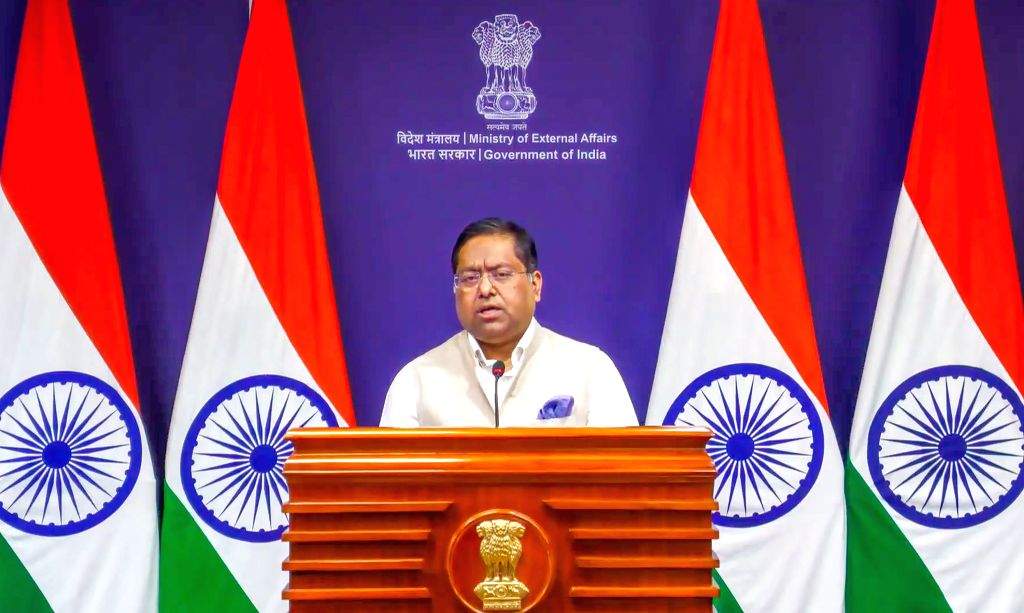
NEW DELHI : The Ministry of Ports, Shipping and Waterways (MoPSW) is closely monitoring six Indian vessels and the welfare of 166 Indian seafarers operating in the Persian Gulf and near the Strait of Hormuz amid escalation in attacks on commercial vessels during the ongoing conflict in the region, the Ministry of External Affairs (MEA) said on recently.

Addressing the media briefing, MEA Spokesperson Shri Randhir Jaiswal said six Indian vessels are currently located west of the Strait of Hormuz in the Persian Gulf, carrying 125 Indian seafarers. Additionally, 41 Indian seafarers are on board foreign vessels in the region.

“We have six Indian vessels west of the Strait of Hormuz, in the Persian Gulf, and there are 125 seafarers on board these Indian ships. In addition, there are 41 Indian seafarers on board foreign ships in that area,” Jaiswal said.
He said the Ministry of Shipping is in close coordination with relevant authorities to ensure the safety and welfare of Indian seafarers in the region.

“The Ministry of Shipping is closely monitoring our ships as well as our seafarers to ensure their well-being and welfare. Obviously, our missions in the region are in touch with the Ministry of Shipping to see if there is any requirement to support them, and they are offering any assistance that might be required,” he added.

Responding to a query on the number of Indian seafarers operating in or transiting the Black Sea region, which has also witnessed attacks on commercial vessels leading to the death of Indian seafarers, Jaiswal said India has one of the world’s largest seafaring communities, with many serving on both Indian and foreign vessels.

“We have the second-largest seafaring community. A lot of them are on Indian vessels, and a lot are also on foreign vessels. As to the exact number of Indian seafarers serving on ships in and around the Black Sea, I don’t have the figure with me right now,” he said.

On the recent reports of attacks on ships carrying Indian seafarers in the Black Sea region and talks with Russia and Ukraine on the matter, the MEA spokesperson reiterated India’s position that commercial shipping, seafarers, civilians and civilian infrastructure should not be targeted.

“We have been very clear in articulating to both our partners and friends and to others also that under no circumstances can commercial shipping or the seafarers or civilians or civilian infrastructure be attacked and it must be avoided, and we have condemned those attacks which have happened recently in the Black Sea region,” Jaiswal said.

On Monday, MEA summoned Ukraine’s Ambassador to India, Oleksandr Polishchuk, and conveyed New Delhi’s “serious concern” over the recent attack on the commercial vessel, MV OMORFI, in the Black Sea that resulted in the death of an Indian seafarer.

Earlier, the Indian Embassy in Ukraine said a merchant vessel, MV Ragnar, carrying four Indian nationals, was struck at the port of Odesa, with two crew members reported safe while information on the remaining two was awaited.

MoPSW has undertaken feasible measures for the development of Urban Water Metro Systems

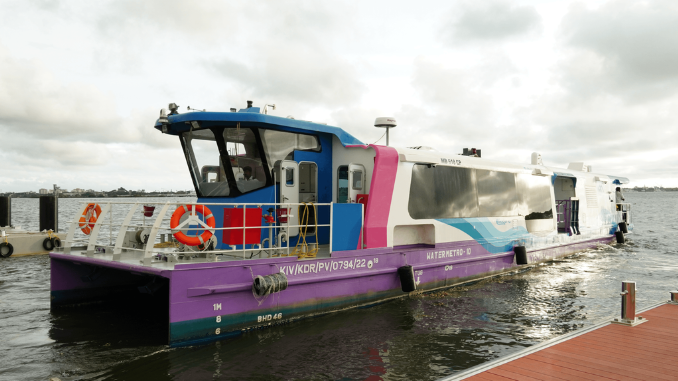
NEW DELHI : The Ministry of Ports, Shipping and Waterways (MoPSW) Shri Sarbananda Sonowal said, Government is formulating National Water Metro Guidelines, 2026 to support the planning, implementation, safety standards, and promotion of eco-friendly water-based public transportation systems. Aspects relating to the zero/low-emission technical framework, standardization requirements, financing structures, environmental safety, and inter-ministerial coordination are covered under these guidelines.

Inland Waterways Authority of India (IWAI), an autonomous organisation under the MoPSW has undertaken Feasibility Studies for the development of Urban Water Metro Systems at 18 identified locations across the country. The Feasibility Studies for 15 locations have been completed, which will help in assessing the technical viability, infrastructure requirements, operational framework, and potential for implementing water-based urban public transportation systems. However, four hybrid electric vessels have been deployed at Varanasi, Ayodhya, Patna and Kolkata; and one hydrogen fuel cell vessel has been deployed at Varanasi under other initiatives of the Ministry.

Govt bolsters maritime supply chains and inland economic corridors amid geopolitical disruptions

NEW DELHI : The Union Minister of Ports, Shipping and Waterways, Shri Sarbananda Sonowal, informed in a written reply to the Lok Sabha. The Government continuously monitors the impact of geopolitical developments on global maritime trade and logistics through institutional mechanisms involving the Ministry of Ports, Shipping and Waterways (MoPSW) and other concerned Ministries & Departments. An Inter-Ministerial Group (IMG), constituted under the Department of Commerce comprising of Ministry of External Affairs (MEA), Ministry of Ports, Shipping and Waterways (MoPS&W), Ministry of Civil Aviation, (MoCA), Ministry of Petroleum & Natural Gas (MoPNG), Reserve Bank of India (RBI), Central Board of Indirect Taxes and Customs (CBIC), Export Credit Guarantee Corporation of India (ECGC), Department for Promotion of Industry and Internal Trade (DPIIT), Agricultural & Processed Food Products Export Development Authority (APEDA), Department of Financial Services (DFS), and Container Corporation Of India (CONCOR), regularly reviews the evolving situation, assesses its implications for maritime trade and supply chains, and facilitates coordinated action to address emerging challenges.

The review mechanism covers issues relating to international shipping routes, movement of export-import cargo, port operations, logistics, freight and insurance costs, and the continuity of supply chains across sectors dependent on maritime trade. Based on these assessments, the Government has taken a number of coordinated measures to facilitate uninterrupted cargo movement and enhance supply-chain resilience, including operational support at major ports, waiver of ground rent and demurrage charges, facilitation of container evacuation through rail connectivity, trade facilitation measures, and initiatives to reduce logistics costs in coordination with the concerned Ministries, agencies and other stakeholders. Details of the measures taken are attached as Annexure.

The measures taken by Government of India to facilitate uninterrupted cargo movement:

Directorate General of Foreign Trade (DGFT), under the Department of Commerce, extended the export obligation period for the Export Promotion Capital Goods (EPCG) and Advance Authorisation Schemes which were expiring between March 01, 2026 and May 31, 2026, up to August 31, 2026 covering 1,017 EPCG and 7,400 Advance Authorisations; restored RoDTEP rates; discharged export obligation of 21,370 EPCG and Advance authorisations through a special drive, thereby unlocking funds held in pending Bank Guarantees. Agricultural & Processed Food Products Export Development Authority (APEDA) ran a helpline for exporters; Government allowed gems-and-jewellery import and vaulting in SEZs/FTWZs.

Central Board of Indirect Taxes and Customs (CBIC) issued clarifications for returned and diverted cargo and extended fee waivers and cargo handling flexibility up to June 30, 2026; Reserve Bank of India (RBI)/ Department of Financial Services (DFS) continued the extended export credit period from 270 to 450 days till June 05, 2026 and introduced Emergency Credit Line Guarantee Scheme (ECLGS) 5.0 for MSME liquidity.

Major Ports gave 100% waiver on ground rent and demurrage and 80% on reefer charges; Container Corporation of India (CONCOR) and Railways waived charges on containers held up due to disruptions and commenced double-stack services on the Dedicated Freight Corridor to facilitate the clearance of around 10,000 containers at the ports.

The Cabinet approved a sovereign guarantee of about US$ 1.5 billion for a domestic maritime insurance pool, reducing the cost of freight and insurance for exports.

Ministry of Petroleum & Natural Gas (MoPNG) activated an emergency cell and issued the LPG Control Order and the Natural Gas Supply Regulation Order.

The Department of Revenue reduced basic customs duty on 40 critical petrochemical products to zero till July 15, 2026.