Home Blog Page 179

Piyush Goyal reviews Measures to Strengthen India’s Export Ecosystem and Global Competitiveness

Focus on FTAs, Brand India, Logistics, Trade Facilitation, and MSME Growth to Accelerate Export-Led Development

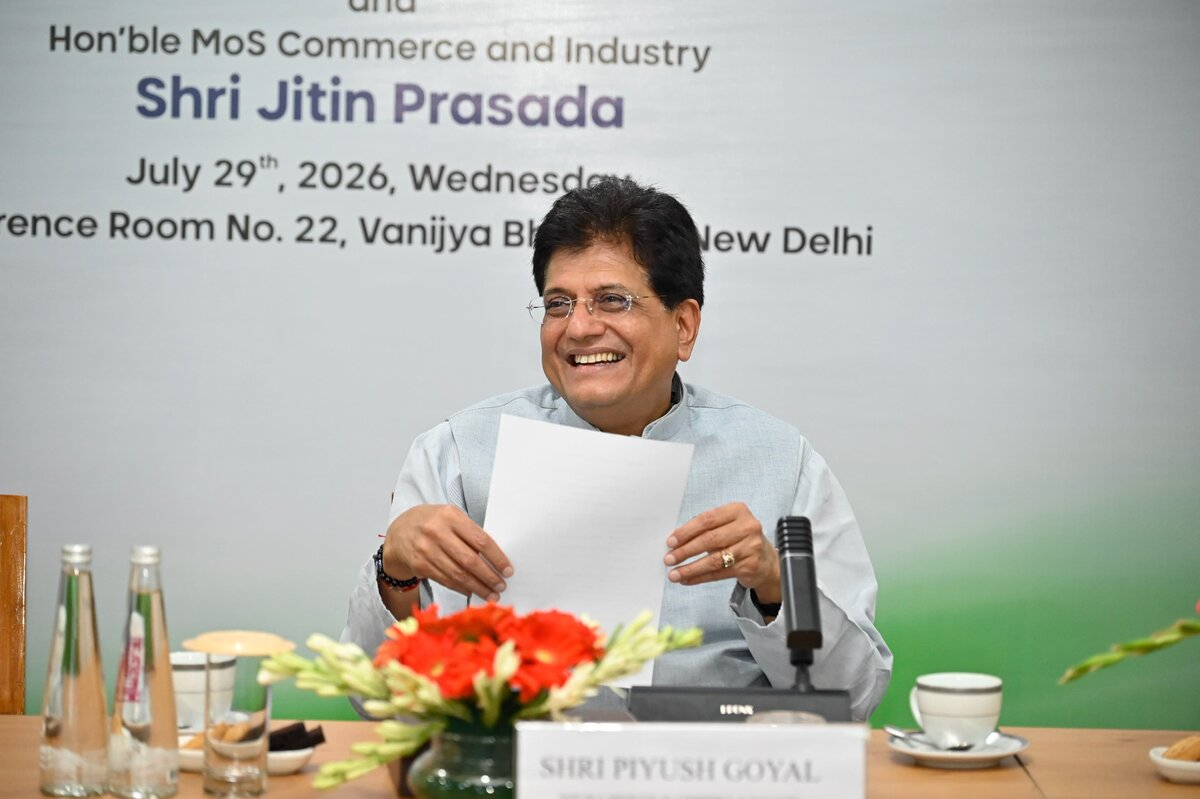
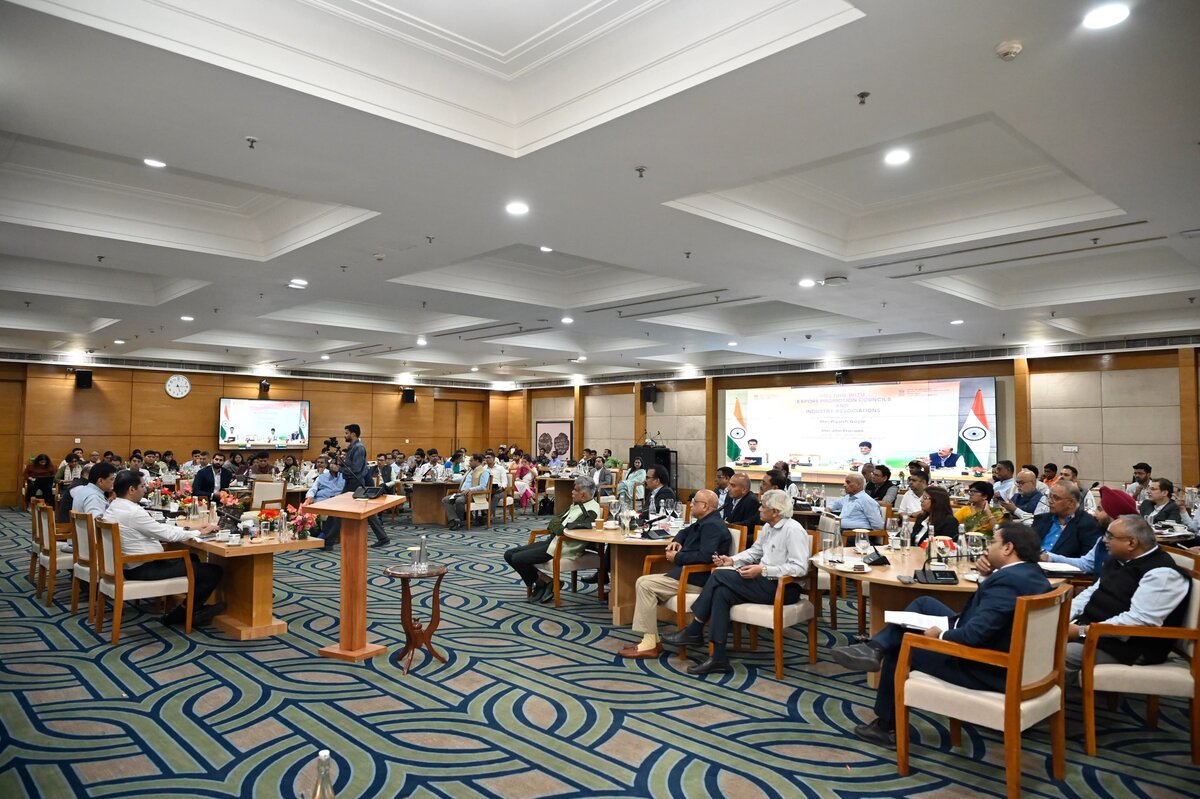
NEW DELHI: Union Minister of Commerce & Industry Shri Piyush Goyal chaired a high-level meeting with Export Promotion Councils (EPCs) and leading Industry Associations to review key measures aimed at strengthening India’s export ecosystem and enhancing the country’s global competitiveness.

The meeting focused on formulating strategies to accelerate India’s export growth by improving market access, leveraging Free Trade Agreements (FTAs), promoting quality-led exports under the Brand India initiative, and creating a more efficient and globally competitive trade environment. The discussions also highlighted the need to enhance logistics efficiency, simplify trade facilitation processes, and expand opportunities for Micro, Small and Medium Enterprises (MSMEs) and emerging exporters.

MoCI Meeting with EPCs 1 Piyush Goyal reviews Measures to Strengthen India's Export Ecosystem and Global Competitiveness

During the deliberations, stakeholders explored ways to maximize the benefits of India’s expanding network of Free Trade Agreements, enabling Indian businesses to access new international markets while improving the competitiveness of domestic products. The emphasis on quality-driven exports reflects the government’s vision of positioning India as a trusted global manufacturing and sourcing destination.

The meeting also underscored the critical role of efficient logistics infrastructure and seamless trade facilitation in reducing supply chain costs and improving export competitiveness. Strengthening logistics performance and simplifying export procedures are expected to play a vital role in helping Indian exporters meet growing global demand while improving ease of doing business.

Reaffirming the Government’s commitment to export-led economic growth, Shri Piyush Goyal stated that the Government remains dedicated to building a stronger, more competitive, and future-ready export ecosystem. The initiative aims to support India’s long-term economic expansion while contributing to the national vision of Viksit Bharat, empowering businesses, encouraging innovation, and creating new growth opportunities across sectors.

The continued engagement between the Government, Export Promotion Councils, and industry bodies reflects India’s collaborative approach towards strengthening its international trade framework. As India expands its global trade partnerships and enhances the competitiveness of its exports, the country is well-positioned to emerge as one of the world’s leading export-driven economies in the years ahead.

India-US BTA to come into operation once India gets comparative advantage over competing economies: Piyush Goyal

NEW DELHI: The first tranche of the India-US bilateral trade agreement (BTA) will come into operation once the United States ensures that India gets a comparative advantage over competing countries in its neighbourhood and the ASEAN region, Union Commerce and Industry Minister Shri Piyush Goyal said on Wednesday.

“I have very categorically and on several occasions expressed the confidence that what we have finalised with the US as the first tranche of the bilateral trade agreement… will come into operation as soon as the United States is able to ensure that we get a comparative advantage over our competitors, the countries in our neighbourhood, the countries in the ASEAN region and other countries with whom we compete,” Goyal said.

He said this comparative advantage was the basis of the first tranche of the BTA and indicated that once it is re-established, the agreement would be ready to come into operation.

Goyal’s comments come amid discussions over the trade relationship between India and the US, including the ongoing US Section 301 process. “301 is a process that is being run by the USTR in the United States. We participated in that,” he said.

The minister said tariffs have been imposed under one investigation, while another probe remains under discussion. He added that India would continue to leverage the US market as long as Indian exporters have a comparative advantage or face comparable duties.

“As long as we have comparative advantage or comparable duties, I think India will continue to grow its exports and continue to leverage the large US opportunity,” Goyal said.

When asked about reports linking potential tariffs to Russian oil, Goyal declined to comment, saying, “We don’t speculate. We don’t comment on speculation.”

Goyal also highlighted the broader momentum in India’s trade negotiations, noting that the country’s recently concluded FTAs are gradually coming into effect. The India-Oman agreement came into effect around two months ago, while the India-UK Free Trade Agreement became effective on July 15.

The minister said the European Union FTA is close to completing its legal scrutiny and is expected to go before the European Parliament after its summer recess. India expects the pact to come into effect by the first quarter of next year.

Goyal described the EU agreement as potentially “game-changing”, as it would open opportunities across 27 countries with a combined GDP of around $20 trillion for Indian exports of goods, services and mobility.

He said the expanding network of trade agreements would provide Indian exporters with significant opportunities as the country seeks to expand its global footprint and move towards its long-term goal of becoming a developed and prosperous economy by 2047.

Source: ANI

Innovation, Startups, MSMEs and Quality Manufacturing are Pillars of India’s Future Growth: Piyush Goyal

NEW DELHI : Union Minister of Commerce and Industry, Shri Piyush Goyal, on Wednesday said that India’s future growth would depend on innovation, deep technologies, skilled manpower, startups, MSMEs and an enabling policy environment that encourages enterprise and investment, supported by globally competitive manufacturing, good manufacturing practices and uncompromising quality standards across sectors.

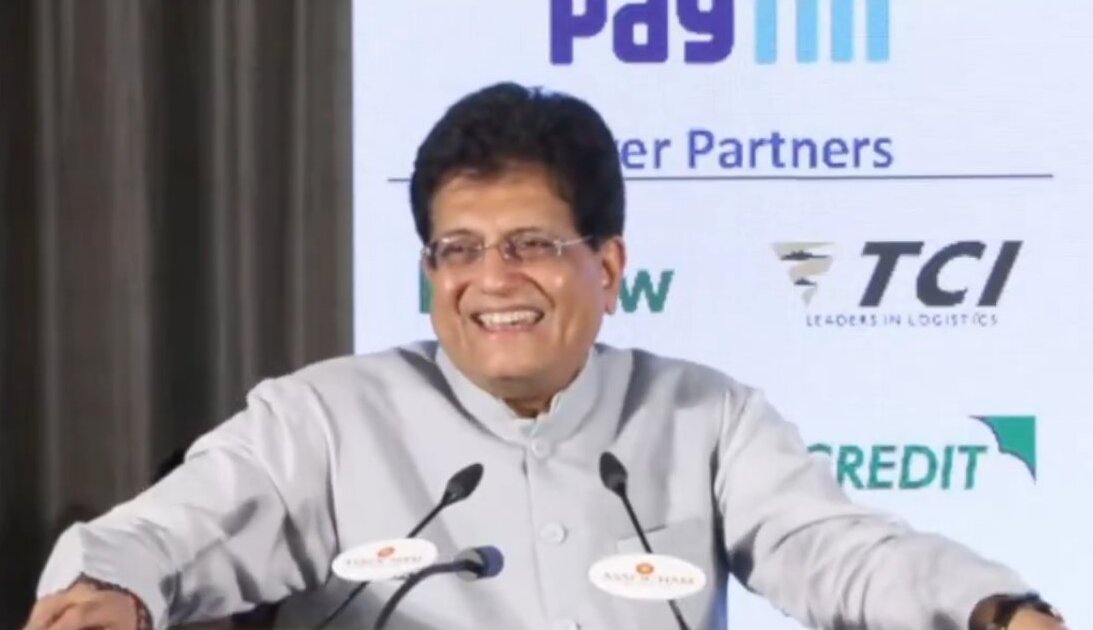
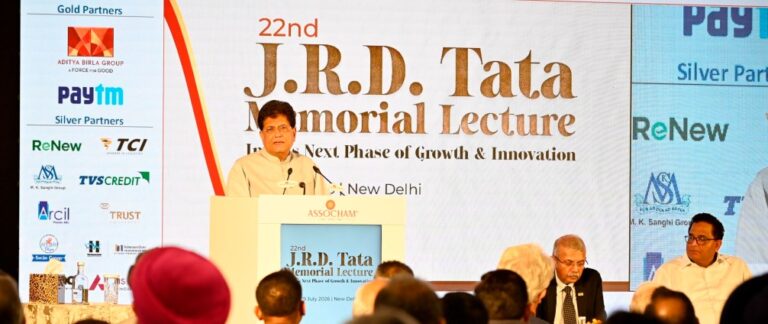
Delivering the 22nd J.R.D. Tata Memorial Lecture on the occasion of the 122nd birth anniversary of Bharat Ratna Shri Jehangir Ratanji Dadabhoy (J.R.D.) Tata in New Delhi, the Minister said India’s journey towards becoming a developed nation by 2047 would be driven by technology, research and development, entrepreneurship and a culture of excellence.

Shri Goyal said emerging and deep technologies, including artificial intelligence, semiconductors, quantum computing, biotechnology, robotics and advanced materials, will define the next frontier of industrial growth and strengthen India’s industrial capabilities. He said the Government is committed to strengthening startups, promoting MSMEs, encouraging deep technology innovation and expanding skill development initiatives. He emphasised that skill development cannot be a government-led effort alone and must become an industry-led movement, while the Government will continue improving ease of doing business and creating an enabling ecosystem in which enterprises can grow and compete globally.

Highlighting several Government initiatives aimed at promoting research and innovation, Shri Goyal said the Government has launched a ₹1 lakh crore Research, Development and Innovation Fund to provide long-term, low-cost risk capital for emerging technologies and innovation. He further stated that under the IndiaAI Mission, nearly 38,000 GPUs have already been onboarded to provide affordable computing capacity to startups and researchers, with plans for further expansion. He also highlighted the success of the India Semiconductor Mission, stating that commitments have already been received for the entire allocation under the first phase. He added that the Government has now launched the second Semiconductor Mission with an allocation of approximately US$12-13 billion and invited industry to participate through new investments and proposals.

Shri Goyal said innovation and manufacturing must progress together. He emphasised that the future of manufacturing lies in producing smarter through technology, automation, better product design, improved packaging, stronger branding and globally competitive quality. While India’s large domestic market provides economies of scale, he said Indian industry must increasingly leverage that scale to expand into global markets, generating higher growth, creating more employment opportunities and maximising the benefits arising from India’s expanding network of Free Trade Agreements.

Referring to India’s Free Trade Agreement (FTA) strategy, Shri Goyal said the country has concluded nine FTAs covering 38 developed economies with a combined GDP of nearly US$60 trillion. He contrasted these agreements with India’s earlier FTAs concluded prior to 2014, which were largely with economies having a combined GDP of around US$10 trillion and where India competed rather than complemented partner countries. He said these agreements provide Indian businesses with unprecedented market access and opportunities for expansion, adding that J.R.D. Tata’s emphasis on quality and perfection would have enabled him to leverage such opportunities on a massive scale.

Highlighting India’s economic performance, Shri Goyal said the country recorded economic growth of 7.7 per cent last year and 7.8 per cent in the last quarter, maintaining its position as the world’s fastest-growing large economy despite global disruptions and geopolitical uncertainties. He said India’s exports of both goods and services continued to grow during 2025-26 despite prolonged geopolitical tensions, uncertainties relating to crude oil and gas supplies, developments affecting the Strait of Hormuz and the Red Sea, and the imposition of 50 per cent tariffs on most Indian exports to the United States for a substantial part of the previous year. He added that merchandise exports have grown by 15 per cent during the current financial year from 1 April till date, demonstrating the resilience of the Indian economy. Shri Goyal said institutions such as the OECD, World Bank and IMF continue to project India as the fastest-growing large economy, attributing this confidence to India’s enabling policy environment, the self-belief of its people, the entrepreneurial spirit of young Indians and the country’s emergence as the world’s third-largest startup ecosystem.

Continuing his address, Shri Goyal said created advantage matters more than inherited advantage and that India’s future competitiveness would be determined by its ability to innovate.

The Minister said India’s startup ecosystem has evolved significantly from its initial phase and is now increasingly focused on deep technology.

Recalling his participation alongside Prime Minister Shri Narendra Modi and French President Emmanuel Macron at the inauguration of Bharat Innovates in Nice, France, on 14 June, Shri Goyal said 120 of India’s leading deep-tech startups showcased their innovations before global investors, technology companies and world leaders. He said every participant returned with a renewed sense of confidence and pride after witnessing the quality of Indian innovation.

Shri Goyal stressed that the next priority should be to help startups move from ideas to prototypes and from prototypes to commercialisation. He urged industry to support startups by adopting their products, experimenting with their technologies and helping them scale commercially. Once proof of concept evolves into commercial success, he said, global markets would naturally follow.

Expressing concern over the loss of promising Indian innovations to overseas investors, Shri Goyal said many of the country’s best technologies and startups are eventually acquired by foreign companies because Indian investors often wait until businesses mature before investing. He urged domestic investors to support Indian startups at an early stage and said India’s deep-tech entrepreneurs represent an enormous investment opportunity. Referring to the 120 startups that participated in Bharat Innovates, he remarked that, had he been in business instead of public life, he would have invested his savings in such innovators.

The Minister said India’s economy, currently valued at approximately US$4 trillion, is well positioned to achieve its stated target of US$13 trillion by 2047, when the country celebrates 100 years of Independence. He said India is already witnessing examples of this transformation across sectors.

Highlighting major reform initiatives, Shri Goyal said the Government has reduced compliance burden, decriminalised numerous legal provisions through the Jan Vishwas Acts, removed several obsolete laws from the statute books and continues to simplify regulations to encourage enterprise. He said Prime Minister Shri Narendra Modi is working every day to remove the barriers that constrain entrepreneurship and unlock the true potential of Indian industry.

The Minister said that over the past decade, equal emphasis has been placed on strengthening India’s macroeconomic fundamentals and expanding public welfare through technology-enabled governance. He said direct benefit transfers have ensured that welfare reaches beneficiaries without leakages or intermediaries, while sustained efforts have been made to provide every citizen with basic necessities including food, housing, electricity, water, healthcare, education, physical connectivity and digital connectivity.

He also underscored the importance of MSMEs in India’s development journey and said the sector must be supported in adopting technology at scale to improve productivity, competitiveness and product quality.

Shri Goyal said that while policies, incentives and technology provide the necessary framework for development, the ultimate success of every reform depends upon the people who implement it. He observed that the rise of a nation is determined not only by the quality of its policies but also by the quality of its mindset and national character.

Recalling the legacy of J.R.D. Tata, Shri Goyal said that he did not merely build companies but built capabilities, confidence and a spirit of self-belief in India. Referring to Guru Purnima, which is also observed on 29 July, the Minister said that, in the Indian tradition, a Guru removes doubts and transfers capability to students, adding that J.R.D. Tata played exactly that role for Indian industry.

Concluding his address, Shri Goyal urged Indian industry to pursue excellence by aiming for perfection and making the “Made in India” label synonymous with global respect and uncompromising quality. He appealed to industry to reinvest earnings in research and development, innovation, skill development, education and nation building. He also urged businesses to leverage India’s Free Trade Agreements to expand their global market share and called upon industry to invest boldly in deep technologies, including artificial intelligence, quantum computing, biotechnology and the space sector, while continuously innovating within their own businesses.

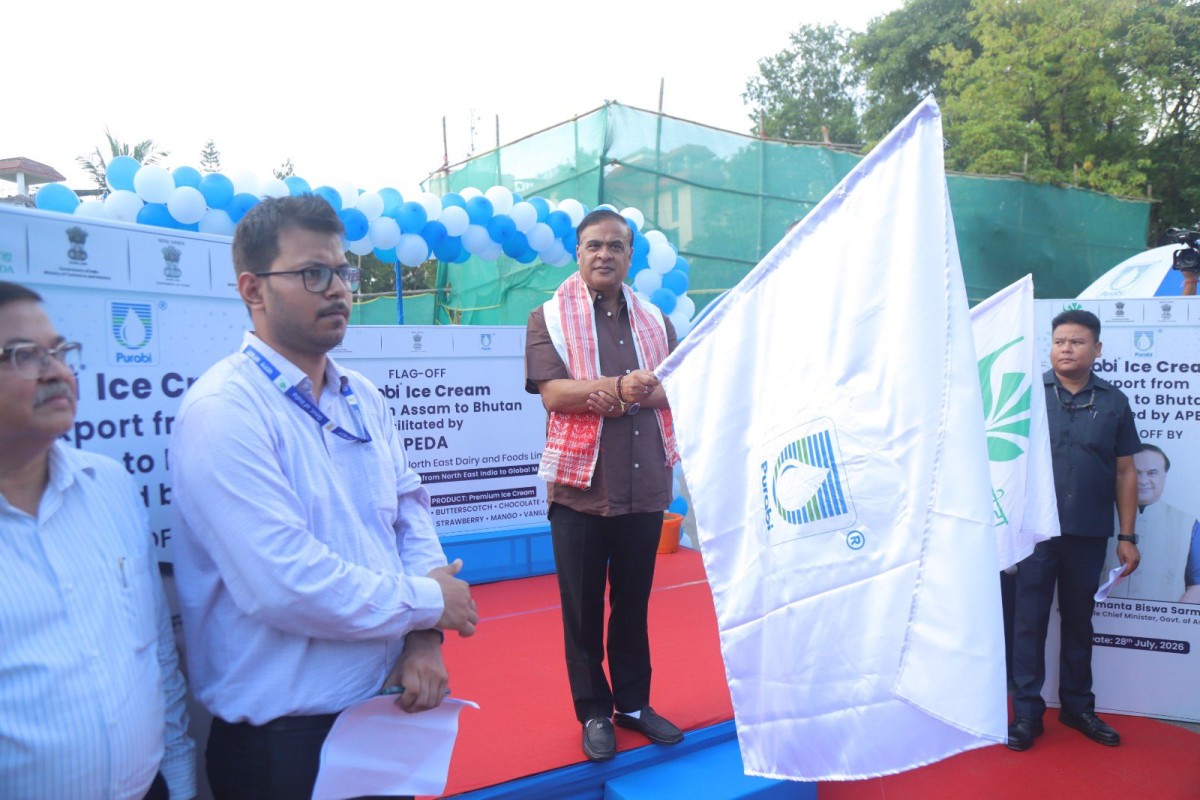
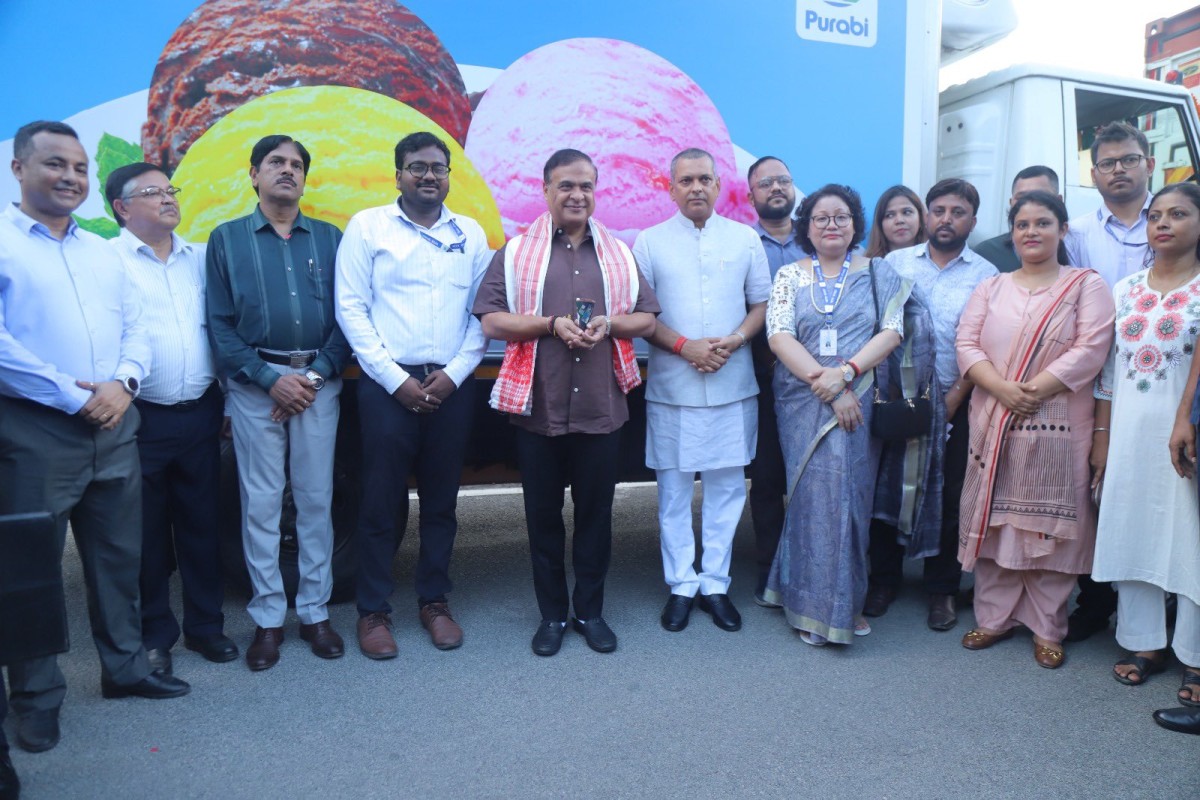
CM Biswa Sarma flags off first Purabi Ice Cream export consignment to Bhutan

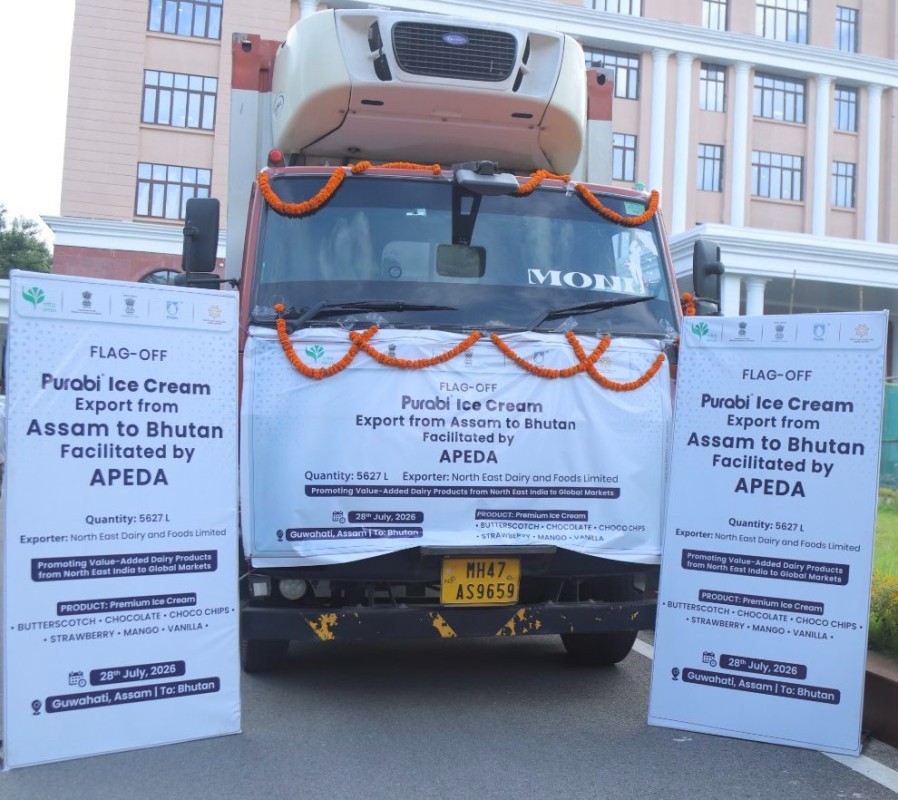
GUWAHATI : Marking a significant milestone for Assam’s dairy sector and the North Eastern Region’s processed food exports, the first international consignment of 5,627 litres of Purabi Ice Cream was exported from Assam to Bhutan, opening new avenues for value-added dairy exports from the region.

The export consignment was flagged off by Chief Minister of Assam, Dr Himanta Biswa Sarma, in Guwahati on 28 July 2026. Exported by North East Dairy and Foods Limited (NEDFL), the shipment will supply Purabi Ice Cream to key markets across Bhutan, including Thimphu, Paro, Phuentsholing and Wangdue, strengthening the presence of dairy products from Assam and the North Eastern Region in neighbouring international markets.

Manufactured by the West Assam Milk Producers’ Cooperative Union Limited (WAMUL) and marketed by North East Dairy and Foods Limited (NEDFL), Purabi Ice Cream is produced using milk procured through Purabi Dairy’s extensive cooperative network of dairy farmers across Assam. The inaugural consignment comprises a diverse range of products, including cups, family packs, cones and gallon packs, catering to both retail consumers and institutional buyers in Bhutan.

The Agricultural and Processed Food Products Export Development Authority (APEDA), under the Ministry of Commerce & Industry, Government of India, has been consistently promoting exports of agricultural and processed food products from the North Eastern Region by facilitating exporters in meeting international standards and accessing overseas markets. The export reflects APEDA’s continued efforts to promote value-added products from the region and expand their global market reach.

APEDA facilitated the shipment by extending support in export documentation, regulatory compliance, market access facilitation and stakeholder coordination, ensuring the seamless movement of the consignment to Bhutan while strengthening the export ecosystem for processed dairy products from the North Eastern Region.

Bhutan’s geographical proximity provides a natural advantage for expanding dairy exports from Assam and serves as an important gateway for enhancing the presence of Made-in-Assam dairy products in neighbouring international markets. Going forward, NEDFL plans to diversify its export portfolio by introducing additional Purabi Dairy products with longer shelf life and progressively increasing export volumes in line with market demand.

The initiative is expected to strengthen the international presence of dairy products from the North Eastern Region, create sustainable export opportunities for the dairy industry, and enhance income prospects for thousands of dairy farmers associated with Assam’s cooperative milk network.

APEDA continues to work closely with State Governments, exporters, Farmer Producer Organisations (FPOs), cooperatives and other stakeholders to enhance the global competitiveness of India’s agricultural and processed food products while creating sustainable export-led growth opportunities for farmers and agri-enterprises across the country.

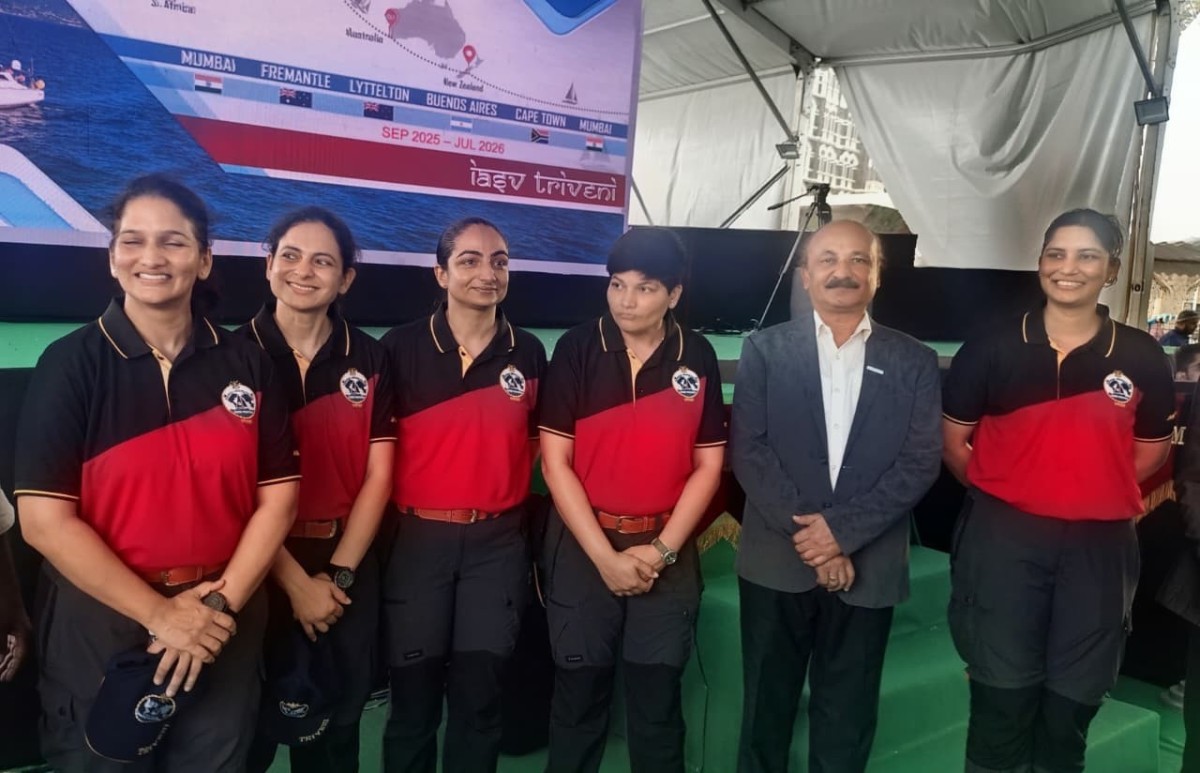
IRS congratulates the crew of IASV Triveni on successful completion of the Samudra Pradakshina Expedition

NEW DELHI : Indian Register of Shipping (IRS) congratulates the crew of Indian Army Sailing Vessel, IASV Triveni, on the successful completion of the historic ‘Samudra Pradakshina‘ expedition. The expedition was undertaken by nine women officers from the Indian Army, Indian Navy and Indian Air Force, who completed a landmark circumnavigation voyage, covering 25,500 nautical miles across four oceans.

IRS is proud to have certified IASV Triveni, after completing independent technical verification of the vessel’s safety and seaworthiness, prior to its historic voyage.

During port calls across several countries, IASV Triveni showcased India’s rich maritime traditions, cultural heritage, military professionalism and national values while strengthening goodwill with friendly nations. The vessel served as a floating ambassador of India, reinforcing the country’s growing maritime presence and soft power on the global stage.

The indigenously built 50-foot sailing vessel represents the vision of Aatmanirbhar Bharat, reflecting India’s engineering excellence, technical innovation, indigenous capability and strategic confidence.

Cdr K K Dhawan of Indian Register of Shipping said: “The successful completion of Samudra Pradakshina is a proud moment for the nation and a testament to India’s growing maritime capabilities. IRS is honoured to have certified IASV Triveni, supporting this remarkable indigenous initiative. The expedition reinforces India’s engineering excellence and demonstrates the confidence that comes from building and certifying world-class maritime assets in India.”

MV AMIR1 with 13 Indians stuck in Black Sea, Embassy says ‘in touch with authorities’

KYIV : FSUI seeks repatriation of 13 Indian seafarers trapped on MV AMIR1 at Ukraine’s Chornomorsk Port amid drone and missile attacks. The Indian Embassy in Kyiv is monitoring the situation.On Wednesday it said that, it was closely monitoring the situation involving a merchant vessel carrying 13 Indian seafarers near Ukraine’s Black Sea coast, following reports that it was under threat from repeated drone and missile attacks.

The embassy said it was in constant touch with all authorities concerned to ensure the safety and security of the Indian crew onboard MV AMIR1. “A situation regarding MV AMIR1 with Indian seafarers onboard has been brought to our attention. We attach the highest priority to this and are in constant touch with all concerned to ensure safety and security of all Indians onboard,” the Indian Embassy in Kyiv wrote on X.

This comes just days after four Indian crew members were onboard merchant vessel MV AGN Ragnar when it was struck at Ukraine’s Odesa port on July 25. Two of the Indian seafarers remain missing, with New Delhi coordinating with Ukrainian authorities in the search operation.

According to the Forward Seamen’s Union of India (FSUI), MV AMIR1 is docked at Ukraine’s Chornomorsk port with 15 crew members on board, including 13 Indians. It had issued a statement urging the Indian government to secure the safety of the crew and arrange their evacuation.

The FSUI alleged that repeated drone and missile attacks were taking place in the immediate vicinity of the vessel, leaving the crew in constant fear of a direct strike. “We urgently appeal to all concerned authorities, shipowners, flag state, and the Government of India to immediately secure their safety and arrange prompt repatriation. Indian seafarers must not be left as sitting targets in conflict zones.”

On July 21, India summoned the Russian Charge d’Affaires, Vladimir Ladanov, to convey Delhi’s “unequivocal condemnation” and “grave concern” over the deaths of four Indian seafarers in the Russian missile strike on merchant vessel MV Golden Leo on July 19 off the coast of Ukraine, which killed four Indians.

On July 18, an Indian seafarer was killed in an attack on a ship while it was reportedly transiting Russian territorial waters in the Black Sea. India summoned the Ukrainian Ambassador and conveyed its strong concern over the targeting of a ship transiting Russian territorial waters in the Black Sea on July 18, in which one Indian seafarer was killed.

Vessel traffic through Hormuz, Bab el-Mandeb straits remains stable: Report

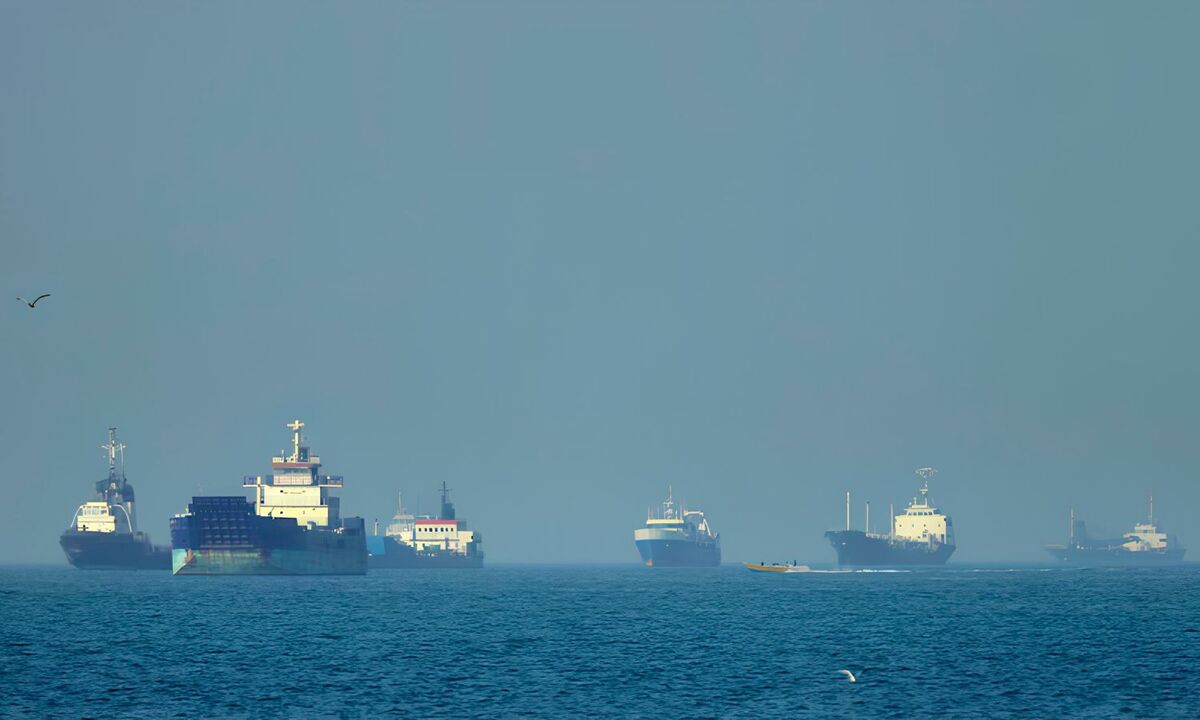
NEW DELHI: Vessel traffic through the strategically important Bab el-Mandeb and Strait of Hormuz remained broadly stable on July 27, with 32 and 15 vessel crossings respectively, according to S&P Global.

Traffic through the Bab el-Mandeb Strait was around three-quarters of the average daily transit volume recorded during June and the first half of July. Of the 32 vessels crossing the strait, 11, or about 34 per cent, moved northbound into the Red Sea, while 21 sailed southbound towards Djibouti and the Gulf of Aden.

Most northbound vessels were transiting the Red Sea towards the Suez Canal, Egypt or Jordan. Among the southbound vessels, eight had previously called at Saudi Arabia’s Red Sea ports, while the remaining ships originated from Egypt or Jordan or had transited the Suez Canal from the Mediterranean and Europe.

The southbound traffic included six tankers carrying Russia-origin oil cargoes. S&P Global also highlighted the movement of the VLCC NEW PEARL, operated by China Merchants Energy Shipping subsidiary AMCL. The vessel loaded around 2 million barrels of Saudi crude at Yanbu on July 25 and was heading through the Gulf of Aden towards Zhoushan.

The report noted that heightened security risks in the Red Sea may be creating a new outlet for very large crude carriers (VLCCs) operating in the Mediterranean. Three VLCCs linked to DHT Holdings were heading north towards Ain Sukhna and the Suez Canal after loading crude at Yanbu.

At the Strait of Hormuz, 15 vessel transits were recorded on July 27, including five vessels that were not transmitting visible automatic identification system (AIS) signals. Eight vessels moved inbound into the Gulf, while seven crossed outbound towards the Gulf of Oman.
The vessels crossing Hormuz included landing craft, bulk carriers, cargo ships, product tankers, a VLCC and a Suezmax. S&P Global said five vessels were assessed as compliant.

Meanwhile, an estimated 47 million barrels of Iranian crude are currently being held aboard tankers in the Middle East Gulf, although the estimate remains uncertain because only around 20 per cent of the tankers are currently visible.

The estimated volume represents a sharp increase from less than 30 million barrels in mid-July, pointing to a growing accumulation of Iranian crude aboard vessels in the region.

Source: ANI

US accuses Iran’s IRGC of threatening ships in Strait of Hormuz, maintains sea route remains open

FLORIDA: Amid heightened tensions with Tehran and mounting anxieties regarding maritime safety in the Gulf, the United States Central Command (CENTCOM) has accused the Islamic Revolutionary Guard Corps (IRGC) of trying to intimidate merchant vessels navigating the Strait of Hormuz, maintaining that the crucial sea route remains accessible for global passage regardless of claims made by Iran.

In an official communication released on Wednesday, CENTCOM stated that the IRGC had recently issued threats and attempted strikes against commercial ships and civilian seafarers traversing the strategic passage.

The American military also charged the Iranian outfit with attempting to force preferred navigation routes on global commercial transport passing through one of the most critical energy transit points worldwide.

“After recently threatening and attempting to attack commercial vessels and innocent mariners transiting the Strait of Hormuz, Iran’s Islamic Revolutionary Guard Corps (IRGC) continues to claim that international mariners should only use routes the IRGC prefers,” the US military said in its statement.

Refuting the position taken by Tehran, the US armed forces emphasised that the maritime corridor is an international passage governed by global maritime regulations, placing it outside the jurisdiction of the IRGC.

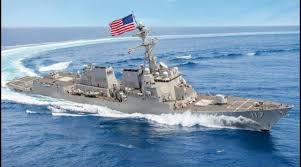
“The Strait of Hormuz is an international waterway. The IRGC has no authority to dictate routes for free and open traffic flow,” CENTCOM stated, noting that merchant shipping is actively proceeding through the maritime passage under the protection of American forces positioned across the region.

This statement follows escalations in the conflict between Washington and Tehran that have left the Middle East in a state of high alert, triggering concerns over potential wider disruptions to regional stability and global energy supplies.

Situated between Iran and Oman, the Strait of Hormuz serves as the vital maritime connector between the Persian Gulf, the Gulf of Oman, and the Arabian Sea.

With approximately twenty per cent of global seaborne petroleum movement passing through this sea lane, any interference with navigation poses significant risks to international energy markets.

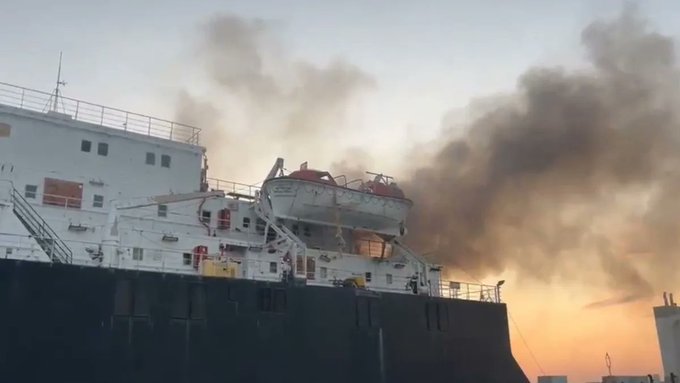
Meanwhile, the naval wing of Iran’s Islamic Revolutionary Guard Corps (IRGC) claimed on Wednesday that it “targeted and stopped” three oil tankers passing through the Strait of Hormuz for disregarding explicit warnings, Iranian media outlet Tasnim reported.

The IRGC statement added that the “illegal interventions and orders” issued by the US will not remain “unanswered by vessels in the region”, according to the report published by Tasnim News Agency.

INTERCARGO calls for protection of seafarers and civilian shipping

LONDON: INTERCARGO has observed a recent increase in attacks on merchant vessels, alongside a noticeable shift towards the direct targeting of commercial shipping. This is deeply concerning to our members and to the wider industry. Seafarers keep global trade moving. They are civilians doing their jobs. They should never be treated as military targets.

Merchant vessels not involved in hostilities have long been recognised as deserving protection, and attacks on them put the lives of ordinary working people at risk for reasons that have nothing to do with their jobs. INTERCARGO calls on all governments, international institutions and parties to armed conflict to take concrete steps to end attacks on civilian merchant shipping and to protect those who crew them.

Our members continue to move the food, fertiliser and goods that people and economies depend on. Every seafarer deserves to do that job safely and to return home.

The seas must remain a space for trade and cooperation, not conflict. INTERCARGO stands with the wider shipping community in urging restraint, respect for international law, and renewed protection for those who keep world trade moving.

About INTERCARGO

The International Association of Dry Cargo Shipowners (INTERCARGO) unites and promotes quality dry bulk shipping, bringing together almost 500 forward thinking companies operating close to 5,000 bulk carriers, from more than 35 countries. The Association provides the forum where dry bulk shipowners, managers and operators are informed about, discuss and share concerns and experience on key regulatory, technical and operational topics and challenges.

The Association advocates for its members’ positions at the IMO, EU as well as other national, regional and international shipping industry fora, striving to engage all maritime sector stakeholders.

Sallaum Lines signs New Order with China Merchants Shipyard for One 8,600 CEU Newbuilding

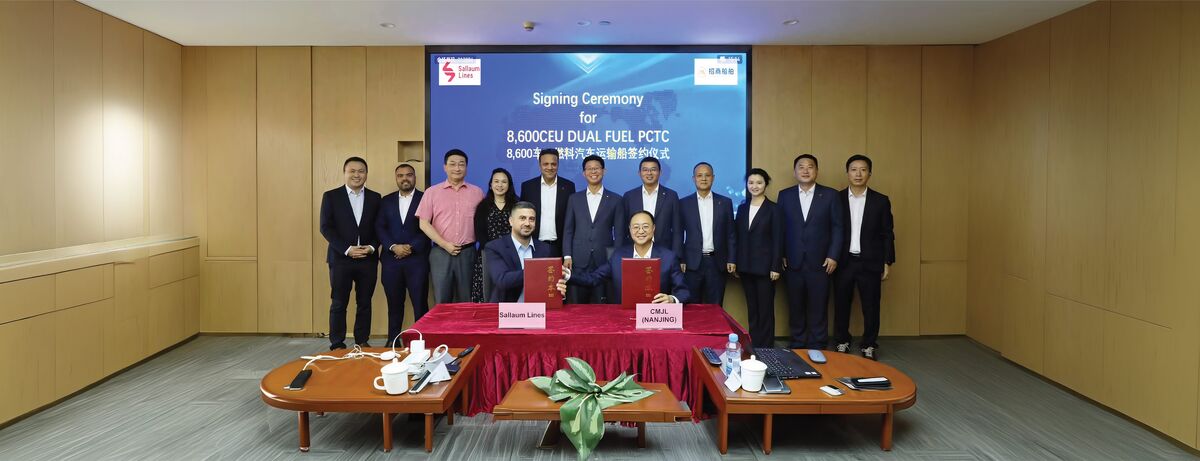
LIMMASOL: Sallaum Lines is pleased to announce the signing of a new shipbuilding contract with China Merchants Shipyard for the construction of one + one additional 8,600 CEU Pure Car and Truck Carrier (PCTC). The new vessel will be LNG dual-fuel and ammonia-ready, with delivery scheduled for 2029.

This latest firm order comes only weeks after Sallaum Lines announced a separate new building agreement with Xiamen Shipbuilding Industry Co., Ltd. for two firms 8,600 CEU vessels, with options for two additional vessels.

The China Merchants order adds further momentum to Sallaum Lines’ newbuilding programme and confirms the company’s continued investment in modern, high-capacity RoRo tonnage at a time when the global PCTC market remains structurally important to automotive supply chains.

The newly signed vessel at China Merchants Shipyard brings Sallaum Lines’ total newbuilding programme to nine vessels, representing a total order value of above USD 850 million. The programme includes four vessels already delivered, one vessel scheduled for delivery in August 2026, one vessel scheduled for delivery in December 2026, and three vessels scheduled for delivery in 2029.

A Market Where Capacity Still Matters

The global PCTC fleet remains a highly specialized segment of shipping. Unlike container or bulk markets, car carriers are purpose-built vessels, operated by a relatively concentrated group of owners and liner operators, and designed around the specific requirements of automotive manufacturers, dealers, heavy equipment producers, and project cargo customers.

Across the global fleet, only around the high-700 vessel range serves the deep-sea car, truck, and rolling cargo market. Within that fleet, modern high-capacity vessels remain especially important, as OEMs increasingly require larger parcel sizes, schedule reliability, lower emissions, and the flexibility to carry a wider cargo mix.

Over recent years, the PCTC market has seen strong demand from several directions at once. Traditional automotive exports remain a core driver, while Chinese vehicle exports, electric vehicles, hybrid vehicles, construction machinery, agricultural equipment, and other high-and-heavy cargo have added further depth to the market.

This has created a more complex demand environment. The market is no longer only about moving passenger cars from one manufacturing region to another. It is increasingly about connecting global production, emerging consumer markets, Chinese export growth, heavy rolling equipment demand, and port networks capable of handling larger volumes.

Against this background, Sallaum Lines’ decision to continue investing in 8,600 CEU vessels reflects a clear view of the market: capacity alone is not enough. The right capacity must be efficient, flexible, and technically prepared for future environmental requirements.

Strengthening the Newbuilding Pipeline

Sallaum Lines has already made significant progress in renewing its fleet. The company previously ordered six LNG dual-fuel vessels, of which four have already been delivered. The fifth vessel is scheduled for delivery in August 2026, followed by the sixth vessel in December 2026.

The recently announced 2+2 order at Xiamen Shipbuilding marked the next phase of this expansion, introducing larger 8,600 CEU vessels into the company’s future fleet. The new order at China Merchants Shipyard adds 1+1 vessel to the pipeline and further strengthens the company’s delivery schedule for 2029.

Together, these investments position Sallaum Lines to serve a market where vessel quality, cargo flexibility, environmental performance, and long-term availability are becoming decisive factors.

Designed for Flexibility

The newly ordered vessel will have a carrying capacity of 8,600 Car Equivalent Units, placing it among the largest vessels in the Sallaum Lines fleet.

The vessel will be designed to support a broad cargo mix, including passenger vehicles, light commercial vehicles, trucks, heavy rolling equipment, and project cargo. This flexibility is important for Sallaum Lines’ global trade network, which serves routes across Europe, Africa, Asia, the Middle East, and the Americas.

As trade patterns continue to shift, especially with the growth of Chinese vehicle exports and changing flows into emerging markets, the ability to carry different types of rolling cargo becomes increasingly valuable.

The 8,600 CEU design gives Sallaum Lines additional scale, while maintaining the operational flexibility required to serve a wide range of customers and ports.

LNG Dual-Fuel and Ammonia-Ready

The new vessel will be equipped with LNG dual-fuel technology, allowing it to operate on LNG as well as conventional marine fuels when required.

LNG remains an important transition fuel for deep-sea shipping. It offers an available and practical pathway to lower-emission operations today, while the industry continues to develop the infrastructure, regulation, and commercial availability of future fuels.

At the same time, the vessel will be built with an ammonia-ready design. This means that the ship is being prepared from the design stage for potential future conversion, once green ammonia becomes more mature as a marine fuel solution.

For Sallaum Lines, this is a practical approach to the energy transition. The company is not relying on one single pathway. Instead, it is investing in vessels that can operate efficiently today while remaining adaptable for tomorrow.

Hasan Sallaum, Managing Director of Sallaum Lines, sees this new order with China Merchants Shipyard as another important step in the development of the future fleet:

“Only weeks after our 2+2 order at Xiamen Shipbuilding, we are pleased to confirm an additional One+One 8,600 CEU vessel. This shows the momentum behind our fleet renewal programme and our confidence in the long-term fundamentals of the PCTC market. The automotive logistics market is changing. Customers need capacity, reliability, flexibility, and a clear environmental direction from their shipping partners. With this new building programme, we are investing in all of these areas. The new vessel will be LNG dual-fuel and ammonia-ready, giving us a practical solution for today and future readiness for tomorrow. This is how we believe modern fleet development should be done: with scale, discipline, and flexibility.”

Reading the Market

The PCTC sector has entered a new phase. After several years of tight vessel availability and strong demand, the industry has seen a wave of newbuilding activity. However, ordering decisions remain highly strategic. New vessels require long lead times, significant capital investment, and careful technical choices. For operators, the question is no longer simply whether to add ships, but what type of ships to add and how they will perform over the next twenty to thirty years. Sallaum Lines’ latest order is therefore not only a capacity decision. It is also a timing decision.

By securing additional 2029 delivery capacity now, the company is preparing for the next phase of market development, while ensuring that its future fleet remains aligned with customer expectations and environmental regulations.

The order also reflects the growing role of Chinese shipyards in the global PCTC newbuilding market. With many of the latest-generation car carriers being built in China, shipyard selection, delivery timing, technical specification, and make choices have become increasingly important parts of fleet strategy.

A Fleet Built for Long-Term Partnerships

Sallaum Lines’ customers operate in industries where reliability and planning visibility are essential. Automotive manufacturers, equipment producers, freight forwarders, and project cargo clients require stable capacity, predictable schedules, and vessels capable of handling different cargo profiles.

The company’s new building programme is designed to support these needs. With nine vessels ordered in total and a total programme value above USD 850 million, Sallaum Lines is making a long-term commitment to its customers and trade lanes. The investment strengthens the company’s ability to provide modern RoRo capacity across its global network, while continuing to improve operational and environmental performance.

About Sallaum Lines

Sallaum Lines is a leading global RoRo carrier specializing in the safe, efficient, and environmentally responsible transportation of automobiles, trucks, heavy equipment, and project cargo.

With an expanding fleet and a strong presence across Europe, Africa, Asia, the Middle East, and the Americas, Sallaum Lines remain committed to sustainable innovation, operational excellence, and long-term partnerships that create value for customers worldwide.