Home Blog Page 180

U-Freight sees traders adapt to new EU Customs charges

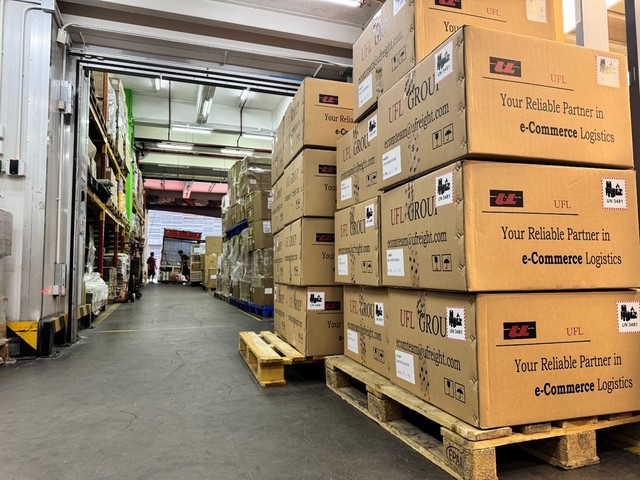
HONG KONG: The U-Freight Group has noticed that EU importers and international e-commerce businesses are adapting their shipping processes for cross-border trade following the European Union’s abolition of the €150 duty-free threshold for low-value consignments, which came into effect on 1 July 2026.

Under the new regulations, shipments valued at €150 or less entering the European Union are now subject to a temporary customs charge of €3 per commodity code contained within each parcel. The measure replaces the previous duty-free exemption for low-value goods and is expected to remain in force until at least 1 July 2028 as part of the EU’s wider customs reform programme.

The changes represent one of the most significant developments in European e-commerce logistics in recent years and are expected to have a substantial impact on businesses shipping large volumes of direct-to-consumer (B2C) parcels into the EU.

“The removal of the €150 de minimis threshold marks a major turning point for cross-border e-commerce,” said Simon Wong, Chief Executive Officer of U-Freight Group. “Business models built around shipping individual low-value parcels directly into Europe now face higher costs, increased customs complexity and the potential for longer clearance times. If they haven’t already, companies need to review their supply chain strategies now rather than wait for costs to escalate.”

The new customs regime forms part of the EU’s efforts to modernise customs procedures, create a more level playing field between parcel and bulk imports, and discourage the undervaluation of goods previously used to benefit from duty exemptions.

Industry trends already indicate that supply chains are evolving in response. Across several key European markets, including Spain, France and Poland, locally fulfilled e-commerce orders have now overtaken direct cross-border shipments, reflecting a growing preference for forward-deployed inventory and regional distribution.

U-Freight believes that establishing inventory within Europe offers businesses a practical long-term solution to the new regulatory environment. By positioning stock closer to customers, companies can minimise border-related costs, improve delivery performance and strengthen supply chain resilience.

“Forward positioning inventory within Europe is becoming a competitive necessity rather than simply an operational option,” added Wong.“Regional fulfilment enables businesses to improve delivery speeds, reduce customs-related uncertainty and maintain a seamless customer experience while remaining fully compliant with the latest EU requirements.”

U-Freight offers integrated supply chain solutions designed to help businesses adapt to changing international trade regulations. Its services include international freight forwarding, customs brokerage, warehousing, inventory management and European distribution, providing customers with end-to-end support as they navigate the evolving customs landscape.

U-Freight is encouraging businesses exporting to the EU to review their shipping profiles, evaluate product classifications, assess the financial impact of the new customs charges and consider whether regional fulfilment strategies could improve efficiency and reduce overall logistics costs.

As regulatory changes continue to reshape global trade, U-Freight remains committed to helping customers build agile, compliant and cost-effective supply chains that support sustainable international growth.
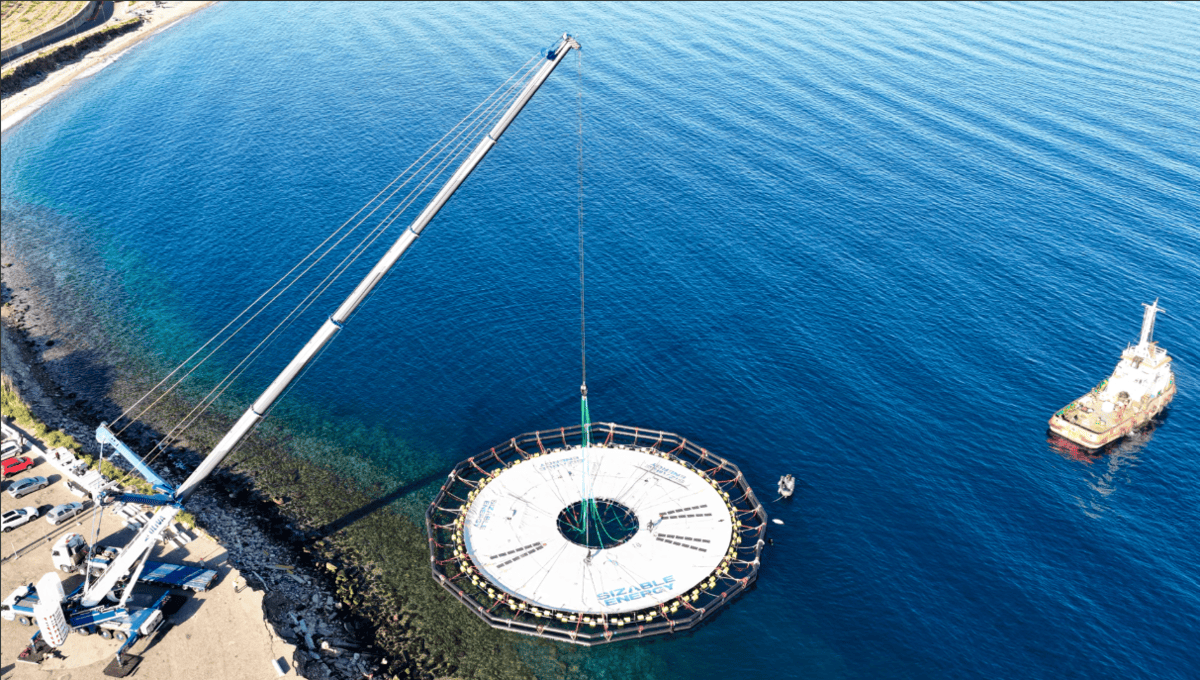
GEODIS designs transport and installation of an offshore energy storage prototype in Italy

PARIS: GEODIS contributed to the deployment of an innovative offshore energy storage prototype, the size of an Olympic swimming pool, in Italy off the coast of Calabria. By engineering its launching, transport and installation, the Group is leveraging its expertise to support a technology designed to facilitate the integration of renewable energy into the power grid, thereby confirming its position in next-generation offshore projects.

GEODIS carried out engineering for the launching, towing, and installation operations of an offshore energy storage tank for the company Sizable Energy. The prototype is installed within the Natural Ocean Engineering Laboratory (NOEL), one of Italy’s leading offshore test sites for innovative marine energy technologies, located in the Mediterranean Sea off the coast of Calabria, Italy.

This system is designed to store electricity produced by offshore wind turbines or other renewable energy sources and then deliver it back to the grid when demand increases. By decoupling production and consumption periods, this technology helps strengthen the stability of the power grid while providing an alternative to conventional battery energy storage systems (BESS).

For this project, GEODIS supported Sizable Energy by providing engineering expertise to develop and enhance the solution envisioned by the client for launching, towing, and installing the prototype. The team performed lifting calculations and drawings, defined the crane positioning, designed the lifting plans, slings, and rigging, developed installation procedures, as well as the engineering for towing and mooring hook-up operations. They also provided technical support and on-site supervision throughout the operations to ensure a safe and proper execution.

The offshore reservoir measures 50 meters in diameter, which is equivalent to the surface area of an Olympic swimming pool and weighs approximately 11 tonnes. Its launch required the use of a 350-tonne crane to perform a lift with an outreach of approximately 50 meters, to meet the site constraints and environmental requirements. This operation demonstrates GEODIS’ expertise in precise lift engineering and complex offshore activities.

“This project demonstrates our ability to support innovative technologies well beyond transportation. Thanks to our offshore engineering expertise, we help our clients turn complex concepts into safe and reliable operational solutions. This first achievement opens new development opportunities for GEODIS in the field of offshore energy storage, both in Italy and internationally.” said Nicolas Bonnier, Global Manager Offshore Wind Solutions, Project Logistics at GEODIS.

This first reference in the field of offshore energy storage illustrates GEODIS’s ability to apply its engineering expertise to next-generation energy technologies and paves the way for future projects in this rapidly evolving sector.

Shipping must stop treating decarbonisation as a ‘future fuel’ problem, says BAR Technologies

PORTSMOUTH: A new study by EY Greece has warned that shipping’s transition to net zero will be uneven and capital intensive, constrained by factors including alternative fuel availability, infrastructure, shipyard capacity, access to finance and fragmented commercial incentives.

Responding to the report, BAR Technologies said that while the industry is right to plan for long-term fuel pathways, too much of the decarbonisation debate remains focused on what may become available in the future rather than what can be deployed now.

The EY study identifies energy efficiency and operational measures as among the most practical near-term actions available to shipping. BAR Technologies argues that wind propulsion, already delivering measurable fuel and emissions savings on commercial vessels, must be recognised as a proven part of that immediate response.

Wind propulsion has also passed an important market milestone. According to the International Windship Association, more than 100 large commercial cargo ships, representing over five million tonnes of deadweight capacity, are now equipped to harness wind power. That is almost five times the number recorded in May 2022, clear evidence that the technology is moving into the commercial mainstream. BAR Technologies are playing a significant part in this transition: By the end of 2026, 10 vessels will be operating with 23 WindWings® installed, giving a combined saving of approximately 100t of CO2 per day.

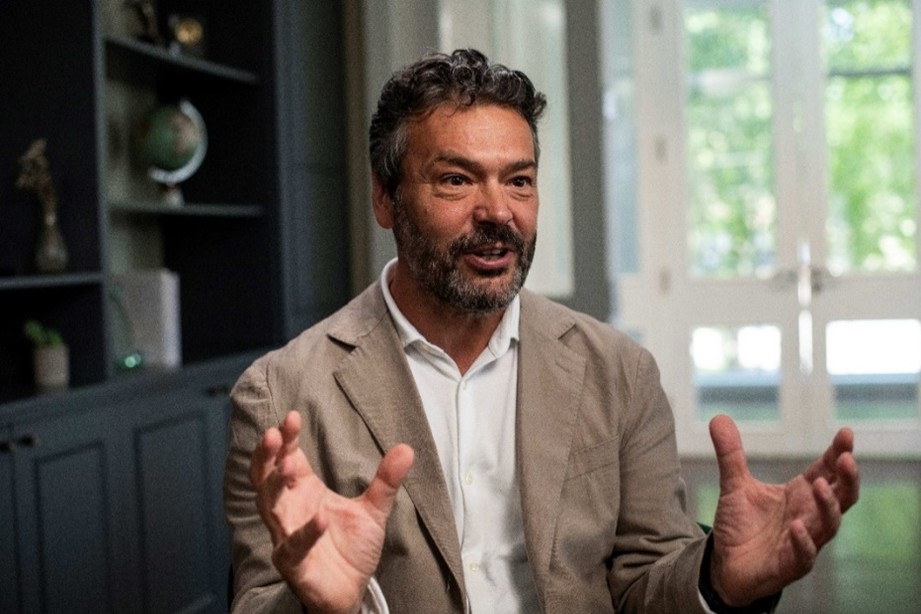
John Cooper, CEO of BAR Technologies, (In Pic above) said: “Shipping needs to stop treating decarbonisation as something that only begins when future fuels arrive or every detail of the IMO’s Net-Zero Framework is settled. The industry cannot allow the absence of perfect policy certainty to become an excuse for inaction. Proven technologies are available now, and owners can act today.”

Unlike alternative fuels, wind requires no new fuel-production facilities, bunkering infrastructure or global supply chain. It is freely available as an energy source and can reduce a vessel’s dependence on whichever fuel it uses.

Cooper continued: “Wind propulsion is not waiting to be invented or proven. It is already operating on commercial vessels and reducing the amount of fuel they need. The priority now should be to remove the barriers preventing more owners from investing.”

For wind propulsion, those barriers are increasingly commercial and financial rather than technical.

Under many chartering arrangements, the owner funds the technology while the charterer receives much of the benefit through lower fuel consumption. Until charterparty structures allow the costs, risks and savings to be shared more effectively, owners can be left carrying the investment and long-term performance risk.

Access to finance is another significant constraint. Without competitive green lending or blended finance, owners may have to fund emissions-reduction technology at conventional commercial borrowing rates. This can lengthen the payback period, particularly in the tramp, bulk and tanker markets, where routes, earnings and charter durations are less predictable.

The EY study concludes that the pace of shipping’s transition will depend on coordination, commercial bankability, access to finance and action across the maritime value chain.

Cooper added: “But the real way to unlock action now is to make green investment affordable. Shipowners need access to financing that makes proven emissions-reduction technologies commercially viable today, not at some point in the future. If we can lower the cost of capital and create funding structures that recognise both the fuel savings and the environmental value these technologies deliver, far more owners will be able to invest.

“Wind propulsion has already passed the technology test. Affordable finance, alongside charterparty structures that share the benefits fairly, is what will unlock deployment at scale.”

TUI River Cruises marks major milestone as first purpose-built ship TUI Luzia touches water

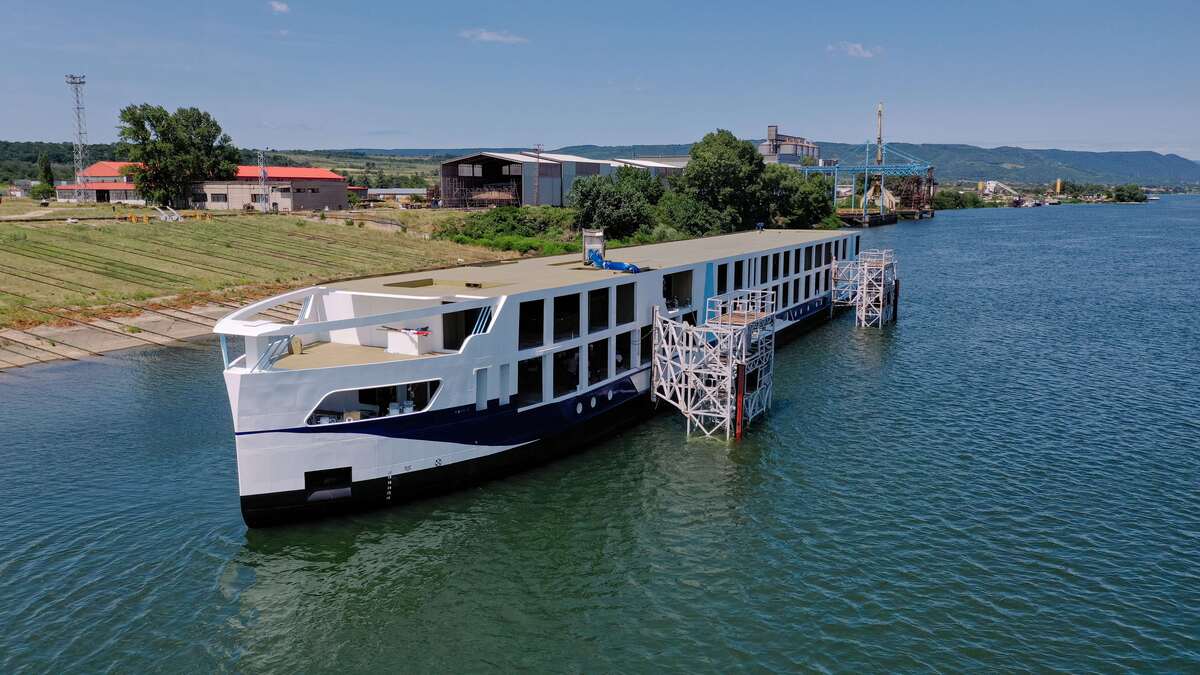
KLADOVO: TUI River Cruises has announced TUI Luzia, the first purpose-built ship for the brand, was floated out in Kladovo, Serbia marking a major construction milestone and the first time the ship has touched water. Scheduled for delivery in June 2027, TUI Luzia will spend her inaugural season sailing itineraries on the Douro Valley in Portugal.

“The float out of TUI Luzia marks another significant milestone for TUI River Cruises and our longstanding partnership with Concordia Damen,” said Katy Berzins, Head of River Cruises at TUI River Cruises. “As our first purpose-built ship, TUI Luzia represents an exciting new chapter for our brand. Her arrival on the River Douro in summer 2027 will not only extend our portfolio into one of Europe’s most sought-after river cruise destinations, but also open up new experiences for both existing and new TUI River Cruises customers.”

The float out took place at Concordia Damen’s partner yard Kladovo Shipyard in Serbia and is significant because it denotes a ship moving into its final stage of construction.

Similar to the other TUI River Cruises ships, TUI Luzia will be Full Board Plus* as standard with the option for guests to upgrade to all-inclusive. 

The ship will accommodate 111 passengers in 56 cabins, including Super French Balcony cabins, Balcony cabins, French Balcony Suites and a single cabin.

Customers will have access to four decks including a top deck complete with a shallow pool and sun loungers and Cinder, a bar and dining area will be open every day for drinks and self-serve lunches.

Other venues on the ship include Novo, the main lounge bar, Retreat, a hybrid area offering a juice bar and an intimate secondary lounge bar for a quiet drink at night. Sorriso, the main restaurant serving breakfast through to dinner and Vinha, a Portuguese inspired alfresco dining space where guests can enjoy a la carte dinner, and by day, will be a place for relaxation and unwinding.

Chris Kornet, CEO at Concordia Damen said: “We are proud to be partnering with TUI River Cruises on its first purpose-built river ship, TUI Luzia. The new vessel embodies our shared ambition to bring innovative, future‑ready ship designs to the European river cruise market, by combining Concordia Damen’s engineering expertise with TUI River Cruises’ clear vision for expanding the brand. We look forward to delivering the vessel that will support the river cruise brand’s growth.”

Prices start from £1859** per person for the ‘Douro Discovery’ flying from London Gatwick or Manchester to Porto via third party airlines on a seven night sailing on TUI Luzia which is available to book from now.

Demand for tanktop coatings increase due to ageing fleet

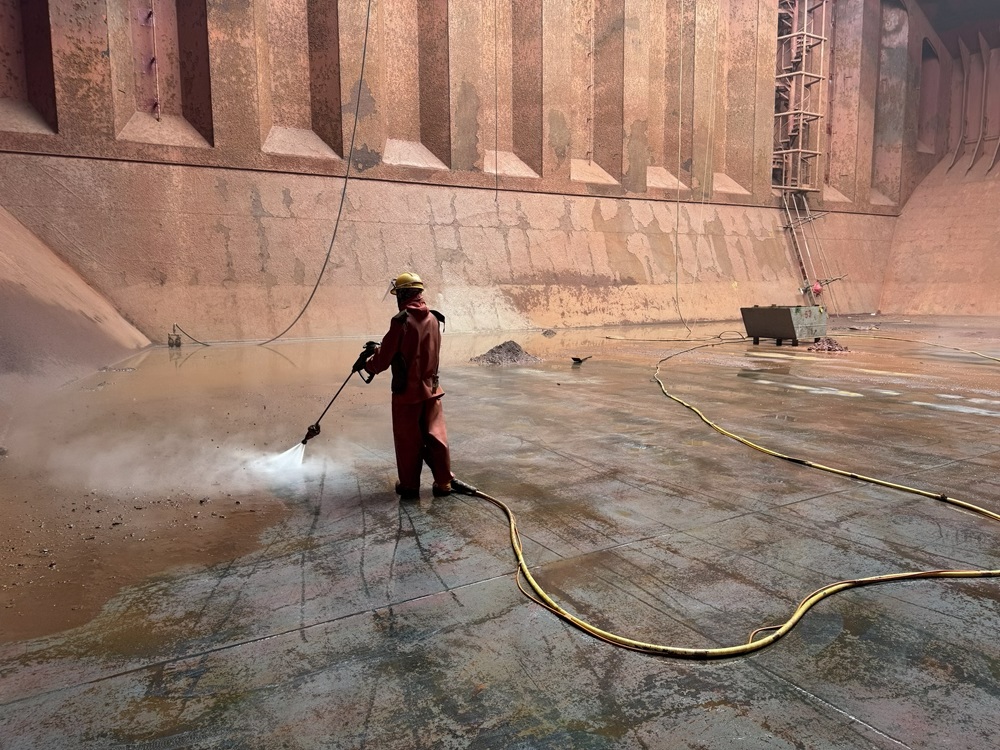
HAMBURG: Bulk carrier owners are investing in corrosion protection for cargo hold tank tops as a cost-effective way of avoiding steel replacement work during drydocking and reducing long-term maintenance costs.

German corrosion protection specialist Steelpaint says it is seeing a marked increase in the number of owners trialling its heavy-duty Stelpant system on cargo hold tank tops and other high-wear areas, with a significant proportion of those trials progressing on to larger applications and fleet orders.

For decades, tank tops have remained one of the few areas inside bulk carrier cargo holds that many operators have chosen not to protect. The argument being that the constant impact damage during the loading/unloading of iron ore, coal, combined with mechanical impact from bulldozers/grabs, aggregates and other abrasive cargoes made the regular repeat coating work nothing more than a costly exercise.

What’s more, once damaged, many owners feared coatings could contaminate some cargoes while offering little long-term protection.

“We’ve reached a point where owners are starting to question assumptions that have existed for years,” said Frank Müller, Director of Steelpaint. “Shipowners are naturally cautious. They don’t want to be the first to try something new, but they certainly don’t want to be the last. Once operators see comparable vessels successfully using the system, confidence grows remarkably quickly.”

The company’s zinc-rich Stelpant PU-Zinc system can be applied under normal commercial operating conditions, allowing owners to evaluate performance through repeated loading, unloading and cargo hold washing cycles. Minimal standard steel preparation is required, such as dry blasting or the more environmentally friendly wet blasting.

The company says this practical approach has proven critical in convincing owners that coating tank tops can deliver long-term results.

Steelpaint is now undertaking around ten trial applications each year, representing a noticeable increase over previous years.

“In many cases an owner starts with a small test patch before progressing to a complete tank top, then perhaps a full cargo hold or several holds, before eventually introducing the system across multiple vessels,” Müller said. “We see a very clear progression from an initial trial to larger applications and then repeat orders.”

The company estimates that heavy-duty cargo hold applications are contributing to sustained annual growth of around 10-15%, reflecting what it sees as a gradual but significant shift towards proactive corrosion management within the dry bulk sector.

One of the principal drivers behind this change is the age profile of today’s global bulk carrier fleet.

“The last major newbuilding peak for bulk carriers was around 2010,” said Li Yinlong, General Manager of Steelpaint China. “That means the average bulk carrier is now around 15 or 16 years old and cargo hold steel condition continues to deteriorate year by year.”

He said owners are increasingly reassessing maintenance strategies as newbuilding deliveries remain comparatively slow and many operators look to retain vessels in service for longer.

“Because of the current balance between supply and demand, together with the slower pace of fleet renewal, shipowners are willing to keep ageing vessels operating for longer,” Li said.

“That makes corrosion prevention much more important. Owners are looking at ways to extend vessel life, reduce future docking costs and minimise the risk of replacing steel on tank tops and lower hopper areas.”

Based on experience gained to date, Li believes demand for corrosion protection systems will continue to grow over the next five years.

As of June 2026, Steelpaint had completed work on 11 Berge Bulk vessels, together with projects for Anglo-Eastern, MUR Shipping, Maran Dry Management, Xiamen Minhua Shipping, and Lomar Shipping. A further full tank top application for Load Line Group is scheduled to begin shortly.

The company is also seeing increasing interest from multi-purpose vessel operators, reflecting a broader recognition that protecting heavily loaded cargo hold areas can reduce lifecycle maintenance requirements.

Recent projects have been completed at several leading Chinese repair yards, including Youlian Shipyard, Xinya Dockyard, Qingdao Beihai Shipyard and Shanghai Yuan Shipyard, where applications have focused on tank tops, lower hopper and stool sections, bulkheads and hatch coamings.

According to Steelpaint, the commercial case extends well beyond the cost of applying a coating. “Classification societies regularly monitor cargo hold steel thickness throughout a vessel’s life. As corrosion reduces plate thickness, owners can eventually be required to replace sections of steel during drydockings,” said Müller.

While the steel itself represents part of the cost, Steelpaint says the much larger financial impact often comes from the extended off-hire period required to complete steel renewal.

Based on its analysis, Steelpaint estimates that maintaining cargo hold steel through planned coating maintenance and periodic touch-up repairs could reduce lifecycle costs by up to US$4.5M per large bulk carrier through avoided steel renewal and reduced downtime.

“As fleets continue to age, we believe more operators will view tank top protection not simply as another coating, but as part of a long-term asset management strategy,” said Müller 

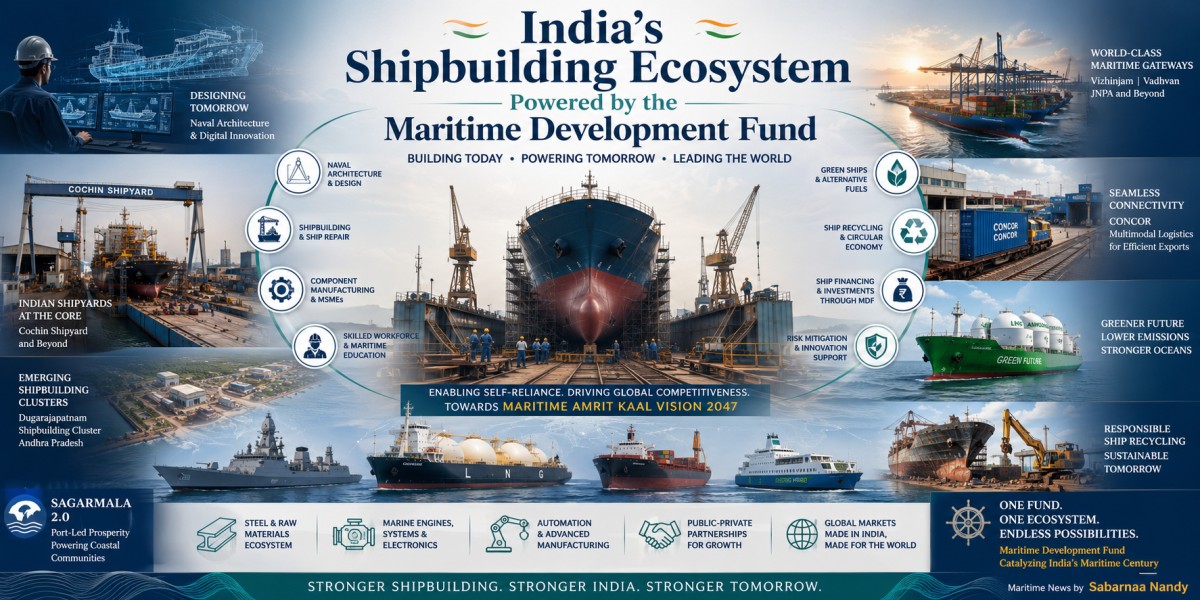
Government strengthens India’s Shipbuilding Ecosystem through Maritime Developement Fund

NEW DELHI : The Union Minister of Ports, Shipping and Waterways, Sarbananda Sonowal, informed in a written reply to the Rajya Sabha that, Shipbuilding Financial Assistance Scheme (SBFAS), is an extension of Shipbuilding Financial Assistance Policy (SBFAP), with an outlay of ₹ 24,736 crore to address cost disadvantages faced by Indian shipyards vis-a-vis global shipyards.

Maritime Development Fund (MDF), with a corpus of ₹ 25,000 crore, has been established for providing long term financing support to shipbuilding and maritime sector comprising of Maritime Investment Fund (MIF) of ₹ 20,000 crore and Interest Incentivisation Fund (IIF) of ₹ 5,000 crore.

The scheme guidelines to operationalize SBFAS have been issued on 26.12.2025 and in-principle approvals for shipbuilding financial support are given in accordance with scheme guidelines. The guidelines for MDF have also been issued on 20.02.2026. Further, SBI Ventures Limited has been appointed as the Fund Manager for MIF on 26.05.2026.

SBFAS and MDF have been formulated in alignment with Maritime Amrit Kaal Vision 2047 (MAKV 2047) which targets India to be in the top 10 in ship ownership and shipbuilding by 2030 and top 5 by 2047. SBFAS improves the competitiveness of Indian shipyards by reducing the cost of shipbuilding, while MDF provides long-term financing for shipyards and maritime infrastructure. Together, these initiatives encourage domestic and export-oriented shipbuilding and strengthen the overall maritime ecosystem, making them key enablers of India’s shipbuilding ambitions.

75 port infrastructure projects worth ₹31,967 crore completed under PM Gati Shakti; Major Ports’ capacity reaches 1,728 MTPA

NEW DELHI : The Ministry of Ports, Shipping and Waterways has completed 75 infrastructure development and port connectivity projects worth ₹31,967 crore under the PM Gati Shakti National Master Plan, out of 182 identified projects with a total investment of ₹1.09 lakh crore, the government informed Parliament.

The projects are being implemented by major ports, State Maritime Boards and Union Territories to strengthen port infrastructure and improve multimodal connectivity.

The government also said 25 projects under the coastal shipping and inland waterways (IWT) pillar of the Sagarmala Programme, involving an investment of ₹1,178.5 crore, have been completed across the country.

To improve last-mile connectivity, the Sagarmala Programme has a dedicated port connectivity pillar focused on enhancing road, rail, and inland waterway links between ports and their hinterlands.

As part of these efforts, the Department for Promotion of Industry and Internal Trade (DPIIT) prepared a Comprehensive Port Connectivity Plan (CPCP) in 2022 after assessing connectivity at operational ports and identifying gaps in road and rail links with nearby economic hubs.

Based on the assessment, the Ministry of Ports, Shipping and Waterways, in consultation with the Ministry of Road Transport and Highways and the Ministry of Railways, identified 294 rail and road connectivity projects. Of these, 84 projects have been completed, including 63 rail projects and 21 road projects.

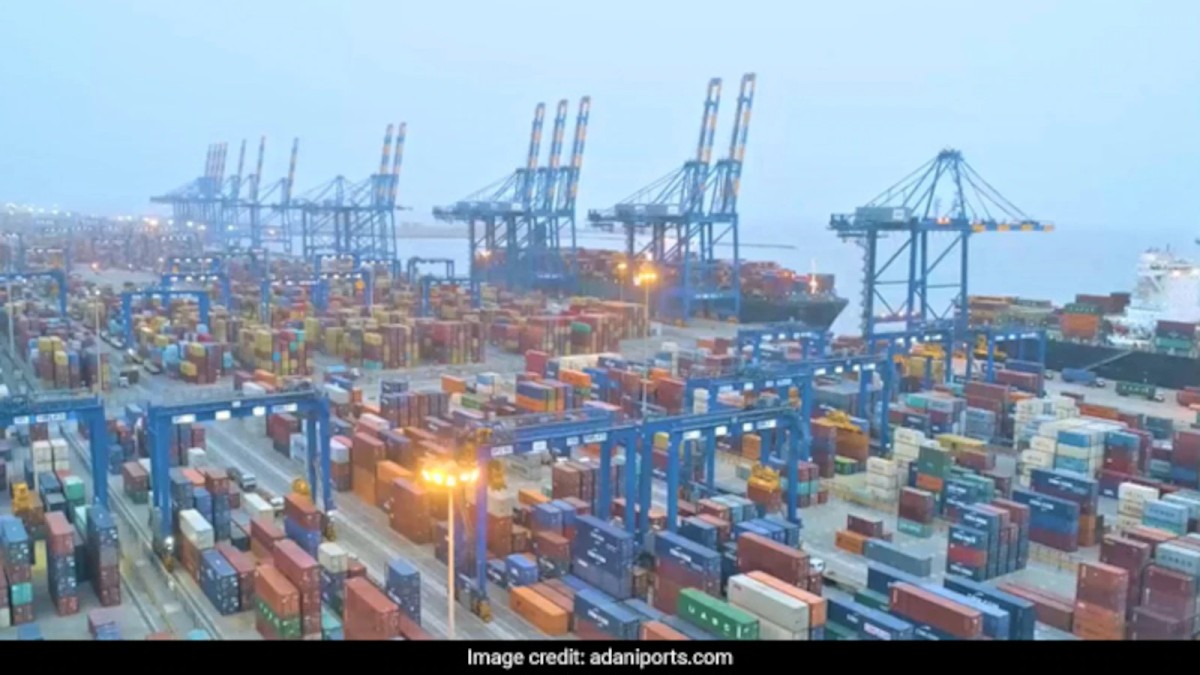
The government said it has also undertaken several measures to expand port capacity and improve operational efficiency. These include mechanisation of berths, capital dredging to accommodate deep-draft vessels, and other infrastructure upgrades.

As a result, the cargo handling capacity of India’s major ports has increased to 1,728 million tonnes per annum (MTPA) as of March 2026.

On the sustainability front, the ministry has launched multiple green port initiatives under the Harit Sagar Green Port Guidelines. These include the Green Tug Transition Programme (GTTP) to replace conventional diesel-powered tugs with electric or hybrid vessels, deployment of Onshore Power Supply (OPS) systems, electrification of port equipment, installation of renewable energy systems, and induction of zero-emission vehicles, and trucks within major port premises.

The initiatives are aimed at reducing emissions, improving operational efficiency, and supporting India’s transition towards greener and more sustainable port infrastructure.

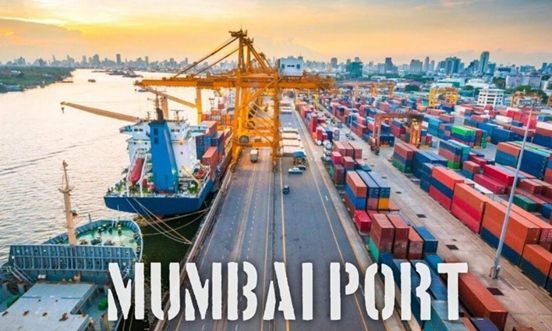
Mumbai Port mulls new oil jetties, specialised cargo terminals: Angamuthu

MUMBAI : Mumbai Port Authority (MbPA) is examining a slew of expansion proposals, including additional crude-oil jetties, petroleum-product & Chemical berths and facilities.

“Based on an internal study on potential areas for expansion, we are examining the feasibility of augmenting our petroleum, oil and lubricants infrastructure to handle incremental refinery output from BPCL, HPCL and upcoming refinery expansions in Maharashtra,” MbPA Chairperson Angamuthu said. The Authority would adopt a collaborative approach with various stakeholders in the proposed expansion plans.

POL cargo remains the backbone of Mumbai Port, accounting for nearly three-fifths of its overall traffic. Vessel-borne crude-oil volumes increased 52 per cent to 26.24 million metric tonnes (MMT) in 2025-26 from 17.22 MMT in 2011-12. A 10 per cent increase in vessel-borne POL cargo could add about 4.5 MMT to the port’s annual throughput.

“Mumbai has tremendous potential to promote LNG bunkering due to its proximity to the maritime route connecting mid-east to far-east. Since the propensity for LNG conversion is more visible in container ships and with JNPA in its backyard, Jawahar Dweep is most suited to act as the future LNG bunker hub’’ Angamuthu said.

Port eyes growth in automobile handling capacity
Automobile Hub: Mumbai Port has a state-of-the-art facility for handling Roll-on/Roll-off Vessels, and during FY: 2025-26, the Port handled about 0.81 lakhs EXIM automobiles. Mumbai Port’s proximity to the Auto Major OEMs within the State, as well as the road and rail connectivity to the automobile-manufacturing clusters of Pune, Chakan and Sanand, offers a locational advantage.

The cargo basket itself is changing in step with the economy it serves. In a recent roll-on, roll-off call, we discharged 861 heavy-duty electric trucks from the MV GRANDE SHANGHAI in a single operation, an early and concrete sign that the vehicles, machinery, and equipment of the energy transition will increasingly move through our berths. It is worth noticing what this represents: a green-mobility consignment of this kind was, a few years ago, not part of an Indian port’s cargo profile at all. The composition of what we handle is not merely the tonnage, it is being reshaped by where the economy is going.

The Port is actively considering creating a storage facility within its Docks to accommodate about one lakh automobiles, which shall further increase the Port’s capacity to handle EXIM automobiles. With Auto Majors setting up plants at Aurangabad, Mumbai Port shall be the automatic choice for shipment of their EXIM automobiles.

Cement logistics, coastal cargo emerge as new focus areas
Cement Hub: Mumbai Port is also envisaging the creation of facilities for Cement Silos to store Domestic Cement received in Railway Wagons. This shall create the capacity to handle 2.0 MMT of Cement for distribution throughout Mumbai for construction purposes, etc.

“The Ministry of Ports, Shipping and Waterways is in the process of finalising the Coastal Cargo Promotion Scheme, there is ample scope for Mumbai Port to handle Domestic Automobiles, too. Compared to road haulage, these waterborne modes generate only a fraction of the emissions per tonne-kilometre, making them a cornerstone of sustainable and low-carbon freight transportation,’’ the MbPA Chairperson said.

Mumbai Port reports record cargo throughput
“Mumbai Port has handled an all-time high of 75.15 MMT in 2025-26, compared with 53.32 MMT in 2020-21. This represents a compound annual growth rate of about 7 per cent over 5 years.

Source : BL

Government boosts domestic container manufacturing and maritime influence

NEW DELHI : In a significant milestone for India’s Maritime Manufacturing Sector, the Government has highlighted the growing global recognition of Indian-made shipping containers, reinforcing the country’s vision of achieving greater self-reliance in maritime logistics and manufacturing. An order for shipping containers was placed by a global shipping line on an Indian container manufacturer. The domestically produced prototype container was unveiled at Dadri, Uttar Pradesh on 03.07.2026. The shipping containers are produced in accordance with internationally accepted quality and safety standards, including International Organization for Standardization (ISO) specifications and the International Convention for Safe Containers (CSC).

The Union Minister of Ports, Shipping and Waterways, Shri Sarbananda Sonowal, informed in a written reply to the Rajya Sabha about this

The above global shipping line has reportedly placed an order for 1,000 shipping containers on an Indian container manufacturer. Procurement of Indian-manufactured containers by global shipping lines demonstrates international confidence in India’s manufacturing quality, engineering capability, and adherence to global safety standards. It also signals the emergence of India as a reliable partner in the global maritime logistics supply chain.

The Government in Budget Speech 2026-27 has announced a Scheme for container manufacturing in India with a budget outlay of Rs. 10,000 crore aimed at creating globally competitive container manufacturing ecosystem in the country.

CONCOR hosts NCR’s first LNG dispensing station at Dadri MMLP, strengthening Green Logistics Infrastructure

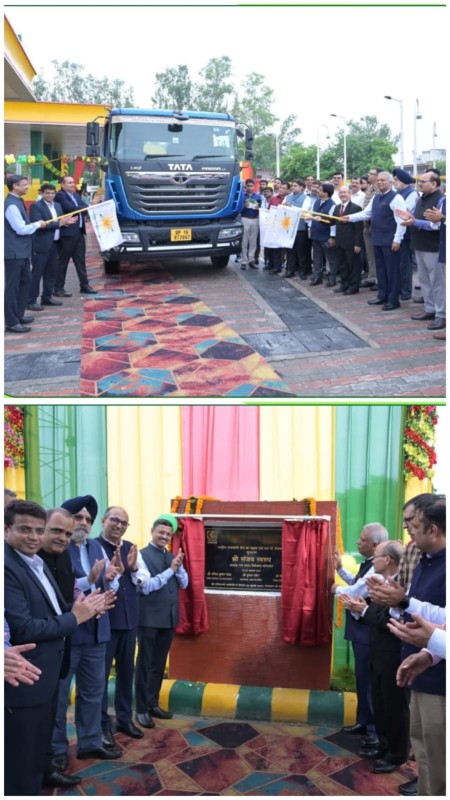
NEW DELHI : Container Corporation of India Ltd. (CONCOR) has achieved another milestone in advancing sustainable logistics with the commissioning of the National Capital Region’s first Liquefied Natural Gas (LNG) dispensing station at its Multimodal Logistics Park (MMLP), Dadri. The initiative marks a significant step towards promoting cleaner fuels for long-haul freight transportation while reinforcing India’s transition to a low-carbon logistics ecosystem.

The LNG station was inaugurated by Shri Sanjay Swaroop, Chairman & Managing Director, CONCOR, in the presence of Shri Vijay Kumar Singh, Director (Marketing & Operations), CONCOR, Shri Kumar Shanker, Managing Director, Indraprastha Gas Limited (IGL), and Shri Mohit Bhatia, Director (Commercial), IGL.

Developed in collaboration with Indraprastha Gas Limited (IGL), the state-of-the-art LNG dispensing facility is strategically located within CONCOR’s Dadri Multimodal Logistics Park, one of the country’s premier logistics hubs. The station is designed to cater to LNG-powered heavy commercial vehicles engaged in long-haul transportation, providing a cleaner and more efficient alternative to conventional fossil fuels.

The commissioning of the LNG station aligns with CONCOR’s commitment to promoting environmentally sustainable logistics solutions and supporting the Government of India’s vision for decarbonising the transportation sector. By integrating clean energy infrastructure into its logistics network, CONCOR continues to enhance the efficiency, sustainability, and resilience of India’s multimodal freight ecosystem.

Speaking on the occasion, Shri Sanjay Swaroop highlighted that the initiative reflects CONCOR’s continued efforts to modernise logistics infrastructure while encouraging the adoption of cleaner fuels in freight movement. He noted that the availability of LNG dispensing facilities at key logistics hubs will facilitate the wider deployment of LNG-powered trucks, reducing carbon emissions and contributing to greener supply chains.

The Dadri MMLP serves as a vital logistics gateway connecting northern India with major ports and industrial centres. The addition of LNG infrastructure further strengthens its position as an integrated logistics hub offering world-class multimodal connectivity alongside sustainable transport solutions.

The commissioning of NCR’s first LNG station at CONCOR’s Dadri facility represents another important milestone in India’s journey towards cleaner mobility, supporting the nation’s energy transition while improving operational efficiency for the logistics and transportation industry.