Home Blog Page 199

Piyush Goyal engages with leading Finnish Technology and Industrial Companies to deepen India–Finland Partnership

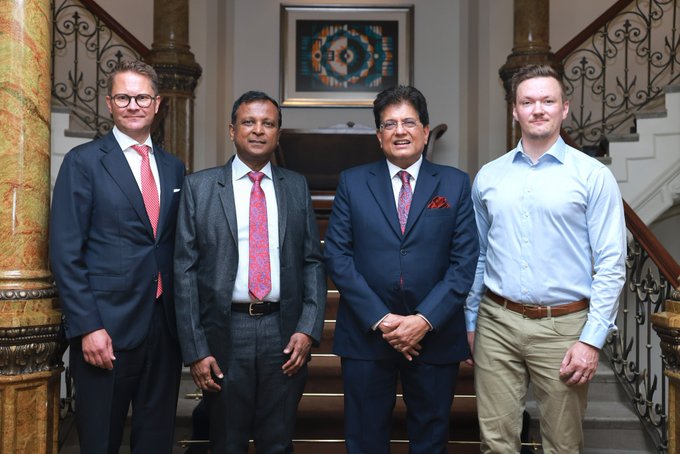
FINLAND : Union Minister of Commerce and Industry Shri Piyush Goyal has held a series of interactions with leading technology and industrial companies of Finland. These interactions are a part of the successful, wider engagements that underscore the strong momentum in India–Finland relations. The engagements reflected the shared commitment of India and Finland to deepen cooperation in advanced manufacturing, digital technologies, innovation, sustainable infrastructure and research.

Shri Goyal met the senior leadership of Nokia Corporation. The discussions focused on strengthening collaboration in next-generation telecommunications, 5G and 6G technologies, digital infrastructure, electronics manufacturing, research and development, and innovation partnerships. The interaction highlighted Nokia’s longstanding presence in India’s telecom ecosystem and explored opportunities to expand cooperation in emerging digital technologies.

At the VTT Technical Research Centre, one of Europe’s leading applied research institutions, discussions centred on enhancing collaboration in research, innovation, clean technologies, industrial transformation, advanced materials, digitalisation and sustainable development. Both sides explored opportunities to strengthen research partnerships and facilitate technology transfer between Indian and Finnish institutions.

The Minister also held discussions with the Chairman and senior leadership of KONE Corporation. The interaction focused on expanding cooperation in smart urban infrastructure, elevator and escalator technologies, sustainable construction solutions, advanced manufacturing and localisation. Opportunities to leverage India’s rapidly expanding infrastructure sector and manufacturing ecosystem were also discussed.

The final engagement was with the Kemppi Group, where Shri Goyal met the company’s owners and senior leadership. Discussions covered advanced industrial machinery, welding technologies, manufacturing innovation, clean industrial solutions and opportunities for investment in India’s growing manufacturing and infrastructure sectors. Prospects for collaboration in emerging areas, including EV charging infrastructure and industrial technologies, were also explored.

The engagements provided an opportunity for direct interaction with Finnish industry leaders, highlighting India’s position as a trusted manufacturing and innovation partner while reinforcing the growing economic partnership between the two countries.

The visit concluded with a reaffirmation of the shared commitment of India and Finland to deepen collaboration in technology, innovation, sustainable manufacturing, research and investment. Building on the successful India–Finland Business Forum held on the previous day, the industry engagements further strengthened business-to-business linkages and opened new avenues for long-term cooperation across strategic sectors.
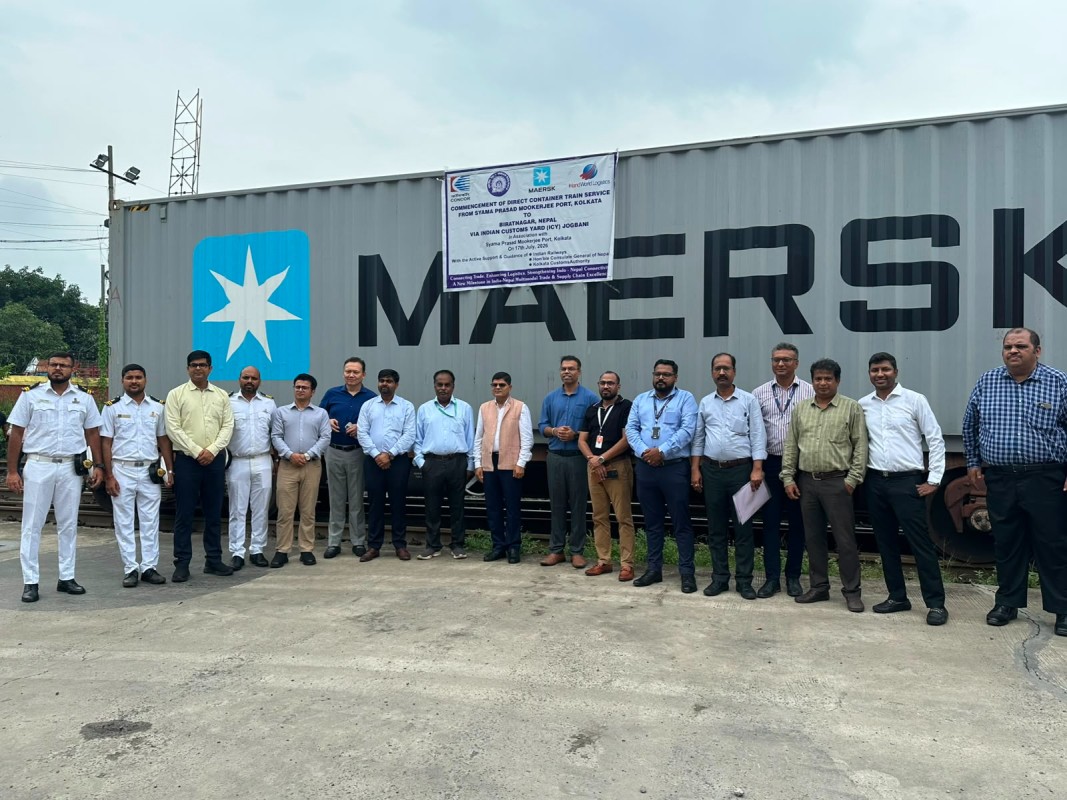
CONCOR flags off direct EXIM Container Train from Kolkata Port to Nepal, strengthening India–Nepal trade connectivity

KOLKATA : Container Corporation of India Ltd. (CONCOR) has achieved another significant milestone in cross-border logistics by flagging off the much-awaited direct EXIM container train from Syama Prasad Mookerjee Port (SMP), Kolkata to NCY Biratnagar, Nepal via ICY Jogbani on July 17, 2026. The new service reinforces CONCOR’s pioneering role in enhancing container rail connectivity between India and Nepal while facilitating seamless cross-border trade.

The inaugural train consists of 40 forty-foot containers carrying farmer-dressed bulk canola grain imported from Fremantle, Australia, moving under the aegis of Maersk Line. The dedicated rail service provides a faster, more reliable and cost-effective multimodal logistics solution for EXIM cargo destined for Nepal, significantly reducing transit time and improving supply chain efficiency.

The successful launch of the service was made possible through the coordinated efforts of Indian Railways, Syama Prasad Mookerjee Port, Customs authorities, Maersk Line, Inland World Logistics and Transecure (ECTS), highlighting the importance of collaborative logistics infrastructure in facilitating international trade.

The direct rail connectivity is expected to provide exporters, importers and logistics stakeholders with an efficient transportation corridor, reducing dependence on road movement while promoting sustainable freight transportation. It also strengthens the multimodal logistics ecosystem connecting Indian ports with neighbouring countries.

The initiative marks another important step in deepening India–Nepal economic cooperation by improving regional connectivity and supporting uninterrupted cargo movement. By expanding dedicated container rail services to Nepal, CONCOR continues to play a pivotal role in enhancing regional trade integration, boosting supply chain resilience and supporting the Government of India’s vision of developing efficient, seamless and globally competitive logistics networks.

The new service is expected to further strengthen bilateral trade, improve ease of doing business, and create greater opportunities for cross-border commerce between India and Nepal while reinforcing Kolkata Port’s position as a key gateway for Nepal-bound EXIM cargo.

CBIC Chairman reviews container scanning infrastructure at Kolkata Port, engages Trade on Budget 2026 Customs Reforms

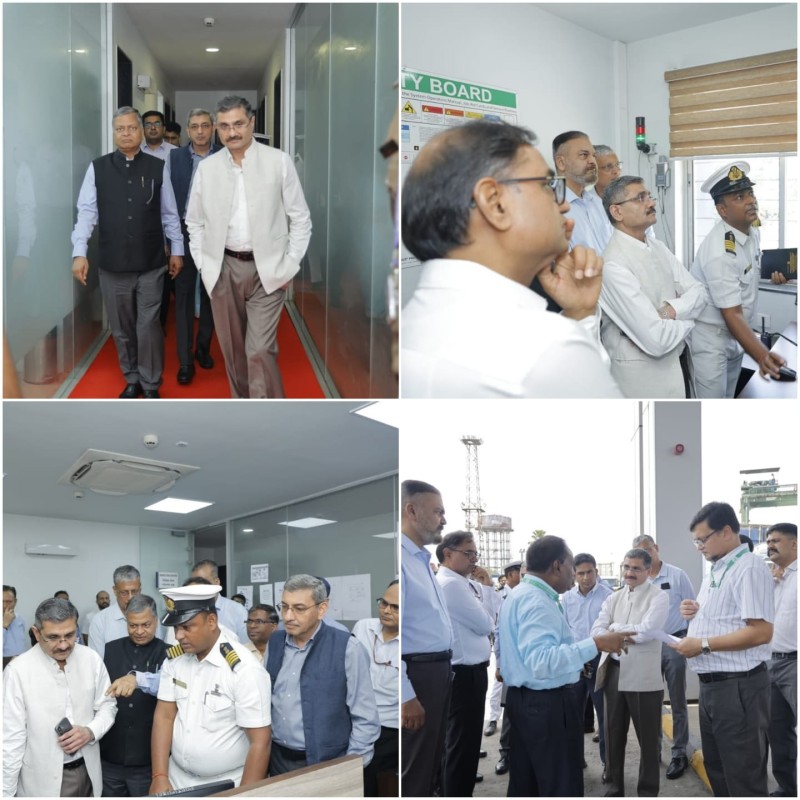
KOLKATA : Shri Vivek Chaturvedi, Chairman, Central Board of Indirect Taxes and Customs (CBIC), visited Kolkata Port to review the existing infrastructure and explore opportunities for strengthening the Container Scanning Division, with an emphasis on enhancing cargo security, facilitating trade, and improving customs clearance efficiency.

The Chairman was accompanied by Shri M.K. Singh, Member (IT), CBIC, Shri Yogendra Garg, Member (Customs), CBIC, along with the Principal Director General (Systems), Principal Director General of Analytics and Risk Management (DGARM), the Principal Chief Commissioner, Kolkata Customs, and other senior CBIC officials.

During the visit, the delegation assessed the port’s container scanning facilities and reviewed the existing technological and operational framework aimed at facilitating faster, secure, and risk-based inspection of import and export cargo. Discussions focused on leveraging advanced scanning technologies, data analytics, and digital systems to strengthen customs enforcement while ensuring seamless cargo movement through one of eastern India’s key maritime gateways.

The review also highlighted the importance of modernizing customs infrastructure in line with the Government’s vision of promoting ease of doing business, reducing cargo dwell time, and enhancing the efficiency of India’s international trade logistics network.

Following the inspection, Shri Vivek Chaturvedi chaired an open-house interaction with members of the trade and industry, providing a platform for exporters, importers, customs brokers, and other stakeholders to share feedback on customs procedures and operational challenges.

The interactive session focused on the implementation of Customs reforms announced in the Union Budget 2026, with discussions covering measures to simplify compliance, promote paperless and faceless customs processes, strengthen risk management systems, and facilitate faster clearance of legitimate trade. Trade representatives also offered suggestions for further improving transparency, predictability, and efficiency in customs administration.

The visit reaffirmed CBIC’s commitment to stakeholder-driven reforms, digital transformation, and the modernization of customs infrastructure. By combining advanced technology with industry engagement, the Board aims to strengthen border security while facilitating faster, more efficient, and globally competitive trade through India’s ports.

The review at Kolkata Port reflects the Government’s continued focus on building a modern, technology-enabled customs ecosystem that supports economic growth, enhances supply chain resilience, and reinforces India’s position as a leading global trading nation.

CONCOR flags off first export container to the UK from ICD Whitefield under India–UK FTA

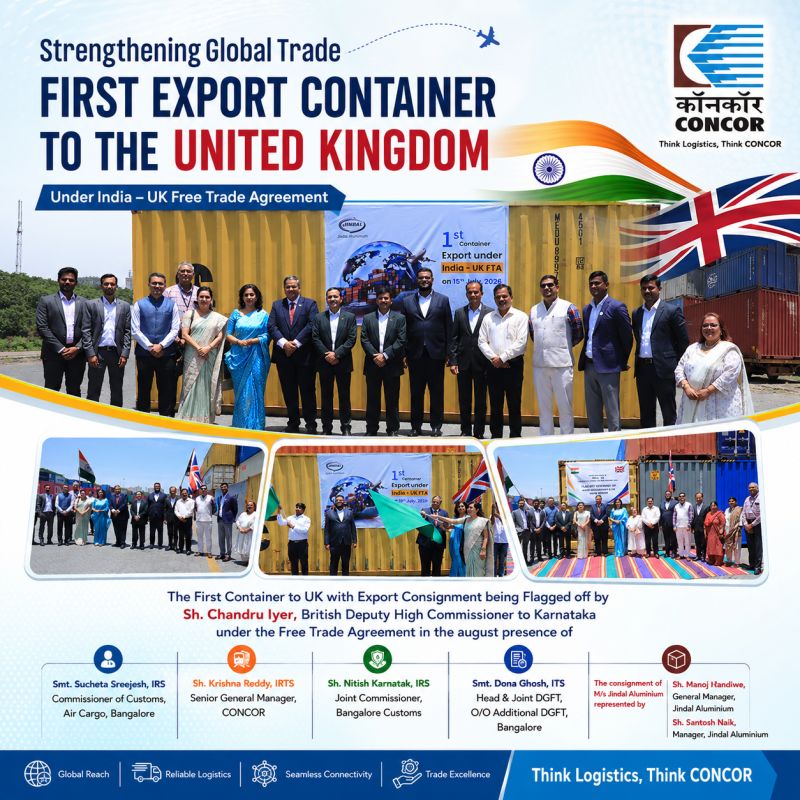
BENGALURU : Marking a significant milestone in India’s export journey under the newly operational India–UK Free Trade Agreement (FTA), Container Corporation of India Ltd. (CONCOR) flagged off the first export container bound for the United Kingdom from its Inland Container Depot (ICD), Whitefield, Bengaluru.

The inaugural export consignment was flagged off by Shri Chandru Iyer, British Deputy High Commissioner to Karnataka, in the august presence of Smt. Sucheta Sreejesh, IRS, Commissioner of Customs (Air Cargo), Bengaluru, Shri Krishna Reddy, IRTS, Senior General Manager, CONCOR, Shri Nitish Karnatak, IRS, Joint Commissioner, Bengaluru Customs, and Smt. Dona Ghosh, ITS, Head & Joint DGFT, Office of the Additional DGFT, Bengaluru.

The export consignment was shipped by M/s Jindal Aluminium, represented by Shri Manoj Randiwe, General Manager, and Shri Santosh Naik, Manager, underscoring the company’s contribution to strengthening India’s engineering exports to the UK market.

The flag-off assumes special significance as it symbolizes the commencement of export movements from Karnataka under the India–UK FTA, which is expected to provide Indian exporters with enhanced market access, lower tariffs, and greater competitiveness in one of India’s key international trading partners.

ICD Whitefield, one of South India’s premier inland container terminals, plays a crucial role in facilitating seamless EXIM trade through efficient multimodal connectivity, integrated customs clearance, and reliable rail-linked logistics services. The movement also highlights CONCOR’s commitment to providing end-to-end logistics solutions that enable Indian exporters to capitalize on emerging global trade opportunities.

With the India–UK FTA expected to boost bilateral trade across sectors such as engineering goods, textiles, pharmaceuticals, chemicals, food products, and value-added manufacturing, CONCOR continues to strengthen its logistics network to support faster, cost-effective, and sustainable cargo movement from India’s manufacturing hubs to global markets.

The successful dispatch of this inaugural container reinforces CONCOR’s pivotal role in advancing India’s export ecosystem and promoting ease of doing business through world-class multimodal logistics infrastructure.

Think Logistics. Think CONCOR.

India–UK CETA to accelerate industrial growth, investment and manufacturing: NICDC

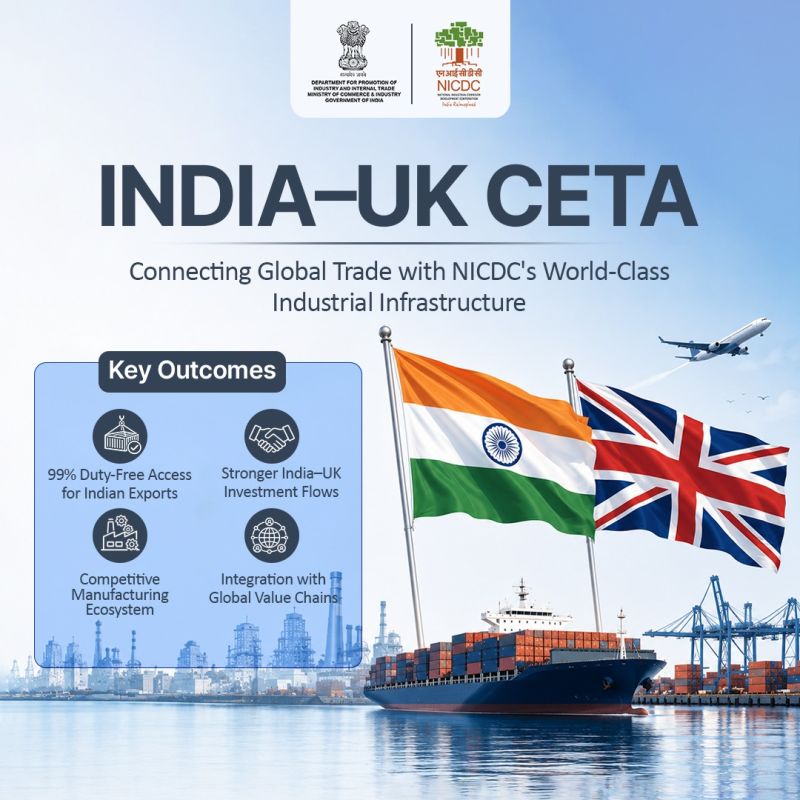
NEW DELHI : The National Industrial Corridor Development Corporation (NICDC) has highlighted the transformative potential of the India–UK Comprehensive Economic and Trade Agreement (CETA), stating that the landmark pact will usher in a new era of bilateral economic cooperation by strengthening trade, investment, manufacturing, and innovation between the two countries.

With the agreement providing zero-duty market access for nearly 99% of India’s exports, Indian industries are expected to become more competitive in the UK market while integrating more deeply into global value chains. The agreement is also poised to create fresh opportunities across key sectors, including engineering goods, automobiles, textiles, pharmaceuticals, chemicals, food processing, and advanced manufacturing.

NICDC said it supports its network of Industrial Smart Cities and integrated industrial corridors is well-positioned to support this growth by providing world-class industrial infrastructure, multimodal logistics connectivity, and investor-friendly ecosystems. These developments are designed to enable industries to establish manufacturing facilities with greater ease, reduce logistics costs, and improve supply chain efficiency.

Through continued engagement with the United Kingdom, NICDC remains committed to promoting investment facilitation, knowledge exchange and stronger industrial partnerships.

The corporation noted that its industrial nodes offer plug-and-play infrastructure, modern utilities, sustainable urban planning, and seamless connectivity through ports, railways, highways, airports, and Dedicated Freight Corridors, creating an enabling environment for both domestic and international investors.

As India and the United Kingdom deepen their economic partnership under the CETA framework, NICDC reaffirmed its commitment to fostering stronger industrial collaboration through investment facilitation, policy support, and knowledge exchange. The corporation also aims to attract greater participation from UK businesses in India’s rapidly expanding industrial and manufacturing ecosystem.

The agreement is expected to complement the Government of India’s flagship initiatives such as Make in India, PM GatiShakti, and the National Industrial Corridor Development Programme, further reinforcing India’s emergence as a preferred global manufacturing and export hub.

According to NICDC, the combination of future-ready industrial infrastructure, integrated logistics networks, and strengthened international partnerships will play a pivotal role in enhancing India’s global competitiveness, attracting high-value investments, and driving sustainable economic growth in the years ahead.

India-UK FTA opens up huge export potential for India in UK’s USD 900 billion market: Bank of Baroda Report

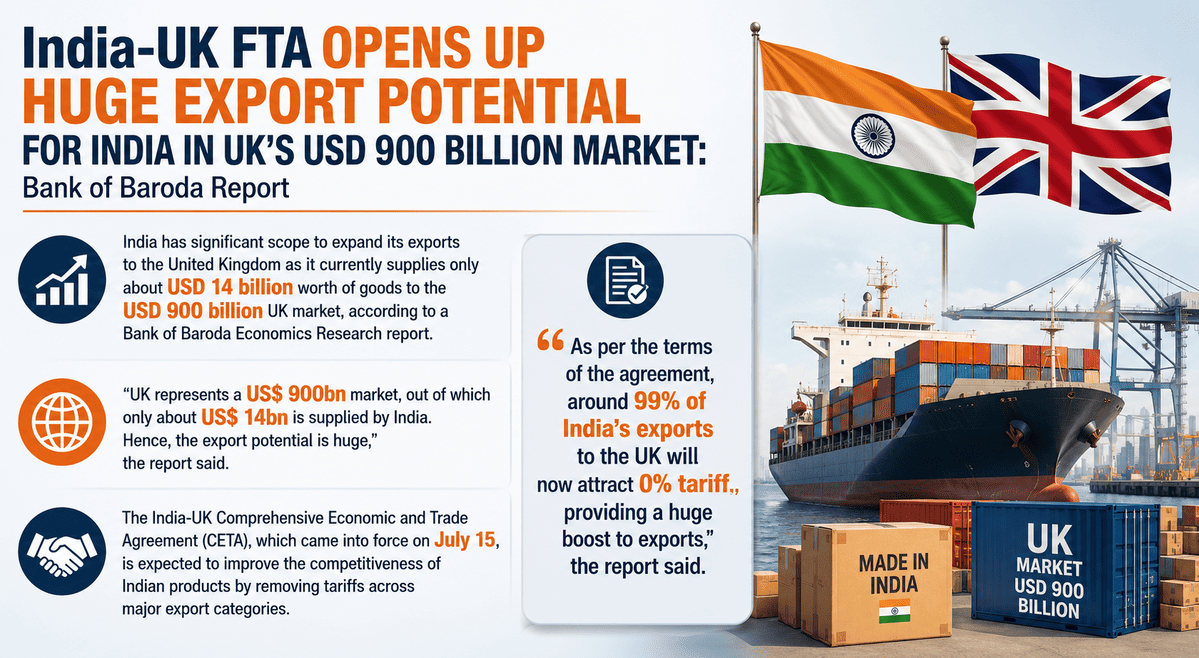
NEW DELHI: India has significant scope to expand its exports to the United Kingdom as it currently supplies only about USD 14 billion worth of goods to the USD 900 billion UK market, according to a Bank of Baroda Economics Research report released on Friday.

“UK represents a US$ 900bn market, out of which only about US$ 14bn is supplied by India. Hence, the export potential is huge,” the report said.

The India-UK Comprehensive Economic and Trade Agreement (CETA), which came into force on July 15, is expected to improve the competitiveness of Indian products by removing tariffs across major export categories.

“As per the terms of the agreement, around 99% of India’s exports to the UK will now attract 0% tariff, providing a huge boost to exports,” the report said.

Bank of Baroda estimated that India’s exports to the UK could rise sharply over the next five years from USD 13.5 billion currently. Its projections show total exports reaching USD 24.2 billion by FY31, registering a compound annual growth rate of 12.5 per cent.

“By reducing/eliminating duties on almost 100% exports (by value), the CETA provides greater export competitiveness for Indian exporters,” the report said.

Labour-intensive sectors such as textiles and leather are expected to be among the key beneficiaries. Tariff-free access has been provided for Indian textile and apparel exports, which earlier faced duties of around 12 per cent.

“This gives significant export competitiveness to India’s exports as duty free access was already available for major competitors such as Bangladesh, Pakistan and Cambodia,” it said.

India’s textile and readymade garment exports to the UK are expected to rise to about USD 3.1 billion over the next five years from USD 2.2 billion in FY26.

For leather and related products, the import duty has been reduced from as high as 16 per cent to zero. The report projected India’s leather exports to the UK to increase to USD 900 million by 2030 from USD 411 million in FY26.

“This implies that India’s market share in UK’s total imports of these products would increase from 5% currently to about 10% in the next 5 years,” it said.

Agricultural products are also expected to gain from tariff-free access. Bank of Baroda estimated that marine exports could almost double to USD 253 million by 2030-31 from USD 127 million, while exports of rice and spices are also likely to double.

Electronics could witness one of the strongest increases. “With the duty on these products reduced to 0%, exports of TV, monitors as well as telecom instruments could benefit. We expect exports under this category to increase to US$ 4bn by FY31,” the report said.

The report also identified pharmaceuticals, engineering goods and gems and jewellery as major beneficiaries of the agreement.

“We expect the total trade between India and UK to increase to US$ 41bn in the next 5 years from US$ 25bn in FY26,” the report concluded.

Container traffic to drive growth at Indian ports up to 9% CAGR through FY28: Motilal Oswal

NEW DELHI: Container traffic is expected to remain a key growth driver for Indian ports, supported by favourable macroeconomic conditions, rising domestic consumption, and greater adoption of containerization, with volumes projected to expand at a 7-9 per cent CAGR over FY26-FY28.

According to a Motilal Oswal report, the expansion in container volumes will diverge significantly from other commodities. Coal traffic is likely to post a compounding decline of 2-4 per cent as higher domestic coal production, renewable energy adoption, and import substitution reduce thermal coal imports, although coastal coal movement is expected to remain resilient.

Petroleum, Oil, and Lubricants (POL) traffic is projected to clock a moderate 2-4 per cent CAGR over FY26-FY28. The report noted that this trajectory is “driven by stable fuel demand but moderated by improving fuel efficiency and increasing use of alternative energy sources.”

Meanwhile, iron ore traffic is expected to recover at a 5-7 per cent CAGR during FY26-FY28, supported by higher coastal transportation to domestic steel plants and increased imports amid elevated domestic ore prices, despite relatively subdued export demand.

The report noted that the projections followed a strong performance in FY26, during which India’s major ports delivered healthy numbers. Cargo volumes rose approximately 7 per cent year-on-year to 915 MMT, driven by healthy growth in both overseas (+6.6% YoY) and coastal (+8% YoY) traffic.

POL and crude, holding a 30 per cent share, led growth with a 16 per cent YoY rise, while coal and container traffic recorded gains of 21 per cent and 10 per cent, respectively.

In contrast, non-major ports reported modest growth, with cargo volumes increasing roughly 1.4 per cent YoY to 753 MMT in FY26. POL and crude volumes remained stable, while fertilizer volumes rebounded strongly by 52 per cent.

The report stated that “with focused policy support, private investments, and infrastructure development under initiatives such as Sagarmala and the Maritime Amrit Kaal Vision 2047, India is well-positioned to emerge as a global maritime hub.”

The report further added that “addressing challenges related to policy delays, connectivity gaps, and environmental concerns will be the key to unlocking the sector’s full potential.”

India and Poland continue to strengthen their economic partnership through enhanced cooperation in the MSME sector

NEW DELHI : India and Poland recently held bilateral talks in New Delhi to strengthen cooperation in the Micro, Small and Medium Enterprises (MSME) sector. The meeting was attended by a high-level Polish delegation led by the Deputy Minister of Economic Development and Technology, Michał Baranowski. The Indian side was led by MSME Secretary Bharat Khera. India–Poland Joint Commission on Economic Cooperation (JCEC), noted the continued strengthening of bilateral engagement, including the forthcoming visit of H.E. Mr. Donald Tusk, Prime Minister of Poland, to India.

india poland fta.jpf India and Poland continue to strengthen their economic partnership through enhanced cooperation in the MSME sector

During the meeting, Mr. Khera highlighted the significant contribution of India’s MSME sector to the country’s economy. He said India has over 86 million registered MSMEs, which contribute nearly 30 per cent to the GDP. He added that the sector supports the livelihoods of around 330 million people.

The secretary also outlined the government’s initiatives to build globally competitive and future-ready MSMEs through digital transformation, innovation, technology adoption, sustainable manufacturing and improved market access. He briefed the delegation on flagship initiatives, including the Udyam Registration Portal, the Credit Guarantee Scheme for Micro and Small Enterprises, Technology Centres and the Zero Defect Zero Effect (ZED) programme.

Mr. Khera said Poland is India’s largest trading and investment partner in Central and Eastern Europe and expressed confidence that the recently concluded India-EU FTA would further boost bilateral trade and investment. Deputy Minister Michał Baranowski appreciated India’s progress in strengthening its MSME ecosystem. He reaffirmed Poland’s commitment to expanding institutional cooperation and promoting greater business-to-business engagement between enterprises of both countries. The two sides also discussed strengthening collaboration in enterprise development, technology, innovation, digital transformation, market linkages and institutional partnerships.

Gujarat tops NITI Aayog’s first Investment Friendliness Index, Maharashtra and Tamil Nadu follow

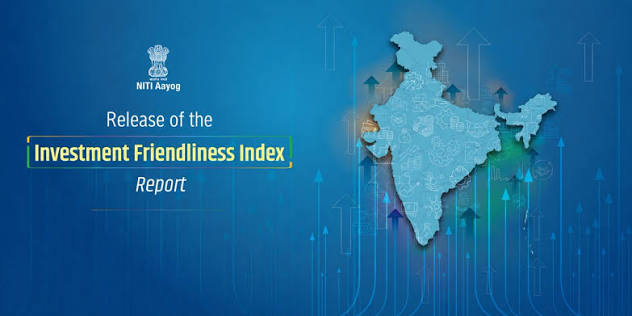
NEW DELHI: Gujarat, Maharashtra, Tamil Nadu, Goa and Odisha have emerged as the top performers in NITI Aayog‘s Investment Friendliness Index, which assesses how effectively states and Union Territories create and sustain an environment conducive to investment.

NITI Aayog released the “Investment Friendliness Index” report on Friday, providing a data-driven framework to benchmark investment ecosystems across all 28 states and eight Union Territories.

“Based on the overall assessment, Gujarat, Maharashtra, Tamil Nadu, Goa, and Odisha have emerged as the Top Performers in the Investment Friendliness Index,” the government think tank said in a release.

The index evaluates investment attractiveness across eight pillars: infrastructure, business climate, resources, government policy, regulatory ease, institutional environment, financial health and environmental resilience. Its framework comprises 84 indicators, combining secondary data with perception-based measures from a survey of investors.

States and Union Territories have been divided into four categories based on their overall scores — top performers, frontrunners, emerging performers and aspiring states. While five states were named top performers, 15 were classified as frontrunners. Eight states and Union Territories each were placed in the emerging performers and aspiring states categories.

Among large states, Gujarat secured the first rank, followed by Maharashtra and Tamil Nadu. Uttarakhand ranked first among hilly and North-Eastern states, followed by Assam and Himachal Pradesh. Goa led the city states and Union Territories category, followed by Delhi and Chandigarh.

“Beyond ranking performance, the IFI serves as a catalyst for reforms by identifying strengths, highlighting areas for improvement, promoting the adoption of best practices, and encouraging peer learning,” the release said.

NITI Aayog said the index seeks to encourage states and Union Territories to undertake continuous reforms, strengthen India’s competitiveness and attract greater domestic and foreign investment.

NMSC visits DGMA’s Maritime Domain Awareness Centre, reviews India’s Maritime Safety and Security Framework

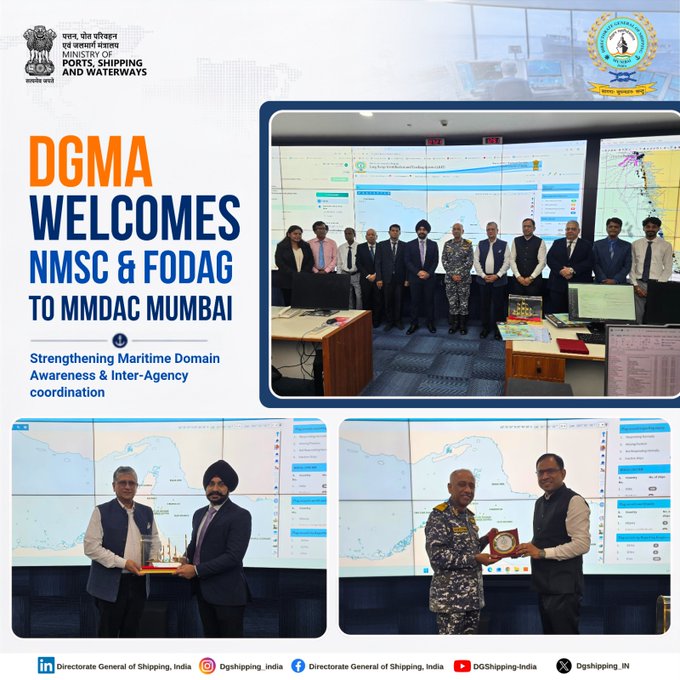
MUMBAI : The Directorate General of Maritime Administration (DGMA) welcomed Vice Admiral Biswajit Dasgupta, PVSM, AVSM, YSM, VSM (Retd.), National Maritime Security Coordinator (NMSC), and Rear Admiral Rahul Shankar, NM, Flag Officer Offshore Defence Advisory Group (FODAG) to the Mercantile Marine Domain Awareness Centre (MMDAC), Mumbai, on 17 July 2026.

During the visit, the delegation was briefed by Capt. Harinder Singh, Nautical Surveyor & Deputy Director General (Technical), DGMA, and In-charge of MMDAC, along with Capt. Nitin Mukesh, Deputy Nautical Advisor-cum-Senior Deputy Director General (Technical), on the functioning of the DG Communication Centre (DG Comm Centre) and India’s Long Range Identification and Tracking (LRIT) System.

The officials explained how these critical maritime systems enhance maritime domain awareness, facilitate real-time vessel tracking, strengthen navigational safety, and support search and rescue operations, emergency response, and regulatory oversight across India’s extensive coastline and surrounding waters. The LRIT system plays a vital role in monitoring the movement of Indian-flagged vessels globally while contributing to maritime security and compliance with international safety standards.

The delegation was also given a live demonstration of the Crisis Response Management Module of the e-Navik Portal, a digital platform designed to streamline the reporting, monitoring, and coordinated management of maritime emergencies. The platform enables rapid information sharing among key stakeholders, helping authorities respond more effectively to incidents at sea.

The visit showcased DGMA’s robust maritime emergency response framework and its close operational coordination with the Indian Navy and the Indian Coast Guard for incident monitoring, intelligence sharing, and coordinated response to maritime contingencies. Officials highlighted the growing importance of technology-driven surveillance, digital platforms, and integrated communication systems in ensuring safe, secure, and resilient maritime operations.

The discussions also focused on enhancing operational preparedness and strengthening collaborative response mechanisms in view of evolving maritime security developments in the Persian Gulf region, a strategically important trade corridor for India’s energy imports and international shipping. The delegation reviewed measures aimed at ensuring uninterrupted maritime trade, safeguarding Indian merchant vessels, and improving readiness to address emerging security challenges.

The visit reaffirmed the importance of integrated maritime domain awareness, real-time information exchange, and seamless inter-agency coordination in reinforcing India’s maritime security architecture. It also underscored the Government’s continued commitment to leveraging advanced digital technologies and institutional collaboration to enhance the safety, security, and resilience of the nation’s maritime sector.