Home Blog Page 198

Odisha collaborates with IFC to develop Rs 20,000 crore infrastructure pipeline

BHUBANESWAR : In a move to transform its public-private partnership (PPP) ecosystem, Odisha entered into a strategic collaboration with the International Finance Corporation (IFC) to develop 20 major infrastructure projects. The pipeline carries a cumulative investment potential of nearly Rs 20,000 crore.

According to Business Standard, the state government signed a Transaction Advisory Services Agreement (TASA) with the IFC, the private-sector arm of the World Bank Group, on Friday. 

With this agreement, Odisha reportedly became the first state in the country to secure a TASA with the corporation.Sector Focus And Strategic Pipeline. Under the terms of the one-year agreement, the IFC will work closely with state authorities to identify, structure, and develop bankable, commercially viable projects. The initiative covers a wide array of priority sectors aimed at modernising the state’s industrial and civic footprint:

Green Energy & Power: Renewable energy expansion and strengthened power transmission networks.

Logistics & Transport: Enhanced connectivity to reinforce Odisha’s position as a premier manufacturing and investment destination.

Urban Development: Modern infrastructure projects to meet the demands of rapid urbanisation while easing the financial burden on the state exchequer.

Sustainable Mobility: Accelerated adoption of electric mobility solutions.

Regional Development

The IFC will undertake transaction advisory work, assess project opportunities, and design financially, legally, and technically sound structures to attract top-tier private investors.

Highlighting the long-term impact of the partnership, Chief Secretary Anu Garg emphasised that mobilising private investment is critical to positioning Odisha prominently on both national and global levels. The initiative directly aligns with the developmental vision of Viksit Odisha 2036, reportedly.

Shalabh Tandon, the regional head of operations and acting regional director (South Asia) for the IFC, confirmed that the agreement with the Odisha government represents a high-priority agenda for the corporation.

While the IFC is currently in discussions with other states for similar models, Odisha’s pioneering engagement will serve as the primary roadmap for regional infrastructure building through the PPP route.

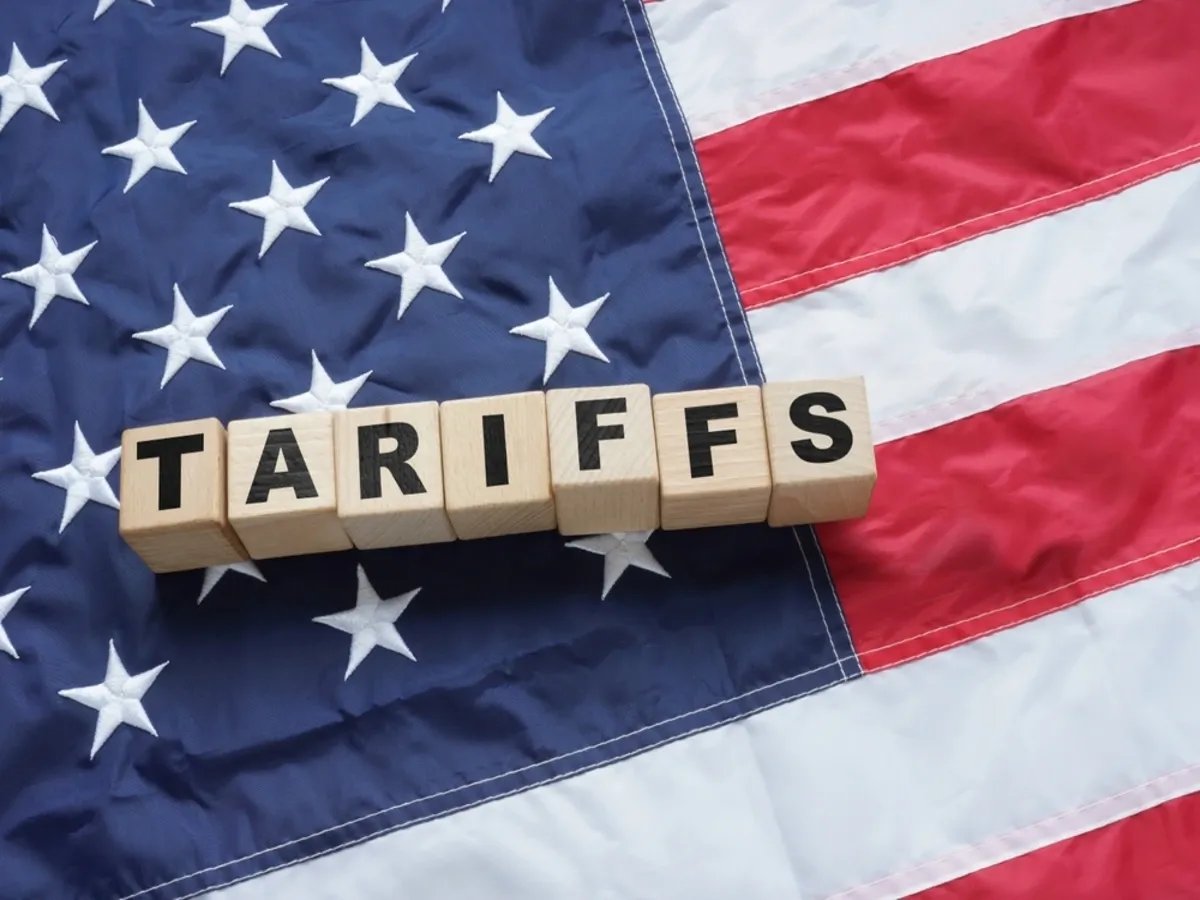
Tariffs reshaped US imports without meaningfully lowering export prices: IMF Report

WASHINGTON D.C. : US high tariffs didn’t help the foreign exporters to reduce their prices and instead prompted American importers to switch to cheaper, and in part lower-quality products, according to an International Monetary Fund (IMF) Working Paper.

The paper finds that tariffs imposed by the United States were largely passed through to import prices, with exporters absorbing only a small fraction of the additional cost. Rather than lowering their pre-tariff prices to remain competitive, foreign suppliers largely maintained their prices, leaving US importers to adjust by sourcing less expensive alternatives.

According to the study, the decline observed in aggregate import prices was driven not by exporters offering discounts but by a reallocation of imports towards lower-priced suppliers and products. The authors note that this compositional shift also reflected a movement towards lower-quality imported varieties, a pattern that was similarly observed during the 2018-19 US-China tariff episode.

Using detailed transaction-level US customs data covering the tariff increases introduced in 2025, the paper finds that the average pass-through of tariffs to import prices remained close to complete. Exporters reduced their pre-tariff prices only marginally, indicating that the burden of higher tariffs was largely borne through changes in sourcing rather than pricing.

The study argues that the shift towards lower-quality imports has broader implications beyond trade flows. It notes that lower-quality imported intermediate inputs could weigh on firms’ productivity, while consumers may also face reduced product quality even if average import prices appear lower.

The findings suggest that tariffs altered the composition of US imports rather than delivering substantial price concessions from foreign exporters. As importers diversified away from higher-priced suppliers, the resulting decline in average import prices reflected changes in the import basket instead of a reduction in the prices charged for comparable products.

Since returning to office in 2025, US President Donald Trump has significantly expanded tariffs on imports from several trading partners, arguing that higher duties would encourage domestic production and improve America’s trade position. The IMF paper examines how these tariff increases affected import prices and sourcing patterns.

The findings come as the United States has imposed higher tariffs since April 2025 on imports from several trading partners, including India, as part of its broader tariff policy under President Donald Trump. India has been engaged in trade negotiations with Washington while seeking relief from these duties and to seal a bilateral trade deal in the near future.

The paper is authored by IMF economists JaeBin Ahn, Lorenzo Rotunno and Michele Ruta. It notes that the analysis is based on IMF staff research and that the views expressed are those of the authors and do not necessarily represent the views of the IMF, its Executive Board or IMF management.

APEDA facilitates first export of Premium Areko Cherries and Scentrose Plums from Jammu & Kashmir to Singapore

NEW DELHI : In another significant boost to the horticulture exports of Jammu & Kashmir, the Agricultural and Processed Food Products Export Development Authority (APEDA), under the Ministry of Commerce & Industry, facilitated the first export shipment of premium Areko Cherries (High-Density European Sweet Cherries) and Scentrose Plums from Shopian and Pulwama to Singapore. The milestone follows the successful export of fresh cherries and plums from the region to Abu Dhabi and Dubai in the UAE, further expanding the global footprint of Kashmir’s premium temperate fruits.

APEDA organised a flag-off ceremony for the first export shipment to Singapore on 16 July 2026 in collaboration with M/s Osum Food Solutions LLP and M/s Fruit Master Agro Fresh Private Limited, Pulwama.

Jammu & Kashmir, known for its favourable agro-climatic conditions, produces premium-quality temperate fruits with excellent taste, texture and shelf life. The export consignment was scientifically harvested, graded, packed and transported through an efficient cold chain in compliance with international food safety and phytosanitary standards to ensure freshness and quality upon arrival in Singapore.

The initiative is expected to enable growers to realise over 50 per cent higher returns compared to conventional marketing channels. It is also expected to promote export-oriented production, adoption of scientific cultivation practices and improved post-harvest management, while reducing post-harvest losses, enhancing value realisation and generating sustainable livelihood opportunities for fruit-growing communities across Jammu & Kashmir.

The export reflects APEDA’s continued efforts to strengthen India’s horticultural exports through market diversification, export facilitation and improved logistics. By connecting growers with premium international markets, the initiative is expected to enhance farmers’ incomes and further position Jammu & Kashmir as a reliable source of high-value fresh temperate fruits in global markets.

Gulf states race to make Hormuz less relevant

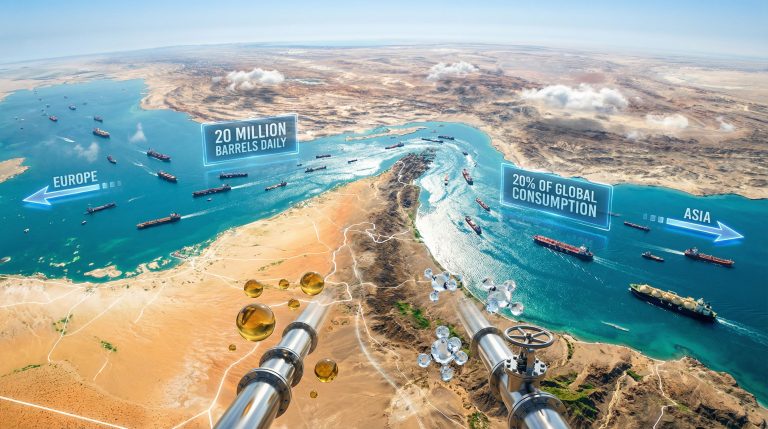
DUBAI : Gulf states are fast-tracking pipelines, export terminals and logistics corridors to reduce reliance on the Strait of Hormuz after the latest disruption exposed the region’s vulnerability to geopolitical conflict.

Existing alternatives such as the UAE’s Fujairah pipeline and Saudi Arabia’s East-West Pipeline are gaining strategic importance, while new projects could eventually divert more than 10m barrels per day from Hormuz.

The shift could redraw Middle East energy trade, boosting ports including Fujairah, Yanbu and Sohar, while creating longer-term challenges for tanker markets as more crude moves through overland infrastructure.

The latest Iran-Hormuz crisis has accelerated gulf states’ efforts to build pipelines, ports and rail links that bypass the world’s most important oil chokepoint, reshaping regional trade flows and potentially altering tanker demand for decades

World’s largest naval replenishment vessel constructed by China at Guangzhou Shipyard

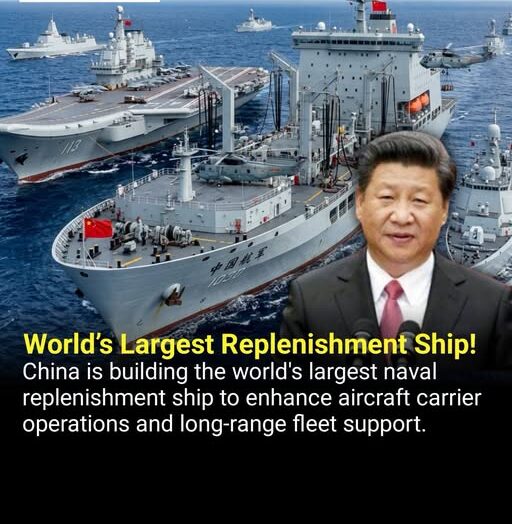
GUANGZHOU : China is building what appears to be the world’s largest naval supply ship at a shipyard located on Longxue Island, near Guangzhou.

According to satellite images, the ship is 270 m long and 37 m wide, with its hull optimised for volume instead of just speed, which makes it much bigger than China’s current largest supply vessel, the 45,000-ton Type 901, and also the U.S Navy’s newest John Lewis-class replenishment oilers.

The ship features superstructures at both the bow and stern, with large hangars and a flight deck at the rear to support helicopters for vertical replenishment. Midship, it has vertical pillar-like structures for transferring fuel, dry stores, and ammunition to other ships at sea.

The monster supply ship is meant to support the People’s Liberation Army Navy’s (PLAN) expanding “blue water” ambitions.

China’s aircraft carriers and their escort ships are all conventionally powered, requiring massive amounts of fuel and continuous resupply to sail for long periods far from friendly shores.

The new supply ship will likely be used to support China’s growing carrier strike groups and other large upcoming vessels, such as the massive Type 076 amphibious assault ship.

The rapid construction of this massive auxiliary ship further highlights the growing disparity in naval shipbuilding capacity between China and the United States. According to experts, the ship has been under construction since atleast February and the work seems to be progressing rapidly.

In recent years, the yard has become known for building unique and unusual ships for military use or dual-purpose applications.

This includes what might be a civilian ‘research carrier,’ jack-up barges to support amphibious operations, and also a trimaran drone ship.

VinFast partners with Bespoke Logistics to strengthen electric motorcycle logistics capabilities in the Philippines

MANILA: Global electric vehicle company VinFast has officially signed a strategic cooperation agreement with Bespoke Logistics, a Philippine provider of end-to-end automotive logistics solutions, to establish an integrated mobility processing center and authorized service workshop for the inspection and preparation of VinFast electric motorcycles prior to delivery. The partnership will help ensure vehicle quality, shorten delivery lead times, and lay a solid foundation for VinFast’s expanding electric motorcycle ecosystem in the Philippines.

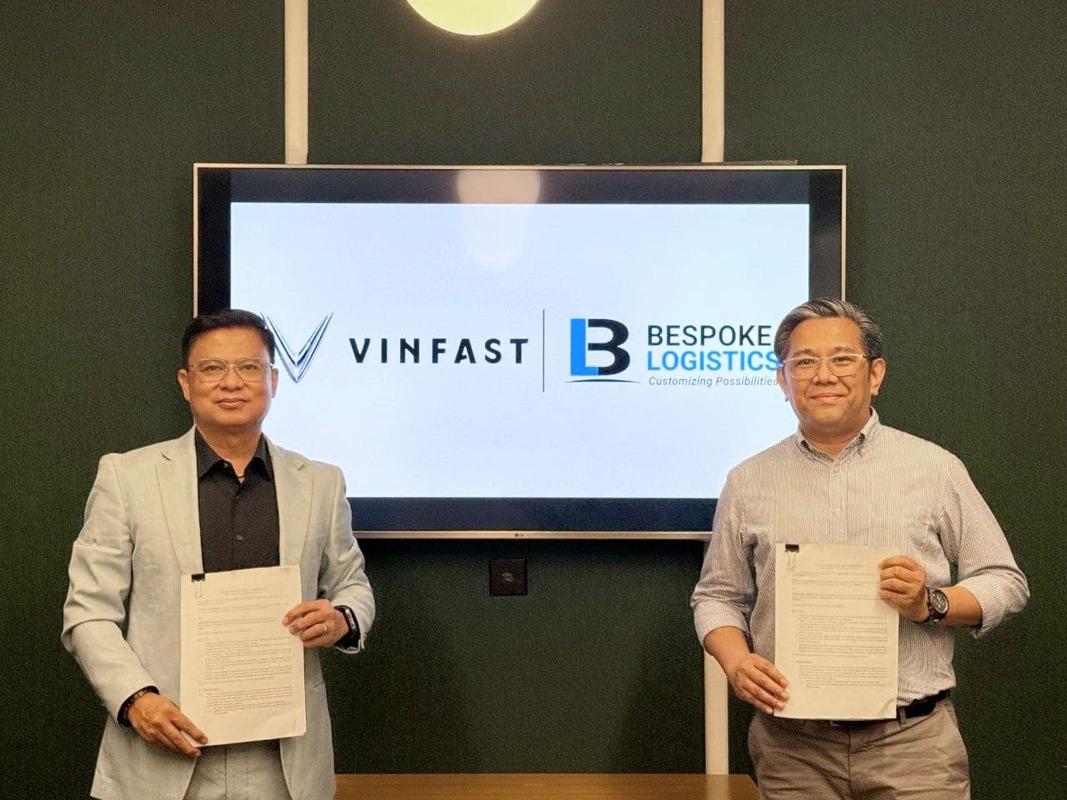
Mr. Irineo Niño Fabros, CEO of VinFast Electric Motorcycles Philippines (left), and Mr. Allan A. Mina, President and CEO of Bespoke Logistics, at the signing ceremony.

Under the agreement, Bespoke Logistics will operate an integrated mobility processing center and VinFast-authorized service workshop, responsible for warehousing, vehicle inspection, technical preparation of electric motorcycles prior to delivery, vehicle yard management, and transportation. Located in Carmona City, Cavite Province, the 20,000-square-meter facility has a storage capacity of up to 30,000 vehicles, helping streamline vehicle preparation, improve operational efficiency, and ensure product quality before delivery to customers.

As part of the partnership, VinFast will work closely with Bespoke Logistics to implement technician training and certification programs, transfer standardized operating procedures and quality control processes, and establish a parts supply system to support aftersales operations.

Bespoke Logistics specializes in automotive logistics, offering an end-to-end service portfolio that includes pre-delivery inspection (PDI), warehousing, vehicle yard management, transportation, and vehicle delivery. The company also has extensive experience in warehouse-based technical operations and modern vehicle and inventory management systems, serving as a trusted logistics partner for multiple automotive brands in the Philippines.

Partnering with experienced local companies such as Bespoke Logistics will not only strengthen VinFast’s logistics and service capabilities in the Philippines but also provide a strong operational foundation for the delivery of its first electric motorcycles to customers.

The agreement forms part of VinFast’s long-term strategy to develop a comprehensive, international-standard electric motorcycle ecosystem in the Philippines. Alongside the launch of its diverse lineup of battery-swapping electric motorcycles, VinFast is steadily expanding its distribution network, aftersales services, and battery swapping infrastructure to deliver a seamless, convenient, and reliable ownership experience for customers.

Mr. Bui Viet Hung, VinFast Deputy CEO of Global Aftersales Service, said: “At VinFast, world-class products must be supported by robust infrastructure and exceptional aftersales services. Our partnership with Bespoke Logistics is a key milestone in strengthening our distribution and aftersales capabilities in line with global standards, ensuring that customers in the Philippines enjoy high quality products and services from day one of ownership.”

Mr. Allan A. Mina, President and CEO of Bespoke Logistics said: “We are proud to partner with VinFast as it develops its electric motorcycle ecosystem in the Philippines. We are committed to operating the facility in accordance with VinFast’s international standards while continuously enhancing our team’s capabilities and operational processes to support the brand’s long-term growth in the market.”

Over the past few years, VinFast has steadily built a green mobility ecosystem across the Philippines, Indonesia, India, and other international markets through strategic partnerships with local companies and ecosystem partners such as Green GSM and V-Green. In addition to electric motorcycles, VinFast is expanding its product portfolio to include electric cars, electric bicycles, and electric buses, providing consumers with more sustainable mobility options while accelerating the global transition to greener transportation.

About About VinFast

VinFast, a subsidiary of Vingroup JSC, one of Vietnam’s largest conglomerates, is a pure-play electric vehicle (“EV”) company with the mission of making EVs accessible to everyone. VinFast’s product lineup today includes a wide range of electric SUVs, e-scooters, and e-buses.

VinFast is currently embarking on its next growth phase through rapid expansion of its distribution and dealership network globally while expanding its production footprint with a focus on key markets across North America, Europe, the Middle East and Asia.

About Bespoke Logistics

Bespoke Logistics is a Philippine-based automotive logistics, warehousing, and mobility solutions company specializing in vehicle processing, stockyard management, electric vehicle support services, transportation, and distribution.

Through its Mobility Processing Center platform, Bespoke Logistics provides integrated solutions for automotive manufacturers, distributors, and emerging mobility brands operating in the Philippines.


Korean researchers secure ABS approval for molten salt SMR-Powered Containership design

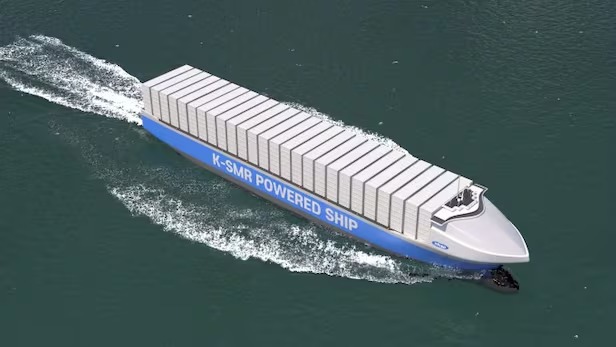
SEOUL : South Korea has taken a significant step towards the development of nuclear-powered commercial shipping, with a 15,000 TEU containership design featuring molten salt Small Modular Reactors (SMRs) receiving Approval in Principle (AiP) from the American Bureau of Shipping (ABS).

The project is being jointly developed by the Korea Atomic Energy Research Institute (KAERI), the Korea Research Institute of Ships & Ocean Engineering (KRISO), and Samsung Heavy Industries (SHI). The AiP marks an important validation of the technical feasibility and safety of the innovative vessel concept, paving the way for further design refinement and technology demonstration.

The proposed containership will be powered by two molten salt-based Small Modular Reactors (SMRs), offering enhanced safety, operational efficiency, and redundancy. Unlike conventional nuclear reactors, molten salt reactors combine nuclear fuel with molten salt, allowing the material to solidify and safely encapsulate the fuel in the unlikely event of a system failure, thereby significantly improving inherent safety.

KAERI led the development of the marine molten salt reactor technology, while working closely with Samsung Heavy Industries on the vessel’s hull design, reactor arrangement, major onboard systems, and power control technologies. The dual-reactor configuration is designed to ensure uninterrupted operations while efficiently matching reactor output with the ship’s varying power requirements. The concept also incorporates surplus energy storage to provide additional power during peak demand.

The vessel has been designed as a high-speed 25-knot, 15,000 TEU containership capable of transiting the Panama Canal’s Neopanamax locks. The reactor systems are centrally positioned within the hull to reduce the effects of wave motion and provide enhanced protection in the event of a collision.

By eliminating the need for conventional fuel tanks and exhaust funnels, the nuclear propulsion system also frees up valuable onboard space while improving overall vessel efficiency. Special attention has been given to crew accommodation, incorporating radiation shielding measures without compromising navigational visibility or operational safety.

Following a comprehensive technical review, ABS confirmed the concept meets the requirements for Approval in Principle, recognizing the design’s technical viability and safety. The approval represents a major milestone for South Korea’s K-Moonshot Project, an initiative aimed at advancing next-generation strategic technologies.

Commenting on the achievement, Cho Jin-young, Director of the Advanced Reactor Research Institute, described the AiP as “an important milestone” in the development of marine nuclear technology.

The project partners will now focus on refining the interface between the reactor and ship systems, conducting further safety verification, advancing the engineering design, and demonstrating the core technologies required to bring a nuclear-powered containership closer to commercial reality.

If successfully developed, the vessel could represent a transformative breakthrough in zero-carbon maritime transport, offering long-range, high-capacity container shipping with minimal greenhouse gas emissions while supporting the shipping industry’s transition towards sustainable propulsion technologies.

PM Modi flagged off India’s first Hydrogen-Powered Train

JALANDHAR : Prime Minister Shri Narendra Modi on Friday inaugurated and laid the foundation stone of rail and road infrastructure projects, including 75 redeveloped railway stations, worth Rs 5,470 crore from Jalandhar.

The projects are aimed at strengthening connectivity, improving passenger convenience and accelerating economic development in the region.

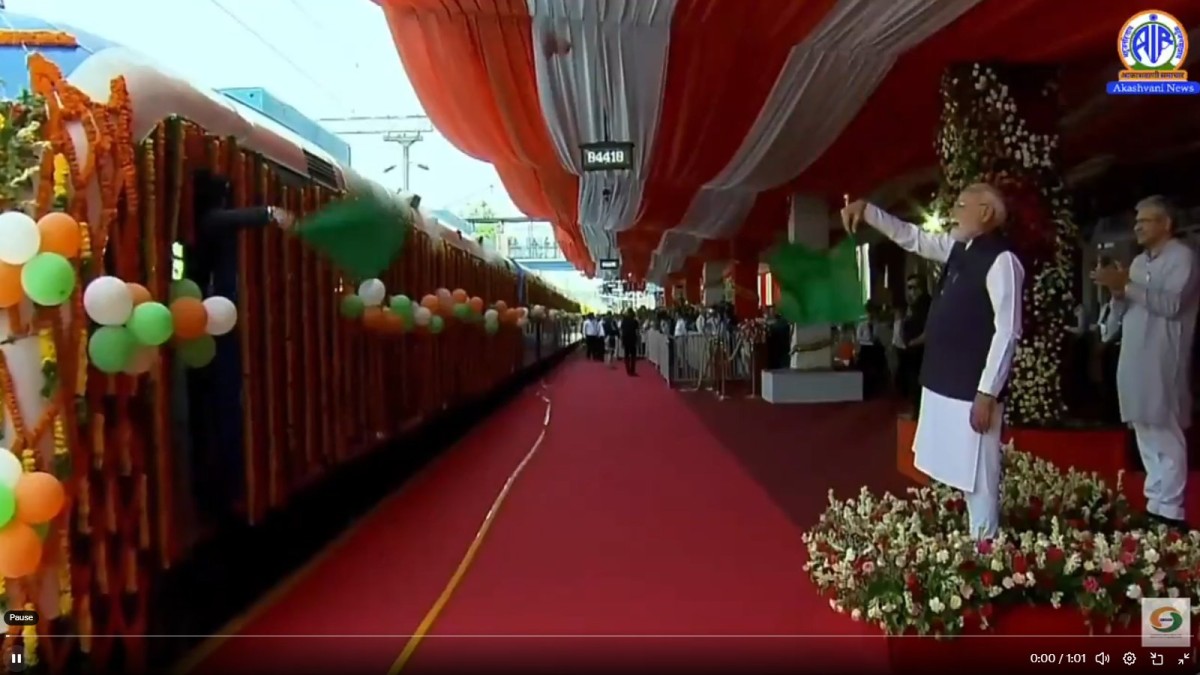
The prime minister also flagged off the Amritsar (Chheharta)-Varanasi Sant Ravidas Express, establishing a direct rail link between two revered spiritual and cultural centres.

PM Modi reached Jalandhar after unveiling projects in Chandigarh and Haryana’s Jind where he flagged off India’s first hydrogen-powered train.This is his second visit to Jalandhar after he visited the Dera Sachkhand Ballan in February this year.

The launch of the first Hydrogen- powered train marks an important step towards the adoption of clean and sustainable mobility in the railway sector. Designed, engineered and integrated in India, the train has been developed using indigenous technology, reflecting the country’s growing capabilities in advanced railway engineering.

With an operational speed of 75 kilometer per hour on the Jind–Sonipat section and a design speed of 110 kilometer per hour, the train is not only safer but also faster on this 89 kilometer section.

PM Modi’s visit is being seen as political outreach ahead of the 2027 Punjab Assembly polls, which the BJP is preparing to fight on its own.

The prime minister inaugurated 75 redeveloped railway stations in 20 states under the Amrit Bharat Station Scheme. Modern, passenger-friendly facilities have been added to the stations, which have been redeveloped at about Rs 1,570 crore.

Four among them are in Punjab: Jalandhar Cantonment, S A S Nagar (Mohali), Sri Muktsar Sahib and Sri Anandpur Sahib railway stations. Elements reflecting local culture, heritage and architecture have been incorporated at the stations.

PM Modi also inaugurated the Daulatpur Chowk-Kartoli new rail line, constructed at about Rs 830 crore as part of the Nangal Dam-Talwara-Mukerian New Rail Line Project.

This project will significantly strengthen rail connectivity between Punjab and Himachal Pradesh, benefiting the districts of Hoshiarpur and Una, officials said.

The new rail line will provide connectivity to important religious destinations such as Shri Anandpur Sahib and Maa Chintpurni Temple, while enhancing access to remote areas by providing passengers with a faster, safer and more reliable mode of transportation, they said.

PM Modi also flagged off the Kartoli-Ambala train service, which will improve connectivity across Punjab, Haryana and Himachal Pradesh.

He also flagged off the Sant Ravidas Express, establishing a direct rail link between Amritsar and Varanasi. After arriving in Jalandhar, Modi was also seen with Sachkhand Ballan Dera chief Niranjan Dass at the Jalandhar Cantt railway station.

It has been the major demand of the Ravidassia community in Punjab for a direct train service ahead of Guru Ravidas’s 650th Parkash Purab celebrations at his birthplace Seer Govardhanpur in Varanasi.

On February 1, Modi visited the Dera Sachkhand Ballan, which it is the largest dera of the Ravidassia community in Punjab.

The PM also inaugurated and laid the foundation stone of national highway projects worth over Rs 3,070 crore. He inaugurated the 30.9-km-long ‘Package 6’ of the four-lane greenfield Delhi-Amritsar-Katra Expressway.

The section will facilitate easier and faster travel, particularly for heavy vehicles, while reducing fuel consumption and vehicle operating costs, officials said. PM Modi also laid the foundation stone for the development of the 25.2-km-long six-lane greenfield Southern Ludhiana Bypass.

The project will reduce travel distance and time between Ludhiana and Bathinda, while also improving connectivity to other major economic centres.

Chabahar’s Shahid Beheshti terminal unharmed: India after US bombs port

NEW DELHI: India on Friday said the Shahid Beheshti terminal at Iran’s Chabahar port has not suffered any damage in the recent US strikes on the key maritime gateway. The clarification came after US officials acknowledged that Chabahar was hit this week as part of Washington’s renewed military campaign against Iran.

Chabahar, which is being developed by India and Iran to boost connectivity and trade, is also central to efforts by both countries to make it part of the International North-South Transport Corridor. India said it was in touch with relevant stakeholders on the way forward after a US sanctions waiver for Chabahar ended in April.

Responding to a question on the US attacks on the port, External Affairs Ministry spokesperson Randhir Jaiswal said, “There was a waiver which was given by America and that waiver got over some time back. Post that, we have been in discussion with relevant stakeholders as to how to take this particular issue forward.”

He added, “On the question of it being attacked, yes, we have seen some reports in that regard, but we can also tell you that the terminal itself did not face any damage.”

Chabahar has two terminals, Shahid Beheshti and Shahid Kalantari, and India was operating the Shahid Beheshti terminal. Jaiswal also reiterated India’s position on the ongoing hostilities in West Asia, saying civilian infrastructure should not be targeted under any circumstances.

The port gives India direct access to Afghanistan by bypassing Pakistan, which does not allow India land transit routes. It also strengthens India’s trade access and reduces dependence on traditional maritime chokepoints.

The 7,200-km International North-South Transport Corridor is a multi-mode freight route connecting India, Iran, Afghanistan, Armenia, Azerbaijan, Russia, Central Asia and Europe, with Chabahar seen as an important part of that wider connectivity plan.

US strikes hit Iran’s Chabahar maritime control tower

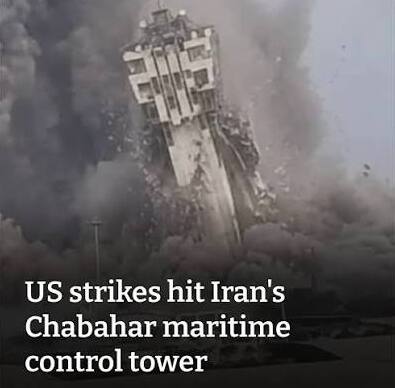
TEHRAN: At least 38 people have been killed and more than 400 others injured in US strikes across several Iranian provinces, Iran’s Health Ministry said on Friday, stating that the attacks targeted civilian infrastructure, including bridges, power facilities and the maritime control tower at Chabahar’s Shahid Kalantari Port.

According to Iranian state media Press TV, the strikes carried out from late Thursday into early Friday affected areas in the Hormozgan, Bushehr, Sistan and Baluchestan, Khuzestan and Lorestan provinces.

Iran’s Health Ministry said the casualties included three women and one person below the age of 18, while 47 injured people remain hospitalised.

The maritime control tower at Shahid Kalantari Port in Chabahar was also destroyed in the strikes. However, the port’s berths, cargo-handling facilities and other operational infrastructure remained intact, with no casualties reported at the site, as reported by Press TV.

US Central Command (CENTCOM) on Friday (local time) confirmed that it has “successfully destroyed” the surveillance tower at Iran’s Shahid Kalantari Port in Chabahar, saying the facility formed part of a maritime surveillance network used by Iran’s Islamic Revolutionary Guard Corps (IRGC) to monitor commercial shipping in the Gulf of Oman, particularly through the Strait of Hormuz.

Iranian news agency IRNA said technical and operational teams began assessing the damage, securing the area and reviewing steps to resume port activities. Cargo loading and unloading operations are expected to restart after safety checks are completed, it added.
Meanwhile, authorities in Hormozgan province reported major damage after strikes hit several locations, including six bridges in Khamir County. The Hormozgan Governor’s Office said seven people were killed and nine others injured in the attacks.

Officials said the strikes affected transport links connecting Bandar Abbas, Bandar Khamir and Lar, while emergency teams worked to restore movement through alternative routes, Press TV reported.

Iranian officials also reported casualties in Bandar Abbas, saying one person was killed and eight others injured after a strike hit a residential area. Separately, a railway branch station in the city was damaged, leaving two people injured, according to provincial authorities, as reported by Press TV.

In Bushehr province, Governor Mohammad Mozaffari said two strikes were reported within hours, injuring one person.

In Khuzestan province, Deputy Governor Valiollah Hayati said US forces targeted areas around Ahvaz, with authorities assessing the extent of damage. Iranian officials had earlier alleged that strikes near Ahvaz forced the temporary evacuation of Shahid Baghaei Hospital, which specialises in cancer treatment.

In western Iran’s Lorestan province, Deputy Governor Saeed Pourali said a strike was reported in the Veysian district of Chegeni County.

The developments came after US Central Command (CENTCOM) said it had carried out multiple rounds of strikes against Iran, targeting military capabilities, including coastal surveillance systems, air defence sites, logistics infrastructure and maritime assets.

Iranian authorities have accused the United States of targeting civilian infrastructure, while Washington has said its operations are aimed at degrading Iranian military capabilities and responding to threats against regional security.

Iran has also announced retaliatory strikes against US military assets in the region, claiming attacks on American positions in Bahrain, Kuwait, Syria and Oman. (ANI)