Home Blog Page 230

Mumbai-Vadodara Expressway to open on August 31

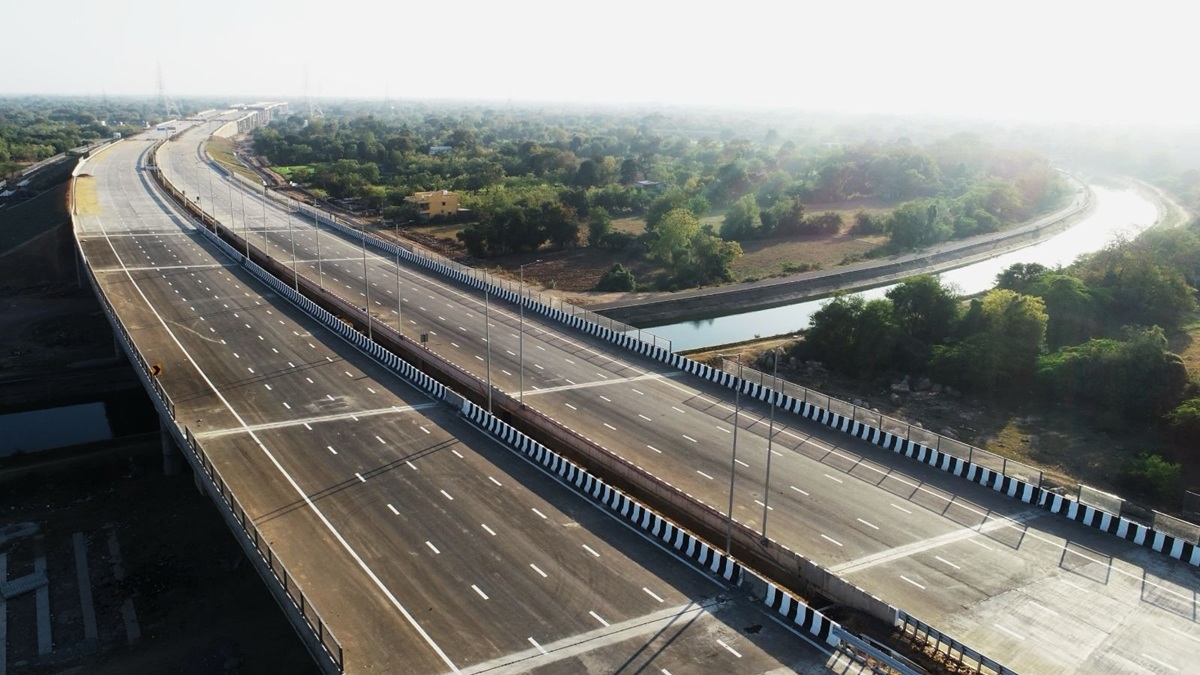
MUMBAI : The Mumbai-Vadodara section of the Delhi-Mumbai Expressway is expected to be opened for the public on August 31, reducing travel time between the two cities from 8 hours to just 4 hours.

Maharashtra Chief Minister Shri Devendra Fadnavis said, “The entire stretch in Maharashtra is planned to be opened for traffic by August 31, 2026.”

The 157 km Mumbai-Vadodara section is being built at a cost of approximately Rs 24,000 crore. Fadnavis revealed that five of the seven construction packages on the stretch had been completed and were ready for traffic.

The Delhi-Mumbai Expressway is an 8-lane, 1,400 km-long access-controlled highway that connects five states: Haryana, Rajasthan, Madhya Pradesh, Gujarat, and Maharashtra.

It provides direct connectivity for the industrial hubs in Delhi-NCR, Gujarat, and Maharashtra to the Jawaharlal Nehru Port Authority (JNPA).

India plans 7 new bullet train routes: Key destinations, stations, length, travel time & more

India is preparing to expand its bullet train network in a major way. The National High Speed Rail Corporation (NHSRCL) has invited global bids for seven new high-speed rail corridors covering around 4,000 kilometres, marking a major step in the country’s high-speed rail plans, according to a report by Money control.

The new corridors will use common designs for bridges, tunnels, elevated tracks and stations.

They will also be built using Indian engineering standards and designed for speeds of 350 kmph.

 The government sees the project as an important part of its ‘Make in India’ initiative to strengthen railway infrastructure

Four project reports approved

Detailed Project Reports (DPRs) have already been approved for four of the seven proposed corridors.

Survey work is currently underway for the remaining three routes. Route inspections and technical ground investigations are also being carried out to help keep the projects on schedule.

Jewar Airport to get underground bullet train station

The proposed Delhi-Varanasi bullet train corridor is one of the seven planned routes.

One of the biggest features of the project will be an underground bullet train station beneath Noida’s Jewar Airport. The station will be connected to the main rail network through a 9.4-kilometre tunnel, making it one of the project’s biggest engineering challenges.

Mumbai-Ahmedabad project to connect 12 stations

Work is also progressing on the Mumbai-Ahmedabad Bullet Train project.

The 508-kilometre high-speed rail line will have 12 stations and connect major cities in Maharashtra and Gujarat.

The project is expected to boost urban development around these stations and create new investment opportunities. Better connectivity in cities such as Surat and Vadodara could also help the real estate market and increase property prices in the future.

Travel times to shrink sharply
The proposed high-speed rail network is expected to significantly cut travel time between major cities.

According to the estimates:

Mumbai to Ahmedabad: 1 hour 57 minutes
Mumbai to Pune: 48 minutes
Bengaluru to Chennai: 73 minutes
Bengaluru to Hyderabad: 2 hours 10 minutes
Pune to Hyderabad: 2 hours 8 minutes
Delhi to Lucknow: 2 hours
Delhi to Varanasi: 3 hours 15 minutes
More growth expected along the route

The bullet train project is also expected to support development in areas such as Boisar, Vapi and Ahmedabad.

Improved connectivity could encourage the growth of industries, logistics hubs, warehouses and new housing projects in these areas.

In Ahmedabad, Sabarmati station will become a major transport hub linking the bullet train, metro and the railway network. This is expected to benefit businesses, hotels and the real estate sector in the surrounding area.

Source : India Today

India marks largest-ever participation at North America’s Summer Fancy Food Show 2026 with inauguration of India Pavilion

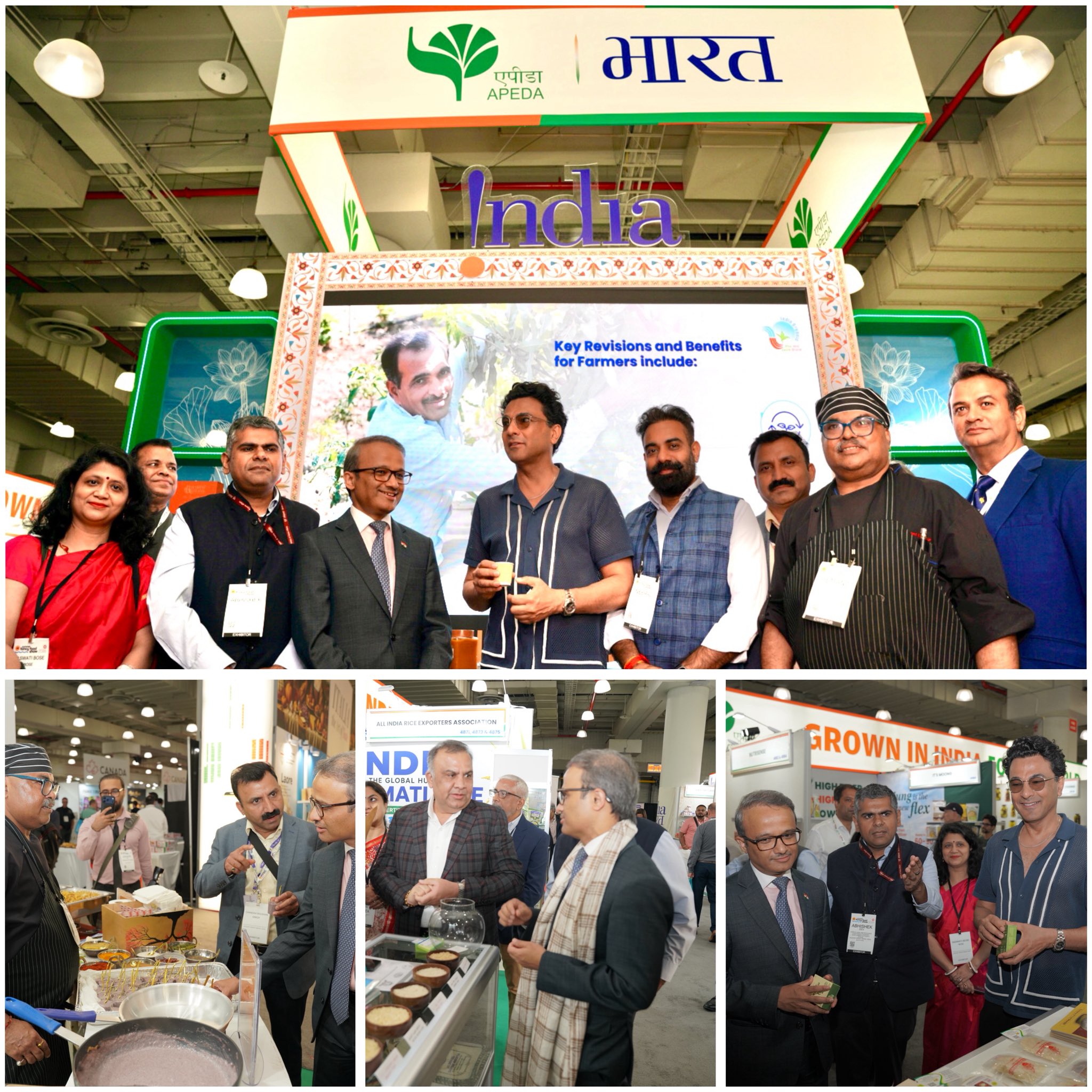
NEW YORK : The India Pavilion at Summer Fancy Food 2026, marking India’s largest-ever participation at North America’s premier specialty food exhibition, was jointly inaugurated by Consul General of India in New York Mr. Binaya Srikanta Pradhan and internationally acclaimed chef, author and TIME100 Honoree Chef Vikas Khanna at the Jacob K. Javits Convention Center on June 28, 2026. The pavilion brings together hundreds of Indian food brands, exporters and innovators under one roof.

The India Pavilion, jointly showcased by the Agricultural and Processed Food Products Export Development Authority (APEDA) and the India Trade Promotion Organisation (ITPO) under the Department of Commerce, Government of India, celebrates the growing global demand for Indian food products while showcasing the richness, diversity and quality of India’s agricultural and processed food industry to buyers, retailers and distributors from across the world.

India’s largest-ever showcase at the Summer Fancy Food Show features exporters across a diverse range of categories, including basmati rice, spices, ready-to-eat foods, beverages, organic products, frozen foods, snacks and value-added agricultural products, reinforcing the country’s position as one of the world’s fastest-growing food export destinations.

A key attraction at the pavilion is the Indian Mango Showcase, featuring six premium export varieties alongside innovative mango-based culinary creations. The display highlights India’s rich diversity of mangoes and reinforces the country’s position as the world’s leading producer of the fruit.

Visitors are also experiencing a curated Basmati Culinary Showcase, where a range of dishes prepared using premium Indian Basmati rice demonstrates its versatility across international cuisines. Michelin-starred Chef Hemant Mathur is curating a sampling menu of Indian dishes every day for visitors.

The showcase highlights the unique aroma, texture and quality that have made Indian Basmati rice a preferred choice in global markets. As global demand for authentic Indian food continues to accelerate, the India Pavilion stands as a powerful symbol of India’s journey from its farms and factories to dining tables across the globe, driven by the collective efforts of millions across the agricultural and food value chain.

Managing Director, ITPO Dr. Neeraj Kharwal also expressed his happiness at the inauguration of the largest-ever India Pavilion at Summer Fancy Food 2026 and said the collaboration between ITPO and APEDA would be highly beneficial for India’s food exports.

Addressing the gathering, Consul General of India in New York Mr. Binaya Srikanta Pradhan described the pavilion as a landmark initiative that would further strengthen India’s food exports and brand presence in the United States. He said the India Pavilion at the Summer Fancy Food Show is a benchmark initiative for Indian brands looking to expand in the U.S. market and reflects the confidence, capability and quality of India’s food industry. He added that the presence of Chef Vikas Khanna at the inauguration was significant, as he has been one of India’s greatest ambassadors of soft power for nearly three decades, carrying India’s culture, traditions and values to the West through the universal language of food.

The inauguration comes at a defining time for India’s food exports. According to trade estimates, the North American market for Indian consumer packaged food products is expected to represent an estimated USD 30-50 billion opportunity over the coming decade. The growth is being driven by increasing consumer demand for authentic Indian flavours, premium ingredients and trusted food brands.

Speaking during the inauguration, Chef Vikas Khanna said every product on display represents the dreams and livelihoods of millions of Indians working across the country’s food ecosystem. He said the industry is not just about products on shelves, but also about the millions of farmers, traders, manufacturers, factory workers, exporters, distributors and retailers behind every grain, spice and package. He added that every opportunity created for Indian food creates opportunities for countless families across the supply chain and that the success belongs to every farmer, trader, manufacturer and worker who make these products possible.

Welcoming international buyers to the India Pavilion, Chairman, APEDA Mr. Abhishek Dev highlighted the significance of India’s record participation at the exhibition and its growing leadership in global food exports. He said the Summer Fancy Food Show provides an important platform for Indian food brands to showcase their quality, innovation and diversity to the global marketplace. He added that the participation of more than 70 Indian exhibitors reflects the confidence of Indian exporters and the growing trust that consumers in premium international markets place in products from India.

MPEDA to organise Second National Seafood Skill Olympiad during Seafood Expo Bharat 2026

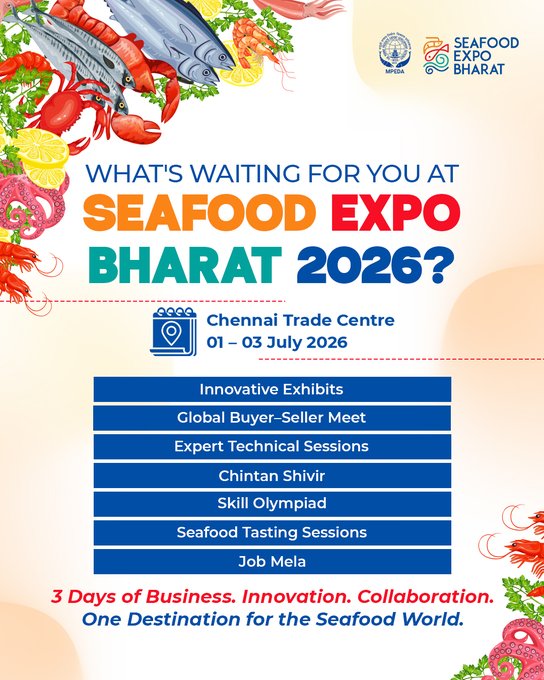
NEW DELHI : The Marine Products Export Development Authority (MPEDA), under the Ministry of Commerce & Industry, will organise the second edition of the National Seafood Skill Olympiad from July 1 to 3, 2026, as part of Seafood Expo Bharat (SEB) 2026. The Olympiad will bring together skilled seafood processing professionals from across the country to showcase their expertise in preparing value-added seafood products.

The competition aims to promote innovation, enhance quality standards, recognise industry talent, and strengthen workforce development in India’s seafood processing sector, while encouraging greater value addition in marine exports.

As a precursor to the second edition of the Skill Olympiad, MPEDA conducted an extensive nationwide capacity-building programme comprising 50 Seafood Value Addition Training Programmes. More than 2,500 seafood processing workers and professionals were trained in the preparation of value-added marine products that are in high demand in international markets.

The training covered products such as breaded squid rings, Nobashi (stretched shrimp), breaded butterfly shrimp, cooked Peeled, Deveined, Tail-On (PDTO) shrimp, marinated shrimp skewers and fish fillets. Preliminary-level skill competitions were conducted following each training programme, and the best performers were shortlisted.

The competition subsequently progressed through State-Level Skill Olympiads conducted across the coastal states, followed by Regional Skill Olympiads held in Mumbai for the West Coast and Vijayawada for the East Coast. The top 10 performers from these regional competitions have qualified for the National Seafood Skill Olympiad Grand Finale.

During the Grand Finale, the finalists will demonstrate their technical expertise before an eminent jury comprising experts from the seafood processing industry and academia. The winners will be presented with medals, certificates and cash prizes of ₹1,00,000 for the first prize, ₹75,000 for the second prize, ₹50,000 for the third prize and ₹25,000 for the fourth prize (consolation).

The event will be attended by senior officials from the Central and State Governments, seafood exporters, international buyers, industry leaders, technical experts and delegates participating in Seafood Expo Bharat 2026.

The award-winning value-added seafood products prepared by the finalists will be showcased at the Skill Olympiad Pavilion. The pavilion will also feature live demonstrations and tasting sessions of export-oriented value-added seafood products developed through MPEDA’s training programmes.

MPEDA Chairman Shri P. Jawahar said that the National Seafood Skill Olympiad reflects MPEDA’s commitment to fostering excellence across the seafood value chain. He said that by recognising and promoting skilled professionals, the initiative is strengthening the industry’s workforce and further enhancing India’s position as a trusted global supplier of high-quality seafood.

He further stated that investment in human capital is essential for sustaining India’s leadership in the blue economy and that the flagship initiative would help create a highly skilled workforce capable of meeting the evolving demands of international markets.

Seafood Expo Bharat 2026, India’s premier international seafood exposition will feature more than 325 exhibition stalls across dedicated segments covering seafood processing, aquaculture, packaging machinery, logistics and government pavilions.

Over the three-day event, nearly 5,000 domestic and international stakeholders are expected to participate in high-level business-to-business meetings, engage with stakeholders across retail and aquaculture value chains, and attend five parallel technical sessions focusing on innovation, sustainability and emerging industry trends.

The exposition will also host major workforce and culinary events, including the National Seafood Skill Olympiad and the Seafood Culinary Olympiad, providing a comprehensive platform for industry stakeholders to expand business opportunities, promote innovation and forge strategic partnerships across the global seafood value chain.

India’s seafood exports reached a record USD 8.45 billion during FY 2025-26, reaffirming the country’s position as one of the world’s leading seafood exporting nations. The country currently has 670 approved seafood processing units with a combined processing capacity exceeding 40,000 metric tonnes per day. Of these, 127 units manufacture value-added seafood products, contributing nearly 10 per cent (USD 0.84 billion) of India’s total seafood exports.

Recognising the significant growth potential of the value-added seafood segment, India has set an ambitious target of increasing the share of value-added products to 25 per cent of total seafood exports by 2030.

To achieve this objective, MPEDA has been implementing a range of schemes and capacity-building initiatives to promote product innovation, strengthen processing and value addition infrastructure, develop a skilled workforce, and enhance awareness of quality standards across the seafood processing sector.

Asyad Group and CMA CGM Group initiate a strategic partnership to enhance maritime connectivity and new regional trade corridors through a multipurpose logistics terminal in Oman

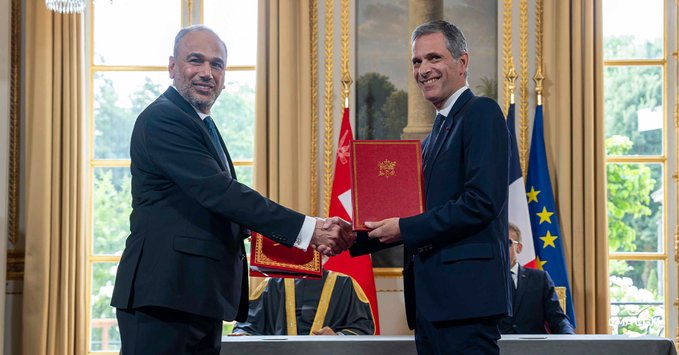
OMAN: Asyad Group, Oman’s global integrated logistics provider, and CMA CGM Group, a global player in sea, land, air and logistics solutions, headquartered in France, have signed a Framework Agreement to develop, manage, and operate a multipurpose logistics terminal in Sohar.

The agreement was signed during the official visit of His Majesty Sultan Haitham bin Tarik to France. It reflects the growing economic cooperation between the two countries.

This partnership establishes a long-term strategic collaboration between the two organizations, combining their capabilities and expertise to enhance Oman’s ports as key global trade hubs, strengthen operational efficiency, and deliver superior service to customers across the region. The partnership provides the framework for the development of a USD 400 million new multipurpose logistics terminal in Sohar, which will enhance advanced integrated logistics services, and supply chain solutions and will contribute to reinforcing new regional and international trade corridors, increasing cargo handling volumes, and solidifying Omani ports’ connections to global shipping networks and key international markets.

Eng. Abdulrahman Al Hatmi, Group CEO of Asyad Group, commented: “This partnership reflects Asyad Group’s vision of building strategic collaborations with major global companies to enhance the commercial attractiveness of Omani ports and maximize the economic value of their assets. This cooperation will open new horizons for attracting trade flows and quality investments to ports, and free and economic zones, and strengthening Oman’s position in global supply chains, in support of the Sultanate’s objectives to establish its position as a pivotal center for trade and logistics services at the international level.”

Rodolphe Saadé, Chairman and CEO of CMA CGM Group, said: “This partnership with Asyad Group marks an important step in the development of our logistics and port activities in the Gulf. By developing a new logistics terminal at Sohar, we will strengthen regional connectivity while securing reliable inland access to key trade corridors. It will ensure greater resilience and efficiency for our customers’ supply chains. It also reflects our confidence in Oman’s long-term vision and our commitment to strengthening its position as a strategic gateway connecting the Gulf to global markets.”

Asyad Group operates an integrated logistics ecosystem spanning more than 76 cities in 24 countries worldwide. This ecosystem is supported by a diverse maritime fleet of over 100 vessels, with services extending to more than 90 destinations globally and connecting over 200 commercial ports. In addition, Asyad operates and manages a number of ports, free and economic zones, reflecting the accelerated growth of its business portfolio and the expansion of its logistics services globally. This reinforces Oman’s vision and position as a bridge connecting East and West. Asyad also manages port operations, freezones, and mega logistics infrastructure projects. Ranked among the top logistics companies in the MENA region by Forbes, Asyad Group is committed to delivering excellence and innovation, connecting global markets through its exceptional infrastructure and strategic international partnerships.

The CMA CGM Group is a global player in sea, land, air and logistics solutions, true to its corporate Purpose: We imagine better ways to serve a world in motion. Present in 177 countries, it employs 160,000 people, including nearly 6,000 in Marseille, where its head office is located. As the world’s third-largest shipping company, CMA CGM serves more than 420 ports across five continents with a fleet of over 700 vessels. In 2025, CMA CGM carried more than 24 million twenty-foot equivalent containers (TEUs). As an international port operator, the Group holds interests in 65 terminals worldwide. Its subsidiary, CEVA Logistics, one of the top five global players, operates 1,000 warehouses and handled 15 million shipments in 2025. The Group’s air division operates a fleet of cargo aircraft under the CMA CGM AIR CARGO and Air Belgium brands.

Source: CMA CGM

Global economic fragmentation could slash USD 6.9 trillion from world GDP: WEF

NEW DELHI: As 2025-26 marks a turning point from globalization to geo-economic fragmentation, a full East-West economic decoupling could cost the global economy up to USD 6.9 trillion in GDP, according to a report by the World Economic Forum (WEF).

As per WEF, “an increasingly likely escalation could raise the economic cost to USD 6.9 trillion,” which could severely impact emerging markets and developing economies (EMDEs) due to reduced access to capital.

The report notes that fragmentation is already reducing gross domestic product (GDP) growth by between USD 213 billion and USD 307 billion while pushing inflation by 0.2-0.3 percentage points (pp). At the same time, countries are increasingly adopting unexpected trade and financial barriers, amplifying risks for businesses and economies worldwide.

It further noted that the US has sought to reshape the global trade and financial system through tariffs and other restrictions, particularly targeting China. Beijing retaliated by leveraging its dominance in critical minerals supply chains and redirecting exports, helping it post a record trade surplus in 2025. Washington also extended tariffs and restrictions to allied countries, prompting retaliation and efforts to diversify geo-economic partnerships.

“In 2025 and 2026, severe swings in policy and enforcement by countries reduced certainty and affected decisions on investing and hiring,” the report noted.

According to WEF, rising nationalism, geopolitical tensions and declining institutional legitimacy have weakened the effectiveness of multilateral institutions such as the International Monetary Fund (IMF), the World Bank, and the World Trade Organization (WTO). With the WTO’s dispute-settlement role diminished, countries are increasingly relying on bilateral agreements and local currency settlements, a shift that could reduce economic efficiency and heighten financial stability risks.

The report also warns that pressure on central bank independence is increasing as governments attempt to influence monetary policy through rhetoric and policy actions.

The WEF estimates that existing trade and financial policies are already slowing growth and raising inflation, although the impact differs across economies. For example, “US output growth is expected to be 0.4-0.6 pp lower than projected, whereas some Neutral countries are less affected, including Indonesia, with a projected 0.1 pp hit to output growth,” it said.

The report further cautions that governments may increasingly weaponize control over key economic chokepoints. It warns that further economic fragmentation would weaken growth and fuel inflation across all regions. “In the worst-case scenario, economic growth could fall by up to 6.4 percentage points, while inflation could rise by as much as 6.1 percentage points,” it said.

Furthermore, highlighting the sharp escalation of the 2025 US-China trade conflict, which briefly saw tariffs exceed 100 per cent, WEF stressed the world economy needs to prepare for extreme scenarios.

JSI Alliance delivers safe and efficient heavy-lift installation for Dahej berth expansion

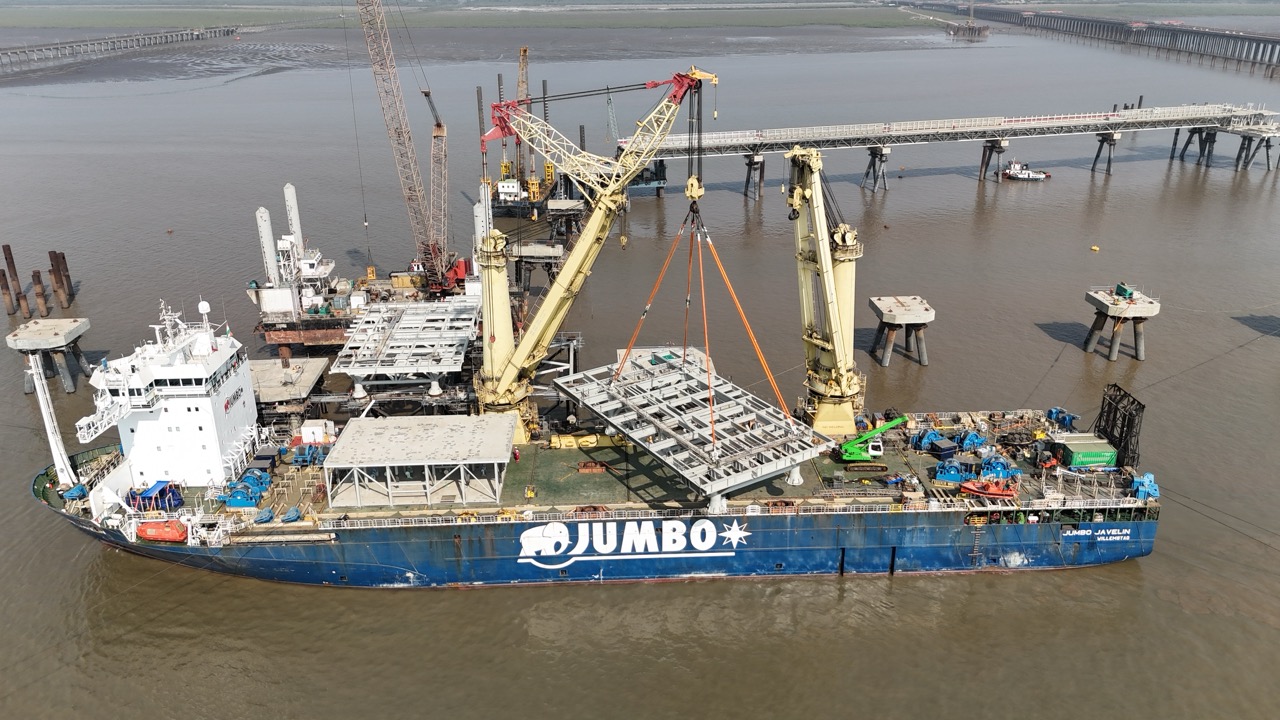
SCHIEDAM: The JSI Alliance is proud to have successfully completed a major project in India for client Afcons Infrastructure Limited. Afcons was contracted to construct a new liquid cargo berth for Gujarat Chemical Port Ltd. (GCPL). The JSI Alliance was contracted for the execution of critical heavy lifting operations for the development.

Complex and challenging environment

The project scope was complex, requiring extensive heavy-lift capabilities for the installation of eight jackets and fifteen berthing dolphins weighing between 500 and 600 t, at an outreach of 10 m.

Work took place in an extremely challenging environment. The location is subject to a 10 m tidal rise, resulting in currents of up to 5 kn. To compound matters, the seabed is comprised of sand, rendering many conventional mooring solutions unsuitable.

A further factor was that the location was operational at the time of installation – all activities had to be undertaken without interrupting two live, frequently used berths. This resulted in severe space restrictions, leading to further mooring complexities.

Tailored solution

Calling upon the expertise of a wide range of internal disciplines, the JSI Alliance developed a solution fully aligned with the requirements of the project. The Alliance mobilised the heavy-lift vessel (HLV) Jumbo Javelin.

The heavy-lift vessel enabled safe and efficient execution by providing a single platform for the transport and installation of prefabricated structures. Mobilisation commenced on 3 November and took place over a period of fifteen days. During this time, the JSI Alliance equipped the Jumbo Javelin with a flyjib that enabled her to perform the necessary lifting scope.

Heavy-duty mooring solution

The vessel was also outfitted with an eight-point mooring spread tailored to the seabed and tidal conditions of the project location. Creating sufficient holding force in such a

restricted area required utilisation of 17 t anchors and 64 and 52 mm mooring lines with a Minimum Breaking Load of approximately 300 t per line.

The Jumbo Javelin was equipped with custom-made 250 t winches. It was determined that eight, in place of four, winches should be installed to provide a back-up wire, ensuring safety and redundancy.

Significant forces

To absorb the significant forces involved, it was necessary to strengthen the vessel with additional steel. Installation of the spread called upon anchor handling support vessels with sufficient capacity for the heavy-duty components employed. The vessels were required to perform the mooring installation during a four-hour tidal window, when the current was at its lowest speed.

Once connected to the mooring spread, the Jumbo Javelin remained in position for several days at a time, thereby avoiding interruption to berthing operations.

Efficient demobilisation and discharge

The first loadout commenced on 3 December at Dighi Port. In total, the Jumbo Javelin made six voyages. The last item was installed on 14 March, before the vessel departed for Dighi Port for demobilisation, which took place over just seven and a half days. Following this, the Jumbo Javelin sailed on to Singapore to return equipment to suppliers. Discharge was completed in two days and, on 6 April, the project was fully completed.

Robert de Waard, Project Manager at the JSI Alliance, said, “The successful completion of this project is a testament to the teamwork, expertise and commitment of everyone involved. By drawing on the shared resources and capabilities of the JSI Alliance, we were able to develop a solution tailored to the complex site conditions and deliver the project safely and efficiently.

“I would like to thank all those involved for their efforts, including my colleagues from all departments, as well as our suppliers, including Franklin Offshore International and Mooreast Asia, for their support with the anchor handling equipment. I would also like to extend my appreciation to Seacontractors, who supported Afcons with the provision of two vessels for anchor handling and contributed to the successful execution of the project.

“Of course, we are also extremely grateful to Afcons for placing its trust in the JSI Alliance. Our two teams have worked together closely throughout the project, with Afcons being involved, and providing expert guidance, in all aspects. We have enjoyed the collaboration and look forward to working together again in the future.”

Hazira Port Crane success for Steelpaint’s New H STELCATEC-L Repair Coat System

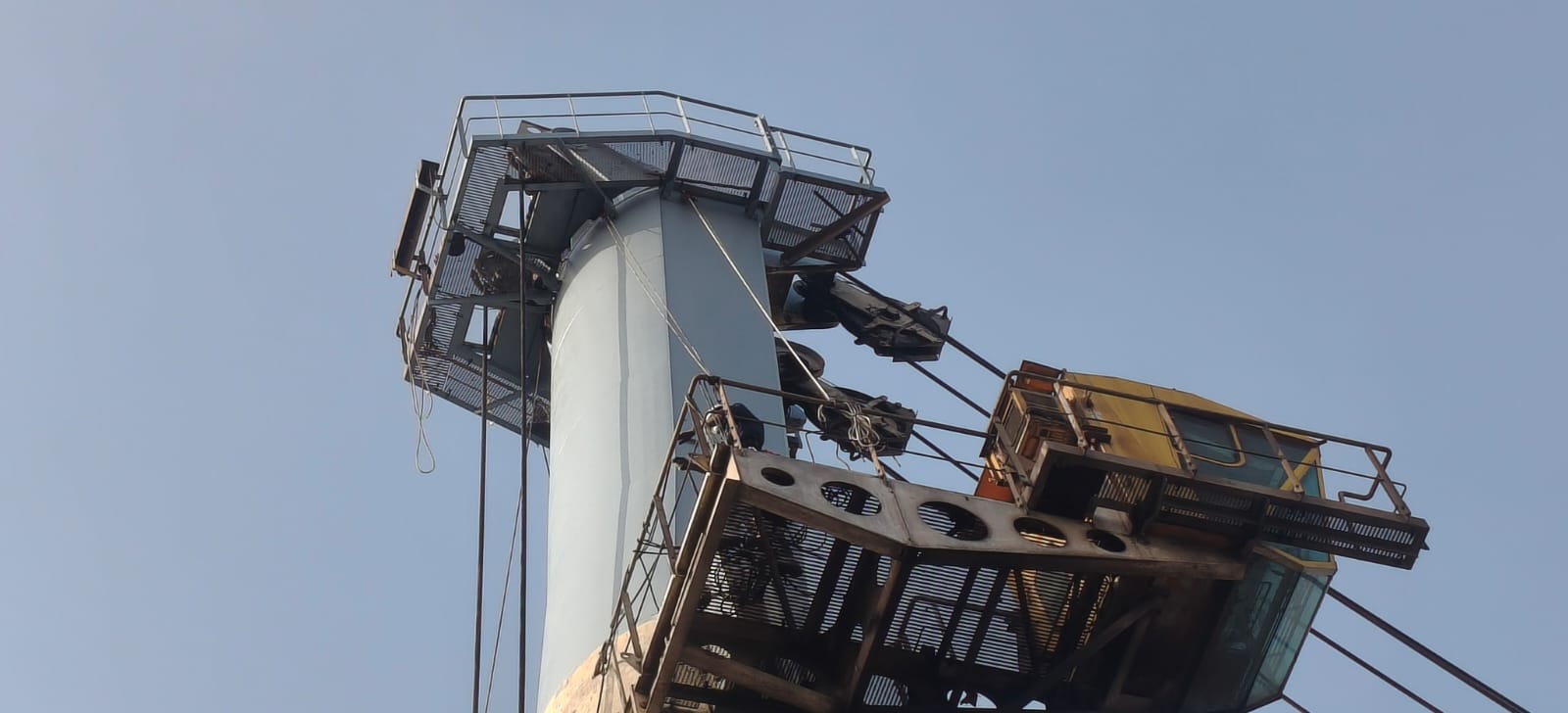
HAZIRA: German corrosion protection specialist Steelpaint has successfully completed a technical field trial of its new Stelcatec-L repair coating on a Liebherr LHM 500 mobile harbour crane operated by ArcelorMittal Nippon Steel.

The test programme at the Hazira Port in Surat, India – made possible through strategic collaboration and support from Steelpaint’s local partner Kaptel Overseas – was carried out on a crane that operates in severe C5 maritime conditions characterised by high humidity and elevated salinity. Kaptel’s help was instrumental in ensuring the seamless completion of the project.

The crane’s surfaces showed significant deterioration and poor coating adhesion of the intermediate and top coating layers and required the removal of damaged and poorly adhering coating layers with surface preparation to Sa2/St3 standards.

Water quality was controlled to keep total dissolved salts below 60ppm, and an alkaline detergent solution was applied to eliminate extensive oil contamination before high-pressure water jetting.

Areas taken back to bare steel received a two-coat system of Stelcatec-L-PR (primer) and  Stelcatec-L-TC (topcoat) applied to total dry film thickness of 280µm. On areas with well-adhering residual primer, the Stelcatec-L-TC topcoat was applied directly  over the existing layer (after roughening), achieving a combined system of 130 to 140µm.

Dmitry Gromilin, Steelpaint’s Technical Service Manager, said the purpose of the project was not simply to deliver advanced corrosion protection, but to validate how the Stelcatec-L system performs under real operating conditions in a severe marine environment, while minimising the lifetime remedial coatings costs for port cranes.

“One of the most striking performance characteristics is the system’s rapid recoat capability,” said Gromilin. “The second coat of Stelpant-1C-PU-Stelcatec-L-TC was applied just 25 minutes after the first, without any damage to the underlying layer.”

Average DFT after two coats was measured at 208.6µm. Pull-off adhesion testing of the completed coating system yielded results of 8.19 MPa and 8.62 MPa, both deemed satisfactory. This is indicative of a well-bonded, robust system.

The project highlighted the practical application advantages of the new Stelcatec-L system in high-temperature field conditions. This included extensive verification and quality controls, salinity testing, DFT measurements and adhesion testing in accordance with recognised ISO standards.

“The combination of controlled surface preparation, rapid curing and strong adhesion performance demonstrated that the technology is well suited to crane maintenance where downtime and environmental exposure are critical considerations,” he said.

Stelcatec-L is Steelpaint’s new moisture-cure polyurethane coating developed for heavy-duty corrosion protection. The system is designed to allow fast overcoating intervals, application at elevated film thicknesses and operation across a broad environmental window.

Steelpaint Director Frank Müller said: “This was a practical repair project carried out under site conditions rather than a demonstration under controlled circumstances. The purpose was to understand how the Stelcatec-L coating behaves where there are existing coatings, heavy contaminations and environmental pressures that maintenance teams deal with every day.

“The work showed that where an existing system still has integrity, there can be value in targeted repair supported by inspection and testing instead of defaulting immediately to complete removal. Stelcatec-L simplifies application, shortens return-to-service timeframes and supports long-term infrastructure resilience in corrosive environments.”

The trial application was completed on the exterior section of the crane’s right rear outrigger and will remain under observation as part of Steelpaint’s ongoing evaluation of coating performance in heavy industrial and port environments.

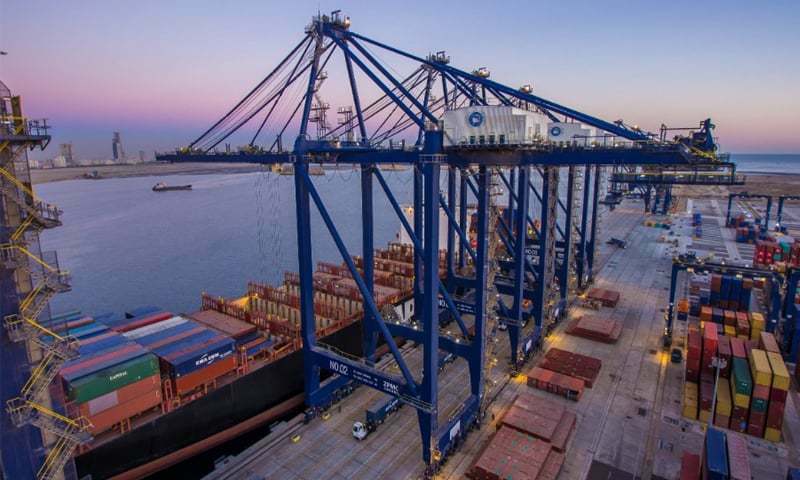
Karachi port handles record 54.7 million tons of cargo in FY26 amid Iran war

ISLAMABAD : The Karachi Port Trust (KPT) handled the highest volume of cargo in its 138-year-old history this fiscal year, state media reported on Sunday, as the US-Iran war in the Middle East rerouted several ships toward Pakistan.

Pakistan saw a surge in port activity after the US-Iran war started in February this year, with several vessels diverting from Gulf transshipment hubs toward KPT, Port Qasim and Gwadar ports in Pakistan.

The Press Information Department (PID) said KPT handled more than 54.685 million metric tons of cargo this fiscal year, surpassing its previous record achieved in 2017-18.

“KPT had surpassed its previous all-time cargo handling record of 54.685 million tons during the current fiscal year,” the PID quoted Maritime Affairs Minister Junaid Anwar Chaudhry as saying.

The minister attributed the achievement to enhanced operational efficiency, effective management and increased port capacity, the PID said.

Chaudhry said the government continued to modernize ports, expand their capacity, strengthen logistics infrastructure and provide facilities in line with international standards, the PID added.

Karachi Port is Pakistan’s largest seaport and handles a substantial share of the country’s seaborne trade. Container volumes are closely watched as an indicator of trade activity and port performance, while the government has been investing in infrastructure upgrades to position Pakistan as a regional logistics and transshipment hub.

The latest milestone comes a week after the KPT said it set a new record for container throughput by handling more than 2.651 million twenty-foot equivalent units (TEUs) in the current fiscal year.

Source : ARAB News

“K” LINE holds DX Technology Presentation

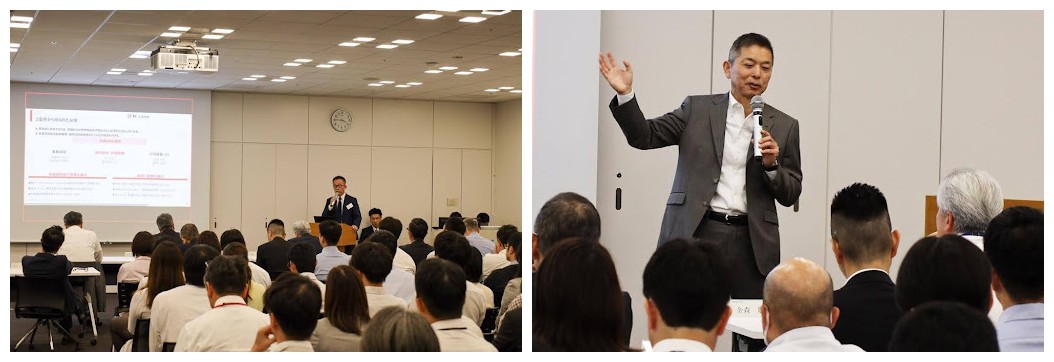
TOKYO: Kawasaki Kisen Kaisha, Ltd. (“K” LINE) held an in-house digital transformation (DX) technology presentation at its head office on May 25 to introduce its latest DX initiatives internally.

This presentation was held with the aim of enhancing understanding and awareness of DX promotion. More than 200 officers and employees attended the event, including 17 members of senior management such as Yukikazu Myochin, Chairperson of the Board, and Takenori Igarashi, President & CEO.

In the first half of the presentation, “K” LINE representatives introduced various ongoing DX initiatives, including initiatives to enhance the cross-organizational utilization of information by developing a data platform, as well as efforts to leverage advanced digital technologies to increase work efficiency and enhance safe vessel operations.

In the second half, guest lecturer Hiroshi Nakatani, Representative Director, Executive Vice President of Kawasaki Heavy Industries, Ltd., spoke about organizational transformation and the promotion of DX. In his lecture, he introduced initiatives to create value by reviewing organizational roles and functions, as well as practical examples of the development of new businesses driven by strengthened cross-departmental collaboration. He also emphasized the importance of promoting flexible DX tailored to on-site realities. Participants recognized the value of integrating both operational and management perspectives.

“K” LINE has been steadily advancing company-wide DX initiatives, including the promotion of data utilization and the expanded use of generative AI. By continuously creating opportunities to share such initiatives internally, “K” LINE will further accelerate company-wide DX efforts and strengthen its business model.