Home Blog Page 229

New COMPETIQ, a live avatar interviewer recruitment platform, launched as merchant shipping faces growing officer recruitment crisis

GLASGOW: COMPETIQ a new live avatar interviewer recruitment platform designed for merchant shipping and the wider maritime industry, has been launched to help employers recruit qualified seafarers faster, while maintaining rigorous standards of safety, verification and competence.

Developed by Glasgow-based maritime technology company The World Yacht, the COMPETIQ platform enables organisations to interview large numbers of candidates simultaneously using AI live avatar interviewers, while automatically verifying identities, checking qualifications and producing consistent candidate assessments within minutes.

COMPETIQ recruitment platform creates a live avatar interviewer that can be tailored by gender, age or ethnicity. After analysing each candidate’s CV and experience, it generates role-specific interview questions, adapts its questioning according to each response and assesses candidates against predefined recruitment criteria. The platform can be configured for roles including masters, deck officers, engineering officers and other seagoing positions.

The system also verifies candidate identity using facial recognition technology and cross-checks professional qualifications and certifications before progressing applicants to the next stage of the recruitment process.

Designed by maritime professionals, including a former ship’s captain, to help employers assess not only whether candidates hold the correct certification, but whether they can demonstrate the practical judgement required for life at sea.

The World Yacht was founded as a superyacht management company 11 years ago by entrepreneur and former ship Captain Vinil Gupta, a Master Mariner with decades of maritime and regulatory experience.

Since then, it has evolved into a maritime technology and innovation business, developing recruitment, training, and operational tools for merchant shipping, yacht management, and the wider maritime sector.

Although the company’s origins are in the superyacht sector, the new COMPETIQ platform draws on Gupta’s seagoing experience and the team’s maritime technology expertise to address one of merchant shipping’s biggest operational challenges: recruiting qualified and competent crew quickly without compromising safety, verification or quality.

Ship owners and operators are often required to recruit across multiple countries and time zones, leaving limited opportunity to conduct lengthy interviews or manually verify every applicant’s identity, qualifications and certifications. At the same time, a growing shortage of skilled seafarers means vacancies must be filled faster than ever, without lowering recruitment standards.

The launch comes as the newly published Seafarer Workforce Report 2026 from BIMCO and the International Chamber of Shipping warns of a growing shortage of STCW-certified officers. The report estimates that the world merchant fleet currently requires 1,088,080 officers, against a supply of 1,048,980, creating a shortage of 39,100 officers in 2026.

The report also forecasts that an additional 113,735 officers will be needed by 2030 to operate the world merchant fleet, with 22,747 officers needing to join the workforce each year. It estimates that 2.57 million seafarers currently serve the global fleet, operating 85,148 merchant ships worldwide.

Since the previous report in 2021, demand for STCW-certified seafarers has increased by 35%, with demand for officers up 23.1% and demand for ratings up 46.3%. The report concludes that recruitment, training and retention will be critical if the industry is to meet future demand.

The report also notes that companies are experiencing the greatest difficulty recruiting engineering officers and deck officers, underscoring the need for faster, more reliable ways to assess qualified candidates.

Following the initial interviews, recruiters receive detailed performance reports together with a recommended shortlist of the strongest candidates, enabling final interviews to be conducted either in person or by video call.

Vinil Gupta, entrepreneur and former ship’s captain, said: “As a ship’s captain, I know there is a big difference between someone who is certified on paper and someone who can make the right decision under pressure. That is the gap this platform has been built to address.

“Maritime recruitment is under huge pressure. Employers need to move faster, but they cannot afford to compromise on competence, safety or trust. COMPETIQ uses AI to help identify the strongest candidates more quickly by testing how they think, how they respond and whether their experience matches the role they are applying for.

“It is not about replacing human judgment. It is about giving recruiters better information before they make that judgment. The platform can interview large numbers of candidates simultaneously across different countries and time zones, verify identity and qualifications, and produce a consistent first-stage assessment, so recruiters can focus their time on the people most likely to be right for the role.

“Too often, recruitment starts with paperwork and certificates. Those are important, but they do not always show whether someone can handle a real operational situation. Because COMPETIQ has been designed by people who understand life at sea, it can ask practical, role-specific questions and assess how candidates respond to them.

“The maritime industry is facing a serious crewing challenge. We need more people, but we also need the right people. AI, used properly, can help the industry recruit faster, more fairly and with greater confidence.”

The company says the COMPETIQ platform has been designed to help maritime employers shorten recruitment times while maintaining robust standards of verification and assessment. It allows experienced recruitment professionals to focus on selecting the best candidates, rather than spending valuable time processing large volumes of applications manually.

The World Yacht says the COMPETIQ could be particularly valuable for employers recruiting across global crew markets, where candidates may be based in different time zones and where speed, consistency and confidence in candidate information are increasingly important.

For more information about The World Yacht’s services and COMPETIQ, visit https://theworldyacht.com/
ClassNK adds world’s first notation to visualize GHG emissions from ship construction

TOKYO: ClassNK has added the world’s first notation, ‘a‑EA (CFP) *¹,’ as a new framework to make initiatives related to greenhouse gas (GHG) emissions during ship construction visible, indicating that the carbon footprint (CFP) generated during ship construction has been calculated and undergone a third‑party verification*².

Shipyards, shipowners, and shipping companies can externally demonstrate the environmental value of their vessels as environmentally friendly ships. The notation is prescribed in the ‘Environmental Guidelines (Edition 4.2)’ issued by ClassNK.

Background to the new notation

In response to growing interest in decarbonization efforts by companies, initiatives to measure and disclose GHG emissions across entire supply chains, including Scope 3, are expanding. In the shipping industry, GHG emissions related to the construction of owned vessels are categorized as Scope 3 Category 2 (capital goods), increasing the importance of appropriately assessing and disclosing GHG emissions during ship construction.

However, it is not always easy to obtain detailed data on actual construction processes and materials for emissions during ship construction. Such emissions are often calculated using emission factors or default values, which may not fully reflect efforts such as the use of low‑carbon materials or emission reduction initiatives in the construction process.

Against this background, ClassNK has revised its ‘Environmental Guidelines,’ which prescribe notations for various environmental initiatives, and has added the world’s first notation, ‘a‑EA (CFP),’ indicating that the CFP during ship construction has been calculated and is subject to a third‑party verification.

About the notation ‘a‑EA (CFP)’

By obtaining this notation, it becomes possible to clearly indicate that the CFP generated during ship construction has been calculated and is subject to a third‑party verification by ClassNK.

For shipyards, this enables them to externally demonstrate their efforts, supported by a third‑party verification, to reduce environmental impact during ship construction, including the use of low‑carbon materials and emission reduction measures in construction processes.

For shipowners and shipping companies, they can use emissions data that reflects efforts such as the use of low‑carbon materials and emission reduction measures in construction processes by using CFP data for ship construction that has been subject to a third‑party verification by ClassNK. This is expected to support more accurate Scope 3 emissions disclosure compared with calculations based on general emission factors or default values.

As a third‑party certification body, ClassNK will continue to support environmental initiatives through the development of standards, certification, and the provision of insights.

*¹ Advanced Environmental Awareness: Carbon Footprint

*² Carbon Footprint (CFP) is the amount of greenhouse gas (GHG) emissions expressed in CO₂ equivalents generated throughout the entire life cycle of a product or service, including raw material procurement, manufacturing, transportation, use, and disposal or recycling. 

ClassNK conducts a third-party verification in accordance with ISO 14067, an international standard that specifies requirements and guidelines for CFP calculation.

*³ Indirect GHG emissions that occur in the value chain of a company, excluding Scope 1 and Scope 2 emissions, which are directly generated by the company itself.

CM Patel inaugurates Fourth Vibrant Gujarat Regional Conference in Vadodara

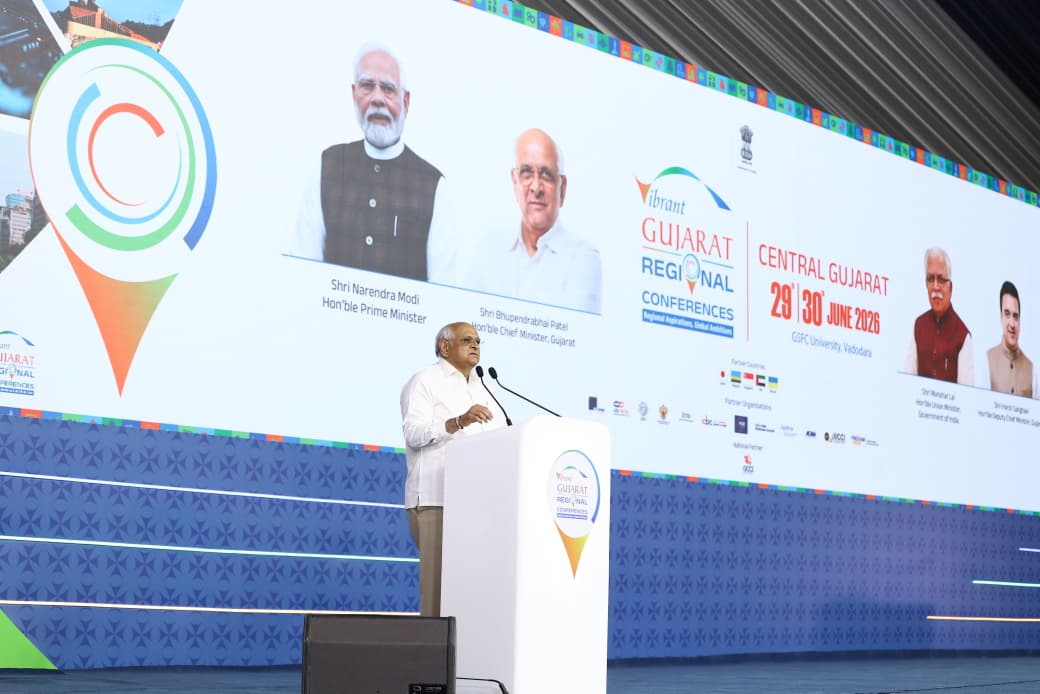
VADODARA : The inaugural edition of the Vibrant Gujarat Regional Conference (VGRC) – Central Gujarat 2026 commenced on a high note at GSFC University, Vadodara, bringing together policymakers, industry leaders, entrepreneurs, investors, academicians, innovators, and key stakeholders to chart a roadmap for the region’s next phase of economic growth and industrial transformation.

The conference marks the beginning of a collaborative platform aimed at strengthening regional competitiveness, promoting innovation-led development, facilitating investments, and creating new opportunities across key sectors. With participation from government representatives, business leaders, academia, startups, and industry associations, the event seeks to foster meaningful partnerships that will accelerate Central Gujarat’s contribution to the state’s economic growth story.

Inaugurating the conference, Chief Minister Shri Bhupendra Patel expressed confidence that the regional conference would further reinforce Gujarat’s position as India’s preferred investment destination while unlocking the immense industrial and entrepreneurial potential of Central Gujarat.

Addressing the gathering, the Chief Minister said, “I am delighted to inaugurate the Vibrant Gujarat Regional Conference (VGRC) for Central Gujarat today at Vadodara, in the esteemed presence of Union Minister Shri Manohar Lal Ji, Deputy Chief Minister Shri Harsh Sanghavi, and my cabinet colleagues. This conference will serve as a dynamic platform to strengthen collaboration between government, industry, and academia, paving the way for sustainable and inclusive economic development across the region, Under the visionary leadership of Hon’ble PM Shri Narendra Modi Ji, Gujarat continues to strengthen its position as a global industrial powerhouse. This conference is a vital step in our mission toward building ‘Viksit Gujarat’ for realizing the vision of ‘Viksit Bharat @ 2047‘..”

vibrant gujarat vadodara CM Patel inaugurates Fourth Vibrant Gujarat Regional Conference in Vadodara

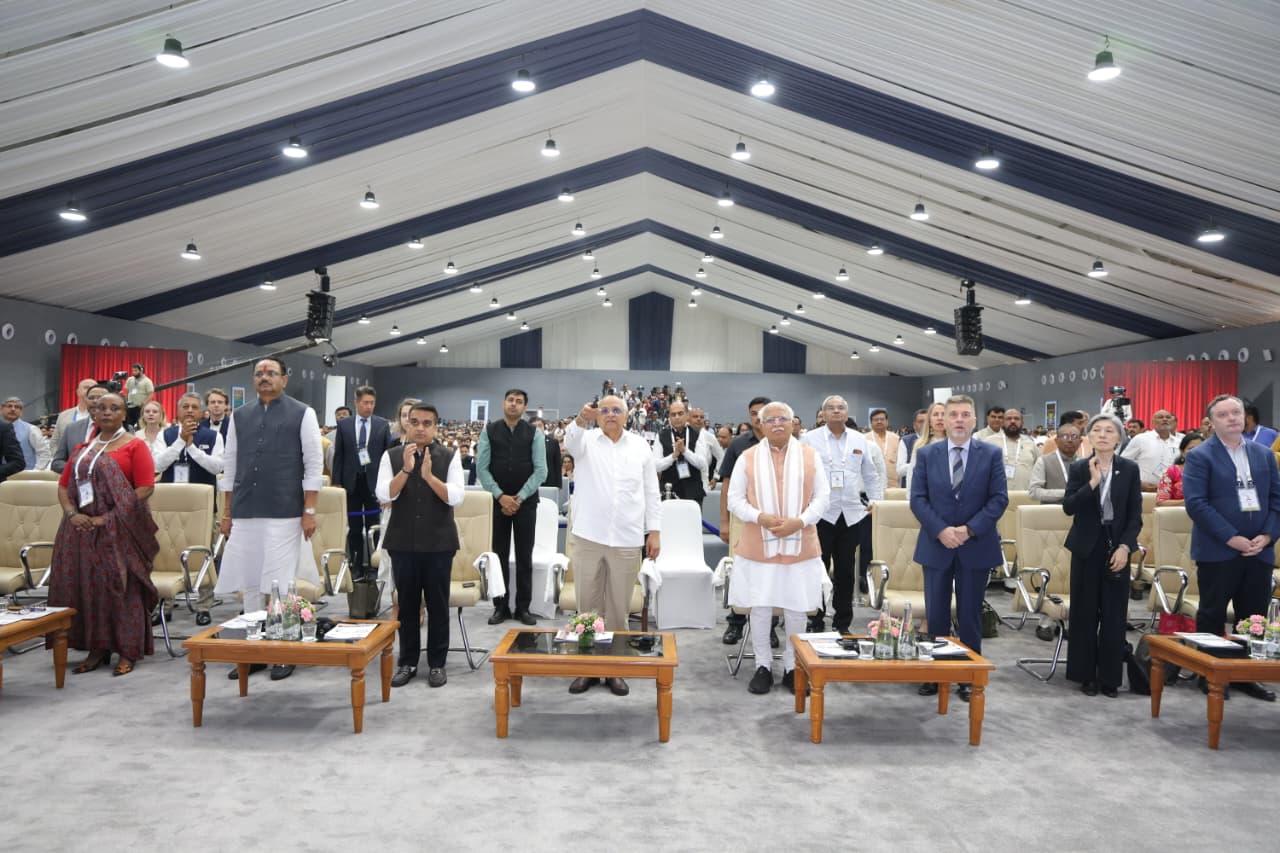
The conference was inaugurated in the distinguished presence of Union Minister Shri Manohar Lal, Deputy Chief Minister Harsh Sanghavi, senior ministers of the Gujarat Government, government officials, industry captains, and representatives from leading business organisations.

Designed as a precursor to future investment initiatives, the Vibrant Gujarat Regional Conference focuses on identifying sector-specific opportunities, encouraging innovation, promoting MSMEs and startups, enhancing industrial infrastructure, and strengthening the ease of doing business ecosystem. Interactive sessions, industry dialogues, and networking opportunities throughout the conference are expected to generate fresh investment interest and encourage strategic collaborations across manufacturing, infrastructure, logistics, renewable energy, technology, education, and emerging industries.

The conference also underscores Gujarat’s continued commitment to decentralized and region-specific economic development by engaging stakeholders at the grassroots level and showcasing the unique strengths of Central Gujarat. By fostering collaboration between government, industry, academia, and investors, the initiative aims to build a resilient, innovation-driven, and future-ready economy that contributes to Gujarat’s vision of sustainable and inclusive growth.

Gujarat to set up 8 new smart GIDCs across 3,611 acres in 5 districts

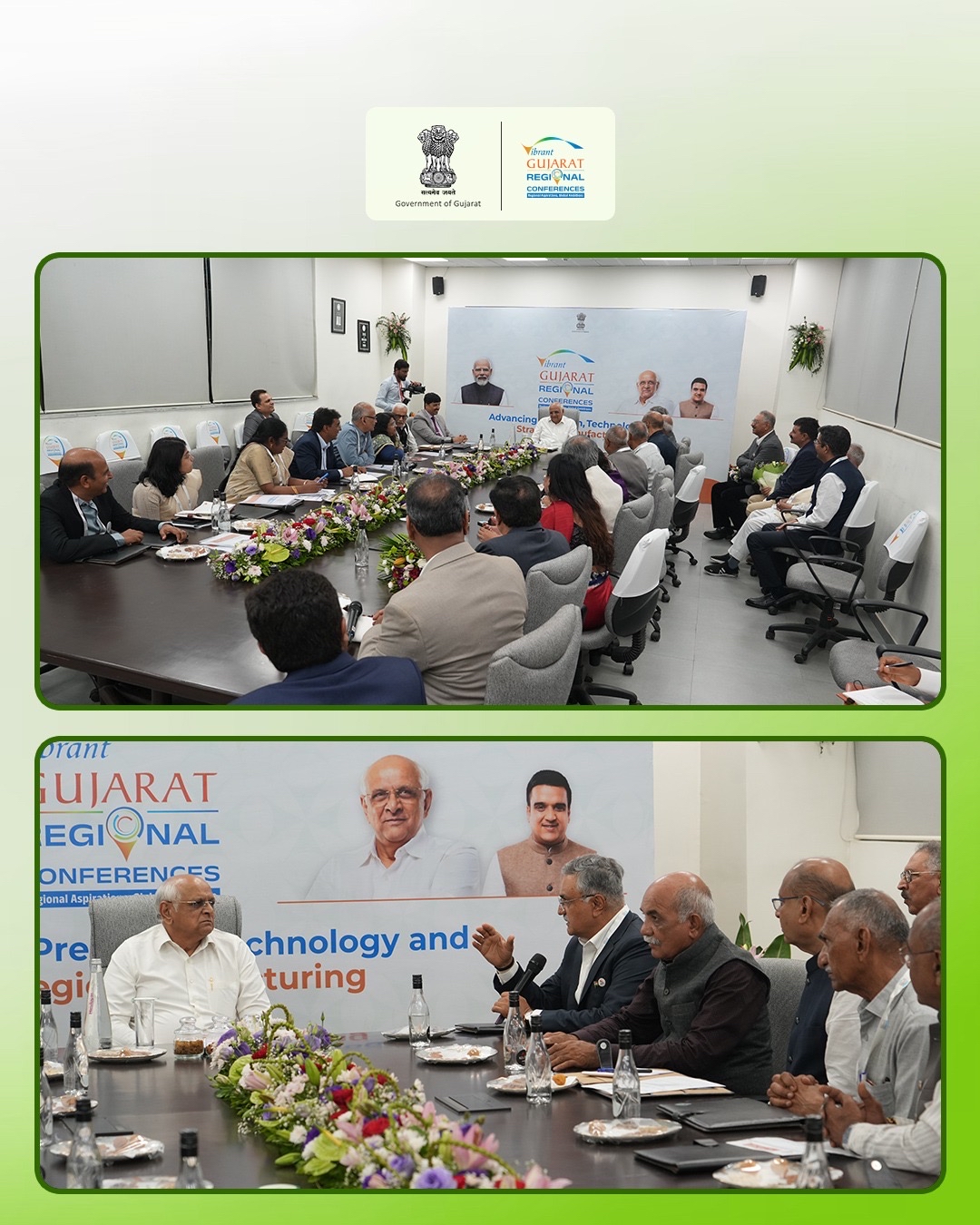
VADODARA : Chief Minister Shri Bhupendra Patel on Monday announced the establishment of eight new GIDCs across various districts during the Fourth edition of the Vibrant Gujarat Regional Conference held in Vadodara, with the objective of further strengthening Gujarat’s credibility in investment, development, and employment, a press release said.

These Smart Industrial Estates will be developed across 3,611 acres in Kheda, Ahmedabad, Panchmahal, Chhota Udepur, and Bhavnagar districts.

Accordingly, the Mahij GIDC in Kheda district will be developed over 130.3 acres, the Sarkhej GIDC in Kathlal taluka over 332.7 acres, the Mahisa GIDC in Mahudha taluka over 18.5 acres, and the Anghadi GIDC in Galteshwar taluka over 310.9 acres.

In addition, the Mandal GIDC in Ahmedabad district will be developed over 515.2 acres, the Nadisar GIDC in Godhra taluka of Panchmahal district over 105.5 acres, the Undva GIDC in Jetpur Pavi taluka of Chhota Udepur district over 247.1 acres, and the Monpur GIDC in Vallabhipur taluka of Bhavnagar district over 1,950.7 acres as new Smart Industrial Estates.

As per the government, the primary objective of this initiative is to develop well-planned industrial areas with plug-and-play facilities for industries, provide greater ease for investors, and create new employment opportunities for local youth.

Gujarat CM Bhupendra Patel meets Russian trade delegation, discusses economic cooperation

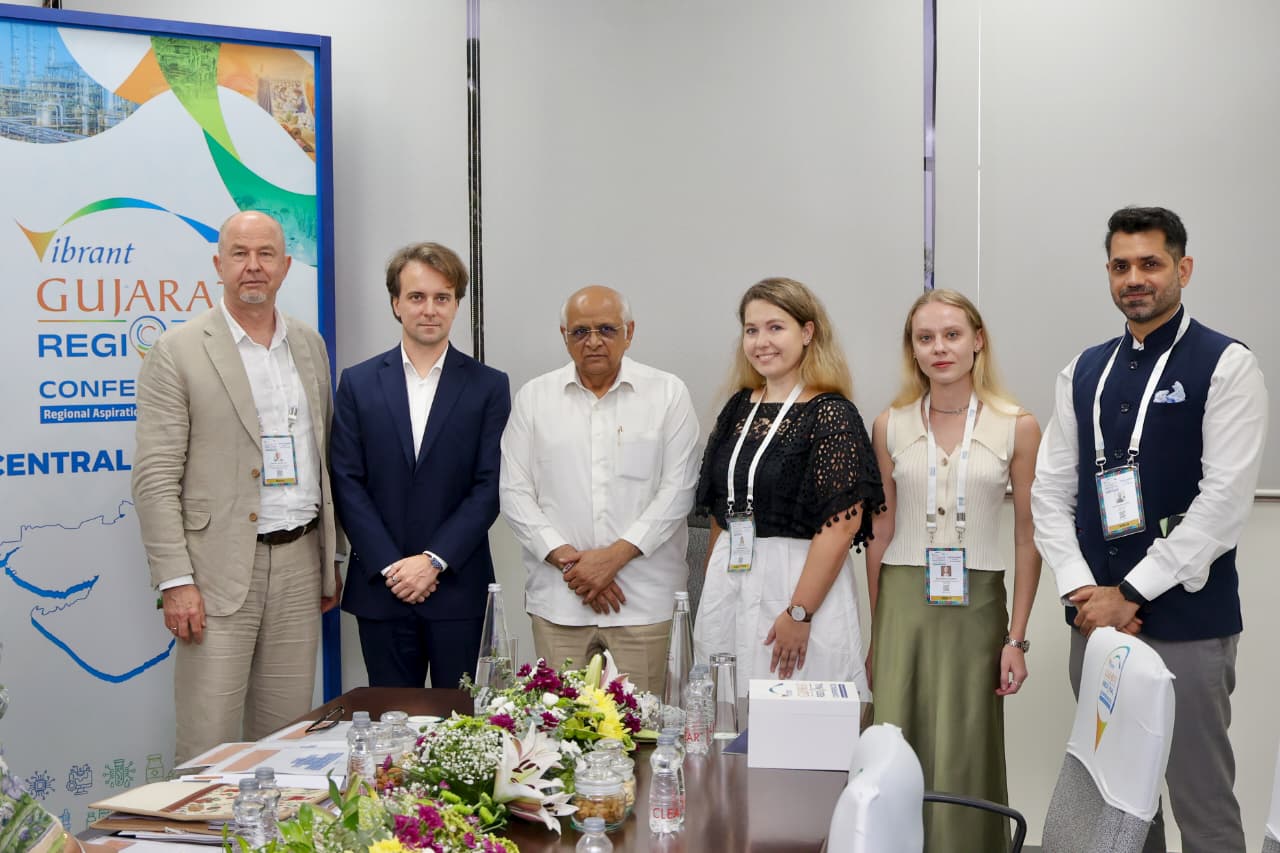
VADODARA: Gujarat Chief Minister Shri Bhupendra Patel on Monday held a meeting with a delegation from the Trade Representation of the Russian Federation in India during the Vibrant Gujarat Regional Conference (VGRC) for the Central Gujarat region in Vadodara.

The delegation was led by Zlata Antusheva, Head of Government Relations and Financial Sector at the Trade Representation of the Russian Federation in India.

According to the Gujarat government, the meeting focused on strengthening Gujarat-Russia economic and industrial cooperation.

The discussions covered collaboration in transportation, smart city development, payment systems, Indian MSMEs, INR-based financial transactions, and engagement with Russian companies Archem in the specialty chemicals sector and EuroChem in the fertiliser sector.

The meeting was attended by Chief Secretary Manoj Das, Additional Chief Secretary of the Industries Department Mamta Verma, Principal Secretary of the Energy Department Ashwini Kumar, Principal Secretary to the Chief Minister Sanjeev Kumar and Additional Principal Secretary to the Chief Minister Vikrant Pandey.

However, focus sectors for VGRC Central Gujarat included Semiconductors & Electronics, IT & ITeS, Biotech, Pharmaceuticals, Aerospace & Defence, Fintech, Auto & Auto Components, Dairy & Food Processing, Education, Chemicals & Petrochemicals, Green Energy Ecosystem, Skill Development, Startups, MSMEs, Tourism & Culture.

According to the earlier release, during this VGRC, districts from the Central Gujarat region, namely Ahmedabad, Anand, Chhotaudepur, Dahod, Gandhinagar, Kheda, Mahisagar, Narmada, Panchmahal and Vadodara will be in focus. Further, various seminars will be conducted on sectors such as semiconductors, IT/ITeS & emerging technologies, Chemicals & Petrochemicals, Defence, Biotechnology, Agro & Food Processing, Startups, MSMEs, Women Entrepreneurship, Skill Development, Tourism, among others.

VGRCs are aimed at boosting regional industrial growth, attracting sector-specific investments and strengthening global engagements, in alignment with the vision of Viksit Bharat 2047. The Regional Conferences are designed with the objective of transforming and equipping local industries to become global players by providing market access opportunities, said the release.

Through key enablers such as strategic partnerships and investor engagement, the State Government aims to accelerate industrial development while ensuring inclusive and sustainable growth across Gujarat. (ANI)

Gujarat CM Bhupendra Patel invites Irish firms to invest in state

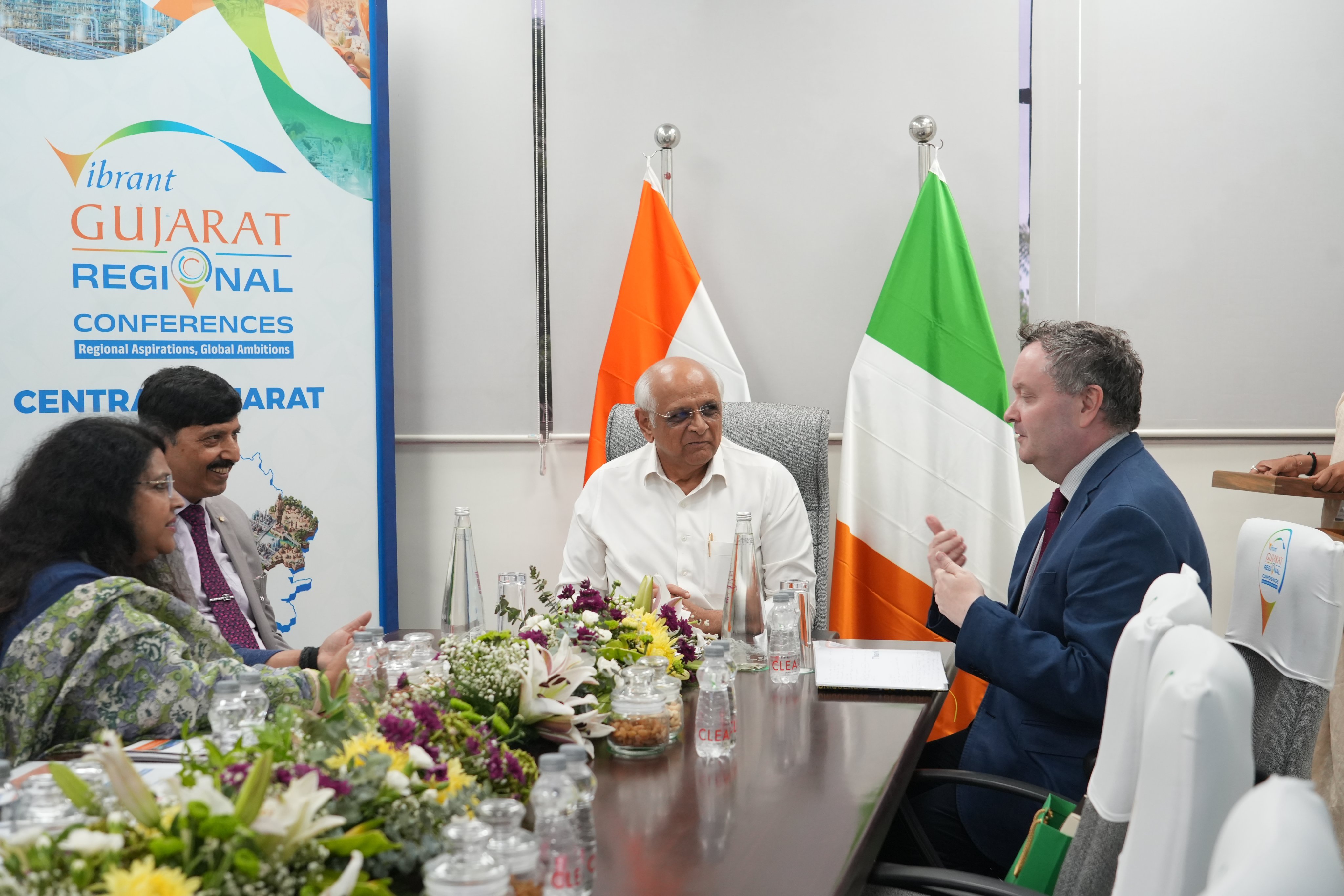
VADODARA: Gujarat Chief Minister Shri Bhupendra Patel on Monday met Ireland’s Consul General in Mumbai, Patrick Duffy, during the Vibrant Gujarat Regional Conference in Vadodara and invited Irish industries and investors to explore investment and business opportunities in the state.

According to an official release, the meeting focused on strengthening the economic partnership between Gujarat and Ireland. Referring to the opportunities expected to emerge from the proposed India-European Union Free Trade Agreement (FTA), the Chief Minister urged Irish businesses to leverage Gujarat’s investment-friendly ecosystem.

The two sides also discussed enhancing cooperation in the areas of skill development, technology and sports.

During the meeting, Patrick Duffy expressed interest in participating in the Vibrant Gujarat Global Summit 2027 and stated Ireland was keen to organise a country seminar to explore avenues for greater collaboration with Gujarat.

The Chief Minister suggested that the Irish delegation visiting for the summit should also visit the Kite Festival, the Statue of Unity and industrial sites across the state to gain a better understanding of Gujarat’s cultural heritage and industrial development.

Chief Secretary Manoj Das, Additional Chief Secretary (Industries) Mamta Verma, Principal Secretary to the Chief Minister Sanjeev Kumar, Additional Principal Secretary Dr Vikrant Pandey, Science and Technology Department Secretary P. Bharati and other senior officials attended the meeting.

VPPL and Maharashtra Govt Fast-Track Skill Development Roadmap for Vadhvan Port

MUMBAI : Vadhvan Port Project Ltd. (VPPL) – the 13th major port of India, convened a high-level review meeting to accelerate the implementation of the Vadhvan Port Skill Development Programme. The meeting reviewed the progress achieved so far and deliberated on key interventions to ensure that local youth are equipped with industry-relevant skills well ahead of project execution.

VPPL MAHARASHTRA GOVT VPPL and Maharashtra Govt Fast-Track Skill Development Roadmap for Vadhvan Port

The meeting was attended by Smt. Manisha Verma, IAS, Additional Chief Secretary, Skill Development, Employment, Entrepreneurship and Innovation Department, Government of Maharashtra; Shri Gaurav Dayal, IAS, Chairman and Managing Director, Vadhvan Port Project Ltd., Dr. Amit Saini, IAS, Commissioner, Skill Development and Chief Executive Officer, Maharashtra State Skill Development Society (MSSDS), Smt. Indu Rani Jakhar, IAS, Collector, Palghar; Shri Ravish Kumar Singh, IRTS, CEO, VPPL, along with senior officials from VPPL, DVET, MSSDS and other departments.

A key highlight of the meeting was the presentation of the Manpower Study Projections Report, an extensive workforce assessment that maps projected employment opportunities, technical competencies and job roles in alignment with various phases of the Vadhvan Port project. The report provides a structured roadmap linking workforce demand with project timelines, enabling timely capacity building and targeted skill development. Smt. Manisha Verma, IAS, stated that the Government of Maharashtra remains committed to building a responsive and future-oriented skilling ecosystem that aligns with emerging industrial requirements.

Speaking during the meeting, Shri Gaurav Dayal, IAS, observed that the collaboration between VPPL, the Government of Maharashtra and industry partners will help create a sustainable talent pipeline, ensuring that local youth are equipped with the competencies required to participate in the development and long-term operations of Vadhvan Port. The meeting also reviewed the progress under the Memorandum of Understanding signed between VPPL and the Directorate of Vocational Education and Training (DVET), Government of Maharashtra.

As part of this collaboration, training has commenced for four batches across ITI Vangaon and ITI Palghar, with Certificate Courses in Fitter Fabrication, Digital Mitra, and Assistant Electrician being offered at ITI Vangaon, while a specialised Manual Metal Arc Welding course has been launched at ITI Palghar. Each batch consists of total 30 students. The Vadhvan Port Skill Development Programme has continued to make steady progress, with over 7000 students trained across 24 training programmes to date. As the project advances, VPPL and its partner institutions will continue to expand training opportunities, ensuring that a skilled and industry-ready workforce is available to support one of India’s most ambitious maritime infrastructure projects.

About VPPL :

Vadhvan Port Private Limited (VPPL) is the 13th major port of India, a special purpose vehicle (SPV) formed between Jawaharlal Nehru Port Authority (JNPA) and the Maharashtra Maritime Board (MMB). Strategically located in Palghar district, near Dahanu, Maharashtra, VPPL is poised to be among the top 10 ports globally. The foundation stone for the port was laid on August 30th, 2024, by the Hon’ble Prime Minister of India, Shri Narendra Modi. Committed to sustainability, VPPL will be 100% green from inception, ensuring minimal environmental impact. The port is set to enhance trade efficiency with the capacity to handle 24 million TEUs, stimulate economic growth, and contribute to regional development. Through initiatives like the Vadhvan Port Skilling Program, VPPL focuses on empowering local communities.

SMP Kolkata gears up to handle 74 MT cargo

KOLKATA : Syama Prasad Mookerjee Port in Kolkata targets handling around 74 million tonnes (MT) of cargo in the current financial year, with daily handling of containers increasing nearly one- and-a-half times.

The port, which consists of two dock systems — Kolkata Dock System and Haldia Dock Complex — handled around 71 MT cargo last financial year.

“On the basis of the CAGR in recent years, the way we are growing, we will definitely be able to meet this cargo handling target this fiscal. In the last six months to one year, our capacity for daily handling of containers has increased by a great extent, at almost 1.5 times what we were handling one- and-a-half years ago,” Syama Prasad Mookerjee Port Deputy Chairman Samrat Rahi told businessline.

“If currently we are handling 2,000 containers daily at Kolkata Dock System, we are very hopeful that we will handle 3,000 containers daily as most of the berths will be on PPP (public-private partnership) mode. Century Ports Ltd has already started operations, and JSW Infrastructure Ltd is also starting operations soon,” he added.

Kolkata’s iconic Kidderpore Docks’ first-ever PPP terminal, developed by Century Ports Ltd, started operations in June.

JSW Infrastructure, which has emerged the successful bidder for the integrated development of the outer container terminal, comprising two berths, and five berths at Netaji Subhas Dock (NSD) at Kolkata Dock System, is likely to commence operations in July.

“All these developments will help increase the number of cranes at Kolkata Dock System, and it will ensure a significant reduction in turnaround time. Moreover, we are planning to have a cement bulk terminal at the Kidderpore Docks. For that, a tender has been floated. A tender has also been floated for a multimodal terminal at the Kidderpore Docks. Together, they will contribute to the augmentation of cargo,” Rahi said.

For the Haldia Dock Complex, a major tender has been floated for developing an outer container terminal. “The bidding is in the final phase. This will contribute to the augmentation of cargo at the Haldia Dock as well,” Rahi said.

Source : BL

CONCOR marks major milestone with first containerised Rail Movement of Edible Salt for ITC and HUL from Gujarat to Hyderabad

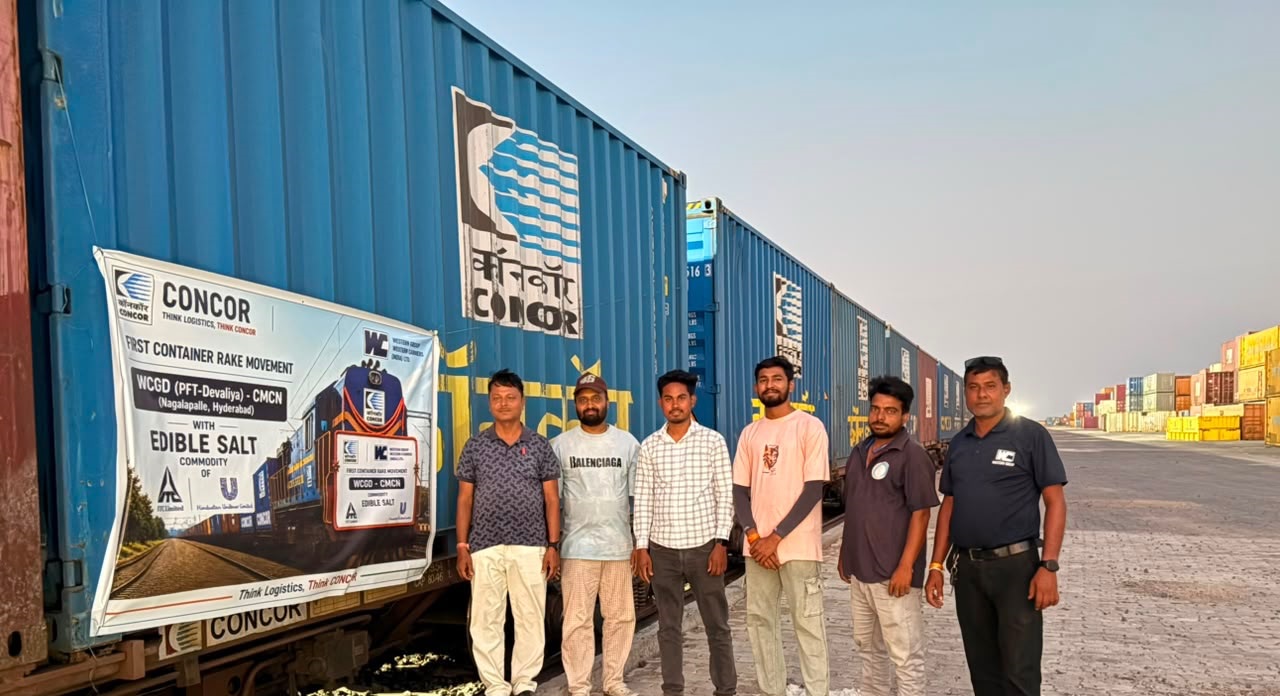
NEW DELHI : In a significant step towards promoting sustainable and efficient freight transportation, Container Corporation of India Ltd. (CONCOR) has successfully handled its first containerised rake movement of edible salt for ITC Ltd. and Hindustan Unilever Ltd. (HUL), marking a new milestone in India’s rail-based logistics sector.

The inaugural containerised rake was loaded on 28 June 2026 from Devaliya Private Freight Terminal (PFT), Gujarat (WCGD) to Cherlapally Inland Container Depot (CMCN), Hyderabad, signifying the successful transition of edible salt transportation from conventional modes to containerised rail services.

The achievement is the result of sustained customer engagement, meticulous planning, and close coordination with logistics partner Western Carriers (India) Ltd., whose collaborative efforts played a key role in enabling the modal shift. The initiative demonstrates the growing confidence of leading FMCG companies in rail-based container logistics as a dependable, cost-effective, and environmentally sustainable transport solution.

The successful movement represents a significant milestone in CONCOR’s ongoing efforts to diversify its cargo portfolio and expand its customer base by offering innovative logistics solutions tailored to industry requirements. It also reinforces the organisation’s commitment to enhancing multimodal connectivity while supporting the nation’s vision of greener and more efficient supply chains.

The initiative is expected to deliver several strategic benefits, including reduced road congestion, lower carbon emissions, enhanced cargo safety, reliable transit schedules, and improved supply chain efficiency. By facilitating the movement of essential commodities such as edible salt through containerised rail services, CONCOR continues to strengthen the role of rail freight in India’s logistics ecosystem.

The successful execution of this maiden movement further deepens CONCOR’s partnership with leading FMCG companies and highlights the growing adoption of containerised rail transport for bulk commodities. As demand for sustainable logistics solutions continues to rise, CONCOR remains focused on delivering customer-centric, technology-driven, and environmentally responsible freight services across the country.

With this landmark achievement, CONCOR once again reaffirms its commitment to driving innovation in logistics and expanding the reach of rail-based multimodal transportation.

Think Logistics. Think CONCOR.

GSV launches Five-Day Skill Development Programme on AI in Military Logistics and Sustainment for Indian Army

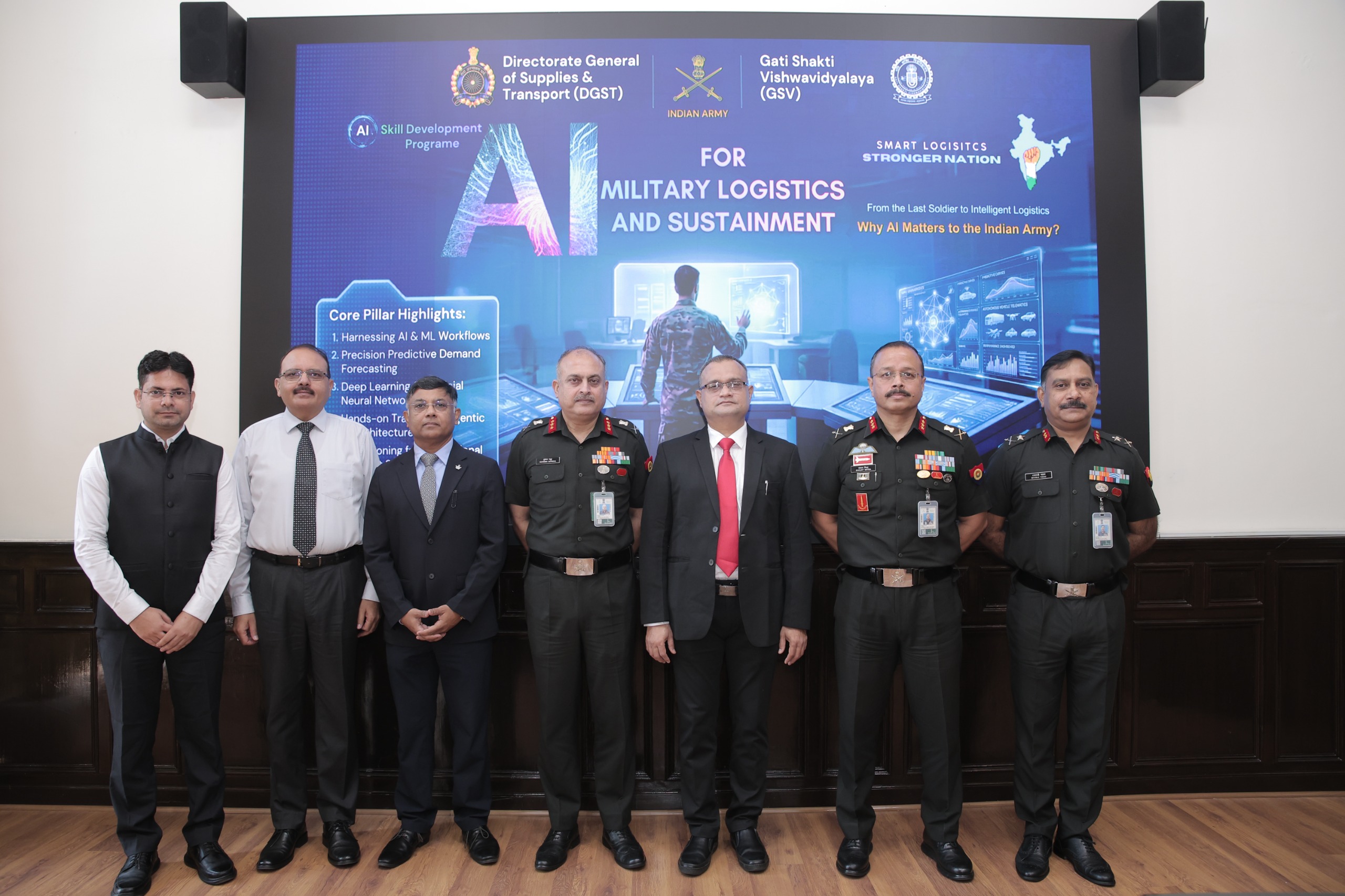
NEW DELHI : In a significant step towards advancing technology-driven defence logistics, Gati Shakti Vishwavidyalaya (GSV) has commenced a five-day Skill Development Programme on “Artificial Intelligence in Military Logistics and Sustainment” for officers of the Indian Army‘s Army Service Corps (ASC) at the Manekshaw Centre, New Delhi. The programme, being held from June 29 to July 3, 2026, aims to strengthen the Armed Forces’ logistics capabilities through the adoption of cutting-edge Artificial Intelligence (AI) technologies.

Designed to build future-ready logistics competencies, the programme provides ASC officers with a comprehensive understanding of Artificial Intelligence and its practical applications in military logistics. The curriculum covers machine learning, deep learning, generative AI, and agentic AI, with a focus on enhancing decision-making, demand forecasting, predictive maintenance, automation, operational efficiency, and resilient sustainment operations in complex operational environments.

The inaugural session began with an opening address by Major General Shyamji Yadav, who highlighted the growing importance of emerging technologies in transforming military logistics and strengthening operational preparedness.

Delivering the keynote address, Lieutenant General Mukesh Chadha, Director General Supplies & Transport, described the initiative as a first-of-its-kind technology-enabled programme dedicated exclusively to military logistics and sustainment. He underscored the importance of embracing Artificial Intelligence to build agile, efficient, and future-ready logistics systems in line with the national vision of Viksit Bharat 2047.

Addressing the participants, Lieutenant General Sanjay Mitra, Director General Operational Logistics & Strategic Movement, Indian Army, emphasised the transformative role of predictive analytics and agentic AI in addressing complex logistics challenges, improving resource optimisation, and enhancing operational effectiveness across the defence logistics ecosystem.

Providing an overview of the programme, Professor (Dr.) Jitesh J. Thakkar, Dean (Academics), Gati Shakti Vishwavidyalaya, outlined the programme structure and highlighted the University’s ongoing academic and research contributions towards strengthening the Management Information Systems of the Army Service Corps (MISA) through AI-enabled solutions and capacity-building initiatives.

The programme is being conducted under the leadership of Brigadier Ajay Sharma, SM (Retd.), Programme Director, with academic sessions led by Professor Kaushik Das, Professor of Aviation Logistics, and coordinated by Dr. Vipul Kumar Mishra, Programme Coordinator. Through expert-led lectures, interactive discussions, practical case studies, and hands-on learning, participants will gain valuable insights into leveraging Artificial Intelligence for modern military logistics and sustainment operations.

The initiative reflects Gati Shakti Vishwavidyalaya’s commitment to fostering innovation, capacity building, and technology-driven excellence in transportation, logistics, and national security. By bringing together academia and the Armed Forces, the programme aims to equip military leaders with the knowledge and tools required to navigate the rapidly evolving landscape of defence logistics while contributing to India’s vision of building a technologically advanced and self-reliant defence ecosystem.