Home Blog Page 242

Tanker traffic through Hormuz picks up after slower flows due to crossing concerns

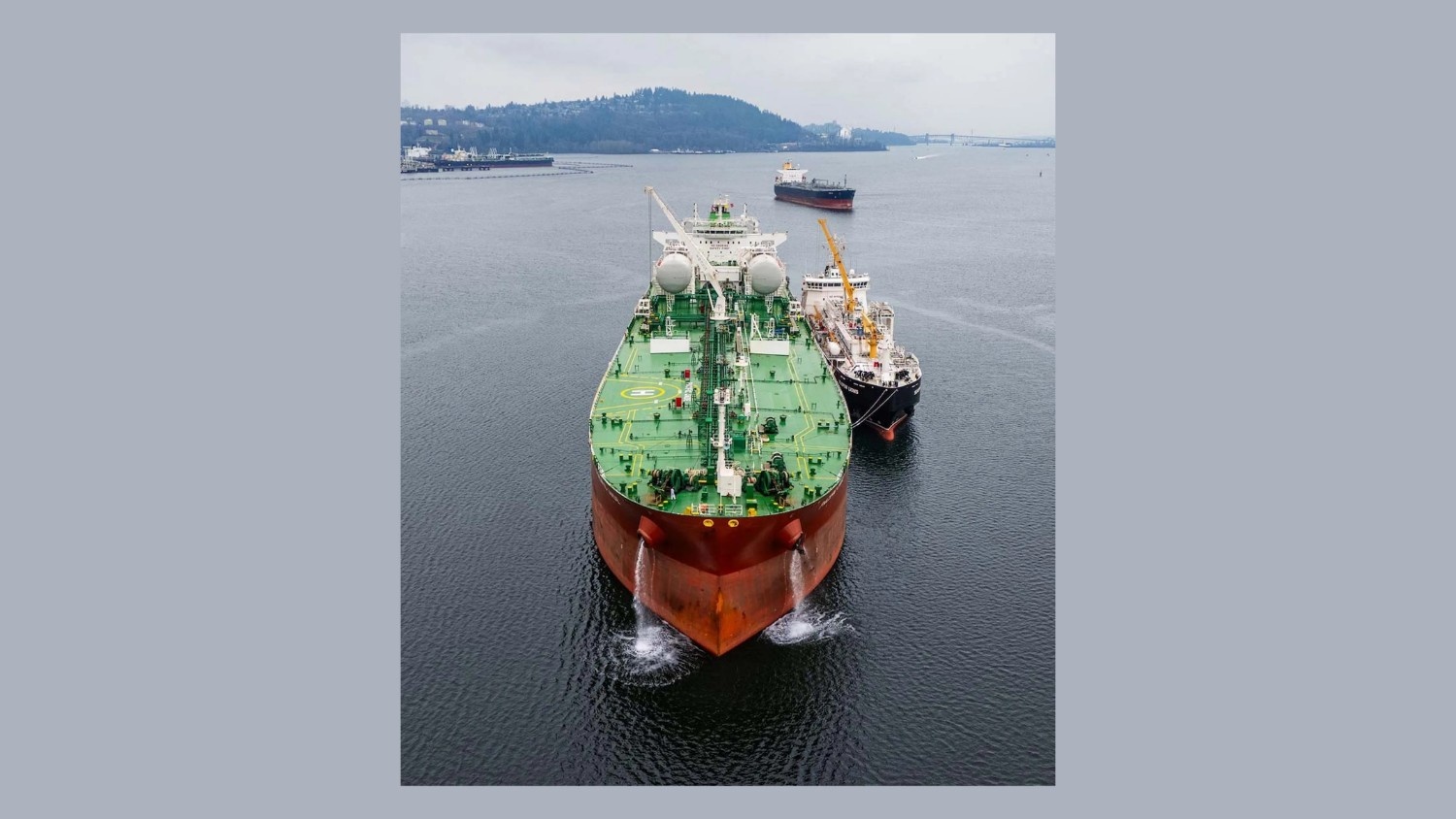
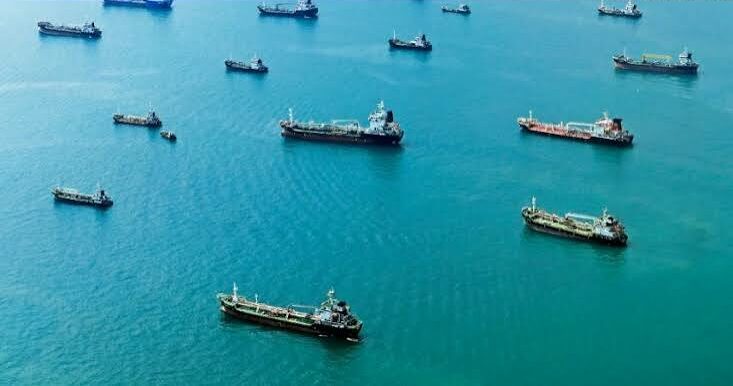
SINGAPORE : Oil and liquefied natural ​gas tankers sailed through the Strait of Hormuz on Monday, in a sign of traffic slowly picking up after Iran said it had again closed the waterway over the ‌weekend, shipping data showed.

Iran lifted its effective blockade of Hormuz last week after agreeing to a 60-day ceasefire with the United States while talks for a final peace deal take place. However, Tehran’s Revolutionary Guards declared the strait shut once again on Saturday, in response to Israeli strikes in Lebanon, prompting a fall in sailings.

Four LNG tankers controlled by Qatar headed into the Gulf and through the strait on Monday, while two supertankers, which can carry up to 4 million ​barrels of crude oil, crossed into the Gulf with one signalling its destination as the Iraqi port of Basra, according to ship tracking data and analysis from Kpler.

Two smaller crude tankers, ​carrying just under 2 million barrels of oil in total, sailed out of the Strait of Hormuz into the Gulf of Oman on Monday, separate ship ⁠tracking data on the Marine Traffic platform showed.

“While daily transits remain below the 125 crossings prior to the Iran hostilities, the trend is positive,” ship broker Clarksons said in a note on Monday. There could be ​more ships plying the strait with their transponders switched off, plus outages reported with AIS ship tracking data, shipping sources said. AIS is the tracking system which traders follow to get information on ship ​movements.

Five vessels passed the strait on Sunday, down from 26 ships spotted a day earlier, Kpler data showed. These included three Very Large Crude Carriers with 2 million barrels of Saudi crude and fuel oil each, one of which was heading to Japan.

“Strait of Hormuz traffic began increasing, with commercial vessels continuing to route south … via Omani territorial waters and via the northern Iranian-controlled route,” the U.S. Navy-led Joint Maritime Information Center said in an advisory on Monday.

Four ​LNG tankers — Wadi Al Sail, Mekaines, Al Sadd and Mesaimeer — entered the strait on Monday via the Iranian route for the first time since the U.S.-Israeli war with Iran started, ship tracking data from ​Kpler showed.

QatarEnergy, whose LNG exports have been heavily curbed since the war began on February 28, did not immediately respond to a request for comment. The Marshall Islands-flagged dry bulk vessel Summit Success also entered the Gulf on ‌Monday, LSEG data ⁠showed.

OIL EXPORTS MOVING
The U.S. Central Command said 55 merchant ships transited the strait on Saturday with more than 17 million barrels of oil for global markets. Among the ships that exited the strait on Saturday, there were three VLCCs carrying crude from the United Arab Emirates, Kuwait and Iraq, and three tankers carrying various oil products, the data showed.

There were 13 ships that entered the strait on Saturday, including two VLCCs, the data showed.
Since last Monday, more than 25 million barrels of Iranian oil have passed through the virtual blockade line, the head of the National Iranian Oil Company, Hamid Bovard, told state TV on Sunday.

Three ​sanctioned VLCCs — Elva, Virgo and Vigor — carrying Iranian ​oil loaded from Kharg Island between late ⁠April and early May were exiting the strait on Monday, LSEG and Kpler data showed.
Gulf producers Abu Dhabi National Oil Co and Kuwait Petroleum Corp have issued tenders selling crude with the option of loading from inside and outside the Strait of Hormuz.
Two vessels operated by South Korea also passed through the strait last week ​following the interim peace agreement, Seoul’s Ministry of Oceans and Fisheries said on Monday, without naming them.
A spokesperson for the Japan Shipowners’ Association said ​the number of Japanese-related vessels remaining ⁠in the Gulf had fallen to 37 from 45 at the start of the conflict.
Meanwhile, two ADNOC-controlled LNG tankers were delivering cargoes to India on Monday, having exited the strait recently, Kpler and LSEG data showed.

The Al Hamra tanker was discharging at the Ennore LNG terminal, while the tanker Mubaraz was set to offload its cargo at the Kochi terminal on Tuesday, the data showed. Both tankers were last seen in ballast ⁠and east of ​the strait in late May to early June, before reappearing again on ship tracking data over the weekend, located off ​the coast of India loaded with cargoes.
“We do not comment on the position, movements, and routing of our vessels, or third-party reports, as a matter of policy,” ADNOC said.

Al Hamra and Mubaraz have each now completed two “dark” voyages out of Hormuz since ​the war started. Reporting by Florence Tan, Emily Chow and Siyi Liu in Singapore, Nerijus Adomaitis in Oslo and Jonathan Saul in London; Yuka Obayashi in Tokyo; Editing by Stephen Coates, Sonali Paul and Milla Nissi-Prussak

Source : Reuters
Saudi-run terminal at Bangladesh’s largest port to go full capacity next month

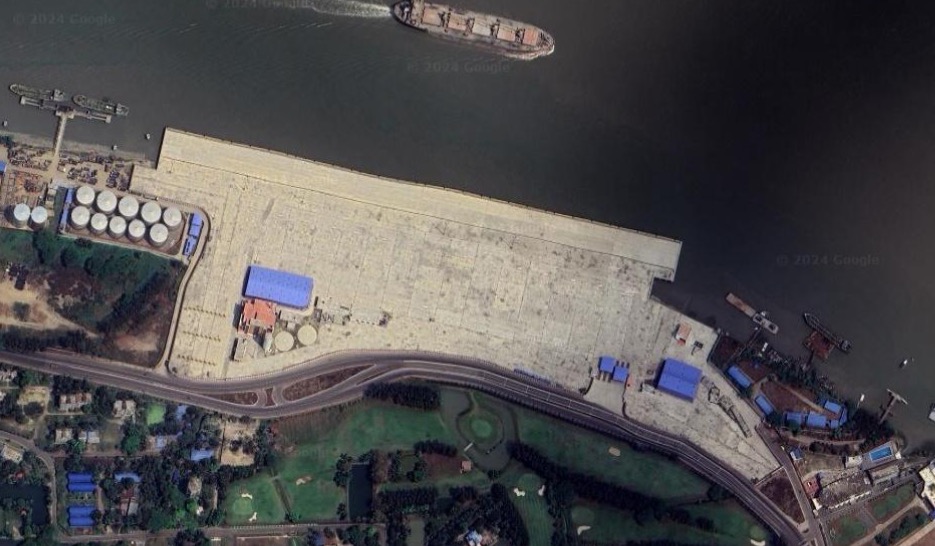
RIYADH : Saudi developer Red Sea Gateway Terminal is set to start full-capacity operations at Bangladesh’s largest port in Chittagong in July, as it has just completed the deployment of specialized machinery.

Chittagong Port is the main gateway for Bangladesh’s ocean cargo import and export. Last year, it handled about 3.41 million TEU, or 20-foot equivalent units, making it the busiest container port on the Bay of Bengal.

RSGT has been running the port’s Patenga Container Terminal since June 2024, under a 22-year agreement signed with the Chittagong Port Authority.

On Friday, the company brought to the site four gantry cranes — the last major pieces of equipment it needed to scale up its presence.

“We were given two years of preparation time — to equip the port facilities, complete all civil works, implement technology and develop human resources,” Sayed Aref Sarwar, head of commercial and public affairs at RSGT Bangladesh, told Arab News.

“The last two years were our soft operation period at the Patenga Container Terminal. Now, with the arrival of four gantry cranes on Friday evening, the final phase of equipment requirements has been completed.”

The custom-built cranes were manufactured by the Chinese company SANY and are expected to significantly enhance vessel-handling efficiency while generating no carbon emissions during operations.

“These cranes are designed in such a way that they can handle two 20-foot containers at a time. This is the first of its kind in any port in Bangladesh and will be operated through fully green operations, meaning there will be no use of fossil fuels to run these cranes as the entire facility will run on electrical energy,” Sarwar said.

“Hopefully, we will start operating the new gantry cranes by mid-July. From that moment, we will run the port at full capacity. If needed, we will undertake further expansion of the facilities. At the moment, however, the equipment we have in place will be more than sufficient to handle the expected volume of containers.”

The Saudi developer is the first foreign company operating at Bangladeshi ports and is steadily increasing the Patenga terminal’s output and permanent workforce.

It handles 155,000 TEU of containers, and with the arrival of the new equipment will increase that volume to 400,000 TEU this year — about 12 percent of total container operations in Chittagong.

Next year, according to Sarwar, the terminal will exceed 500,000 TEUs, or 17 percent of the port’s traffic.

It is also steadily increasing the number of employees.

“So far, RSGT has invested $170 million to modernize the port to a global standard. At the moment, we have around 500 workers serving as permanent employees. Besides that, there are around 800 people who deliver services on a contract basis,” Sarwar said.

“All of these workers are Bangladeshi nationals, and we trained them locally and internationally. Some of our employees have been sent to Saudi Arabia to receive training in port operations … in our port industry, there aren’t enough human resources who can deliver services at the global level. It’s a challenge for Bangladesh. And RSGT is trying to fill this gap through investing in human development.”

Low-GHG methane’s role in keeping LNG-capable ships compliant

A new DNV white paper explores how bio-methane and e-methane, collectively called low-GHG methane, could offer a viable compliance route to help LNG‑capable ships stay compliant as greenhouse gas regulations tighten, benefiting from engine and fuel system compatibility.

SINGAPORE: Excluding LNG carriers, more than 800 ships can run on LNG using mature, proven technology and established infrastructure, with over 600 more on order.

Under the FuelEU Maritime regulation, LNG‑capable ships can remain compliant on fossil LNG until around 2035, depending on engine configuration. Ships fitted with two‑stroke high‑pressure dual‑fuel engines can remain compliant longer than those using four‑stroke low‑pressure dual‑fuel engines, which are more common in cruise ships and RoPax vessels.

Extending LNG compliance with low-GHG options

DNV’s Methane in Shipping white paper indicates that a potential compliance pathway is the use of LNG-compatible low-GHG fuels. LNG ships are compatible with alternatives such as liquefied bio-methane and e-methane. With tightening GHG intensity requirements, these ships are thus well positioned to transition towards lower GHG emission fuels without major retrofits for these alternatives.

“Bio-methane and e-methane can achieve very low, or even negative, life cycle emissions depending on how they are produced. LNG-fuelled vessels can progressively decarbonize by blending in or switching to these fuels,” explains Øyvind Sekkesæter, Senior Consultant at DNV and lead author of the paper.

Demand for low-GHG methane will grow with tightening regulations
According to demand projections outlined in the paper, compliance-driven low-GHG methane demand under FuelEU Maritime alone could reach 2–4 million tonnes by 2040, rising to as much as 40–95 million tonnes under the proposed IMO Net Zero Framework’s base target.

On the supply side, current production of low-GHG methane is limited, but still higher than many other low-GHG fuel alternatives. Global bio-methane production reached around 7 million tonnes in 2024 and is projected to increase to about 15 million tonnes by 2030. E-methane remains nascent, with only 0.01 million tonnes of operational capacity today, but announced projects could lift this to 0.9 million tonnes by 2030.

While there is significant potential to expand the global supply of low-GHG methane beyond today’s production levels, shipping will compete with other sectors for this supply. Most available supply is already absorbed by power generation and road transport, meaning access for shipping will largely depend on its willingness to pay relative to other users.

Securing low-GHG methane in a competitive market

Regulation will be decisive in shaping this competition. The paper notes that mechanisms such as the EU Emissions Trading System (EU ETS) and FuelEU Maritime are already incentivizing low-GHG methane uptake in shipping. Similar global measures could, over time, strengthen shipping’s willingness to pay to secure supply, while demand from less policy‑driven sectors may remain more price‑sensitive.

“Securing access to low-GHG methane may require long-term offtake agreements, partnerships with fuel producers, or participation in emerging fuel value chains. Fuel procurement therefore becomes both a strategic and an operational consideration for shipowners,” explains Sekkesæter.

LNG bunkering infrastructure applicable

From a technical standpoint, existing LNG infrastructure is largely compatible with liquefied bio‑methane and e‑methane and can, in principle, supply these fuels without physical modifications.

The more persistent constraint lies in economics and market access rather than infrastructure alone. As of late 2025, liquefied bio-methane in Rotterdam was priced at around USD 1,860 per tonne, almost three times the price of fossil LNG. However, when regulatory incentives are taken into account, most notably reduced exposure under the EU ETS and pooling revenues under FuelEU Maritime, bio-methane can already be cost-competitive on selected EU-to-EU voyages.

Unlocking methane supply through flexible mechanisms

Beyond production volumes, availability to shipping is shaped by how low‑GHG methane is accounted for and allocated across sectors.

“This places chain-of-custody models at the centre of the discussion,” says Sekkesæter. “Flexible approaches, such as mass-balance and book-and-claim systems, allow low-GHG methane to be injected into existing gas grids and attributed to end users without requiring physical delivery to a specific location.” Such models can significantly reduce distribution costs and logistical complexity.

In Europe, mass balancing is permitted under regulations such as FuelEU Maritime and the EU ETS, enabling shipping to access low-GHG methane through existing infrastructure. However, the absence of similar flexibility globally, combined with the need for liquefaction and dedicated distribution in the absence of flexible chain-of-custody models, can place shipping at a disadvantage compared to sectors that rely on already established gas. “Without the adoption of flexible chain-of-custody models in international regulation, shipping may face higher costs and consequently more constrained access to limited low-GHG methane supplies,” notes Sekkesæter.

Methane slip can be managed by different measures

While upstream discussions focus on fuel availability and cost, methane slip remains a key onboard challenge associated with LNG use.

Slip levels vary by engine type, which influences a vessel’s well‑to‑wake emissions profile. In response, engine designers have significantly reduced methane slip in recent years through combustion optimization and hardware upgrades, particularly for low‑pressure engines.

“Importantly, the use of real-world measurement data, rather than conservative default assumptions, can improve the assessed methane slip, particularly for modern dual-fuel LNG engines. This has direct implications for regulatory compliance, because lower methane slip translates into better GHG intensity scores,” states Sekkesæter.

Operational practices also play a critical role; measures like optimized engine tuning and load management can further minimize methane slip. After-treatment technologies, including oxidation catalysts, may also offer another layer of mitigation.

Measures keeping LNG-capable vessels relevant in a net-zero transition

LNG-capable vessels can, in both theory and practice, serve as a bridge to net-zero shipping, provided a supportive ecosystem evolves, including scaled production of low‑GHG methane, flexible chain‑of‑custody frameworks, and sufficient willingness to pay to secure supply in competition with other sectors.

In the near term, owners of LNG-capable ships can focus on improving energy efficiency, optimizing engine performance, and reducing methane slip to lower both fuel consumption and compliance costs. It is also important to closely monitor regulatory developments, particularly forthcoming decisions on well‑to‑tank emissions and chain‑of‑custody models.

Sekkesæter concludes: “Ultimately, LNG’s role in shipping will not only be defined by its status as a fossil fuel, but by its ability to enable a transition to low-GHG fuels like liquefied bio-methane and e-methane. As Methane in Shipping makes clear, the opportunity is real: there is already a pathway for today’s LNG-capable fleet to evolve into a lower-emission fleet if the right conditions are put in place. To support shipowners in managing risks and uncertainties related to fuel selection, the paper presents a two-step framework which includes an economic and a technical analysis.”

Download the Report

Methane in Shipping

https://www.dnv.com/publications/methane-in-shipping

Source: DNV

OCIMF appoints Don Davis as Managing Director to support the next phase of maritime safety across the energy sector

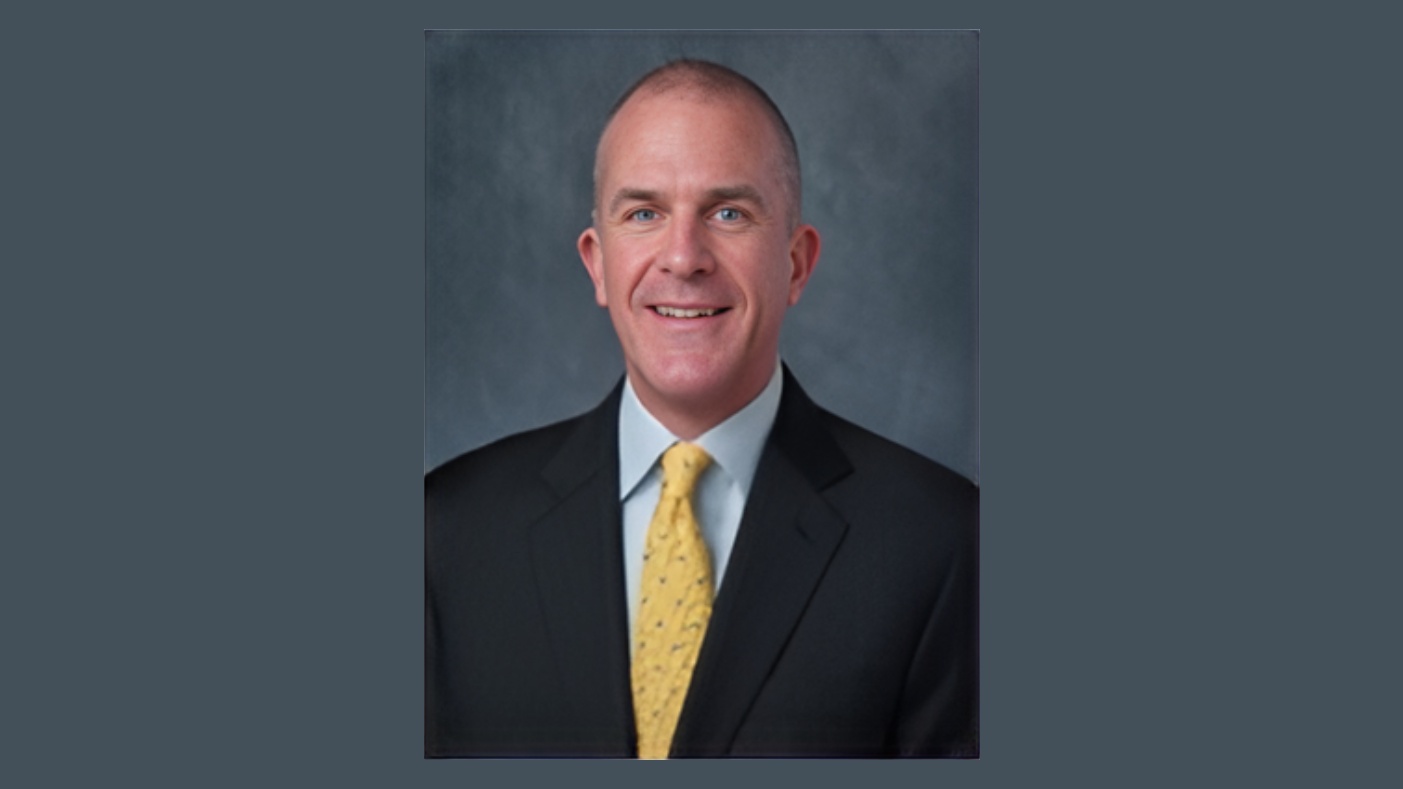
LONDON: OCIMF Monday announced the appointment of Don Davis as its new Managing Director. Don joins the organisation at a pivotal moment, as OCIMF enters a new phase following the recent evolution of its mission and brand to support maritime safety across the wider energy sector.

Don will join OCIMF on secondment from Chevron and assume the role on 1 July 2026. He succeeds Karen Davis, who will remain with the organisation until the end of June to support a smooth leadership transition.

The appointment comes at a significant milestone in OCIMF’s evolution. Under Karen’s leadership, the organisation recently adopted its new mission, ‘United in purpose to drive maritime safety in the energy sector’, reflecting its evolving role in supporting safe and responsible maritime operations across an increasingly diverse energy landscape.

As Managing Director, Don will guide OCIMF’s work to support maritime safety, environmental stewardship and operational best practice across the global maritime industry, while helping to deliver the organisation’s strategic priorities for the future.

Don joins OCIMF from Chevron Shipping Company, where he currently serves as General Manager of Global Marine Assurance. With more than three decades of experience across tanker, barge, marine terminal and offshore vessel operations, he brings extensive expertise in maritime safety, operational assurance and leadership. He is also well known within OCIMF, having served for the past five years as Chevron’s representative on the Publication & Advocacy Offshore Principal Committee, including the last four years as Chair, and currently serves as Chevron’s alternate representative on the OCIMF Executive Committee.

OCIMF Chair, Lambros Klaudatos, said: “We are delighted to welcome Don to OCIMF. He brings an exceptional combination of operational expertise, strategic leadership and deep industry knowledge. Having worked closely with OCIMF for many years, he has a strong understanding of our members, our mission and the challenges and opportunities facing the maritime industry.

“As the energy sector continues to evolve, maritime safety remains fundamental to our industry’s success. Don’s experience and commitment to collaboration and operational excellence make him exceptionally well placed to lead OCIMF through its next chapter.”

Lambros Klaudatos also paid tribute to Karen Davis for her contribution to the organisation.

“Karen has provided outstanding leadership during her time as Managing Director and has helped position OCIMF for the future. She has overseen an important period of change for the organisation, including the successful launch of SIRE 2.0 and the development of OCIMF’s new mission and broader role across the energy sector. On behalf of the Board and the wider OCIMF community, I would like to thank her for her dedication, professionalism and the significant contribution she has made to both the organisation and the industry.”

Commenting on his appointment, Don Davis said: “It is a privilege to join OCIMF at such an important time for the maritime industry. As the global energy landscape continues to evolve, the industry’s commitment to safety, collaboration and operational excellence has never been more important.

“OCIMF plays a unique role in bringing stakeholders together to share knowledge, develop best practice and address emerging challenges. I look forward to working with members, industry partners and colleagues around the world to build on the organisation’s strong foundations and support its future ambitions.”

Karen Davis said: “It has been an honour to serve as Managing Director of OCIMF. I am proud of what we have achieved together and grateful for the support of colleagues, members and industry partners throughout my time with the organisation.

“The launch of SIRE 2.0 in 2024 and more recently the evolution of our brand and adoption of our new mission reflect OCIMF’s ability to adapt and lead as the energy sector continues to change. I look forward to working closely with Don over the coming weeks to ensure a seamless transition and to support the organisation’s continued success.”

NorthStandard partners Sailors’ Society to put seafarer wellbeing at heart of maritime safety

LONDON: NorthStandard will partner maritime welfare charity Sailors’ Society to support seafarers’ emotional wellbeing in delivering Sea Mate – an industry‑leading online mental health awareness training programme.

Launched during the week of Day of the Seafarer 2026 (25 June), the partnership reinforces shared commitments to recognise and support the vital contribution seafarers make to global trade, delivering Sea Mate as part of NorthStandard’s My Mind Matters initiative.

Sea Mate offers seafarers a range of onboard emotional support, training seafarers to become Wellbeing Officers who can recognise distress, provide peer support and respond to challenges arising at sea.

Life at sea presents unique challenges, including isolation, fatigue, and prolonged periods away from home. Its pressures can intensify due to unpredictable events, such as geopolitical conflicts, piracy incidents, or disruptions like the COVID‑19 pandemic. Recent events in the Persian Gulf underline how crews going about their daily duties can suddenly become exposed to high stress situations that last for weeks or months.

Sea Mate offers a two‑day remote training programme, available in multiple languages, which shares the real‑world skills seafarers need to face onboard realities. It helps crews recognise early warning signs of emotional distress and to support one another when challenges arise. Sea Mate also extends beyond the course itself to offer access available to ongoing professional guidance, peer networks, and Sailors’ Society’s 24/7 crisis response services.

For NorthStandard, the partnership reinforces its commitment to seafarer wellbeing, in line with findings from the Safety4Sea SEAFiT Survey and cases seen by the club which highlight gaps in crew awareness, coping strategies, and confidence to act.

By focusing on early intervention, open communication, and resilience, Sea Mate helps create psychologically safer working environments on board. Stronger crew wellbeing is strongly linked with improved retention, a reduced risk of incidents, and more stable ship operations, supporting safe and sustainable shipping.

Colin Gilespie, Global Head of Loss Prevention, said: “We are pleased to be partnering with Sailors’ Society to deliver Sea Mate and further strengthen the support available to seafarers. Providing practical, accessible training that helps crews recognise and respond to wellbeing challenges is vital in today’s operating environment. We are committed to helping our Members support their crew, recognising that strong wellbeing is fundamental to safe and efficient operations. Through this programme, we are giving Members further tools to build more resilient crews and safer vessels.”

Through the partnership, NorthStandard Members are eligible to one free remote Sea Mate course each year for up to 16 seafarers, as well as discounted rates for additional courses. This enables Members to scale wellbeing support across fleets and embed a proactive safety culture without adding operational burden.

Sailors’ Society CEO Sara Baade said: “This generous partnership with NorthStandard could see thousands of new Wellbeing Officers on board ships across the world, trained to give frontline help and support to fellow crewmates. Our Sea Mate training has been hugely popular with shipping companies who know that seafarers’ wellbeing directly affects the safety of their colleagues, the cargo and the ship. We are looking forward to NorthStandard members benefitting from this programme and applaud NorthStandard for its commitment to crew wellbeing.”

BCBA hosts landmark Second Edition of the ‘India Logistics Conclave 2026’ in Mumbai

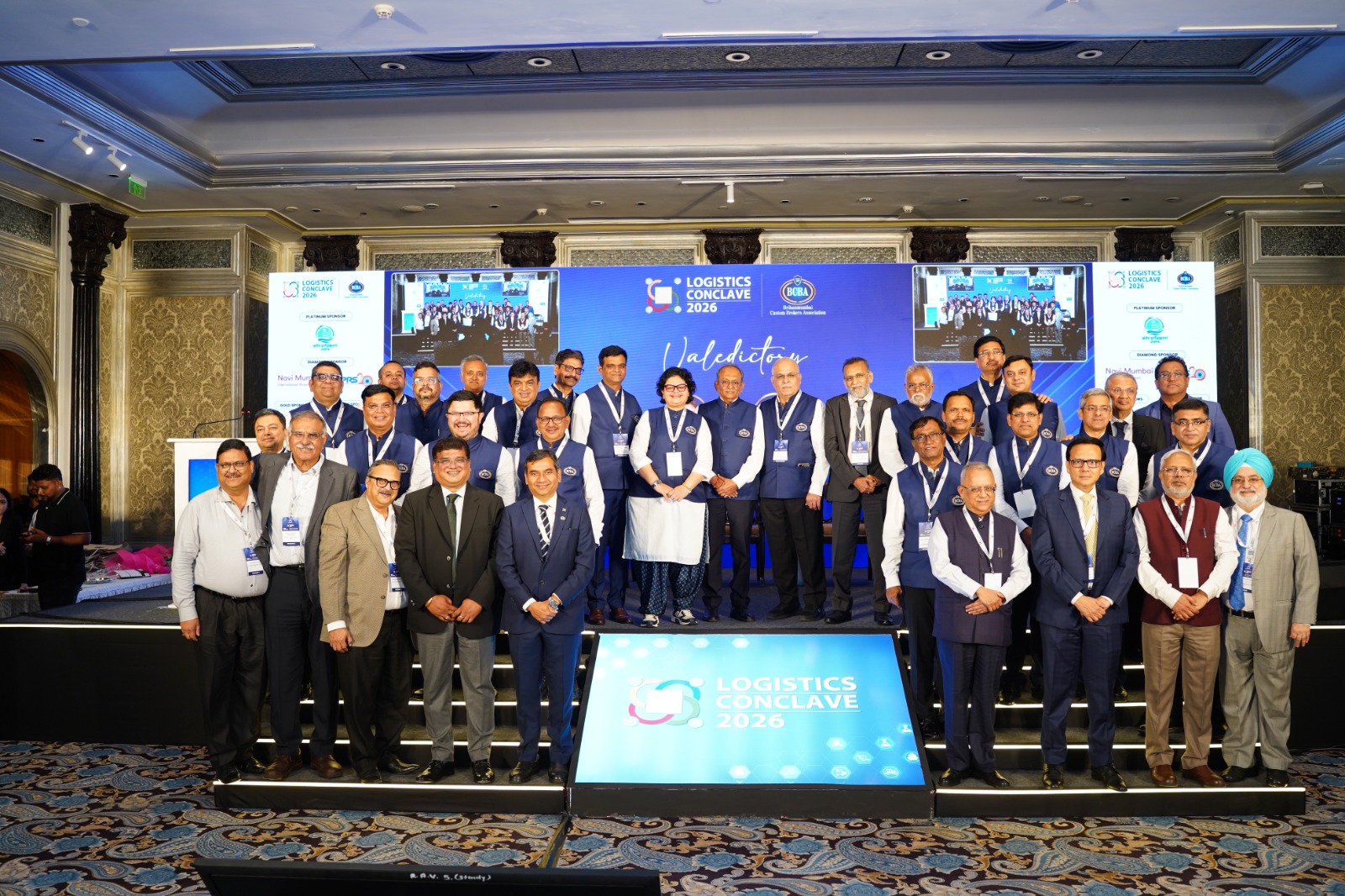
MUMBAI : The Brihanmumbai Custom Brokers’ Association (BCBA), established in 1939, successfully hosted the second edition of The India Logistics Conclave 2026 at The Taj Mahal Palace, Mumbai, drawing more than 550 delegates, invitees and guests from across the customs, ports, shipping, trade and logistics ecosystem. Anchored in the theme “One Fraternity, One Vision — Logistics Driving India Towards Viksit Bharat,” the day-long Conclave brought senior government leadership and industry stalwarts onto one platform to chart the road to a developed India by 2047.

The proceedings began at 09:45 a.m. with the ceremonial inauguration of the CBIC Pavilion, followed by the Inaugural Session. In a defining moment, Shri Vivek Chaturvedi, Chairman, Central Board of Indirect Taxes & Customs (CBIC), delivered the welcome address live online, sharing the Board’s vision for a modern, trust-based and technology-led customs administration — received by the fraternity as a source of great strength and inspiration.

BCBA Inaugural Session BCBA hosts landmark Second Edition of the 'India Logistics Conclave 2026' in Mumbai

The inaugural dais featured an eminent gathering of dignitaries. These included Shri Yogendra Garg, Member (Customs), CBIC; Shri Anupam Prakash, Joint Secretary, Customs; Shri Sushil Mansing Khopde, IPS, Additional Director General of Shipping; Shri Sunil Jain, IRS, Director General of Valuation; Capt. BVJK Sharma, Chief Executive Officer, Navi Mumbai International Airport; Capt. Deepak Tiwari, Managing Director, MSC India and Chairman, CSLA; Shri Om Hisaria, Senior Executive Vice President, Reliance Industries Limited; and Mr Mukesh Oza, Group President & CEO, Samsara Group. They were joined on the dais by BCBA President Mr Sanjeev Harale and Senior Vice President Mr Paresh Thakkar.

“To see this fraternity stand shoulder to shoulder with the highest offices of government and industry, under one roof and one vision, has been deeply humbling,” said Mr Paresh Thakkar, Senior Vice President, BCBA. “What we have built over two editions is not merely an event, but a platform where the customs broker’s voice is heard, respected and woven into the national agenda. That is the legacy we intend to carry forward.”

The intellectual heart of the Conclave lay in its four business sessions, each a moderated plenary of national stature.

BCBA Logistics Conclave 2026 Session 1 BCBA hosts landmark Second Edition of the 'India Logistics Conclave 2026' in Mumbai

Session 1, “India 2030, 2035, 2047 — A Roadmap for Viksit Bharat,” was moderated by Mr Shantanu Bhadkamkar and brought together Shri Yogendra Garg, Member (Customs), CBIC; Mr Shailesh Haribhakti, eminent voice on economy and governance; Capt. Deepak Tiwari of MSC India and CSLA; Dr Prasad Pradhan, senior strategy and resilience advisor; and Mr Rahul Ahluwalia, Director & Co-Founder, Foundation for Economic Development.

BCBA Logistics Conclave 2026 Session 2 BCBA hosts landmark Second Edition of the 'India Logistics Conclave 2026' in Mumbai

Session 2, “Building India’s Digital Spine — Customs & Trade,” was moderated by Mr Dushyant Mulani. The panel comprised Shri Anupam Prakash, Joint Secretary, Customs; Shri Gaurav Dayal, IAS, Chairman, Jawaharlal Nehru Port Authority; Shri Parvinder Singh, Managing Director, Hans Infomatic; Mr Kunal Maheshwari, Director, Softlink Global; Mr Faisal Khan, Foundation for Economic Development; and Mr Amit Kamat, Chairman, FFFAI.

“Custom Brokers are now playing a nodal role in India’s EXIM Logistics, they are quiet backbone of India’s trade, and forums like this one finally give that contribution the recognition it deserves,” said Mr Dushyant Mulani, Immediate Past President, BCBA. “Keeping National interest of being Globally Competitive it is imperative that government and trade sit at the same table as partners to conceptualise further trade facilitation measures to ensure the entire ecosystem moves faster — and that partnership is the real achievement of this Conclave.”

BCBA Logistics Conclave 2026 Session 3 BCBA hosts landmark Second Edition of the 'India Logistics Conclave 2026' in Mumbai

Session 3, “Geopolitics and the New Geometry of Trade,” was moderated by Mr Tej Contractor and featured Dr Pritam Banerjee of the Indian Institute of Foreign Trade; Mr Sachin Vijan, Vanguard Logistics Services; Mr Fardeen Malbarwalla, Galaxy Freight; Mr S. Mahesh Mahalingam, Head — EXIM, Larsen & Toubro; and Dr Rumki Majumdar, Director & Economist, Deloitte India.

BCBA Logistics Conclave 2026 Session 4 BCBA hosts landmark Second Edition of the 'India Logistics Conclave 2026' in Mumbai

Session 4, “Policy and Infrastructure — Building India’s Futuristic Logistics Ecosystem,” was moderated by Mr Mihir Parekh of the Foundation for Economic Development, who served as moderator cum panellist. The session brought together Shri Unmesh Sharad Wagh, IRS, Commissioner General, JNCH; Shri Ravish Kumar Singh, IRTS, Deputy Chairman, JNPA; Shri Sagar Rameshrao Kadu, Director (Logistics Division), DPIIT; Dr Rekha Raikar Kumar, Senior Advisor, Land Port Authority of India; and Mr Rajiv Chohan, Aegis Vopak Group.

The Valedictory Session, themed “Logisticians — Building a Better India,” offered an inspiring close. It was led by Mr Dhimant Parekh, Founder & CEO of The Better India — the world’s largest positive-impact storytelling platform — and Mr S. Ramakrishna, Past Chairman of FFFAI, who reflected on conviction, reinvention and the logistician’s role in nation building.

“This Conclave reaffirmed that the customs broker and freight forwarder are not mere facilitators, but true partners in India’s growth story,” said Mr Sanjeev Harale, President, BCBA. “The participation of the highest echelons of government and industry, and the warmth of over 550 delegates, is a powerful testament to the strength of our fraternity and our shared resolve to drive India towards Viksit Bharat.”

The Conclave was made possible by the generous support of its partners. The BCBA extends profound gratitude to the Jawaharlal Nehru Port Authority (Platinum Sponsor); Navi Mumbai International Airport and MPRS Shipping (Diamond Sponsors); Softlink Global Private Limited (Gold Sponsor); and Reliance Industries Limited (Silver Sponsor). The Association also acknowledges Parekh Global (Lunch Sponsor); Conex CFS, Polaris CFS and Globicon CFS (Delegate Kit Sponsors); Galaxy Freight (Seat Sponsor); Mumbai Cargo Service Center (Lanyard Sponsor); and Unifo (Hi-Tea Sponsor); and DBS Bank (Banking Partner). The BCBA further thanks our Bronze and Associate Sponsors, along with its Media Partners and supporting organisations, whose collective faith — despite a challenging global environment — was vital to the success of the event.

As the second edition closed, the BCBA expressed deep appreciation to every delegate, dignitary, speaker, moderator and partner who made the day a success. The Association reaffirmed its commitment to serving as a unifying voice for the fraternity and advancing the national conversation on India’s logistics future.

About BCBA:

The BCBA, established in 1939, is one of India’s oldest and most respected representative bodies for customs brokers, serving as a unifying voice for the customs, trade and logistics fraternity.
For media enquiries, please contact the BCBA.

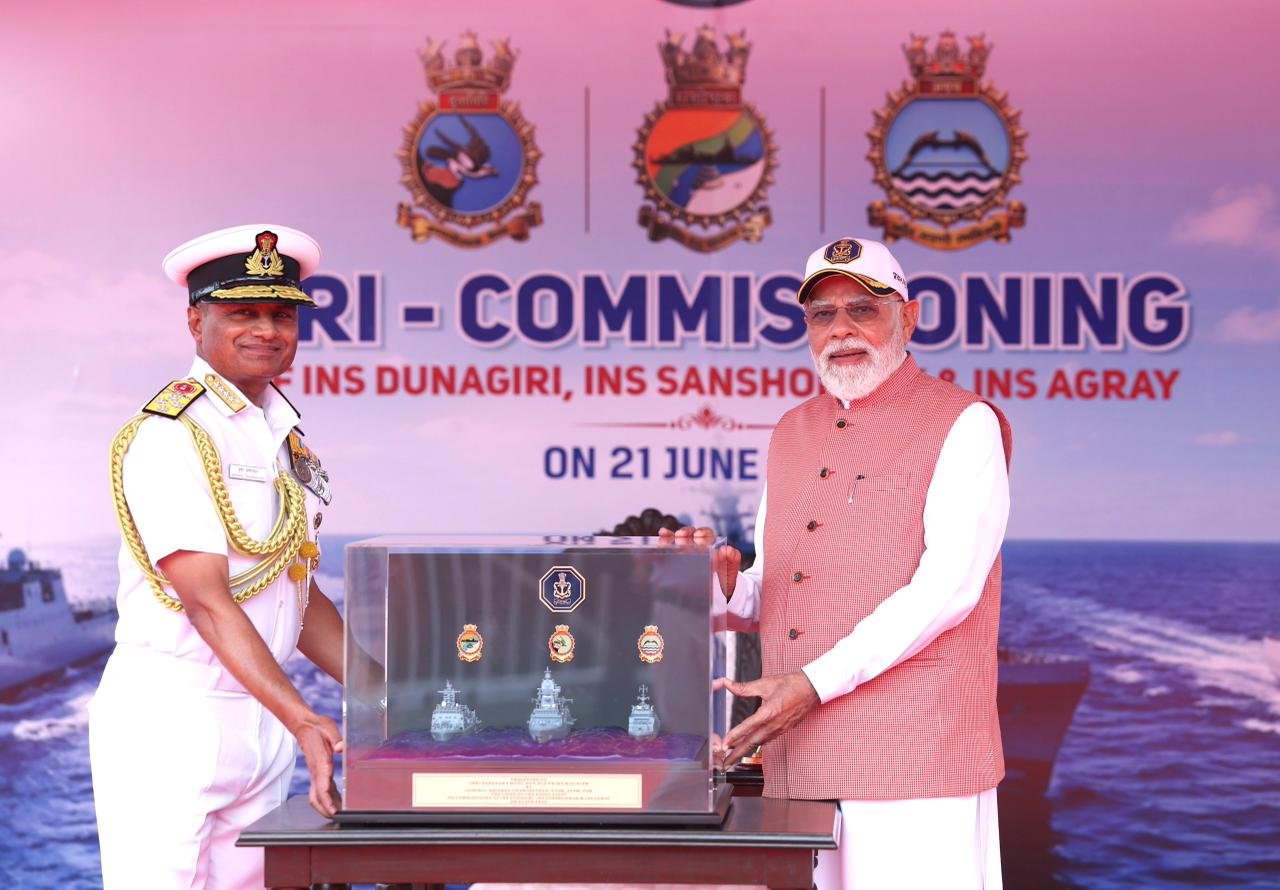
PM Modi commissions three indigenously designed and built naval ships – INS Dunagiri, INS Sanshodhak and INS Agray at SMP Kolkata

KOLKATA: Prime Minister, Shri Narendra Modi, Sunday commissioned three indigenously designed and built naval ships – INS Dunagiri, an advanced stealth frigate, INS Sanshodhak, a survey vessel (large) and INS Agray, an anti-submarine warfare shallow water craft, at Syama Prasad Mookerjee Port, Kolkata, West Bengal. These inductions will significantly bolster the nation’s operational capabilities, enhance maritime domain awareness, and strengthen the security of our coastal waters against geopolitical threats. All three ships were designed by the Indian Navy’s Warship Design Bureau and constructed in Kolkata by Garden Reach Shipbuilders & Engineers (GRSE), with extensive participation by Indian industry, including more than 200 MSMEs. With an indigenous content of over 75 percent, these ships are also a testament to India’s commitment to Aatmanirbharta.

Addressing the gathering, the Prime Minister noted that the occasion coincides with the International Day of Yoga being celebrated across the world and expressed happiness at having the opportunity to visit the historic land of Bengal, which has played a pivotal role in shaping India’s intellectual, cultural and national renaissance and has connected India with the world through maritime routes for centuries. “The event represented an important milestone in the journey towards an Aatmanirbhar Bharat, a secure India and a developed India”, Shri Modi noted. He pointed out that June 21 is also observed globally as World Hydrography Day and described it as a remarkable coincidence that India’s most advanced hydrographic survey vessel, INS Sanshodhak, is commissioned on the same day. Congratulating the Indian Navy, scientists, engineers, workers and all citizens of the country, Shri Modi said the achievement reflected India’s growing technological and maritime capabilities. “No nation can emerge as a major power without strong maritime capabilities. Development, security and prosperity are closely linked to the oceans. Most of the world’s trade moves through sea routes, while vast global data networks operate beneath the oceans”, Shi Modi stated while emphasizing the importance of maritime strength in the modern world. He further noted that critical minerals, deep-sea resources and future sources of energy will increasingly be connected to the maritime domain. Therefore, he said, a nation’s economic and strategic influence is directly linked to the strength of its maritime sector.

Shri Modi stated that India fully understands this reality and is preparing itself accordingly. “The commissioning of the three naval platforms stands as testimony to the country’s growing capabilities and skills”, he remarked. Recalling the commissioning of INS Vikrant, he said that it had marked the beginning of a new chapter in India’s maritime journey and announced India’s growing naval strength to the world. He noted that the journey from INS Vikrant to the commissioning of INS Agray, INS Dunagiri and INS Sanshodhak is not merely a story of new warships but also a reflection of India’s increasing self-reliance. “All three vessels symbolize India’s commitment to indigenous design, manufacturing and innovation. Designed and built in India, the vessels showcase the talent of Indian industries, the expertise of Indian engineers and the hard work of Indian workers”, Shri Modi underscored. 

Shri Modi asserted that India does not wish to remain merely a buyer in the defence sector. “The strength of the nation’s military cannot be measured by its dependence on global markets but by its ability to become self-reliant. India seeks to become a producer and a manufacturer, because nations that manufacture become decisive players on the global stage”, he added. Highlighting recent achievements, the Prime Minister noted that more than 40 indigenously built warships and submarines have been inducted into the Indian Navy over the past few years. He remarked that nearly every few weeks the Navy has received a new capability, while 45 major naval platforms are currently under construction. These figures, he said, are not merely statistics but indicators of India’s industrial capacity and future potential.

Underlining the immense employment-generating potential of the maritime sector, Shri Modi said, “The Government views the maritime sector not as an isolated industry but as a major engine of employment and economic growth for a developed India. A modern ship requires large quantities of steel, electronics, machinery and thousands of components, creating opportunities across extensive industrial supply chains”. Referring to the three commissioned vessels, he noted that more than 200 MSMEs contributed to their construction, generating substantial employment and economic activity across the country.

Shri Modi stated that the time has come for India to enter the next phase of maritime development, and the Government has adopted a new vision for the shipbuilding sector and has introduced several policy reforms in recent years to enhance domestic manufacturing capabilities. “The ₹70,000 crore incentive package announced for the shipping sector is not merely an economic measure but an investment in India’s maritime future and industrial expansion. Initiatives such as Sagarmala reflect this comprehensive vision and are helping reduce logistics costs, accelerate industrial growth and create new opportunities in coastal regions” he stated.

Reflecting on India’s transformation in the defence sector, Shri Modi observed that there was a time when India was counted among the world’s largest defence importers, creating both strategic and security challenges. Following the formation of the Government in 2014, he said, a determined effort was made to change this situation through major policy reforms and a strong emphasis on self-reliance in defence manufacturing. “These efforts have opened new opportunities in defence design, manufacturing and exports. While India’s total defence production stood at around ₹40,000 crore in 2014, it has now risen to nearly ₹1.8 lakh crore, demonstrating the significant progress made towards building a strong, self-reliant and globally competitive defence industry”, he remarked. Shri Modi emphasized that the progress made over the past twelve years demonstrates how transformative change becomes possible when policies are clear, direction is correct, and all stakeholders work together with a shared commitment towards national development.

Referring to India’s rich maritime heritage, the Prime Minister said that the name of West Bengal naturally comes to mind whenever the country’s maritime legacy is discussed. He observed that Bengal has historically played a crucial role in India’s maritime connections with the world. The waters of the Hooghly River, he said, have witnessed changing chapters of history, the growth of trade, and new journeys of development. He also noted that the port bears the name of Dr. Syama Prasad Mookerjee, the son of Bengal and India’s first Minister for Industry, making the occasion even more significant. “West Bengal is poised to become a major hub for India’s Blue Economy, maritime manufacturing, logistics and coastal development in the years ahead”, Shri Modi stated.

Shri Modi reiterated that India has always viewed the oceans as a medium for cooperation and connectivity. “Security is indispensable for protecting prosperity, while self-reliance is necessary for building the future.  INS Agray, INS Dunagiri and INS Sanshodhak embody these very ideals and symbolize a nation that is increasingly aware of its capabilities, confident in its strengths and determined to move forward with renewed energy and purpose in the twenty-first century” he emphasised.

Concluding his address, the Prime Minister extended his best wishes to all personnel of the Indian Navy, scientists, engineers, workers and all citizens for their contribution to these achievements and expressed confidence that India’s maritime and defence sectors would continue to strengthen the nation’s security, prosperity and global standing.

CONCOR and CMA CGM explore new avenues for strategic collaboration in integrated logistics

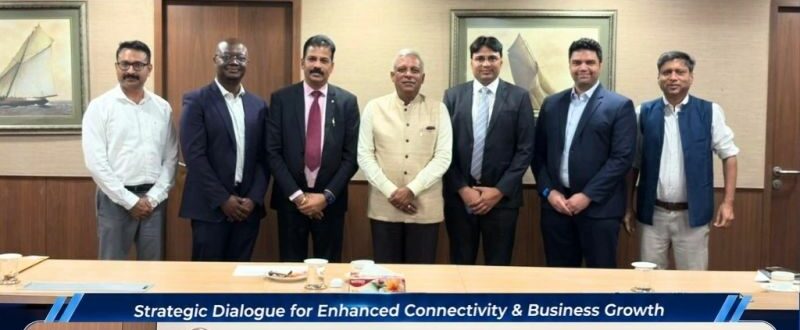
NEW DELHI : Container Corporation of India Limited (CONCOR) Chairman and Managing Director Shri Sanjay Swarup chaired a strategic meeting with senior representatives of CMA CGM to explore new business opportunities and strengthen collaboration across the logistics value chain.

The meeting focused on identifying avenues to enhance multimodal connectivity, develop customer-centric logistics solutions, and leverage mutual strengths to drive sustainable growth in an increasingly interconnected global trade environment.

Discussions also covered opportunities to improve supply chain efficiency through greater integration of rail, port, inland logistics, and value-added services, aligning with evolving customer requirements and emerging trade patterns.

The engagement underscores CONCOR’s continued commitment to delivering seamless, efficient, and future-ready logistics solutions while fostering long-term partnerships with leading global logistics stakeholders.

Speaking on the occasion, Shri Sanjay Swarup reaffirmed CONCOR’s focus on building collaborative ecosystems that enhance operational excellence, strengthen supply chain resilience, and support India’s growing role in global commerce.

As India’s premier multimodal logistics service provider, CONCOR continues to work closely with international shipping lines, logistics companies, and industry partners to create innovative and sustainable logistics solutions that facilitate trade and improve ease of doing business.

The collaboration with CMA CGM is expected to further strengthen logistics connectivity and unlock new opportunities for integrated supply chain solutions, contributing to the development of a more efficient and competitive logistics ecosystem.

About CONCOR

Container Corporation of India Limited (CONCOR), a Navratna Public Sector Enterprise under the Ministry of Railways, is India’s leading multimodal logistics company, offering end-to-end containerised cargo transportation and logistics solutions through an extensive network of inland container depots, terminals, and rail services across the country.

Adani Logistics launches first double-stack container train from JNPT to ICD Tumb

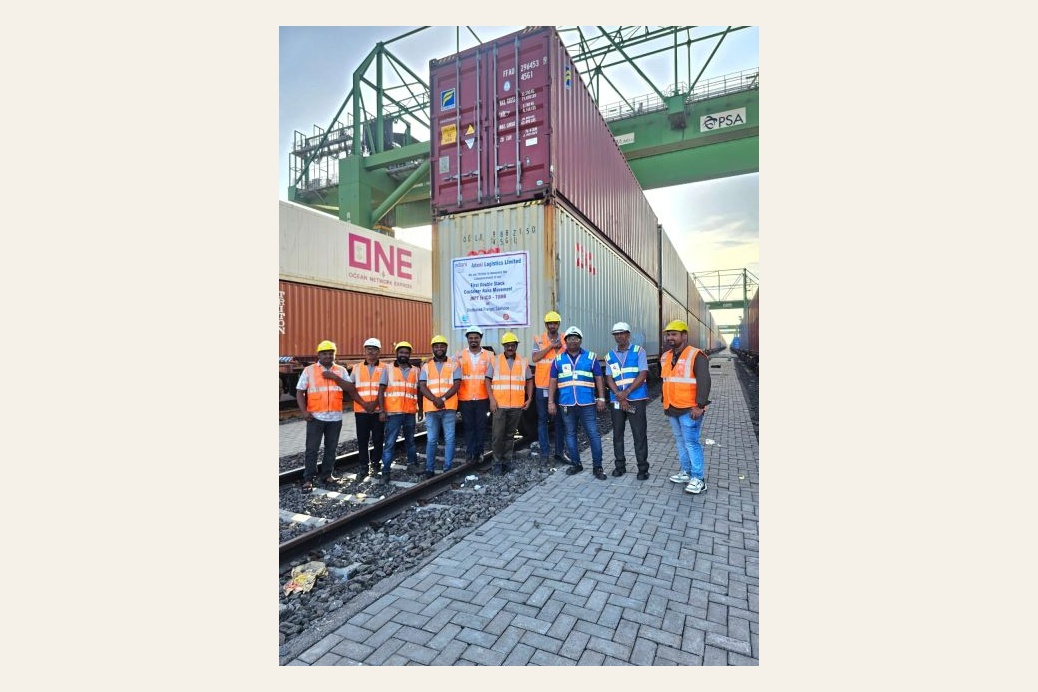
MUMBAI : In a landmark development for India’s logistics and multimodal transportation sector, Adani Logistics successfully operated its first double-stack container train from Jawaharlal Nehru Port (JNPT) to ICD Tumb following the receipt of the much-awaited regulatory approval for double-stack train operations on the corridor.

The inaugural movement marks a significant milestone in the evolution of rail-based container transportation in western India and is expected to enhance the efficiency of cargo evacuation from the country’s premier container gateway. The introduction of double-stack operations will enable the movement of a larger number of containers in a single train, substantially improving asset utilization, reducing transit costs, and increasing overall supply chain efficiency.

1781966673008 Adani Logistics launches first double-stack container train from JNPT to ICD Tumb

The new service is expected to provide importers and exporters with a faster, more reliable, and cost-effective transportation solution. By allowing greater cargo volumes to move by rail, the initiative is also poised to accelerate the modal shift from road to rail, helping reduce highway congestion, lower logistics costs, and support environmentally sustainable freight movement through reduced carbon emissions.

Industry stakeholders have long awaited the commencement of double-stack operations on this route, considering its potential to transform cargo flows between JNPT and the key industrial and manufacturing clusters served by ICD Tumb. The development aligns with India’s broader vision of promoting multimodal logistics, enhancing rail freight share, and improving the ease of doing business through world-class infrastructure.

With double-stack connectivity now operational, Adani Logistics is expected to further strengthen hinterland connectivity, improve turnaround times, and unlock new growth opportunities for customers across sectors. The milestone underscores the company’s continued commitment to developing innovative logistics solutions and supporting India’s rapidly expanding trade ecosystem.

The successful launch heralds a new chapter in container rail transportation, promising greater efficiency, competitiveness, and sustainability for the nation’s supply chains. As stakeholders across the logistics value chain welcome this achievement, the future looks increasingly promising for rail-led freight movement in India.

DFCCIL achieves major milestone with first double-stack container train from JNPT on WDFC

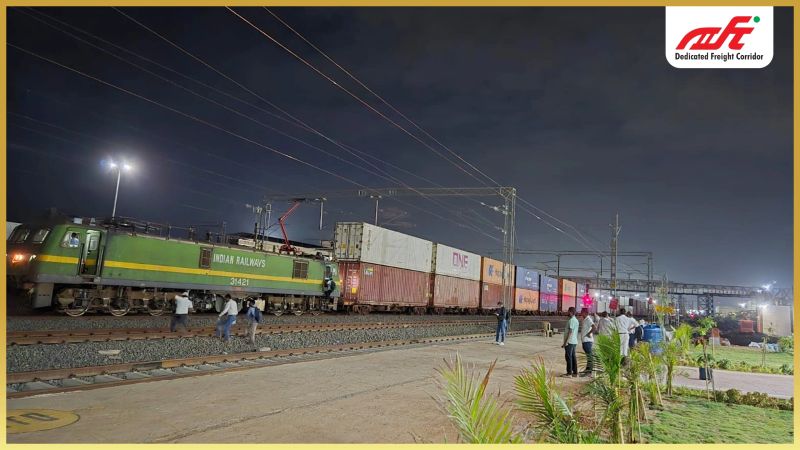
NEW DELHI : In a landmark achievement for India’s freight transportation sector, Dedicated Freight Corridor Corporation of India Limited (DFCCIL) successfully facilitated the operation of the first double-stack container train originating from Jawaharlal Nehru Port (JNPT) on the Western Dedicated Freight Corridor (WDFC).

The milestone marks a transformative step in India’s logistics modernization journey and underscores the seamless integration of the country’s largest container port with the fully operational high-capacity freight corridor.

Designed to support heavy-haul and high-speed freight movement, the Western Dedicated Freight Corridor is equipped with high-rise overhead electrification systems, enabling the operation of double-stack container trains and significantly enhancing freight-carrying capacity.

The commencement of double-stack services from JNPT is expected to revolutionize cargo evacuation from the port by facilitating faster, more reliable, and cost-effective movement of import and export containers to key hinterland destinations. The initiative will help reduce transit times, improve asset utilization, and optimize supply chain efficiency for trade and industry.

By enabling the movement of a greater volume of cargo in a single journey, double-stack operations are also expected to drive a substantial modal shift from road to rail, reducing highway congestion, lowering fuel consumption, and contributing to India’s carbon reduction goals.

The successful integration of JNPT with the WDFC reinforces the Government of India’s commitment to developing a world-class, multimodal logistics ecosystem under the PM Gati Shakti National Master Plan and the National Logistics Policy.

This achievement highlights DFCCIL’s pivotal role in creating a future-ready freight transportation network capable of supporting the nation’s growing trade volumes and ambitious economic aspirations.

The launch represents not only an operational milestone but also a significant step towards realizing the vision of a modern, sustainable, technology-driven, and globally competitive logistics infrastructure for India.

DFCCIL expressed appreciation to all stakeholders, including the Ministry of Railways, port authorities, container train operators, logistics partners, and industry participants whose collaborative efforts made this landmark achievement possible.

With the Western Dedicated Freight Corridor now fully operational and integrated with major ports and logistics hubs, India is poised to witness a new era of efficient, sustainable, and rail-led freight movement.