Home Blog Page 257

Europe Can Price Carbon. Can It Actually Cut It?

By Sjoerd de Jager, PortXchange Co-Founder & Managing Director

The EU ETS benchmark values for 2026–2030 will be adopted by an implementing act. Following the 4-week public consultation launched last month and the scrutiny by EU Member States in the Climate Change Committee, the Commission will adopt the benchmarks by the end of June.

 Europe is doing what Europe does.

Six countries demanding relief. Italy freezing. France and Germany tinkering with technical exemptions. Spain, Portugal, Slovenia and Luxembourg are drawing lines in the sand. Each with a position paper. Each with a red line.

The EU ETS, the system that forces industry to pay for every tonne of carbon it emits, has become a fight over who pays and how much. That is the wrong fight.

Because, while Brussels argues, shipping is still pumping carbon into the atmosphere at the same berths, the same anchorages, the same congested gates it used five years ago.

That gap, between the politics and the physics, is what nobody wants to say out loud.

EU ETS Works. Just Not For Shipping.

Before anyone reaches for the usual complaints about carbon pricing, look at the evidence.

For power plants and factories, the EU ETS has halved verified emissions since 2005. Fifty-one per cent. Gone. A further 1.3% fell in 2025. The system generated €38.8 billion in revenue last year alone, with an additional €135.8 billion expected to flow into decarbonisation budgets by 2030.

This is not a failing system. For industries that could not move, it has delivered.

That is the sentence shipping needs to understand. Power stations cannot reroute through a non-EU jurisdiction. A vessel can. And as carbon allowances are projected to hit €126 per tonne by 2030, with some scenarios pushing to €150, the financial incentive to find the route, or the gateway that keeps the cost off the ledger, will become overwhelming.

Pricing carbon is not the problem. Pricing carbon for an industry that can simply leave is a problem which is entirely different from the one it faces. And Europe has not solved it.

We should debate the behaviour, not the bill.

The current ETS argument has narrowed itself to cost.

Who gets free allowances? How fast benchmarks fall? How much pain can the industry absorb before competitiveness cracks? These are real questions and nobody seriously pretends otherwise.

But they are the wrong questions.

Because if price is the only signal Europe sends, companies will do what companies always do: optimise around it. A vessel reroutes. Cargo finds a different gateway. Industrial activity migrates. The spreadsheet improves. The atmosphere does not notice or care.

Carbon pricing without behaviour change is not decarbonisation. It is a very expensive way to generate revenue while congratulating ourselves on our ambition.

January 2026 marked the moment shipping companies became liable for 100% of their verified EU ETS emissions, and the first year in which methane and nitrous oxide entered the scope alongside CO2. The Commission’s formal review is now live. The political theatre is at full volume at exactly the moment that only one number matters: are verified emissions actually falling?

Ports Are Where Theory Dies Or Doesn’t

Forget the passive port.

What is replacing it is the most complicated node in the entire supply chain. Energy hub. Data hub. Emissions hub. The single point where shipping, terminals, inland transport, cargo owners, regulators and local communities all simultaneously come together, under pressure, with incompatible incentives.

When Europe changes the carbon rules, ports feel it before anyone else. Not in policy documents or sustainability strategies. In berth planning. In vessel waiting times. In truck queues that nobody is managing. In terminal operations, running on stale data. In the customer call, asking why the Scope 3 numbers just went in the wrong direction.

This is where climate policy either becomes operational action or another layer of reporting that everyone files and nobody changes their behaviour because of.

And if recent industry conversations are any indication, we should be worried. Over the past few months, I have attended several decarbonisation conferences and industry events and the discussions have been refreshingly blunt. The mood in many rooms was not that shipping is moving too slowly by accident. It was that much of the industry is still planning to move at the last possible moment.

More than one conversation came back to the same expectation: many market participants will wait until the pressure becomes unavoidable, then scramble to comply just before key deadlines arrive. We have seen this before. A target is set, everyone acknowledges it, the industry spends years discussing the complexity and then the real action begins when the deadline is almost impossible to ignore.

The same tension is visible around cargo owners. Sustainability commitments are becoming more visible, and many companies are starting to talk seriously about Scope 3 emissions. But in the rooms I have been in, shipping lines are not yet convinced that cargo owners are ready to absorb the real cost of decarbonisation. One comment I heard more than once was brutally direct: “We won’t pay for ETS. That’s a problem for the shippers to solve.”

The Cheapest Carbon Is The Stuff You Never Emit

Maritime decarbonisation gets told as a story about future technology. Green ammonia. Shore power. Carbon capture. New hull designs. Fleet renewal. The 2035 horizon. All of it matters. None of it is an excuse.

Because ships are sitting at anchor right now, burning fuel, generating carbon, waiting for a berth that is not ready. A UCL and UMAS study published in December 2024 found that vessels spend between 4 and 6% of their operational time, that is, fifteen to twenty-two days per year, waiting at anchor outside ports. Optimising arrivals to account for congestion could cut voyage emissions by up to 25% for some vessel types. Container ships average around 10%.

No new technology. No infrastructure investment. No 2035 solution required.

Just ten stakeholders stopped working on ten different versions of the same data.

This is a coordination problem, first and foremost. And coordination problems do not wait for the next budget cycle or the next regulatory review. They wait for someone to decide that the status quo is more embarrassing than the alternative.

So far, not enough people have reached that conclusion.

Stop Reporting. Start Managing.

Too many ports are being handed the wrong instruments. Annual reports. Static averages. Fragmented data across incompatible systems. Methodologies that disagree with each other about basic definitions. Sustainability presentations that look serious and tell nobody what to do differently when the shift begins on Monday morning.

That is not emissions management. That is emissions documentation. And it will not survive the review.

Shipping companies reported 89.8 million tonnes of verified CO2 under the EU MRV system in 2024. That number is sitting on the Commission’s desk right now. If the review finds that the system is generating nearly €39 billion a year in revenue while berth-level behaviour has not changed, that will be difficult to defend, politically, commercially and in front of every port community that was told change was coming.

The ports that come out of this fully operational will not be the best at filing compliance reports. They will be the ones with control over where their emissions are generated, what causes them and which stakeholders have the actual power to do something about it before the next reporting period closes.

The Real Test Is Not The Regulation

The ETS review will produce more position papers. More resistance. More compromise dressed as progress. That is how Brussels has always worked and that is not going to change this year.

But here is what the stationary sector proved over twenty years: the instrument works when industry cannot move around it.

Shipping is mobile by design. It is global by design. It was built for regulatory arbitrage long before that phrase existed.

And Europe is not built to catch it.

EU regulation moves by consensus, shaped by lobby groups with deep pockets and longer memories than most commissioners. It shifts every four years with the political weather. The six countries currently demanding ETS relief are not outliers,  they are the system working exactly as was designed to.

So waiting for Brussels to tighten its grip is not a strategy. It is a way of postponing the conversation that actually matters.

The emissions that can be cut right now do not require stronger regulation. They do not require political consensus or a lobbying budget or a four-year wait for the next Commission. They require ports, terminals, shippers and cargo owners to stop pretending that operational waste is someone else’s carbon problem.

So the ports that wait for Brussels to force the issue will be waiting a long time. The ones that move now, before the deadline pressure, before the 2034 scramble, before the next Commission resets the clock, will have built something that regulation cannot give them and cannot take away: actual operational grip on their own emissions.

The ports that win this decade will not be the ones that explained their emissions best.

They will be the ones that stopped producing them.

That is the only version of this story the atmosphere has any interest in.

Author:

Mr. Sjoerd de Jager, PortXchange Co-Founder & Managing Director

PM chairs 11th Governing Council Meeting of NITI Aayog

NEW DELHI : Prime Minister Shri Narendra Modi chaired the 11th Governing Council Meeting of NITI Aayog at Rashtrapati Bhavan Cultural Centre, New Delhi, earlier on Thursday. This year’s theme was Inclusive Human Development for Viksit Bharat@2047. It was attended by Chief Ministers, Lt. Governors and Administrators representing 28 States and 5 UTs. This was the first time when Chief Ministers of all 28 States participated in the Governing Council Meeting of NITI Aayog.

pm modi niti aaoyog 1 PM chairs 11th Governing Council Meeting of NITI Aayog

Prime Minister noted that at a time when many major economies are facing uncertainty and economic challenges, India’s growth story continues to inspire the world. He emphasized the need to further strengthen the nation’s resolve towards self-reliance and highlighted the importance of adopting and implementing global best practices, particularly in the renewable energy sector.

Underscoring the importance of cooperative federalism, Prime Minister stated that the Centre and the States must work together to achieve the goal of a Viksit Bharat. He stressed that the vision of Viksit Bharat should become the collective resolve of every State, district, block and village.

Highlighting the strength of India’s demographic profile, Prime Minister observed that the country’s youth constitute its greatest asset, with nearly 70 crore Indians below the age of 25 years. Calling this a demographic dividend, he urged States to focus on transforming it into a development dividend through education, skilling and capacity-building initiatives that prepare young people for future opportunities and challenges.

Referring to India’s recently concluded trade agreements with several countries, Prime Minister encouraged States to create opportunities for youth and MSMEs and to equip stakeholders to effectively leverage the benefits arising from these agreements. He also urged States to actively attract investments from partner countries.

Emphasizing women-led development, Prime Minister called upon States to work towards increasing the number of Lakhpati Didis from 3 crore to 6 crore and stressed the importance of ensuring a safe and secure environment for Nari Shakti.

Prime Minister urged States to focus on One District One Product (ODOP) initiatives and develop export-oriented strategies around it. He also identified defence manufacturing as an emerging sector where India is establishing a distinct identity and encouraged States to formulate policies to leverage the opportunities arising from its growth.

Prime Minister highlighted the need for coordinated efforts to address emerging social challenges such as drug abuse and cyber fraud through preventive measures, awareness campaigns and effective governance.

Prime Minister also drew attention to concerns arising from El Niño conditions and appealed to States to promote water conservation and encourage natural and organic farming practices. He noted that the purchase of 11 lakh tonnes of organic manure by farmers during the current Kharif season reflected growing confidence in sustainable agriculture.

Prime Minister emphasized the need to evaluate progress at the district level, particularly through aspirational district parameters. Prime Minister suggested that on similar lines, 100 districts should be identified in the field of agriculture to bring positive results. He urged the States to take lead in this pursuit so that a phenomenal change can be achieved through the aspirational approach.

Prime Minister emphasised the need for a monitoring framework and targeted 100-day and five-year goals towards achieving the vision of Viksit Bharat@2047.

Highlighting the importance of good governance, transparency, and infrastructure for attracting investment, he urged States to focus on branding, ease of doing business, and emerging opportunities in sectors such as data centres and artificial intelligence. He emphasized that AI should be viewed as an opportunity and called for greater efforts to equip people with the skills required for the future economy.

The Chief Ministers/Lt. Governors/Administrators congratulated Prime Minister Modi on completing 12 years in his office. They also expressed solidarity with the Centre to withstand the global geo-political crisis and to strengthen India’s resilience with respect to energy requirements, and sustain its growth trajectory.

Prime Minister noted that the discussions were constructive and reflected the aspirations, hopes, experiences, best practices, and challenges of the States. Prime Minister expressed his gratitude to all the CMs, LGs and Administrators for participating in the meeting and expressed confidence that Together, through cooperation, innovation, and a shared commitment to development, India can accelerate its journey towards a Viksit Bharat by 2047.

HM Amit Shah inaugurates Land Port Management System Vinimay for digital border management

NEW DELHI: Union Home Minister Shri Amit Shah inaugurated the Land Port Management System (LPMS) – Vinimay in New Delhi on Tuesday, marking a major step towards digitising and streamlining cargo processing and passenger movement across India’s land borders.

Addressing the gathering, Mr Shah said the initiative reflects the government’s commitment towards building a modern, technology-driven border management system. He said the platform is aligned with the vision of Viksit Bharat 2047 and will strengthen trade facilitation, connectivity and national security.

Mr Shah said the Ministry of Home Affairs is working on a four-pronged strategy to secure India’s borders under the Smart Border concept, and the Land Ports Authority will play a key role in this vision. He said LPMS and Smart Borders together will help create a more secure and modern border management framework, curb illegal activities and ensure a robust border security system.

The Home Minister added that the launch of the Vinimay platform marks an important milestone in the country’s governance journey and reflects the transformative changes brought about under the leadership of Prime Minister Shri Narendra Modi.

Mr Shah said the Land Port Management System has been designed as a modern, digital, integrated and real-time management platform, bringing all stakeholders onto a single interface. He said nearly 90 per cent of paperwork will be eliminated through the system, while the Single Electronic Window and Automatic Number Plate Recognition-based gate operations will significantly reduce processing time. 

Highlighting the transformation of land ports over the last 12 years, Mr Shah said trade through land ports has increased from 5 thousand crore rupees in 2014 to 83 thousand crore rupees at present, registering a 16-fold rise. He said 15 land ports are currently operational across the country and 11 more land ports are expected to become operational over the next two to three years. He added that land ports are playing an important role in reducing migration from border districts, strengthening local economies and enhancing people-to-people and cultural connectivity across borders.

The Land Port Management System, Vinimay, is a digital platform designed to integrate operations across land ports into a unified ecosystem. The system will facilitate secure, real-time exchange of logistics and regulatory information among stakeholders, bringing land ports at par with advanced digital systems operational at airports and seaports. The platform is expected to improve operational efficiency, enhance ease of doing business and ensure seamless movement of goods and passengers across India’s international land borders.

Piyush Goyal to visit Switzerland from June 12-13  to strengthen India–Switzerland

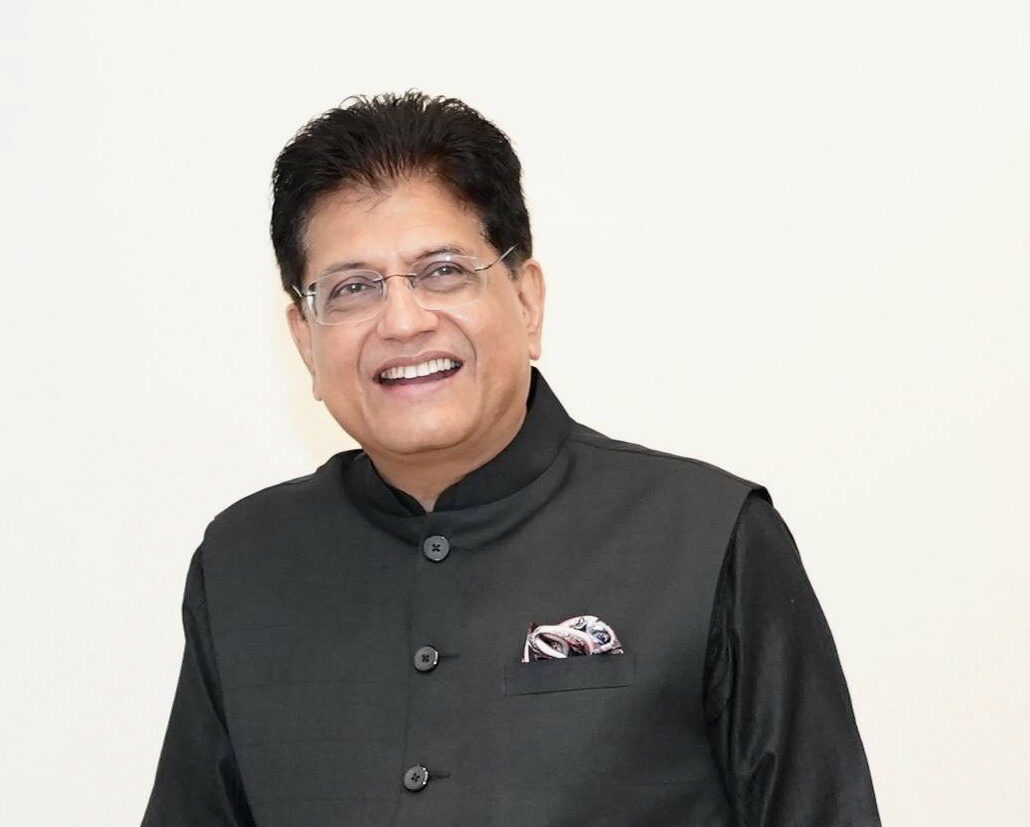
BERNE : Union Minister of Commerce and Industry, Shri Piyush Goyal, will visit Berne, Switzerland, today on 12 June 2026 for discussions with senior representatives of the Swiss Government and leaders of the Swiss pharmaceutical industry.

The visit underscores the importance India attaches to its economic engagement with Switzerland and the other EFTA States. India and the EFTA States—Switzerland, Norway, Liechtenstein and Iceland—signed the Trade and Economic Partnership Agreement (TEPA) in March 2024, which entered into force in October 2025. The Agreement provides a comprehensive framework for strengthening trade, investment and economic cooperation between the two sides.

During the visit, Shri Goyal is scheduled to meet Ms. Helene Budliger Artieda, State Secretary for Economic Affairs, and Mr. Guy Parmelin, Federal President of Switzerland. He will also interact with leading representatives of the Swiss pharmaceutical industry. Discussions are expected to focus on the implementation of TEPA, addressing operational issues arising from the Agreement, and enhancing bilateral trade, investment and institutional cooperation.

On the sidelines of the visit, the Minister will engage with Swiss companies and investors in Zurich to discuss opportunities for expanding bilateral trade and investment and to explore avenues for deeper economic collaboration.

Shri Goyal will be accompanied by senior officials from the Department for Promotion of Industry and Internal Trade (DPIIT) and the Ministry of Health and Family Welfare. The visit is expected to support the effective implementation of TEPA and further strengthen the longstanding economic partnership between India and Switzerland.

India’s FTAs with developed economies to support growth, innovation, quality upgradation and job creation: Piyush Goyal

NEW DELHI : Union Minister of Commerce and Industry Shri Piyush Goyal attended the closing session of the 5th Annual Meeting of India Global Innovation Connect in New Delhi on Thursday as the Chief Guest. Addressing the gathering, the Minister said that India’s strategy of entering into Free Trade Agreements (FTAs) with developed economies is designed to support the country’s long-term growth ambitions by expanding global engagement, attracting investments, promoting innovation, creating jobs, upgrading quality standards and increasing India’s participation in international trade.

Shri Goyal said India and Switzerland share a special relationship and noted that the Trade and Economic Partnership Agreement (TEPA) signed between India and the European Free Trade Association (EFTA) countries has created a strong framework for trade, investment and innovation-led partnerships. He said the agreement provides an important platform for Swiss and Indian companies to engage with one another and build long-term partnerships that will benefit both countries.

Referring specifically to the EFTA agreement, Shri Goyal said Switzerland, Norway, Liechtenstein and Iceland have committed to bring USD 100 billion of investment into India over a period of 15 years and support the creation of one million direct jobs. He said that while India was opening a large and growing market to these countries, the investment commitment formed an integral part of the agreement and helped create balance between the interests of both sides. He informed that India is currently in the second year of implementation of the agreement and that active discussions are underway regarding investments under the framework.

The Minister said India’s engagement with developed economies is based on complementarity rather than competition. Referring to Europe, the United States, Canada, Israel, the Gulf countries, Australia and New Zealand, he noted that these economies have significantly higher per capita incomes than India and are facing demographic challenges due to ageing populations. India, on the other hand, continues to benefit from a young workforce, with an average age below 30 years and an expected demographic advantage over the next three decades.

Shri Goyal observed that the cost of production and research and development in developed economies has risen significantly, affecting the competitiveness of goods and services produced there. He said partnerships between India and these countries create mutually beneficial opportunities by combining India’s youthful talent, competitive costs and growing market with the capital, technology and expertise available in developed economies.

The Minister highlighted that India has entered into nine FTAs over the last three to three-and-a-half years, covering 38 countries. He noted that all these partner countries have significantly higher per capita incomes than India. He said these agreements provide India access to new markets, facilitate collaboration in emerging technologies and enable greater integration into global value chains while creating opportunities for investment and employment generation.

Shri Goyal highlighted that many of these countries possess large pools of capital seeking productive investment opportunities and that India, with its rapidly growing economy and large domestic market of 1.4 billion aspirational consumers, offers a compelling destination for such investments. He said the combination of growing domestic demand, technological advancement and international partnerships places India in a strong position to achieve its long-term economic objectives.

The Minister said reforms have focused on reducing the burden of policies, procedures and compliances, simplifying taxation, introducing insolvency and bankruptcy reforms, reducing legal complexities and creating a more predictable business environment. He stated that the overall objective has been to create a congenial atmosphere for companies to invest, operate and expand in India.

Shri Goyal also highlighted the Government’s large-scale investments in infrastructure, stating that India is building infrastructure designed not merely for present requirements but for future growth. He said the country has benefited from the ability to leapfrog into modern infrastructure systems.

On the power sector, Shri Goyal said India today has a unified national grid of over 500 gigawatts. He noted that prior to 2014 the country operated through regional grids and that one of the early steps taken by the Government was to integrate them into a single national grid. According to the Minister, the unified grid has improved stability, facilitated greater efficiency and enabled the integration of substantial renewable energy capacity.

The Minister stated that more than 50 per cent of India’s installed electricity capacity now comes from renewable energy sources. He also noted that India achieved its Intended Nationally Determined Contributions (INDCs) under the Paris Agreement ahead of schedule and ranks among the leading performers on climate commitments within the G20.

Shri Goyal said that the combination of a unified power grid and growing renewable energy capacity has strengthened India’s attractiveness as a destination for data centres. He noted that India offers a stable democratic system, adherence to the rule of law, strong data protection and privacy frameworks and effective intellectual property protection, all of which are important considerations for global investors.

The Minister further highlighted India’s competitive advantages, including some of the world’s lowest data costs, relatively low construction costs, affordable industrial and office infrastructure, and a highly skilled workforce available at competitive costs. These factors, coupled with the scale offered by a domestic market of 1.4 billion people, are driving increasing interest from global companies seeking to establish manufacturing and services operations in India.

Addressing the issue of innovation and research, Shri Goyal acknowledged that India must invest more deeply in building an innovation culture. He said the Government is actively engaging with companies and countries to identify sectors where innovation-led investments can be encouraged. He emphasized that while incentives have a role to play, creating a supportive ecosystem is equally important for attracting research and development activities.

The Minister stated that the Government is continuously examining intellectual property frameworks to ensure they remain contemporary and supportive of innovation. He also highlighted the growing strength of India’s startup ecosystem, which is receiving support through both public funding and private investment.

He further stated that India possesses significant advantages for innovation, including abundant youthful talent, lower infrastructure costs and a large ecosystem that can support experimentation and clinical trials. The Minister said that partnerships between India and developed economies can help address challenges related to costs, scale and availability of talent while accelerating innovation outcomes.

Shri Goyal informed that the Government’s research and development innovation fund of approximately ₹1 lakh crore has recently begun operationalisation and that the first set of projects under the initiative has already been approved. He noted that successful innovation ecosystems in countries such as the United States, Switzerland and Israel evolved over many years and expressed confidence that India would witness significant progress in this area over time.

Addressing international trade, the Minister said that while certain countries have introduced measures to protect specific domestic industries, global trade continues to operate largely within a rules-based framework. He acknowledged that countries often adopt differing approaches depending on their domestic interests but stated that India remains committed to navigating such challenges through dialogue, cooperation and mutually beneficial engagement.

Shri Goyal reiterated that India welcomes all companies that manufacture in the country and contribute to employment and economic growth. He emphasized that the Government seeks to provide a level playing field to both Indian and foreign enterprises and encourages companies to use India as a base for serving both domestic and international markets.

The Minister expressed confidence that India’s economic transformation, supported by trade partnerships, infrastructure development, innovation-led growth and global engagement, would contribute significantly to the country’s development journey and help define its role in the global economy in the decades ahead.

WTO as a forum is not very effective now; India engages globally from position of strength: Piyush Goyal

NEW DELHI: Union Commerce and Industry Minister Shri Piyush Goyal on Thursday said the World Trade Organization (WTO) is “not very effective right now”, but asserted that global trade continues to function under the WTO framework and that India remains committed to expanding trade and investment partnerships despite rising protectionist trends.

Addressing the closing session of the fifth Annual Meeting of the India Global Innovation Connect (IGIC), Goyal said, “Fortunately, the WTO as a forum is not very effective right now. So action has to be almost bilateral, oftentimes in cooperation. But with that, as it may, I think, all world trade, at the aggregate, is still very much in its place, still working under the WTO framework.”

He further added that “India today works from a position of strength when it’s engaged with other countries. We are able to navigate this in the spirit of friendship. You win some, you lose some. But at the end of the day, in the aggregate, I think it’s a win-win for all countries working together.”

The minister said this while responding to a question on rising protectionism across developed economies and whether such trends could hamper India’s ambitions of expanding its role in global trade and supply chains.

Goyal acknowledged that countries are increasingly taking measures to protect domestic industries, citing efforts by the European Union, the United States and the United Kingdom to safeguard sectors such as steel from external competition. He said India, too, takes steps to protect its economy from unfair trading practices when required.

“There will obviously be some constraints, particularly now that the European Union, U.S. and U.K. are trying to safeguard their domestic steel industry, for example, against competition. Or even India, for that matter, protecting our economy from unfair trading practices of certain geographies,” he said.

Despite these challenges, the minister said India engages with the world from a position of strength and is able to navigate differences through cooperation and dialogue.

“India today works from a position of strength when it’s engaged with other countries. We are able to navigate this in the spirit of friendship. You win some, you lose some. But at the end of the day, in the aggregate, I think it’s a win-win for all countries working together,” Goyal said.

The minister said India has adopted a well-thought-out strategy of expanding engagement with developed economies through trade agreements and investment partnerships. He noted that India has signed nine free trade agreements in the last three to three-and-a-half years, covering 38 countries that are significantly wealthier than India on a per-capita income basis.

According to Goyal, many of these countries face ageing populations, rising production and research costs, and shortages of skilled talent, while India offers a young workforce, competitive costs, growing innovation capabilities and a large domestic market of 1.4 billion aspirational consumers.

He said such partnerships are critical to achieving India’s goal of becoming a developed nation by 2047, when the country will mark 100 years of Independence. Goyal said the Indian economy could be in the “ballpark of about USD 30 trillion” by then, but added that such growth would require greater international engagement, higher quality standards, technological advancement and stronger participation in global trade.

Highlighting India’s efforts to become a preferred investment destination, the minister said the government has focused on strengthening macroeconomic fundamentals, reducing regulatory burdens, simplifying taxation and improving ease of doing business. He also pointed to large-scale investments in infrastructure, including airports, ports, expressways and power systems.

Referring to the Trade and Economic Partnership Agreement (TEPA) signed with the European Free Trade Association (EFTA) countries — Switzerland, Norway, Iceland and Liechtenstein — Goyal said the grouping has committed to bringing USD 100 billion in investment into India over the next 15 years. He added that investment flows have already begun and discussions between businesses are progressing actively.

Goyal said India would continue pursuing mutually beneficial trade and investment partnerships despite evolving global challenges, arguing that deeper integration with the global economy would help create jobs, improve quality standards, attract capital, strengthen innovation and enhance India’s role in international trade.

Source: ANI

APM Terminals Pipavav Port ranks 28th globally in the Container Port Performance Index (CPPI) 2025

PIPAVAV : APM Terminals Pipavav Port (G𝘂𝗷𝗮𝗿𝗮𝘁 𝗣𝗶𝗽𝗮𝘃𝗮𝘃 𝗣𝗼𝗿𝘁 Ltd.) 𝗵𝗮𝘀 𝗯𝗲𝗲𝗻 𝗿𝗮𝗻𝗸𝗲𝗱 𝟮𝟴𝘁𝗵 𝗴𝗹𝗼𝗯𝗮𝗹𝗹𝘆 𝗶𝗻 𝘁𝗵𝗲 𝗖𝗼𝗻𝘁𝗮𝗶𝗻𝗲𝗿 𝗣𝗼𝗿𝘁 𝗣𝗲𝗿𝗳𝗼𝗿𝗺𝗮𝗻𝗰𝗲 𝗜𝗻𝗱𝗲𝘅 (𝗖𝗣𝗣𝗜) 𝟮𝟬𝟮𝟱, making it India’s highest-ranked private container port and the second-highest ranked container port in the country.

Published jointly by the World Bank and S&P Global Market Intelligence, the CPPI is one of the most widely recognized global benchmarks of container port performance, measuring efficiency through vessel time spent in port.

This achievement reflects the continued focus on operational excellence, vessel turnaround efficiency, service reliability, and customer-centric performance. In an increasingly competitive global maritime environment, consistent execution and operational discipline remain critical differentiators.

What makes this recognition particularly meaningful is the journey behind it. Over the past six years, Pipavav’s CPPI score has improved from 78 in 2020 to 92.6 in 2025, reflecting a sustained commitment to continuous improvement and the collective efforts of our teams across the terminal.

Behind every vessel call, every container move, and every customer commitment fulfilled is the dedication of their employees, the trust of their customers, and the collaboration of their partners and stakeholders.

GPPL remain committed to raising the bar, strengthening India’s trade and logistics ecosystem, and continuing to deliver world-class performance which will keep Lifting the Game always.

‘Restrictions in, around Strait of Hormuz causing instability across world’: UN Chief reiterates call for complete ceasefire

GENEVA: United Nations Secretary General Antonio Guterres on Thursday reiterated the call for an immediate ceasefire and the restoration of navigational rights in and around the Strait of Hormuz.
Highlighting how the restrictions on navigational rights are causing hardship & instability across the world, he said that the world needs a complete ceasefire in line with international law.

“Even in the best-case scenario, these shocks will be felt for many months – with developing countries bearing the heaviest impacts,” he added.

The UN Chief also drew attention to the conflict in Lebanon and urged the parties to work towards a diplomatic settlement that fully respects the territorial integrity, sovereignty & political independence of Lebanon.

“I fully support a monopoly on weapons by the Lebanese Government. The process must start with a comprehensive ceasefire respected by all parties everywhere, alleviating the suffering of communities on both sides of the Blue Line. I hope further negotiations will contribute to lasting peace & stability”, he said.

Meanwhile, on Wednesday, Israel’s Prime Minister Benjamin Netanyahu shared a message to the Lebanese people stating that Israel is not at war with Lebanon.

“We’re at war with Hezbollah, which has taken your country hostage, does Iran’s bidding, and uses your territory to launch terrorist attacks against Israel. Once Hezbollah is dismantled, the possibilities are endless”, he said in a message shared by the Israeli PMO.

Amid a rapidly evolving situation in West Asia and the Gulf region, Kuwait, Jordan and Bahrain issued alerts as air defence systems intercepted aerial targets earlier on Thursday.

This comes after CENTCOM announced in the early hours of Thursday that it carried out additional “self-defence strikes” against multiple targets in Iran, June 10, at the Commander in Chief’s direction.

According to CENTCOM, these were launched against Iranian military surveillance capabilities, communication systems, and air defence sites across Iran.

The key developments come as Iranian officials announced the closure of the Strait of Hormuz in response to American strikes.

However, CENTCOM issued a fact-check stating that commercial ships are continuing to transit in and out of the Strait of Hormuz.

Citing Iran’s IRGC, Al Jazeera further said that 18 “important” US military-related sites were targeted, including the Ali Al-Salem and Ahmed Al-Jaber bases in Kuwait, and Sheikh Isa Air Base in Bahrain, as part of its response operations to US attacks.

Meanwhile, Iranian state broadcaster Press TV reported that the IRGC claimed 12 ballistic missiles targeted facilities housing US F-35, F-15, and F-16 fighter jets, as well as key military installations at Al-Azraq air base and its control centre, with reports of significant damage and destruction of aircraft and infrastructure.

As tensions escalate, it is further mentioned that IRGC’s Commander General Sayed Majid Mousavi warned the US, vowing to turn the region into “hell: if the US continues to threaten the security of the Strait of Hormuz. (ANI)

MEA calls for “unimpeded, safe navigation” through Hormuz, hopes US attacks on vessels “Come To An End”

NEW DELHI : India has once again stressed the importance of maintaining free and secure maritime movement through the Strait of Hormuz, one of the world’s most critical shipping corridors, amid escalating tensions in West Asia.

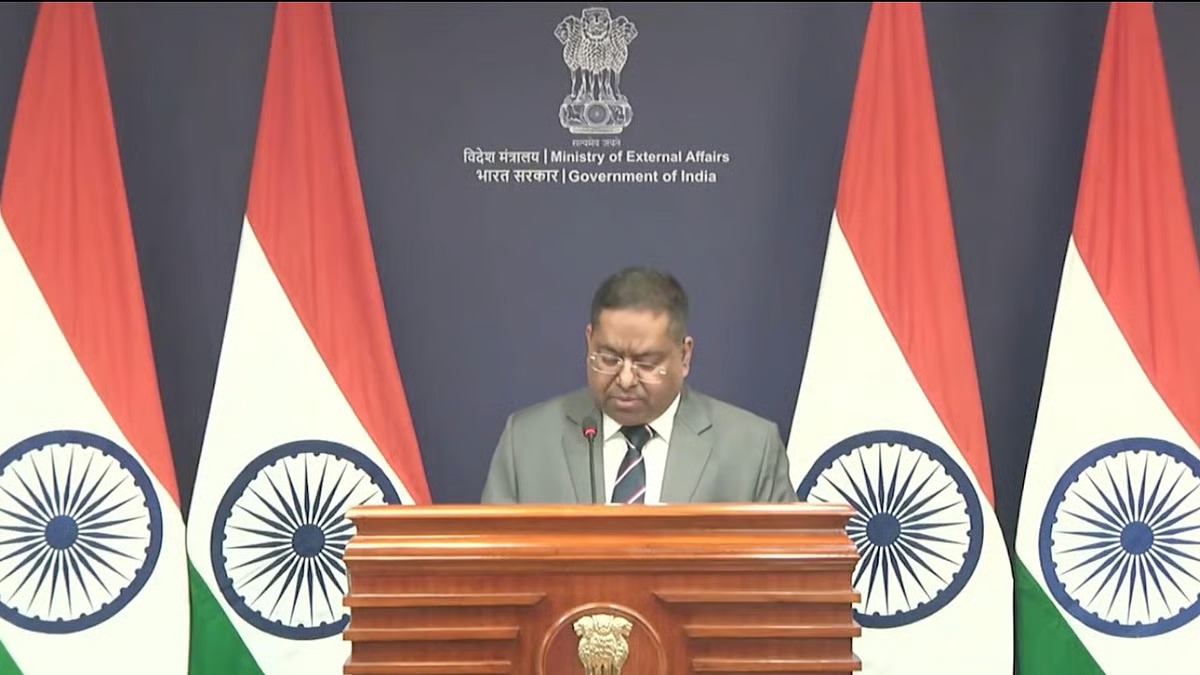
Speaking at a special briefing on Prime Minister Shri Narendra Modi’s upcoming visit to France and Slovakia, Ministry of External Affairs (MEA) spokesperson Randhir Jaiswal underlined India’s longstanding position on maritime security.

“We have stated our position in the Strait of Hormuz. We would like, we want, and we have urged that there be unimpeded and safe navigation through the Strait of Hormuz, keeping with international law. So that is our position. This is a topic which will come up for discussion, and we’ll put our points across,” Jaiswal said.

The Strait of Hormuz is a narrow but strategically vital waterway connecting the Persian Gulf with the Gulf of Oman and the Arabian Sea. A significant share of the world’s crude oil and liquefied natural gas exports passes through this route.

Any disruption in shipping through the strait can impact global energy supplies, freight costs, and oil prices, making developments in the region a matter of international concern.

What Prompted India’s Latest Statement?
India’s remarks came amid growing concerns over recent US military actions against commercial vessels in the Gulf of Oman.

The MEA expressed concern over attacks on ships carrying Indian crew members and called for an end to the incidents. “We are deeply concerned at these attacks and hope and expect these will come to an end,” Jaiswal said.

The concern follows a series of US actions against foreign-flagged vessels accused of transporting Iranian oil in violation of a US-imposed blockade.

What Happened to MT Jalveer?
On Thursday, the US Central Command (CENTCOM) confirmed that American forces had struck the Guinea-Bissau-flagged oil tanker MT Jalveer, which had 20 Indian seafarers on board. According to CENTCOM, the vessel attempted to transport Iranian oil and allegedly ignored repeated instructions from US forces.

“U.S. Central Command (CENTCOM) acted against Guinea-Bissau flagged M/T Jalveer as it attempted to transport oil from Iran through the Gulf of Oman. A U.S. aircraft fired two Hellfire missiles into the ship’s engine room after the crew repeatedly failed to comply with directions from U.S. Forces,” the statement said.

Indian Govt. on highest alert to safeguard Indian Seafarers amid evolving maritime security situation in Gulf Region

NEW DELHI : In view of the rapidly evolving security situation in the Gulf region and surrounding waters, the Government of India continue to monitor, and coordinate response mechanisms to safeguard Indian seafarers and protect India’s maritime interests. The Ministry of Ports, Shipping and Waterways (MoPSW), through the Directorate General of Shipping (DGS), is maintaining sustained surveillance of developments in and around the Strait of Hormuz, the Gulf of Oman and adjoining maritime areas.

The Government is closely coordinating with the Ministry of External Affairs, Indian Navy, Indian Missions abroad, maritime administrations of friendly countries, shipping companies, seafarers’ welfare organisations and other relevant stakeholders to ensure timely support and assistance to Indian seafarers.

Recent security incidents involving merchant vessels operating in the region have highlighted the increasing risks faced by commercial shipping. Recognising the strategic importance of these international shipping lanes to global trade and energy security, the Government has directed all concerned agencies to remain on heightened alert and maintain readiness to respond to any contingency involving Indian seafarers or Indian maritime interests.

The Directorate General of Shipping has advised all Indian seafarers serving onboard Indian and foreign-flagged vessels transiting through conflict-affected waters to exercise the highest degree of caution and vigilance. Vessel operators, ship managers and shipping companies have also been advised to adhere strictly to prevailing maritime security protocols, maintain enhanced situational awareness and continuously monitor advisories issued by the Government of India and competent international authorities.

Stakeholders have been directed to promptly report any incident involving Indian seafarers to the Directorate General of Shipping to facilitate immediate intervention and coordination. Dedicated communication channels and emergency response mechanisms remain operational round-the-clock to provide assistance to Indian seafarers and their families.

The Union Minister of Ports, Shipping and Waterways (MoPSW), Shri Sarbananda Sonowal, said,”The Government is closely monitoring the evolving situation in the Gulf region and remains fully committed to the safety, security and welfare of every Indian seafarer. All relevant ministries, agencies and missions abroad are working in close coordination to ensure timely support and assistance whenever required.”

Attack on MT Settebello and Assistance to Indian Seafarers

Among the recent incidents reported in the region, MT Settebello (IMO 9162916), a Palau-flagged Medium Range Tanker carrying 28 crew members, including 24 Indian seafarers, was reportedly subjected to a missile attack on 10 June 2026 while operating approximately 20 nautical miles north-east of Sohar, Oman.

According to information received from the Maritime Security Centre of Oman and subsequent reports from the vessel’s management, three Indian seafarers tragically lost their lives in the attack. On receipt of this information the Government of India actively coordinated with all concerned authorities, ship owners and RPSL to provide all necessary assistance. The mortal remains of the three missing Indian seafarers have been expeditiously located and identified, and all other crew members have been rescued safely. Efforts are now being fast-tracked to repatriate the rescued seafarers and ensure the dignified return of the mortal remains to their families at the earliest.

The Government of India expresses its profound condolences to the bereaved families. The loss of Indian seafarers while performing their duties at sea is a matter of deep sorrow for the nation.

Expressing at this tragic incident, Sarbananda Sonowal said, “It is deeply unfortunate to learn of the tragic incident aboard the Palau-flagged MT Settebello. Sadly, three Indian seafarers initially reported missing are now confirmed dead after bodies have been located and identified. The safety of Indian citizens, protection of Indian maritime interests and uninterrupted movement of legitimate cargo remain our highest priorities. The Government of India is keeping a close watch on developments and will take all necessary measures to safeguard the lives of Indian seafarers and uphold the nation’s interests.”

The Government has further reiterated that the welfare and security of Indian seafarers remain paramount. The Seafarers Welfare Fund Society (SWFS), functioning under the Directorate General of Shipping, stands ready to extend eligible welfare benefits, financial assistance and other support measures to affected seafarers and their families whenever required. As per protocol, SWFS is releasing Rs 10 lakhs to the families of the deceased.

Adding further, Sonowal said, “This is a profound loss to our maritime family. The Modi Govt stands firmly with the bereaved during this difficult hour and is fully committed to supporting the next of kin. I have directed officials to ensure immediate repatriation of the rescued crew members and swift return of the mortal remains of the deceased for their final rites.”

The Directorate General of Shipping, along with the concerned Recruitment and Placement Service License (RPSL) agencies, remains in constant contact with the next of kin of the affected seafarers. The Government is actively coordinating with relevant authorities for the repatriation of rescued crew members, transportation of mortal remains and provision of all necessary assistance and support to the families concerned.

All stakeholders are advised to continuously monitor advisories issued by the government as well as for any emergency assistance, citizens may contact MMDAC (DG Comm Centre) via email to dgcommcentre-dgs[at]nic[dot]in or WhatsApp/Call at +91 8657549760. Alternate Numbers to contact are +91 2222613606, +91 8657549752) or the 24×7 grievance redressal channels including Toll-Free Number (Domestic): 1800-889-7768, International Toll-Free: +1-888-988-0256, WhatsApp: +91 8655856830, and email to enavik.24×7[at]gov[dot]in.

The Government of India reiterates that it stands firmly with Indian seafarers and their families and will continue to take every necessary measure to ensure their welfare, security and well-being during this period of heightened geopolitical uncertainty.