NEW DELHI : External Affairs Minister (EAM) Dr. S Jaishankar on Saturday said he spoke to US Secretary of State Marco Rubio to convey India’s strong protest overUS Navy attacks in the Gulf that killed three Indian mariners.
He described such actions against commercial shipping as unjustified.
In a post on X, EAM Jaishankar said, “Spoke to US Secretary of State Marco Rubio this evening. I reiterated India’s strong protest at the attacks by the US Navy in the Gulf that killed three Indian mariners. Such lethal actions against commercial shipping are not justified.”
His remark came after the death of three Indian sailors in a US military strike on a commercial tanker in the Gulf of Oman.
The vessel, MT Settebello, came under fire on Wednesday after US forces accused it of violating the ongoing naval blockade on Iranian ports. Of the 24 Indian crew members on board, 21 were rescued, while the three others were later confirmed deceased.
NEW DELHI: India on Friday summoned the United States Charge d’Affaires, Jason Meeks, and lodged a “strong protest” over the continuing attacks by US naval forces on commercial vessels carrying Indian mariners in the Gulf of Oman, which have resulted in the deaths of three Indian nationals.
According to a statement issued by the Ministry of External Affairs (MEA), the US Charge d’Affaires was called to the ministry earlier in the day, where India’s concerns over the incidents were formally conveyed.
“A strong protest was lodged with him regarding the continuing attacks by US naval forces on commercial vessels carrying Indian mariners in the Gulf of Oman, which have already resulted in the tragic and avoidable loss of three Indian lives,” the MEA said in the release.
The ministry reiterated India’s deep concern over the use of lethal force against civilian shipping and stressed that such actions pose a threat to maritime safety and regional stability.
“The Ministry once again conveyed its deep concern over the use of lethal and deadly force against civilian shipping. Such actions are unacceptable and undermine the safety, security and stability of international maritime commerce in a sensitive region at a difficult time,” the statement added.
India also urged the United States to take immediate steps to ensure the safety of civilian vessels and prevent any further loss of life.
The MEA in its statement, further stated that the US Charge d’Affaires was requested to convey India’s strong concerns to the American authorities and ensure that US forces operating in the region adopt all necessary measures to avoid civilian casualties.
“The U.S. Charge d’Affaires was requested to convey India’s strong concerns to his authorities and to ensure that U.S. forces operating in the region take all necessary measures to prevent the loss of civilian life,” the ministry stated.
The development comes amid another incident on Thursday, where a commercial vessel with 20 Indian crew members on board came under US attack in the region.
This marks the second time that the US mission has been summoned by the MEA over the escalating maritime security issue.
The US envoy was also called in by the Additional Secretary (Americas) in the Ministry of External Affairs to register India’s serious concerns.
This escalation marks New Delhi’s first public acknowledgement of the US Navy directly targeting commercial ships carrying Indian seafarers in the Gulf of Oman.
According to the US Central Command (CENTCOM), the American naval forces targeted three foreign-flagged merchant vessels operating with Indian crew members off the coast of Oman over four days.
CENTCOM on Thursday confirmed that American forces had struck the Guinea-Bissau-flagged oil tanker MT Jalveer, carrying 20 Indian seafarers, in the Gulf of Oman, claiming that the ship had violated the US blockade against Iran in the region, firing two Hellfire missiles into the ship’s engine room to stop its movement.
This marks the third commercial vessel attacked by US forces in the Gulf of Oman this week. Earlier, Palau-flagged vessels MT Marivex and MT Settebello, carrying Indian seafarers, were disabled on Monday and Tuesday, respectively, for attempting to transport Iranian oil.
The Ministry of External Affairs confirmed that three Indian seafarers have lost their lives in the attack on the vessel MT Settebello and have been identified.
During an inter-ministerial briefing on Thursday, MEA spokesperson Randhir Jaiswal stated that efforts are underway to bring their mortal remains to India at the earliest.
“These attacks came from the US Navy that is stationed there. As you would have seen in the various reports, as also in what was clarified through our statements and otherwise from this podium, the three ships that have been involved in the incidents are foreign-flagged,” he said.
The US blockade is enforced impartially against vessels of all nations entering or departing Iranian ports and coastal areas amid diplomatic engagement to achieve a complete solution to the hostilities in West Asia, including all Iranian ports in the Arabian Gulf and Gulf of Oman.
LONDON: BIMCO, the International Chamber of Shipping (ICS),INTERCARGO and INTERTANKO unanimously condemns recent attacks on seafarers and commercial shipping in and around the Strait of Hormuz.
According to the International Maritime Organization (IMO), the organisation has verified 46 attacks on international shipping in and around the Strait of Hormuz since 28 February 2026, with 14 confirmed seafarer fatalities.
There is grave concern about the recent escalation of the conflict which puts the lives of our seafarers at risk, compromises the safety of international shipping and restricts freedom of navigation.
Commercial ships and their crews are civilian in nature and form the backbone of global trade. The seafarers on board often have no say regarding which cargoes are transported or the routes taken.
Seafarers should never be collateral damage, victims or instruments of political or military pressure.
Attacks on merchant ships constitute a direct challenge to the fundamental principle of freedom of navigation which is essential to the global economy and enshrined in international law. Acts of war, including enforcement of blockades, should always be done in accordance with the Law of Armed Conflict. This also includes using only the force necessary and taking all feasible precautions to avoid or minimise civilian harm.
Rebuilding confidence in the safety of the Strait of Hormuz will require not only an end to attacks, but also clear demonstrations of restraint and adherence to international law by all parties.
BIMCO, the International Chamber of Shipping (ICS), INTERCARGO and INTERTANKO therefore call on all parties involved to:
Urgently pay attention to the safety of seafarers.
Immediately cease attacks on commercial vessels.
Exercise restraint and proportionality in all military operations.
Respect the rights to freedom of navigation enshrined in international law.
Work towards a de-escalation of tensions and restoration of safe maritime transit.
For the safety of seafarers, we call on shipowners to assess the developing situation carefully and place top priority on crew safety when instructions are received from warring parties.
NEW DELHI : The Directorate General of Shipping held a meeting with the National Centre of Excellence in Green Port and Shipping (NCoEGPS), TERI, at TERI Headquarters, India Habitat Centre, New Delhi.
The meeting was led by Shri Shyam Jagannathan, IAS, Director General of Shipping and focused on strengthening collaboration to advance India’s maritime decarbonization and sustainability objectives.
Discussions covered key areas including green shipping, green ports, alternative fuels, shore power supply, ship recycling, maritime sustainability, capacity building and the broader maritime energy transition. Deliberations also focused on the ongoing development of the National Maritime Decarbonization Policy Framework under the umbrella initiative of Maritime India @ Net Zero, and explored avenues for enhanced technical support, stakeholder coordination and knowledge partnerships to accelerate the implementation of green maritime initiatives.
The interaction reaffirmed the shared commitment of DG Shipping and NCoEGPS–TERI towards fostering innovation, evidence-based policymaking and collaborative action in support of a sustainable, resilient and future-ready maritime sector.
HYDERABAD: Telangana is rapidly emerging as one of India’s most promising logistics destinations, driven by strategic infrastructure investments, progressive policies, and a strong vision for the future, said Shri D. Sridhar Babu, Minister for Information Technology, Electronics & Communications, Industries & Commerce and Legislative Affairs, Government of Telangana, while delivering the keynote address at the International Conference on Shipping & Logistics 2026 (ICSL 2026) organized by the Logistics Committee of Federation of Telangana Chambers of Commerce and Industry (FTCCI) at HICC Novotel, Hyderabad on Friday.
Delivering the inaugural address, the Minister emphasized that logistics is fundamentally about connection—connecting manufacturers to markets, farmers to customers, businesses to opportunities, and nations to the world. “Every connection creates movement, and every movement creates opportunity. Today, we call it logistics,” he said.
Referring to the changing global trade landscape, Shri Sridhar Babu observed that efficiency alone is no longer sufficient. Resilience, speed, reliability, and adaptability have become critical drivers of economic growth and global competitiveness. Countries that can adapt quickly, remain connected, and deliver efficiently will lead the future, he noted.
Highlighting Telangana’s strengths, the Minister said that although the state does not have a coastline, it has transformed its inland location into a strategic advantage. Telangana contributes nearly 5% of India’s GDP, ranks seventh among merchandise-exporting states, and recorded exports of over ₹1.61 lakh crore in 2024–25. The state was also ranked eighth nationally and second among all landlocked states in the Export Preparedness Index 2024.
The Minister highlighted Telangana’s strategic location, strong multimodal connectivity, Logistics Policy 2.0, the upcoming Mega Multimodal Logistics Park at Manoharabad, expanding air cargo capabilities, and world-class skilling ecosystem as key enablers for transforming Telangana into a leading logistics hub.
Inviting investors and industry leaders to partner with the state, Shri Sridhar Babu said, “Telangana is ready to connect markets, support industry, and build the logistics ecosystem of the future. Come, invest in Telangana. Grow with Telangana.”
Giving his welcome remarks R Ravi Kumar, President of FTCCI said Hyderabad is uniquely positioned to emerge as India’s premier hub-and-spoke logistics destination. With the upcoming Multimodal Logistics Park, expanding industrial ecosystem, and growing focus on integrated transportation, Telangana has the potential to redefine logistics efficiency in the country. At the same time, strengthening rail connectivity to Inland Container Depots and developing air connectivity in emerging industrial centres such as Warangal, Karimnagar, and Khammam will be critical to unlocking the state’s full logistics potential. ICSL 2026 serves as an important platform for industry, policymakers, and infrastructure stakeholders to collectively shape a future-ready, technology-driven, and globally competitive logistics ecosystem.”
According to Kama Jain, Chairman of the Logistics Committee of FTCCI, the conference brought together policymakers, government officials, logistics companies, supply-chain professionals, exporters, importers, technology providers, investors, startups, infrastructure developers and academia to deliberate on the future of India’s logistics ecosystem.
The conference featured four high-level panel discussions covering critical aspects of the logistics and shipping ecosystem.
Session 1 was on Unlocking Cargo Potential – Infrastructure for the Next Decade examined the investments and infrastructure required to meet India’s growing cargo demand. Industry leaders from GMR Hyderabad International Airport, Dr. Reddy’s Laboratories, Syngenta, MSN Group, Maersk, MPL Logistics and Nexgen Logistics discussed cargo infrastructure expansion, trade facilitation, multimodal connectivity and logistics competitiveness.
Session 2 on The Future Freight Grid – Rail, Road and EVs focused on integrated transportation systems and sustainable freight movement. Experts from Teamglobal Logistics, HMDA Truck Dock Logistics, Maersk Line India and the Government of Telangana deliberated on rail-road integration, freight corridors, electric vehicle adoption and last-mile connectivity solutions.
Session 3 on Smart Digital Networks – Leveraging AI highlighted how artificial intelligence, digital platforms and automation are transforming logistics operations. Speakers from Tata Consultancy Services (TCS), Stellantis and ParadomeAI shared insights on predictive analytics, supply-chain visibility, automation and technology-driven efficiency improvements.
Session 4 on The Last Mile and the First Skill – Building a Future-Ready Workforce for Landlocked Logistics Hubs addressed the growing need for skilled manpower in logistics and supply-chain management. Experts from Sitara Shipping, VCJ Foundation, Young India Skills University, Zaufany Training and Consulting and Logistics Sector Skill Council discussed skilling initiatives, workforce development and industry-academia collaboration.
Throughout the conference, participants emphasized the importance of multimodal logistics, digital supply chains, warehousing infrastructure, e-commerce fulfilment, EV-led logistics, artificial intelligence, automation, shipping, ports and maritime trade in building resilient and globally competitive supply-chain ecosystems.
The conference gave a strong call for greater collaboration among government, industry, technology providers and academia to strengthen India’s logistics competitiveness and accelerate the country’s emergence as a global logistics powerhouse.
FTCCI President Ravi Kumar, Senior Vice President K.K. Maheshwari, Industries Commissioner Nikhil Chakravarthi J., Principal Chief Commissioner of GST & Customs Arun Kumar, IRS, and Kamal Jain, Chairman, FTCCI Logistics Committee, participated in the inaugural session and emphasized the need for continued investment, policy support and innovation in the logistics sector.
The conference ended with a vote of thanks and a collective commitment from stakeholders to work towards creating a future-ready logistics ecosystem for India.
NEW DELHI : Gujarat has emerged as one of India’s leading startup hubs, with more than 19,000 startups recognised by the Department for Promotion of Industry and Internal Trade (DPIIT), according to an official release.
The state has been ranked the Best Performing State in the Startup India Rankings for five consecutive years, reflecting its growing entrepreneurship and innovation ecosystem.
Gujarat Strengthens Position As Leading Startup Ecosystem
According to the release, Gujarat has strengthened startup development through policy support, innovation-focused initiatives and entrepreneurship programmes aimed at students, startups and emerging enterprises, reported ANI.
The Student Startup and Innovation Policy (SSIP), launched in 2017-18 and expanded through SSIP 2.0 in 2022, has played a key role in promoting entrepreneurship among students and supporting startups across traditional and emerging technology sectors.
Under SSIP 1.0 and 2.0, more than 13,047 student projects have received support at the Proof of Concept (PoC) stage. The programme has also facilitated the filing of over 4,043 Intellectual Property Rights (IPRs) and provided guidance and incubation support to 3,287 startups.
The release stated that SSIP institutions have utilised Rs 36.43 crore towards financial assistance for startups and innovation projects, while more than 22.72 lakh students have participated in startup awareness initiatives since the programme’s launch.
SSIP Encourages Student Innovation And Startup Development
Under SSIP 2.0, over 1,948 startup proposals from school students have been registered, with around 1,141 proposals approved so far.
The Gujarat Startup and Innovation Hub (i-Hub), established in 2019, has supported nearly 750 startups through mentorship, incubation and financial assistance. The facility offers legal, financial, technical and strategic guidance through a single-window support system.
i-Hub And Seed Support Schemes Drive Startup Growth
According to the release, more than 400 startups have received assistance worth Rs 28 crore under the Startup Creation Seed Support Scheme. These startups have collectively generated over 4,000 jobs and achieved a combined market valuation of approximately Rs 3,569 crore.
The i-Hub has also facilitated private funding exceeding Rs 446 crore through various venture capital funds and has conducted entrepreneurship awareness programmes reaching more than 4.5 lakh youth across over 20 districts.
The release further noted that 269 women-led startups have received support under the WEstart initiative, which provides mentorship, networking opportunities and financial assistance to women entrepreneurs.
Additionally, 471 startups have benefited from seed support assistance under provisions of the Gujarat Industrial Policy.
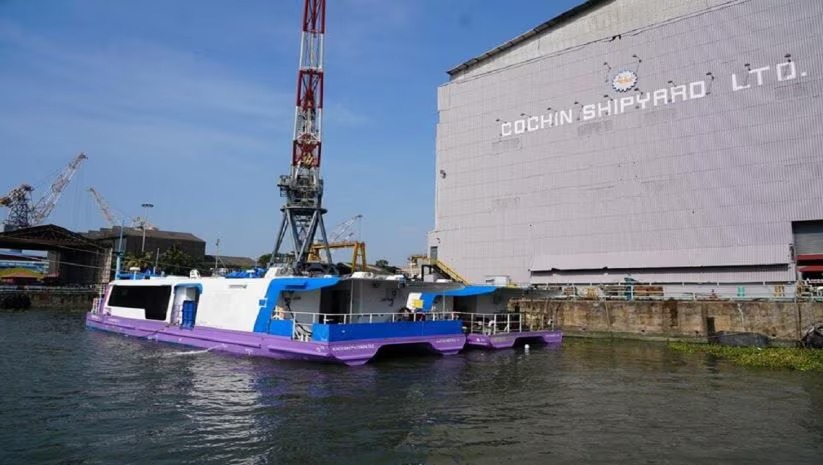
KOCHI : State-run shipbuilder Cochin Shipyard Limited (CSL) and HBL Engineering Limited have incorporated a joint venture company, Green Maritime Propulsion Private Limited, to develop electric mobility and energy storage solutions for the maritime sector.
The joint venture company was incorporated on June 11, following the joint venture agreement signed by the two companies in March this year. The company has been established in Hyderabad, Telangana, and will focus on developing indigenous technologies and products for electric and hybrid propulsion systems in the maritime industry.
The newly incorporated company has an initial share capital of Rs 9 crore, divided into 90 lakh equity shares of face value Rs 10 each. Cochin Shipyard has subscribed to 36 lakh equity shares worth Rs 3.6 crore, representing a 40 percent stake in the venture, while HBL Engineering has subscribed to 54 lakh equity shares worth Rs 5.4 crore, giving it a 60 percent stake.
According to the Cochin Shipyard Ltd’s regulatory filing the stock exchanges, the joint venture aims to combine the strengths of both partners to develop electric mobility and energy storage technologies for domestic and international markets. The initiative is aligned with the Government’s Aatmanirbhar Bharat vision and is expected to support the growing adoption of electric and hybrid propulsion systems in the maritime sector.
The venture will operate in the field of maritime electric mobility and energy storage technology, a segment that is gaining importance globally as the shipping industry moves towards cleaner and more sustainable solutions.
Cochin Shipyard said it has obtained the necessary approvals from the Ministry of Ports, Shipping and Waterways and the Department of Investment and Public Asset Management (DIPAM) for participation in the joint venture.
The incorporation of Green Maritime Propulsion Private Limited marks a strategic step by Cochin Shipyard to expand its presence in emerging green maritime technologies and strengthen India’s capabilities in sustainable marine transportation.
NEW DELHI : The government has restricted institutional, industrial, and commercial customers from buying Motor Spirit and High-Speed Diesel from retail outlets and has asked them to source their requirements from their own consumer pumps.
The decision has been taken to prevent local shortages amid disruptions in global supply chains caused by the ongoing crisis in West Asia.
Motor Spirit and High-Speed Diesel are essential commodities, and uninterrupted availability at fair prices is critical for transportation of goods and passengers, agricultural operations, emergency services, and national security.
In a notification, the Petroleum and Natural Gas Ministry said the restrictions will be in place for up to 90 days. Retail outlets have been directed to sell up to 200 litres of High-Speed Diesel to a customer per day to prevent bulk purchase.
The government said the restrictions were necessary to prevent hoarding and maintain uninterrupted fuel supplies at fair prices. The Ministry added that many states have sought prevention of such practices, as they are causing inconvenience to retail customers and farmers.
It said the order is a temporary measure to curb practices that unscrupulous elements are resorting to during the crisis. It has asked Oil Marketing Companies and retail outlet dealers to ensure compliance with the order.
NEW DELHI : The Department for Promotion of Industry and Internal Trade (DPIIT), in collaboration with the Open Network for Digital Commerce (ONDC), convened a CPG Roundtable – Bharat Commerce Chintan Shivir on 12 June 2026. The roundtable brought together leaders from leading consumer goods companies, distributor networks, technology providers and logistics partners to discuss the digital transformation of India’s General Trade ecosystem.
India’s General Trade ecosystem, comprising over 1.4 crore kirana stores, accounts for nearly 75–80 per cent of FMCG sales. However, much of the channel continues to operate through fragmented ordering systems, limited inventory visibility and manual sales processes, resulting in inefficiencies for retailers, distributors and brands.
The discussions focused on DigiDukaan, ONDC’s initiative aimed at digitising kirana stores for B2B procurement. Designed to improve efficiency across the value chain, DigiDukaan enables kirana stores to improve margins through direct procurement by offering better visibility of schemes, improved fill rates and enhanced working capital management. For distributors, the initiative facilitates wider market reach without additional field costs through order and collection digitisation, while improving retailer coverage. For brands, it provides direct access to retailer demand signals, retail counters, and more effective deployment and tracking of schemes.
DigiDukaan has already gained early traction in Hyderabad, where more than 10,000 retailers and over 35 brands have been onboarded through Qwipo. Following Hyderabad, DigiDukaan is scheduled to launch in Jaipur on 19 June 2026 through Salescode, with expansion planned across Mumbai, Bengaluru and Delhi-NCR in the coming months.
Industry leaders discussed key challenges facing the General Trade ecosystem, including fragmented retailer engagement, rising sales-force costs, inventory inefficiencies, limited visibility into secondary sales and increasing competition from digital-first retail models. Participants also explored how open digital infrastructure can improve retailer access, distributor productivity, demand planning and scheme effectiveness across the FMCG value chain.
The roundtable provided a platform for stakeholders to share recommendations on distributor digitisation, catalogue standardisation, retailer onboarding and technology integration. Participating companies were also invited to collaborate as founding partners in the next phase of DigiDukaan’s expansion.
The roundtable was chaired by Additional Secretary, DPIIT, Shri Ateesh Kumar Singh, and saw participation from companies including HUL, ITC, Coca-Cola, TCPL, CavinKare, Marico, Bikano, L’Oréal, Moon Beverages, Anmol Industries, Nestlé and Kirana King. The participating organisations expressed interest in engaging with and supporting the DigiDukaan initiative.
GENEVA : (MSC) Mediterranean Shipping Company is replacing Colombo with Hambantota as its northbound Sri Lankan hub call on the Far East–South Africa Ingwe Service, adding a twelfth vessel to the rotation in the same move.
The expanded fleet will range from 5,500 teu to 12,000 teu, with the revised rotation connecting Qingdao, Shanghai, Ningbo, Shenzhen (Shekou), Singapore, Port Louis, Ngqura, Durban, Port Louis, Hambantota, Hong Kong and Tianjin before returning to Qingdao. The port substitution elevates Hambantota’s role within MSC’s regional transshipment network on the Asia–South Africa trade lane, a corridor where the carrier has steadily expanded capacity in recent years.
Hambantota, developed with Chinese investment and operated under a long-term concession by China Merchants Port Holdings, has been seeking to displace Colombo as the preferred transshipment gateway for international carriers calling Sri Lanka.