
Home Blog Page 260

Cabinet approves Ahmedabad Metro Rail project Phase 2A (Koteshwar Road to Airport corridor)

NEW DELHI : The Union Cabinet chaired by the Prime Minister Shri Narendra Modi has approved Phase 2(A) of Ahmedabad Metro Rail Project with corridor for a length of 6.032 Km with 05 stations (04 Elevated and 01 underground). On operationalisation of Phase 2(A), Ahmedabad-Gandhinagar will have 77.63 Km of active Metro Rail Network. The names of stations in the Phase 2(A) Corridor are- Ashram Road, Koteshwar Prachin Mandir, Sabarmati River, Sardar Nagar and Airport.

AhmedabadMetroRailproject2HNX Cabinet approves Ahmedabad Metro Rail project Phase 2A (Koteshwar Road to Airport corridor)

The total completion cost including IDC (Interest during Construction) for the project will be Rs.2,169.04 crore.

Benefits and Bolstering Growth:

The Phase 2(A) of Ahmedabad Metro Rail Project represents a significant advancement in the city’s infrastructure development. Phase 2(A) acts as a major expansion of the Metro Rail Network in the city.

Enhanced Connectivity:

Phase 2(A) of the Ahmedabad Metro Project envisages the development of approximately 6.032 km of new metro corridor, aimed at substantially enhancing public transportation by providing seamless connectivity to the airport and linking key residential and commercial areas that presently lack efficient transit access.

This phase aims to seamlessly integrate key zones, including residential & Commercial hubs with existing Ahmedabad-Gandhinagar corridor. Further, likelihood of sports facilities also being developed in the vicinity for the World Police Games 2029 and Commonwealth Games 2030.

By bridging these vital areas with the metro network, Phase 2(A) will not only enhance connectivity but also stimulate economic activity, tourism, and ease urban mobility for both residents and visitors.

Reduction in Traffic Congestion: Metro Rail as an efficient alternate road transport and with Phase 2(A) as an extension of the Metro Rail network to the Airport, will be particularly impactful inside Ahmedabad. Reduction in road traffic can lead to smoother movement of vehicles, reduction in travel time, increasing overall road safety etc.
Environmental Benefits: With the addition of Phase 2(A) of Ahmedabad Metro Rail Project and increase in overall Metro Rail Network in Ahmedabad & Gandhinagar cities, can significantly reduce carbon emissions compared to traditional fossil fuel-based transport.
Economic Growth: Reduced travel times and improved access to different parts of the city such as Airport, Railway Stations and Bus Depots can enhance productivity by allowing individuals to reach their workplaces and destinations more efficiently. Also, the enhanced connectivity can stimulate local businesses, especially in areas near new metro stations which can also attract investment and development in previously less accessible regions.
Social Impact: The expansion of Phase 2(A) Metro Rail network in Ahmedabad will provide more equitable access to public transport, benefiting diverse socio-economic groups and reducing transport disparities which will contribute to a higher quality of life by reducing commute times and improving access to essential services.
The Phase 2(A) of Ahmedabad Metro Rail Project is set to be a transformative development for the city. It promises to deliver enhanced connectivity, reduced traffic congestion, environmental benefits, economic growth, and improved quality of life. By addressing key urban challenges and providing a foundation for future expansion, Phase 2(A) will play a crucial role in shaping the city’s development trajectory and sustainability.

The Ahmedabad Metro Phase 2A will generate employment of around 2,000 persons during the peak period of construction activity and 500 persons are likely to work during Operation & Maintenance of the system.
A dam across the sea: Kalpasar gets fresh push after PM’s Netherlands visit

GANDHINAGAR : The long-pending Kalpasar Project, which proposes a dam across the Gulf of Khambhat to create a massive freshwater reservoir for water-scarce Saurashtra, has received a fresh push after Prime Minister Shri Narendra Modi’s visit to the Netherlands last month and the signing of a Letter of Intent (LOI) on technical cooperation between the two countries.

The Detailed Project Report (DPR), which will determine the project’s technical and economic viability, is in its final stages, officials aware of the matter said.

Estimated to cost at least ₹1.2 lakh crore, the project aims to store river water that currently flows into the sea and could transform water availability in Saurashtra, while also improving connectivity and generating renewable energy, said a Gujarat government official.

B N Navalawala, Chairman of the Expert Advisory Group for the Kalpasar Project and former secretary, ministry of water resources, said the DPR was underway, almost in a final stage with the National Centre for Coastal Research (NCCR) in Chennai. “They will complete their exercise and come before the Expert Advisory Group. The group will examine it and, after finding it acceptable or with recommendations, will put it up to the government. We have been entrusting studies to internationally reputed institutions. NCCR is one such institution and all these studies were carried out because this project demanded it,” he said.

The project proposes a 64-km-long dam across the Gulf of Khambhat to create a reservoir spanning around 2,000 sq km. According to Navalawala, the proposed reservoir will have a gross storage capacity of 13,000 million cubic metres (MCM), larger than the Sardar Sarovar dam’s 9,460 MCM.

“One must appreciate this unique feature of the project—no single village would get submerged. If you look at the Gujarat map, from Bharuch to Bhavnagar it forms a half-circle, and the reservoir will be created along it. The existing villages will remain. Some villages may lose access, but we can categorically say that there will be no displacement of any human being or villages,” Navalawala said.

The concept was first proposed nearly four decades ago by the late academic Anil Kane, former vice chancellor of M.S. University Baroda, to address Saurashtra’s chronic water shortages. It was named Kalpasar, after the mythical Kalpa Vriksha or the wish-fulfilling tree. A 1988-89 reconnaissance report confirmed technical feasibility, but turning the idea into reality has proven far more challenging. Successive governments have conducted multiple studies, revised alignments and set deadlines that repeatedly slipped largely because of the project’s scale and engineering complexity — creating a vast freshwater reservoir from the sea in one of the world’s most aggressive tidal zones.

According to the government official cited above, the reservoir would be fed by rivers including the Mahi, Sabarmati, and Dhadhar. It is expected to irrigate nearly 10 lakh hectares across nine districts of Saurashtra, reduce the road distance between Bharuch and Bhavnagar from 240 km to 60 km through a transport corridor over the dam, and support 2,500 MW of renewable energy generation.

Saurashtra has long faced recurring water shortages and remains dependent on Narmada canal supply, making large-scale storage projects a key policy focus, he added.

Navalawala said the biggest engineering challenge remains closing the dam in one of the world’s most extreme tidal environments. “You start building the dam from both ends. As construction progresses, the middle section becomes narrower and the velocity of the tidal flow increases sharply. That is the main issue here—how to close the dam. It is an unprecedented technical challenge,” he said.

He also flagged concerns over river water quality and environmental impacts. “All these rivers will have to meet permissible water quality standards. Today you know what is happening with the Sabarmati and Mahi. This is a major issue that has to be addressed,” he said.

The project will require environmental and coastal clearances before construction, which officials estimate could take around 15 years once approvals are secured.

Indian Railway creates history with Electric Double-Stack Container Trains

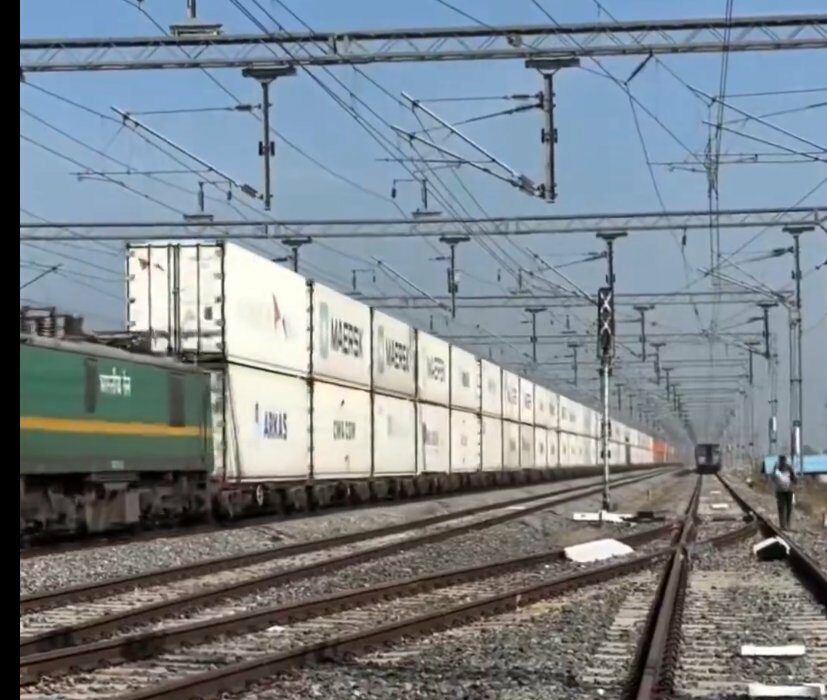
NEW DELHI : India continues to set new benchmarks in railway innovation and freight transportation, becoming the first and only country in the world to operate double-stack container trains hauled by electric locomotives under overhead electrification, a remarkable engineering achievement that has drawn global attention.

While countries such as the United States and China operate double-stack container trains, these services are largely powered by diesel locomotives or run on routes specifically designed without the constraints of overhead electric infrastructure. India has successfully overcome the complex challenge of combining double-stack container operations with fully electrified railway corridors, marking a significant milestone in the evolution of sustainable freight transportation.

The breakthrough has been achieved on the Western Dedicated Freight Corridor (WDFC), one of India’s most ambitious rail infrastructure projects, developed by Dedicated Freight Corridor Corporation of India Limited. To accommodate the exceptional height of double-stack container trains, engineers designed a unique High-Rise Overhead Equipment (OHE) system, with contact wires installed at approximately 7.45 metres, significantly higher than the conventional railway electrification standard.

Complementing this innovation are specially developed high-powered electric locomotives equipped with advanced high-reach pantographs, enabling uninterrupted power collection while hauling double-stack container trains at higher speeds and greater efficiency. These locomotives are capable of transporting substantially larger cargo volumes in a single trip, reducing logistics costs and improving operational productivity.

The Western Dedicated Freight Corridor, stretching from Dadri in Uttar Pradesh to Jawaharlal Nehru Port near Mumbai, has emerged as a game-changing logistics artery for the nation. The corridor enables seamless movement of containers between manufacturing hubs, industrial clusters, ports, and consumption centres, significantly reducing transit times while enhancing reliability.

The introduction of electric double-stack operations offers multiple advantages. By carrying nearly twice the container load of conventional freight trains, the system boosts network capacity, lowers fuel consumption, reduces carbon emissions, and supports India’s broader goals of sustainable and green transportation. The initiative also aligns with the Government of India’s vision of transforming the country into a global manufacturing and logistics hub under programmes such as PM Gati Shakti and Make in India.

Railway experts have hailed the achievement as one of the most significant freight transportation innovations in recent decades. The successful integration of heavy-haul freight, double-stack container technology, and electrified operations demonstrates India’s growing expertise in railway engineering and infrastructure development.

As freight volumes continue to rise and Dedicated Freight Corridors expand across the country, India’s pioneering model is expected to serve as a reference for railway systems worldwide, reinforcing the nation’s position at the forefront of modern rail logistics and sustainable transportation.

India’s electric double-stack container train operations stand today as a symbol of engineering excellence, technological innovation, and the country’s commitment to building a faster, greener, and more efficient logistics ecosystem.

CONCOR achieves milestone with inaugural domestic container movement from Mysore to Kolkata

New Service Strengthens Multimodal Logistics Connectivity Across India

MYSURU : Container Corporation of India Ltd. (CONCOR) has marked a significant milestone in its logistics operations with the successful inaugural outward domestic container movement from the Multi Modal Logistics Park (MMLP) at Kadakola, Mysore, Karnataka, to Shalimar, Kolkata, during the first week of June 2026.

The maiden service involved the dispatch of 80 domestic 20-foot containers, underscoring CONCOR’s commitment to expanding efficient and reliable multimodal transportation solutions across the country. The new route is expected to enhance connectivity between southern and eastern India, providing customers with a seamless and cost-effective cargo movement option.

The launch represents a major advancement in strengthening India’s logistics infrastructure and improving supply chain efficiency. By integrating rail-based transportation with multimodal logistics facilities, the service is set to facilitate faster cargo movement, optimize handling capabilities, and offer greater flexibility to businesses across diverse industries.

The initiative aligns with CONCOR’s strategic vision of promoting rail-led logistics solutions and leveraging its extensive nationwide network to support the growing demands of domestic trade. The service is also expected to contribute to reducing transportation costs, improving transit reliability, and encouraging a modal shift towards more sustainable freight transportation.

The successful commencement of operations from MMLP-Kadakola further highlights the growing importance of multimodal logistics parks in India’s freight ecosystem. These facilities play a vital role in consolidating cargo, enhancing operational efficiencies, and supporting the government’s efforts to modernize the country’s logistics sector.

With the launch of the Mysore–Shalimar service, CONCOR continues to reinforce its position as a leading logistics service provider, connecting key consumption and production centers through an integrated and customer-centric logistics network.

Driving connectivity. Enhancing efficiency. Delivering value.

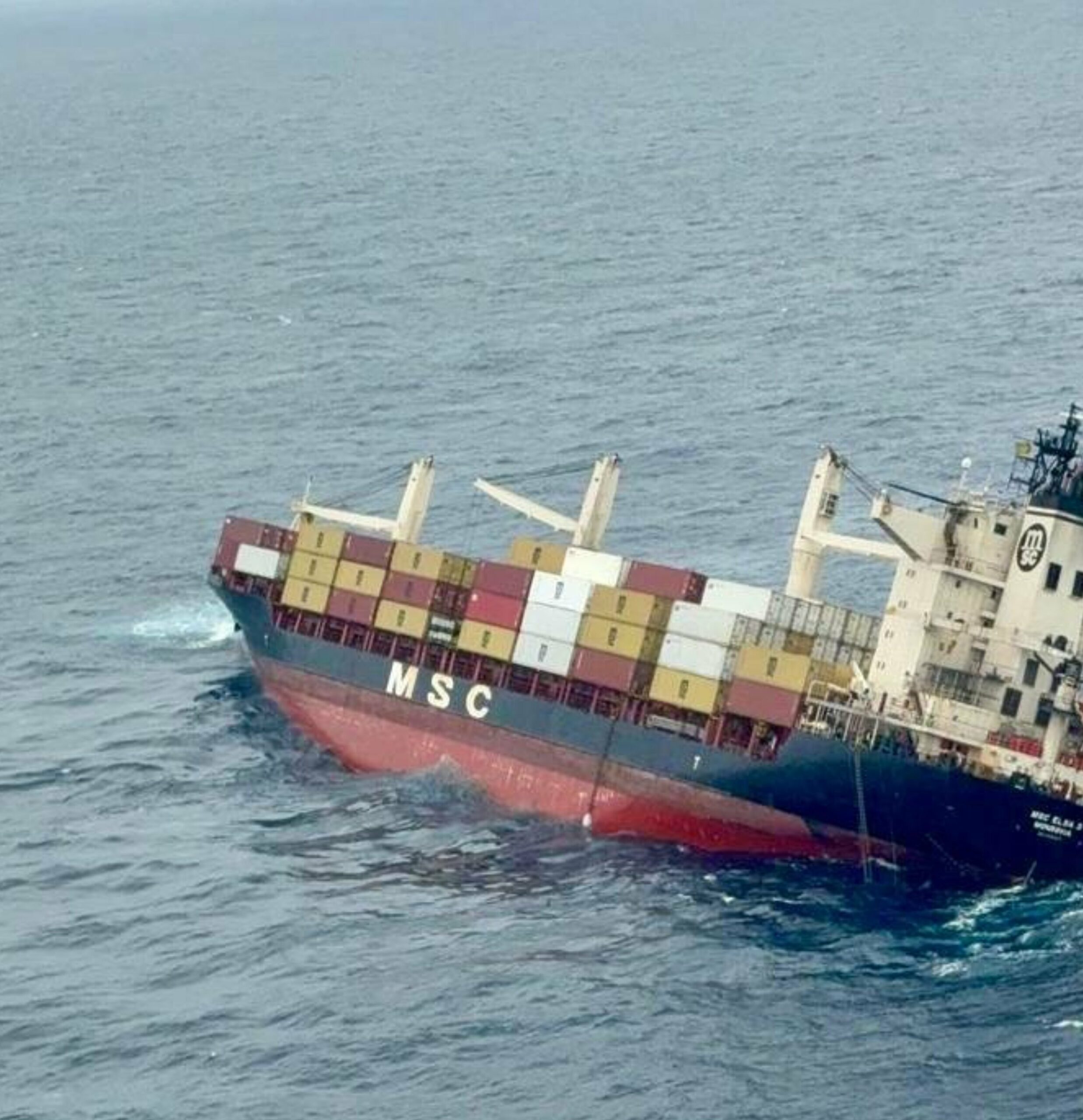
MSC ELSA 3 sinking: Probe points to total system failures behind Kerala maritime disaster

KOCHI : A preliminary investigation into the sinking of container vessel MSC ELSA 3 off the Kerala coast last year has revealed a series of failures by the ship’s management and shore-based support systems, with investigators concluding that poor maintenance, defective equipment, inadequate training and weak safety oversight contributed to the disaster.

The findings are contained in an interim report submitted to the Kerala High Court by the central government on behalf of the Directorate General of Shipping while opposing the crew’s plea to return to their home countries.

The Court on Tuesday permitted three crew members of the vessel– the electro-technical engineer, a seaman and a motorman — to return to their home countries.

The report went into detail about the progressive system deficiencies and failures that resulted in the ship’s sinking, such as the failure of the ballast water system with integrated heeling correction, failure of the safety management system due to inadequate maintenance protocols, delayed spare parts supply, defective machinery and insufficient crew training among other factors.

DP World and NITI Aayog honour Top 10 Women Entrepreneurs at “WE RISE”

NEW DELHI: DP World and NITI Aayog’s Women Entrepreneurship Platform (WEP)  on Wednesday  honoured 10 women entrepreneurs at the culmination of We Rise, a nationwide initiative supporting women-led businesses with export readiness and market access.

Launched in October 2025, We Rise (Women Entrepreneurs Reimagining Inclusive and Sustainable Enterprises) equips women entrepreneurs with the skills, knowledge and networks needed to scale their businesses and access new markets.

The Top 10 entrepreneurs were recognised for building innovative and impactful businesses across sectors including food, handicrafts, textiles, beauty and wellness. Selected from over 600 applications from across India, the finalists reflect the growing ambition of women-led enterprises to participate in India’s trade and economic growth story.

Through structured mentorship, expert-led workshops and digital learning modules, participants gained practical insights into branding, packaging, logistics, compliance and positioning for international markets.

Speaking at the event, Former India captain Mithali Raj, said: “As a cricketer, I know that every milestone is earned through preparation, resilience, and the courage to perform when it matters most. The women entrepreneurs celebrated through DP World’s We Rise program have shown that same spirit stepping up, proving their strength, and building businesses ready for the global arena. Their journey reminds us that when opportunity meets determination, futures are not just imagined, they are achieved.”

We Rise felicitation ceremony DP World and NITI Aayog honour Top 10 Women Entrepreneurs at "WE RISE"

Anna Roy, Programme Director, NITI Aayog, and Mission Director, Women Entrepreneurship Platform (WEP), said, “As India strengthens its position within global supply chains, increasing women’s participation in entrepreneurship and trade becomes critical to building a more inclusive and resilient economy. We Rise has been designed as a comprehensive platform that equips women entrepreneurs with the skills, confidence and market orientation needed to scale sustainably and participate meaningfully in global markets.”

Hemant Kumar Ruia, Country Manager Subcontinent (India), DP World, said, “Women entrepreneurs are shaping India’s economic future through innovation, job creation and stronger communities. Through We Rise, in partnership with NITI Aayog’s Women Entrepreneurship Platform, DP World is helping women entrepreneurs build capabilities, expand networks and access global opportunities. The initiative reflects our commitment to enabling inclusive trade ecosystems and supporting India’s growth through entrepreneurship and innovation.”

In a curated panel with Mithali Raj, Hemant Kumar Ruia, Country Manager, Subcontinent (India), DP World, and Anna Roy (NITI Aayog), leaders discussed how women-led MSMEs can drive India’s export ambitions. The discussion emphasized the critical role of ecosystem enablers in scaling women entrepreneurs globally. DP World will continue to support the finalists through ongoing access to curated learning resources, industry networks and ecosystem opportunities aimed at enabling long-term business growth and global competitiveness.

Tamil Chamber of Commerce strengthens engagement with Tamil Nadu Leadership

CHENNAI: In a significant step towards strengthening industry-government collaboration and advancing the interests of the business community, Mr. Chozha Naachiar Rajasekar, President of The Tamil Chamber of Commerce, held separate courtesy meetings with senior leaders of the Government of Tamil Nadu at the Tamil Nadu Secretariat.

During his visit, Mr. Rajasekar met Honourable Speaker of the Tamil Nadu Legislative Assembly, Thiru J.C.D. Prabhakar. On the occasion, he presented a traditional shawl to the Speaker as a mark of respect and extended his warm greetings and best wishes. The meeting was attended by Mr. B. Ravi Kumar David, Honorary Secretary of the Chamber, and Mr. M. Karunagaran, Executive Secretary. The interaction reflected the Chamber’s commitment to fostering constructive relationships with key policymakers and public representatives.

In another important engagement, Mr. Rajasekar met Honourable Dr. K.G. Arunraj, Minister for Health, Government of Tamil Nadu. During the meeting, he felicitated the Minister with a shawl and conveyed his best wishes. Mr. Rajasekar also briefed the Minister on the various initiatives, activities, and contributions of The Tamil Chamber of Commerce towards trade, industry, entrepreneurship, and economic development in the state.

The Chamber President further extended a formal invitation to Dr. Arunraj to participate as the Chief Guest at an upcoming Chamber programme. The invitation was received positively, highlighting the growing synergy between the Chamber and the state government in promoting business growth and community development.

These high-level interactions underscore The Tamil Chamber of Commerce’s proactive efforts to engage with government leadership, strengthen public-private partnerships, and create opportunities for dialogue on issues concerning commerce, industry, healthcare, and regional economic progress.

The meetings reaffirm the Chamber’s role as a leading platform representing the interests of businesses and entrepreneurs while contributing to Tamil Nadu’s vision of sustainable economic growth and inclusive development.

Congestion at ports causes by West Asia crisis, exporters name liners’ as-‘opportunistic pricing’

NEW DELHI : Amid logistical disruption due to the West Asia crisis, Indian exporters are grappling with mounting financial burden posed by “opportunistic” pricing practices by foreign shipping lines and “non-transparent” imposition of detention, demurrage charges imposed by port authorities. The country’s top export promotion council, Federation of Indian Export Organisations (FIEO), has flagged this in a missive to the Ministries of Port and Shipping and Commerce and Industry.

The alarm raised by exporters comes after weeks of delays in container evacuation, persistent and heavy congestion across western ports such as Jawaharlal Nehru Port Trust (JNPT), Kandla and Mundra, which together form India’s biggest container gateway. Congestion at the port began to swell last month after the heavy influx of stranded West Asia-bound shipments began in the backdrop of the Iran-US ceasefire announced in April.

The FIEO told the government that a Directorate General of Shipping’s (DGS) advisory issued on March 9, asking stakeholders to “refrain from predatory, non-transparent and opportunistic pricing practices, including levy of exorbitant charges”, is not being followed on the ground.

“Based on industry feedback, exporters continue to report instances of unilateral and non-transparent levy of charges such as detention, demurrage, War Risk Surcharge, additional freight and related surcharges. In this regard, the possibility of suitable monitoring of audit mechanisms may kindly be examined to assess implementation of the DGS advisory at the ground level and to discourage any non-transparent or opportunistic pricing practices impacting trade,” the FIEO wrote to the government on May 19.

In response to a query by The Indian Express, a Shipping ministry representative said Shri Sarbananda Sonowal, Union Minister of Ports, Shipping and Waterways, has been reviewing the situation and has met various stakeholders, including importers, exporters, the shipping lines and port officials.

“He also warned stakeholders not to try extra profit-making by taking advantage of the situation,” the representative said. A query mailed to the Commerce and Industry Ministry did not elicit a response.

The Shipping Ministry representative said that in March 2026 and early April 2026, certain containers destined for West Asia had been diverted to Jawaharlal Nehru Port Authority (JNPA) and were given temporary storage at the western port on a transhipment basis.

“These containers have later been shipped out to West Asia through the ports of Khor Fakkan, Sohar, and Salalah. Currently, there are no such instances of stranded containers destined to West Asia lying in the port,” the representative said.

Exporters said a shortage of transport workers has added to the challenges of the ports and led to a sharp spike in transport costs. An advisory issued by JNPA on May 15 said the recent development of a shortage of trailer drivers due to the vacation season, compounded with elections and other factors, has created a serious impediment in shifting the import containers from terminals to Container Freight Station (CFS).

“It has also been observed that this situation of shortage of drivers may continue till the end of May 2006. In this situation, it is essential that some fruitful measures must be taken to reduce this increase in pendency,” JNPA said.

The Shipping Ministry representative said there has been no strike at JNPA in the past year. “However, there has been a shortage of drivers in April and May, due to drivers taking an annual vacation every year during this period. This year, due to various other issues, including the West Asian crisis, more drivers (above 50%) have gone on leave to their native places. This has caused a certain delay in the evacuation of import containers to CFS. Currently, this issue is also under control,” the representative said.

Khalid Khan, former Vice President & Regional Chairman, FIEO, said, “There is a high backlog at ports, and several containers are not able to get in or come out. This resulted in a huge traffic jam at the western ports. And the cost of this traffic jam is borne squarely by the exporters. During a crisis, relief measures should be announced, but even charges for services like lift-on or lift-off charges have gone up several times.”

He said exporters are already hit by high freight rates, and in such a situation, port authorities should not pass on the detention and demurrage charges, adding that more space needs to be created for storage where cargo can be unloaded and moved.

“The customs and other departments have been supportive during the crisis by relaxing certain norms. But the situation can be better handled if there is a single point of contact comprising all ministries, including road, shipping, commerce, and customs. There should also be a push to make the entire port clearance system paperless so that unwarranted delays that hurt the system during a crisis can be eliminated,” Haresh Calcuttawala, CEO and Co-Founder of Trezix, said.

The port congestion continues to affect cargo – an advisory as recently as last week asked traders to expect a delay at Mundra Port. Central Warehousing Corporation (CWC), the public warehouse operator, issued an advisory on June 6, informing traders that congestion at Mundra Port continues to persist, resulting in delays in container evacuation, rail transit, and onward dispatch of containers.

“The prevailing congestion is affecting terminal operations, container handling, loading activities, and rail movements, which may impact the planned schedules for dispatch and delivery… It is further understood that container loading at the port is being undertaken based on operational accessibility and availability of containers rather than on a strict First-In-First-Out basis,” the CWC said.

The FIEO, in its letter to the government, also indicated that the exporters are not able to take the benefit of the relief measures announced by the government due to the non-transparent system of bills issued by foreign shipping lines. It said there is significant variation in the dates from which different shipping lines have implemented war risk surcharge (WRS). In some cases, WRS has reportedly been levied even on cargo that had already been discharged prior to the onset of the conflict situation.

“As the triggering event and risk environment are common across the sector, exporters have requested that the possibility of having a transparent and uniform cut-off date for applicability of WRS across shipping lines may kindly be examined. For exporters to effectively avail benefits under the RELIEF support framework being implemented by ECGC, it would be helpful if shipping lines issue invoices in a standardised and transparent format wherein WRS is reflected separately instead of being merged within ocean freight,” the FIEO said.

Source : Indian Express

Lloyd’s Register Group and Lloyd’s Register Foundation appoints Matthias Altendorf as new chair    

LONDON: Lloyd’s Register Group (LR) and Lloyd’s Register Foundation (The Foundation) are delighted to announce the appointment of the new chair of its boards.  

Matthias Altendorf will succeed current chair Thomas Thune Andersen when he leaves the role at the end of his tenure in June 2027.

Matthias Altendorf, 59, brings a wealth of experience as both an executive and non-executive director across a number of high-profile organisations. He enjoyed a distinguished career of almost four decades with the Swiss-based Endress+Hauser Group, including serving as CEO from 2014 to 2023 and subsequently chairing its Supervisory Board.

Beginning his career as a toolmaking apprentice, Matthias worked his way through the organisation to lead the global, family-owned engineering business specialising in process and measurement technology – helping clients to ensure precision, quality and safety in the products they manufacture. This included the shipbuilding, and both offshore and onshore markets where he was a strong advocate of digitalisation and connected solutions. Through that experience, he brings to LR’s Power of Three proposition a combination of industrial leadership, digital expertise and customer focus that strengthens its ability to connect class, digital and advisory capabilities across vessel, voyage and people.

He is also the founder of Bionic Leadership, a company which focuses on developing human-centred management to pioneer evolutionary approaches to leadership and economic social systems.   

Commenting on his appointment, Nick Brown, Chief Executive Officer of LR, said: “I am delighted to welcome Matthias to LR.  He brings with him a record of truly inspirational global leadership.

“Matthias’ vast and varied experience will be a tremendous benefit to LR as we continue to develop and evolve our services to meet the needs of our clients and colleagues across an ever-evolving maritime industry.”

Matthias Altendorf said: “As the incoming Chair of Lloyd’s Register Group and Lloyd’s Register Foundation, I am honoured by the trust the Trustees have placed in me. Lloyd’s Register has played a vital role in maritime safety for more than 260 years, supporting shipowners and the wider shipping industry through technical expertise, independent assurance and innovation. What inspires me most is the combination of scientific depth, public purpose, and global impact that define both Lloyd’s Register Group and Lloyd’s Register Foundation. I look forward to helping build on that legacy and supporting their mission with clarity, courage and responsibility.”

Klaipėda Port opens Lithuania’s first green hydrogen station

KLAIPEDA: Klaipėda Port has officially opened Lithuania’s first green hydrogen production and refuelling facility, marking a significant milestone in the country’s transition to clean energy. The new station will supply green hydrogen for passenger vehicles, heavy-duty transport, ships and port operations, laying the foundation for a new low-emission transport ecosystem in Lithuania.

“Only a few years ago, green hydrogen at Klaipėda Port was little more than an ambitious vision. It led us into unexplored territory, where we often found ourselves among the first to tackle challenges that had no clear solutions. The journey was demanding, but it gave us invaluable experience. Today, we are proud to open Lithuania’s first green hydrogen facility and contribute to a new chapter in the country’s energy transition. Klaipėda Port has always connected sea and land routes; now it is also becoming a gateway to future energy solutions,” said Algis Latakas, Director General of Klaipėda Port Authority.

Development of the green hydrogen project began in 2023. Construction of the facility started in the summer of 2025, and the project quickly gained momentum. The key equipment arrived at the port in October, installation followed shortly afterwards, and in April this year the first green hydrogen was successfully produced.

The facility uses a polymer electrolyte membrane (PEM) electrolyser to produce green hydrogen. At full capacity, it will be capable of producing around 127 tonnes of hydrogen annually.

Klaipėda Port Authority is not only introducing green hydrogen to Lithuania but is also becoming one of its first users. Approximately one quarter of the hydrogen produced at the new facility will be used to power the Authority’s own operations. A newly built hydrogen-powered waste collection vessel will soon enter service in the port, while a hydrogen-powered Toyota Mirai has already joined the Authority’s vehicle fleet. These investments reflect a broader commitment to testing, demonstrating and advancing clean technologies in real operating conditions. By using the fuel it produces, Klaipėda Port Authority is helping to create confidence in hydrogen as a viable solution for the future of sustainable transport and port operations.

Designed as open infrastructure, the facility will serve not only the port but also the wider transport and logistics sector. Together with LTG Group, Klaipėda Stevedoring Company BEGA and Volvo Lietuva, Klaipėda Port Authority is exploring opportunities to use hydrogen in road freight transport, railway operations and various port activities. Commercial hydrogen supply is expected to begin in autumn 2026.

The project implemented under the Economic Recovery and Resilience Plan Next Generation Lithuania, funded by the European Union’s NextGenerationEU recovery and resilience facility. The total estimated cost of the hydrogen production and refueling station is approximately €12 million, with around €6 million financed by EU funds.

The project was implemented by „Inžinerinis projektavimas“, „MT Group“ and „Gevalda“.