
Home Blog Page 265

Sallaum Lines Marks a Historic Double Delivery with the MV Ocean Express and MV Ocean Navigator

NANGING (CHINA): Sallaum Lines celebrates a major milestone in its fleet expansion programme with the simultaneous delivery of MV Ocean Express and MV Ocean Navigator, two new Pure Car and Truck Carriers (PCTCs) joining the company’s growing Ocean Class fleet.

The dual delivery ceremony, attended by the Founder, Chairman, and executives of Sallaum Lines, represents the most significant single-day milestone in the Ocean Class Programme to date and underscores the company’s continued investment in modern tonnage, cargo flexibility, and lower-emission operations across its global network.

Built by China Merchants Jinling Shipyard (Jiangsu) Co. Ltd. and registered under the Cyprus flag, both vessels offer a cargo capacity of 7,400 CEU across 13 cargo decks. With maximum vehicle height and width clearances of 5.4 meters and 13.5 meters respectively, the vessels are designed to accommodate a broad range of cargo, including passenger vehicles, heavy commercial trucks, high-clearance SUVs, rolling machinery, and oversized project cargo. LNG fuel storage capacity has been built to the Ocean Class standard, supporting extended operational range and improved environmental performance on long-haul voyages.

“Welcoming two additional vessels into our fleet on the same day is a milestone we are immensely proud of, The Ocean Class vessels reflect the resilience, vision, and values that have guided Sallaum Lines since its inception. They are a testament to our belief in building a company that is prepared for the opportunities and challenges of the future”, said Mr. Ibrahim Sallaum, Founder of Sallaum Lines.

Powered by LNG dual-fuel propulsion systems, both vessels incorporate energy-efficient technologies that exceed current IMO regulatory requirements. The vessels deliver significant reductions in greenhouse gas emissions and air pollutants while providing the fuel flexibility and operational reliability required for modern deep-sea shipping. The delivery also highlights the strategic importance of China within Sallaum Lines’ global network, both as a strategic export market and as a long-term shipbuilding partner.

Beyond expanding fleet capacity, these vessels strengthen Sallaum Lines’ ability to support evolving global trade patterns. Over the past several years, demand for the company’s services has frequently exceeded available capacity, limiting its ability to provide customers with the level of service, flexibility, and consistency they expect. The delivery of MV Ocean Express and MV Ocean Navigator addresses this challenge, enhancing service reliability and reinforcing Sallaum Lines’ commitment to its customers.

In 2026, Sallaum Lines has actively supported Chinese exports with eight sailings from the Far East to Europe, reflecting growing demand for reliable RoRo capacity on this corridor. Building on this momentum, we are planning to launch a dedicated China-Europe service in 2027. These vessels provide the capacity, flexibility, and operational efficiency needed to support our customers’ growth while advancing our long-term sustainability objectives.

“The delivery of these vessels also reinforces our confidence in the longterm potential of the China-Europe trade corridor and our commitment to investing in the services and infrastructure required to support our customers as global trade continues to evolve,” added Mr. Sami Sallaum, Chairman of Sallaum Lines.

Alongside MV Ocean Breeze, MV Ocean Explorer, and MV Ocean Legacy, the addition of MV Ocean Express and MV Ocean Navigator further strengthens Sallaum Lines’ Ocean Class fleet, a new generation of eco-efficient PCTCs designed with optimized hull forms, advanced automation systems, and adaptable cargo configurations that maximize operational efficiency and service reliability across global trade lanes.

The vessels will enter commercial service immediately following delivery and will support Sallaum Lines’ expanding global RoRo network, serving automotive, commercial vehicle, heavy equipment, and project cargo customers across key international trade routes. With this latest milestone, Sallaum Lines continues to reinforce its position as a forward-looking RoRo carrier, investing in modern assets, sustainable operations, and long-term partnerships to support the evolving needs of global trade.

“K” LINE implements Electronic UMS Check System for Vessels under its Management

TOKYO: Kawasaki Kisen Kaisha, Ltd. (“K” LINE) has decided to implement the Electronic UMS (Unattended Machinery Space) Check System, which was developed to collect and manage data from UMS checks conducted onboard vessels, throughout its managed fleet. This system was developed to reduce crew workload, increase safety and facilitate the effective utilization of operational data throughout vessels managed by “K” LINE. Following multiple operational trials conducted onboard vessels between 2024 and 2026, “K” LINE plans to begin the phased full-scale implementation of the system in around July 2026.

UMS checks are inspection and verification procedures conducted prior to conducting operations in UMS, such as in operational modes in which engine room is left unattended when navigating at night or while at berth. These checks include approximately 1,000 individual inspection items. To date, crew members, including engineers, have recorded each inspection item manually on paper. This paper-based process required the use of both hands, creating slip, trip and fall risks, particularly in unstable conditions such as on moving vessels or in areas with limited footing.

To address these challenges, “K” LINE has developed a system that enables inspection data to be recorded using smartphones and a dedicated application. By making one-handed data entry possible, crew members can use the other hand to support themselves. They can also stow the smartphone in a pocket while moving, enhancing onboard safety by enabling them to keep both hands free. Additionally, the elimination of paper records makes it possible to reduce printing and storage costs, eases the administrative workload, and reduces “K” LINE’s environmental impact.

Previously, inspection data for each vessel was stored on paper. Using the system, the data can be centrally collected and stored long term. This facilitates the continuous monitoring of equipment conditions, helping to prevent the overlooking of abnormalities and enabling their early detection. In the future, “K” LINE aims to leverage AI to analyze the accumulated data and further enhance its proactive and systematic management of safety.

This initiative is an important first step toward establishing a foundation for the effective utilization of vessel data going forward. “K” LINE will continue to proactively adopt the latest digital technologies to further enhance safety and reduce crew workload. By working seamlessly throughout both its ship and shore operations, “K” LINE will promote even higher standards for the safe operation of vessels while also striving to improve the quality of its transportation services and contribute to the conservation of the environment.

Lloyd’s Register delivers fleet-wide energy transition roadmap for TMS Tankers

LONDON: Lloyd’s Register (LR) has delivered a fleet-wide energy transition strategy for TMS Tankers, giving the Greek shipowner a clearer view of its exposure to tightening emissions regulation and the most cost-effective pathways to compliance.

The work provides TMS with vessel-level insight into how regulatory pressure from measures such as Carbon Intensity Indicator (CII), EU ETS and FuelEU Maritime will affect both performance and cost, linking trading patterns and fuel use directly to future financial exposure.

The collaboration, first announced at Posidonia in 2024, focused on TMS’s Aframax, Suezmax and VLCC fleets. LR Advisory established carbon intensity baselines and assessed compliance risk under different reduction scenarios, benchmarking performance against more than 300 comparable vessels to give a clear view of where exposure is increasing across the fleet.

LR Advisory combined this with a detailed assessment of operational and technical measures available to improve performance, including speed optimisation, energy-saving technologies and fuel-switching options.

A parallel fuel readiness study evaluated biofuels, LNG, methanol and ammonia against TMS’s trading routes and bunkering infrastructure, highlighting where near-term options are realistic and where constraints remain.

The analysis was then translated into vessel-specific pathways through techno-economic modelling, identifying the most effective combination of actions to meet regulatory requirements while balancing operational and revenue performance.

Jack Spyros Pringle, Global Head, Energy Transition Advisory, LR Advisory, said: “Shipowners are now facing a convergence of regulatory pressure from CII, EU ETS and FuelEU, and the real challenge is understanding what that means commercially at vessel level. This work gives TMS a clear view of how each ship is exposed to future costs and which actions deliver the strongest return.

“By modelling performance against real trading patterns and benchmarking against the wider fleet, we have been able to move beyond general strategy and define practical, vessel-specific pathways that can be implemented across the fleet.”

Theo Kourmpelis, Global Business Director for Tankers, Lloyd’s Register, said: “TMS Tankers is taking a strategic, fleet-wide view of the energy transition, looking beyond near-term compliance to long-term resilience and competitiveness. This roadmap gives TMS a practical basis to sequence investment, preserve commercial flexibility and make informed decisions across its tanker fleet.”

A TMS spokesperson said: “The strategy gives us a clear line of sight between how our vessels operate today and the cost of compliance under future regulation. That is critical for how we optimise deployment and prioritise investment across the fleet.

“It also brings clarity to which decarbonisation options are realistically available to us based on our trading profile and bunkering infrastructure, allowing us to take a more structured approach to energy transition rather than reacting to regulation as it develops.”

SSI simplifies newbuilding and retrofit projects with integration of third-party ship models

VICTORIA: SSI, the leader in software, services, and expertise for the business of shipbuilding, is helping shipyards build and convert assets more efficiently with integration of third-party ship models into its software platform.

Shipyards can choose whether to import ship models created in third party software into SSI’s Product Lifecycle Management suite or into SSI’s Ship Constructor CAD solution depending on the level of complexity required for each project.

Shipyards looking to build series of ships based on existing designs that require only minor modification can manage their projects directly in PLM and focus on process efficiency with data that feeds downstream systems.

Users can make a direct import into PLM to compare revisions or manage, track, and collaborate on changes to equipment or workflows, regardless of the package originally used to create the model.

When projects require design and production modification, like changing structure, systems, or functionality, the existing data can be brought into Ship Constructor to execute the change.

SSI can simplify repair and upgrade programmes on older existing vessels, whether they were created with 2D drawings or a 3D model created in a third-party software tool.

Shipyards undertaking conversion or retrofit projects for energy efficiency or other enhancements can make the required engineering changes without needing to reconstruct the original model and then manage the project in PLM.

“Shipyards are under pressure to deliver and are increasingly being asked to utilize existing designs to speed up program timelines,” said Bruno Benevolo, Director of Enterprise Solutions, SSI. “Our approach ensures that the shipyard remains in control and avoids disruption, no matter where the design package originated.”

PM Modi chairs Economic Advisory Council Meeting, reviews India’s long-term growth roadmap

NEW DELHI : Prime Minister Shri Narendra Modi chaired a meeting of the Economic Advisory Council to the Prime Minister (EAC-PM), where members deliberated on a broad spectrum of issues related to India’s economic transformation, sustainable growth, and long-term development priorities.

The meeting focused on strengthening India’s growth trajectory amid evolving global economic conditions, with discussions covering key areas such as infrastructure development, manufacturing competitiveness, innovation, digital economy, employment generation, investment promotion, and productivity enhancement.

Prime Minister Modi emphasized the importance of accelerating the reform agenda to ensure that India remains one of the world’s fastest-growing major economies. Participants shared valuable perspectives on policy measures aimed at boosting economic efficiency, attracting investments, enhancing global competitiveness, and supporting inclusive development.

A key highlight of the discussions was the government’s continued commitment to improving both ‘Ease of Living’ for citizens and ‘Ease of Doing Business’ for enterprises. The Council explored ways to simplify regulations, reduce compliance burdens, strengthen governance frameworks, and leverage technology-driven solutions to improve public service delivery.

The meeting also reviewed strategies to support India’s vision of becoming a developed nation by 2047, with a focus on innovation-led growth, entrepreneurship, skill development, and sustainable economic expansion. Members of the Council provided recommendations on fostering a conducive environment for businesses while ensuring that economic progress translates into improved quality of life for all citizens.

The deliberations reaffirmed the government’s commitment to pursuing bold reforms, strengthening economic resilience, and creating new opportunities for growth, investment, and employment across sectors.

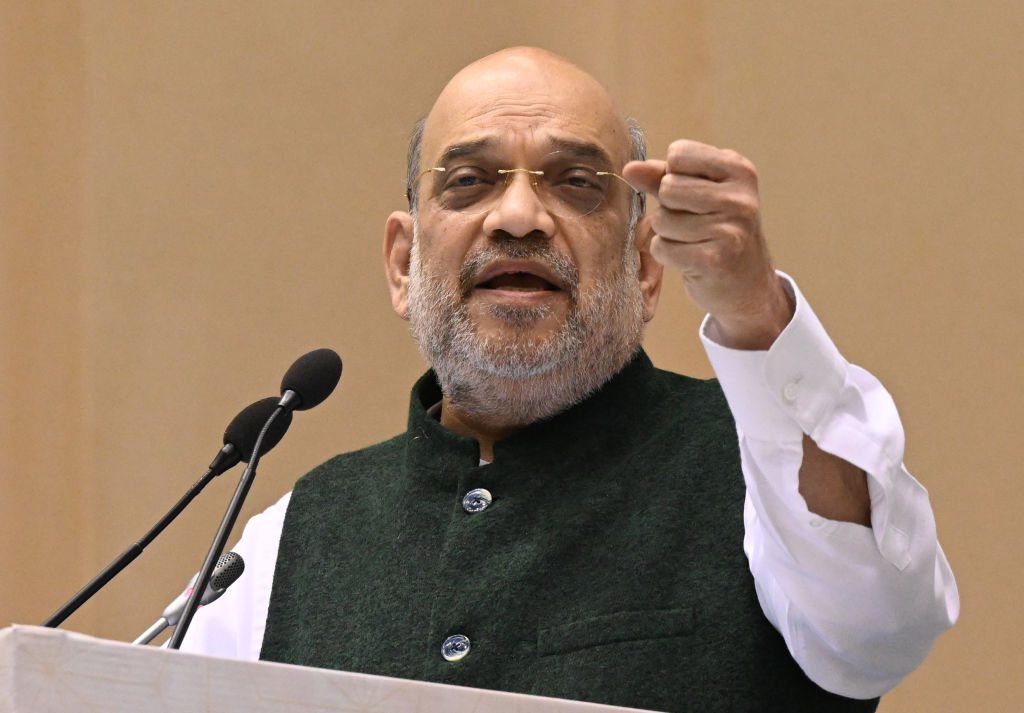
Amit Shah to launch Land Port Management System on June 9

NEW DELHI: Delivering on his promise of smarter and more secure border management, Union Home and Cooperation Minister Amit Shah will on Tuesday, June 9, formally launch the Land Port Management System (LPMS) in New Delhi — a landmark step in India’s digital transformation of border infrastructure.

According to an official release, the cutting-edge platform is designed to bring all of India’s land ports under a single, unified digital system, placing them on par with airports and seaports in terms of real-time logistics management and regulatory coordination.

As promised by Home Minister Amit Shah, the new system will deliver end-to-end digital workflows for both cargo and passenger processing, covering slot booking, payments, real-time tracking and single-window clearance, eliminating paperwork delays and reducing wait times at border crossings.

Operating as a neutral and open platform, LPMS will enable seamless coordination between government agencies and private operators alike. It will be fully integrated with major national systems, including ICEGATE, ULIP and the Motor Vehicle Ecosystem, making border management interoperable, efficient and transparent, the release stated.

The launch comes against the backdrop of a dramatic rise in cross-border activity. Since 2014-15, EXIM trade through land ports has jumped from roughly Rs 5,000 crore to Rs 82,800 crore in 2024-25. Cargo vehicle movement has grown from 1.1 lakh to 6.69 lakh, and passenger movement has surged from 1.7 lakh to 25.8 lakh, despite regional geopolitical pressures.

The Land Ports Authority of India (LPAI), a statutory body under the Ministry of Home Affairs, currently operates 15 land ports across India’s international borders with Pakistan, Nepal, Bhutan, Bangladesh and Myanmar, the release noted.

The LPMS launch is seen as a strategic step toward India’s ‘Viksit Bharat’ goal for 2047, reinforcing the government’s commitment to trade facilitation, regional connectivity and national security through technology.

Source: ANI

India eyes USD 30 billion seafood export target within next 5 years: Piyush Goyal

VISAKHAPATNAM: India has set its sights on a dramatic leap in seafood exports, with Commerce and Industry Minister Shri Piyush Goyal calling on the industry to scale up from the current USD 8.5 billion to USD 30 billion within five years.

Speaking at a national workshop on seafood exports in Visakhapatnam, Goyal said the ambitious target is achievable but only if the sector sharpens its focus on production quality and value-added goods rather than raw commodities.

“Take India’s fish across the world. Reduce import of raw shrimp and export value-added goods and build brands,” he urged industry stakeholders.

Shri Goyal also pointed to India’s recently finalised nine free trade agreements with developed nations as a major tailwind, saying the deals would unlock greater market access for exporters in the coming years.
Shri N Chandrababu Naidu, Chief Minister of Andhra Pradesh, highlighted that the ‘Blue Economy’ will be a key driver of future economic growth, with the fisheries sector playing a transformative role.

He underscored Andhra Pradesh’s leadership in fisheries production and exports and expressed confidence that India can significantly scale up its global market share through value addition, innovation, and stronger export ecosystems.

Emphasising quality, sustainability, traceability, and circular economy practices, he called for a collaborative approach involving all stakeholders to build a globally competitive and trusted Indian seafood brand, while assuring full support from the State to promote investment, infrastructure, and a robust aquaculture ecosystem.

Union Minister of Fisheries, Animal Husbandry Shri Rajiv Ranjan Singh echoed the call for higher ambition, saying India must grow its share of global fisheries exports and boost value addition to benefit both large exporters and small fishermen alike.

Singh flagged a particular need for export infrastructure in inland states, which currently contribute a smaller share to overall exports. He also highlighted India’s resilience in the face of steep US tariffs of 55.8 per cent, noting that exporters successfully pivoted to grow shipments to the EU, Japan, China and Southeast Asia.

In a significant announcement, Singh confirmed that the National Fisheries Board will soon open a regional office in Andhra Pradesh — India’s largest fish and seafood producing state, which accounts for 66 per cent of national shrimp exports and recorded aquaculture production of 55.39 lakh tonnes in 2025-26.

He further announced that under the Pradhan Mantri Matsya Sampada Yojana (PMMSY), the Government of India has approved the development of a Smart and Integrated Fishing Harbour at Kakinada, Andhra Pradesh, at an outlay of Rs 72.42 crore with central assistance of Rs 43.45 crore, incorporating modern infrastructure and smart technologies to enhance efficiency and service delivery.

India’s marine product exports hit a record Rs 73,890 crore (USD 8.45 billion) in 2025-26, with shipment volumes reaching 19.72 lakh metric tonnes. The sector has set a longer-term domestic target of crossing Rs 1 lakh crore in exports.

Frozen shrimp remained the top export product, with the US and China continuing as the principal buyer nations.

Civil Aviation Minister Kinjarapu Shri Rammohan Naidu added a logistics dimension to the discussion, announcing plans to more than double India’s airports from the current count to over 350, with a focus on expanding dedicated cargo facilities.

Shri Naidu proposed adopting a One Airport, One Product model – inspired by the One District One Product framework – to build specialised export hubs. He also called for cutting processing times at cargo terminals to speed up perishable export consignments.

Shri Chirag Paswan, Minister of Food Processing Industries, emphasised that seafood exports are of critical importance for India and the entire fisheries value chain, appreciating the efforts of stakeholders in sustaining growth despite challenges.

He highlighted the need to shift from “volume to value” and “produce to product”, with a strong focus on value addition and development of global markets alongside domestic markets. Noting the vast untapped potential of the fisheries sector, he underscored opportunities in ready-to-eat and ready-to-cook segments, which are witnessing growing global demand.

MV Meghna Prestige delivers over 30,000 MT of NPK Fertiliser at DPA Kandla

GANDHIDHAM : In a significant boost to the agricultural supply chain and fertilizer logistics sector, MV Meghna Prestige successfully berthed at the Deendayal Port Authority (DPA), Kandla, carrying a bulk consignment of 30,077.618 metric tonnes of NPK (Nitrogen-Phosphorus-Potassium) fertilizer for Krishna Phoschem Ltd. The vessel’s arrival marks another important fertilizer import operation at one of India’s leading major ports, reinforcing Kandla’s pivotal role in supporting the nation’s agricultural requirements.

The operation was efficiently handled by Rishi Shipping, which coordinated the vessel’s port call, cargo discharge, and associated logistics. The timely berthing and commencement of discharge activities underscore the company’s expertise in managing bulk cargo operations and ensuring seamless vessel turnaround. Strict adherence to safety standards, reflects their continued commitment to operational excellence in fertilizer cargo handling.

NPK fertilisers are essential for enhancing soil fertility and improving crop productivity by providing balanced nutrients required for plant growth. The arrival of such a substantial consignment is expected to support fertilizer availability ahead of the upcoming agricultural season, particularly benefiting farming communities across western and northern India.

Deendayal Port Authority continues to strengthen its position as a key gateway for bulk imports, including fertilisers, coal, edible oils, and other essential commodities. With its extensive infrastructure, deep-draft berths, and efficient cargo-handling capabilities, the port plays a crucial role in facilitating India’s trade and ensuring the smooth movement of vital agricultural inputs.

The successful handling of MV Meghna Prestige further highlights the strong collaboration between port authorities, shipping agents, stevedores, and logistics stakeholders in maintaining uninterrupted supply chains. As fertilizer demand remains critical for sustaining agricultural growth, such operations contribute significantly to ensuring food security and supporting the country’s farming sector.

Industry observers note that Kandla’s strategic location and robust hinterland connectivity continue to make it a preferred destination for fertilizer imports destined for consumption centres across multiple states, thereby strengthening India’s agricultural and economic resilience.

Make in India efforts showing results as import dependence falls in key sectors despite global shocks: Bank of Baroda

NEW DELHI: India’s efforts to build domestic manufacturing capabilities appear to be yielding results, with import dependence declining across several key sectors, including electricals, chemicals, capital goods and consumer durables, even as global supply chains remain under pressure amid the ongoing West Asia crisis, according to a Bank of Baroda research report released on Saturday.

The report said that while the overall import intensity of India Inc has remained largely unchanged over the years, sector-level data shows a gradual shift towards greater self-reliance.

“Though the headline imports to net sales ratio is flat, yet sector specific ratio has fallen especially where import dependency is higher,” the report noted.

The study analysed 1,372 non-financial companies and found that India’s overall import-to-net-sales ratio stood at 22.3 per cent in FY25, compared with 22.9 per cent in FY19.

However, the report highlighted significant improvement in several sectors where imported inputs had historically played a major role.

For electricals, the import-to-net-sales ratio fell sharply to 13.7 per cent in FY25 from 22.7 per cent in FY19. Within the sector, “the import intensity of cable has gone down to 12.5% from 21.8% in FY19,” while “for electronic components as well, it has gone down substantially from 31.5% to 25.8% in FY25.”

The chemicals sector also recorded a notable decline in import dependence, with the ratio falling to 22.5 per cent in FY25 from 27.5 per cent in FY19.

According to the report, “major reduction happened for Carbon black (from import to net sales ratio of 55% in FY19, it went down to 35.6% in FY25).”

The report noted that carbon black is an important intermediate input used in tyre manufacturing, plastics, electronics and batteries.

The report attributed the trend to policy measures aimed at strengthening domestic manufacturing ecosystems.

“Indian economy has seen policy initiative targeted at building resilient supply chains and reducing import dependency,” it said, citing programmes such as Make in India, India Semiconductor Mission 2.0, expansion of the Electronics Components Manufacturing Scheme, development of Rare Earth Corridors and establishment of Chemical Parks.

Bank of Baroda said the decline in import dependence across key manufacturing sectors could help cushion the economy from external commodity shocks.

“India is slowly moving towards calibrated reduction in import dependence,” the report said, adding that “this policy of slowly reducing import dependence of India Inc, will be sanguine against any abrupt global supply shock on domestic output.”

The findings come at a time when rising commodity prices have emerged as a key concern following the West Asia conflict.

The report noted that international crude oil prices have risen 31.1 per cent since the start of the crisis on February 27, while several industrial metals have also recorded gains, raising concerns about input costs for import-intensive industries.

Despite these pressures, the report said the risks are not widespread across corporate India.

“Import intensity of India Inc is not broad based and is concentrated in certain sectors,” it said, adding that “the risk will not be broad-based and can be regulated with sector-level policies.”

The report also observed that consumer-oriented sectors remain relatively insulated from global supply disruptions, with lower import intensity seen in domestic appliances, healthcare, FMCG and agriculture.
According to Bank of Baroda, sectors such as industrial gases and fuels, non-ferrous metals, crude oil and gas transmission continue to remain highly import-dependent and will require close monitoring amid volatility in global commodity markets.

Mazagon Dock joins race to anchor Andhra’s ₹29,000 crore mega shipbuilding cluster

DUGARAJAPATNAM : State-owned Mazagon Dock Shipbuilders is likely to be the anchor investor in the proposed mega shipbuilding facility at Dugarajapatnam in Tirupati district of Andhra Pradesh,

According to a senior government official, representatives of the Mumbai-based company are expected to visit Dugarajapatnam shortly to assess the site and evaluate the feasibility of joining the project as an anchor investor.

A special purpose vehicle (SPV) has already been formed by the State government and Visakhapatnam Port Authority (VPA) representing the Centre for the mega shipbuilding cluster with a capacity of 1.2 million tonnes. The total investment has been pegged at ₹29,253 crore. While the government will take care of land and marine infrastructure development worth ₹5,289 crore. The anchor investor will develop the core shipbuilding cluster with an investment of ₹23,964 crore.