Home Blog Page 266

Maritime infrastructure can transform Kerala’s economy : CM Satheesan

THIRUVANANTHAPURAM : Kerala has the potential to emerge as India’s maritime gateway and unlock vast opportunities in the blue economy, Chief Minister Shri V D Satheesan said.

The blue economy promotes the sustainable use of marine and coastal resources while balancing growth, employment and ocean conservation.

The state’s strategic coastline, ports and maritime infrastructure are key drivers of future economic growth, he noted in an article released by the Public Relations Department on the eve of World Ocean Day (June 8).

Kerala’s 600-km coastline, along with its two international ports, container terminal, 17 non-major ports, fishing harbours, inland waterways and tourism assets, provides a strong foundation for developing a vibrant maritime economy, Satheesan said.

The CM said the state’s development strategy envisions integrating these assets to transform Kerala into a major port-led economy, with greater reliance on coastal shipping for cargo movement and expanded opportunities in logistics, shipbuilding, cruise tourism, fisheries, aquaculture and maritime services.

“The government’s vision is to integrate these assets and transform the state into a major port-led economy, with at least 50 per cent of cargo currently transported by road eventually shifted to sea routes,” he said.

He added that the second phase would focus on cruise shipping, followed by tourism projects integrated with the state’s river network in the third phase.

According to him, transforming Kerala into a port-driven economy could generate lakhs of employment opportunities. Noting that around 28 per cent of Dubai’s GDP is derived from its port sector, Satheesan said Kerala’s coastline and maritime resources hold immense untapped potential for economic growth and development.

He said the deep-water international transshipment port at Vizhinjam International Seaport, which is capable of handling some of the world’s largest vessels, could become a model for sustainable port development in South Asia.

Satheesan stressed the need for sustainable ocean governance, marine conservation and responsible utilisation of marine resources, noting that oceans play a critical role in sustaining livelihoods, regulating climate and supporting global trade.

He also highlighted challenges such as marine pollution, climate change, coastal erosion and plastic waste, saying these issues pose serious threats to marine ecosystems and coastal economies and require urgent attention.

Observing that the global blue economy is emerging as a major growth driver, Satheesan said areas such as green ports, smart shipping, offshore renewable energy, marine biotechnology, sustainable aquaculture and blue carbon initiatives offer significant opportunities for Kerala.

He added that World Ocean Day serves as a reminder that protecting oceans is not only an environmental responsibility but also an investment in humanity’s future and sustainable development.

With logistics costs now in single digits, Rajesh Menon of DPIIT Logistics Division says focus must shift to speed, execution and multimodal efficiency

NEW DELHI: India’s logistics costs have moved into the 8 to 9 per cent range of GDP, but further gains will depend on moving goods faster and making multimodal transportation work more effectively on the ground, according to Mr. Rajesh Menon, Associate Director, DPIIT Logistics Division, Ministry of Commerce & Industry.

ICC 1 With logistics costs now in single digits, Rajesh Menon of DPIIT Logistics Division says focus must shift to speed, execution and multimodal efficiency

Speaking at the Indian Chamber of Commerce‘s Excellence in Motion: Redefining the Future of Logistics in India forum in New Delhi, Menon noted that average truck speeds on key freight corridors remain in the range of 50 to 60 kmph, compared with international benchmarks of 70 to 80 kmph. He also pointed out that while multimodal transportation offers clear cost advantages, many of those benefits are yet to be fully realised due to operational challenges.

Rajesh Menon, Associate Director, DPIIT Logistics Division, Ministry of Commerce & Industry, said, “The next set of gains will come from addressing the gaps that continue to exist across the logistics ecosystem. Industry, policymakers and implementing agencies need to work together to solve practical challenges on the ground and ensure that logistics reforms translate into tangible benefits for businesses.”

The forum brought together policymakers, infrastructure developers, logistics companies and industry leaders to examine how India’s logistics ecosystem can respond to changing trade patterns, infrastructure requirements and supply chain risks.

Offering an industry perspective, Mr. Kanishka Sethia, Chairman, ICC National Logistics & Supply Chain Committee and Director & CEO, Western Carriers (India) Limited, said India’s logistics market is estimated to exceed USD 380 billion, supported by manufacturing growth, infrastructure investment and deeper integration with global value chains. He highlighted the contribution of initiatives such as the Dedicated Freight Corridors, PM Gati Shakti and the National Logistics Policy in improving freight movement across the country. Sethia also noted that the Dedicated Freight Corridor linkage to JNPT was completed earlier this year, improving connectivity between northern India and major ports, while rail freight is increasingly becoming a competitive alternative to road transport on several routes.

Kanishka Sethia, Chairman, ICC National Logistics & Supply Chain Committee and Director & CEO, Western Carriers (India) Limited, said, “Recent developments in the Middle East and disruptions across major shipping routes have shown how quickly global events can affect supply chains. For India, the challenge is not limited to improving efficiency. It is equally about building networks that can absorb shocks, adapt to uncertainty and continue supporting trade and manufacturing activity.”

Mr. Manoj Singh, Additional Member Railway Board, Ministry of Railways, Govt. of India, said, “Indian Railways carried nearly 1.7 billion tonnes of freight in FY26 and is steadily moving towards the 2 billion tonne milestone. Achieving that scale will require deeper collaboration across the logistics ecosystem, particularly in strengthening first mile and last mile connectivity. While bulk commodities remain central to rail freight, there is a growing opportunity to serve sectors that value speed, reliability and predictability in cargo movement.”

“We are seeing encouraging traction in scheduled parcel and rapid cargo services designed for e-commerce, FMCG and other time-sensitive supply chains. At the same time, rail remains one of the country’s most energy-efficient modes of transport, accounting for roughly 2 per cent of electricity consumption while moving nearly a quarter of India’s freight traffic. As India looks to build a more sustainable logistics network, increasing the share of rail-based transportation can deliver both economic and environmental benefits.”

Highlighting developments in the maritime sector, Shri Sushanta Purohit, Chairman, V.O. Chidambaranar Port Authority, outlined ongoing investments at the port, including the proposed ₹15,000 crore Outer Harbour Project, offshore renewable energy infrastructure and the development of a shipbuilding and maritime cluster in Tuticorin. He also pointed to the port’s designation as a Green Hydrogen Hub and Offshore Renewable Energy Hub, alongside investments in renewable energy, green hydrogen and digital technologies. The port has implemented a Digital Twin platform and is pursuing projects in green methanol and clean energy as part of its expansion plans.

Shri Sushanta Purohit, Chairman, V.O. Chidambaranar Port Authority, said, “India’s trade ambitions will require ports to expand capacity, adopt new technologies and prepare for emerging opportunities in areas such as renewable energy and green fuels. The investments being made today are aimed at ensuring that maritime infrastructure keeps pace with future demand.”

Addressing the future of freight transportation, Mr. Abhijeet Sinha, Program Director, Ease of Doing Business and National Highways for Electric Vehicles (NHEV), highlighted the development of a 5,500 kilometre electric highway network aimed at enabling long distance freight movement using green energy and reducing dependence on conventional fuels. He also stressed the growing role of decarbonisation, digitalisation and geospatial intelligence in logistics planning as businesses seek greater predictability and resilience in their operations.

Mr. Abhijeet Sinha, Program Director, Ease of Doing Business and National Highways for Electric Vehicles (NHEV), said, “Energy security is no longer separate from logistics planning. Decisions around sustainability, fuel diversification and freight movement are increasingly shaping competitiveness across the sector. Building freight corridors powered by clean energy will help create a logistics network that is better prepared for future disruptions.”

While the speakers approached the subject from different perspectives, a common message emerged through the discussions: India’s next logistics gains will come not from new announcements alone, but from improving execution, strengthening multimodal connectivity, preparing infrastructure ahead of demand and reducing exposure to global supply chain disruptions.

APEDA facilitates first export of fresh mangoes from Jharkhand to UK

KOLKATA : In a significant development for agricultural exports from Jharkhand, the Agricultural and Processed Food Products Export Development Authority (APEDA), under the Ministry of Commerce and Industry, flagged off the first commercial consignment of fresh mangoes from the State to the United Kingdom. The flag-off ceremony was held in Kolkata on 4 June 2026.

The consignment comprises 1.5 metric tonnes of fresh Amrapali mangoes sourced from Beura Farmer Producer Company Ltd., an all-women Farmer Producer Company (FPC) located in Bano Block of Simdega district, Jharkhand. The consignment is being exported by M/s JGB Agrofresh Pvt. Ltd., Kolkata, to London, United Kingdom.

The export follows an Export-Oriented Capacity Building Programme organized by APEDA on 5 May 2026 for Farmer Producer Companies (FPCs), Farmer Producer Organisations (FPOs) and progressive farmers of Simdega district. The programme focused on export requirements, quality standards and market opportunities.

Subsequently, APEDA facilitated linkage between Beura Farmer Producer Company Ltd. and M/s JGB Agrofresh Pvt. Ltd. for procurement of export-quality mangoes from the district. The present shipment is the outcome of this initiative.

The linkage has enabled direct participation of the FPC in the export value chain and provided market access for its member farmers. The farmers associated with the FPC realized higher returns for their produce compared to prevailing domestic market prices.

The initiative is expected to encourage adoption of quality production practices, improved post-harvest management and compliance with international standards among farmer groups in the region.

Jharkhand possesses favourable agro-climatic conditions for horticulture cultivation. The Amrapali variety of mango grown in the State is known for its quality characteristics and market acceptance. With this consignment, Jharkhand joins the list of States exporting fresh fruits to international markets.

APEDA facilitates exports of agricultural and processed food products through market development initiatives, capacity-building programmes, quality improvement measures, traceability systems and export promotion activities. The Authority also supports participation of farmer collectives, including women-led and tribal producer organizations, in agricultural exports.

The export of the first commercial consignment of fresh mangoes from Jharkhand marks an important step towards integrating farmer producer organizations from the State with international markets.

Delhi–Siliguri Bullet Train announced: Via Lucknow, Varanasi and Patna, travel time to drop from 20 hours to 6

NEW DELHI : Announcing a wave of rail infrastructure plans for West Bengal, Railways Minister Shri Ashwini Vaishnaw on Saturday (6 June) unveiled a bullet train project linking Delhi with Siliguri, the gateway to the northeast, India Today reported.

He said the corridor would cut travel time to just six hours from the current 20 hours.

The project will be India’s second after the 508-km Mumbai-Ahmedabad corridor, expected to begin operations next year.

“A bullet train project will come to West Bengal. It will connect Delhi and Siliguri via Lucknow, Varanasi and Patna,” the Union Minister said.

During his Kolkata visit, where he also took a metro ride, Vaishnaw lauded Chief Minister Shri Suvendu Adhikari for the poll victory and for “saving Bengal” from the Trinamool Congress, which he accused of stalling key projects.

He said railway works worth over Rs 1 lakh crore were under way in the state.

“Congratulations on the way you have saved Bengal. Now you can work. For so many years, development work was stopped here,” Vaishnaw told Suvendu, widely regarded as the architect of the BJP’s turnaround.

Adhikari, who accompanied the minister, said his government would coordinate with the Centre to speed up pending projects, blaming the Mamata Banerjee regime for straining Centre-state ties. “Just as we have provided land to the BSF to strengthen border security, we will similarly provide land to the Railways for various projects across West Bengal,” he said.

Vaishnaw added that the Kolkata Metro would get 60 new-generation trains over five years, while 102 stations in Bengal were being redeveloped under the Amrit Bharat scheme.

Taking a swipe at the TMC, he cited the delayed Chingrighata metro stretch, noting that “Projects valued at around Rs 1.02 lakh crore have been pending implementation for a long time.”

‘No hope’: Indian crew stranded off Turkey for months

In a message sent to AFP, the stranded crew members said they were losing hope after 10 months trapped on board the Mongolia-flagged AZRA C that has been moored in the Sea of Marmara since August 2025.

The ship’s purported owners were arrested in January in connection with a massive international drugs bust, leaving its fate and those on board in limbo.

“Every day we are losing hope and facing increasing mental pressure and health problems,” one Indian crew member told AFP through an intermediary, asking not to be named. “We are searching for new ways to overcome this situation… We have no words to describe (it),” he said.

The case highlights a growing problem of vessel abandonments, which the International Transport Workers’ Federation (ITF) says has become a systemic problem in the maritime industry.

The ITF’s Turkey representative, Selahattin Polat, has demanded the crew be disembarked “as soon as possible”, on safety grounds. “The ship is on the navigation route of other vessels and poses a serious risk in terms of maritime and vessel safety,” Polat told AFP.

The Istanbul-based ITF inspector, who has been handling this case and helping the crew, said they were in a very difficult position. “The ship’s owner is under arrest and there’s nobody to talk with,” said Polat, who also represents the Marine Employees’ Solidarity Association (DAD-DER).

The local shipping agents, who provide essential services to a vessel, had stopped providing supplies as they had not been paid.

“Currently, no-one is taking care of the ship. It’s completely abandoned,” Polat said.

Under international maritime law, a ship must have sufficient crew members on board at all times to handle any emergencies — whether the vessel is in port or at anchor.

This means the four sailors, who haven’t been paid for months, cannot leave until a new crew arrives.

“There is a shortage of fuel and provisions on board,” Polat said, adding: “Legal procedures have been initiated to enable them to leave.”

When the vessel arrived in August, it needed repairs and its purported owners, Ahmed al-Masri and Semra al-Masri, were handling matters with the local shipping agent, an industry source said.

But then they disappeared. “We later learned they had been arrested,” the source explained.

In mid-January, Istanbul prosecutors named the pair as being among 12 people arrested by Turkish police for alleged “drug trafficking” and “money laundering”, Anadolu state news agency reported.

Prosecutors said the raids were directly linked to Spain’s seizure of 10 tonnes of cocaine from a ship called the “United S” off the Canary Islands a week earlier.

Key among the detainees was a suspect called Cetin Goren, whom Turkish media reports also linked to the AZRA C.

Hurriyet newspaper said the vessel had initially been earmarked to carry the haul but the plan was shelved when the ship broke down.

Abandonments rife off Turkey
ITF figures show 2025 was the worst year on record for abandonment, affecting 6,233 seafarers on 410 ships, with Indian nationals most affected.

Turkey was the country where most abandonments took place, accounting for 61 cases last year.

So far this year, there have been 151 cases, the ITF said.

The issue raises serious concerns about the protection of seafarers and international maritime obligations, according to Arif Sinan Unlu, lawyer and mediator.

There are currently 15 foreign-flagged vessels classed as abandoned in the Sea of Marmara, he said — figures confirmed by the ITF.

Istanbul’s port authorities are closely monitoring the situation, as is the Indian consulate, which is trying to secure the sailors’ repatriation.

For now, the ITF and the DAD-DER were providing the stranded sailors with drinking water and essential supplies, Polat explained.

The vessel needed to be handed to a trustee or a new crew brought in but, he acknowledged, such procedures “would take time”.

Although grateful for the ITF’s help and efforts by the consulate, one of the stranded sailors told AFP they had “little hope someone will come and rescue us”.

If someone were to come and talk with him face-to-face, “I would break down crying,” he said.

Middle East conflict, fuel price surge to halve global airline profits in 2026: IATA

RIO DE JANERIO: Global airline industry profits are expected to halve in 2026 as the conflict in the Middle East and a sharp rise in jet fuel prices weigh heavily on carriers worldwide, according to the latest financial outlook released by the International Air Transport Association (IATA).

IATA said airlines are expected to post a combined net profit of USD 23 billion in 2026, down from an estimated USD 45 billion in 2025 and significantly lower than the earlier forecast of USD 41 billion.
“War-related disruptions in the Middle East and rising fuel costs have shifted the outlook for airlines to the worse,” said Willie Walsh, IATA’s Director General.

“Globally, airlines are expected to see profitability halve compared to 2025. Profits will shrink from USD 45 billion in 2025 to USD 23 billion this year. And margins will shrink from 4.2 per cent to 2.0 per cent,” Walsh said.

The industry body said the net profit margin is expected to fall to 2 per cent in 2026 from 4.2 per cent in 2025, while net profit per passenger transported is projected to decline to USD 4.50 from USD 9.10 last year.

According to IATA, the biggest challenge facing airlines is the surge in fuel costs. Jet fuel prices are expected to average USD 152 per barrel in 2026, nearly 70 per cent higher than the USD 90 per barrel average in 2025.

“All airline bottom lines are suffering from the rapid 70 per cent rise in jet fuel prices,” Walsh said.

“Some of the additional cost is being recuperated by adjusting prices and improving efficiency, but it will not be sufficient to maintain profitability at the previous year’s level,” he added.

Despite the profitability hit, the airline industry is still expected to generate record revenues of USD 1.165 trillion in 2026, up 9.4 per cent from USD 1.065 trillion in 2025. Passenger numbers are projected to rise 2.4 per cent to 5.1 billion, while airlines are expected to fill a record 84 per cent of available seats.

Passenger ticket revenues are forecast to increase to USD 839 billion, supported by a 7 per cent rise in ticket yields as airlines attempt to recover part of the fuel cost shock.

However, IATA warned that operating expenses are expected to grow faster than revenues. Total industry costs are projected to rise 13 per cent to USD 1.117 trillion, largely driven by fuel expenses, which are expected to jump nearly 40 per cent to USD 350 billion.

The association said airlines remain vulnerable because profitability in the sector has historically been low.
“Airlines are bearing the brunt of the fuel price shock,” Walsh said.

“Net profit per passenger is expected to fall to USD 4.50, half of what it was last year. Under the circumstances, that shows resilience. But it won’t even buy you a hot dog at most of the FIFA World Cup venues, and it does not leave much of a buffer should other costs or taxes start rising,” he added.

Regionally, IATA said all major airline markets are expected to remain profitable except the Middle East, where carriers are projected to slip into losses amid flight disruptions, airspace restrictions and weaker transfer traffic caused by the ongoing conflict.

“The Gulf carriers face operational uncertainty following a near-complete shutdown of airspace at the outbreak of the war,” Walsh said.


“These carriers are doing an amazing job maintaining connectivity, but major financial impacts are unavoidable,” he added.
IATA also flagged slower global economic growth, rising inflation, aircraft supply chain constraints and geopolitical uncertainty as additional risks facing the airline industry in 2026. (ANI)

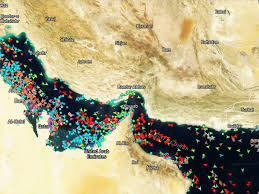
Iran lawmaker says ships pay up to $2 million to cross Hormuz

TEHRAN: Iran currently receives an average of $1.5 million to $2 million from each ship passing through the Strait of Hormuz, Mohsen Zanganeh, a member of parliament’s budget and planning committee, told IRGC-linked Fars News on Sunday.

The money is deposited into the treasury under the budget law and spent in designated areas, according to the report.

Some payments were not made in cash and were instead settled through US Tether, a dollar-linked cryptocurrency, or barter, the report said.

Source: Iran International

Iran says Strait of Hormuz to be managed jointly with Oman under international law

TEHRAN : Iran and Oman will jointly manage the Strait of Hormuz in line with international law, said Iranian Foreign Minister Abbas Araghchi on Thursday. In remarks carried by Iran’s state broadcaster IRIB citing Lebanon’s Al Mayadeen TV, Araghchi said Iran and Oman, as the two countries bordering the strategic waterway, have the “natural right” to coordinate and make decisions regarding its management.

He said Tehran would exchange views with Gulf countries over developments related to the strait but stressed that decisions concerning its administration would ultimately be made by Iran and Oman.

Araghchi said efforts by both sides are aimed at ensuring safe passage for all ships through the strait in accordance with international law.

In the same interview, Araghchi said communication with Iran’s Supreme Leader Mojtaba Khamenei remains ongoing and that his directives are received “in due time” and implemented precisely.

He also said there is broad national consensus around Iran’s leadership and that state affairs are proceeding “in a very good direction.”

US forces shoot down two Iranian attack drones in Strait of Hormuz amid fresh escalation

FLORIDA: The United States military has intercepted and destroyed two Iranian attack drones that posed an immediate hazard to commercial shipping lanes in the Strait of Hormuz, according to an official statement by the US Central Command late Saturday.

The kinetic engagement underscores a fresh escalation of hostilities in West Asia, severely straining the existing ceasefire framework just a day after Iran targeted the strategic waterway and its Gulf neighbours, including Kuwait and Bahrain, with a barrage of missiles and unmanned aerial vehicles.

“Earlier today, US forces in the Middle East shot down two Iranian one-way attack drones that threatened international maritime traffic in the Strait of Hormuz,” US Central Command announced on its X account.

The military command added that “American forces remain postured and ready to continue defending against Iranian aggression.”

This drone interception is part of a broader flare-up of military confrontations between US and Iranian forces in the strategic shipping corridors of West Asia, exposing the extreme fragility of the existing ceasefire and raising significant international concern over a wider regional escalation.

The immediate cycle of friction began early on Saturday, when US forces launched targeted strikes against Iranian coastal radar installations located in Goruk and on Qeshm Island within the critical Strait of Hormuz.

According to US Central Command, this pre-dawn military operation was initiated directly after the interception of earlier Iranian drones that were deemed a threat to maritime traffic in the strategic waterway.

In direct retaliation for those radar strikes, Iran launched a barrage of missiles aimed at US military facilities situated in Kuwait and Bahrain.

Commenting on the defensive situation, Kuwaiti authorities confirmed that seven ballistic missiles crossed over populated areas, resulting in structural damage but causing no casualties, while Bahrain activated its public warning sirens and advised residents to seek shelter immediately.

An official statement from Iran’s Revolutionary Guard claimed that its retaliatory strikes successfully targeted American military installations located in both Gulf nations.

However, the US military countered that assessment, stating that six incoming missiles were intercepted by regional air defences, while another failed to reach its intended target.

Despite these intense kinetic exchanges on the ground, parallel diplomatic channels have managed to remain functional, with Pakistan continuing its active diplomatic efforts to bridge differences between the two sides.

As part of this mediation track, Pakistani Interior Minister Mohsin Naqvi arrived in Tehran on Saturday, carrying what Iranian media described as a special message from Pakistan’s military and political leadership for Iran’s Supreme Leader, Mojtaba Khamenei.

This high-level political engagement comes amidst reports that broader diplomatic negotiations have slowed down significantly, primarily because Tehran continues to pursue access to its frozen financial revenues, comprehensive relief from international sanctions heavily impacting its oil exports and maritime ports, and ultimate leverage over shipping through the Strait of Hormuz.

Highlighting the scale of the financial deadlock, an adviser to Iran’s supreme leader had previously suggested that the release of USD 24 billion in Iranian assets frozen by the United States remained a critical element of any peace arrangement.

The ongoing challenges to the ceasefire are also expanding across multiple fronts beyond the Gulf, notably in Lebanon, where three members of the Lebanese armed forces, including two officers, were killed following an Israeli strike on a military vehicle in the southern region of the country.

Israeli officials stated that they were investigating the circumstances of the incident.

This active front in Lebanon has become increasingly entangled with the wider matrix of US-Iran diplomacy, as Tehran has explicitly linked progress in its ongoing negotiations with Washington to a formal ceasefire involving Israel and Hezbollah.

Conversely, Israel has indicated its intent to continue military operations and maintain its active troop deployment.

Amid these complex diplomatic alignments, Lebanese Army Commander General Rudolf Haykal travelled to Pakistan at the explicit invitation of Pakistan’s military chief, a visit that has drawn considerable attention from regional observers monitoring the ongoing efforts involving Islamabad.

The continuing clashes across both the Gulf and Lebanon highlight the immense hurdles currently facing international negotiators who are seeking to transform the volatile ceasefire into a broader and more durable peace agreement.

Middle East Crisis: Why Are Freight Rates Rising in Waves and what’s next? Xeneta Chief Analyst Answers

OSLO: Latest data shows containerized imports into the Middle East collapsed in the month immediately following the escalation of conflict at the end of February, down 64% in March year-on-year. Exports from the region were down 62% year-on-year.

The data, released by Xeneta and Container Trades Statistics this week, is the clearest sign of the magnitude of the disruption and the importance of the Strait of Hormuz for container trade in the Middle East, essentially cutting off a seaborne trade artery into critical ports such as Jebel Ali and Khalifa in UAE, Dammam in Saudi Arabia and Hamad in Qatar.

If this sudden collapse in trade in the Middle East acted as the initial earthquake, the aftershocks are still spreading across global supply chains. This wave pattern means it is not always easy for supply chain professionals to provide credible explanations internally to finance teams on why the freight budget has been blown apart – and, perhaps more importantly, what the forecast is for the remainder of 2026. This is especially the case if you are not shipping on trades directly impacted by the Strait of Hormuz.

This blog will provide clarity and key considerations for the remainder of 2026.

Note: ‘Middle East’ includes Iran, Iraq, Kuwait, Saudi Arabia, UAE, Qatar, Bahrain, Oman, Yemen, Jordan, and Egypt (Ain Sokhna only).


Waves of disruption

We are now three months into the Middle East conflict and a familiar wave pattern is emerging.

Port of Jeddah is a good example because it is acting as the gateway to a land bridge into areas of the Middle East cut off by the Strait of Hormuz.

Between 28 February (date of escalation in conflict) and 22 March, average spot rates from China to Jeddah increased 85%.

While this is not too surprising, what causes more confusion is spot rates then began to ease slightly, falling back 14% by 15 April.

If this lulled procurement professionals into telling finance colleagues they were through the worst, it was a mistake. Since then, a second wave has hit, with average spot rates already spiralling past the 22 March spike and expected to rise to around 100% above pre-conflict levels at the start of June.

History lesson in freight rate spikes following black swan events

The wave effect is a familiar pattern during a black swan. Following the escalation of attacks by Houthi Militia in the Red Sea in December 2023, average spot rates from China to Mediterranean increased 243% by 16 January 2024 (compared to 1 December), before falling back 35% by 30 March (from the mid-Jan spike).

Again, if a procurement professional told their senior management or finance team the worst was behind them, it was a big mistake. From that point, average spot rates spiralled upwards and didn’t peak until 15 July 2024 when they hit 350% above pre-conflict levels (1 December 2023). It then took six months for rates to fall back to the 30 March level – a much sharper rise than the fall.

If you are struggling to explain the financial impact of the latest Middle East crisis to your Chief Finance Officer, understanding these patterns provides credibility in a seemingly chaotic environment.

If history is anything to go by, the second wave of rate increases on the trade from China to Jeddah are likely to climb even higher. It should certainly not be ruled out and is important to flag with finance teams already reworking freight budgets for the remainder of 2026.

Waves rippling across global trades

If you are shipping on a trade into the Middle East, the explanation for increased freight costs is easier. But what if you are shipping on a trade thousands of miles away on the Transpacific from China to US West Coast? How do you explain to the Chief Finance Officer that average spot rates are set to be more than 80% higher at the start of June compared to pre-conflict in February?

We can also see the wave pattern on the Transpacific trade. There was a modest 12% increase in average spot rates on 1 March before easing back 8% by 14 March.

Perhaps the Transpacific was insulated from the impact of the Middle East crisis given it is nowhere near the epicenter of conflict? Again, this is an error.

The second wave has now hit the Transpacific, with average spot rates from China to US West Coast expected to reach 84% above pre-conflict levels in June.

Waves rippling across global trades
If you are shipping on a trade into the Middle East, the explanation for increased freight costs is easier. But what if you are shipping on a trade thousands of miles away on the Transpacific from China to US West Coast? How do you explain to the Chief Finance Officer that average spot rates are set to be more than 80% higher at the start of June compared to pre-conflict in February?

We can also see the wave pattern on the Transpacific trade. There was a modest 12% increase in average spot rates on 1 March before easing back 8% by 14 March.

Perhaps the Transpacific was insulated from the impact of the Middle East crisis given it is nowhere near the epicenter of conflict? Again, this is an error.

The second wave has now hit the Transpacific, with average spot rates from China to US West Coast expected to reach 84% above pre-conflict levels in June.

Strategies for the remainder of 2026?

There is no hiding place from the disruptive impact of the closure of the Strait of Hormuz and sudden collapse of trade into the Middle East.

Compared to pre-conflict, average spot rates in June are expected to be +75% from China to US East Coast, +51% to North Europe, +45% to Mediterranean and +57% on the Transatlantic from North Europe to US East Coast.

Some shippers have delayed signing new long term contracts on major fronthaul trades in the hope spot rates will begin to ease and give them a stronger negotiating position. The false dawn of easing spot rates following the first wave could have encouraged this wait-and-see approach.

However, given the second wave of rate increases is now seen across major trades, continuing to play on the spot market could be a dangerous game.

A shipper will be reluctant to lock into a long term rate that is higher than they budgeted for at the start of the year, but it may be the least worst option and at least provides some clarity for finance teams in understanding full year cost impact of the Middle East conflict.

If you are a procurement professional facing this dilemma, whatever strategy you adopt for the remainder of 2026, you can provide credible explanations and rationale for your decisions though Xeneta data and market intelligence.

Index-linked contracts are a strong option

No one has a trustworthy crystal ball and, given the highly-volatile geopolitical situation, nothing should be ruled out in 2026 and beyond.

That is why many shippers are adopting index-linked contracts, where the rate paid tracks the market against agreed parameters with the service provider.

This does not fully insulate a shipper from the waves of freight rate increases following a black swan, but it offers many benefits.

Firstly, it is likely the index-linked rate will be below the price a shipper would pay on the spot market.

Secondly, it gives the shipper a level of assurance that, should the situation improve in the Middle East and freight rates begin to soften, they will not be locked into paying an uncompetitive rate in a traditional long term contract agreement.

Additionally, an index-linked contract provides greater certainty the shipper’s cargo will make it onboard the ship, while forwarders and carriers both also benefit from this type of agreement. During uncertain times, index-linked contracts support buyers and sellers of freight to work in partnership.

What Shippers Should Do Now

There are three things every shipper should be doing in this environment, regardless of whether their cargo touches the Middle East.

  • Get the data to explain the situation internally. Finance teams and senior management are asking why freight budgets are broken. Having lane-level rate benchmarks and market context to hand is the difference between a credible explanation and a shrug. If you cannot explain what the market is doing and why, you cannot make the case for the budget you need.
  • Reassess your exposure to the spot market. Shippers who delayed signing long-term contracts in the hope that rates would soften have found themselves increasingly exposed to a spot market that is still rising. Long-term contract rates carry a discount to the spot market and provide predictability. Index-linked contracts go further, aligning your rate to market movements while removing the risk of being locked in above-market if conditions improve (or not getting any space onboard the ship if rates rise). 
  • Look beyond the rate. Cancellation rates, schedule reliability, and actual versus announced transit times vary significantly by carrier and corridor right now. Paying a lower rate for a service that cancels or delivers three weeks late is not a saving it’s another (potentially self-inflicted) disruption. Carrier performance data — not carrier promises — should drive routing decisions.

Source: Xeneta

*‘Middle East’ includes Iran, Iraq, Kuwait, Saudi Arabia, UAE, Qatar, Bahrain, Oman, Yemen, Jordan, and Egypt (Ain Sokhna only).