Home Blog Page 268

NMPA celebrates World Environment Day

MANGALURU : World Environment Day was observed at New Mangalore Port Authority on 05.06.2026 with great enthusiasm under the global theme “Inspired by Nature. For Climate. For Future.”

To mark the occasion and reaffirm NMPA’s commitment towards environmental sustainability and green initiatives, a plantation drive was organised within the Port premises. Smt. S. Shanthi, Deputy Chairperson, NMPA planted a sapling along with Shri Padmanabhachar K., IOFS, Chief Vigilance Officer, NMPA and Shri Rajashekhar Puranik, Senior Environment Officer, Karnataka State Pollution Control Board (KSPCB), Mangalore. Officers, employees and staff of the Port actively participated in the plantation drive.

As part of its sustained commitment towards environmental conservation, NMPA has already established and maintains nearly 649 acres of green belt within and around the Port area with plantation of various species of trees. The Port has also undertaken several eco-friendly initiatives including 100% solarisation, rain water harvesting, Continuous Ambient Air Quality Monitoring Station, 1.2 MLD Sewage Treatment Plant, Solid Waste Management, induction of electric vehicles, Slop reception facility, Shore power at berth and other sustainable environmental management measures aimed at reducing carbon footprint and promoting green port practices.

Later in the day, a stage programme was organised at the Port premises. The function was presided over by Smt. S. Shanthi, Deputy Chairperson, NMPA. Shri Rajashekhar Puranik, Senior Environment Officer, KSPCB, Mangalore attended the programme as the Chief Guest, while Shri Padmanabhachar K., IOFS, CVO, NMPA graced the occasion as Guest of Honour. Shri Ravindra Reddy, Chief Engineer (Civil), NMPA welcomed the gathering and highlighted the importance of environmental protection, sustainability, and collective responsibility towards safeguarding nature for future generations.
During his address at the World Environment Day programme, Shri Rajashekhar Puranik, Senior Environment Officer, Karnataka State Pollution Control Board (KSPCB), Mangalore, highlighted the various initiatives undertaken by the Karnataka State Pollution Control Board towards environmental protection, pollution control, sustainable waste management, and promotion of eco-friendly practices across the State.

He appreciated Mangaluru for its rich greenery, ecological balance, and comparatively cleaner environment, stating that the city continues to remain one of the greener coastal regions of Karnataka. He also commended the proactive environmental initiatives undertaken by New Mangalore Port Authority, particularly the development and maintenance of extensive green belt areas, pollution mitigation measures, solarisation initiatives, and sustainable environmental management practices being implemented within the Port premises.

In her address during the World Environment Day celebrations at New Mangalore Port Authority, Smt. S. Shanthi, Deputy Chairperson, NMPA, emphasized the critical importance of environmental protection and sustainability in ensuring a healthier and greener future for coming generations. Referring to the global theme “Inspired by Nature. For Climate. For Future.”, she stated that environmental conservation is no longer a choice but a collective responsibility for society. She highlighted that a clean and green environment positively impacts the well-being and quality of life of people and stressed the need for preserving nature through collective efforts. Appreciating Mangaluru for its greenery and comparatively lower pollution levels, she noted that NMPA has been consistently implementing several eco-friendly initiatives including Sewage Treatment Plants, green belt development, pollution control measures, solarisation, and sustainable environmental management practices in line with the guidelines of the Karnataka State Pollution Control Board.

Shri Deepak Rath, Chief Mechanical Engineer, NMPA rendered vote of thanks. The programme witnessed enthusiastic participation from officers, employees and staff members of NMPA, reaffirming the Port’s continued commitment towards environmental stewardship and sustainable development.

India and ADB sign $42 million loan agreement to strengthen coastal protection in Maharashtra

NEW DELHI : The Government of India and the Asian Development Bank (ADB) have signed a $42 million loan agreement aimed at strengthening coastal and riverbank protection measures in Maharashtra, enhancing the resilience of local communities and safeguarding critical natural ecosystems from the impacts of climate change.

The loan will support the Maharashtra Sustainable Climate-Resilient Coastal Protection and Management Project, which seeks to address growing challenges such as coastal erosion, flooding, sea-level rise, and extreme weather events affecting the state’s extensive coastline.

The agreement was signed by Smt. Juhi Mukherjee, Joint Secretary, Department of Economic Affairs, Ministry of Finance, on behalf of the Government of India, and Mio Oka, on behalf of ADB.

Under the project, a combination of engineering solutions and nature-based approaches will be deployed to combat coastal erosion. These include offshore reefs, rock protection structures, beach nourishment, and dune restoration measures designed to provide long-term coastal resilience while preserving natural habitats. Advanced technologies such as remote sensing satellite imagery and climate-risk forecasting tools will also be utilized to improve shoreline management and strengthen disaster preparedness.

The initiative is expected to deliver significant benefits to Maharashtra’s tourism and fisheries sectors, both of which are highly vulnerable to coastal degradation and extreme weather events. In addition, the project places strong emphasis on community participation, promoting the involvement of women, youth, and vulnerable groups in coastal zone management and disaster-risk reduction activities.

ADB will also support institutional capacity building through the strengthening of the Maharashtra Maritime Board, including the establishment of a dedicated coastal infrastructure management unit and specialized training programs in coastal planning, social inclusion, and sustainable livelihood development.

The project underscores India’s growing focus on climate-resilient infrastructure and sustainable coastal development, while reinforcing the long-standing partnership between India and ADB in supporting infrastructure, environmental protection, and community resilience initiatives across the country.

AP accelerates maritime transformation with 3 new ports, shipbuilding hub and industrial corridors

AMRAVATI : Andhra Pradesh is rapidly emerging as one of India’s most dynamic maritime growth engines, with a series of large-scale port, logistics, and industrial infrastructure projects set to redefine the state’s economic landscape and strengthen its role in global trade.

In a landmark maritime expansion program, the state is developing five greenfield ports with a combined investment of approximately ₹22,833 crore. The initiative represents one of the largest port infrastructure drives currently underway in India and is expected to significantly enhance cargo-handling capabilities along the country’s eastern seaboard.

Among the flagship projects, the ports at Machilipatnam, Ramayapatnam, and Mulapeta are progressing at an accelerated pace and are expected to become operational between December 2026 and March 2027. Upon commissioning, these three ports alone will boost Andhra Pradesh’s cargo-handling capacity by more than 50 percent, increasing it from the present 195 million tonnes per annum (MTPA) to approximately 286 MTPA.

The expansion is expected to improve maritime connectivity, reduce logistics costs for industries, attract export-oriented investments, and create new opportunities across sectors such as manufacturing, mining, agriculture, energy, and containerized trade.

Complementing the port-led growth strategy, Andhra Pradesh is also moving ahead with plans to establish a world-class shipbuilding and maritime manufacturing cluster at Duggarajapatnam through a dedicated Special Purpose Vehicle (SPV). The project, envisaged with an investment potential of nearly ₹29,000 crore and a planned shipbuilding capacity of 1.2 million gross tonnage, is expected to become one of the largest maritime industrial hubs on India’s east coast.

The proposed cluster is designed to support shipbuilding, ship repair, fishing harbours, marine engineering, offshore structures, and ancillary industries, while generating substantial employment opportunities and fostering a robust maritime ecosystem.

A key strength of Andhra Pradesh’s strategy lies in the integration of port infrastructure with broader industrial development initiatives. The ports are being linked with the Visakhapatnam-Chennai Industrial Corridor (VCIC), logistics parks, freight corridors, industrial nodes, manufacturing clusters, and multimodal transportation networks. This integrated approach is expected to ensure seamless cargo movement from production centers to ports, enhancing supply-chain efficiency and global competitiveness.

The maritime infrastructure push is also aligned with major industrial investments planned across the state, including the upcoming ArcelorMittal Nippon Steel India (AM/NS India) integrated steel project and significant investments proposed by JSW Group and other leading industrial players.

With strategic geographic advantages, deep-water port infrastructure, strong industrial linkages, and a forward-looking development agenda, Andhra Pradesh is positioning itself as a premier maritime, logistics, and manufacturing hub that will play a pivotal role in supporting India’s vision of becoming a global trade and industrial powerhouse.

As these projects move closer to completion, the state is set to witness a new era of economic growth driven by modern ports, advanced shipbuilding capabilities, enhanced connectivity, and world-class industrial infrastructure.

14th Meeting of India-Philippines JWG on Trade and Investment held in Manila

MANILA : The fourteenth meeting of the India-Philippines Joint Working Group on Trade and Investment (JWGTI) was convened on 05 June 2026, in Manila, Philippines. The Meeting was co-chaired by Mr. Amit Verma, Joint Secretary, Department of Commerce, Ministry of Commerce and Industry of the Republic of India, and Mr. Allan B. Gepty, Undersecretary, Department of Trade and Industry, International Trade Group. Representatives of concerned Ministries, Departments, and Organisations also participated through video conferencing.

Both sides acknowledged the robust growth of bilateral trade between India and the Philippines, which reached USD 3.9 billion in 2025–26, demonstrating a strong upward trajectory. Discussions covered trends in bilateral trade and investment, identification of priority products and services, and promotional activities and cooperation across various fields. The meeting also explored potential areas of collaboration in diverse sectors such as film, energy, construction and infrastructure, ICT/IT-BPM/AI, and pharmaceuticals. Both sides agreed that deeper cooperation in these areas could deliver sustained long-term benefits, enabling each country to pursue its developmental goals more effectively while reinforcing a framework of mutual support.

Improving the business environment to facilitate trade was another key focus. Discussions covered customs cooperation and facilitation, agricultural cooperation and market access for specific products, and trade settlement in national currencies.

The meeting also discussed the early conclusion of the ASEAN–India Trade in Goods Agreement (AITIGA) Review, and the engagement for a bilateral India–Philippines Preferential Trade Agreement (PTA) thereafter.

Overall, the meeting underscored the strategic importance of strengthening bilateral economic ties, reaffirming both countries’ commitment to building a more dynamic and mutually beneficial partnership.

On the sidelines of the 14th JWGTI, an interaction with Indian businesses operating in the Philippines was held on 04 June 2026, providing a platform for discussions on trade, investment, market opportunities, and ways to further deepen India–Philippines commercial ties.

The next meeting of the India-Philippines Joint Working Group on Trade and Investment (JWGTI) will be held in New Delhi, India. The JWGTI meeting served as a platform for India and the Philippines to exchange perspectives on global, regional, and bilateral developments, with a strong emphasis on enhancing trade in goods and services and investment ties.

India Showcases Carbon Credit Trading Scheme and Renewable Energy Standards at WTO Trade and Environment Week 2026

GENEVA : On the occasion of World Environment Day, India organized a special event titled “Showcase of India’s Carbon Credit Trading Scheme and Standardization in Renewable Energy” during the WTO Trade and Environment Week 2026 in Geneva.

The event highlighted India’s efforts towards sustainable development, clean energy transition and achievement of its Nationally Determined Contributions (NDCs) under the Paris Agreement. The session showcased key policy and regulatory initiatives aimed at supporting India’s transition to a low-carbon economy.

The event featured presentations by experts and senior officials from the Ministry of Environment, Forest and Climate Change (MoEFCC), Bureau of Energy Efficiency (BEE), Ministry of Power and Ministry of New and Renewable Energy (MNRE).

The programme commenced with a presentation on India’s climate action and environmental sustainability initiatives. The presentation highlighted India’s achievements under its Nationally Determined Contributions (NDCs), carbon market mechanisms and major environmental and climate change initiatives. It also underscored the principles of equity, Common but Differentiated Responsibilities and Respective Capabilities (CBDR-RC), and multilateral cooperation that guide India’s approach towards climate action and sustainable development.

It was highlighted that India has been consistently achieving its climate commitments ahead of schedule. As of March 2026, the share of non-fossil fuel-based installed electricity generation capacity had reached 53.21 per cent against the target of 50 per cent by 2030, thereby achieving the target nearly five years in advance. Similarly, India’s emissions intensity of GDP declined by 37.38 per cent between 2005 and 2022, surpassing the NDC target of a 33–35 per cent reduction by 2030 well ahead of the stipulated timeline.

The session also highlighted India’s evolving carbon market architecture and efforts to establish standards and certification frameworks in emerging renewable energy sectors. India’s national framework for the Indian Carbon Market, developed under the Carbon Credit Trading Scheme (CCTS), aims to establish a national electronic carbon credit trading platform and utilise market-based instruments to incentivise activities that contribute to greenhouse gas emission reduction.

The progress achieved under the National Green Hydrogen Mission was also presented, including the emission thresholds and technical criteria notified for classifying hydrogen as “Green Hydrogen”. These standards are intended to provide transparency, credibility and certainty for producers, investors and consumers, while supporting the development of a robust green hydrogen ecosystem.

Earlier, on 2 June 2026, the delegations of India and Japan held discussions on transparency and unilateral trade-restrictive measures during the WTO Trade and Environment Week. The discussions focused on the manner in which trade and climate-related measures may create unnecessary obstacles to international trade and examined the practical challenges faced by governments and stakeholders with limited capacities in complying with such measures.

The WTO Trade and Environment Week provided an important platform for India to share its experiences and policy approaches on trade, environmental sustainability, emissions standards and carbon markets. India’s experience demonstrates that economic growth, energy access and environmental sustainability can be advanced simultaneously through appropriate policy frameworks and technological innovation.

India’s participation in the WTO Trade and Environment Week reflects its commitment to constructive engagement on global trade and environmental issues. It also provided an opportunity to showcase India’s domestic initiatives and regulatory developments to the international community while contributing to discussions on sustainable and inclusive pathways for addressing climate change.

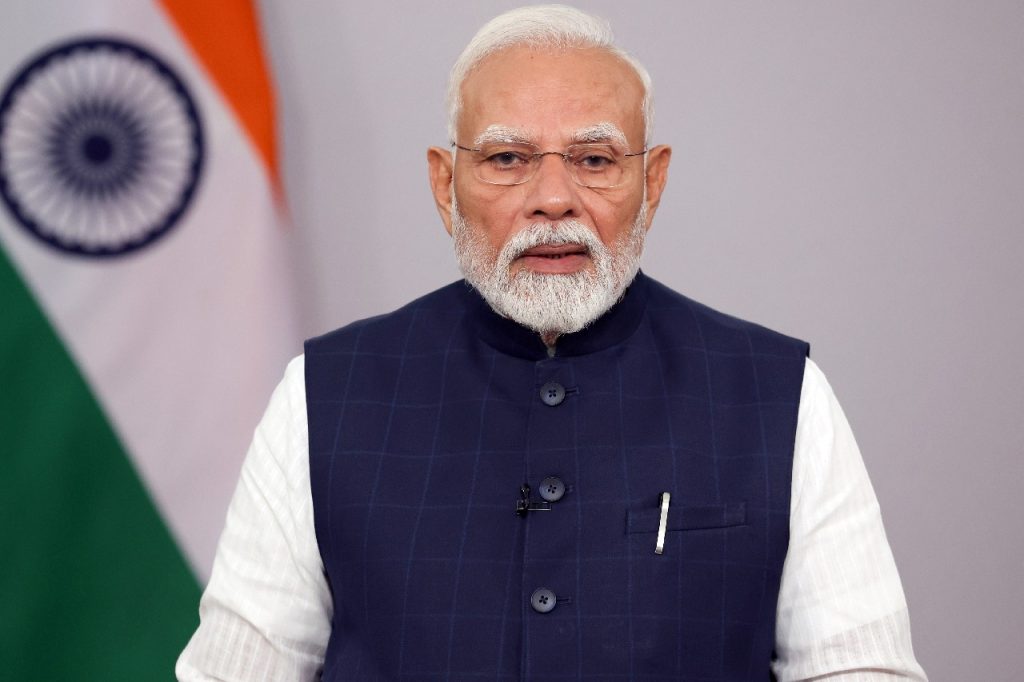
PM Modi inaugurates, dedicates to the nation and lays the foundation stone of development projects worth around ₹2,970 crore in Daman

DAMAN : Prime Minister Shri Narendra Modi, on Friday inaugurated, dedicated to the nation and laid the foundation stone of development projects worth around ₹2,970 crore in Daman. Acknowledging the gathering of local leaders and citizens, the Prime Minister commenced his address by expressing profound gratitude for the overwhelming public turnout. Reflecting on his previous visit, he noted how his earlier observation had transformed into reality, with the region now proudly representing the diverse and vibrant essence of the nation. ‘“Daman has become a living example of Mini India, where the residence of people from different regions provides a beautiful glimpse of the entire country,”‘ remarked Shri Modi.

Expressing deep satisfaction with the administrative progress of the Union Territories, the Prime Minister lauded the highly effective governance model actively implemented across Daman, Diu, and Dadra and Nagar Haveli. ‘“Every time I come here, I feel that compared to my last visit, this region has moved miles ahead on the path of development,”’ noted Shri Modi.

Marking a historic milestone for the region, he dedicated and laid the foundation stones for a multitude of transformative projects spanning connectivity, health, education, tourism, and urban infrastructure. Recognizing the relentless administrative efforts behind these initiatives, he praised the leadership for facilitating modern conveniences and novel opportunities for the youth. ‘“These development works will drastically make the lives of the people easier and successfully create new avenues for the youth,”‘ asserted Shri Modi.

Pivoting to the national economic landscape, the Prime Minister shared the latest encouraging GDP data, crediting the country’s robust infrastructure push and welfare-driven reform agenda for the stellar 7.8 percent growth in the final quarter. ‘“Even in this difficult phase of the global crisis, with the collective efforts of 140 crore countrymen, India is sustaining itself and striving to remain at the forefront,”’ affirmed Shri Modi.

Aligning the nation’s infrastructural goals with World Environment Day, he proudly highlighted Diu’s monumental achievement of powering all government buildings entirely through solar energy. Outlining a future of decentralized green power generation, he championed the massive plantation drives and rooftop solar initiatives currently underway. ‘“We have to take this further so that homes also get electricity from solar energy and families earn an income from the surplus,”asserted Shri Modi.

Commending the profound civic consciousness demonstrated by the local populace, the Prime Minister specifically appreciated the ongoing mass cleanliness campaigns in the region. ‘“This active public participation clearly shows how cleanliness has truly become a spirit among the people,”’ observed Shri Modi.

Drawing a visionary parallel between the Union Territory and the historic economic evolution of Singapore, he emphasized that mega infrastructure projects like the Namo Airport and the iconic Damanganga bridge are not just localized upgrades, but stepping stones to global prominence. ‘“Through all such infrastructure, we are laying a rock-solid foundation for the great resolutions of the future,”‘ affirmed Shri Modi.

Elaborating on the logistical benefits of the localized development agenda, the Prime Minister detailed how enhanced mobility directly feeds into expanding trade and hospitality. ‘“Facilities like Transport Nagar will undoubtedly give a new and powerful momentum to our trade and logistics,”’ noted Shri Modi.

Expanding on India’s broader maritime strategy, he inextricably linked the region’s localized progress to the nation’s overarching Blue Economy vision, citing concurrent port developments in Lakshadweep. ‘“All these targeted efforts driven by high-tech infrastructure will significantly increase the country’s strength in the blue economy,”’ asserted Shri Modi.

Defining the core developmental philosophy of the government, the Prime Minister underscored the absolute prioritization of marginalized communities, the poor, tribals, and middle class, through holistic healthcare interventions like the Ayushman Arogya Mandirs and the digital health mission. ”Today, even the poorest of the poor have the facility of an Ayushman card and the solid assurance of free medical treatment up to 5 lakh rupees,”’ affirmed Shri Modi.

Quantifying the massive financial relief brought about by these targeted welfare schemes, the Prime Minister illustrated the tangible economic benefits delivered to average households. ‘“Through the Ayushman card and Jan Aushadhi Kendras alone, around two and a quarter lakh crore rupees of the poor and middle class have been successfully saved,”‘ observed Shri Modi.

Contrasting the current medical infrastructure with past scarcities, he celebrated the operational success of the Namo Hospital in Silvassa and the inauguration of its counterpart in Daman, alongside the introduction of local post-graduate medical education. ‘“The people of this region will now get the immense benefit of even better and highly advanced healthcare,”’ affirmed Shri Modi.

Citing comprehensive data from the National Family Health Survey, the Prime Minister tracked the monumental leap in institutional deliveries and child immunizations, proving the systemic triumph of initiatives like Mission Indradhanush. ‘“Today Ayushman Bharat has fundamentally changed those figures, and now more than 60 percent of families are getting this vital security,”’ noted Shri Modi.

Singling out the demographic that has reaped the highest dividends from the government’s comprehensive healthcare overhaul, the Prime Minister directed his attention toward the women of the nation. ”If anyone has benefited the most from the government’s sincere efforts in the health sector, it is undeniably the Nari Shakti of the country,”remarked Shri Modi.

Addressing the educational renaissance in the Union Territory, the Prime Minister highlighted the cessation of the forced migration of youth for higher studies, celebrating the rapid establishment of smart classrooms and the Swami Vivekananda Education Hub. ”I am glad that the Union Territory is gradually and firmly coming forward in the highly critical field of education,”’ observed Shri Modi.

Reaffirming the government’s unwavering commitment to gender parity within the ongoing educational revolution, he praised localized initiatives designed specifically to uplift young women. ‘“Schemes like the Saraswati Cycle Scheme and Saraswati Vidya Yojana are helping the daughters here a lot,”‘ noted Shri Modi.

Outlining the national strategy to seamlessly align academic degrees with practical global opportunities, the Prime Minister stressed the necessity of modernizing the workforce through specialized education in sectors like drones, IT, and renewable energy. ‘“Our current targeted preparation in professional sectors will fundamentally strengthen India’s future workforce,”’ asserted Shri Modi.

Announcing the foundation of the eighteenth NIFT campus and the introduction of advanced technical courses at ITI Daman, the Prime Minister positioned these institutes as critical gateways to the world. ‘“This premier institute will permanently connect the youth here with invaluable global exposure,”’ affirmed Shri Modi.

Shifting focus to the radical democratization of the nation’s sporting culture, the Prime Minister praised initiatives like Khelo India for shifting the spotlight from metropolitan stadiums to local arenas, specifically highlighting Diu’s rise as a premier beach sports destination. ‘“Efforts like Khelo India have given a completely new platform for youth from smaller regions to show their incredible talent,”’ remarked Shri Modi.

Detailing the strategic approach to harnessing India’s cultural and geographical diversity, the Prime Minister explained how campaigns like ‘Dekho Apna Desh’ are actively revitalizing heritage, eco, and adventure tourism sectors. ‘“Our ultimate effort is that tourism consistently promotes local art and culture while connecting small places with massive opportunities,”’ asserted Shri Modi.

Revealing a staggering tenfold increase in tourism footfall over the last few years, he attributed this economic boom to the pristine upkeep of local beaches and the rapid development of modernized sea-fronts and heritage complexes. ‘“Numerous spots like the Daman Night Market and Namo Path Sea-front are actively forging a brand new identity for this entire region today,”‘ observed Shri Modi.

Recognizing the industrial prowess of the region, particularly Dadra and Nagar Haveli’s status as the National Man-Made Fibre Capital, the Prime Minister emphasized the continuous financial support provided to local MSMEs to foster a robust manufacturing ecosystem. ‘“I am fully confident that in the times to come, this region will absolutely become a major hub for manufacturing,”’ affirmed Shri Modi.

Concluding his address by linking sensitive governance with accelerated grassroots transformation, the Prime Minister expressed his unwavering faith in the local youth, farmers, and entrepreneurs to spearhead the next phase of development. ‘“The central government will always stand firmly shoulder to shoulder with you to fulfill your dreams,”’ affirmed Shri Modi.

Tailwind Shipping Lines sailing under German flag

HAMBURG: A first for Heilbronn, as of 2 June, the city on the Neckar is the home port of a seagoing vessel – the “Panda 001” of Tailwind Shipping Lines – for the first time. The container ship, with a carrying capacity of 5,527 TEU (twenty-foot equivalent units, i.e. 20-foot containers), will sail under German flag. Heilbronn was selected owing to its close proximity to the headquarters of its parent company, Lidl, in Neckarsulm. The shipping company’s headquarters will remain in Hamburg. By changing the flag of its company-owned vessel, Tailwind is moving even closer to the geographical centre of the European Union. Since Tailwind was founded in 2022, its three container liner services have been strengthening supply chains between Asia and Europe as well as within Europe. The resilient maritime transport and downstream hinterland logistics provided by Tailwind Shipping Lines, in collaboration with its sister company Tailwind Intermodal, are key factors in ensuring reliable, on-time delivery across the 30 European countries in which Lidl operates. In this way, Tailwind also helps to strengthen the sovereignty of one of Europe’s leading food retailers.

“As a thoroughly European company, we have flown European quality flags on our company-owned vessels since the very beginning,” says Joachim Hillger, Vice President at Tailwind Shipping Lines. “The excellent reputation of the German flag is based on its status as a state institution. Around the world, both the German flag and we – as a shipping company at the heart of Europe – embody quality, reliability and resilience.”

In Germany, the organisation responsible for flagging-related issues is the German Flag State Administration – or the German flag (Deutsche Flagge), for short. Unlike other flag states, Germany employs its state-run administration rather than private companies to ensure that requirements are complied with, although private companies (classification societies) are authorised to act on behalf of the German flag in a few areas.

Among the German flag’s responsibilities are promoting – via Germany’s 225 representations abroad – the interests of shipmasters and crews around the world in the face of uncertainty. Besides comprehensive social security for ship crews and optimal working conditions on board, the benefits of the German flag also include training for seafarers, a clear legal framework, health-related services, and practice-oriented occupational health and safety. “As a collaboration between several institutions, it has become more streamlined in recent years and is therefore much easier for shipping companies to navigate. Various services have been brought together under one roof, and the coordination processes have been simplified. For us as a shipping company, this means flexibility and brings many benefits in our day-to-day operations,” Hillger explains. Tailwind plans to register under the German flag all of the company-owned ships in its fleet, including the newbuildings currently under construction, once they have been delivered. 

“In times of geopolitical tensions and fragile global supply chains, the choice of the German flag is a sign of responsibility, cooperation and strategic capacity to act. Every additional ship under the German flag strengthens our security of supply,” says Federal Minister of Transport, Patrick Schnieder.

Regarding the importance of the shipping company, Christian Stangl, Head of Global Transport Solutions at Lidl Stiftung & Co. KG, says: “Tailwind Shipping Lines has played a major role in enabling Lidl to gain influence over a large part of its supply chains, thereby allowing it to manage them better than before. In doing so, we are preparing for the future as early as possible in keeping with the Schwarz Group’s motto: ‘Acting ahead rather than just thinking ahead’.”

Leadership Changes across BSM’s People Function

HAMBURG: Bernhard Schulte Shipmanagement (BSM) has appointed Elena Pantazidou as Chief People Officer, effective 1 June 2026, reporting to the Chief Executive Officer. 

As member of BSM’s Management Board, Patazidou joined the company in 2010 and has held a number of leadership role across the organisation. In her new position, she will continue to oversee the Group’s people, sustainability and communications functions, while also assuming responsibility for Group HR Marine, bringing BSM’s shore-based and seafaring workforce under unified leadership.

“Over the past 16 years, Elena has played an important role in the development of our people agenda and organisational culture. Bringing our shore and marine HR functions together under one leadership structure reflects the importance we place on our people across the Group,” said Sebastian von Hardenberg, CEO of BSM.

BSM SofronisTheodosiou Leadership Changes across BSM's People Function

BSM has also appointed Sofronis Theodosiou as Group HR Marine Director, reporting to the Chief People Officer, effective the same date. In his role, Theodosiou will be responsible for workforce standards, employment conditions and personnel planning across BSM’s fleet, while overseeing the company’s Crew Service Centres and Maritime Training Centres.

Bjoern Sprotte who previously held the position of Chief People Officer, will leave BSM at his own request. “We sincerely thank Bjoern for his dedication and contribution to BSM. He has played an important role in the development of our marine HR function, and we wish him every success for the future,” said von Hardenberg.

Ship operators urge clear rules to return Hormuz to normal

ATHENS : Shipping executives meeting in Athens on Monday said that any peace deal worked out between the United States and Iran would need to offer clear rules allowing vessels to resume normal business via the Strait of Hormuz. Shipowners and maritime industry officials met at a Capital Link conference and other events to begin Posidonia, a week-long biennial shipping exhibition.

PANKAJ KHANNA, PRESIDENT, HEIDMAR MARITIME HOLDINGS CORP : ”What we need is obviously a framework, a rules regulation, whatever tells us exactly how we can go in and get out. So even if a peace deal was signed, that needs to be clarified and that we don’t know as yet. Khanna said the company had a vessel stuck inside the Gulf for the past three months and noted the impact on seafarers: “Obviously the seafarers on board are missing out, not only on seeing their families but also on births, on deaths, on marriages.”

VASILIS KIKILIAS, GREECE’S SHIPPING MINISTER : “Can somebody predict (the end of the conflict)? Unfortunately, no. It has been proven that there is no prediction, and things get messy in terms of conflicts very, very easily, and they get untangled very, very difficult. “We are hoping, of course, that there will be a solution. We cannot accept that there will be no free pass for ships all over the globe. I wish that they would leave shipping the shipping industry, the seafarers, and global trade out of the equation, but it seems like this is impossible.”

YIANNIS PROCOPIOU, CEO, CENTROFIN MANAGEMENT :”While insurance might be available, this does not mean that the straits is really a place where you want to be transiting, at least until we have clear rules of engagement as the shipping industry as to how we deal with the two nations that are involved here, the U.S. and Iran …That’s, right now, a very high risk proposition.”

Source : Reuters

PM Modi to inaugurate, lay stone for development projects worth over ₹18,777 crore in Surat today

SURAT : Prime Minister Shri Narendra Modi will inaugurate and lay foundation stones for development projects worth over ₹18,777 crore in Gujarat during his visit to Surat on June 5. Among the key initiatives are eight Gujarat Industrial Development Corporation (GIDC) projects valued at ₹1,063.43 crore, aimed at strengthening industrial infrastructure and environmental management systems across South Gujarat.

Of the total investment, projects worth more than ₹894 crore are located in Bharuch district, while Valsad district will receive projects worth ₹169.3 crore. Mr. Modi will inaugurate six GIDC projects in Bharuch, a major hub for Gujarat’s chemical and petrochemical industries.

A flagship project among them is the ₹474.61-crore offshore and onshore effluent disposal pipeline at the Dahej Petroleum, Chemicals and Petrochemicals Investment Region (PCPIR), officials said. “The 90 MLD-capacity pipeline connects the Saykha Pumping Station with the Dahej landfall point and includes civil structures, electro-mechanical systems and PLC-SCADA-based monitoring infrastructure. The project is expected to significantly improve effluent management in the Dahej-Saykha industrial region,” they said.

The Dahej PCPIR currently houses more than 1,000 industrial units engaged in sectors such as chemicals, textiles, pharmaceuticals, dyes and engineering.

Another major project is the development of roads, stormwater drainage networks and a central drain at the Bulk Drug Park in Jambusar at a cost of ₹274.96 crore. The infrastructure is designed to support the pharmaceutical manufacturing ecosystem and accelerate the growth of the emerging pharma cluster.

The Prime Minister will also inaugurate a 30 MLD drainage pumping station for the Dahej-2 Industrial Estate. The facility includes a rising main connecting the Suva Pumping Station to the final pumping station and is expected to strengthen industrial drainage and effluent conveyance systems.

Other projects include infrastructure development works at the Panoli Extension Industrial Estate, featuring road networks, water supply systems, cross-drainage structures, compound walls, paver blocks, plantation works and street lighting.

An intermediate booster pumping station on the Ankleshwar effluent transmission pipeline will also be inaugurated, aimed at improving the efficiency of effluent transportation and environmental compliance.In addition, Natural Drain-2 in the Dahej-1 Industrial Estate has been upgraded to enhance stormwater carrying capacity and reduce the risk of flooding and waterlogging in the industrial zone.

In Valsad district, the Prime Minister will inaugurate two major GIDC projects at the Sarigam Industrial Estate worth over ₹169 crore.

The capacity of the Common Effluent Treatment Plant (CETP) has been expanded from 15 MLD to 25 MLD, increasing treatment capabilities and strengthening compliance with environmental norms. The project covers design, engineering, construction, commissioning and long-term operation and maintenance.

Additionally, an HDPE-based onshore and offshore outfall pipeline system, along with a sump and pumping station, has been developed to facilitate the safe discharge of treated effluents into the deep sea. The project includes a pipeline network connecting the pumping station, landfall chamber and offshore discharge point.

Officials said the projects would strengthen industrial infrastructure, improve environmental management and support sustained industrial growth across South Gujarat.