Home Blog Page 293

India-Italy sign MoU for the development of the NMHC Lothal

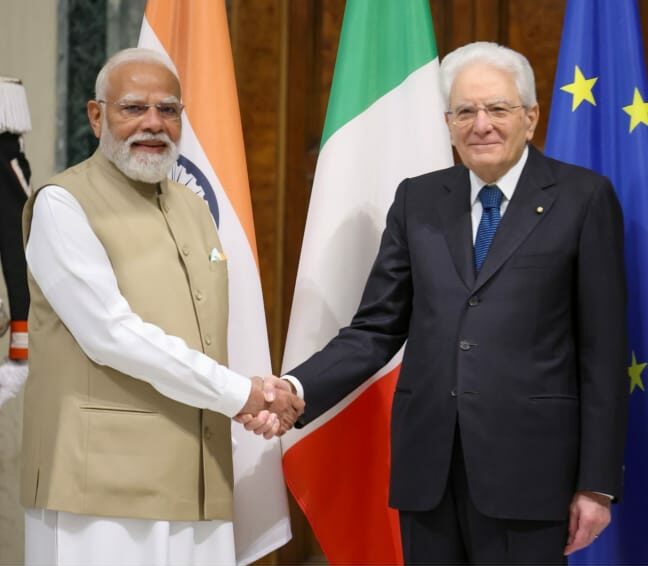
ROME : India and Italy have taken significant steps to deepen their longstanding cultural, heritage and people-to-people partnership, reaffirming their shared commitment to preserving civilizational heritage, promoting artistic collaboration and strengthening cultural diplomacy.

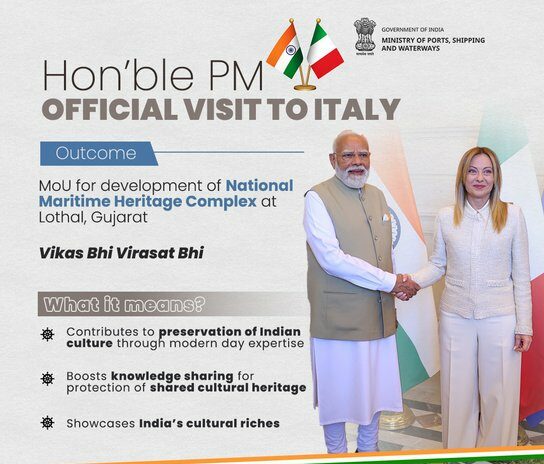
A major highlight of the bilateral engagement was the signing of a Memorandum of Understanding (MoU) on Italy’s participation in the development of the National Maritime Heritage Complex (NMHC) at Lothal, Gujarat, marking a new chapter in India–Italy cooperation in maritime heritage preservation, museum development and knowledge exchange.

Italy’s participation in the ambitious National Maritime Heritage Complex at Lothal—conceived as one of the world’s largest maritime heritage destinations—will facilitate collaboration in areas such as maritime archaeology, museum curation, conservation practices, exhibition design, restoration technologies and heritage interpretation.

The partnership brings together two nations with rich maritime traditions and ancient trading histories, underscoring their shared interest in preserving and showcasing maritime legacy for future generations.

Located at the historic site of the ancient Indus Valley Civilization port city of Lothal, the National Maritime Heritage Complex is envisioned as a global centre celebrating India’s maritime history, navigation traditions, shipbuilding excellence and centuries-old international trade linkages. Italy’s involvement is expected to contribute valuable expertise in cultural conservation, museum innovation and heritage management.

India and Italy also welcomed the participation of the Indian National Pavilion at the Venice Art Biennale 2026, reflecting growing artistic engagement and expanding collaboration in the fields of contemporary art, culture and creative industries.

Recognizing the importance of cultural diplomacy in strengthening bilateral ties, both nations announced that 2027 will be celebrated as the “Year of Culture and Tourism between Italy and India.”

The commemorative year will feature a vibrant and wide-ranging calendar of activities including cultural festivals, museum collaborations, academic exchanges, tourism promotion initiatives, performing arts showcases, literary programmes, culinary events and enhanced engagement between cultural institutions.

As part of the celebrations, India and Italy will jointly organize a major exhibition dedicated to exploring the ancient cultural and historical connections between the two countries, highlighting centuries of interaction through trade, art, maritime exchanges, scholarship and civilizational dialogue.

The initiative aims to deepen public awareness of the enduring links between the Mediterranean and Indian civilizations while fostering stronger people-to-people connections and tourism exchanges.

The latest cultural initiatives reflect the growing breadth of the India–Italy strategic partnership, extending beyond trade, technology and economic cooperation into heritage preservation, cultural collaboration and shared civilizational engagement.

By combining their expertise, historical richness and creative strengths, India and Italy continue to build a forward-looking partnership rooted in shared values, innovation and mutual respect for cultural diversity.

India and Italy deepen Strategic and Maritime Partnership, reinforce commitment to IMEC connectivity vision

ROME : India and Italy have reaffirmed their strong commitment to expanding bilateral cooperation across strategic, economic and maritime domains, with a renewed focus on strengthening maritime connectivity and advancing the ambitious India–Middle East–Europe Economic Corridor (IMEC) initiative aimed at reshaping global trade and supply chain networks.

Italian Prime Minister Giorgia Meloni and Prime Minister Shri Narendra Modi reviewed the progress on the India-Italy Joint Strategy Action Plan 2025-2029. “The talks with Prime Minister Meloni were excellent. Her commitment to furthering the India-Italy friendship is commendable. Bilateral ties between our nations have advanced significantly in sectors like trade, space, technology and more. In order to further deepen linkages, we have elevated our ties to a Special Strategic Partnership.We agreed that investment and economic linkages have to be strengthened even further. The India-EU FTA presents a historic opportunity to do so. We even talked about areas such as digital infrastructure, connectivity, science, AI and more “, PM Modi tweeted.

Marking a significant milestone in bilateral relations, both countries signed a Memorandum of Understanding (MoU) on Maritime Transport and Ports, paving the way for enhanced collaboration in port development, maritime logistics, shipping connectivity, sustainable transport systems and maritime infrastructure modernization.

To ensure the timely and effective implementation of the agreement, India and Italy have also agreed to establish a Joint Working Group (JWG), which will facilitate institutional cooperation, identify priority projects and accelerate collaborative initiatives in the maritime sector.

The developments underscore the growing strategic convergence between the two nations and their shared vision of building resilient, diversified and efficient global connectivity corridors.

During his visit to Rome, PM Modi held wide-ranging discussions with President Sergio Mattarella, reviewing the multifaceted India–Italy partnership and exploring new avenues for cooperation under the broader framework of the India–Italy Strategic Partnership.

The leaders discussed expanding collaboration in key areas including trade, investment, advanced manufacturing, cultural exchanges and people-to-people ties, while emphasizing the importance of fostering innovation-led economic growth.

Prime Minister Modi and President Mattarella also explored future cooperation in emerging and high-technology sectors such as Artificial Intelligence (AI), critical minerals, space technology, clean energy and civil nuclear cooperation, recognizing the strategic importance of these sectors in shaping the global economy of the future.

The two leaders acknowledged the immense potential of the India–Middle East–Europe Economic Corridor (IMEC) as a transformative, multi-modal connectivity initiative designed to improve trade flows, logistics efficiency, digital integration and energy connectivity between Asia, the Middle East and Europe.

India and Italy highlighted the critical role of ports, shipping and maritime infrastructure in supporting IMEC’s successful implementation and reiterated their determination to work closely in developing secure, sustainable and future-ready transport ecosystems.

The strengthening India–Italy partnership reflects the deepening alignment between the two democracies on economic resilience, sustainable development, technological innovation and global connectivity, while opening new opportunities for bilateral business engagement and maritime cooperation.

The latest engagements are expected to further enhance commercial linkages, strengthen supply chain integration and elevate India–Italy relations to new strategic heights in the years ahead.

Gujarat explores deeper Strategic Cooperation with Russia’s Astrakhan region across trade, Maritime and Logistics Sectors

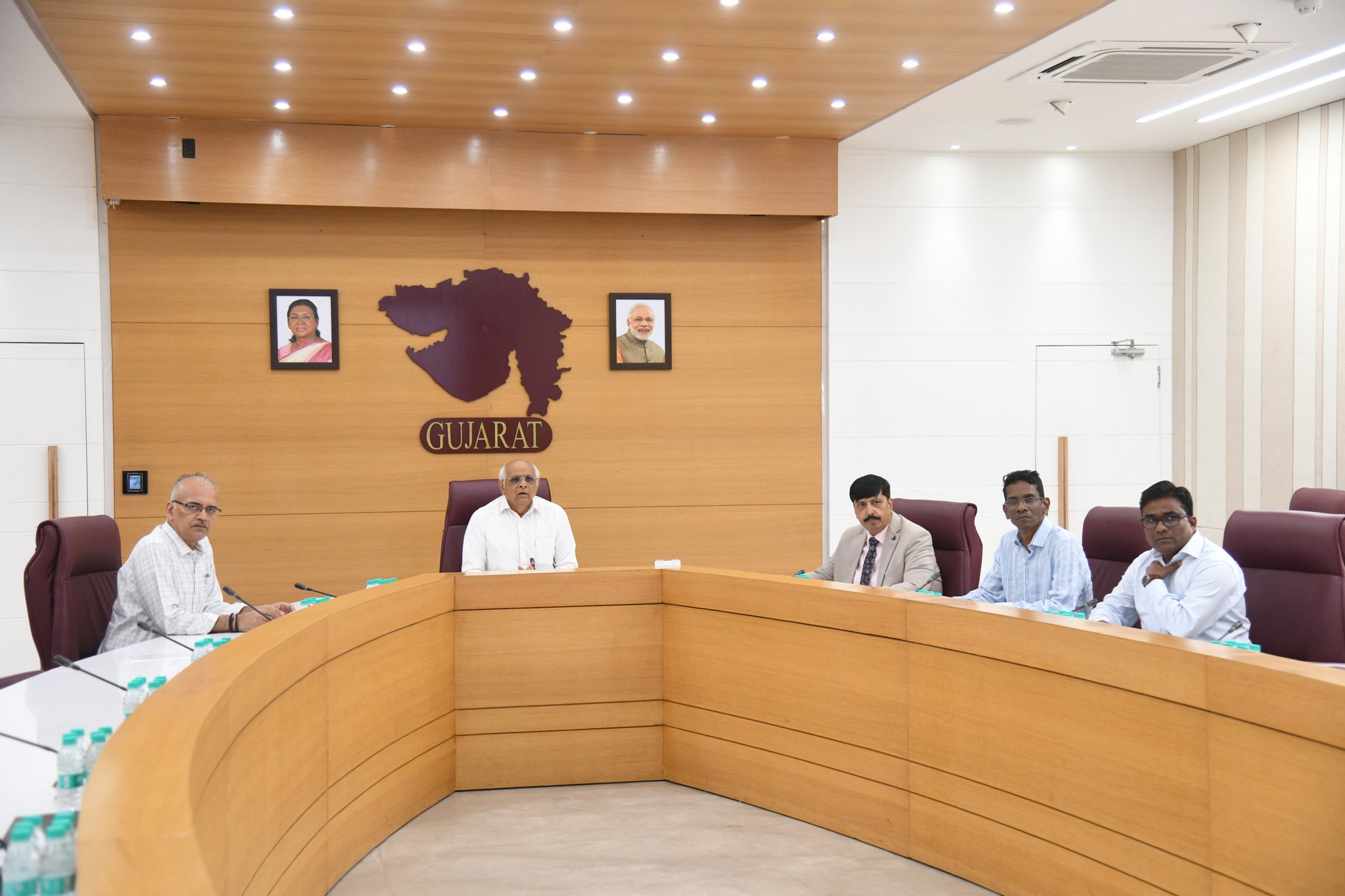
AHMEDABAD : Reinforcing international partnerships and expanding avenues for economic collaboration, Gujarat held a high-level virtual interaction with Mr. Igor Babushkin, Governor of Russia’s Astrakhan Region, focusing on strengthening bilateral cooperation across multiple strategic sectors. Chief Minister of Gujarat Shri Bhupendra Bhai Patel said, during the interaction, discussions centered on enhancing Gujarat–Astrakhan collaboration in trade, education, shipbuilding, transport & logistics, maritime connectivity, and cultural exchange, reflecting the shared commitment of both sides to deepen engagement and unlock new opportunities for mutual growth.

The dialogue highlighted the significant potential for cooperation between Gujarat, one of India’s leading industrial and maritime hubs, and Astrakhan Region, a strategically located Russian gateway connecting Europe, Central Asia and the Caspian region. Both sides explored possibilities for expanding business partnerships, improving maritime and logistics linkages, and fostering institutional collaborations in skill development and academic exchange.

Particular emphasis was laid on maritime connectivity, port-led development, shipbuilding capabilities, and integrated logistics cooperation, areas where Gujarat’s strong industrial ecosystem and Astrakhan’s strategic geographical position can create substantial synergies.

The discussions also underscored the importance of strengthening people-to-people relations and cultural engagement to complement economic and commercial ties.

The interaction reflected a shared commitment to carrying forward and further strengthening the partnership envisioned under the leadership of Hon’ble Prime Minister Shri Narendra Modi, during his tenure as Chief Minister of Gujarat, when the foundation for closer Gujarat–Astrakhan engagement was initiated.

The virtual meeting marks another important step toward advancing international regional cooperation and reinforcing Gujarat’s role as a global partner in trade, maritime development, logistics and cross-border collaboration.

FICCI Secy Gen Anant Swarup meets Sarbananda Sonowal; discusses strengthening India’s Maritime & Logistics Ecosystem

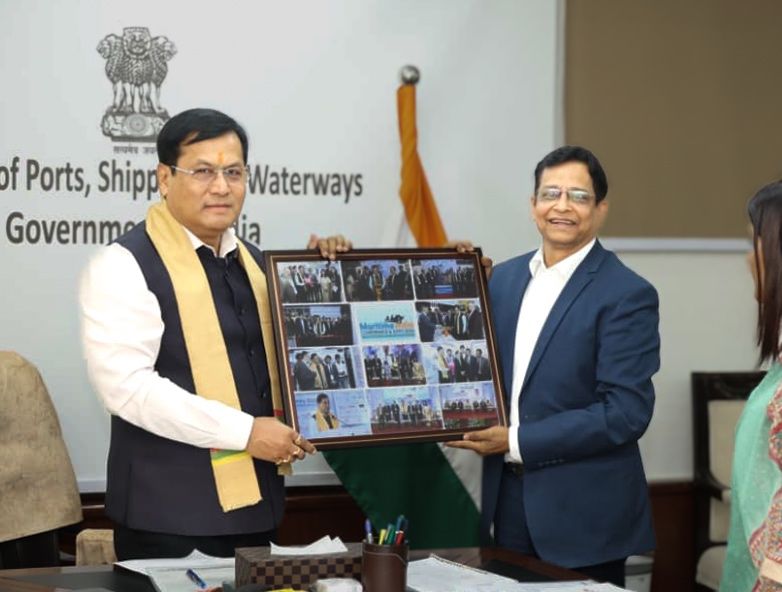
NEW DELHI : FICCI Secretary General Shri Anant Swarup called on Hon’ble Union Minister for Ports, Shipping & Waterways, Shri Sarbananda Sonowal, to discuss strategic initiatives aimed at further strengthening India’s maritime, ports, shipping, and logistics ecosystem.

The meeting focused on enhancing industry–government collaboration to accelerate the growth and modernization of the maritime sector, aligned with India’s vision of becoming a leading global maritime and logistics hub.

During the discussions, both sides explored opportunities to deepen cooperation in key areas including port-led development, multimodal logistics integration, maritime infrastructure expansion, ease of doing business, digital transformation, and sustainable shipping practices.

1779346148557 FICCI Secy Gen Anant Swarup meets Sarbananda Sonowal; discusses strengthening India’s Maritime & Logistics Ecosystem

The interaction also underscored the importance of fostering a policy environment that encourages private sector participation, investment, innovation, and skill development to support the evolving needs of the maritime and logistics industries.

Shri Sonowal highlighted the Government of India’s continued commitment to advancing transformative initiatives under Maritime India Vision 2030 and Amrit Kaal Vision 2047, aimed at enhancing port efficiency, strengthening coastal shipping, boosting inland waterways, and developing world-class logistics infrastructure.

Shri Anant Swarup reaffirmed FICCI’s commitment to working closely with the Ministry and industry stakeholders to promote dialogue, policy support, and collaborative frameworks that can unlock new growth opportunities for the sector.

The meeting also touched upon the growing significance of resilient supply chains, green maritime solutions, technology adoption, and capacity building in positioning India as a competitive and future-ready player in global trade and logistics.

The interaction reflects the shared commitment of government and industry to building a robust, efficient, and sustainable maritime ecosystem that supports economic growth, trade facilitation, and enhanced connectivity across the country.

India and America are working as natural partners, there is complementarity and trust : Piyush Goyal

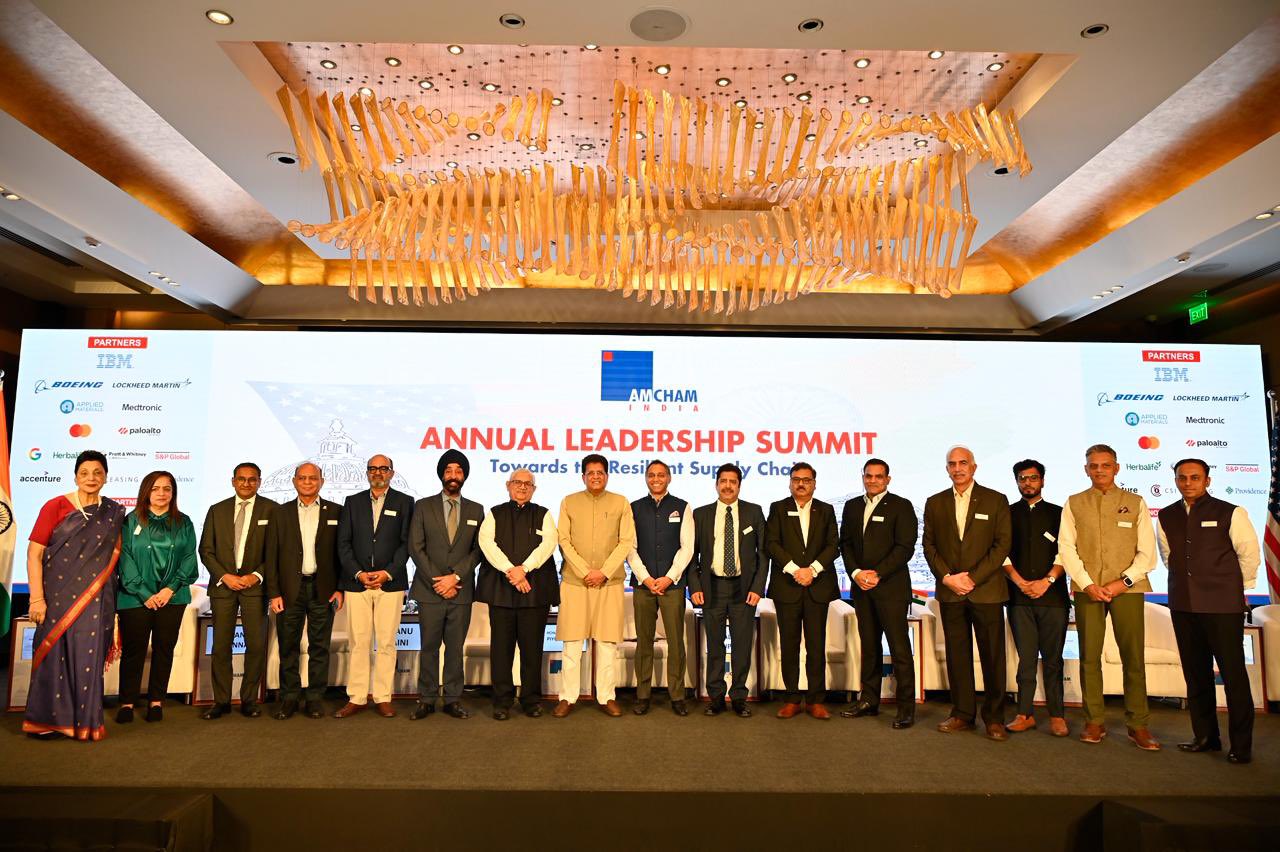
NEW DELHI : Union Minister of Commerce and Industry Shri Piyush Goyal on Thursday said that India and the United States are working as natural partners and complement each other across sectors including technology innovation, high precision defence, digital data centres, quantum computing and medical devices. Addressing the Annual Leadership Summit of the American Chamber of Commerce in New Delhi, the Minister said the partnership between the two countries is strengthened by mutual trust and shared economic interests.

Shri Goyal said commitments from American industry in the last six months are estimated to be upwards of 60 billion dollars, including major data centre investments by companies such as Amazon and Google. He said India provides a trusted framework for global companies and combines scale, talent and market opportunity in a manner unmatched globally.

The Minister said America is looking for a trusted partner and India has consistently demonstrated respect for intellectual property rights while delivering high-quality output on time. He said India offers a large pool of skilled talent and provides scale to American innovation through demand aggregation from 1.4 billion aspirational Indians, rising incomes and a growing middle class.

Shri Goyal said India and the United States have economies that complement each other with minimal competition, making the partnership stronger. He said when complementarity is combined with mutual trust, it creates an unbeatable combination capable of building trusted and resilient supply chains for the future.

The Minister said the Government is also adopting an area-based approach to industrial development through the Bhavya scheme aimed at creating 100 new industrial parks across the country. He said the model integrates industrial infrastructure with worker housing, recreation and social amenities to create holistic industrial ecosystems.

Shri Goyal said improved infrastructure, lower logistics costs and free trade agreements together are creating a virtuous cycle of investment, manufacturing growth and export competitiveness. He expressed confidence that India will continue to remain the world’s fastest growing economy for at least the next 25 years.

Highlighting the role of MSMEs in strengthening global supply chains, Shri Goyal said the Government has initiated coordinated efforts involving the MSME Ministry and the Department for Promotion of Industry and Internal Trade to support technology upgradation and skill development for MSMEs.

He said the proposed Export Promotion Mission will help MSMEs secure globally recognised certifications necessary to become part of international supply chains. Shri Goyal added that agencies such as the Export Inspection Council, Bureau of Indian Standards and FSSAI are working together to build world-class testing and quality infrastructure across India.

Highlighting India’s resilience amid global uncertainties, Shri Goyal said India’s growth forecast was upgraded from 6.4 per cent to 6.5 per cent despite challenges such as the Ukraine conflict and the West Asia crisis. He said this reflects India’s capability, decisive leadership and growing confidence in engaging with the world as a reliable and favoured investment destination.

The Minister said global leaders increasingly view India with admiration and expectation, and this recognition is motivating Indians to work towards building a stronger nation and a better future for coming generations. He described the India-US partnership as a defining partnership of the 21st century driven by American innovation and investment combined with Indian skill and talent.

Speaking on India’s manufacturing transformation, Shri Goyal said India is rapidly moving away from the earlier model of sourcing globally and assembling products domestically towards becoming a centre for design, innovation and intellectual property creation. He said innovations that may cost billions of dollars in developed countries can be developed in India at one-third or one-fifth of the cost.

The Minister said global companies are increasingly recognising India as a preferred destination for setting up global capability centres rather than relocating talent overseas. He said this shift accelerated after the COVID pandemic demonstrated the effectiveness of remote working and offshoring to trusted partners such as India.

Shri Goyal said India is witnessing a rapidly growing culture of research and development and innovation among the youth. He noted that digital adoption and technology awareness are spreading quickly not only in metropolitan cities but also in tier-two and tier-three cities and eventually villages because of India’s strong digital backbone.

Highlighting the long-term vision behind India’s transformation, Shri Goyal referred to flagship initiatives launched under the leadership of Prime Minister Shri Narendra Modi, including Startup India, Make in India and Digital India. He also referred to initiatives related to financial inclusion, women empowerment and the creation of a unified national electricity grid.

The Minister said India’s renewable energy sector has witnessed unprecedented growth over the last decade. He said solar power capacity has increased from less than two gigawatt to over 150 gigawatt in under twelve years, supported by visionary policy decisions and ambitious targets set by the Government.

Shri Goyal said India today offers high-quality power infrastructure, including 24-hour clean energy at globally competitive rates, making the country an attractive destination for data centres and advanced manufacturing. He added that India offers reliable infrastructure, technological talent, a trusted digital ecosystem and a large domestic market along with tax incentives extending till 2047.

The Minister said these factors are enabling India to build ecosystems that support design, development and manufacturing while generating high-paying jobs for India’s youth. He said India’s ambition is to move beyond the earlier “assemble in India” model and create a prosperous and developed nation by 2047.

Referring to India’s digital infrastructure, Shri Goyal said the country has achieved one of the fastest 5G rollouts across the length and breadth of the country, including remote areas, while also providing among the world’s lowest data costs. He said India is already preparing for the next phase of digital growth and technological advancement.

Shri Goyal said India currently hosts 2,117 global capability centres employing approximately 2.35 million people directly and generating nearly 98 billion dollars in revenue. He said these developments are contributing significantly to India’s sustained economic growth at a time when several countries are struggling with low growth rates.

The Minister said India has achieved significant progress but remains committed to continuous improvement and deeper engagement with the United States across technology, investment, manufacturing and innovation sectors. He expressed confidence that the coming decades will witness even greater economic integration between the two countries.

The Minister said the Government is ready to support industries in establishing modern testing facilities equipped with the best global technologies. He urged industry stakeholders to guide the Government in further expanding India’s testing ecosystem to international standards.

Citing the example of the mega common facility centre at SEEPZ in Mumbai, Shri Goyal said the centre was established through a public-private partnership model and houses world-class facilities for jewellery design, manufacturing, prototyping and testing. He noted that the project, initially planned for 30,000 square feet, was expanded to 100,000 square feet and became surplus-generating within its first year because of strong industry participation.

The Minister said recent budget announcements, Semicon Mission 2 and initiatives aimed at promoting critical mineral processing technologies demonstrate the Government’s commitment to supporting industry and advanced manufacturing. He urged MSMEs and larger companies alike to leverage these opportunities for future growth.

Describing the Government as a listening and adaptive administration, Shri Goyal said there are no silos within the Government and ministries work together as one team. He said the Government remains open to policy changes and newer approaches based on the evolving requirements of businesses and industries.

Shri Goyal also appealed to larger companies to support MSMEs through faster payment cycles. Referring to the existing 45-day payment requirement for MSME suppliers, he suggested that companies could consider clearing payments within seven days after approval of goods to improve MSME cash flow, strengthen supply chains and encourage investment in technology and quality enhancement.

On infrastructure development, Shri Goyal said infrastructure remains central to India’s growth strategy because of its multiplier effect on jobs, incomes, industrial growth and tax revenues. He said sectors ranging from aviation to digital services benefit directly from rapid infrastructure expansion.

The Minister highlighted PM Gati Shakti as a transformative initiative developed by the Commerce and Industry Ministry to create smarter and more efficient infrastructure planning across the country. He said the platform integrates nearly 1,800 layers of geospatial and infrastructure-related data to improve planning and execution.

Shri Goyal said PM Gati Shakti enables better planning of highways, railway lines, ports and logistics infrastructure by identifying the most efficient routes, reducing delays, improving land acquisition and strengthening last-mile connectivity. He noted that the initiative helps reduce infrastructure costs and improve operational efficiency.

Recalling earlier logistical bottlenecks around major ports such as JNPT, Shri Goyal said PM Gati Shakti has fundamentally changed infrastructure planning and implementation in India by enabling coordinated and technology-driven decision-making.

Speaking about the vision for Viksit Bharat 2047, Shri Goyal said the Government is working with clearly defined targets and long-term planning similar to successful businesses. He said India aims to become a developed nation with a projected per capita income of 20,000 dollars and a population of around 1.6 billion by 2047.

The Minister said Government initiatives related to financial inclusion, housing, water access, ease of living and ease of doing business are all being implemented with precision and measurable goals. He added that the Government continuously reviews progress and addresses slippages through corrective planning and policy action.

Shri Goyal urged businesses and investors to look beyond the present and recognise the capability, talent, aspirations and agility of India and its people. He said those who trust India’s growth story will continue to benefit from the country’s long-term economic transformation.

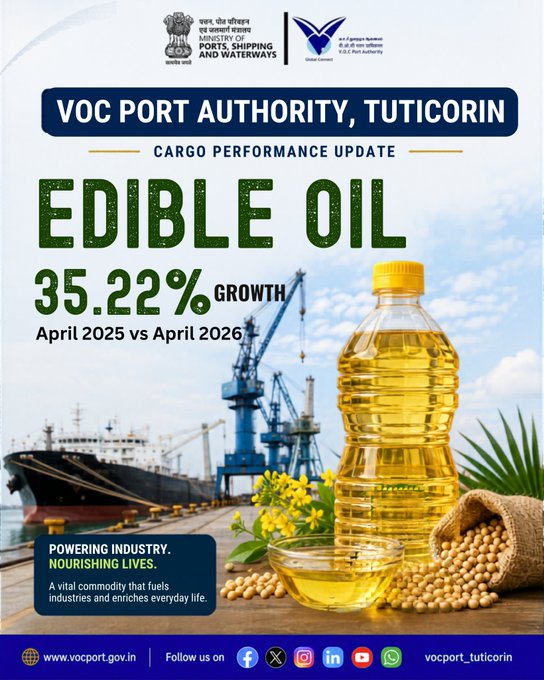
V.O. Chidambaranar Port records 35.22% growth in edible oil cargo handling, strengthening industrial supply chains

TUTICORIN : Reinforcing its role as a key gateway for essential commodities and industrial trade, V.O. Chidambaranar Port Authority (VOC Port), Tuticorin, has registered an impressive 35.22% increase in edible oil cargo handling during April 2025 – April 2026, reflecting rising trade volumes, enhanced operational efficiency and growing confidence among industry stakeholders.

The substantial growth in edible oil cargo movement highlights the Port’s expanding contribution to India’s industrial and economic ecosystem. As a critical commodity widely used in households, food processing, hospitality, manufacturing and allied industries, edible oil plays a vital role in sustaining domestic consumption and supporting diverse industrial operations.

The strong performance underscores V.O. Chidambaranar Port’s capability to efficiently manage bulk liquid cargo through robust port infrastructure, streamlined logistics operations and customer-focused service delivery.

Strategically located on India’s southeastern coast, the Port continues to serve as an important maritime hub facilitating domestic and international trade. Its efficient cargo evacuation systems, seamless multimodal connectivity and modern handling facilities enable faster turnaround times and reliable cargo movement for importers, processors and downstream industries.

The notable increase in edible oil throughput also reflects growing trade activity, strengthened supply chain integration and rising demand from key consumption and industrial markets served through the Port’s hinterland network.

V.O. Chidambaranar Port Authority remains committed to enhancing operational excellence through infrastructure modernization, process optimization and sustainable growth initiatives aimed at improving cargo handling efficiency across commodity segments.

By ensuring reliable logistics support and uninterrupted movement of essential commodities, the Port continues to play a pivotal role in strengthening national supply chains, supporting food security and contributing to regional economic development.

With a continued focus on efficiency, capacity enhancement and stakeholder collaboration, V.O. Chidambaranar Port is steadily consolidating its position as one of India’s leading ports driving trade growth and industrial progress.

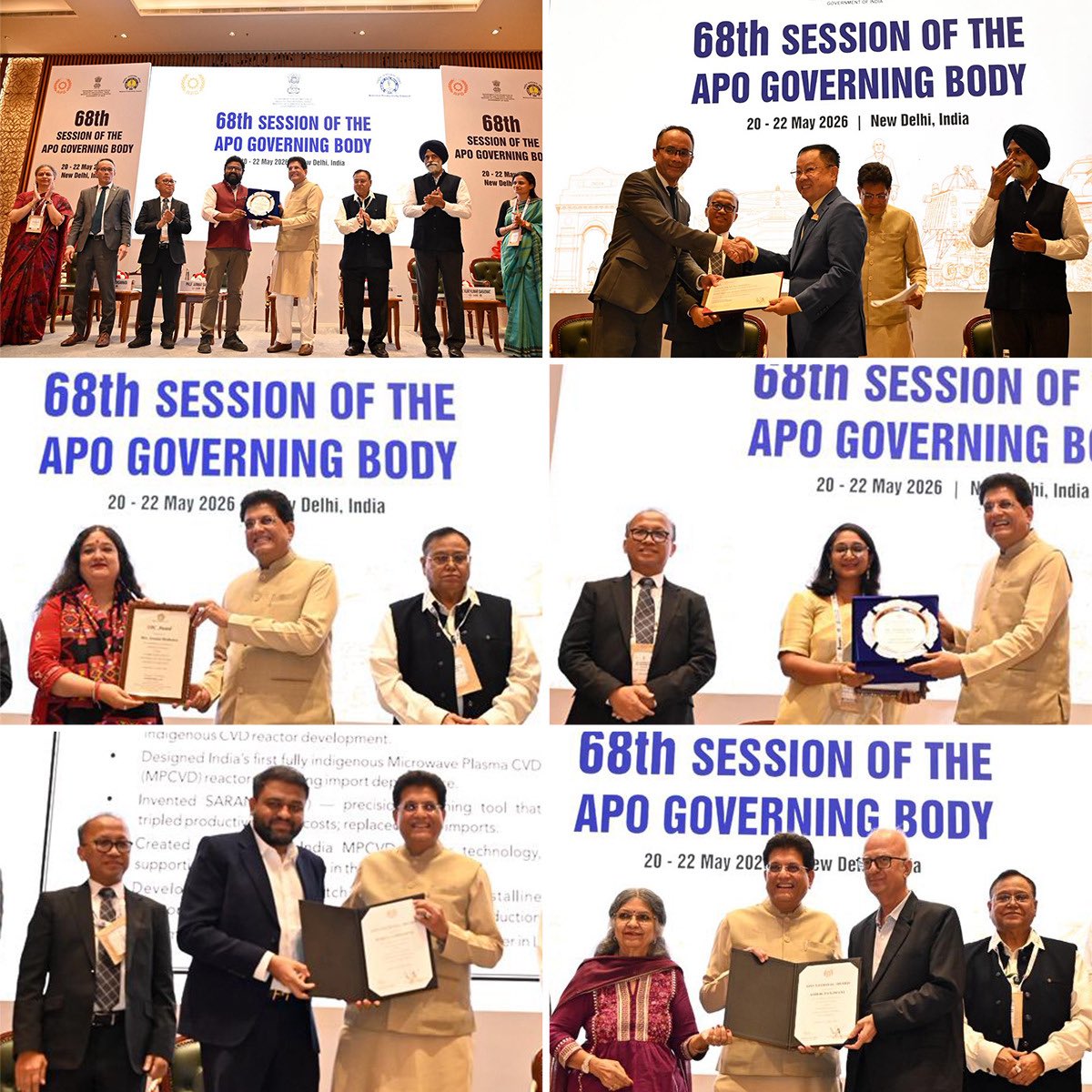
Piyush Goyal calls for inclusive, sustainable and future-ready productivity growth at 68th APO Governing Body Meeting

NEW DELHI : Union Minister for Commerce & Industry, Shri Piyush Goyal, addressed the inaugural session of the 68th Governing Body Meeting of the Asian Productivity Organization (APO), underscoring the critical role of productivity-driven growth in shaping resilient, inclusive, and sustainable economies across the Asia-Pacific region.

68th APO Governing Body Meeting Piyush Goyal calls for inclusive, sustainable and future-ready productivity growth at 68th APO Governing Body Meeting

Commending the APO for its longstanding contribution to strengthening productivity ecosystems, institutional capacity, and regional cooperation, Shri Goyal highlighted the organization’s pivotal role in supporting member economies amid evolving global economic dynamics.

Addressing delegates and policymakers from across the Asia-Pacific, the Minister noted that the global economy is witnessing rapid technological advancement, digital transformation, and structural shifts, making it imperative for nations to pursue growth models that are not only innovation-led but also equitable and future-ready.

Shri Goyal stressed the importance of empowering Micro, Small and Medium Enterprises (MSMEs), describing them as key engines of economic growth, employment generation, and innovation. He emphasized the need to enhance MSME competitiveness through improved access to advanced technologies, affordable financing, skill development, digital capabilities, and stronger market linkages.

Highlighting the growing influence of Artificial Intelligence (AI) and emerging technologies, the Minister stated that technological progress must be leveraged as a force for inclusion and shared prosperity. He called for collaborative efforts to ensure that digital transformation bridges development gaps and creates opportunities for businesses of all sizes, particularly small enterprises and underserved sectors.

Reaffirming India’s unwavering commitment to regional collaboration, Shri Goyal emphasized the importance of building resilient supply chains, strengthening economic partnerships, and fostering innovation-driven cooperation across the Asia-Pacific region. He noted that stronger regional integration and collaborative policymaking would be essential in addressing global challenges and unlocking new growth opportunities.

The Minister further reiterated India’s support for initiatives that promote measurable outcomes, knowledge-sharing, capacity building, and sustainable industrial growth through deeper engagement among APO member economies.

The 68th Governing Body Meeting of the Asian Productivity Organization serves as an important platform for member countries to deliberate on strategies aimed at enhancing productivity, innovation, sustainability, and economic resilience across the region.

CBIC allows remote Customs Clearance for sea cargo operations

NEW DELHI : The Central Board of Indirect Taxes and Customs (CBIC) has introduced remote customs clearance for sea cargo operations, a move aimed at streamlining port procedures, reducing vessel delays and improving operational efficiency across Indian ports.

Under the revised framework, customs authorities will no longer require mandatory physical boarding of vessels before granting Entry Inward or Sail-out Clearance, enabling cargo processing and vessel movement to be handled remotely through digital systems.

The reform is part of CBIC’s broader effort to modernise maritime logistics and standardise customs procedures across ports. According to the circular issued on May 15, customs clearances will now be processed based on electronic filings such as the Sea Arrival Manifest (SAM) and Sea Departure Manifest (SDM) submitted through the SCMTR and e-Sanchit systems.

CBIC clarified that the grant of Entry Inward and Vessel Sail-out Clearance under the Customs Act is independent of the physical boarding process conducted by customs officers. The board observed that linking vessel clearance with mandatory boarding formalities at some ports had led to avoidable operational delays and slower cargo handling.

Physical boarding of vessels by customs officials will now be carried out only on the basis of risk profiling, taking into account factors such as compliance history, cargo type, voyage details and security considerations.

Industry stakeholders believe the move could significantly improve turnaround times at ports, lower logistics bottlenecks and enhance ease of doing business for shipping lines, exporters and importers.

The decision also comes at a time when India is focusing on improving maritime infrastructure and port efficiency to support growing trade volumes and strengthen supply chain competitiveness.

CBIC has directed field formations to issue public notices informing stakeholders about the revised procedures and ensure prompt implementation of the new system across ports.

Allcargo Terminals Reports 46% Y-o-Y Growth in FY26 PAT; Net Profit Rises 46%

MUMBAI: Allcargo Terminals Limited has announced its financial results for the year ended March 31st, 2026. The company reported a consolidated net profit of ₹44 crore in FY26, registering a strong 46% year-on-year growth over the previous year. EBITDA has increased to ₹162 crore, reflecting a 26% year-on-year rise. Annual volumes also recorded healthy growth, increasing to 7.23 lakh TEUs, representing a 7% year-on-year increase.

Summary of Consolidated Financial Results. (₹ in Cr)

Particulars(in ₹Crs)Q4FY26    Q4FY25  Y-o-Y(%)FY26FY25Y-o-Y(%)
Revenue20818612%8217588%
EBITDA4433.531%16212826%
Profit After Tax (PAT)8.8-2.4NA443046%

Suresh Kumar R, Managing Director, Allcargo Terminals Limited, said: “FY26 was a year of strong progress and purposeful groundwork toward ATL’s three-year ambition. Supported by India’s growing EXIM momentum and our focused capacity expansion at key ports, PAT grew 46% over the previous year. Our continued emphasis on operational excellence further strengthened customer confidence across markets and enabled us to achieve our highest-ever annual volumes.

In line with our strategic priorities, we enhanced capacity at one of our two JNPT facilities and secured a ten-year extension for the other. Construction of the PFT-ICD at Farukhnagar also commenced in Q4, marking another important milestone in our growth journey.

We are well positioned for the future and remain committed to contributing meaningfully to India’s expanding EXIM ecosystem and logistics infrastructure development.”

Adani Logistics flags off first dedicated reefer train for HyFun Foods

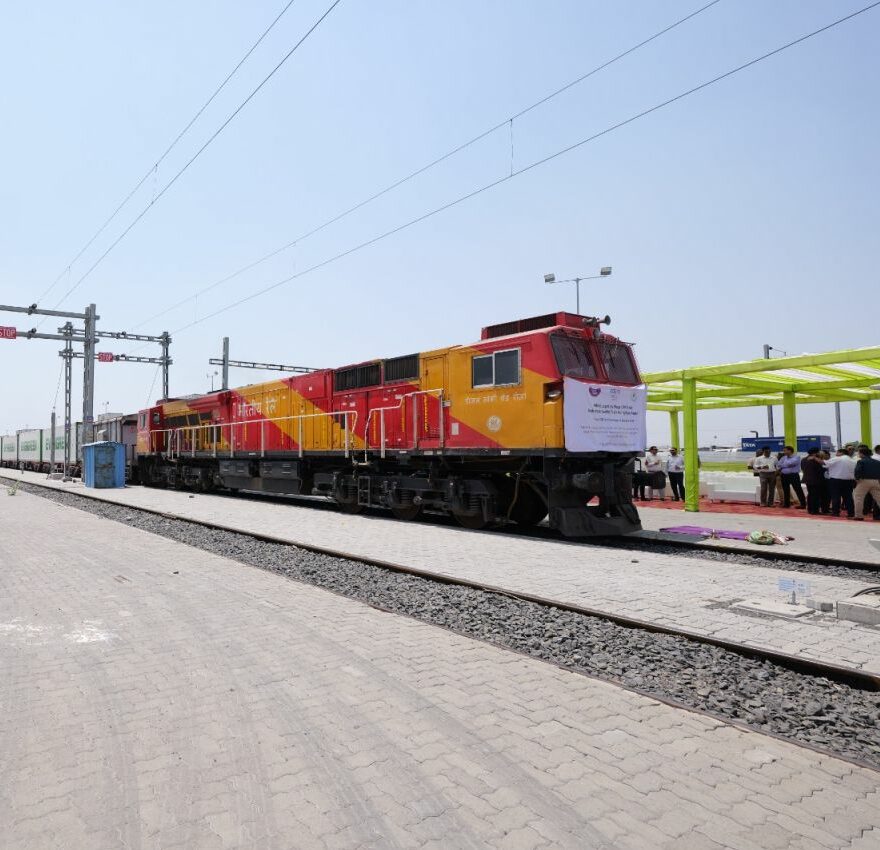
AHMEDABAD : Adani Logistics flagged off a dedicated reefer rail corridor fromICD Virochannagar to Mundra Port, enabling seamless, temperature-controlled movement of frozen cargo from Gujarat to global markets. In partnership with HyFun Foods and Evergreen Marine corporation, the initiative strengthens export efficiency, reliability, and supply chain resilience.

With ICD Virochannagar emerging as a strategic multimodal hub and a clear shift from road to rail improving both cost efficiency and sustainability, this corridor reflects the growing importance of integrated logistics in supporting India’s export ambitions—where India’s macro story will continue to drive all-India cargo volumes.