Home Blog Page 474

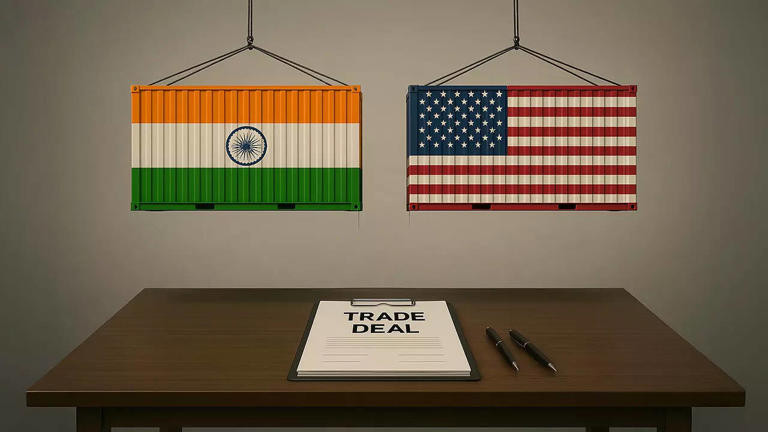
India-US trade deal ‘very near’ but can’t put deadline : Commerce Secretary

NEW DELHI : India and the United States are engaged in ongoing discussions on a proposed trade deal, with no fixed deadline set for its announcement, Commerce Secretary Rajesh Agrawal said.

“We have always had the discussions. We are again engaged. There has been a virtual meeting also between the minister and the US Trade Representative. There were engagements going on, and negotiating teams were talking virtually on issues which are still pending,” Agrawal told reporters. “But we can’t put a deadline. It’s very near. That will happen as long as both sides are ready and feel it is the right time to announce.”

The remarks come amid heightened concerns over US tariffs on Indian exports and no breakthrough in the negotiations for a proposed bilateral trade deal.

Commenting on exports to the United States amid high tariffs, the commerce secretary said India continues to see resilience in shipments.

“We are still holding on to a positive trend. It was still doing around $7 billion despite high tariffs. We are focusing more on areas where tariffs are less, or in areas where tariffs are there, industry has been showing resilience and holding on to the supply chains,” he said.

Export data
Agrawal expressed confidence that India’s overall exports would cross $850 billion in the current financial year.

Merchandise exports grew 1.86% year-on-year to $38.51 billion in December 2025, compared with $37.8 billion in December 2024, he said. “There has been a positive movement in our export growth. We have maintained the positive territory,” he added.

Cumulative exports during the first nine months of the current financial year stood at $634.26 billion, up from $607.93 billion in the corresponding period last year.

Imports rose to $63.55 billion in December 2025 from $58.43 billion a year ago, resulting in a trade deficit of $25 billion for the month.

During April–December, merchandise exports increased 2.44% to $330.29 billion, official data showed.

Tariffs on Iran trade
On possible tariff issues involving Iran, Agrawal said India’s trade with the country remains limited. “We have very limited trade. We are looking at that. We are awaiting details and as and when details are there, we will look into it,” he said.

US President Donald Trump on Monday said the United States will impose sweeping new tariffs on countries that do business with Iran, threatening a 25% levy on all trade with the US.
In a post on his Truth Social platform, Trump said that “effective immediately,” any country doing business with Iran would face a 25% tariff on “any and all business being done with the United States of America,” calling the order “final and conclusive.”

The White House has not released details on how the tariffs would be implemented or enforced.

Trump did not define what qualifies as “doing business” with Iran, raising questions about whether the measure would apply to goods, services or financial transactions, and which countries could be targeted.
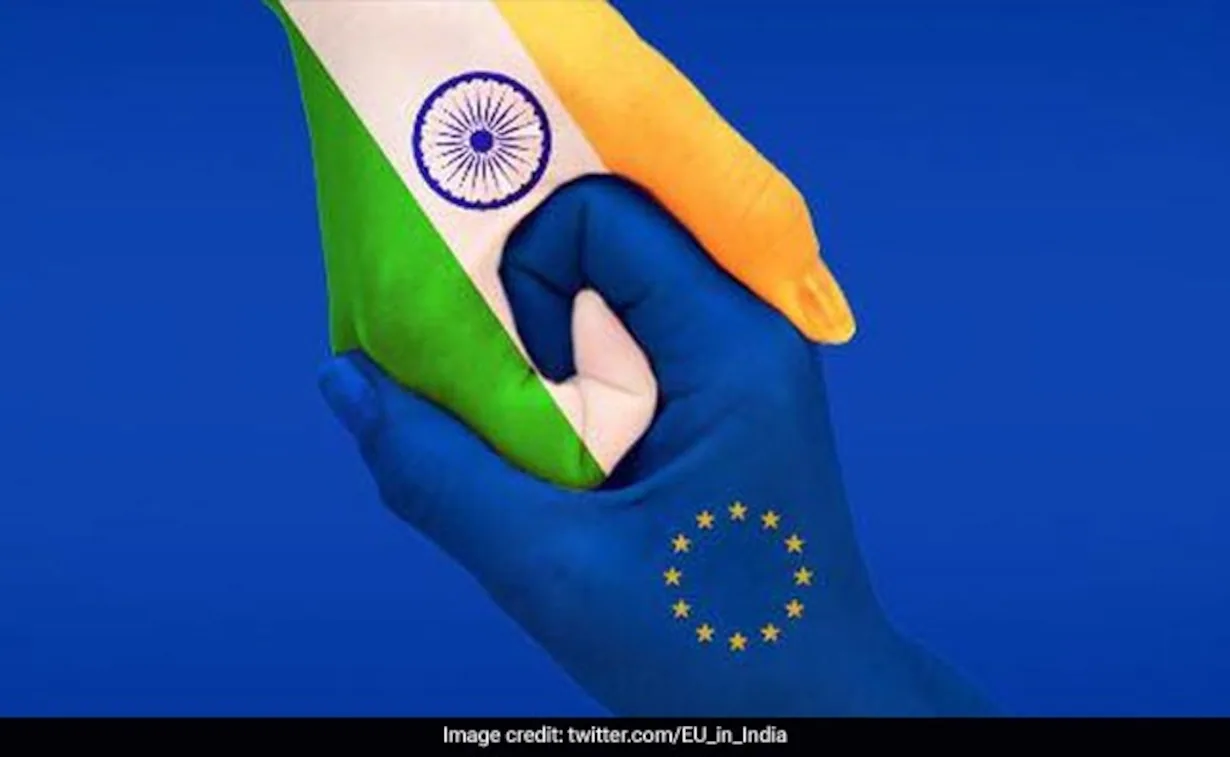
India and EU close to the trade pact as US trade talks drag on

NEW DELHI : India expects talks on a long-sought trade deal with the European Union to conclude this month, Trade Secretary Rajesh Agrawal said on Thursday, in what would be New Delhi’s largest agreement as it seeks new markets amid U.S. tariff pressures.

The deal, under discussion for years, is seen as a chance for both sides to deepen economic ties and cut reliance on China and Russia. Bilateral trade between India and the EU totalled 120 billion euros ($140 billion) in 2024, making the bloc India’s biggest trading partner.

Agrawal said the two sides were “very close” to finalising the pact and were exploring whether it could be wrapped up before leaders meet in New Delhi this month.
He said talks on a U.S. trade pact were continuing and a deal would be reached when both sides were ready. Negotiations collapsed last year after a breakdown in communication between the two governments.
The president of the European Council, Antonio Costa, and European Commission President Ursula von der Leyen will visit India on January 25–27 and co-chair an India–EU summit on January 27, India’s foreign ministry said.
The European Commission, which is negotiating on behalf of the EU’s 27 members, also expressed cautious optimism in remarks to EU envoys late on Wednesday, according to sources familiar with the discussion.

The main sticking point is over cars and steel, they said. The EU wants India to cut sharply import duties on EU cars that can exceed 100%, while India is concerned that its steel exports to the EU will be limited by the EU’s carbon border levy and safeguards lowering overall EU steel imports.
If concluded, the deal would open India’s vast and heavily protected consumer market of more than 1.4 billion people to European goods and could reshape global trade flows as protectionism rises and a U.S.-India pact remains stalled.

Both sides have been pushing to close a broad agreement after Von Der Leyen and Indian Prime Minister Narendra Modi agreed to fast-track negotiations in an effort to close a deal in 2025. Talks, relaunched in 2022, gained momentum after U.S. President Donald Trump imposed tariff hikes on trading partners including India.

Brussels has recently signed deals with Mexico and Indonesia and stepped up talks with India, while New Delhi has reached agreements with Britain, Oman and New Zealand. Some in Brussels see the India deal as welcome, although less ambitious than its other free trade agreements, in terms of scope and the extent of tariff cuts.

AGRICULTURE OFF THE TABLE
Some sensitive agricultural items have been excluded from negotiations, an Indian trade ministry official said. India will not open its agriculture or dairy sectors in any trade pact, officials have said, citing the need to protect millions of subsistence farmers.

The EU is pushing for steep tariff cuts on cars, medical devices, wine, spirits and meat, along with stronger intellectual property rules. India is seeking duty-free access for labour-intensive goods and quicker recognition of its autos and electronics sector.

Beyond goods, the agreement is expected to expand services trade, investment and cooperation in digital trade, intellectual property and green technologies, as well as spur European investment in Indian manufacturing, renewable energy and infrastructure.

Challenges remain over regulatory alignment and the protection of sensitive sectors. The EU also insists that trade partners adhere to international standards on labour and the environment, with commitments to the Paris climate change agreement still to be settled.

Source : Reuters

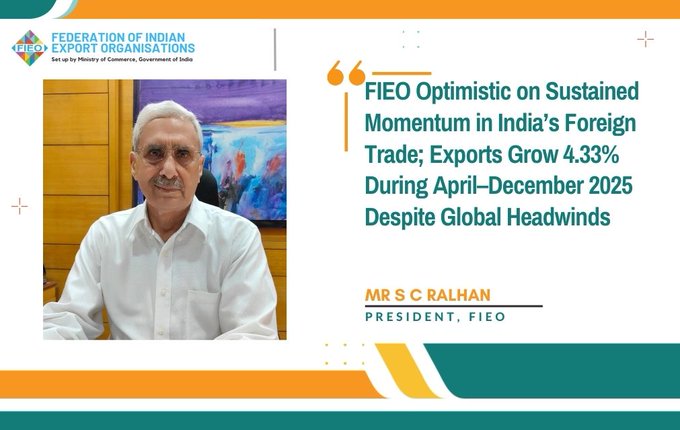
FIEO optimistic on sustained momentum in India’s foreign trade; Exports grow 4.33% during April–December 2025 despite global headwinds

NEW DELHI : The Federation of Indian Export Organisations (FIEO) has expressed strong optimism over the sustained and broad-based growth in India’s foreign trade, as reflected in the December 2025 trade data. The performance assumes greater significance against the backdrop of ongoing geo-political tensions, supply-chain realignments, inflationary pressures and rising protectionism across major economies.

Commenting on the data, Mr S C Ralhan, President, FIEO, stated that the continued expansion of India’s exports during April–December 2025 is a clear testament to the resilience, agility and growing global competitiveness of Indian exporters. He emphasized that exporters have not only weathered global uncertainties but have also capitalized on emerging opportunities through market diversification, value addition and product competitiveness, aided by a supportive policy ecosystem.

India’s overall exports during April–December 2025 rose by 4.33% to USD 634.26 billion, compared to USD 607.93 billion in the corresponding period of the previous fiscal. Merchandise exports during the period stood at USD 330.29 billion, registering a growth of 2.44% over USD 322.41 billion in April–December 2024–25. Exports in December 2025 alone grew by 1.87% to USD 38.51 billion, reflecting sustained demand across key product segments.

Mr Ralhan noted that this performance is particularly encouraging given the volatility in global trade flows, and reflects the effectiveness of Government initiatives aimed at boosting exports, including policy continuity, export facilitation measures, improved logistics, digitisation of trade processes and focused support to MSME exporters.

On the import side, India’s overall imports during April–December 2025 increased by 4.95% to USD 730.84 billion, as compared to USD 696.37 billion in the same period last year. Merchandise imports rose by 5.90% to USD 578.61 billion, up from USD 546.36 billion in April–December 2024–25. Imports in December 2025 stood at USD 63.55 billion, compared to USD 58.43 billion a year ago, resulting in a trade deficit of USD 25 billion for the month.

Explaining the rise in imports, Mr Ralhan pointed out that higher inflows of energy products, electronics, machinery and industrial inputs are indicative of robust domestic manufacturing activity, infrastructure expansion and investment demand, which augur well for medium-term economic growth.

During April–December 2025, Engineering Goods, Petroleum Products, Electronic Goods, Drugs & Pharmaceuticals, Gems & Jewellery, Chemicals, Readymade Garments, Cotton Textiles, Handloom Products, Rice and Marine Products emerged as the top export items. On the import side, key commodities included Petroleum Products, Electronic Goods, Gold, Machinery, Transport Equipment, Non-ferrous Metals, Chemicals, Coal, Plastics and Iron & Steel.

Mr Ralhan further highlighted that India’s top export destinations—USA, UAE, China, the Netherlands, UK, Germany, Bangladesh, Singapore, Saudi Arabia and Hong Kong—demonstrate a well-diversified and resilient export footprint. This diversification is particularly critical at a time when global trade routes are being reshaped due to geo-political conflicts, sanctions, shipping disruptions and strategic realignments.

He added that India’s continued strong engagement with advanced economies such as the USA and Europe, alongside deepening trade ties with emerging markets and regional partners, reinforces India’s standing as a reliable, trusted and competitive global trading partner. Growing exports to Bangladesh, Singapore and Saudi Arabia also underscore the importance of regional integration, South-South cooperation and strategic partnerships across the Indo-Pacific and Middle East.

Mr Ralhan reiterated that the commendable export performance is the outcome of the collective efforts of India’s exporters and the Government’s proactive and facilitative trade policies. Going forward, he emphasized that continued policy support, faster logistics, stable trade agreements and sustained focus on market diversification will be critical to further accelerate India’s export growth trajectory.

Union Budget likely to launch Stand-Up India II with higher loan limits

NEW DELHI : The Union Budget, to be presented on February 1, is expected to unveil Stand-Up India II, a revamp of the existing scheme that will raise the maximum loan size beyond the current Rs 1 crore, government sources said.

The redesigned programme is aimed at widening the scheme’s reach, especially among very small and first-generation businesses, and supporting job creation at the grassroots.

“The budget will roll out Stand-Up India II with likely maximum loans of up to Rs 2 crore, which will significantly improve access to credit for small businesses,” a government source told Moneycontrol. The move is meant to build on past achievements by facilitating larger credit flows to first-generation entrepreneurs from under-served communities and women.

With Stand-Up India II, policymakers want to retain the scheme’s core eligibility rules while ensuring that businesses which succeed in their early years are not forced to stall for lack of finance as they try to grow.

Under the Stand-Up India scheme, scheduled commercial banks (SCBs) provide loans ranging from Rs 10 lakh to Rs 1 crore to eligible entrepreneurs from scheduled caste (SC), scheduled tribe (ST) and women categories to set up greenfield enterprises in manufacturing, services, trading or allied sectors.

The revamp is expected to address a long-standing gap in the credit ladder. Many early-stage firms manage with smaller loans in their initial years but struggle to find formal finance when they need larger sums for expansion, equipment purchases or working capital.

“Increasing the loan ceiling will enable many early-stage enterprises to invest in capacity expansion, technology adoption and working capital without resorting to informal credit,” the government source said.

At the Global Inclusive Finance Summit on January 13, M Nagaraju, secretary in the department of financial services, said the government is “trying to revise the Stand-Up India scheme” to offer larger loans and widen its reach, particularly for SC and ST beneficiaries.

Change is overdue

Despite steady growth under Stand-Up India, sources said the of Rs 1 crore ceiling is no longer sufficient for many businesses that have moved beyond the start-up phase but are still too small to attract mainstream corporate financing.

“Micro units often face a funding cliff once they reach thresholds where small-ticket finance ends and institutional credit becomes harder to secure,” he said. Stand-Up India II is expected to help smooth that transition by allowing such firms to borrow more without changing the scheme’s basic structure.

Nine-year footprint

Since its launch on April 5, 2016, the Stand-Up India scheme has focused on bridging credit gaps for SC, ST and women entrepreneurs by facilitating institutional bank loans and fostering inclusive entrepreneurship across India.

According to government data, total sanctions under the scheme rose from around Rs 14,431 crore in late 2018 to over Rs 61,020 crore by March 17, 2025, reflecting its expanding reach.

Participation has increased sharply across target groups. Between November 2018 and November 2024, the number of accounts held by SC entrepreneurs grew from 9,399 to 46,248, and those by ST entrepreneurs from 2,841 to 15,228. Women entrepreneurs saw the biggest rise, with accounts increasing from 55,644 to 1,90,844 in the same period.

What Stand-Up India does

The original Stand-Up India scheme was designed to provide inclusive access to formal credit by ensuring at least one SC or ST borrower and at least one woman borrower per branch of SCBs .

Loans are meant for greenfield enterprises, with the applicant required to hold a controlling stake. They are usually composite in nature – combining term loans and working capital – and cover manufacturing, services, trading and activities allied to agriculture.

CONCOR sets new benchmark in refrigerated EXIM Movement at MMLP Dadri

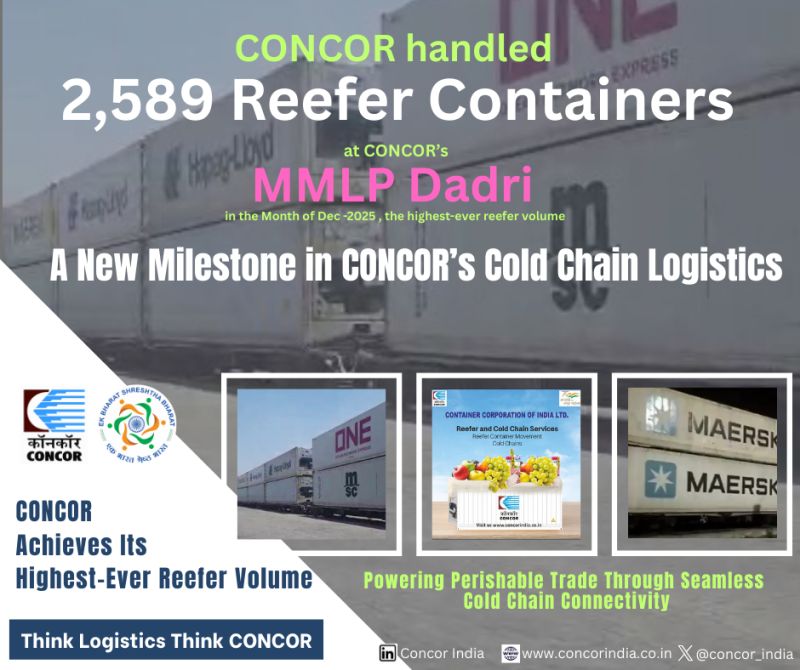
NEW DELHI : Container Corporation of India Ltd. (CONCOR) has achieved a significant milestone in refrigerated export–import (EXIM) logistics by handling 2,589 reefer EXIM containers at its Multi Modal Logistics Park (MMLP), Dadri, in December 2025. This marks the highest-ever reefer volume handled at any CONCOR terminal, surpassing the earlier record of 2,568 containers set in September 2025.

This achievement underscores CONCOR’s growing capability in managing temperature-controlled cargo and its commitment to strengthening India’s cold-chain logistics ecosystem.

The record performance was made possible through robust infrastructure and operational preparedness at MMLP Dadri, including:

150 refrigerated supply plug points to support large-scale reefer handling,

45 power packs ensuring uninterrupted power supply both on ground and during transit,

2–3 daily double/single-stack refrigerated train services connecting Dadri with key ports such as Mundra, Kandla, Pipavav and JNPT via the Dedicated Freight Corridor (DFC),

Pan-India reefer facilities supported by seamless multimodal connectivity.

With rising demand for reliable cold-chain solutions, especially for agri-exports, pharmaceuticals and perishable commodities, CONCOR continues to play a pivotal role in enabling efficient, safe and sustainable refrigerated logistics across the country.

This milestone further reinforces CONCOR’s position as a trusted logistics partner for India’s EXIM trade and highlights its focus on infrastructure augmentation, service reliability and customer-centric solutions.

Railways sets New Record in Freight Movement

By Interchanging a Record 892 Trains in a Single Day, DFC Sets a New Benchmark of Operational Efficiency

Railways Ensures Efficient Movement of Goods Across Regions, Reducing Transit Time & Costs

Record Freight Interchange Helping Timely and Comfortable Passenger Train Services, Besides Low Logistics Costs and Faster Delivery of Essential Goods, Boosting the Indian Economy

NEW DELHI: Indian Railways is redefining freight transportation in the country and has set a new record in freight movement by providing a speedy, reliable, and affordable end-to-end rail freight solution. By combining advanced infrastructure, high-capacity corridors, and modern operational systems, the Dedicated Freight Corridor (DFC) network is ensuring efficient movement of goods across regions, reducing transit times and costs.

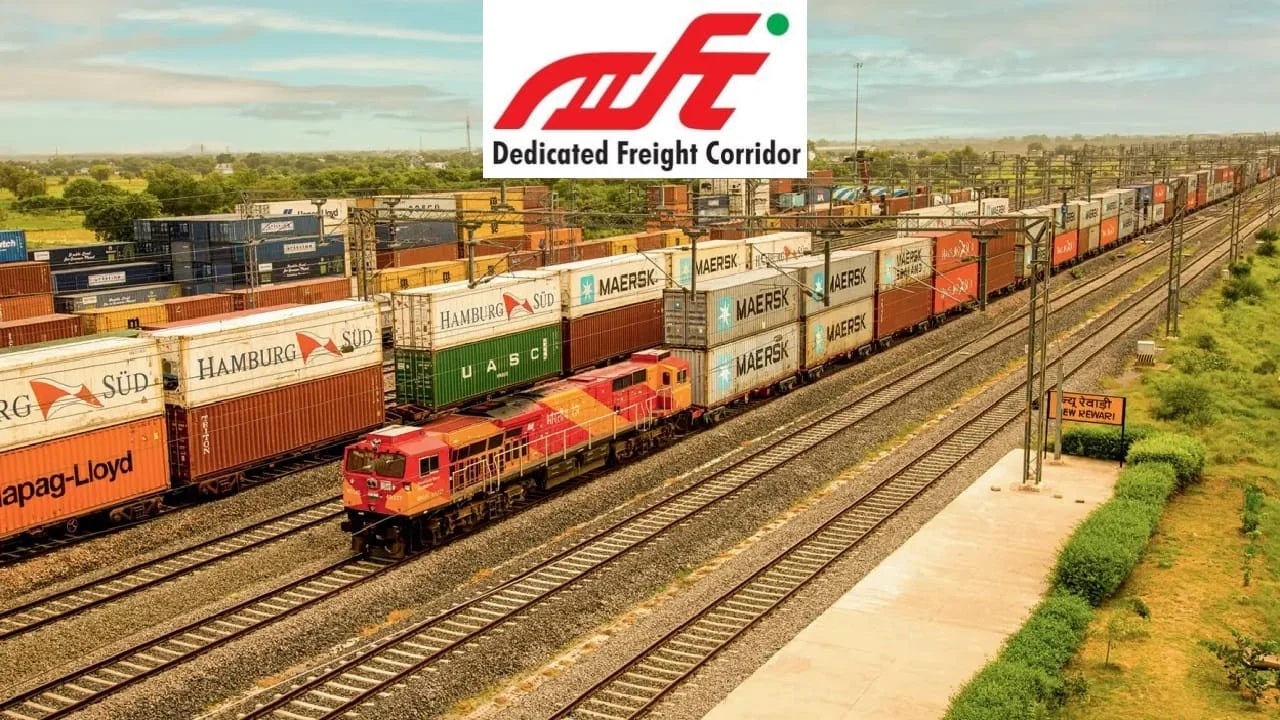
Continuing its trend of seamless high-density freight operations, the Dedicated Freight Corridor Corporation of India Limited (DFCCIL) established a new benchmark of operational efficiency with the highest-ever train interchanges on the DFC network. On Sunday, 5 January 2026, a total of 892 ‘interchange’ trains were handled in a single day between the DFC network and five zones of Indian Railways, marking the highest interchange achieved since commissioning of the corridors. The previous record stood at 865 trains, achieved on 4 January 2026.

This enhanced operational efficiency resulting from record freight interchange is easing congestion on conventional rail lines, which is ensuring more timely and comfortable passenger train services and reducing delays in daily commutes. It is also supporting the economic growth of industries, ultimately benefiting the common man through faster delivery of essential goods and lower logistics costs.

The milestone reflects DFCCIL’s growing operational capacity, strengthened planning framework, and robust traffic management systems. The achievement was enabled through effective regulation of train speeds, maintenance of safe headway, and close coordination between adjoining stations, allowing trains to cross stations in minimal time and ensuring safe, fuel-efficient, and uninterrupted operations even on heavily loaded sections.

The performance was further supported by modern train scheduling tools, real-time traffic monitoring, automated signalling, digital control rooms, and strict safety protocols. Central Control provided network-level planning and supervisory oversight based on inputs from all Operational Control Centres and zonal control offices, ensuring seamless execution across the network.

High-power locomotives played a critical role by hauling long and heavy freight trains at higher average speeds, while strong coordination among loco pilots, assistant loco pilots, and train managers ensured alert, disciplined, and safe operations throughout the day. Strengthened feeder routes and efficient yard management minimised detention, enabling faster entry and exit of trains and timely evacuation of freight.

The record underlines a positive transformation in India’s logistics ecosystem, facilitating faster, safer, and more predictable movement of coal, cement, containers, and agricultural commodities, while easing congestion on the conventional rail network. Other recent high-volume interchange days on the DFC network include 846 trains on 30 March 2025, 830 on 14 September 2025, 820 on 31 March 2025, 812 on 3 January 2026, and 808 on 25 May 2025, reflecting a sustained trend of high-density freight operations.

While Indian Railways continues to efficiently transport millions of passengers to their destinations, it is equally well-equipped to handle high-density freight operations with safety, speed, and reliability. Through modern locomotives, digital monitoring, and streamlined yard and feeder management, the DFC network is enabling faster movement of essential commodities like coal, cement, containers, and agricultural products. This is ensuring a robust supply chain, reducing logistics costs, and contributing to the overall growth of the nation’s economy.

CONCOR showcases integrated logistics strategy at IIRS, Raipur

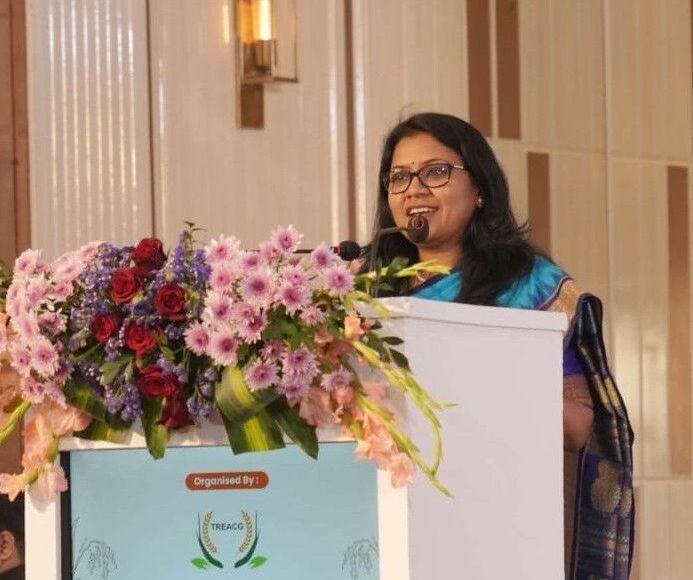
RAIPUR : Container Corporation of India Ltd. (CONCOR) participated in the India International Rice Summit(IIRS) held in Raipur, where it presented its comprehensive logistics strategy for the rice sector, underscoring integrated, efficient, and sustainable supply chain solutions.

During the summit, CONCOR highlighted its role in strengthening end-to-end logistics support for rice movement, leveraging multimodal connectivity, robust infrastructure, and technology-driven operations to enhance efficiency and reliability across the value chain.

The summit served as a valuable platform for meaningful stakeholder engagement, facilitating constructive dialogue with policymakers, industry leaders, exporters, and participants from the agri-sector. These interactions reinforced the importance of collaborative approaches to address logistics challenges and unlock new opportunities for India’s rice exports.

CONCOR expressed its gratitude to the organizers for curating an excellent forum that enabled collaboration, knowledge exchange, and forward-looking discussions for the growth of the agri-logistics ecosystem.

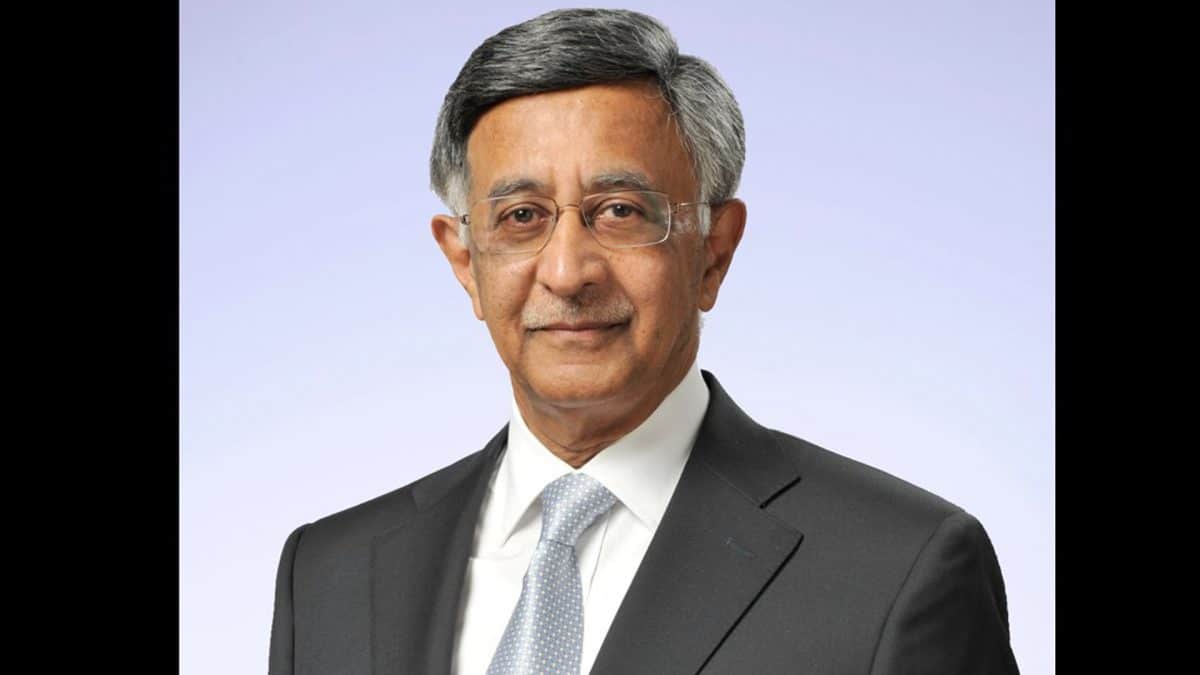
Baba Kalyani says India should get out of services, become product nation

PUNE : Baba Kalyani, Chairman and Managing Director of Bharat Forge, said India needs to transition into a product-led economy while reducing its reliance on the services sector. He believes that the country must move away from a service-oriented mindset and focus on manufacturing products for both domestic and global markets.

Speaking at the Public Policy Festival 2026 in Pune, Kalyani stated that manufacturing is essential for the country’s economic growth. He noted that India’s manufacturing contribution to GDP should reach 25%, up from the current 13%, which has decreased from 15% earlier.

“We must become a product nation rather than remain a service nation,” Kalyani asserted. “For too long, we have been focused on services. We need to learn how to create products. If we continue to serve foreign companies or multinational corporations, India will not progress.”

Transition from Services

Kalyani expressed his belief that only Indians can build the country, and he does not support providing services to others. He pointed out that, despite the success of India’s IT companies, they have yet to develop a single product. Many of these companies are comfortable with tax breaks and are not pushing the boundaries of innovation.

He shared how Bharat Forge has evolved from a forging company to producing products for electronics, defence, and unmanned systems. The company supplies parts to automotive original equipment manufacturers (OEMs) like Daimler-Benz, Toyota, Honda, Volvo, Scania, Ford, General Motors, and MAN. Additionally, Bharat Forge provides turbine blades and shafts to Rolls-Royce and landing gears for Airbus. Kalyani remarked that in his industry, German and Japanese companies are now trying to catch up.

New Industrial Mantra
He advised that the country should adopt the mantra of Andhra Chief Minister Chandrababu Naidu, who says that it is no longer sufficient to have the ease of doing business; it is now essential about the speed of doing business. He drew attention to their experience in setting up a large facility in Andhra Pradesh, where they got 1,000 acres for their facility in just 15 days.

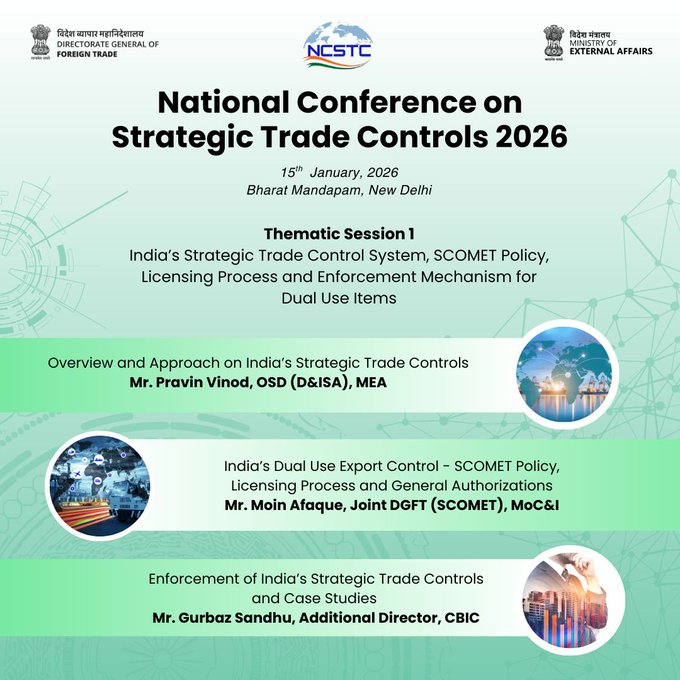
DGFT, in collaboration with MEA and FIEO, organises National Conference on Strategic Trade Controls 2026

NEW DELHI : The Directorate General of Foreign Trade (DGFT), in collaboration with the Ministry of External Affairs (MEA), the Federation of Indian Export Organisations (FIEO), and other Government partners and industry stakeholders, organised the National Conference on Strategic Trade Controls (NCSTC) 2026 in New Delhi .

The Conference provided a platform for discussions on India’s Strategic Trade Control (STC) framework, including policies and procedures governing the export of dual-use and sensitive goods, technologies, software, materials and equipment regulated under the SCOMET framework. It also enabled the exchange of international experiences and practices related to strategic trade controls. NCSTC 2026 focused on enhancing awareness, compliance and coordination among Government, industry, academia, research institutions and international stakeholders, while facilitating legitimate high-technology trade and addressing proliferation risks.

During the inaugural session, the third edition of the Handbook on India’s Strategic Trade Control System was released. The handbook has been prepared by DGFT in partnership with the D&ISA Division of MEA, with inputs from relevant Government departments and industry experts, and provides guidance on India’s strategic trade control policies and procedures. The session was attended by senior officials, including Commerce Secretary Shri Rajesh Agrawal; Chairman, CBIC Shri Vivek Chaturvedi; Director General, DGFT Shri Lav Agarwal; Joint Secretary (D&ISA), MEA Ms. Muanpuii Saiawi; Joint Secretary, Department of Defence Production Shri Amit Satija; and Additional DGFT Shri Rakesh Kumar.

The Conference included seven thematic sessions covering the Strategic Trade Control system and SCOMET policy, including the licensing framework and enforcement mechanisms. Discussions also addressed compliance and supply chain security, including the Authorised Economic Operator (AEO) programme and Intangible Technology Transfer (ITT). Other sessions focused on electronics, information technology, semiconductors and emerging technologies, as well as compliance aspects related to academia and research institutions. Sector-specific sessions were held on chemicals and biotechnology, aerospace and space, and defence exports and munitions-related controls.

Discussions during NCSTC 2026 also covered emerging and frontier technologies, including quantum-related items, advanced computing and semiconductors, additive manufacturing, aerospace technologies and cyber security, in the context of recent updates to India’s SCOMET List and non-proliferation considerations.

Alongside the conference sessions, industry-led technology display booths presented emerging technologies, compliance mechanisms and secure supply chain practices, enabling interaction among policymakers, regulators, technology developers and other stakeholders.

The Conference saw participation from over 500 stakeholders, including Government officials, industry representatives, exporters, compliance professionals, academia and research institutions, as well as participants from India and abroad.

NCSTC 2026 underscored the importance of maintaining an effective and transparent Strategic Trade Control framework, balancing national security and non-proliferation requirements with the facilitation of legitimate trade in advanced goods and technologies.


GeM Marks Seven Years of Womaniya Initiative to Strengthen Women-Led MSE Participation in Public Procurement

Womaniya Initiative Enables Women-Led Enterprises to Secure Over ₹80,000 Crore Orders on GeM

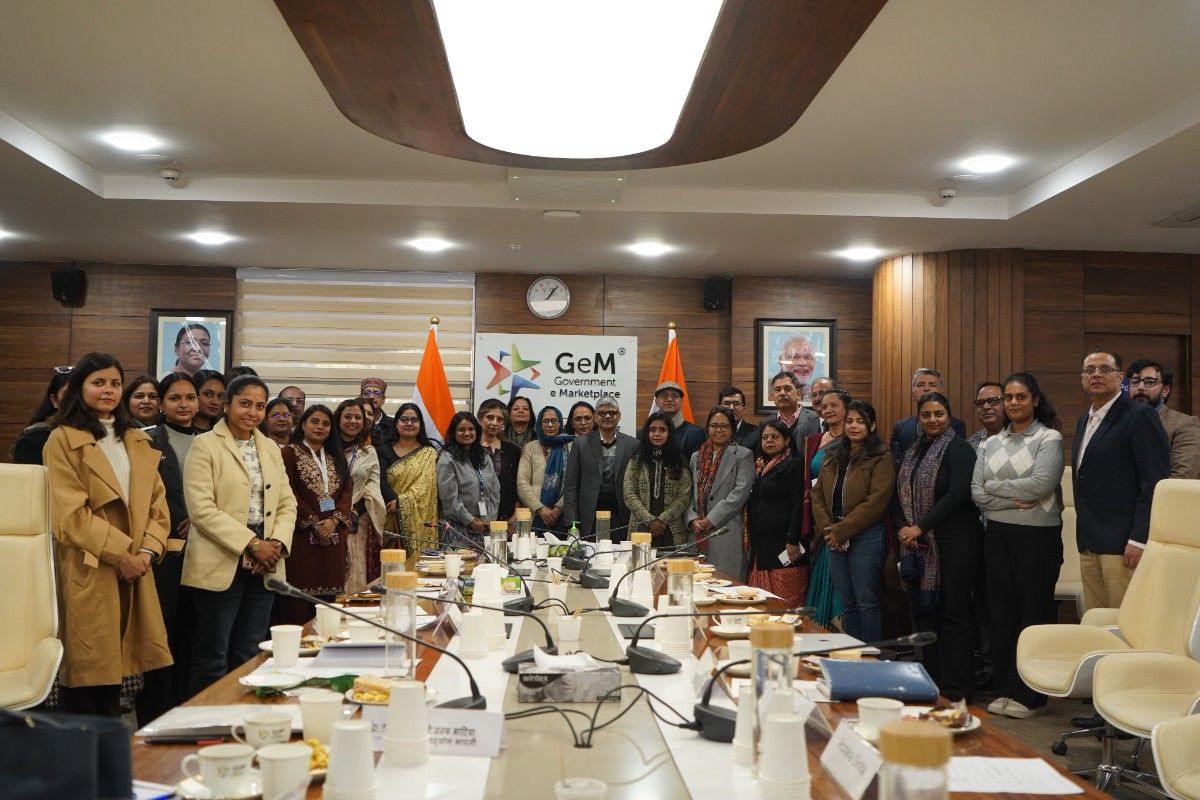
NEW DELHI: Government e-Marketplace (GeM) marked seven years of the Womaniya initiative, its flagship programme aimed at strengthening the participation of women-led Micro and Small Enterprises (MSEs) in public procurement. The commemorative event was held at Jeevan Bharti Building, New Delhi.

Seven years on, the impact of the initiative is evident. As of 14 January 2026, more than two lakh women-led MSEs are registered on the GeM portal. Collectively, these enterprises have secured public procurement orders exceeding ₹80,000 crore, accounting for 4.7 per cent of GeM’s total order value, significantly surpassing the mandated three per cent procurement target for women-owned and women-led enterprises.

Launched on 14 January 2019, Womaniya was conceived to address the limited access of women entrepreneurs and Self-Help Groups (SHGs) to government markets. By providing a direct, transparent and fully digital interface with government buyers, the initiative eliminated intermediaries and reduced entry barriers that had historically constrained participation. Over the years, Womaniya has evolved from an access-enabling platform into a national ecosystem of opportunity.

The event brought together policymakers, multilateral institutions and ecosystem partners to reflect on this journey. Addresses were delivered by Joint Secretary (SME), Ministry of MSME, Smt. Mercy Epao; Chief of Staff, UN Resident Coordinator’s Office, Smt. Radhika Kaul Batra; and Country Programme Manager, UN Women India, Smt. Suhela Khan. The speakers highlighted the importance of institutional access, capability building and sustained policy support in advancing women’s economic participation, and underscored the need for promoting gender-responsive public procurement.

GeM7yrs1 GeM Marks Seven Years of Womaniya Initiative to Strengthen Women-Led MSE Participation in Public Procurement

Speaking on the occasion, Chief Executive Officer, GeM, Shri Mihir Kumar, stated that Womaniya has grown into a structured and scalable ecosystem and has emerged as a flagship initiative enabling women-led enterprises to scale their businesses through resilience and credibility. He noted that policy-enabled digital procurement through the GeM portal has played a key role in nurturing women entrepreneurship and advancing gender inclusion in public procurement. He emphasised the importance of price discovery and product comparison for government buyers, the need for women entrepreneurs to understand procurement patterns on the portal, awareness of Government Financial Rules (GFR), and the convergence of stakeholders to collectively support and promote women entrepreneurship.

GeM7yrsMoU GeM Marks Seven Years of Womaniya Initiative to Strengthen Women-Led MSE Participation in Public Procurement

A key highlight of the event was the signing of a Memorandum of Understanding (MoU) between GeM and the Women’s Collective Forum (WCF). The MoU was signed by Additional Chief Executive Officer, GeM, Shri Ajit B. Chavan, and Chief Community Officer, WCF, Ms. Richa Sharma. The partnership aims to strengthen institutional support for women entrepreneurs by building awareness of business-to-government opportunities, supporting onboarding, documentation, compliance and product listing, and enhancing visibility and participation through structured training programmes, workshops and field-level coordination.

The programme also featured testimonials from women entrepreneurs, interactive sessions and roundtable discussions, providing insights into how access to public procurement has translated into enterprise growth and local economic impact.

Aligned with national priorities such as Aatmanirbhar Bharat, Make in India and Vocal for Local, the Womaniya initiative reflects the Government’s commitment to gender-inclusive economic growth and demonstrates how policy, platforms and partnerships can work together to transform participation into prosperity.