Home Blog Page 550

Gold imports drive biggest-ever monthly trade gap in October: RBI Bulletin

NEW DELHI: India’s merchandise trade deficit widened to an all-time high of $41.7 billion in October 2025, driven by a sharp increase in gold and silver imports and a renewed contraction in exports, according to the Reserve Bank of India’s (RBI) State of the Economy report in the November 2025 Bulletin.

The deficit, the highest for any month on record, reflects a combination of festive-season import spikes, weak global demand, and broad-based increases in non-oil non-gold imports, the report noted.

The RBI bulletin highlighted that India’s merchandise exports returned to contraction in October after three consecutive months of growth. Weakness in global manufacturing and services activity, particularly in export orders, weighed on outbound shipments.

Global PMI data referenced in the report indicated that new export orders remained in negative territory, despite overall global output growing modestly.

Another significant observation made by the RBI Bulletin was in terms of gold and silver as it said there was a sharp rise in gold and silver imports being a major contributor to the record deficit. October coincided with the peak of the festive season, which typically drives jewellery demand.

The bulletin noted that digital gold purchases also climbed, with the category appearing among top UPI merchant transactions.

High global bullion prices further inflated India’s import bill. Charts in the bulletin showed gold prices nearing historical highs during the period.

Apart from precious metals, imports of electronic goods, machinery, chemicals and consumer items rose in October. The RBI attributed this to strong domestic consumption and festive stocking by businesses.
Oil imports, however, remained stable as global crude prices stayed subdued, limiting energy-related pressures on the deficit.

Despite the merchandise trade deterioration, the RBI said India’s external position remained broadly stable, supported by Robust services exports, Healthy remittance inflows, and Comfortable foreign exchange reserves.

The report also noted that the US decision to grant tariff exemptions to select Indian agricultural products from November 14 may provide limited support to export performance in the coming months.

In the November Bulletin, the economists expected the October spike to be temporary, driven largely by festive-season imports and precautionary restocking. Gold imports typically moderate in the winter months.

However, the RBI cautioned that global trade uncertainty, contracting export orders and volatile financial markets continue to pose risks to India’s trade outlook.

Source: ANI

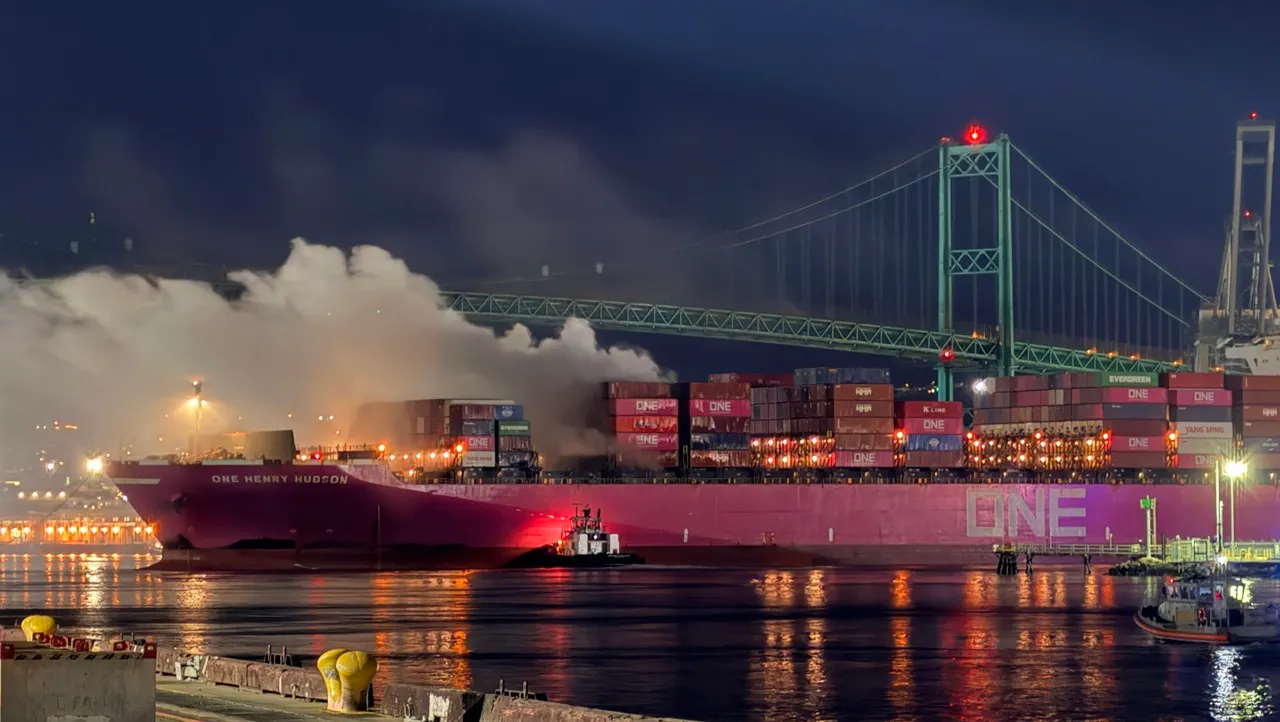
Fire stricken ONE container ship towed to anchorage in Port of LA

LOS ANGELES : The container ship ONE Henry Hudson ablaze in the Port of Los Angeles has been towed to an anchorage as the fire is brought “substantially under control”.

According to a statement issued by the US Coast Guard (USCG) on 23 November by 1:30pm on Sunday the fire had been isolated to a single cargo hold with a fire boat on the scene from the Port of Los of Angeles and the Port of Long Beach.

A fire erupted below deck on the Panama-flagged, Ocean Network Express (ONE) operated container ship in the evening of 21 November while it was berthed at the Yusen Container Terminal in the Port of LA.

The fire was responded to by nearly 200 personnel from the LA Fire Department which was the lead agency in the response, and it led to the temporary closure of four out of seven container terminals were temporarily closed due to the impact of the blaze.

“Several of the ship’s 23 total crew members initially assisted firefighters in gaining access to the lower decks of the ship, but all 23 members were ultimately safely assisted off the vessel with the help of Los Angeles Port Police and United States Customs and Border Protection,” LAFD said. No injuries have been reported from the fire.

According to the LAFD the fire burned in multiple sub-levels below deck which were large inaccessible and an onboard explosion around 8pm on 21 November caused onboard lights and cranes to lose power.

As conditions on the vessel deteriorated, Unified Command ordered all firefighting personnel to withdraw from the ship, and firefighting continued boats around the container ship.

At 3am on 22 November an operation was undertaken to undock the ONE Henry Hudson and it was successfully towed to a location one mile from shore, near Angel’s Gate Lighthouse. Firefighting operations on the container ship continue.

“The fire onboard has been substantially contained. Fire crews and ship crew members are continuing fire suppression efforts,” the Port of LA said on 22 November. It said that port operations resumed on the morning of 22 November.

MISC Group reports strong Financial Results for the Third Quarter of 2025

KUALA LUMPUR: Zahid Osman, MISC President and Group CEO said, “MISC achieved stronger profitability and higher operating cash flows to date reflecting stronger operational agility despite a less favourable market environment.

We execute with discipline our #delivering Progress strategy by maximising utilisation and high grading the shipping portfolio. This quarter, we took delivery three new LNG carriers under consortium partnership for QatarEnergy and converted one LNG carrier into floating storage unit for PETRONAS Gas.

In terms of fleet modernisation, with the recent Final Investment Decision (FID) by AET on two LNG dual-fuel Suezmax tankers, MISC Group will see 21 newbuilds to be delivered over the next two to three years, representing one of the most extensive fleet renewal cycles in our history.

Supported by our solid cash position, we declared a third interim dividend of 8 sen (RM) per share, in line with our previous payouts. To date, we have declared total dividends amounting to RM1.607 billion in 2025.”

Stronger Profitability and Higher Cash Flows, Driven by our Portfolio and our People

Group revenue for the quarter ended 30 September 2025 and the period ended 30 September 2025 was lower than the corresponding quarter and the period ended 30 September 2024.

Group operating profit and profit attributable to equity holders of the corporation for the quarter and period ended 30 September 2025 were higher than the corresponding quarter and period ended 30 September 2024.

Group cash flows generated from operating activities for the period ended 30 September 2025 was higher than the corresponding period ended 30 September 2024.

Group Revenue, Operating Profit, Profit Attributable to Equity Holders of the Corporation for the Quarter Ended 30 September 2025

The Group revenue of RM2,797.2 million was RM166.0 million or 5.6% lower than the quarter ended 30 September 2024 (“corresponding quarter”) of RM2,963.2 million, mainly due to lower revenue from ongoing projects in the Marine & Heavy Engineering segment, due to projects approaching completion as well as newly secured projects were still in the early stages of execution, coupled with lower earning days from contract expiries, vessel disposals and lower charter rates in the Gas Assets & Solutions segment. The decrease in Group’s revenue was, however, offset by higher revenue from higher freight rates and earning days in the Petroleum & Products segment, as well as revenue contribution from a Floating, Production, Storage and Offloading unit (“FPSO”) that had transitioned from the construction phase to operational phase in the Offshore segment.

The Group operating profit for the quarter ended 30 September 2025 of RM656.5 million was RM113.7 million or 20.9% higher than corresponding quarter’s profit of RM542.8 million contributed by an FPSO in the Offshore segment, following its transition from the construction phase to the operational phase, higher revenue in Petroleum and Products segment and favourable finalisation of completed projects in Marine and Heavy Engineering segment.

The profit attributable to equity holders of the corporation of RM541.8 million was RM202.9 million or 59.9% higher than the corresponding quarter’s profit of RM338.9 million due to the higher operating profit mentioned above.

Group Revenue, Operating Profit, Profit Attributable to Equity Holders of the Corporation and Cash Flows Generated from Operating Activities for the 9 Months Period Ended 30 September 2025

The Group revenue of RM8,334.6 million was RM1,596.3 million or 16.1% lower than the revenue for the 9 months period ended 30 September 2024 (“corresponding period”) of RM9,930.9 million mainly due to lower revenue from ongoing projects in the Marine & Heavy Engineering segment as several projects are nearing completion. The reduction in revenue is also attributable to lower earning days from contract expiries and vessel disposals as well as lower charter rates in the Gas Assets & Solutions segment and impact from strengthening of RM against USD in the current period.

The Group operating profit of RM2,268.9 million was RM51.9 million or 2.3% higher than the corresponding period’s profit of RM2,217.0 million, mainly contributed by higher profit in the Offshore segment, primarily from an FPSO that had transitioned from construction phase to operational phase in Quarter 4, 2024. The increase in the operating profit was, however, offset by lower revenue in the Gas Assets & Solutions segment, lower margin in the Petroleum & Product Shipping segment and lower level of project activities in the Marine & Heavy Engineering segment.

The profit attributable to equity holders of the corporation of RM1,711.9 million was RM72.2 million or 4.4% higher than the corresponding period’s profit of RM1,639.7 million in line with the higher operating profit as mentioned above, coupled with gain on disposal of ships.

The Group recorded cash flows generated from operating activities of RM3,758.7 million for the period ended 30 September 2025, higher by RM1,161.8 million or 44.7% compared to RM2,596.9 million in the corresponding quarter contributed from higher collection from customers.

Moving Forward

LNG carrier (“LNGC”) spot charter rates are expected to remain soft, primarily due to continued vessel oversupply resulting from strong newbuild deliveries and increasing number of vessels coming off long-term charters. Coupled with high inventory levels in Europe and subdued demand in Asia, spot charter rates are expected to come under sustained downward pressure for the remainder of the year. The prevailing weakness in the spot market presents potential asset impairment risks that may affect the segment’s long-term asset valuations. Despite these challenges, the Gas Assets & Solutions (“GAS”) segment is maintaining its focus on proactively securing long-term charters while advancing its fleet rejuvenation strategy through the delivery of modern, eco-efficient LNGCs. As at the end of the quarter under review, four new LNGCs co-owned with consortium partners have been delivered, with additional vessels scheduled for delivery in the next quarter. The GAS segment has also implemented strategic measures for vessels currently off charter, including lay-ups to optimise costs and the exploration of redeployment opportunities.

In the Petroleum & Products segment, the crude tanker market is expected to remain firm for the rest of 2025, supported by stronger vessel demand arising from increased OPEC+ output and steady tonne-mile demand along the US-Asia trade routes. Charter rates continue to benefit from tight vessel availability stemming from ongoing sanctions and limited fleet expansion, while geopolitical uncertainties persist in affecting crude trade flows. The Petroleum & Products segment is actively pursuing opportunities to expand its contract portfolio and optimise fleet deployment through more efficient trade routes, with the aim of maximising fleet utilisation and driving revenue growth.

The Offshore segment remains supported by a favourable industry outlook, underpinned by firm global energy demand that is fuelling ongoing investment in upstream exploration and production. These positive market conditions are driving the expansion of Floating Production Storage and Offloading (FPSO) activities, particularly in key regions including South America, West Africa and the Asia-Pacific. The Offshore segment is pursuing strategic growth opportunities in high-potential markets to ensure sustainable, long-term value creation.

In the Marine & Heavy Engineering segment, the oil and gas market outlook remains stable despite ongoing trade policy uncertainties and geopolitical tensions. Against this backdrop, the Heavy Engineering sub-segment is focused on project execution excellence, timely delivery of projects and strengthening its orderbook in both conventional and new energy projects, while maintaining vigilance in addressing operational challenges. Concurrently, the Marine sub-segment delivers consistent performance, supported by ongoing vessel repair and conversion works, alongside efforts to enhance yard infrastructure to reinforce long-term competitiveness and support future growth. Full Report is available here. Full Report

HD Hyundai secures record 2.13 trillion won container ship order

SEOUL : South Korea’s shipbuilding industry is experiencing a “container ship boom” after securing consecutive orders for ultra-large container ships. Container ships, which transport goods in standardized containers, are a primary means of maritime logistics for bulk trade goods such as consumer products and industrial goods.

Just a few years ago, container ships were a ship type domestic companies avoided due to relatively low profitability and price competition with Chinese firms. However, orders have recently surged due to environmental regulations and replacement demand driven by aging fleets.

On the 24th, HD Korea Shipbuilding & Offshore Engineering, a mid-tier holding company of HD Hyundai, announced a contract with HMM to build eight 13,400 TEU (1 TEU equals one 20-foot container) dual-fuel container ships. The total contract value is 2.13 trillion Korean won. This deal marks the largest container ship order in 18 years since the 2007 shipbuilding supercycle.

Samsung Heavy Industries also revealed on the 20th that it secured a large-scale contract to build seven container ships for approximately 2 trillion Korean won. The vessels will be delivered to the shipowner sequentially by November 2029. The company recorded orders worth $6.9 billion (approximately 10.13 trillion Korean won) this year, with this contract accounting for about 10%. Hanwha Ocean also reported that 13 out of its 37 total ship orders this year are container ships.

This year, while demand for LNG carriers—a key high-value ship type for domestic shipbuilders—has declined due to oversupply, container ship demand has significantly increased. According to the Export-Import Bank of Korea’s Overseas Economic Research Institute report, “Trends in the Shipping and Shipbuilding Industries in Q3 2025 and Outlook for 2026,” South Korea’s cumulative ship orders in the first three quarters of this year reached 7.34 million CGT, a 16.7% decrease from last year. By ship type, container ship orders surged by 226.0% to 3.78 million CGT, while LNG carrier orders dropped by 63.6% to 1.47 million CGT.

The rush for container ship orders by South Korean shipbuilders stems from international environmental regulations and geopolitical shifts, including U.S.-China tensions.

The primary driver is eco-friendly regulations. The International Maritime Organization (IMO) plans to reduce greenhouse gas emissions from ships by 20% compared to 2008 levels by 2030 and enforce stricter fuel carbon regulations for ships over 5,000 tons starting in 2027. Violations could incur carbon taxes of up to $380 per ton of excess emissions. Consequently, shipowners are accelerating the replacement of their fleets with new vessels that emit less carbon and have higher fuel efficiency.

Political and trade environments are also changing, with the U.S. considering imposing entry fees on ships made or owned by Chinese companies. While container ship orders were previously dominated by Chinese shipyards, a trend is emerging where shipowners are turning to domestic shipbuilders to avoid U.S. regulations.

OrbitMI launches Vessel Reporting Analysis to strengthen Data Quality and help Shipowners align with industry standards

NEW YORK: OrbitMI, a leading provider of maritime SaaS software, today announced the launch of its Vessel Reporting Analysis, a structured assessment designed to help shipowners and operators understand how closely their vessel reports align with industry vessel reporting standards. The assessment identifies data gaps that affect compliance, operational efficiency, and the accuracy of performance and emissions reporting.

As more maritime workflows depend on reliable data—across compliance, chartering, operations, and commercial decision-making—the need for consistent, standards-aligned vessel reporting has grown significantly. Even small inconsistencies in noon reports can slow down compliance processes, create manual rework, and weaken optimization models. The Vessel Reporting Analysis gives operators a clear picture of where their reports stand and what adjustments will deliver the greatest impact. 

The Vessel Reporting Analysis provides: 

  • A structured review of noon reports, voyage data, fuel entries, and key operational fields 
  • A comparison of current reporting practices against the OVD standard 
  • A clear summary of missing or inconsistent data 
  • Practical recommendations to increase data quality and consistency 
  • Insight into how standardized data supports both compliance requirements and operational decision-making 

“Standards matter more than ever,” said Alexandre Lapointe, Chief Product Officer at OrbitMI. (In Pic Above) “The maritime industry is entering what we call the Connected Maritime Era—where ship and shore think together through shared data and intelligent, connected workflows. In this environment, vessel reports are more than a daily requirement. They connect onboard systems, cloud platforms, partners, and the decisions that operators must make in real time. High-quality data builds trust across the voyage lifecycle, and addressing even small gaps can reduce friction and lead to better decisions. This assessment helps operators understand exactly where improvements will deliver value.” 

Smart Maritime Network
The Vessel Reporting Analysis is available now through OrbitMI’s landing page. Shipowners and operators attending Smart Maritime Network Singapore can meet with OrbitMI’s team to learn more about the offering. OrbitMI is a Gold-level co-sponsor of the event with Bureau Veritas, reflecting a shared commitment to data quality, standardization, and practical solutions for the global fleet. 

Wattlab wins IBJ Environmental Protection Award for Solar Flatrack Technology

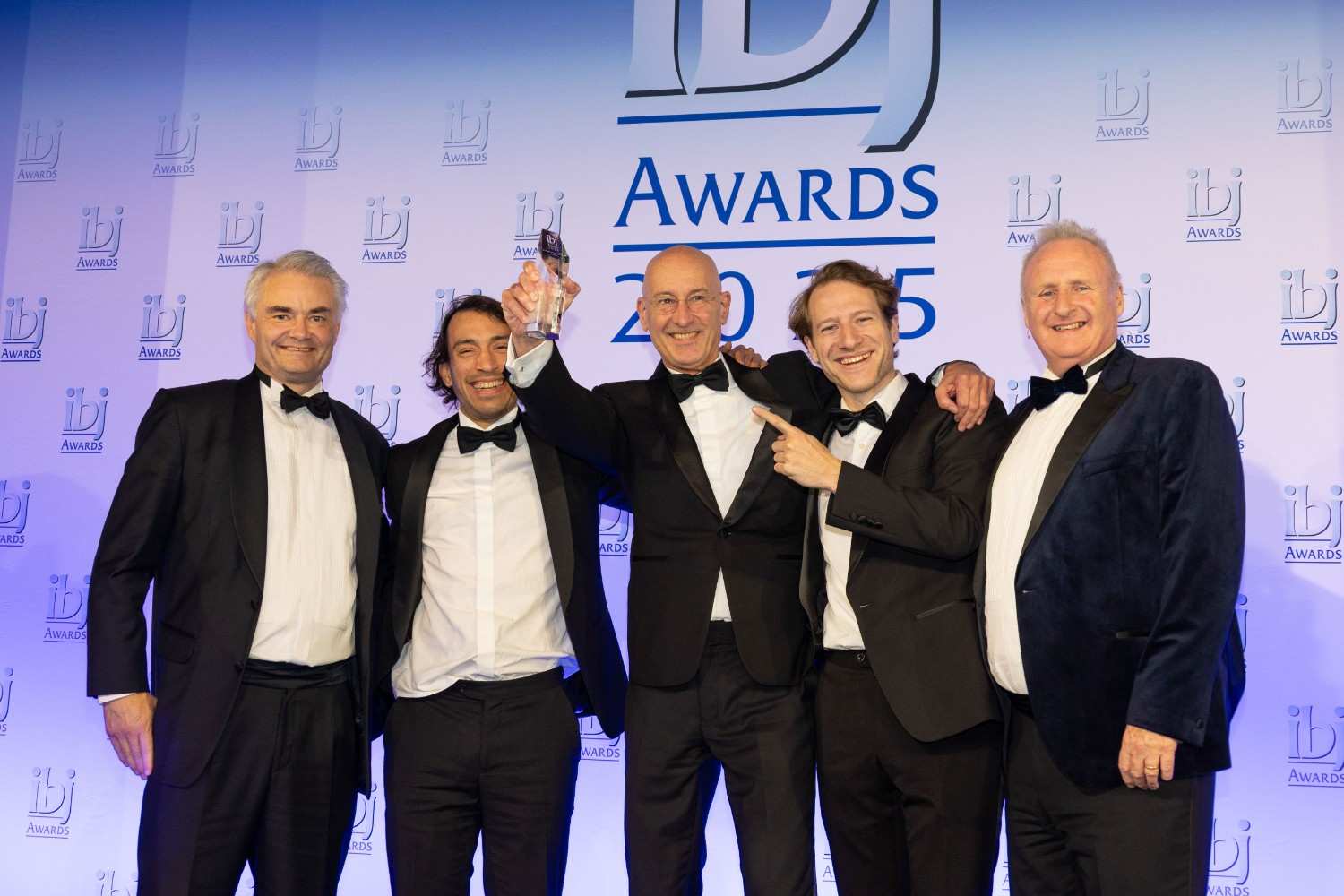
ROTTERDAM: Last week, the IBJ Awards recognised Wattlab’s contribution to deliver verified fuel savings, CO₂ reduction, and a strong financial return to shipping companies. Wattlab was awarded the IBJ Environmental Protection Award for its innovative Solar Flatrack, the world’s first modular solar power solution engineered specifically for seagoing cargo vessels. Furthermore, the scale-up’s maritime solar energy system has now been independently validated by TNO.

The IBJ Awards is a longstanding event organized by International Bulk Journal, the medium that has reported about and commented on for the dry bulk industry for 40 years. 

The Solar Flatrack allows vessels to generate free solar electricity at sea, reducing auxiliary fuel consumption by 2–5% and lowering CO₂ and GHG emissions. The solution offers a strong return on investment, fast installation, high durability, and seamless integration into daily ship operations.

Independent Validation by TNO

Dutch research organisation TNO conducted an independent study confirming system performance, energy yield, and financial return. Results show that the Solar Flatrack offers a reliable, cost-effective, and scalable pathway to decarbonisation for bulk carriers and short sea coasters.

Acknowledgements

For Wattlab, a scale-up looking to outfit as many coasters as possible, this award comes at a good time.

“We extend our sincere thanks to Vertom, whose support enabled both pilot installations and the full-scale system now operating aboard MV Vertom Tula,” says Bo Salet, CEO at Wattlab. “We are equally grateful to TNO for validating our system and to our customers for the trust they place in us, such as Berge Rederi who awarded us with a contract for their BRF Froan just last week at Europort. We feel a bit overwhelmed by the strong interest from around the world; but that’s a good feeling!”

“This award is a strong recognition of what is possible when innovation meets real operational needs,” Bo continues. “The Solar Flatrack shows that decarbonising shipping doesn’t always require waiting for future fuels. Solar power can deliver measurable impact right now.”

BIO-UV Group strengthens Leadership Team with New Appointments

LUNEL: France-based BIO-UV Group, the specialist in UV-, ozone-, salt-electrolysis- and AOP-based water-treatment technologies, has announced three senior appointments to support and strengthen the company’s expansion across new and existing markets.

The changes include the appointment of Jean-Philippe Picard de Muller as Deputy General Manager of BIO-UV Group, the promotion of Steven Brady to Managing Director of Triogen in the United Kingdom, and the arrival of Patrice Garrigues as European Sales Director for the Group’s pool division. The moves mark a further step in the company’s plan to strengthen operational capability and support the wider transformation programme underway across the organisation.

Jean Philippe BIO-UV Group strengthens Leadership Team with New Appointments
Jean-Philippe Picard de Muller

Jean-Philippe Picard de Muller, who succeeds Simon Marshall as Deputy General Manager, joined the company in June 2024 and has since overseen the after-sales and services division, now the Group’s most profitable activity and the one forecast to deliver the strongest growth momentum over the coming years. His role continues to focus on service performance, long-term customer support and new operational systems that form part of the Group’s wider digitalisation work.

An engineer specialising in mechanics, he previously spent more than 18 years with the Fives Group, holding operational and management positions in France, the United Kingdom, the United States and China. His familiarity with international industrial environments, combined with experience in organisational transformation, positions him to support BIO-UV Group’s next strategic cycle as the demand for environmentally responsible water-treatment solutions increases globally.

Steven Brady BIO-UV Group strengthens Leadership Team with New Appointments
Steven Brady

In the UK, Steven Brady has been promoted to Managing Director of Triogen, the Group’s subsidiary dedicated to ozone- and UV-based water-treatment systems. Since joining Triogen last June, he has developed a clear view of the company’s production and procurement landscape and has worked across teams to improve engineering-operations alignment. His background includes senior roles at Harland & Wolff, where he oversaw production strategy and site optimisation, and at BAE Systems, where he delivered operational-efficiency and innovation programmes in a regulated industrial environment.

Steven’s remit now includes advancing the next phase of Triogen’s development by strengthening design office capability, improving cooperation between sales and technical teams, and building momentum across internal projects. His experience in industrial transformation and structured change programmes is expected to support Triogen’s growth as the subsidiary continues to integrate more closely with BIO-UV Group’s wider activities.

Pi7 Patrice Garrigues BIO-UV Group strengthens Leadership Team with New Appointments
Patrice Garrigues

BIO-UV Group has also appointed Patrice Garrigues as European Sales Director for the pool division. He brings sector-specific experience in commercial development and product-launch strategy.

Laurent-Emmanuel Migeon, CEO of BIO-UV Group, said: “I am delighted to announce the promotion of two talented and committed individuals within BIO-UV Group. I am confident that their expertise and dedication will contribute fully to the Group’s future development. I am also very pleased to welcome Patrice Garrigues to our team. His unique combination of experience and innovative mindset aligns perfectly with our values and growth vision.

“Lastly, I would like to warmly thank Simon Marshall for his remarkable contributions over the past six years: the acquisition of Triogen, the strong international expansion of BIO-UV Group, and the establishment of strategic technological partnerships in the United States. I wish him every success in his new role as CEO of Daro.”

Mr Migeon said the appointments reinforce the Group’s  long-term plan to enhance leadership capability, accelerate transformation across operations and services, and position BIO-UV Group for continued growth in Europe and internationally as regulatory and environmental pressures drive demand for advanced water-treatment technologies.

About BIO-UV Group 

For more than 35 years, BIO-UV Group has designed, manufactured and marketed ultraviolet (UV-C), ozone, AOP and salt-electrolysis water-treatment systems for a range of applications: swimming pools, aquaculture, aquariums, industrial process water, wastewater and drinking water. In 2011, it expanded its offering to include ballast-water treatment systems for ships. The company manufactures its products at specialised production sites in Lunel and Muret, France, and in Great Britain, allowing it to respond rapidly to clients’ specific needs worldwide. Listed on the stock exchange since July 2018, the company recorded consolidated revenue of €39.6 million in 2024 and currently employs 150 people. More than 50% of Group sales are generated internationally.

The Hood celebrates one year of connecting maritime professionals and providing a digital space for seafarers

HONG KONG: Innovative social media and recruitment platform The Hood, has attracted over 10,000 users in just 12 months and is now looking to harness the power of AI, social learning and the benefits of the community marketplace to deliver more career opportunities for seafarers.

The platform is celebrating its first anniversary this month having completed the initial phase of the project and reaching its target number of users, as well as signing its tenth recruitment client on The Hood Career Hub.

54133395381 89c9a1e772 c The Hood celebrates one year of connecting maritime professionals and providing a digital space for seafarers

The Hood has always been about people, said its founder Josephine Le. “We’ve built a space where seafarers can connect and support each other. But this is just the beginning. Next, we want to use smarter tools to open up more chances for learning and fairer recruitment across the industry.”

Today, The Hood connects seafarers from the Philippines, Myanmar, India, Vietnam, Indonesia, and Europe, helping to create communities worldwide. Users on the platform can join the community to find recruitment opportunities, support and connection.

Through the Career Hub, applicants and employers can communicate directly and receive live updates throughout the hiring process. This transparency helps reduce uncertainty and promotes safer, fairer recruitment, especially for smaller companies that cannot afford large tracking systems.

Members say the platform encourages an unusually open mix of voices, with cadets, deck officers, Masters and Chief Engineers  all sharing space in the same conversations. Younger seafarers often receive answers from senior crew in real time, turning what was once private discussion into shared learning and real connection.

“As the platform continues to grow, it aims to support the next generation through closer collaboration with academies and cadetship programmes,” concluded Josephine.

Prime Minister participates in G20 Summit in Johannesburg

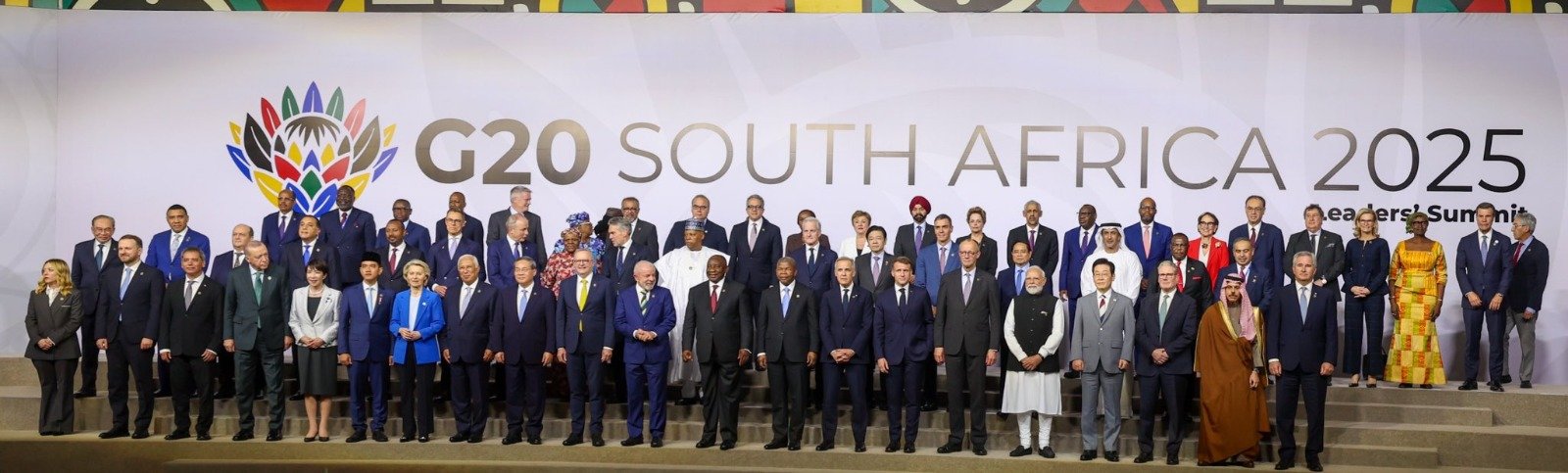
JOHANNESBURG: Prime Minister Shri Narendra Modi participated last Saturday in the G20 Leaders’ Summit hosted by the President of South Africa, H.E. Mr. Cyril Ramaphosa in Johannesburg. This was Prime Minister’s 12th participation in G20 Summits. Prime Minister addressed both the sessions of the opening day of the Summit. He thanked President Ramaphosa for his warm hospitality and for successfully hosting the Summit.

Prime Minister at G20 Summit in Johannesburg 1 Prime Minister participates in G20 Summit in Johannesburg

Addressing the Opening Session on “Inclusive and sustainable economic growth leaving no one behind”, Prime Minister appreciated the work done by the group under the South African presidency in the areas of skilled migration, tourism, food security, AI, digital economy, innovation and women empowerment. In the process, he noted that some of the historic decisions taken during the New Delhi Summit have been carried forward. Prime Minister emphasized that it was time to look at new parameters of development, one which addressed imbalance of growth and over exploitation of nature, particularly when the G20 Summit was being held for the first time in Africa. In this context, he noted that the idea of “Integral Humanism” based on India’s civilizational wisdom must be explored. Integral Humanism, he expanded, takes a holistic view of humans, society and nature and that is how harmony between progress and planet could be achieved.

Elaborating India’s approach to growth, development and well-being for all, Prime Minister proposed six ideas for the G20 to consider. They are:

* Creation of a G20 Global Traditional Knowledge Repository: This would harness collective wisdom of humanity for the benefit of future generations.

* Creation of a G20 Africa Skills Multiplier: This program would aim to create a pool of one million certified trainers for skilling the youth in Africa. This would create local capacities and foster long-term development in the continent

* Creation of a G20 Global Healthcare Response Team: This would comprise healthcare experts from each of the G20 countries and could be deployed to deal with global health challenges in any part of the world.

* Establish a G20 Open Satellite Data Partnership: Through this program satellite data of G-20 Space agencies would be made available to developing countries for agriculture, fisheries, disaster management, among other activities.

* Creation of a G20 Critical Minerals Circularity Initiative: This initiative would foster recycling, urban mining, second-life battery projects and innovation of various types, and help in strengthening supply chain security, and develop cleaner pathways of development.

* Creation of a G20 Initiative on Countering the Drug Terror Nexus: This would address drug trafficking and break the drug-terror economy.

Prime Minister also addressed a session on “A Resilient World- G20 Contribution to Disaster Risk Reduction; Climate Change; Just Energy Transition; Food Systems”. He appreciated that the Disaster Risk Reduction Working Group initiated by India is being taken forward. He noted that the approach to disaster resilience should be “development-centric”, rather than “response-centric” as exemplified in the Coalition for Disaster Resilient Infrastructure set up by India. Prime Minister called for greater collective action on climate agenda to strengthen food security. In this context, he noted the value of millets in promoting nutritional security and environmental sustainability. Highlighting the Deccan Principles on Food Security adopted during India’s presidency, he noted that such an approach should become the basis for creating a G20 roadmap on food security. He also called upon developed countries to meet their climate action commitments on providing affordable finance and technology to developing countries in a time bound manner.

Prime Minister sought greater voice for the Global South in global governance structures. In the context, he noted that the inclusion of the African Union as a permanent member of G20 in New Delhi Summit was a major step forward and this inclusive spirit must also be taken beyond G20. Full remarks of Prime Minister in the two sessions may be seen here [Session 1;Session 2]

Prime Minister participates in India-Brazil-South Africa (IBSA) Leaders’ Meeting in Johannesburg

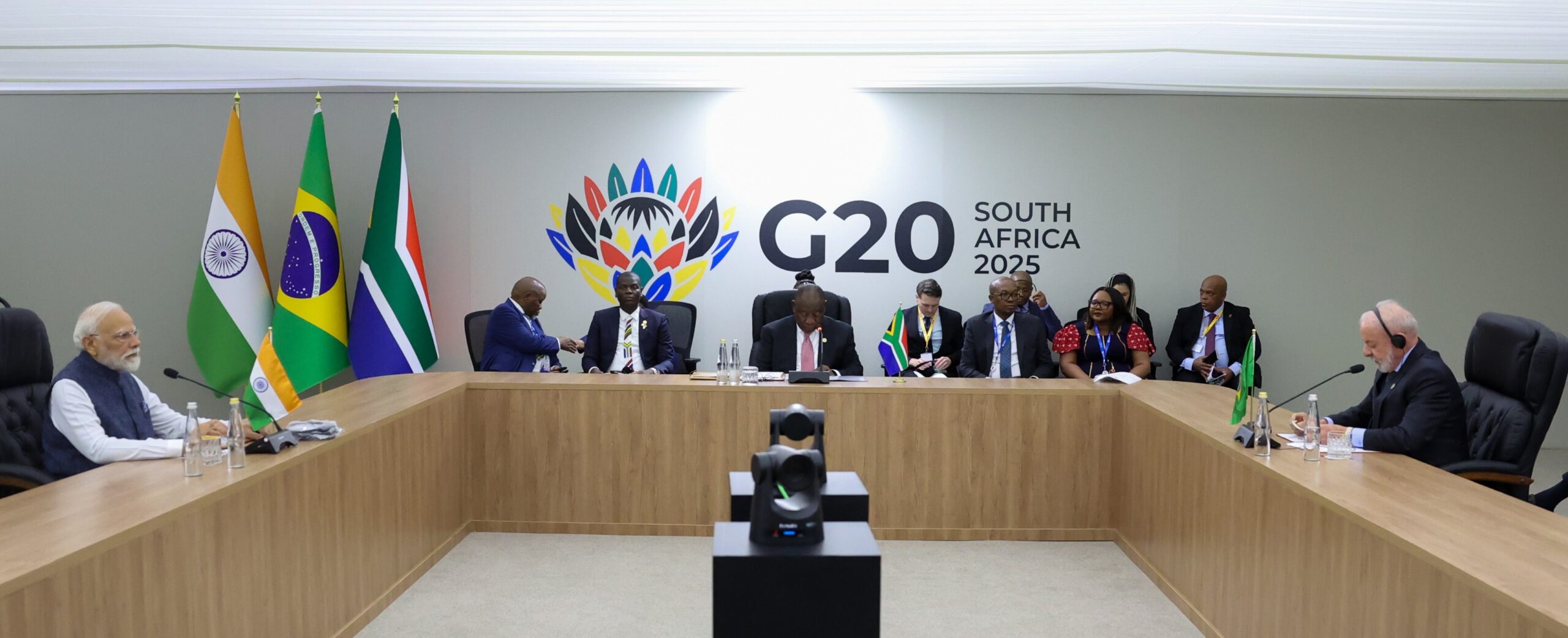
JOHANNESBURG: Prime Minister Shri Narendra Modi on Sunday participated in the India-Brazil-South Africa (IBSA) Leaders’ Meeting held in Johannesburg, South Africa. The meeting was hosted by the President of South Africa, H.E. Cyril Ramaphosa of South Africa and attended by the President of Brazil, H.E. Luiz Inácio Lula da Silva.

Describing the meeting as timely, Prime Minister noted that it coincided with the first G20 Summit on African soil and marked the culmination of four consecutive G20 presidencies by Global South countries, out of which the last three were by the IBSA members. This, he noted, has resulted in several important initiatives focussed on human-centric development, multilateral reform and sustainable growth.

Prime Minister emphasized that IBSA is not just a group of three countries but an important platform connecting three continents, three major democratic nations, and three major economies.

Prime Minister stressed that global governance institutions are far removed from 21st century realities. He called on IBSA to send a strong message that reform of institutions of global governance, in particular the UN Security Council, is now not an option, but an imperative.

On counter-terrorism, Prime Minister emphasized the need for close coordination and that there should be no room for double standards while fighting terrorism. Highlighting technology’s crucial role in ensuring human-centric development, Prime Minister proposed establishing an ‘IBSA Digital Innovation Alliance’ to facilitate sharing of Digital Public Infrastructure like UPI, health platforms like CoWIN, cybersecurity frameworks and women-led tech initiatives among the three countries.

Prime Minister also emphasized IBSA’s potential to contribute to the development of safe, trustworthy and human-centric AI norms. He invited IBSA leaders to the AI Impact Summit to be held in India next year.

Prime Minister stated that IBSA can complement each other’s development and become an example for sustainable growth. He highlighted cooperation opportunities in areas such as millets, natural farming, disaster resilience, green energy, traditional medicines and health security.

Appreciating the IBSA Fund’s work in supporting projects across forty countries in sectors like education, health, women empowerment and solar energy, Prime Minister proposed IBSA Fund for Climate Resilient Agriculture to further advance South-South cooperation. Prime Minister’s full speech can be found [here].