Home Blog Page 598

Global Shipping majors choose Indian Flag as maritime prospects soar

NEW DELHI : In a major boost to India’s maritime credentials, the world’s top container shipping lines — CMA CGM, Maersk, and Mediterranean Shipping Co. (MSC) — are reflagging vessels under the Indian register. The move underscores India’s growing prominence as a global maritime hub and the strengthening of its cabotage and coastal trade framework.

Marseille based CMA CGM was the first to signal this shift earlier this year, registering four vessels under the Indian flag soon after Prime Minister Shri Narendra Modi’s visit to the company’s Marseille headquarters. The carrier has since announced plans to build containerships in India — a milestone development that could redefine the nation’s shipbuilding ambitions.

Following suit, Danish shipping giant Maersk has begun transferring vessels to the Indian register. Data from Equasis confirms that Maersk Vilnius now sails under the Indian flag, while Maersk Vigo is reportedly in the process of reflagging.

Industry sources indicate that MSC, the world’s largest container carrier, may soon join the trend. The company is expected to formalize its reflagging plans during the upcoming India Maritime Week, marking another pivotal moment in India’s emergence as a preferred destination for global shipping operations.

Dr. Asha Pillai, Chief Strategy Officer at Kochi-based port automation firm Docker Vision, described the reflagging wave as a development of deep strategic importance. “This is far more than symbolic,” she noted. “Each vessel that joins the Indian register strengthens our national tonnage, channels freight earnings back into the country, and opens up opportunities for Indian seafarers, ports, and ship management companies. Sustained momentum in this direction could transform India’s global maritime standing — translating policy ambition into measurable tonnage and a stronger presence at sea.”

This growing trend dovetails seamlessly with the Maritime India Vision 2030, the Modi government’s flagship blueprint for the sector, which seeks to modernize ports, expand coastal and inland shipping, and drive investment in shipbuilding, ship repair, and maritime services.

With the world’s leading shipping lines increasingly steering their fleets toward the Indian flag, India’s maritime ecosystem is entering a new phase of strategic consolidation — one that enhances not only its economic potential but also its influence across the global shipping map.

Piyush Goyal meets Mr. Xavier Bettel, Deputy Prime Minister and Minister of Foreign Affairs & Trade of Luxembourg, and German Business Leaders

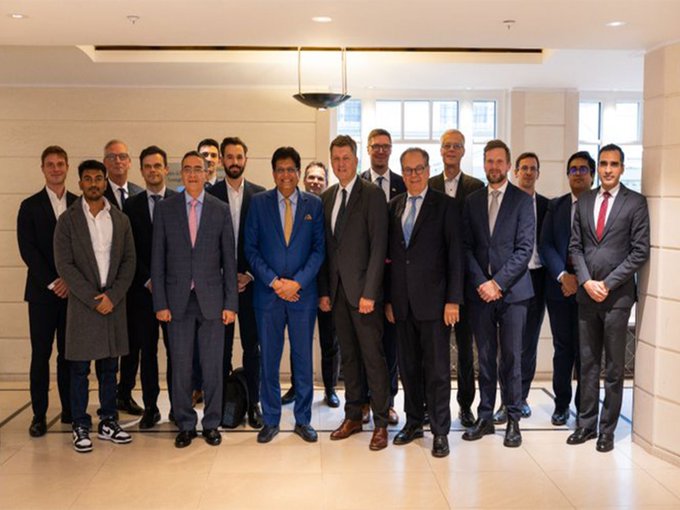
BERLIN : Following his high-level engagements at the German Federal Ministry for Economic Affairs and Energy and the Federal Chancellery on 23 October 2025, Union Minister of Commerce & Industry, Shri Piyush Goyal, met Deputy Prime Minister & Minister of Foreign Affairs and Trade of Luxembourg, Mr. Xavier Bettel. Both leaders reviewed the progress in economic relations and explored further avenues to strengthen bilateral trade and business relations. They also discussed the upcoming State Visit to India as well as regional and global developments.

Shri Goyal also held one-on-one discussions with CEOs of leading German companies. He met with Jochen Hanebeck, CEO, Infineon Technologies AG, Klaus Rosenfeld, CEO, Schaeffler Group, Michael Masur, CEO, Renk Vehicle Mobility, Martin Herrenknecht, CEO, Herrenknecht AG, Tobias Bischof-Niemz, Board Member, Enertrag and Ola Kaellenius, CEO, Mercedes-Benz.

The discussions focused on synergies and prospects for increased collaborations between Indian and German companies, especially in critical sectors like defence, energy, emerging technologies and mobility. The business leaders reiterated their optimistic outlook on doing business in India and the intent to further strengthen their economic partnerships.

Later today, Shri Goyal will join a high-level panel on global trade at Berlin Global Dialogue and will continue his engagements with leaders of German businesses and industry associations.

India-US “very near” to a bilateral trade deal: Sources

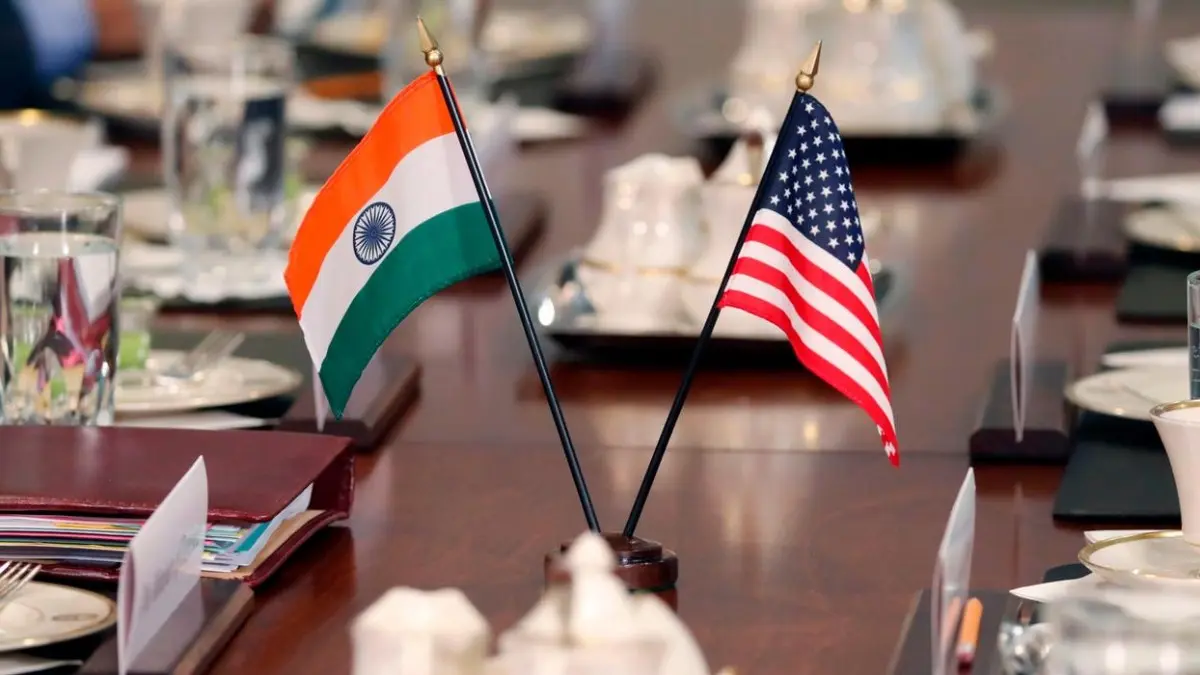
NEW DELHI: India and the US are “very near” to finalising the first tranche of the ambitious Bilateral Trade Agreement (BTA), a government official said on Friday.

The official affirmed that both sides are converging on most of the issues and negotiators of both the countries are sorting out “language of the agreement”.

There are not many differences for the countries to reach a resolution, the official claimed.

Talks are progressing well on the agreement and no new issues are acting as hurdle in the negotiations, he further said, adding that both parties are hopeful of the deadline.

On Thursday, negotiators of both countries had a virtual discussion. So far, five rounds of talks have been completed since March for the first phase of the bilateral trade agreement, initially decided to be inked by the “fall of 2025.”

The bilateral trade agreement, formally proposed in February following directives from leaders of both countries, aims to more than double trade volumes from the current USD 191 billion to USD 500 billion by 2030.

Commerce and Industry Minister Shri Piyush Goyal was in the United States last month, leading high-level trade negotiations as both nations work toward concluding a comprehensive bilateral trade agreement. Goyal was accompanied by a delegation of senior ministry officials including Special Secretary and India’s Chief Negotiator Mr. Rajesh Agrawal.

In mid September, a team of United States officials led by Assistant US Trade Representative for South and Central Asia, Brendan Lynch, had “positive and forward-looking” discussions with the officials from India’s Department of Commerce and it was decided to intensify efforts to achieve early conclusion of a mutually beneficial Trade Agreement.

Over the past few months, India and the US have been negotiating for an interim trade deal. There were reservations from the Indian side on the US demand for opening up the agricultural and dairy sectors. Agriculture and dairy are critical for India as these two sectors provide livelihood opportunities to a large section of people.

Initially, US President Donald Trump announced 25 per cent tariffs on Indian goods that came into effect on August 1, even as there were hopes of an interim India-US trade deal that would have otherwise helped avoid elevated tariffs. A few days later, he imposed another 25 per cent tariff, taking the total to 50 per cent, citing India’s continued imports of Russian oil.

The 50% tariffs came into effect on August 27.

US President Donald Trump had imposed reciprocal tariffs on dozens of countries with which the US has a trade deficit.

Source: ANI

BIRC 2025 to position India’s Leadership in Global Rice Supply Chain

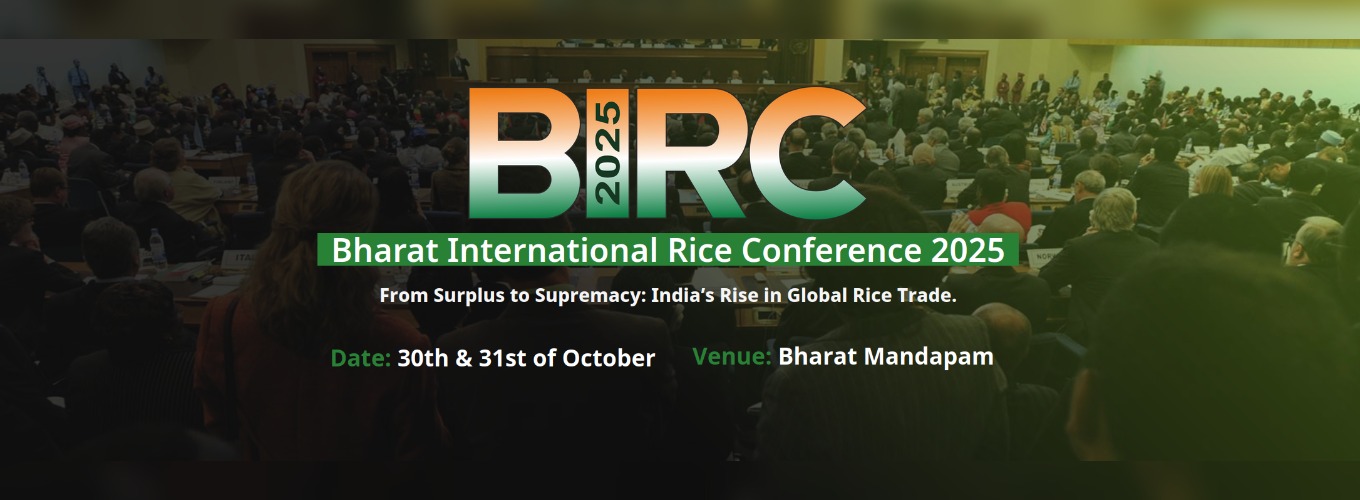
NEW DELHI : The Department of Commerce, Ministry of Commerce & Industry, Government of India, has announced that the Bharat International Rice Conference (BIRC) 2025 will be held at Bharat Mandapam, Pragati Maidan, New Delhi, on 30th – 31st October 2025.

Conceived as a global platform aligned with the vision of Viksit Bharat @2047, the Conference will bring together producers, exporters, importers, policymakers, financiers, logisticians, research institutions, and allied service providers to strengthen transparency, efficiency, and resilience in the global rice trade. Sustainability, innovation, and transparent, rules-based commerce will be at the core of the deliberations.

While addressing the curtain raiser of the Bharat International Rice Conference (BIRC) 2025 in New Delhi , Chairman, APEDA, Shri Abhishek Dev informed that the Foreign Ministers of the Philippines, Ghana, Namibia, and The Gambia will participate in the two-day event.

India is one of the world’s largest producer and exporter of rice, supplying to over 172 countries. Therefore, BIRC 2025 will provide an opportunity for the stakeholders to position their presence in global food supply chains.

Organised by the Indian Rice Exporters’ Federation (IREF), a national-level body representing over 7,500 exporters and allied stakeholders across India, in collaboration with the Agricultural and Processed Food Products Export Development Authority (APEDA)—a Statutory Authority under the APEDA Act, 1985, mandated with promoting exports of nearly 800 agri products, including rice—the Conference has received support from several line Ministries, Departments, and State Governments. Supporting institutions include the Ministry of Commerce & Industry, Ministry of Consumer Affairs, Food & Public Distribution, Ministry of Food Processing Industries, Ministry of Cooperation, and Ministry of Agriculture & Farmers Welfare. The State Governments of Odisha, Telangana, Meghalaya, Assam, and Manipur are also supporting the event, along with the Indian Council of Agricultural Research (ICAR) and cooperative institutions such as National Cooperative Exports Limited (NCEL), National Cooperative Organics Limited (NCOL), Bhartiya Beej Sahakarita Samiti Ltd. (BBSSL), and Krishak Bharati Cooperative Agri Limited (Kribhco).

Over 3,000 farmers and Farmer Producer Organisations (FPOs), over 1,000 foreign buyers from more than 80 countries, and 2,500 exporters, millers, and allied industries are likely to participate in the event.

BIRC 2025 will act as a launchpad for a Vision & Roadmap document that will outline rice sector‑specific details of the action plan, aligned with the Ministry’s long‑term policies and vision. Stakeholder consultations will be conducted during the event through panel discussions involving domain experts, policymakers, industry leaders, trade associations, and research institutions, ensuring that the Vision & Action Plan for the Rice Sector incorporates insights from the entire ecosystem.

The final Vision & Roadmap document will be developed over the next six months, drawing upon the outcomes of the technical sessions, stakeholder consultations, and expert deliberations held during the Conference. The process will be coordinated by the Department of Commerce, in collaboration with APEDA, IREF, and partner Ministries, together with leading research institutions such as ICAR and the International Rice Research Institute (IRRI), as well as key cooperative societies and participating State Governments.

Eight technical sessions shall be conducted over two days will set the foundation for the Vision & Roadmap document. The sessions will be chaired by Senior officers and eminent experts in the field.

India produced around 150 million tonnes of rice in 2024–25 from nearly 47 million hectares, accounting for about 28 percent of global output. Average yields have improved from 2.72 tonnes per hectare in 2014–15 to about 3.2 tonnes per hectare in 2024–25, driven by improved seed varieties, better agronomic practices, and expanded irrigation coverage. In FY 2024–25, India exported 20.1 million metric tonnes of rice valued at approximately USD 12.95 billion, reaching more than 172 countries.

Highlighting the importance of rice in global food systems, BIRC 2025 underscores that rice is the backbone of global food security, with production having tripled since 1961—from 216 million tonnes to nearly 776 million tonnes. Over four billion people depend on rice for sustenance and income, and approximately 150 million smallholder farmers cultivate the crop across more than 100 countries. The global rice industry is valued at around USD 330 billion, making it the third most-traded food commodity.

Given that rice cultivation is resource-intensive—using nearly 24–30 percent of global irrigation water and spanning about 167 million hectares—the Conference will address innovations in agronomy, irrigation, certification, and traceability to promote sustainability and reduce the sector’s environmental footprint.

BIRC 2025 will include a broad spectrum of thematic activities and sessions. A coffee table book encapsulating India’s rich rice heritage—covering both Basmati and non-Basmati varieties, historical GI stories, farmer narratives, and innovations—will be unveiled at the event.

BIRC 2025 aims to unlock ₹1.80 lakh crore in new rice import markets and sign ₹25,000 crore worth of export MoUs. A Culinary Experience Zone, curated by IREF and APEDA with IRRI and ITC Hotels, will showcase Indian rice in international cuisines through chef demonstrations and tasting counters. Sensory panels and buyer clinics will assess quality and preferences, while instant export onboarding facilities will help convert interest into trade MoUs on the spot.

This programme aims to demonstrate that Indian rice varieties are authentic, high‑performance substitutes in target cuisines unlocking ₹1.80 lakh crore in new markets and catalysing ₹25,000 crore in export MoUs at the event.

The Bharat International Rice Conference (BIRC) 2025 will feature a dedicated AgriTech Pavilion, introducing India’s first AI-based sorting technology with a live launch and demonstration at Bharat Mandapam, Pragati Maidan, on 30–31 October 2025. Unlike conventional colour sorters, this new system powered by Artificial Intelligence and Big Data analyses colour, shape, size, and structure of rice grains simultaneously, enabling both colour sorting and broken-grain segregation in a single process. The innovation promises higher precision, efficiency, and cost savings while reducing power, manpower, and space requirements.

A special Women Entrepreneur, Startup and MSME Pavilion will showcase innovations across the agricultural value chain, including seed and input development, climate-resilient agronomy, post-harvest technologies, milling and colour-grading systems, packaging and branding, quality and traceability through QR and blockchain solutions, digital marketplaces, and finance and insurance products. The Pavilion will feature live demonstrations, mentorship sessions, and export-onboarding opportunities for new enterprises.

State and Union Territory Pavilions from Jammu & Kashmir, Manipur, Telangana, Odisha, Meghalaya, Assam, Uttar Pradesh, Bihar, Chhattisgarh, and Haryana will highlight GI and specialty rice varieties, sustainable cultivation methods, processing infrastructure, logistics corridors, investment prospects, and buyer-connect initiatives. In a State-led initiative to promote India’s rice diversity, the Government of Meghalaya will participate in BIRC 2025 to showcase its traditional rice varieties such as Pnah Iong (Black Sticky Rice), Mynri (Golden Rice of Ri-Bhoi), Mangsang Rice, Minil, and Khaw Biriun. These are cultivated under eco-friendly, rain-fed systems, reflecting the State’s focus on organic and sustainable agriculture. Meghalaya’s participation aligns with its efforts under the State Rice Mission and the Integrated Basin Development and Livelihood Programme (IBDLP) to enhance productivity, value addition, and market access for smallholder farmers while strengthening indigenous rice biodiversity.

Telangana will present its emergence as a major hub for premium rice exports, supported by robust policy measures and modern infrastructure. The State’s paddy production has grown from 68.17 lakh metric tonnes in KMS 2014–15 to an estimated 277.67 lakh metric tonnes in KMS 2024–25, positioning Telangana as a key player in India’s export-oriented agriculture. The State will engage in business discussions and showcase its leading varieties, including Telangana Sona (RNR 15048), BPT 5204 (Samba Mahsuri), MTU 1010, and KNM 1638, for potential international buyers.

Reinforcing the cooperative movement’s role in value creation, Bharat Organics under the aegis of National Cooperative Organics Limited (NCOL) will launch its Organic Rice Range and Direct-to-Consumer platform at BIRC 2025. The range includes two flagship variants—Traditional Basmati and Traditional Brown Basmati—and ten single-origin varieties such as Kala Namak (Uttar Pradesh), Indrayani (Maharashtra), Gobindobhog (West Bengal), Black Rice (Manipur), and Red Matta (Kerala). Bharat Organics aims to provide certified, farmer-direct, chemical-free food products while ensuring fair trade, transparency, and better market access for small and marginal farmers.

To enhance ease of trade and global connectivity, the Directorate General of Foreign Trade (DGFT) will promote its Trade Connect e-Platform at the event. The portal provides exporters a unified digital window for Certificates of Origin, country-specific tariff information, trade show listings, product and market guides, and networking tools to connect directly with international buyers and create custom microsites to enhance visibility.

A key milestone of BIRC 2025 will be the signing of a contract for establishing an Incubation and Agricultural Research Centre in New Delhi. The Centre will focus on sustainable, regenerative, and climate-resilient rice production, promoting research in seed development, cultivation, and post-harvest management. MoUs will also be signed to facilitate placements for agricultural graduates in research and development roles, strengthening innovation and employment in the agri-research ecosystem.

During the event, the Indian Council of Agricultural Research (ICAR) and the International Rice Research Institute (IRRI) will conduct a farmer training session on sustainable and good agricultural practices (GAPs). The session will focus on climate-smart farming, water-efficient cultivation, and soil health management to enhance productivity and environmental sustainability.

The Bharat International Rice Conference will henceforth be organised annually as a flagship platform for international engagement, policy dialogue, and collaboration across the global rice value chain.

The International Rice Research Institute (IRRI) South Asia Regional Centre (IRRI-SARC), Varanasi, is the research and knowledge partner, while E&Y and S&P Global are knowledge partners. Partner countries for the event include the Philippines, Myanmar, Niger, Comoros, Jordan, Liberia, The Gambia, and Somalia.

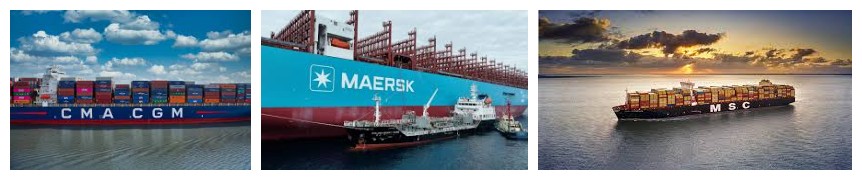
Global Shipping lines make a beeline to reflag their ships in India

COPENHAGEN : International shipping majors are making a beeline to register their ships under the Indian Flag. Denmark shipping major A.P. Moller – Maersk (Maersk) is the latest with two of its ships – Maersk Vilnius and Maersk Vigo – having been re-flagged under the Indian flag in the last two weeks, said sources.

International shipping majors are making a beeline to register their ships under the Indian Flag.

Denmark shipping major A.P. Moller – Maersk (Maersk) is the latest with two of its ships – Maersk Vilnius and Maersk Vigo – having been re-flagged under the Indian flag in the last two weeks, said sources.

Since then, CMA CGM had registered two more ships and the fourth will be done next week.

It is learnt that Switzerland’s MSC also plans to re-flag its ships under the Indian Flag and this will be known next week at the India Maritime Week to be held in Mumbai, sources in DG Shipping said.

Sources in DG Shipping said that Maersk has opened an office – Maersk Bharat IFC Pvt Ltd – in Gujarat International Finance Tec-City for re-flagging the ships.

The reflagging of Maersk’s ships comes after the company celebrated the name-giving of its newest dual-fuel methanol container vessel in Mumbai in February as a part of the vessel’s maiden voyage to India. The vessel, named Albert Maersk, is the eleventh vessel in Maersk’s fleet capable of operating on methanol.

By reflagging, ships are added to the Indian fleet. This ensures that Indian cargo is carried in Indian flag ships, which are available to overcome disruptions, in times of crises, and have uninterrupted supply chains. Freight revenue stays within the country instead of paying foreign shipping lines.

There are also economic benefits for Indian ship management companies that hire crew to work on board, and on port charges and and ancillary services. More jobs will be available for Indian seafarers on Indian flag ships, said sources.

Further, Indian flagged ships get priority to carry government cargo. “We expect more ships to be reflagged in future,” said sources.

Capt MM Saggi, Former Nautical Advisor to the Government of India, told businessline that the need to have more ships under Indian flag would save foreign exchange, reduce exploitation by foreign flags, rationalise freight rates for our EXIM trade, lower logistics and transaction cost, improve export competitiveness and enhance global maritime influence.

The current Indian tonnage share for carriage of our EXIM trade is only about 7 per cent. 93 percent of our trade is carried by foreign ships. Initial target can be to have adequate tonnage to carry 40 per cent of EXIM cargo. This could earn an estimated $20 billion in freight for Indian ships, as compared to the present earning estimated at about $3.5 billion. Augmented freight earnings and forex savings could be about $16.5 billion annually, if this is realised, he said.

Raising cargo share from 7 per cent to 40 per cent could create a nearly six-fold increase in employment opportunities both onboard, ashore and in creating ancillary services in India, he added.

Urals freight rates to India accelerate in October amid high exports, tighter sanctions, sources say

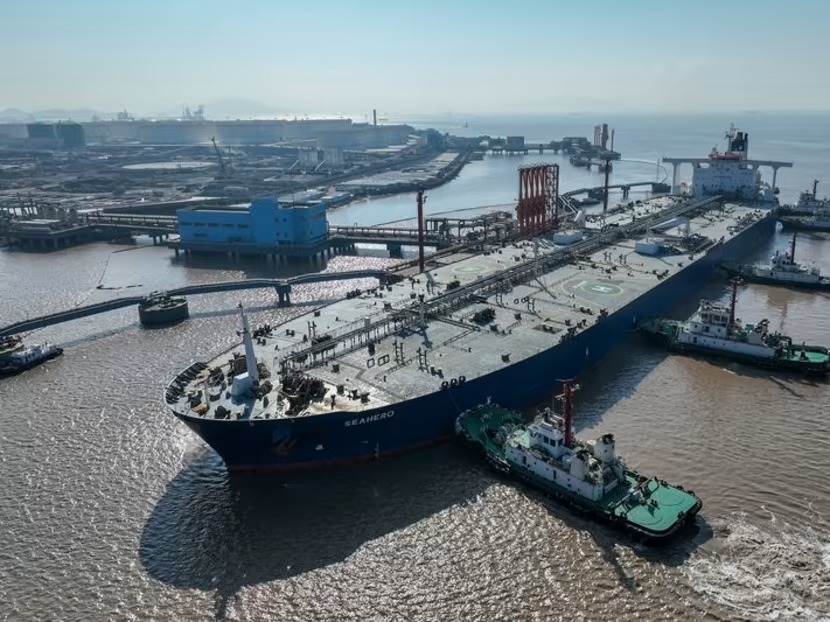
LONDON: Freight rates for shipping Urals crude from Russia’s western ports to India rose sharply in October, driven by strong export volumes and mounting sanctions pressure, industry sources told Reuters.

U.S. President Donald Trump on Wednesday imposed further sanctions on Russia’s two largest oil producers, Lukoil and Rosneft.

On the same day, the European Union approved its 19th package of sanctions against Moscow. The bloc added 117 vessels—mostly tankers—to its list of shadow fleet ships linked to Russia, bringing the total to 558.

Crude oil loadings from Russia’s western ports of Primorsk, Ust-Luga and Novorossiisk remained elevated in October at around 2.3 million barrels per day (bpd), slightly below a record high of 2.5 million bpd fetched in September, driven by volumes freed up due to unplanned refinery maintenance.

Freight costs for transporting Urals from the Baltic ports of Primorsk and Ust-Luga to India for November loading now exceed $8 million for Aframax tankers, up from about $7 million per one-way voyage at the start of the month.

Offer prices for some individual vessels have approached $10 million, one trader said, noting that no fixtures have yet been confirmed at those levels.

Reuters sources said that Urals shipments from Russian ports are now largely handled by tankers from the shadow fleet, while Greek shipowners scale back their presence in the market.

“The number of Greek shipowners active in the market has dropped to a minimum,” one source said.

Since the start of 2025, the United States has rolled out a new wave of sanctions targeting Russia’s oil sector—among the toughest yet—hitting major exporters, insurers, traders and shipping firms, and triggering a sharp rise in freight rates.

Source: Reuters

Post-mortem on IMO’s Net Zero Framework discussions: UCL readout

LONDON: Two weeks of negotiations at the IMO give two confusingly different signals, as well as plenty of information on detail to digest, according to UCL (University College London) in their informative readout. In the first week the IMO’s efforts to adopt binding GHG measures in the form of the Net Zero Framework, agreed in principle in April, went backwards. Countries voted to defer the meeting and therefore the decision to adopt. There is now certainty that this regulation’s entry into effect will be delayed by 12 months to 1st January 2029, but there is also increased uncertainty that it will be adopted at all.

Although US and Saudi Arabian pressure was central, the full explanation for the significant shift in positions from April to October is difficult to decompose. Interventions by countries during negotiations offer some narrative and potential explanations, but all the underlying reasons are likely complex and may involve multiple interacting causes.

Dr Tristan Smith, Professor of Energy and Transport at UCL Shipping and Oceans Research Group said: “Instead of clarification, shipping and the global trade and energy systems now face significantly increased uncertainty and therefore risk. Understanding what happened at the IMO in October and why is now central not just for any chance of future adoption, but for just and equitable climate action generally. This lost momentum can be recovered, but we have taken a step closer to the abyss that is dangerous climate change.”

However, the second week of negotiations, the ISWG-GHG 20, made steady progress on the discussion of the detail for the regulation’s implementation. Many of the countries which had been negative towards adoption in the previous week were back to negotiating their preferences on all the key implementation details – how the regulation should incentivise energy transition, how the fund should be setup, how the lifecycle and sustainability of different fuels should be evaluated and certified.

Dr Annika Frosch, Research Fellow at UCL Shipping and Oceans Research Group said: “After last week’s challenges, this week’s intersessional negotiations were promising. We observed constructive participation from all parties — including those with prior concerns — which led to real progress on key technical guidelines. Even previously contentious topics, such as the Net Zero Fund, experienced broad and active involvement from many delegations, helping to clarify priorities like establishing the Governing Board and fundamental principles to guide the Fund’s future work.”

Beyond the overall outcome on adoption, the detailed discussions in ISWG-GHG 20 reveal some positive emerging perspectives that will form the basis of the guidelines. No decisions were taken to rule on detail either way, and so the ideas all move forwards to greater clarification.

Dr Pinar Langer, Research Fellow at UCL Shipping & Oceans Research Group said: “The past two weeks at the IMO sent mixed signals — while the adoption of the Net Zero Framework was delayed, detailed negotiations showed that most countries still see it as the right foundation for maritime decarbonisation, keeping the door open for meaningful progress in 2026.”

  • Zero Near Zero (ZNZ) definition – looks unlikely to go beyond the detail in the MARPOL amendment (e.g. the limit on GHG fuel intensity).
  • Reward mechanism – will remain fluid, although saw good support for differentiating rewards to different fuels. It was clear that member states see these guidelines as a priority and will likely work to clarify significantly during 2026.
  • Net Zero Fund – mixed signals from the member state interventions. Some were keen to move forwards with urgency and develop some initial governing provisions that would provide a minimum further clarity, but there was also opposition to this.
  • Lifecycle analysis (LCA) and certification – The question of sustainability criteria (an important issue for biofuel evaluation) was widely discussed, and is likely to see further attention alongside questions of environmental integrity and GHG emission accountancy.

Dr Marie Fricaudet, Research Fellow at UCL Shipping & Oceans Research Group said: “The industry now faces increased investment uncertainty: regulatory uncertainty from the IMO (timing and stringency of the NZF); from the concrete implementation of the guidelines which will have a large impact on fuels and technologies’ competitiveness and prices; but also from the space it opens for more disparate regional and private initiatives to fill the gap left by the IMO in the meantime.”

Link to readout: https://www.shippingandoceans.com/post/post-mortem-on-imo-s-net-zero-framework-discussions-ucl-readout

UCL IMO MEPC Summary Post-mortem on IMO’s Net Zero Framework discussions: UCL readout

NGOs Welcome IMO Progress for Cutting Shipping’s Climate Impact Despite Net-Zero Framework Delay

LONDON: As a meeting of the International Maritime Organization’s Intersessional Working Group on Reduction of Greenhouse Gas (GHG) Emissions from Ships (ISWG-GHG 20) closes in London, the Clean Shipping Coalition (CSC) applauds IMO Member States for rising above last week’s rancour – when the IMO decided to hold off on adoption for one year – by pushing ahead with preparations for adoption of the Net Zero Framework.

“While last week’s IMO decision to delay its Net Zero Framework was unwelcome, let’s be clear – this is just a postponement and not the end of the NZF”, said Delaine McCullough, Clean Shipping Coalition president. “During this week’s ISWG meeting, IMO member states have constructively engaged in preparing the guidelines that will be necessary once the NZF is adopted. This indicates broad support for the NZF and that progress can still be made on preparing for implementation.”

The IMO’s Net-Zero Framework is aimed at reducing greenhouse gas (GHG) emissions from ships, in line with its GHG Strategy. The NZF includes a global fuel standard (GFS), requiring ships “to gradually reduce how polluting its ship fuel can be (i.e. how much greenhouse gas is emitted for each unit of energy used, across a fuel’s life cycle)”. It also includes a mechanism for setting prices on the GHG ships emit, to encourage the shipping industry to lower emissions as per the global fuel standard. 

“IMO member states also don’t have to wait a year for the NZF to tackle shipping’s contribution to the climate crisis. At the IMO’s MEPC 84 meeting in April 2026 they will get a chance to slash GHG emissions and the cost of the energy transition by strengthening the Carbon Intensity Indicator (CII), the IMO’s cornerstone energy efficiency measure”, said John Maggs, Clean Shipping Coalition’s Representative at IMO. “By transforming the CII into an energy efficiency powerhouse, the IMO and its member states can quickly get shipping climate action back on course.”

“While adoption of the IMO Net-Zero Framework was paused last week, negotiations this week advanced on the implementation guidelines nonetheless”, said Dr Alison Shaw, IMO Manager at Transport & Environment. “The framework’s success will hinge on strong, coherent guidance that both incentivizes long-term green e-fuel production and use, and safeguards against unsustainable fuels with uncaptured environmental impacts. Many member states acknowledged the importance of both aims, though uncertainty over the framework’s eventual adoption remained a clear backdrop to discussions.”

“This week’s meeting signaled that IMO member states will inevitably need to account more comprehensively for not only potential environmental harms but also human, health, social, Indigenous Peoples Rights and community well being of the full well to wake marine fuels energy pathway”,
said Andrew Dumbrille, Co-Founder and Director of Equal Routes. “Despite the implementation delay of the IMO’s GHG framework, work continues in earnest to create a just and equitable path for the shipping sector to meet its 2050 net zero ambitions.”

“Wind propulsion is back in the spotlight at the IMO this week, with countries voicing support and industry data strengthening the case”, said Anaïs Rios, Senior Shipping Policy Officer, Seas At Risk. “The Net Zero Framework may be delayed but the work hasn’t stopped, and when adoption comes next year, implementation can be quick. Governments must now ensure that these guidelines enable a global scale up of wind propulsion: One of the few solutions that cuts fuel bills, slashes emissions and keeps shipping competitive. The technology is here, now the rules need to catch up.”

“The global shift toward cleaner shipping fuels and technologies is already happening“, said Jenny Helle, Expert on Decarbonisation of Aviation and Shipping at Carbon Market Watch. “Scaling back ambition at this critical moment would risk slowing the momentum needed to achieve meaningful progress in maritime decarbonisation. This week, the IMO member states have shown support for the development of clear, enforceable, and science-based guidelines, robust life-cycle emissions accounting, a reward scheme for clean fuels and technologies, as well as revenue distribution to support the transition in small island developing states and least developed countries.”

Drewry: World Container Index up 3% last week

LONDON: For many years, World Container Index has been the go-to, independent, global reference for index-linked contracts. Drewry’s World Container Index increased 3% to $1,746 per 40ft container this week.

Drewry’s detailed assessment for Thursday, 23 Oct 2025

  • The Drewry World Container Index (WCI) increased 3% to $1,746 per 40ft container. This is the second straight week of increase, following a prolonged decline over 17 consecutive weeks.
  • Spot rates from Shanghai to Los Angeles increased 4% to $2,290 per 40ft container and those to New York rose 6% to $3,420. Drewry expects rates to increase slightly next week due to the GRIs implemented mid-October. Carriers are planning to implement new GRIs on 1 November and 15 November to secure higher prices before the effect of the current rate increases completely fades away.
  • Spot rates on the Asia–Europe route recorded further gains this week. The rate from Shanghai to Rotterdam jumped 4% to $1,736 per 40ft container and from Shanghai to Genoa rose 2% to $1,855. Drewry expects a slight increase in rates next week, as carriers come under increasing pressure to lift prices ahead of the annual contract negotiation season. To cap the rate slide in the future, carriers have announced new FAK rates effective 1 November, ranging between $2,600 and $2,700 per 40ft container.
  • Drewry’s Container Forecaster expects the supply-demand balance to weaken in the next few quarters, which will cause spot rates to contract.
    Source: Drewry

Baltic Index headed for Weekly Loss on declining Capesize Rates

LONDON: The Baltic Exchange’s Dry Bulk Sea Freight index, which monitors rates for vessels moving dry bulk commodities, extended losses on Friday and was headed for a weekly loss, pressured by declining capesize vessel rates.

The main index, which factors in rates for capesize, panamax and supramax shipping vessels, fell 66 points, or 3.2%, to 1,991 points. The index recorded a loss of 3.8% for the week.

The capesize index lost 188 points, or 6.2%, to 2,871 points, hitting a three week-low. The index fell about 8% for the week.

Average daily earnings for capesize vessels, which typically transport 150,000-ton cargoes such as iron ore and coal, decreased by $1,556 to $28,811.

Iron ore futures prices dipped on Friday, snapping a three-session winning streak, as demand in top consumer China softened, hit by shrinking steel margins.

The panamax index was unchanged at 1,924 points, and logged a rise of 5.3% for the week.

Average daily earnings for panamax vessels, which usually carry 60,000-70,000 tons of coal or grain, fell by $1 to $17,318.

Among smaller vessels, the supramax index lost 9 points to 1,369 points. The index declined 3.9% for the week.
Source: Reuters