Home Blog Page 597

Passenger vehicle exports rise 18% in April-September; Maruti Suzuki leads segment

NEW DELHI : Passenger vehicle exports from India rose by 18 per cent year-on-year in the April-September period with Maruti Suzuki leading the segment with shipment of over 2 lakh units, according to the Siam data.

Total passenger vehicle exports in the first half of the current fiscal year rose to 4,45,884 units as compared with 3,76,679 units in the year-ago period, an increase of 18.4 per cent.

Passenger car shipments rose to 2,29,281 units in the period under review, an increase of 12 per cent as against 2,05,091 units in the April-September period of 2024-25.

Similarly, utility vehicle exports to overseas markets rose 26 per cent year on year to 2,11,373 units in the April-September period of the current fiscal.

Van shipments rose 36.5 per cent year on year to 5,230 units in the first half of the current financial year.

Maruti Suzuki’s exports rose to 2,05,763 units in the period under review, an increase of 40 per cent as compared with 1,47,063 units in the same period a year ago

Hyundai Motor India shipped 99,540 units in the April-September period, up 17 per cent from 84,900 units in the year-ago period.

Nissan Motor India exported 37,605 units in the period under review as against 33,059 units in the year-ago period.

It was followed by Volkswagen India with shipment of 28,011 units; Toyota Kirloskar Motor with 18,880 units; Kia India with 13,666 units and Honda Cars India with 13,243 units.

The Society of Indian Automobile Manufacturers (Siam) has attributed the growth in passenger vehicle exports to stable demand across global markets, particularly robust performance in the Middle East and Latin America.

Reflecting a clear trend of market diversification, Indian exporters have registered a positive growth in 24 countries during the first half of the current fiscal year, even as shipments to the US declined due to high tariffs in September.

These 24 countries include Korea, UAE, Germany, Togo, Egypt, Vietnam, Iraq, Mexico, Russia, Kenya, Nigeria, Canada, Poland, Sri Lanka, Oman, Thailand, Bangladesh, Brazil, Belgium, Italy and Tanzania.

Cyclone Montha Oct 26 updates: Red, orange alerts for 23 Andhra Pradesh districts for October 27 as cyclone looms

AMRAVATI : Andhra Pradesh Chief Minister Shri N. Chandrababu Naidu put the entire administrative machinery on high alert on Sunday (October 26, 2025) as the India Meteorological Department issued red and orange alerts for 23 of the State’s 26 districts for Monday (October 27) in view of cyclonic storm ‘Montha’.

The IMD said that the deep depression over southeast Bay of Bengal is likely to intensify into a cyclonic storm by Monday (October 27) morning. Thereafter, it was likely to intensify into a severe cyclonic storm by Tuesday (October 28) morning and was very likely to cross the Andhra Pradesh coast between Machilipatnam and Kalingapatnam around Kakinada in the evening or night. While crossing, the severe cyclonic storm could have a maximum wind speed of 90-100 kmph gusting to 110 kmph, it said.

As of 5:30 p.m. on Sunday (October 26), the deep depression lay centred over southeast and adjoining southwest Bay of Bengal, about 720 km east-southeast of Chennai, 780 km southeast of Kakinada, 790 km south-southeast of Visakhapatnam and 900 km south-southeast of Gopalpur in Odisha.

The IMD has warned that the sea condition may be ‘very rough’ along and off the Andhra Pradesh and Yanam coasts on Monday (October 27). It would further worsen, becoming ‘very rough’ to ‘high’ on Tuesday (October 28). According to the A.P. State Disaster Management Authority, nine State Disaster Response Force teams and seven National Disaster Response Force teams have been formed.

‘Montha’ is the third severe cyclonic storm after ‘Asani’ in 2022 and ‘Michaung’ in 2023 to cross the Andhra Pradesh coast.

HD KSOE awarded DNV AiP for SMR-powered container vessel design

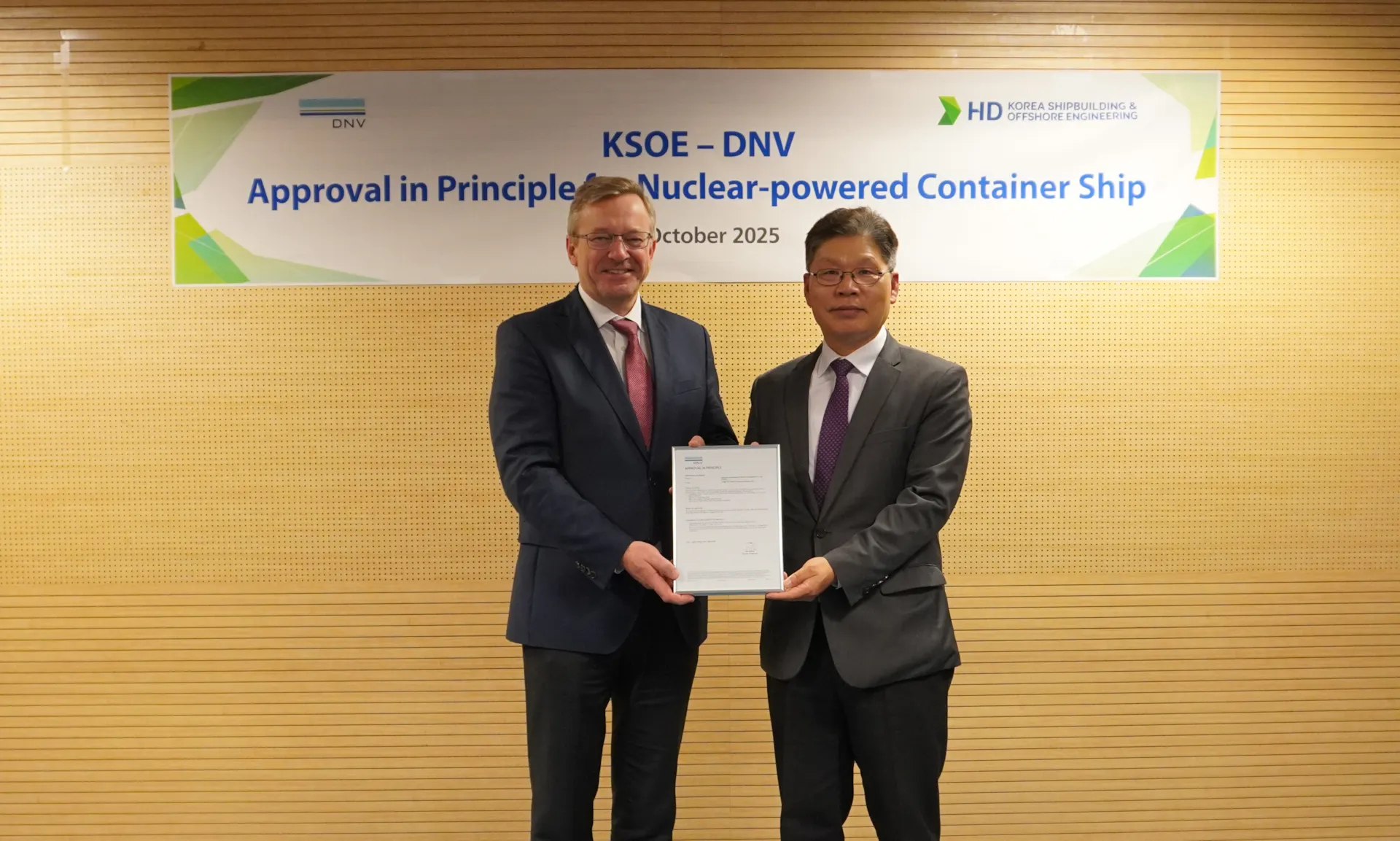
BUSAN: Classification society DNV has awarded HD Korea Shipbuilding & Offshore Engineering (HD KSOE) an Approval in Principle (AiP) for a new 15,000 TEU container vessel design powered by Small Modular Reactor (SMR) technology. The presentation was attended by Sungkon Han, Executive Vice President of the Green Energy Research Lab at HD KSOE, Geir Dugstad, Technical Director at DNV, and Ole Christen Reistad, Senior Principal Researcher and nuclear research lead at DNV, who discussed the outcome of the project and the potential for nuclear-powered shipping at DNV’s Busan offices.

The design demonstrates the application of SMR technology in a 15,000 TEU container vessel, capable of operating at 24 knots. The vessel concept incorporates a supercritical CO₂-based power generation system, which can provide higher thermal efficiency and a reduced equipment footprint compared to conventional steam-based systems. DNV has reviewed the conceptual design of the nuclear-powered ship in line with the relevant rules and regulations and the safety levels as outlined in SOLAS Ch. VIII and the IMO Code of Safety for Nuclear Merchant Ships.

Dr. Kwangpil Chang, CTO of HD KSOE, commented on the project: “This SMR-powered container vessel concept represents a key milestone in our efforts to explore alternative fuels for decarbonizing shipping. The design focuses intensely on the safety of the vessel and advancing the propulsion system in the application of SMR technology. In addition, we have developed a novel shielding and containment system, which is designed to maintain reactor safety and vessel survivability even in the event of collisions, groundings, or sinking accidents. We will continue to collaborate with global partners to advance marine nuclear technologies.”

During the development of the ship design concept, the DNV team worked closely with HD KSOE to assess the vessel’s overall safety and the design of the advanced power generation system. This review includes the vessel’s main functions, power supply and overall approach to safety. In May 2025, HD KSOE and DNV also conducted a HAZID (Hazard Identification) workshop at DNV’s headquarters in Oslo to identify potential risks and accident scenarios for nuclear-powered vessels and to guide improvements in the design.

Geir Dugstad, Technical Director at DNV, commented: “Shifting environmental requirements and advances in technology are reigniting interest in nuclear propulsion as a potential solution for maritime decarbonization. But with little recent experience in utilizing nuclear power for cargo vessels, this AiP represents an important first step in building the technical verification process for nuclear-powered vessels. We are very pleased to award KSOE this new AiP, which is the well-deserved result of an intensive and productive cooperation, which we look forward to continuing as this exciting technology continues to develop.”

DNV recently released a new white paper on the potential of nuclear vessels for commercial shipping. It examines the reactor technologies, vessel construction and operation, fuel management, waste handling, and the oversight of nuclear supply chains.

An Approval in Principle (AiP) is an independent assessment of a concept within a defined framework of requirements. It confirms the feasibility of the design and verifies that no significant technical barriers exist to its implementation.

Khalifa Port rises to 39th position in Lloyd’s List Top 100 Ports

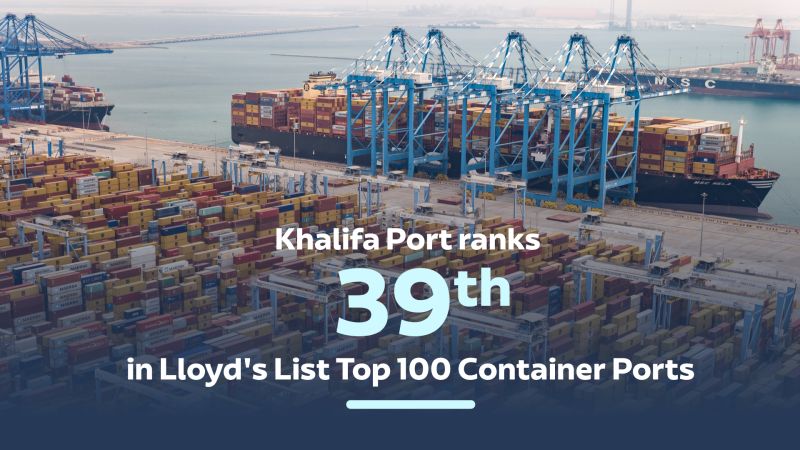
ABU DHABI : AD Ports Group announced that Khalifa Port has advanced to the 39th position in the Lloyd’s List Top 100 Ports ranking for 2025, continuing its steady rise among the world’s leading container ports.

Since its first entry into the global ranking in 2019 at the 95th position, Khalifa Port has demonstrated consistent growth driven by strategic expansion, technological innovation, and enhanced operational efficiency.

The ranking reflects the port’s pivotal role as a global logistics gateway and underscores Abu Dhabi’s growing stature as a key hub for international trade.

Recognised as an industry benchmark, Lloyd’s List evaluates container ports based on throughput performance and operational excellence. Khalifa Port’s consistent advancement highlights its transformation into a smart, sustainable, and highly connected maritime hub, underpinned by consistent expansion, increased throughput, and a robust network of global shipping partners.

Serving as a comprehensive logistics gateway, Khalifa Port integrates sea, land, rail, and air transport links, fostering resilience and efficiency across supply chains.

Its strategic link with KEZAD Group, the UAE’s largest integrated trade and industrial hub, creates a unified ecosystem that connects manufacturing, storage, and distribution directly to the port’s global shipping network.

Khalifa Port has delivered consistent year-on-year growth in recent years, driven by expanded capacity, new shipping services, the significant widening of its service offering, and the integration of advanced digital and cargo-handling technologies.

As of Q2 2025, AD Ports Group’s total container capacity reached 11.8 million TEUs, of which Khalifa Port accounted for 9.6 million. Container throughput for H1 2025 rose 21 percent year-on-year to 3.62 million TEUs, with 85 percent handled at Khalifa Port.

“Khalifa Port’s steady climb in the Lloyd’s List Top 100 Ports ranking exemplifies our long-term vision and commitment to operational excellence. It stands as a testament to the dedication of our teams, the trust of our global partners, and the success of our integrated strategy to reinforce Khalifa Port’s position as a world-class hub for trade and logistics,” said Saif Al Mazrouei, Chief Executive Officer, Ports Cluster – AD Ports Group.

Khalifa Port distinguishes itself as the only port in the Gulf region, hosting container terminals operated by three of the world’s top five largest shipping and logistics companies – COSCO Shipping Ports (CSP), CMA CGM, and Mediterranean Shipping Company (MSC). These strategic partnerships provide unmatched capacity and connectivity, enabling direct access to major global markets and delivering competitive advantages for importers, exporters, and consumers.

Through continuous investment and strategic partnerships, AD Ports Group continues to strengthen Khalifa Port’s role in advancing Abu Dhabi’s economic diversification and reinforcing its position as a leading global centre for trade, logistics, and industry.

New UAE-Oman train service announced

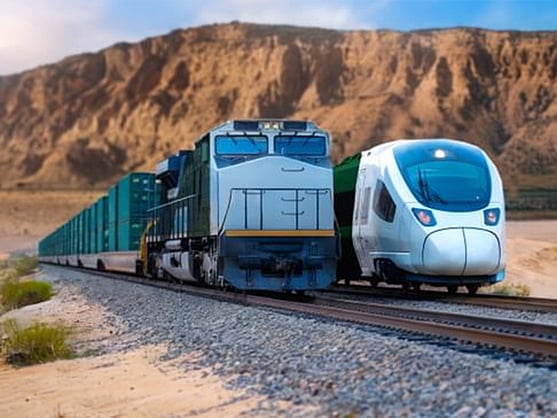
OMAN : A new rail service between UAE and Oman was announced on Friday. Noatum Logistics, an AD Ports Group company, has signed a preliminary agreement with Hafeet Rail, developer and operator of the first cross-border railway network connecting Oman and the UAE, to establish a new rail service between Sohar and Abu Dhabi.

Under the agreement, Noatum Logistics would run a daily rail service leveraging Hafeet Rail’s network. The service would run seven container trains per week, each with a capacity of 276 TEUs, equating to an annual throughput of 193,200 TEUs.

The agreement secures dedicated trains for 20-foot, 40-foot, and 45-foot containers, ensuring reliable and consistent capacity from the very first day of operations. These flows will cover a wide portfolio of goods currently traded between the two countries, including general cargo, manufactured goods, food products, pharmaceuticals, agrifoods, and other essential supplies.

The agreement was formalised at the Global Rail 2025 exhibition in Abu Dhabi and marks a significant step toward launching dedicated freight rail corridor between the UAE and Oman.

Samir Chaturvedi, CEO, Noatum Logistics, said: “By linking two of the region’s most strategic hubs via rail for the first time, we are extending the reach of our service and enabling customers to benefit from a mode of transport that is cost-effective, scalable, and sustainable. Beyond its operational impact, our agreement would reinforce regional supply chains, unlock new opportunities, and support the economic integration of the UAE and Oman through infrastructure-led collaboration.”

Ahmed Al Musawa Al Hashemi, CEO, Hafeet Rail, said: “As part of our continuous engagement with key logistics players in Oman and the UAE, this agreement with Noatum Logistics marks a new major milestone as we are progressing with the development of the cross-border railway between the two nations. With dedicated rail service, we enable reliable, efficient cross-border container transport between Oman and the UAE, strengthening trade and driving sustainable growth.”

A green alternative
As sustainability becomes a priority for global and regional supply chains, rail freight forwarding introduces a greener, more efficient mode of cargo transport. Compared to traditional road transport, a rail service offers a more predictable and cost-efficient solution for moving high volumes of containerised and bulk cargo across medium to long distances. Its ability to move large loads with lower fuel consumption also translates into significantly reduced carbon emissions per tonne, helping customers meet sustainability targets while optimising operational performance.

The Noatum Logistics service along Hafeet Rail’s network builds on existing rail shuttle service connecting Khalifa Port to Fujairah Terminals, which was launched in the third quarter of 2024.

Egypt’s Suez Canal Authority signs $2 billion petrochemical complex deal

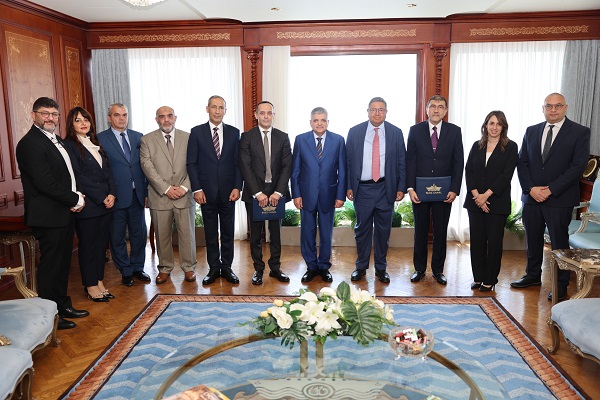
CAIRO : Egypt’s Suez Canal Authority said on Wednesday it had signed a $2 billion strategic partnership agreement with Anchorage Investments to establish a petrochemical complex in Ain Sokhna, Egypt.
The first phase of the project aims to primarily produce polypropylene along with hydrogen.

In its first phase, the petrochemical complex aims to produce polypropylene (PP) as a primary product from propane feedstock, along with hydrogen as a byproduct, using an estimated $2 billion in investments.

The second phase, estimated to cost about $4.5 billion, will expand the complex to produce other petrochemical products, in addition to establishing “additional complementary industrial units focused on exports and sustainability”.

The establishment of a petrochemical industrial complex on the Authority’s land in Ain Sokhna falls within the Suez Canal Authority’s “clear strategy” to “maximize the utilization of its assets, diversify economic activities and diversify sources of income”, said SCA Chairman Osama Rabie.

The Suez Canal Authority is a public entity owned by the Arab Republic of Egypt, responsible for the operation, maintenance, and development of the Suez Canal. Established in 1956 following Egypt’s nationalization of the canal, the Authority manages canal revenues, oversees expansion projects, and regulates maritime traffic through one of the world’s key shipping routes linking the Mediterranean and the Red Sea.

Anchorage Investments is an Egypt-based private industrial investment and development company. It focuses on projects in the fields of petrochemicals, chemicals, and mining, with a strategy centered on export-oriented production and alignment with sustainability goals. The company was founded by Dr. Ahmed Moharram and has been involved in large-scale industrial developments within Egypt’s economic zones.

In a later phase, estimated to cost an additional $4.5 billion, Anchorage Investments would add complementary plants to produce other petrochemicals mainly intended for exports.

IMO negotiations on carbon pricing move forward, despite delay in adoption

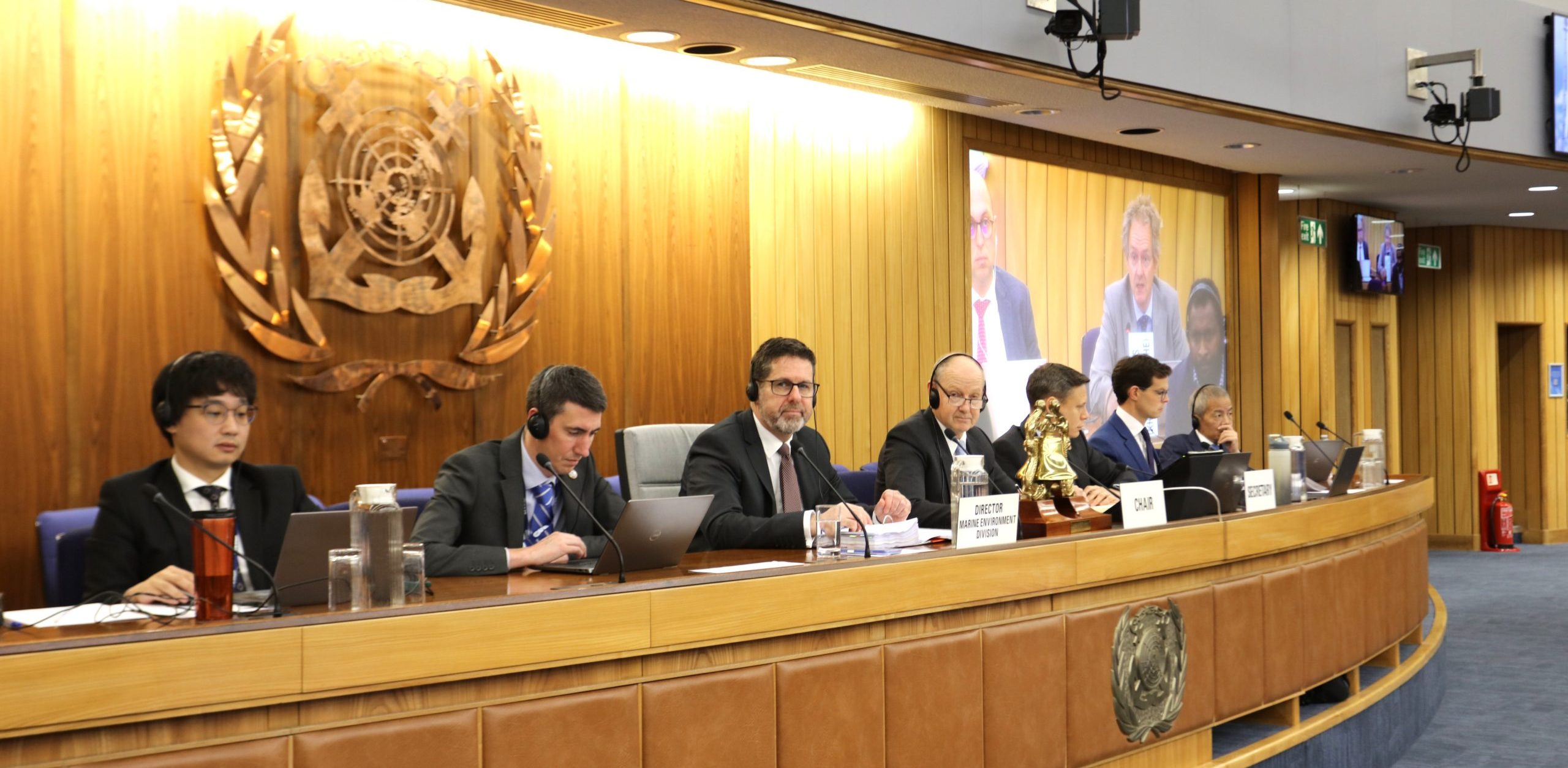
LONDON: The International Maritime Organization (IMO) continued negotiating on key policy details in the Net-Zero Framework (NZF), at the working group talks (ISWG-GHG20) on 20-24 October in London.

Last week the IMO agreed to postpone the NZF’s adoption by one year, but discussions continued this week on the design and implementation of this flagship climate regulation, including clean energy and how to spend the carbon pricing revenues, worth up to $15 billion a year from 2030.

Why this matters: The NZF is a critical policy tool based on carbon pricing that the industry needs to get closer towards its 2023 Revised Strategy goals: equitable transition to zero-emission by 2050.

The ISWG-GHG-20 meeting largely resembled business as usual at the IMO, with governments engaging in constructive discussions on the Framework’s guidelines. This was in contrast to chaotic negotiations the week before, which led to the NZF adoption delay.

Countries disagreed on the role of biofuels in shipping’s clean transition, with Brazil, Indonesia and several African countries pushing for a “technology neutral” approach that would favour cheap, existing sources of biofuels, including food and feed stock (e.g. soy and palm oil). This is opposed by the EU and Pacific Island states, who are concerned about sustainability and scalability, and favour renewable e-fuels as a long-term solution.

Researchers, civil society groups and international campaigners have repeatedly warned against the use of food and feed-based biofuels on ships on environmental, climate and human rights grounds, and urge the IMO to disincentivise this fuel option. One way to do this is by considering the full lifecycle of emissions of marine fuels, including accounting of indirect land-use change (ILUC) emissions, in the Life Cycle Assessment (LCA) guidelines. This has received the support of Mexico, UK, and several Pacific Islands who also expressed their concerns for addressing food security and environmental sustainability. The LCA guidelines are set to be finalised in April 2026.

Member States and industry expressed broad support for the inclusion of wind propulsion as a zero- or near-zero (ZNZ) energy source alongside solar and shore power, recognizing their contribution to emissions reductions.

Governments also discussed the IMO Net-Zero Fund, which according to experts must be equitable in order to ensure climate-vulnerable countries are not left behind in the transition. The Chair encouraged countries to consolidate their proposals ahead of the next round of negotiations in April.

The US, Saudi Arabia and other oil-producing countries responsible for the NZF adoption delay objected to any further work on the guidelines, deeming it premature until the NZF is adopted. This puzzled several delegates who pointed out that only last week the US and Saudi Arabia argued the NZF cannot be adopted due to key policy clarifications still missing.

Dr. Alison Shaw, IMO Policy Manager at T&E, said: “While adoption of the IMO Net-Zero Framework was paused last week, negotiations this week advanced on the implementation guidelines nonetheless. The framework’s success will hinge on strong, coherent guidance that both incentivizes long-term green e-fuel production and use, and safeguards against unsustainable fuels, like crop-based biofuels, with uncaptured environmental impacts. Many member states acknowledged the importance of both aims, though uncertainty over the framework’s eventual adoption remained a clear backdrop to discussions.’”

Natacha Stamatiou, IMO GHG Lead, Global Shipping, Environmental Defense Fund, said: “Last week was undoubtedly challenging, marked by hesitation and differing views on how best to move forward, reflecting the broader tensions we have all been navigating. But the IMO can’t stand still while the world moves forward. Luckily, this week, more voices joined the conversation, and the discussions took on a constructive and more respectful tone. It was a meaningful step toward rebuilding the confidence, transparency, and integrity we need to deliver the pollution cuts future generations deserve.”

Christiaan de Beukelaer, Senior Lecturer in Culture and Climate at the University of Melbourne and an IMO observer, said: “Over the last two weeks, the US, Saudi Arabia and other petro-states engaged in textbook climate obstruction. Last week, they opposed the adoption the Net-Zero Framework for lack of detail. This week, they opposed discussing details ahead of adoption. This Catch-22 of their own making had little impact during IWSG-GHG 20. Under the conciliatory guidance of Working Group Chair Sveinung Oftedahl, the vast majority of delegations in the room worked on ensuring that the IMO can deliver on its unanimously-adopted 2023 GHG Strategy through the Net-Zero Framework. This made the saboteurs sound like a broken record, which the room quietly ignored.”

Jamie Yates, Climate & Renewable Energy Manager, Pacific Environment, said: “Despite last week’s delay tactics and bullying, we’ve moved past obstruction and into real progress with productive discussions now shaping the Net Zero Framework and how it will be implemented. We applaud the member states and industry leaders driving this forward.”

Anaïs Rios, Shipping Policy Officer, Seas At Risk, said: “Wind propulsion is back in the spotlight at the IMO this week, with countries voicing support and industry data strengthening the case. The Net Zero Framework may be delayed but the work hasn’t stopped, and when adoption comes next year, implementation can be quick. Governments must now ensure that these guidelines enable a global scale up of wind propulsion: One of the few solutions that cuts fuel bills, slashes emissions and keeps shipping competitive. The technology is here, now the rules need to catch up.”

Gavin Allwright, Secretary General at International Windship Association (IWSA), said: “With continued advances in wind propulsion, we’re now approaching the 100 large-vessel milestone, representing around 5 million DWT, and the fleet is set to roughly double again within the next 12 months. The technology is proven, scalable, and available globally today. Companies don’t have to wait for international regulation to catch up – they can make a sure bet on wind now and start reaping the benefits of a future-proof, truly zero-cost and zero-emissions energy source.”

Emma Fenton, Senior Diplomacy Director at Opportunity Green, said: “Despite last week’s devastating outcome, countries came together to work on the supporting guidelines that will provide the much-needed clarity on the IMO Net-Zero Framework. We were pleased to see constructive discussions on the IMO Net-Zero Fund, ZNZ reward methodology and guidelines related to GHG Fuel Intensity (GFI). However, with the Net-Zero Framework hanging in the balance, and much more still to be discussed, it is as important as ever for States to prioritise justice and equity in their decision-making, and ultimately, to continue to push for the adoption of the Net-Zero Framework.”

Next steps:
Next time the IMO meets is for a two-part summit in 2026: technical working group talks (ISWG-GHG-21) on 20-24 April and the 84th session of the Marine Environment Protection Committee (MEPC 84) on 27 April-1 May.

MEPC 84 is planned to finalise important decisions on clean energy under the NZF, including the LCA guidelines. LCA guidelines are essential for evaluating the environmental impact of marine fuels and for determining vessels’ compliance with NZF.

Sources: T&E, Environmental Defense Fund, Pacific Environment, International Windship Association (IWSA), Seas At Risk, Opportunity Green

Singapore joined as Partner Country for India Maritime Week 2025, Strengthening Bilateral Maritime Cooperation

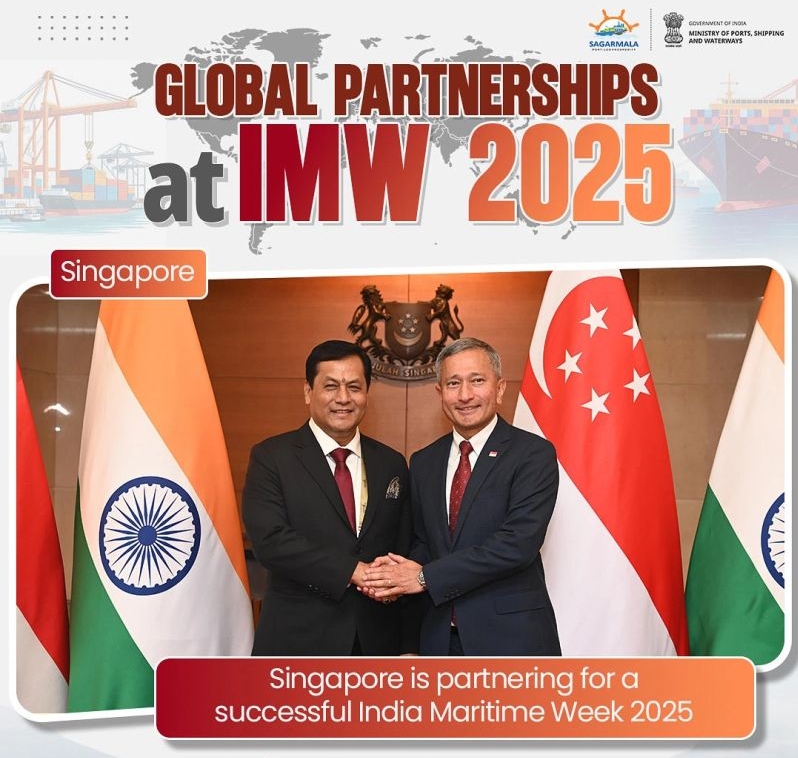
NEW DELHI: Reflecting a shared commitment to sustainable maritime development, Singapore is partnering for a successful India Maritime Week (IMW) 2025, one of the world’s largest maritime events, to be held at the Bombay Exhibition Centre, Mumbai, from October 27 to 31, 2025.

The collaboration underscores the deepening bilateral maritime and economic ties between India and Singapore, as both nations work towards advancing innovation and green growth within the global Blue Economy. The partnership aims to foster cooperation in areas such as green shipping, digitalisation, port-led development, and sustainable logistics.

Organised under the aegis of the Ministry of Ports, Shipping and Waterways (MoPSW), Government of India, India Maritime Week serves as a premier platform for global stakeholders — including governments, port authorities, shipping lines, and logistics leaders — to exchange ideas and explore new opportunities in maritime trade and infrastructure.

With Singapore joining as a Partner Country, IMW 2025 is expected to further enhance dialogue on eco-friendly shipping technologies, regional connectivity, and resilient supply chains, aligning with both countries’ vision for a greener and more innovative maritime future.

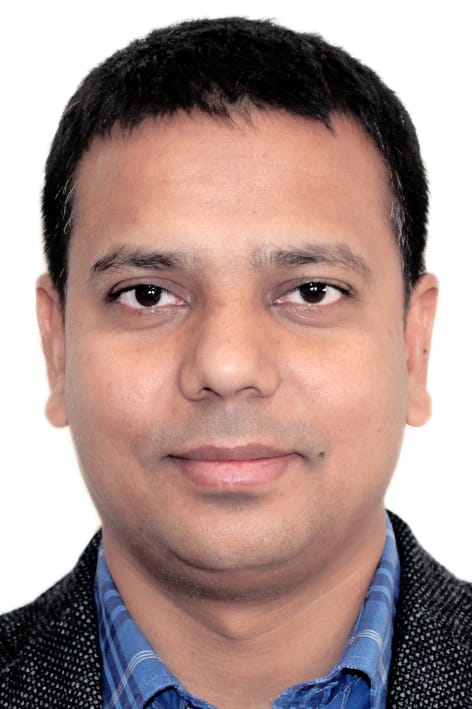
Gaurav Dayal, IAS, assumes charge as Chairperson of JNPA

MUMBAI : Jawaharlal Nehru Port Authority, India’s largest container port, is pleased to announce that Shri Gaurav Dayal, a senior IAS officer of the 2004 Uttar Pradesh cadre has taken charge as the new Chairperson of JNPA from Friday. With over two decades of distinguished public service, He brings deep expertise in governance, urban transformation, infrastructure development, and crisis management. He has previously held key positions including Secretary (Home & Vigilance), Divisional Commissioner of Ayodhya, and District Magistrate in several districts, delivering impactful results in flagship government initiatives.

Mr. Dayal played a pivotal role in transforming Ayodhya into a global religious tourism hub. Under his leadership, Deepotsav 2024 set a Guinness World Record for the largest diya display, reflecting his capacity to manage complex security, crowd, and administrative operations during large-scale events.
He has managed complex security, crowd, and administrative operations during large-scale events. Earlier, as District Magistrate in several key districts, he delivered strong results in flagship government schemes. He has deep expertise in governance, port operations, public policy, and sustainable development. He holds a degree in Physics and trained at LBSNAA, Mussoorie.

JNPA looks forward to advancing its strategic initiatives under Mr. Dayal’s leadership, strengthening its position as a world-class port authority and a key driver of India’s maritime growth.

About JNPA:
The Jawaharlal Nehru Port Authority (JNPA) is one of the premier container-handling ports in India. Since its inception on May 26, 1989, JNPA has transformed from a bulk cargo terminal into the premier container port in the country.

Currently, JNPA operates five container terminals – NSFT, NSICT, NSIGT, BMCT and APMT. The Port also has a Shallow Water Berth for general cargo. A Liquid Cargo Terminal present at the JNPA Port is managed by the BPCL-IOCL consortium and the additional liquid cargo terminal developed by JNPA will be operated by M/s JSW – JNPT Liquid Terminal Pvt. Ltd. Additionally, the newly constructed coastal berth links other Indian ports and facilitates enhancing the traffic of coastal containers.

Nestled across 277 hectares of land, JNPA also operates a meticulously designed multi-product SEZ, with state-of-the-art infrastructure, to boost export-oriented industries in India.

JNPA is also developing an all-weather, deep-draft, greenfield port at Vadhvan, the 13th Major Port of India in Maharashtra. It is poised to be among the top 10 ports globally and will be a 100% green port since its inception.

Chennai Port Authority signs 25 strategic MoUs ahead of India Maritime Week 2025

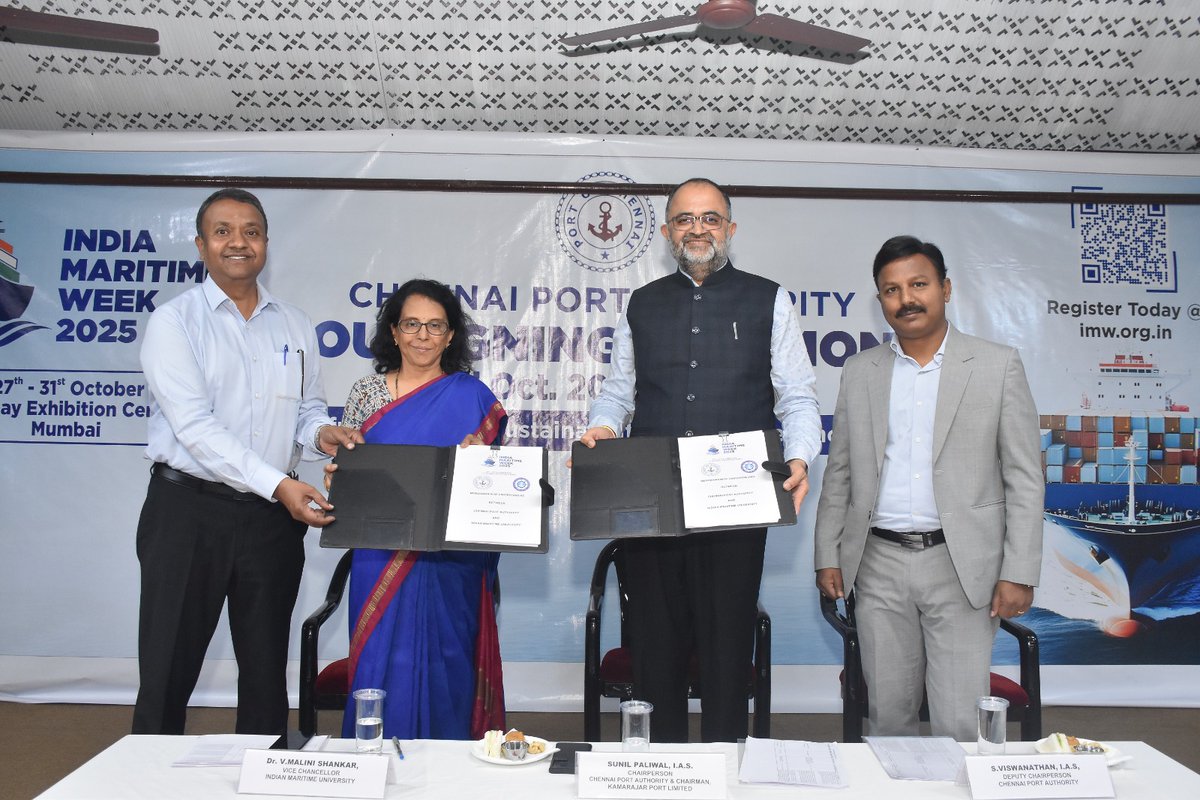
CHENNAI : In a significant stride toward advancing India’s maritime growth and innovation, the Chennai Port Authority (ChPA) hosted the Pre-Event MoU Signing Ceremony ahead of India Maritime Week 2025, scheduled to be held in Mumbai from October 27–31, 2025.

The ceremony was presided over by Shri Sunil Paliwal, IAS, Chairperson, ChPA, Kamarajar Port Limited (KPL), and Indian Ports Association (IPA), along with Shri S. Viswanathan, IAS, Deputy Chairperson, ChPA. The event was graced by Dr. V. Malini Shankar, Vice Chancellor, Indian Maritime University, who lauded the collaborative efforts of stakeholders in accelerating India’s maritime transformation.

During the ceremony, 25 Memoranda of Understanding (MoUs) were signed between ChPA and various public and private sector partners spanning Infrastructure Development, Trade Facilitation, Port-led Industrialisation, Technology Integration, and Sustainability Initiatives. These partnerships aim to strengthen logistics efficiency, promote coastal shipping, enhance port automation, and foster green and digital port ecosystems in alignment with the Maritime India Vision 2030 and the long-term goals of Maritime Amrit Kaal 2047.

Speaking on the occasion, Shri Sunil Paliwal emphasized that these collaborations mark an important step toward positioning Chennai Port as a leading maritime gateway driving trade competitiveness and sustainable growth. He also highlighted that the upcoming India Maritime Week 2025 will serve as a global platform for showcasing India’s maritime capabilities, investment opportunities, and technological advancements.

The event brought together senior officials, industry representatives, academia, and logistics stakeholders, reaffirming Chennai Port Authority’s commitment to contributing to India’s maritime leadership and economic vision for Viksit Bharat@2047.