Home Blog Page 600

Cost-reduction measures at Kuehne+Nagel to mitigate challenging market environment

SCHINDELLEGI : In the first nine months of 2025, the Kuehne+Nagel Group increased its net turnover by 3% to CHF 18.5 billion. EBIT reached CHF 1.0 billion and earnings amounted to CHF 761 million. Currency effects in Q3 2025 again weighed on EBIT by CHF 14 million.

Kuehne+Nagel achieved market share gains, particularly in Air Logistics, through targeted investments in logistics services for cloud infrastructure and the perishables market segment. In Sea Logistics, progress was made in SME market share. The company is focusing on strategically important routes and remains confident in further expanding its market position.

In a market environment characterised by overcapacity and yield pressure, Kuehne+Nagel generated a strong free cash flow of CHF 521 million (up CHF 209 million vs. the prior year). However, there is a need for action regarding cost development.

Kuehne+Nagel has therefore launched a Group-wide cost reduction programme, aiming for annual savings of at least CHF 200 million including structural and sustainable measures. Productivity is to be increased in the long term through process optimisation in central functions and markets, as well as greater use of automation and shared service centres.

Stefan Paul, CEO of Kuehne+Nagel International AG : “Despite very challenging market conditions, Kuehne+Nagel was able to gain market share through targeted investments in key areas. With the launch of group-wide cost reduction measures, we are now taking action to safeguard our cost base. Challenging external factors are forcing us to sustainably and permanently improve our efficiency and performance culture. Keeping high quality levels of customer service remains a top priority.”

On August 19, 2025, Partners Group (PG) exercised its put option to sell its 24.9% ownership stake in Apex. The transaction is expected to be settled in cash during the fourth quarter of 2025, against the recognised redemption liability of CHF 886 million. The transaction will be financed through available funds and credit lines.

Due to ongoing uncertainties and the impact of the trade war in Q4 2025, Kuehne+Nagel expects EBIT for the full year 2025 of more than CHF 1.3 billion.

Sea Logistics generated net turnover of CHF 7.0 billion and EBIT of CHF 479 million in the first nine months of 2025. The conversion rate was 31%. Results were significantly impacted by negative currency effects.

Volume through the end of September 2025 rose by 1% year-on-year to 3.3 million TEU. The sharp decline in transport volumes to the US since “Liberation Day” continued to have a negative impact, particularly affecting the US business of IMC Logistics, consolidated by Kuehne+Nagel. Imports to Europe, however, increased significantly.

Overall, Kuehne+Nagel Sea Logistics successfully expanded its market share among SME customers, with this segment now representing more than 50% of total customer volumes.

Net turnover in Air Logistics was CHF 5.4 billion and EBIT CHF 322 million for the first nine months of 2025. The conversion rate was 25%. Results were also impacted by negative currency effects. Q3 2025 was challenging for the entire airfreight industry, which also affected the profitability of Kuehne+Nagel Air Logistics.

Airfreight volume through the end of September 2025 increased by 7% year-on-year to 1.6 million tonnes, significantly above market growth. Market share gains were achieved particularly in perishables and cloud infrastructure (hyperscalers). In this area, Kuehne+Nagel provides logistics services for the construction of data centres for artificial intelligence.

In recent months, Kuehne+Nagel has expanded its air freight network with new gateways in India, Canada, Italy and Spain.

Net turnover in Road Logistics was CHF 2.6 billion and EBIT CHF 67 million for the first nine months of 2025. Networks remained underutilised due to weak demand in European markets.

Demand for customs clearance and consulting services in the United States remained high due to the tariff situation and increasing complexity. Net turnover in Contract Logistics was CHF 3.6 billion and EBIT CHF 161 million for the first nine months of 2025.

In September 2025, Kuehne+Nagel opened a regional distribution centre for Lego near Ho Chi Minh City, Vietnam. This site supplies growth markets in Southeast Asia, as well as Japan, India, and Oceania. It is the second regional distribution centre operated by Kuehne+Nagel for the Danish toy manufacturer.

About Kuehne+Nagel
With close to 85,000 employees at almost 1,300 sites in close to 100 countries, the Kuehne+Nagel Group is one of the world’s leading logistics providers. Headquartered in Switzerland, Kuehne+Nagel is listed in the Swiss blue-chip stock market index, the SMI. The Group is the global number one in air and sea logistics and has strong market positions in road and contract logistics. Kuehne+Nagel is the logistics partner of choice for 400,000 customers worldwide. Using its global network, logistics expertise and data-based insights, the Group provides end-to-end supply chain solutions for global companies and industries.
Rhenus Group selected by Correios as the Global Logistics Service Provider for COP 30

SINGAPORE: The Rhenus Group has been nominated by Correios as the Global Logistics Service Provider for the United Nations Climate Change Conference (COP 30). In partnership with the state-owned company, designated as the Strategic Logistics Operator for the event, Rhenus will manage the international transport of the United Nations cargo to the climate conference, which will take place from November 10 – 21 this year in Belém, Brazil.

The partnership with Correios will leverage Rhenus’ international freight forwarding capabilities to ensure the secure and timely delivery of critical shipments for one of the world’s most significant climate events. With operations in over 70 countries, Rhenus is leveraging its global logistics expertise to support the successful execution of the COP 30 event.

The Rhenus Brazil team is playing a key role in coordinating international transportation, working closely with Correios. Rhenus is managing the international logistics process for the UN, starting with cargo collection in Bonn, Germany, followed by air transport to Brazil via São Paulo–Guarulhos (GRU) and Viracopos (VCP) airports. Upon arrival, the cargo will be processed under a temporary admission regime. Rhenus will also oversee the re-export of the cargo back to Frankfurt (FRA), ensuring its final delivery to Bonn.

“Partnering with Correios to support COP 30 underscores our commitment to responsible logistics and global collaboration – for the benefit of future generations,” said Tobias Bartz, CEO of the Rhenus Group. “Brazil is one of our key global hubs for supply chain operations and an essential center for our activities across the LATAM region, supported by our highly skilled local teams. With a strong international network and deep regional expertise, we are well positioned to strengthen supply chains throughout Brazil and Latin America. Our participation builds on our extensive experience, including serving as the official logistics sponsor for COP 29 last year. We look forward to contributing to the success of COP 30 and advancing the transition to more sustainable logistics worldwide.”

Rhenus has a proven track record in supporting major international events of various industries. Last year, the global logistics service provider demonstrated its capabilities as the Official Logistics Partner for COP 29 in Baku, Azerbaijan and supported the Belgian Olympic team at the Summer Games in Paris, managing infrastructure and equipment logistics across multiple venues. Rhenus also provided logistics support for a global customer during the Rio de Janeiro Summer Olympics, and recently has been appointed the official freight forwarder for major trade shows at Riyadh Front Exhibition & Conference Centre, one of Saudi Arabia’s leading venues for international trade shows.

Delivering Low-Emission Solutions for Sustainable Growth

Rhenus is driving sustainable innovation across the logistics industry by integrating alternative drive systems, promoting intermodal transport, and offering smart technologies that reduce emissions across air, sea, and land. Solutions like RheGreen, an air freight service, avoid up to 40% of CO₂ emissions by selecting the most efficient aircraft. Rhenus is setting new benchmarks for low-emissions logistics. Its digital tools, such as Emissions Dashboard, offer customers clear visibility into the carbon performance of their shipments, while the Transport Mode Optimizer enables them to make environmentally responsible choices by selecting transport modes with lower emissions.

In line with its corporate commitment to achieving a Net-zero target by 2045 through low-carbon solutions, Rhenus has set a goal to reduce emissions and actively support its customers in making responsible logistics decisions. To this end, and as part of its contribution to the goals of COP, Rhenus is providing a detailed report of its emissions once the operation has been completed, facilitating the control of their carbon footprint, promoting transparency, and strengthening the planning of conscious logistics aligned with global sustainability standards.

About Rhenus
The Rhenus Group is one of the leading logistics specialists with global business operations and annual turnover amounting to EUR 8.2 billion. 41,000 employees work at 1,330 business sites in more than 70 countries and develop innovative solutions along the complete supply chain. Whether providing transport, warehousing, customs clearance or value-added services, the family-owned business pools its operations in various business units where the needs of customers are the major focus at all times.

Jeju Port welcomes first international containership in 57 Years via new China Route

SOUTH KOREA : Jeju Port in South Korea has marked a historic milestone with the arrival of its first international commercial vessel in 57 years.

The opening of a new regular shipping route between Jeju and Qingdao, China, is expected to significantly reduce logistics costs and enhance trade competitiveness for local businesses.

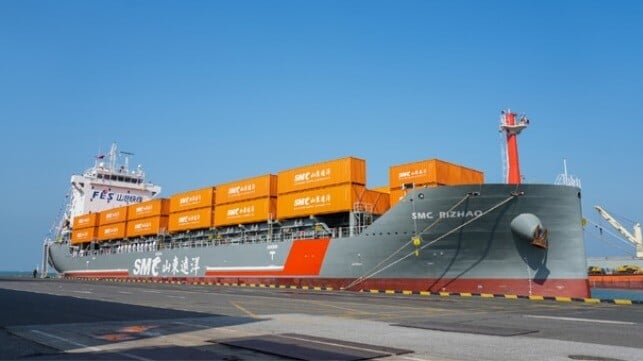
The inaugural vessel, the SMC Rizhao, operated by China’s Shandong Port Equipment Group, departed Qingdao on 16 October and arrived at Jeju Port on 18 October.

The 118-metre-long containership has a capacity of 712 TEU (twenty-foot equivalent units) and is fitted with 109 refrigerated outlets, allowing it to transport fresh and frozen cargo.

This is the first regular international container service since Jeju was designated a trading port in 1968. Previously, most containerised goods had to go through larger ports like Busan or Incheon.

The new schedule will see the vessel depart Qingdao every Monday, arrive at Jeju on Wednesday, and return to China on Saturday.

On its first voyage, the SMC Rizhao carried 40 TEU of imports, including furniture, machinery, and electronics, and loaded 10 TEU of Jeju exports such as seafood and Samdasu mineral water for the return journey. The route will also support exports of bottled water and cosmetics and imports of construction materials from China.

Jeju Province said the direct route will reduce logistics costs by up to 62%, reducing the cost per TEU from 2.04 million Korean won via Busan to 770,000 won, saving about 1.27 million won per container. Transit time will also be shortened by at least two days, improving supply chain efficiency for island-based businesses.

The new route is expected to create jobs in cargo handling, bonded warehouses, and port services, supporting Jeju’s economic growth. Officials said the project is part of efforts to strengthen Jeju as a logistics hub in Northeast Asia.

Jeju Governor Oh Young-hun called the launch historic, noting the island’s long maritime heritage dating back to the ancient Tamna era. He added that reopening the route revives Jeju’s trading spirit and opens access to Chinese and Southeast Asian markets.

Container ship orderbook is almost entirely in the big three shipbuilding nations : Alphaliner

The global container ship orderbook is the largest on record, with more than a thousand newbuildings and over 10 Mteu on order, equal to 31.1% of the global fleet in teu slot capacity.

China, Korea and Japan account for 98.5% of the pipeline, led by China at 7.36 Mteu (73.7%), followed by Korea at 2.04 Mteu (20.5%) and Japan at 0.43 Mteu (4.3%).

Only 29 newbuildings are scheduled from yards outside these three countries. Taiwan has 16 ships under construction, Turkey four, the United States three and India two, with a few very small vessels on order in Azerbaijan, Indonesia and Pakistan.

According to Alphaliner, in several cases there are specific reasons for placing orders outside the big three. Turkey’s two largest contracted ships, each 4,012 teu, are being built at a yard that is a sister company of the ship owner and operator. In the United States, orders are driven by Jones Act requirements for US-built tonnage on domestic routes to Hawaii, Alaska and Puerto Rico.

Alphaliner is a commercial maritime data and market-intelligence provider focused on the liner shipping industry, publishing paid newsletters, databases and analytics for carriers, shipowners, ports and investors.

First containerised BIO-SEA success for EFGL

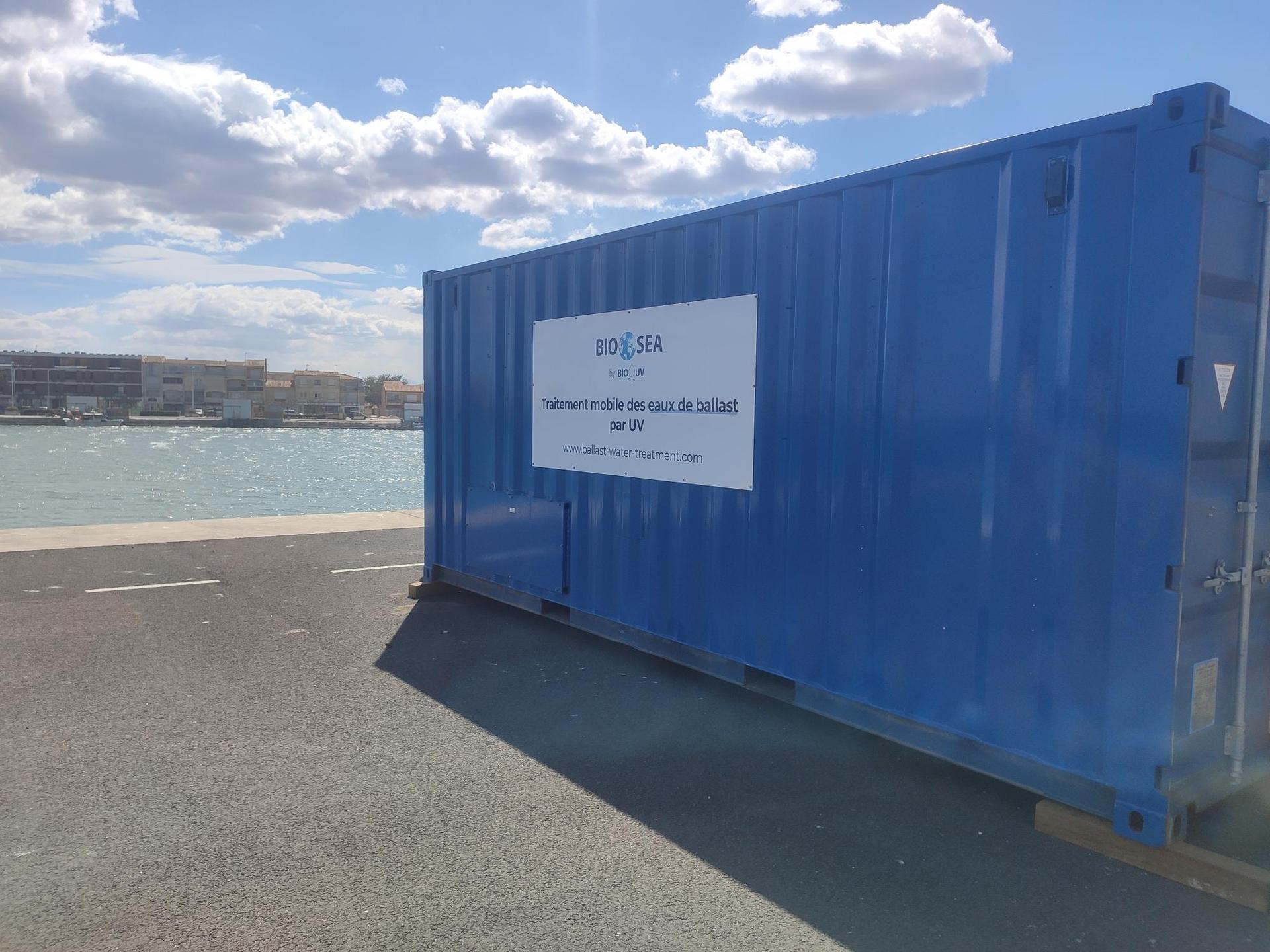
LUNEL (FRANCE): BIO-UV Group has completed the first commercial deployment of its containerised BIO-SEA ballast water treatment system (BWTS) at Port-la-Nouvelle in southern France, supporting the installation of the pioneering EFGL floating offshore wind project in the Mediterranean.

The landmark project, operated by Eoliennes Flottantes du Golfe du Lion (EFGL) – a project owned by Ocean Winds and Banque des Territoires, marks the first floating offshore wind development in Occitanie region (French Mediterranean Sea) and is a significant milestone for the integration of marine environmental technologies into the renewable energy supply chain.

BIO-UV’s containerised system was used to treat the water deballasted from three floating wind turbine platforms – each comprising three floaters arranged in a triangular structure – before their deployment offshore.

The rental agreement, signed with Euroports in May 2025, enabled Euroports to provide compliant deballasting services including the water treatment to EFGL during the assembly and installation phase. The first platform arrived from Fos-sur-Mer near Marseille in early July, followed by the second in mid-July and the final unit in August. Over the course of approximately two months, BIO-UV treated the ballast water of all three platforms in full compliance with IMO D-2 standards and local environmental regulations, before safe discharge back into the port basin.

“This project is an important milestone for BIO-UV Group,” said Maxime Dedeurwaerder, Solutions Business Unit Director, at BIO-UV Group. “It is the first time our containerised ballast water treatment technology has been deployed commercially in support of the offshore renewable energy sector, demonstrating not only the performance and reliability of our UV-based solution but also its versatility in new marine applications beyond conventional shipboard use.”

The 20-foot containerised BIO-SEA unit, developed and proven during the EU-funded ELBE R&D programme in 2024, offers a modular and mobile solution for treating ballast water during the construction and deployment of floating wind platforms. Unlike traditional onboard systems, the containerised unit can be positioned quayside, treating water from platform tanks before discharge, with all treated effluent handled locally to avoid the spread of invasive aquatic species.

“Protecting marine biodiversity is critical to the sustainable growth of offshore wind,” said Dominique Moniot, Business Development Director at OCEAN WINDS France. “By ensuring ballast water is treated before it is released, we help prevent the transfer of non-indigenous species, supporting the ecological integrity of coastal waters as new renewable infrastructure is installed.”

The EFGL project comprises three 10MW turbines located just off the coast of Leucate-Le Barcarès (25km away from Port-la-Nouvelle) near Narbonne, representing the first pilot-scale floating wind farm in Occitanie Region (French Mediterranean Sea). Floating offshore wind is widely seen as a key enabler of Europe’s net-zero ambitions, opening new deep-water sites that fixed-bottom turbines cannot reach. The successful completion of the EFGL deployment underscores the growing importance of integrated environmental management technologies in this emerging sector.

“This regional collaboration shows how innovation in water treatment can align with offshore wind and port industry challenges,” said Remy Moron, Eolic Director at Euroports. “BIO-UV’s system allowed us to offer a complete and compliant ballast water treatment service to our client OCEAN WINDS for the EFGL project without transporting this water by truck to permanent facilities, and without impacting the assembly planning.”

BIO-UV believes the successful execution of the EFGL project will pave the way for broader adoption of containerised ballast water treatment solutions in the offshore wind industry. The company is exploring further commercial opportunities to deploy the technology in future floating wind developments across Europe and beyond.

“Offshore wind is entering a new phase where environmental protection, regulatory compliance and operational efficiency must go hand in hand,” said Laurent Emmanuel Migeon, CEO of BIO-UV Group. “This project proves that portable ballast water treatment can play a vital role in achieving those objectives, and we look forward to building on this success as the floating wind market scales up.”

BIO-UV Group, headquartered in Lunel, France, is a global expert in UV water treatment and ballast water management technologies, with systems installed on more than 800 vessels worldwide. Its BIO-SEA solutions are certified to meet IMO and USCG standards

Evaluation and financing is provided to Uyeno Transtech Ltd. based on “Zero-Emission Accelerating Ship Finance”

TOKYO: Under Zero-Emission Accelerating Ship Finance (“the Program”), which is jointly operated by Development Bank of Japan Inc. (DBJ) and ClassNK, ClassNK evaluated the hydrogen-fueled demonstration large oil tanker “KIKOU MARU” (IMO 1015595) (“the Ship”), owned by Uyeno Transtech Ltd. (Uyeno Transtech). The evaluation result was the highest rating of “S,” and DBJ provided financing to Uyeno Transtech. Notably, this case marks the first instance of utilizing the Program for a coastal vessel.

In the shipping industry, where environmental regulations are becoming stricter as the industry moves towards decarbonization, ClassNK evaluates ships based on a comprehensive scoring model jointly developed with DBJ from the perspective of “decarbonization, environmentally friendly performance, and innovativeness,” and DBJ provides investment and financing. The program supports initiatives that contribute to the transition to decarbonization from both IR and financial perspectives.

Uyeno Transtech has been involved in the marine transportation of petroleum and petrochemical products since its establishment and has recently focused on achieving zero emissions in the maritime industry through the development of next-generation fuel supply vessels. The Ship is a “hydrogen fuel ready” electric propulsion oil tanker built at the Nagasaki Yard of Fukuoka Shipbuilding Co., Ltd., and delivered in October 2025. In 2026, the Ship is scheduled to conduct one of the world’s first demonstration voyages using hydrogen fuel, as part of a subsidized project under the Nippon Foundation’s “Zero Emission Ships” project.

a75b2227 35b5 6663 80bf 871b98f8f63b Evaluation and financing is provided to Uyeno Transtech Ltd. based on “Zero-Emission Accelerating Ship Finance”

The following points were highly evaluated in this assessment of the Ship:
(1)   As a “hydrogen fuel ready” vessel, development of the Ship involved not only a concept design for the use of hydrogen but also the design and equipping of a hull structure intended to satisfy requirements related to hydrogen fuel tank and compartments for tank installation.
(2)   Fuel consumption is optimized through the installation of lithium-ion batteries.

As a result, the Ship received an “S” rating, the highest rank in the Program, recognizing it as a ship with “exceptionally high decarbonization, environmental consideration, and advanced performance,” acknowledging that significant environmental-related investments have been made.

Through the expansion of the Program, DBJ and ClassNK will support shipping and shipbuilding companies’ efforts to contribute to the transition toward decarbonization and work together to accelerate the transition toward decarbonization in the entire maritime industry.

Ship nameKIKOU MARU (IMO 1015595)
Ship typeOil tanker
Cargo tank capacityApprox. 5,000 KL
ShipbuilderFukuoka Shipbuilding Co., Ltd. Nagasaki Yard

About Uyeno Transtech
Uyeno Transtech, a core maritime transport company of the Uyeno Group (consisting of 37 companies currently and in operation for over 150 years since the original company’s founding in 1869), engages in the transportation, storage, and sales of petroleum and chemical products essential to industry and daily life, as well as solar energy and marine environmental businesses.
 
Today, Uyeno Transtech is taking on the challenge of realizing zero emissions during a major transition period in the maritime industry toward decarbonization. A symbol of this challenge is the newly launched “KIKOU MARU.” This forward-looking initiative embodies the Uyeno Group’s vision: “Be the energy for leading our industry and the world to a sustainable future.”
 
Uyeno Transtech will continue to pursue both technological innovation and safe navigation, and by leading the next generation of energy transportation, contribute to the realization of a decarbonized society.

Sagarmanthan – The Great Oceans Dialogue to Lead Global Discourse on Sustainable Ocean Governance at IMW 2025

NEW DELHI: In a landmark initiative, the Ministry of Ports, Shipping and Waterways (MoPSW) will host ‘Sagarmanthan – The Great Oceans Dialogue’ during India Maritime Week (IMW) 2025, setting the stage for transformative global discussions on ocean governance, sustainability, and maritime collaboration.

The high-level forum will convene global experts, policymakers, industry leaders, and environmental thinkers to deliberate on pressing maritime challenges—ranging from climate resilience and marine biodiversity to blue economy growth, maritime security, and sustainable use of ocean resources.

With oceans covering over 70% of the planet and underpinning global trade, food security, and climate regulation, Sagarmanthan aims to become a platform for unified global action towards protecting marine ecosystems while promoting equitable economic opportunities.

The dialogue will also explore pathways for international cooperation in green shipping, decarbonization, and ocean-based innovation, aligning with India’s vision of a “Blue Economy for a Sustainable Future.”

By fostering strategic dialogue and cross-sectoral collaboration, Sagarmanthan at IMW 2025 will play a pivotal role in shaping global maritime policy frameworks and ensuring a prosperous, secure, and sustainable ocean future for all nations.

Piyush Goyal to visit Germany to strengthen Economic and Trade Partnership

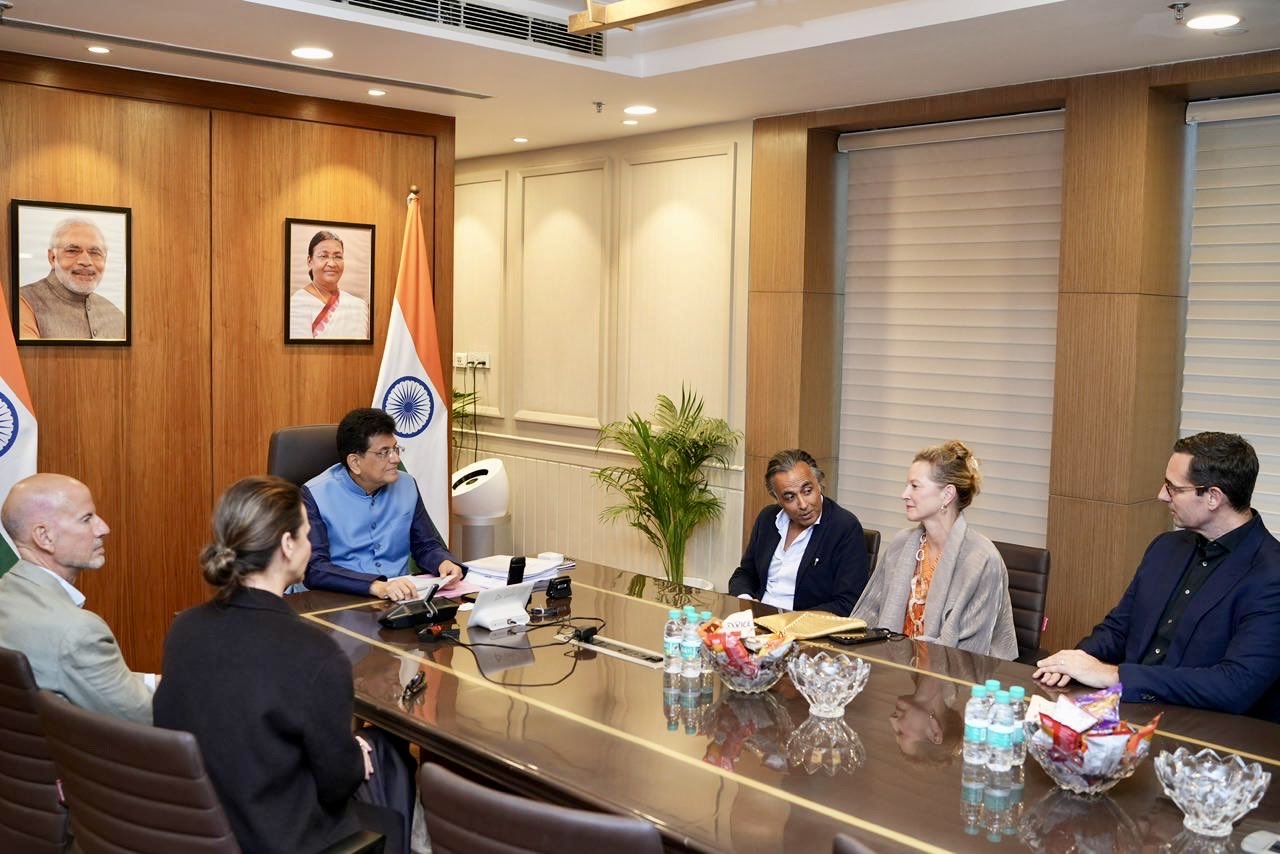
GENEVA : Union Minister of Commerce & Industry, Shri Piyush Goyal, will be on an official visit to Berlin (Germany) from 23rd October 2025. The visit marks a key milestone in enhancing India’s engagement with Germany and holds particular significance as the year 2025 marks the 25th anniversary of the India–Germany Strategic Partnership, highlighting the depth, resilience, and long-standing strength of bilateral ties.

Union Minister of Commerce & Industry, Shri Piyush Goyal, will be on an official visit to Berlin (Germany) from 23rd October 2025. The visit marks a key milestone in enhancing India’s engagement with Germany and holds particular significance as the year 2025 marks the 25th anniversary of the India–Germany Strategic Partnership, highlighting the depth, resilience, and long-standing strength of bilateral ties.

Minister Goyal’s meetings are designed to facilitate high-impact interactions with senior government officials, industry leaders, and business associations in both countries.

During the visit the Union Minister will hold high level bilateral meetings with Ms. Katherina Reiche, Hon’ble German Federal Minister for Economic Affairs & Energy and Dr. Levin Holle, Economic and Financial Policy Advisor at the Federal Chancellery and Germany’s G7 & G20 Sherpa. Discussions during the meeting will focus on further strengthening the dynamic Indo–German economic partnership and exploring new avenues for enhanced trade and investment cooperation.

The Minister will also hold a high-level meeting with Mr. Xavier Bettel, Deputy Prime Minister and Minister of Foreign Affairs and Trade of Luxembourg to discuss the strengthening of bilateral trade relations, Luxembourg’s forthcoming State Visit to India, current regional developments, and key international issues.

As part of his Berlin visit, Shri Goyal will participate as a speaker at the third Berlin Global Dialogue (BGD) — an annual summit that brings together leaders from business, government, and academia to deliberate on issues shaping the global economy. At this flagship event, The Minister will be a panellist in the session titled “Leaders’ Dialogue: Growing Together – Trade and Alliances in a Changing World.” The session will explore how nations and businesses are navigating an evolving global trade landscape, identifying practical pathways to enhance market access and build a new trading ecosystem that drives sustainable global growth.

A key component of the visit will include a series of one-on-one meetings with CEOs of leading German companies such as Schaeffler Group, Renk Vehicle Mobility Solutions, Herrenknecht AG, Infineon Technologies AG, Enertrag SE, and Mercedes-Benz Group AG. The Minister will also chair a Roundtable with CEOs and leaders of German Mittelstandcompanies, and meet with representatives of the Federation of German Industries (BDI) and the Asia-Pacific Association of German Business (APA). These interactions will provide a platform to explore synergies, facilitate investments, and promote stronger business-to-business linkages, particularly in sectors aligned with sustainability, innovation, and advanced manufacturing.

This visit reflects the deepening alignment of strategic priorities between India and its European partners, aiming to translate high-level commitments into sustainable economic partnerships that foster innovation, resilience, and shared growth.

, highlighting the depth, resilience, and long-standing strength of bilateral ties.

Minister Goyal’s meetings are designed to facilitate high-impact interactions with senior government officials, industry leaders, and business associations in both countries.

During the visit the Union Minister will hold high level bilateral meetings with Ms. Katherina Reiche, Hon’ble German Federal Minister for Economic Affairs & Energy and Dr. Levin Holle, Economic and Financial Policy Advisor at the Federal Chancellery and Germany’s G7 & G20 Sherpa. Discussions during the meeting will focus on further strengthening the dynamic Indo–German economic partnership and exploring new avenues for enhanced trade and investment cooperation.

The Minister will also hold a high-level meeting with Mr. Xavier Bettel, Deputy Prime Minister and Minister of Foreign Affairs and Trade of Luxembourg to discuss the strengthening of bilateral trade relations, Luxembourg’s forthcoming State Visit to India, current regional developments, and key international issues.

As part of his Berlin visit, Shri Goyal will participate as a speaker at the third Berlin Global Dialogue (BGD) — an annual summit that brings together leaders from business, government, and academia to deliberate on issues shaping the global economy. At this flagship event, The Minister will be a panellist in the session titled “Leaders’ Dialogue: Growing Together – Trade and Alliances in a Changing World.” The session will explore how nations and businesses are navigating an evolving global trade landscape, identifying practical pathways to enhance market access and build a new trading ecosystem that drives sustainable global growth.

A key component of the visit will include a series of one-on-one meetings with CEOs of leading German companies such as Schaeffler Group, Renk Vehicle Mobility Solutions, Herrenknecht AG, Infineon Technologies AG, Enertrag SE, and Mercedes-Benz Group AG. The Minister will also chair a Roundtable with CEOs and leaders of German Mittelstandcompanies, and meet with representatives of the Federation of German Industries (BDI) and the Asia-Pacific Association of German Business (APA). These interactions will provide a platform to explore synergies, facilitate investments, and promote stronger business-to-business linkages, particularly in sectors aligned with sustainability, innovation, and advanced manufacturing.

This visit reflects the deepening alignment of strategic priorities between India and its European partners, aiming to translate high-level commitments into sustainable economic partnerships that foster innovation, resilience, and shared growth.

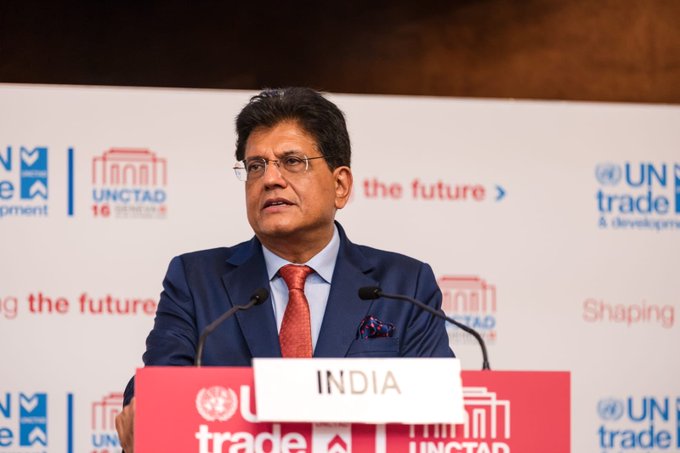
Piyush Goyal leads India’s delegation at the XVIth Session of UNCTAD in Geneva

GENEVA : Union Minister of Commerce and Industry, Shri Piyush Goyal, attended the XVIth Session of the United Nations Conference on Trade and Development (UNCTAD) in Geneva, where he delivered India’s national statement and participated in key discussions. UNCTAD, established in 1964, plays a crucial role in promoting the integration of developing countries into the global economy through trade, investment, and sustainable development policies.

In his address at the 16th Session of the United Nations Conference on Trade and Development (UNCTAD XVI), the Commerce and Industry Minister of India underscored India’s transformation into one of the top five economies globally. India has been the fastest-growing large economy with over 7% average annual growth over last three years. The nation doubles its economy every eight years. Shri Goyal highlighted lifting millions of people out of poverty in the last decade. These individuals then join the middle class. They fuel rising incomes and demand.

G33lPY W0AA0IH8 Piyush Goyal leads India's delegation at the XVIth Session of UNCTAD in Geneva

Shri Goyal underlined India’s sustainability leadership. Half its installed power capacity comes from renewables. Current clean energy stands at 250 GW with aim to install 500 GW by 2030. India is taking measures against climate change impacts. Yet it contributes only 3.5% to global emissions despite hosting 17% of the world’s population. He noted that developed countries have not fulfilled Paris commitments including in providing $100 billion in low-cost, long-tenure finance and technology transfers. He rejected burden-shifting or environmental trade barriers. The Minister stressed a dedicated approach to sustainable development. This includes tailored, actionable solutions. Key global initiatives feature the Coalition for Disaster Resilient Infrastructure, International Solar Alliance, and Global Biofuels Alliance, building partnerships.

Calling for South-South cooperation for genuine solutions, Shri Goyal stated that areas may include critical minerals access, fertilizers and supply chain management. India bridges the technological divide via digital public infrastructure which empowers millions. The country has one billion internet users. It ranks second in ChatGPT users globally. A young population averages 28.5 years. Democracy and rule of law fuel growth.

The Minister noted inclusive development in India exemplified in women forming 14% of entrepreneurs and MSMEs creating and supporting millions of jobs. The services sector contributes 55% to GDP. It has shown decade-long double-digit export growth. This supports equitable workforce mobility. It fosters collaborations to boost partners’ competitiveness and global reach. Additionally, the Minister highlighted critical global challenges. These erode trust in multilateral institutions and the rules-based trading system. Issues include non-market practices, tariff and non-tariff barriers, overconcentration of supply chains at source and demand sides. Other challenges include dilution of special and differential treatment and unilateral environment measures apart from technological divide with restrictive controls. Restrictive policies have hit the services sector. In this, developing countries suffer the most. He emphasized the need for the Global South to speak with one voice.

The Commerce and Industry Minister highlighted that India is a pioneer, trusted by the developing countries and developed world alike, for its independent policies, growth, and commitment to progress. UNCTAD can play a key role in harnessing trade for equitable, inclusive, sustainable development. The Minister offered support to developing nations in technology, cooperation and building resilient supply chains. Trade serves as a development tool. Together, nations can build a future for all. This embraces “Sabka Saath, Sabka Vikas, Sabka Vishwas, Sabka Prayas”—development for all with trust and effort. India believes in “Vasudhaiva Kutumbakam,” the world as one family.

At the Ministerial Roundtable on “Towards Resilient, Sustainable, and Inclusive Supply Chains and Trade Logistics,” the Minister emphasized India’s self-reliance under Atmanirbhar Bharat, particularly in medicines and COVID vaccines, while fostering trading relations built on trust and reliability. He highlighted the trillion-dollar master plan, including about $130 billion annual investments in domestic infrastructure. Key advancements include expanding airport capacity from 74 to 158, enhancing rail, road, and inland waterways for a robust internal transport network, strengthening the manufacturing system, and establishing India as a trusted partner globally, with projections for continued fastest growth over coming decades. Furthermore, he advocated for conversations across large parts of the developing world to share offerings such as payment systems, transactions, payments, transport sharing, and reduced port times, urging developing countries to collaborate and work together for mutual benefit.

On the sidelines, Shri Goyal held bilateral meetings to strengthen international partnerships. With H.E. Ms Teresa Ribera Rodriguez, Executive Vice President of the European Commission for Clean, Just and Competitive Transition, the Minister discussed the impact of Carbon Border Adjustment Mechanism (CBAM) on Indian exports, especially steel secto and ensuring that the clean transition does not create dependencies. In his meeting with H.E. Ms. Rebecca Grynspan, Secretary-General of UNCTAD, the emphasis was on advancing UNCTAD’s role in equitable economic transformation, deficiency in meeting the Paris Agreement commitments by developed countries, unjustified unilateral measures and South-South cooperation.

The visit reaffirms India’s commitment as a trusted partner in global trade and development, aligning with the UNCTAD XVI theme of “Shaping the Future: Driving Economic Transformation for Equitable, Inclusive, and Sustainable Development.” Shri Goyal’s engagements underscore India’s vision of a rules-based multilateral system that fosters mutual prosperity, resilience and inclusive growth for all nations.

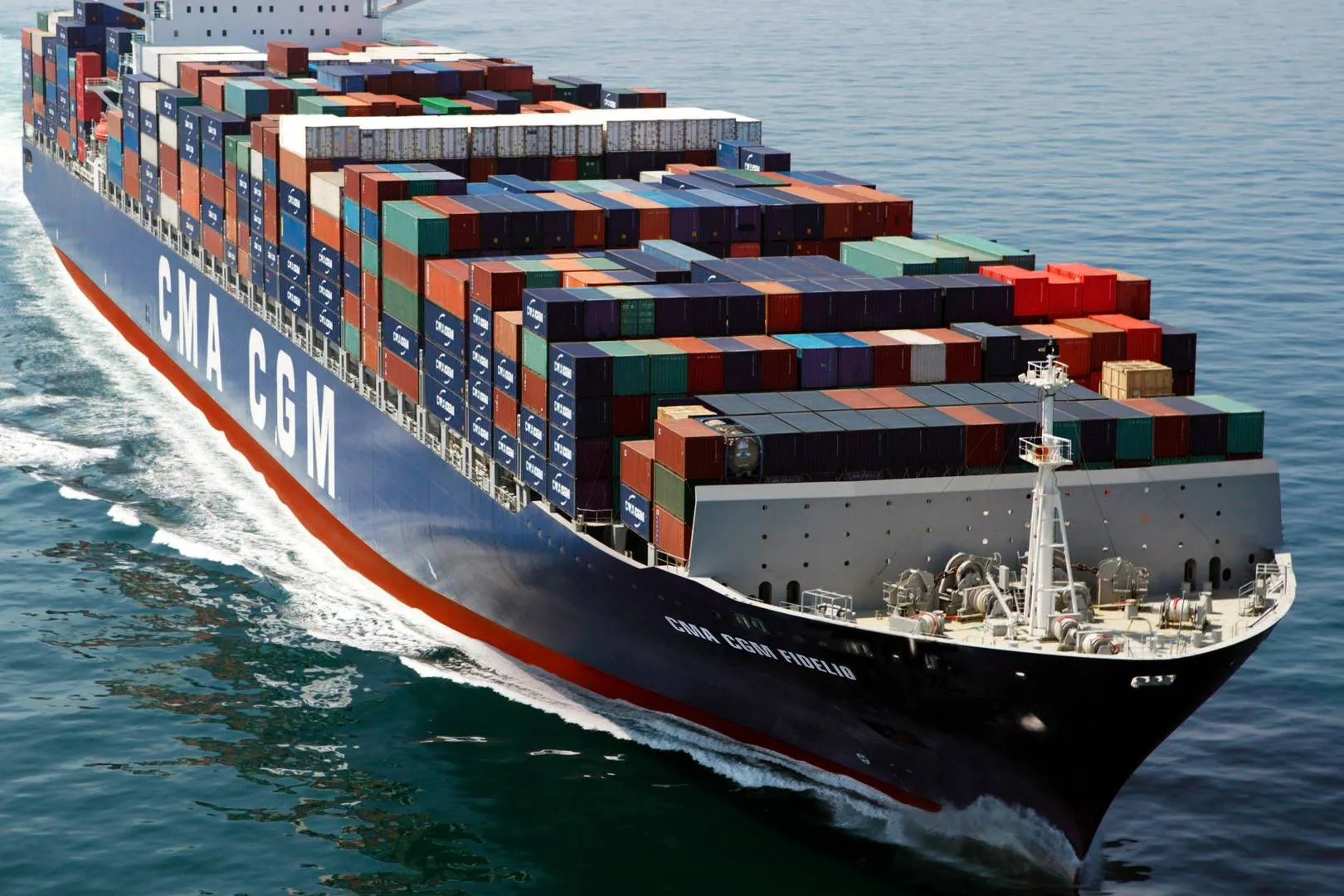
CMA CGM returns to resume Russian service after a three-year absence

MARSEILLE : CMA CGM will next month resume regular services to Russia for the first time since March 2022.

It will add a new call at the Baltic Sea port of St Petersburg as of mid-November.

Forward schedules show the service will be included in the rotation of its Germany-Finland Finland Express service, according to Alphaliner.