Home Blog Page 601

HMM orders $2.8 billion fleet of LNG-fueled containerships and VLCCs

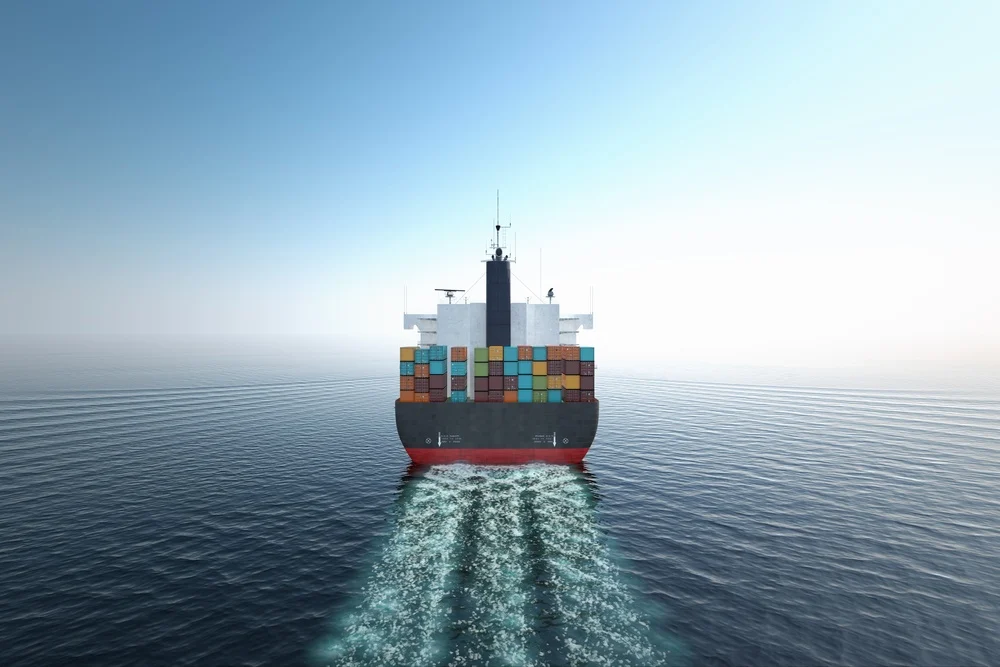
SEOUL : South Korean Shipping Line HMM has placed a KRW 4 trillion (US $2.814 billion) newbuilding order for vessels that will significantly expand its fleet portfolio. The order includes a dozen 13,000 TEU containerships and two Very Large Crude Carriers (VLCCs).

The 13,000 TEU container vessels will all be LNG dual-fuelled ships, with construction split between HD Hyundai Heavy and Hanhwa Ocean. The company said the choice of LNG propulsion reflects the industry’s response to strengthening decarbonization regulations from the International Maritime Organization and European Union.

The announcement from HMM came Friday as IMO member nations voted to delay the adoption of the IMO’s Net-Zero Framework.

“As decarbonization regulations from the IMO and EU continue to strengthen, LNG is viewed as one of the most readily deployable lower-emission fuels,” according to the announcement. Clarksons Research data shows that alternative fuel vessels made up nearly 50% of all newbuildings ordered last year, with over 70% powered by LNG.

The newbuildings will join HMM’s existing portfolio of alternative-fuel vessels, which already includes methanol-powered containerships and LNG-powered vessels. The two VLCCs will help diversify and strengthen the company’s bulk fleet portfolio.

The investment aligns with HMM’s 2030 mid-to-long-term strategy to secure a more flexible and future-ready fleet amid global market and regulatory shifts.

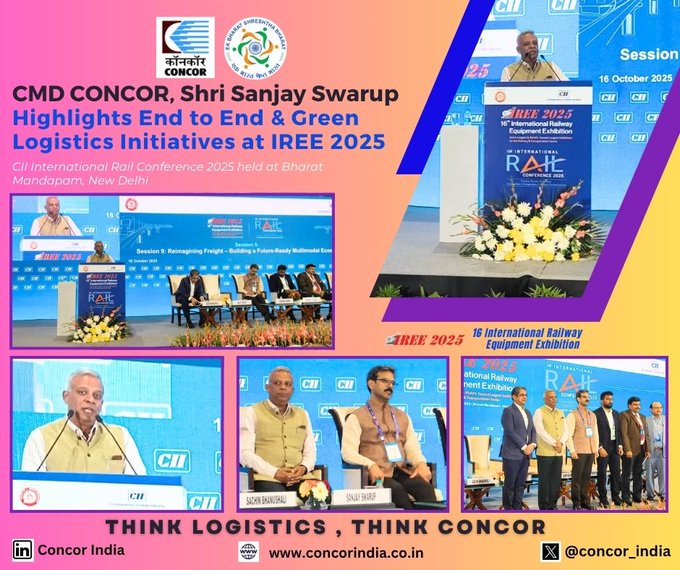
CONCOR CMD highlights Green and Multimodal Logistics Vision at IREE 2025

NEW DELHI: Shri Sanjay Swarup, Chairman and Managing Director of Container Corporation of India Ltd. (CONCOR), engaged with industry stakeholders at the International Railway Equipment Exhibition (IREE) 2025, underscoring the company’s commitment to building an efficient, sustainable, and multimodal logistics network.

Emphasizing Green Logistics, Shri Swarup highlighted CONCOR’s efforts to shift cargo movement from road to rail, particularly through the operationalisation of the Dedicated Freight Corridor (DFC). This transition, he noted, is reducing transit times, cutting logistics costs, and contributing significantly to CO₂ emission savings — aligning with India’s broader decarbonisation goals.

Addressing the importance of First Mile–Last Mile (FMLM) Integration, the CMD stressed that rail and road transport are complementary components of an efficient logistics ecosystem. While rail offers a cost-effective and environmentally friendly solution for long-distance haulage, road transport ensures essential connectivity for shorter routes. CONCOR, he added, has successfully integrated both modes to enhance service reliability and accessibility.

Highlighting the company’s expanding role, Shri Swarup shared that Indian Railways has entrusted CONCOR with several new end-to-end logistics initiatives, including:
1️⃣ Assured Transit Container Train Service
2️⃣ Door-to-Door Parcel Service
3️⃣ Operation of Railway Goods Sheds as Integrated Logistics Hubs, starting with the Sonik facility under the Lucknow Division.

He also announced the deployment of modern rolling stock capable of speeds up to 100 kmph, offering higher capacity and improved operational efficiency compared to conventional wagons.

Shri Swarup reiterated that these initiatives reflect CONCOR’s vision to drive India’s logistics transformation through innovation, sustainability, and multimodal connectivity.

NHAI to deploy network survey vehicles across the country for over 20,000 km of National Highways

To enhance the riding experience of the commuters on National Highways, NHAI will deploy Network Survey Vehicles (NSV) in 23 states covering 20,933 km for collection, processing and analysing Road inventory and Pavement condition data of National Highway stretches. The deployment of NSVs will enable NHAI to collect necessary data related to road inventory and pavement condition including all relevant road defects like surface cracking, potholes and patches etc. The data collected through NSV surveys will highlight deficiencies in road conditions, prompting NHAI to take corrective measures for better upkeep of National Highways.

Data collected through NSV survey will be uploaded on NHAI’s ‘AI’ based portal Data Lake, where it will be analysed by a dedicated team of experts at NHAI to transform data into knowledge and subsequent actionable insights. Finally, the data collected at regular intervals as per Government of India guidelines shall be preserved for future technical purposes in Road Asset Management system in prescribed formats.

The pavement condition surveys will be carried out using 3D laser based NSV system capable of capturing and reporting road defects automatically without any human intervention with the help of high resolution 360-degree cameras, DGPS (Differential Global Positioning System), IMU (Inertial Measurement Unit), and DMI (Distance Measuring Indicator). These are equipped with versatile data acquisition & processing software to accurately measure and report the inventory & pavement condition data. The data shall be collected for all projects involving 2/4/6 and 8 lanes with NSV before start of work and thereafter at regular intervals of six months. To implement this initiative, NHAI has invited bids from qualified companies.

Network Survey Vehicle (NSV) System is a specialized infrastructure management tool comprising vehicles equipped with advanced sensors and data acquisition systems. These vehicles systematically collect data on road inventory and condition of National Highways. The collected data is useful to take decisions for pavement maintenance, asset management, and infrastructure planning, contributing to the enhancing safety and efficiency of the National Highway Network across the country.


Odisha govt collaborates with Indian Rice Exporters Federation for upcoming mega rice conference at Bharat Mandapam

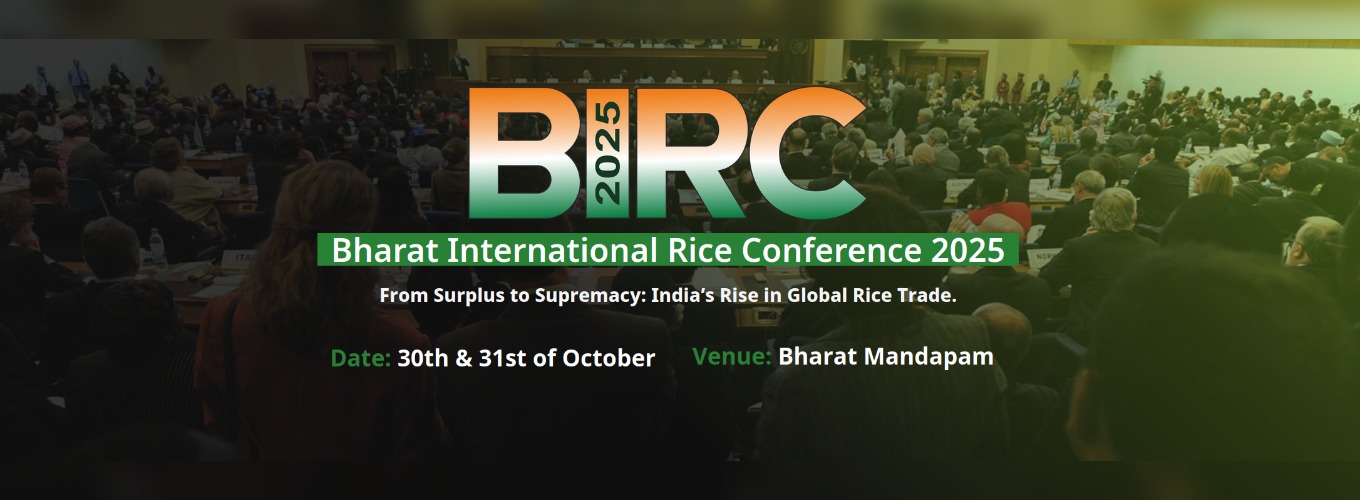
NEW DELHI: The Odisha government has confirmed its collaboration with the Bharat International Rice Conference (BIRC) 2025, dubbed the world’s largest conference dedicated to the rice sector.

Scheduled for October 30 and 31 at iconic Bharat Mandapam here in the national capital, BIRC 2025 is a landmark initiative aiming to elevate India’s status in the global rice industry.

“Odisha’s involvement represents a significant step toward amplifying the state’s contribution to both national food security and international rice trade,” according to a statement from the conference organiser.

Renowned for its rich diversity in rice cultivation, including unique indigenous and climate-resilient varieties, Odisha will use the BIRC platform to highlight its progressive agricultural policies and farmer welfare programs.

As part of its engagement, the state will also contribute to the Coffee Table Book on Indian Rice and co-author the Vision and Roadmap for the Rice Sector’s Contribution to Viksit Bharat @2047 — a blueprint for inclusive and sustainable agricultural growth.

According to the organisers, the Odisha government views this partnership as an opportunity to connect with global stakeholders, attract investments in agri-processing, and ensure a stronger voice for its farmers in international markets.

Responding to the alliance of Odisha government for BIRC 2025, Prem Garg, Chairman of Shri Lal Mahal Group and National President of IREF, said that: “We are deeply honored to have the support of the Odisha Government for BIRC 2025. This association is a landmark moment for the Indian rice sector, and a strong endorsement of the crucial role cooperatives and grassroots institutions play in our agricultural economy.”

The two-day event at Bharat Mandapam, is expected to bring together over 1,000 international buyers from more than 80 countries, 2,500 Indian exporters, 5,000 farmers, and more than 200 institutions, including research bodies, financial institutions, millers, logistics providers, and agri-tech innovators.

Source: ANI

Secure rare earths supply chain by diversifying sources: Expert Neha Mukherjee as China tightens grip

LONDON: Neha Mukherjee, a rare earth expert and Research Manager at Benchmark Mineral Intelligence, has urged nations to urgently diversify their sources to avoid a global supply chain breakdown.

“The problem is that the entire world is now structurally dependent on China,” she said, suggesting, “If you want a secure supply chain, diversify your sources as much as possible.”

Her suggestion comes as tensions rise over China’s tightening grip on rare earth exports to the world.
China’s recent decision to impose new export controls on several medium and heavy rare earth elements — critical materials used in defence, clean energy, and high-tech manufacturing — has, to a degree, hit global industries.

“We are days, if not weeks, away from a crisis,” Mukherjee asserted, describing the severity of the supply disruption.

According to Mukherjee, the trouble began in April this year, when Beijing introduced export controls on a few rare earth elements amid escalating trade tensions.

“No one was prepared, and a lot of production was put on hold because anyone who had to submit for a license had to wait for at least 45 to 60 days,” she explained.

According to her, the situation worsened recently when China added more heavy rare earths to the restricted list.

Although the curbs are not an outright ban, Mukherjee emphasised that their reach “transcends across everything” and “spills across on everything,” given China’s dominance in this domain.

“The export restrictions are in place because they do not want to supply to any defense manufacturing organisations,” she said. “So any company which is manufacturing missiles, fighter jets, or is linked to these will be affected. There will be no supply. And why is this critical? Because 95 per cent of these materials come from China.”

The implications extend well beyond defence. “Defence is going to be affected the most; e-mobility is also going to get hit. Consumer electronics and robotics, too, will be affected,” Mukherjee added.

Faced with challenges, India is already aiming to diversify its rare earth supply through a combination of imports, domestic mining and international partnerships. The government is investing in research and development to improve domestic refining and processing capabilities.

The Central government has recently earmarked Rs 1,345 crore to incentivise rare earth magnets production in India.

China’s overwhelming control of global rare earth processing — commanding over 90 per cent of the world’s magnet production capacity — has created significant vulnerabilities for industries worldwide. Beyond China, there are only a few alternative suppliers of critical minerals.

US considering curbs on exports to China made with US software, sources say

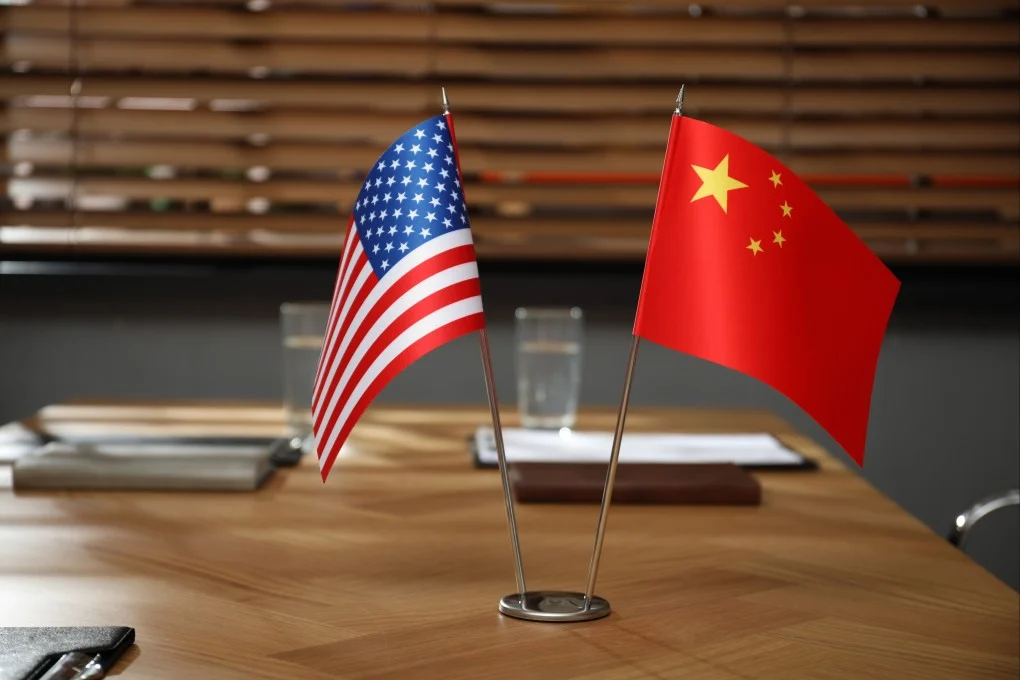
WASHINGTON : The Trump administration is considering a plan to curb a dizzying array of software-powered exports to China, from laptops to jet engines, to retaliate against Beijing’s latest round of rare earth export restrictions, according to a U.S. official and three people briefed by U.S. authorities.

While the plan is not the only option on the table, it would make good on President Donald Trump’s threat earlier this month to bar “critical software” exports to China by restricting global shipments of items that contain U.S. software or were produced using U.S. software.

On October 10, Trump said in a social media post that he would impose additional tariffs of 100% on China’s U.S.-bound shipments, along with new export controls on “any and all critical software” by November 1 without further details.

To be sure, the measure, details of which are being reported for the first time, may not move forward, the sources said. But the fact that such controls are being considered shows the Trump administration is weighing a dramatic escalation of its showdown with China, even as some within the U.S. government favor a gentler approach, according to two of the sources.

The White House declined to comment. The Commerce Department, which oversees export controls, did not respond to requests for comment.

A spokesperson for the Chinese embassy did not comment on the specific U.S. measures under consideration but said China opposed the U.S. “imposing unilateral long-arm jurisdiction measures” and vowed to “take resolute measures to protect its legitimate rights and interests” if the U.S. proceeds down what it views as a wrong path.

Administration officials could announce the measure to put pressure on China but stop short of implementing it, one of the sources said. Narrower policy proposals are also being discussed, two of the people said.

“Everything imaginable is made with U.S. software,” one of the sources said, highlighting the broad scope of the proposed action. The sources declined to be named because the matter was not public.

The move could disrupt global trade with China, especially for technology products, and could come at a cost to the U.S. economy if fully implemented.

The measure, if adopted, would echo restrictions that the Biden administration imposed on Moscow after its 2022 invasion of Ukraine. Those rules restricted exports to Russia of items made globally using U.S. technology or software.

Trump’s Truth Social post came just three weeks before a previously announced meeting with Chinese President Xi Jinping in South Korea, and a day after China dramatically expanded its export controls on rare earth elements. China dominates the market for such elements, which are essential to tech manufacturing.

In his post, Trump said China’s action, also effective November 1, represented “a moral disgrace” that would impose controls on “virtually every product they make.”

But questions have swirled about what Trump meant in his response by “critical software” controls.

While Trump has slapped a series of tariffs on China since taking office in January, he has wavered in his use of export restrictions against Beijing, first imposing strict new curbs on shipments of Nvidia’s AI chips as well as chip design software to China, and later removing them.

China expressed its opposition to a Trump administration rule last month that restricts U.S. companies from shipping goods and technology to companies at least 50% owned by sanctioned Chinese firms.

Source : Reuters

European logistics firms face impact from falling freight rates

LONDON : European shipping and logistics firms are under pressure heading into third-quarter earnings season, as analysts trim profit forecasts to reflect falling freight rates and weaker demand.

Ocean container rates have plunged to their lowest since January 2024, hit by industry oversupply and weaker demand following new U.S. tariffs, which is threatening carrier profits.

Danish shipping company Maersk is seen as relatively shielded to the mounting challenges, analysts say, in part because it has long-term contracts with customers that are locked in at higher rates.

Although container volumes rose 4% in the January-August period, the increase was driven largely by front-loading during the pause in U.S. tariffs and thus offers only temporary rate support, Bernstein analysts said in a research note.

Demand remained muted in the third quarter, Bernstein said, with what is normally the peak season for carriers proving subdued. As supply continues to rise, rates are expected to remain weak, the broker added.

Bank of America analysts said they expected logistic companies “to present a cautious outlook”.

BEARISH WINDS BLOW THROUGH SECTOR

Analysts expect companies to either revise their forecasts or report weaker third-quarter results, pressured by soft sea and air freight yields.

BofA Securities expects Denmark’s DSV to shave off 1 billion Danish crowns ($156 million) from the top of its guidance range for operating profit before one-off items, bringing it to between 19.5 billion and 20.5 billion crowns, while HSBC expects Swiss Kuehne+Nagel’s quarterly operating profit to drop by a third.

DSV’s profitability appears more resilient than fellow freight forwarder K+N’s, with Jefferies attributing this to the company shedding lower margin business following its merger with Schenker.

German logistics giant DHL will announce a 4% decline in its quarterly operating profit on weakness in express and forwarding segments, HSBC forecasts.

MAERSK KEEPS ANALYSTS BULLISH

More positively, some analysts expect Maersk to report strong third-quarter results and raise its full-year guidance, citing a favourable trend in freight rates through mid-August that likely boosted both revenue and volumes.

“For Maersk it turns out positive that the majority of the container rates clients pay are locked in term contracts (up to 72% this year),” said Rico Luman, senior economist for transport, logistics & automotive at ING Research.

These contracts typically run for up to a year or more, allowing Maersk to continue benefiting from previously elevated rates, he added.

Luman said that Maersk’s Ocean segment will eventually face pressure as contracts roll over, though the decline will be more gradual compared to other container liners.

Gemini Cooperation to divert two US-flagged vessels from China

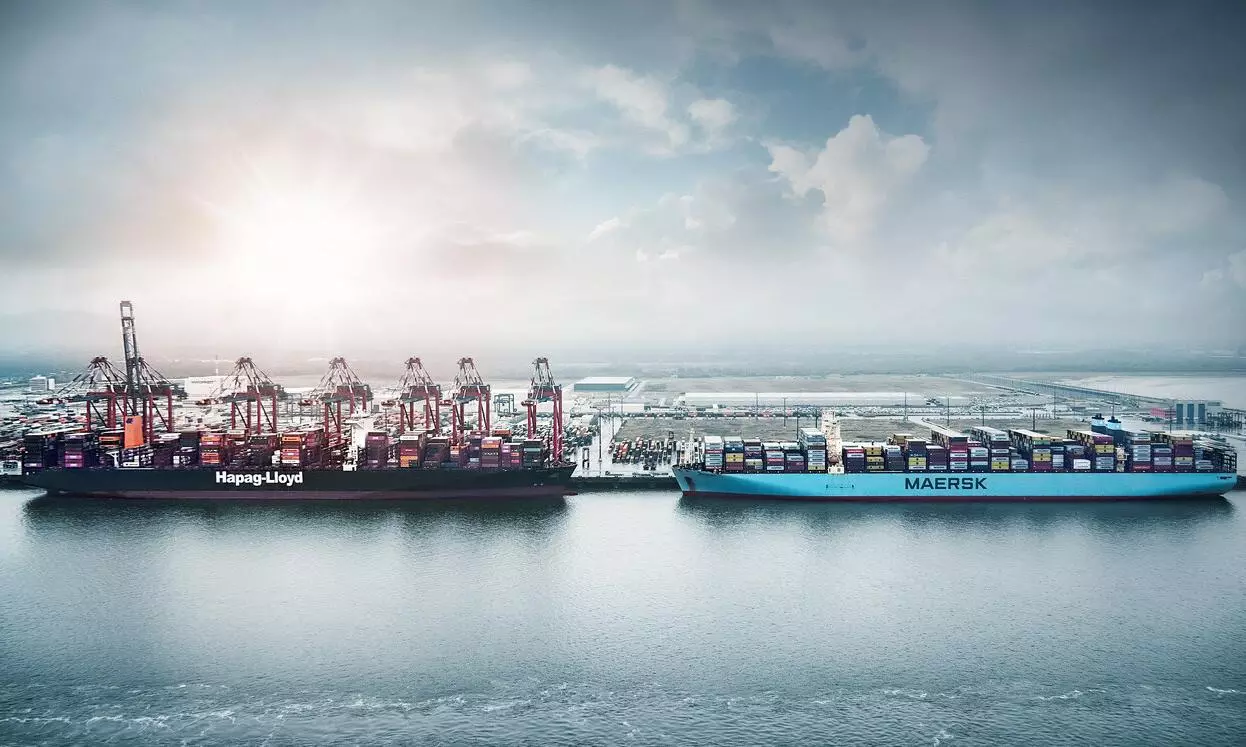
COPENHAGEN : Two container ships operated by Maersk and Hapag-Lloyd as part of the Gemini Cooperation on a transpacific service will no longer call Ningbo as Chinese port fees for US-flagged ships come into force.

A Maersk customer advisory said it was implementing changes to its TP7 Transpacific services.

The US-flag Potomac Express operated by Hapag-Lloyd will no longer be calling the Port of Ningbo and instead call in South Korea before heading back across the Pacific. The Potomac Express will discharge Ningbo cargo in Busan where the cargo will be loaded onto other ships in the Maersk network, while Ningbo exports to the US will be loaded on the Maersk Luz and connect to the Potomac Express in Kwangyang on 24 October.

For the US-flag Maersk Kinloss similarly Maersk said it would no longer call Ningbo with it discharging cargo for the Chinese port at a South Korean port and onwards to Ningbo via its network. “ Exports from or via Ningbo to the United States will be loaded on a shuttle, name to be provided, and tranship in South Korea,” Maersk said.

China only announced its “Special Port Fee” for US owned, operated, and flagged vessels on 10 October and it came into force just four days later on 14 October. This meant that US-flagged vessels such as the Potomac Express and the Maersk Kinloss were already bound for China from the US when the fees were both announced and came into force. It left Maersk with two choices – pay an unexpected RMB400 ($56) per net tonnage on additional port fee on each vessel for calling Ningbo or drop calling in China and divert Ningbo cargo onto non-US-flagged vessels in a third country, in this case South Korea.

The US-flag Potomac Express is managed by Marine Transport Management in Jacksonville, while Maersk Kinloss is part of the fleet of the Danish company’s US subsidiary Maersk Line Ltd, according to database Equasis.

Longer term Maersk said, “We will be making changes to the TP7 rotation to make sure your supply chains continue to run as smoothly as possible, if you are utilising this service.

“We will ensure to inform you of further changes, temporary or long-term, to this service, with as much notice as possible.”

China’s Special Port Fee on US ships is in retaliation for the USTR 301 investigation fees on Chinese owned, operated and built vessels calling US ports that also came into force on 14 October.

Source : Seatrade Maritime

Israel-Hamas ceasefire will not bring global freight fleet back to Red Sea quickly

COPENHAGEN: Maritime experts and shipping industry insiders are not expecting a return of ocean carriers to the Red Sea anytime soon, despite the Israel-Hamas ceasefire deal.

“This is all still very early days,” said Alan Murphy, founder and CEO of Sea-Intelligence. “The Houthis in Yemen have justified their attacks on international shipping as a response to the Israel-Hamas war, but there are no guarantees that the recent Israel-Hamas ceasefire will be a lasting one, or that this will lead to an end to the conflict in Gaza,” he added.

It’s been 690 days since the Houthis rebels launched their attacks on vessels navigating the Red Sea and they have not agreed to a ceasefire.

Lars Jensen of Vespucci Maritime noted in a LinkedIn post that “Despite the ceasefire between Israel and Hamas, the Houthis will for now not start a ceasefire. The Houthi leader Abdul-Malik al-Houthi stated that targeting Israeli maritime routes will continue until, as he said, ”[…] the aggression against Gaza stops and the unjust siege is completely lifted.”

Murphy said the Houthis may not view the ceasefire as meeting their demands, and they “could very well make the demand for outright Palestinian statehood a condition to stop the attacks, a challenging proposition,” he added.

He said there are a lot of puzzle pieces that will need to fall into place before the global shipping lines can justify putting their crews at risk by transiting the Red Sea, despite the fact that it saves transit time and cost.

“These are geopolitical puzzle pieces and thus outside of the control of shipping lines,” Murphy said. “The lines are likely to require very firm commitments from the Houthis of no further attacks, as well as increased security support from Western forces, before they will even consider a return to the Suez, and both can be hard to come by,” he explained.

In addition, ocean carrier shipping networks are very complex and “heavy beasts,” in Murphy’s words, to move around.

For example, moving a single weekly service back to a Suez Canal routing involves 14 vessels on a 98-day round trip, of which 12 would be routed back to Suez and the last two vessels would be taken out of the service, Murphy explained. “These are operations that take several months to implement, and not a decision taken lightly, especially if there is a real risk of having to reverse course, and go back to round-Africa, if attacks return to the Red Sea,” he said.

Then, once the ocean carriers decide to traverse the Red Sea again, congestion at the ports is expected to occur because the vessels taking the shorter route through the Red Sea and Suez would be arriving at the ports in Europe and Asia at the same time of vessels that traveled around the Horn of Africa.

When conditions allow for the resumption of Red Sea transits, he said it would make the most sense for the three major global freight liner alliances (the Premier Alliance, Ocean Alliance, and Gemini), and the world’s biggest ocean shipping company, MSC, to return to a Suez routing in separate stages. “Then, this could potentially be manageable, but given the high-stakes game of prisoner’s dilemma, we are likely to see them all rush back to Suez in similar time frames,” Murphy said.

In a worst-case scenario, the congestion could last for several months, and as port congestion builds up and everything slows to a crawl, lead to vessels stuck outside port, driving disruptions and blank (canceled) sailings. “If we see a somewhat simultaneous shift to Suez across the three alliances and MSC, then we are likely to see congestion and disruptions for at least 2-3 months, but could be up to 4-6 months,” Murphy predicted.

The port congestion would create an artificial shortage of vessels because they would not be available to be loaded with additional goods.

“We are likely to see a spill-over to all deep-sea trades,” Murphy added.

That situation would also lead ocean freight rates to go up, as they have historically done in the past, with spot rate increases as much as three to five times over long-term averages, according to Murphy.

Ultimately, Murphy said the extra vessels that were added to the vessel line up to accommodate the longer-transits around Africa should drive ocean freight rates down because too many ships will be available compared to demand.

Overcapacity of ships could drive freight rates down to 2023 levels or below, Murphy said, and he added the earliest he would expect to see an easing in the oversupply of vessels would be around 2028 at the earliest.

As far as an initial return to the Red Sea, he thinks a reasonable forecast would be coinciding with the Chinese New Year of Golden Week. But he added, “I think it would be far too optimistic to assume this could all work out in time for Chinese New Year 2026. Maybe Golden Week in October 2026.”

Murphy said the first ocean carrier alliance (or possibly MSC) to return to the Suez routing would have a massive cost advantage, compared to those who continue to go around Africa, because of the faster transit and use of less fuel.

“The lines most eager to return to a Suez routing are likely to be MSC, CMA CGM, and ZIM, due to their strong market positions in the Eastern Mediterranean, a market devastated by the closure of the Suez routing,” he said.
Source: CNBC

Japan-India Maritime Exercise (JAIMEX) 2025

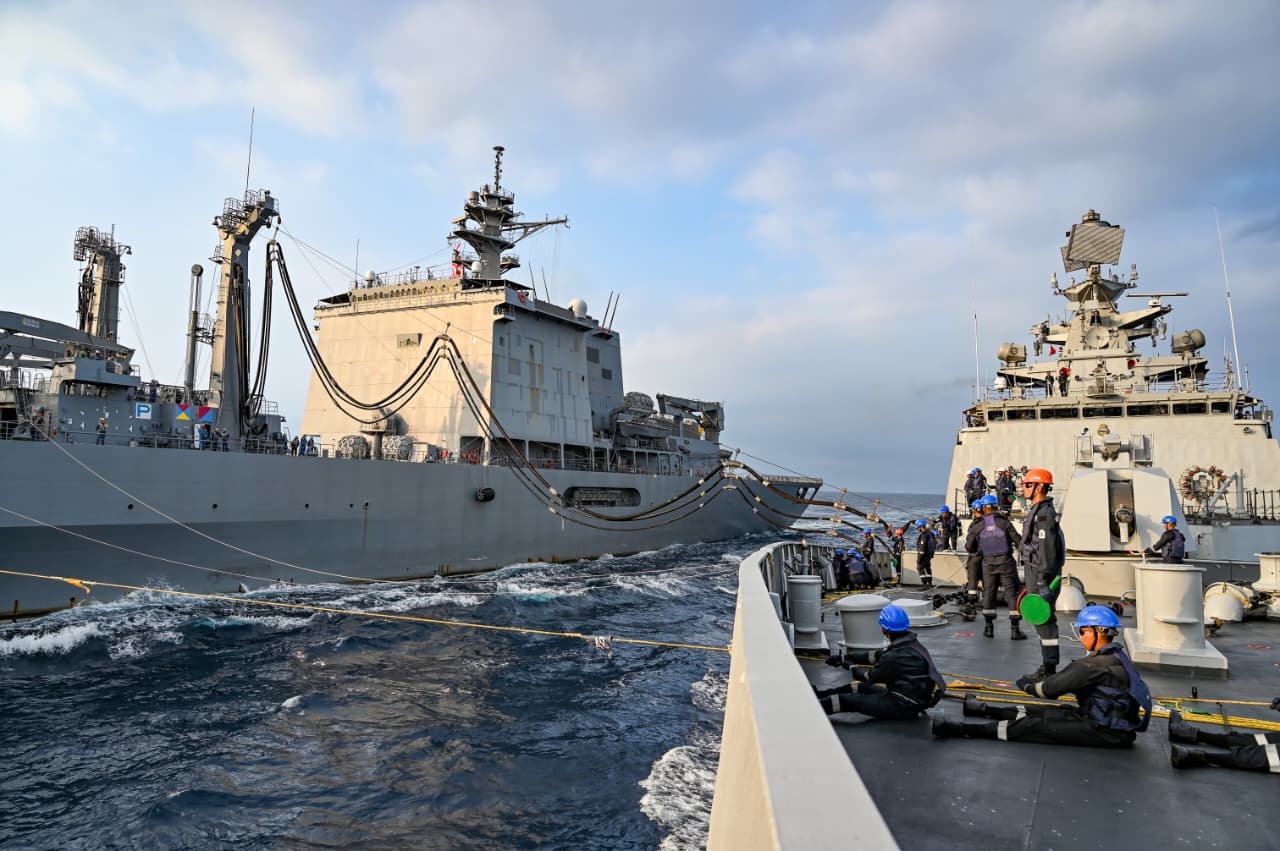
YOKOSUKA : Indian Naval Ship (INS) Sahyadri, an indigenously built Shivalik-class Guided Missile Stealth Frigate, participated in the Sea phase of JAIMEX-25 (Japan India Maritime Exercise) from 16 to 18 Oct 2025 and made a port call at Yokosuka, Japan, on 21 Oct 2025 for the Harbour phase.

Prior to arriving at Yokosuka, INS Sahyadri and JMSDF Ships Asahi, Oumi and Submarine Jinryu participated in the sea phase of JAIMEX-25. The sea phase included advanced Anti-Submarine Warfare and missile defence drills, enhancing interoperability by undertaking flying operations and underway replenishment. JAIMEX-25 underscores the strong and burgeoning Navy-to-Navy interactions that underpin the ‘Special Strategic and Global Partnership’ established between India and Japan in 2014. This partnership is a crucial pillar for ensuring peace and stability in the Indo-Pacific maritime domain.

During the Harbour Phase at Yokosuka, the crews of INS Sahyadri and the participating JMSDF units will engage in a multitude of professional and cultural exchanges. The activities will include cross-deck visits, collaborative operational planning, sharing of best practices, and a combined Yoga session to foster camaraderie and unity. The port call also serves as a key engagement during the ship’s ongoing Long Range Deployment to the Indo-Pacific region.

Commissioned in 2012, INS Sahyadri is a testament to India’s growing pursuit of indigenous defence technology and the nation’s vision of ‘Aatmanirbhar Bharat’ (Self-Reliant India). The multi-role stealth frigate has participated in various operational deployments, bilateral and multilateral exercises.

The strategic partnership between India and Japan has been very robust for a long time with significant focus on defence and maritime cooperation. The Indian Navy and JMSDF have been at the forefront of this growing partnership with a shared vision of a free, open, and inclusive Indo-Pacific region.