Home Blog Page 608

Xeneta Weekly Ocean Container Shipping Market Update

OSLO: Average spot rates on four main fronthauls out of the Far East have all increased from last week. This uptick follows the previous week when rates were stable after a drop on 1 October.

Far East to North Europe saw the biggest average spot rate increase in the past week, up 13.9% to reach a 24-day high. The rate jump comes mid-month as carriers successfully push through a few hundred dollars of announced GRIs.

From Far East into the Mediterranean, the short-term freight rates are up 7.3% from a week ago. This recovers the lost ground in October to-date with the rate now almost back the level at the end of September.

Similar development from Far East into the US East Coast with the short-term rate back to the end-September level after jumping 5.8% in mid-October. This increase is despite carriers having reintroduced much of the capacity withdrawn during the Golden Week.

The primary Transpacific trade lane from Far East to US West Coast increased 7.7% in mid-October from a week ago. Xeneta data shows carriers have increased blanked sailings in October, leaving offered capacity largely unchanged for the past two-and-a-half months.

On the Transatlantic, the short-term rates halted the consistent yet slow-burning decline and remained unchanged from a week ago. Average spot rates on this trade are down -0.7% from two weeks ago and -42.2% since the end of 2024.

The latest average spot rate data is provided in the attached documents ‘Xeneta – weekly market update 15.10.25’ and ‘Xeneta – weekly market update chart 15.10.25’.

Data highlights

Market average spot rates – 15 October 2025:
Far East to US West Coast: USD 1653 per FEU (40ft container)
Far East to US East Coast: USD 2588 per FEU
Far East to North Europe: USD 1896 per FEU
Far East to Mediterranean: USD 2309 per FEU
North Europe to US East Coast: USD 1616 per FEU

Xeneta analyst insight – Transpacific

Peter Sand, Xeneta Chief Analyst: “There is a lot on shippers’ minds in Q4 trying to look ahead and procure freight for 2026, while also dealing with the here and now. Carriers may take the opportunity of shippers occupied by 2026 planning to try to push up the short term market, even if it is to a limited extent.

“We have USTR port fees coming into force this month and China responding with port fees of its own, so there is plenty of uncertainty for shippers and plenty for carriers to latch onto to try and justify the mid-month GRIs.”

Xeneta analyst insight – Europe

Peter Sand, Xeneta Chief Analyst: “Carriers have cut 13% of capacity from Far East to North Europe since end of August against a backdrop of strong demand, possibly due to frustrated cargo that was originally intended for the US. Something has to give in this situation and that is freight rates – with the spot market increasing 14% in the past week.

“It is likely average spot rates will continue to climb into Europe before peaking and heading south towards the end of the month.”

Source: XENETA


New guidance provides industry-first roadmap for nuclear-powered shipping

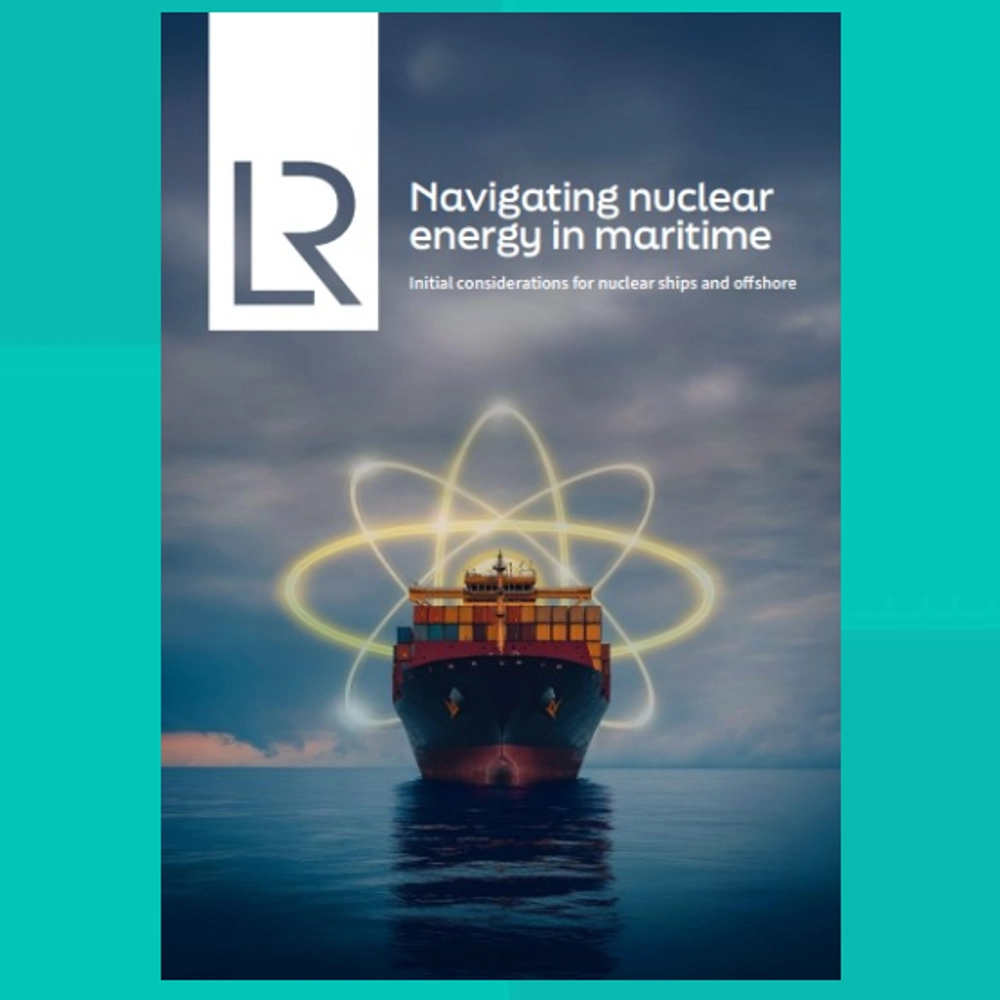
LONDON: Lloyd’s Register (LR) has published Navigating Nuclear Energy in Maritime, a new guidance document providing the first roadmap for the safe and responsible use of nuclear technology in commercial shipping and offshore industries. 

As the maritime sector accelerates its transition towards sustainable energy solutions, nuclear power has re-emerged as a viable solution to achieve net-zero ambitions.  

The guidance, developed in partnership with Global Nuclear Security Partners (GNSP) and marine insurer NorthStandard, sets out the practical steps project teams must take – outlining regulatory, technical, operational and financial requirements for integrating nuclear technology, such as small modular reactors (SMRs), into maritime assets. 

With no international regulatory framework yet in place, the document discusses the roles of key bodies, including the International Maritime Organization (IMO) and the International Atomic Energy Agency (IAEA), highlighting the importance of harmonising maritime and nuclear standards.  

Topics covered include safety classification, environmental impact assessments, structural integrity, and the development of a robust nuclear safety case. Security measures are also addressed, with emphasis on physical and cyber protection systems, as well as insider threat mitigation. 
 
Operational and financial aspects are thoroughly explored, including personnel qualifications, emergency response planning, and quality assurance throughout the project lifecycle. The document also examines insurance and reinsurance challenges, advocating for a predictable liability framework to support commercial viability.  

Mark Tipping LR New guidance provides industry-first roadmap for nuclear-powered shipping

Mark Tipping, LR’s Global Power to X Director, said: “Nuclear energy has the potential to transform maritime, providing a scalable and zero-carbon energy source that can accelerate the industry’s energy transition. However, its adoption requires clarity, collaboration and trust across regulators, operators, insurers and wider society. This guidance offers a comprehensive starting point for stakeholders to navigate the risks and opportunities ahead.” 

Nick Tomkinson, Senior Partner, Global Nuclear Security Partners, said: “Maritime nuclear will only succeed when safety, security and safeguards are considered together from the start. This guidance document helps first movers align maritime and nuclear frameworks, apply goal-based approaches where prescriptive rules are absent, and build the confidence required by regulators, insurers and the public. GNSP is proud to contribute to this important step for the sector.” 

Helen Barden, Director – External Affairs at NorthStandard, added: “NorthStandard are proud to have been invited to contribute our expertise to the Navigating Nuclear Energy in Maritime guidance document. We collaborated with Lloyd’s Register to explore the insurance and reinsurance considerations for nuclear energy – particularly the interlink between classification and insurance, current P&I limitations around pooling nuclear risks and the importance of liability frameworks. 

“We welcome the growing recognition that nuclear could play a meaningful role in the decarbonisation of shipping and we are proactively supporting the maritime industry when it comes to the insurance and regulatory challenges ahead.”  

LR’s guidance builds on its industry-leading Fuel for Thought: Nuclear research programme and aims to fill a critical knowledge gap. It brings together decades of classification, safety and compliance expertise with specialist nuclear insight to provide an evidence-based framework for project teams at every stage of development. 

The full guidance, Navigating Nuclear Energy in Maritime, is now available at: Navigating nuclear energy in maritime

Prodevelop drives port digitalization in Cyprus through the European aerOS project

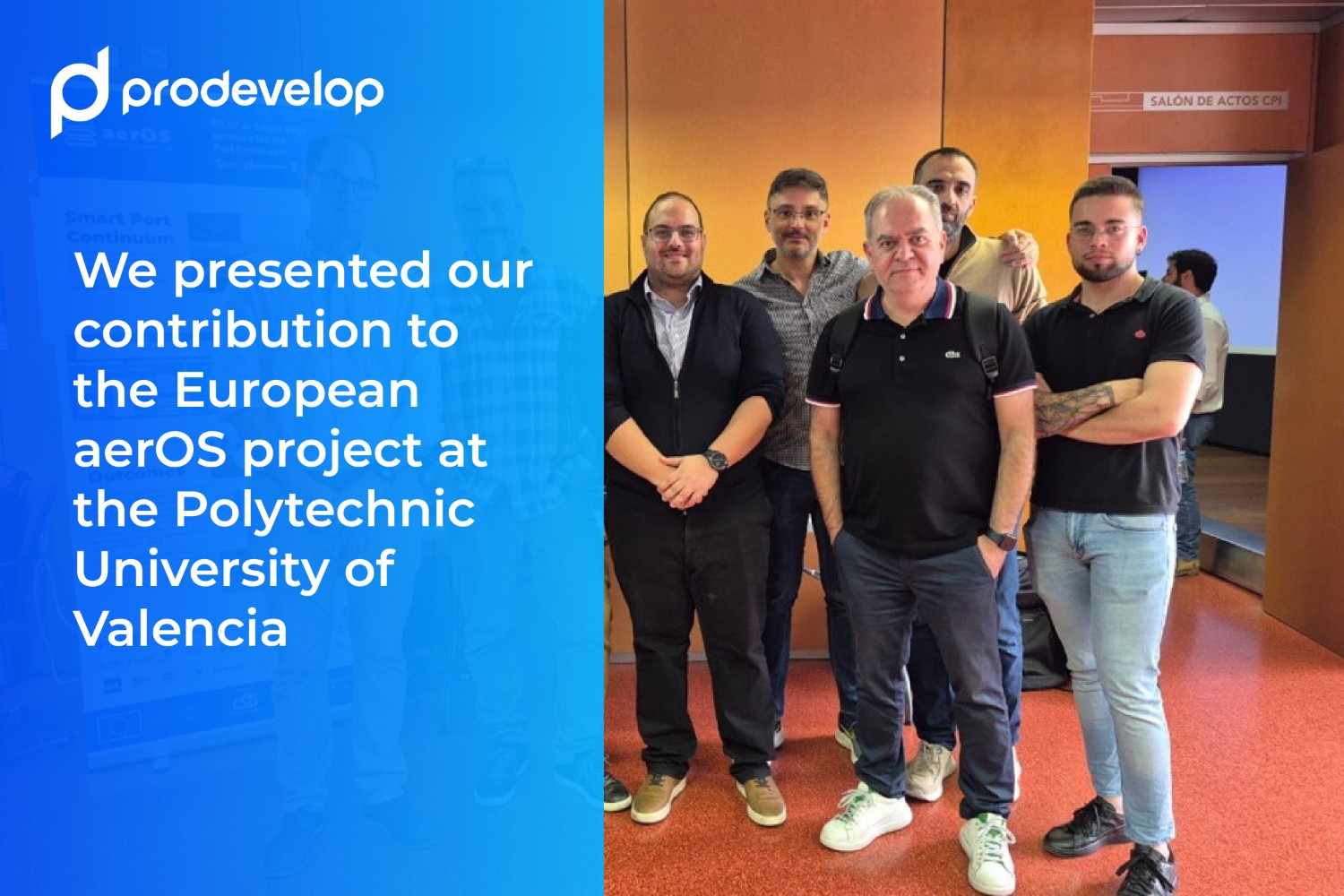
LIMASSOL: Port digitalization continues to advance across Europe through collaborative innovation projects that combine technology, interoperability and sustainability. One of the most prominent examples is the aerOS project, where Prodevelop works alongside EUROGATE Container Terminal Limassol (Cyprus) and the Cyprus University of Technology (CUT) under the Horizon Europe programme.

Digitalization and IoT in the Cypriot port ecosystem
The Port of Limassol, Cyprus’s main gateway for container cargo, is undergoing a full process of automation and digital transformation. Within this context, the aerOS pilot implements a scalable IoT–Edge–Cloud infrastructure that will connect more than 200 devices in the coming years, creating an intelligent, distributed operational environment.

Use cases: predictive maintenance and risk prevention through computer vision
The pilot, titled Smart Edge Services for the Port Continuum, addresses two key use cases:

  • Predictive maintenance for Container Handling Equipment (CHE), including Straddle Carriers and Ship-To-Shore (STS) cranes.
  • Risk prevention via computer vision at the edge, improving safety in terminal operations.

These scenarios rely on an advanced architecture combining industrial IoT sensors, frugal AI models and edge computing, enabling local data processing without the need for high bandwidth consumption.

Objectives and benefits

The aerOS pilot in Cyprus pursues four main objectives:

  • Enhance asset traceability within the terminal.
  • Support a heterogeneous and interoperable digital platform compliant with aerOS standards.
  • Deliver a predictive maintenance service based on embedded AI.
  • Provide a computer vision solution at the edge to improve operational safety.

Together, these advances represent a significant step towards comprehensive port digitalization, reinforcing the resilience, sustainability and competitiveness of European ports.

Conclusion: towards the next generation of smart terminals
Prodevelop’s participation in the aerOS project reflects its ongoing commitment to technological innovation in port digitalization, contributing expertise in system integration, operational analytics and open-source development.

This initiative further consolidates Prodevelop’s role as a trusted technology partner in the digital transformation of ports and terminals worldwide.

Record-Breaking Cruise Season in Klaipėda: More Tourists than ever before

KLAIPEDA: This year’s cruise season at the Port of Klaipėda was record-breaking – it welcomed the largest number of tourists in the port’s history. The 2025 season not only exceeded pre-pandemic results but also stood out with many large ships and several liners visiting Klaipėda Port for the first time. Based on the number of bookings already made, next year is expected to be even stronger.

image00028 1 Record-Breaking Cruise Season in Klaipėda: More Tourists than ever before

“The record number of cruise tourists proves that the Port of Klaipėda is taking a stronger place on the world’s cruise map. We are not just receiving ships – we are welcoming the world. And more and more travelers are choosing to discover Lithuania through Klaipėda,” said Algis Latakas, Director General of the Klaipėda State Seaport Authority.

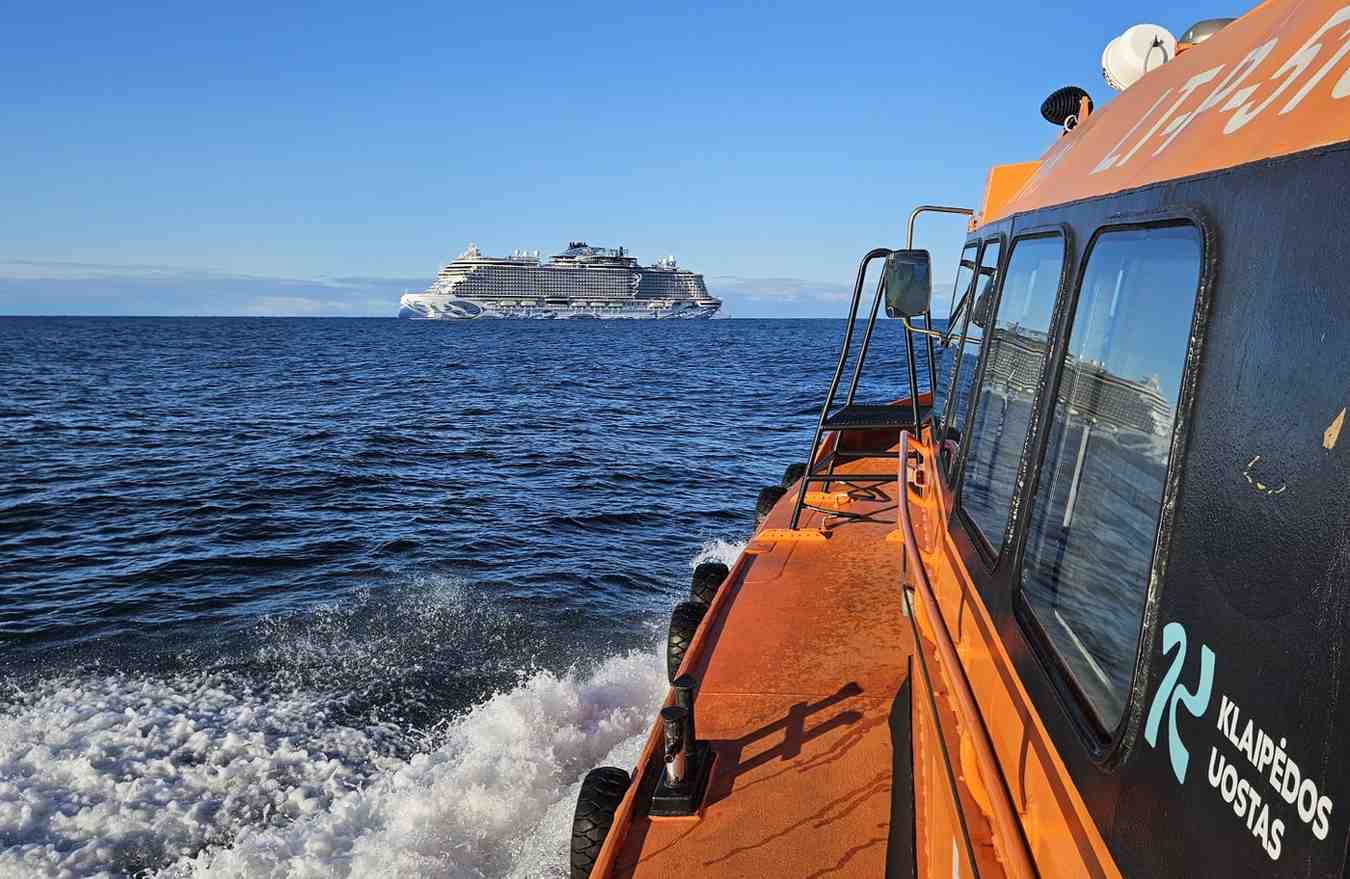
The cruise season wrapped up with the arrival of Norwegian Prima – a 293-meter-long vessel bringing over 3,000 tourists to Lithuania. Its visit marked a new milestone for Klaipėda, with a total of more than 76,600 cruise passengers arriving this year. This exceeds the previous record from 2017 by almost 2,000 visitors.

It is estimated that cruise tourists spend around 50 euros each during their visit. This year, most travelers chose excursions to Juodkrantė and Nida, as well as trips to Palanga, Kretinga, Žemaitija National Park, and Klaipėda itself. Many guests also visited local cafés and restaurants to taste traditional Lithuanian dishes.

Known for its modern design, Norwegian Prima – launched only three years ago – was the 59th cruise ship to visit Klaipėda this season. The season started exceptionally early, in February, and reached peak activity in the summer, with several days seeing two cruise ships in port at the same time.

One of the season’s highlights was August 4, when the port welcomed more than 3,000 tourists arriving on Mein Schiff 1, which carried 3,062 guests. The same record number of passengers was reached once again on October 14, with the arrival of the final ship of the season.

This year was remarkable for the number of large vessels visiting the port. Out of 59 cruise ships that called at Klaipėda, 21 were over 290 meters long – nearly 40% of the total. Last year, there were 14 ships of that size, and 12 in 2023. The largest visitors this season, Mein Schiff 7 and Mein Schiff 1, each measured 316 meters in length.

Alongside these giants, Klaipėda also welcomed smaller but notable vessels. One of them was the Nordstjernen, just 81 meters long, which visited the port several times. Built almost seven decades ago, this vessel is considered a true maritime legend – one of the oldest passenger and expedition ships still in operation worldwide.

This season, Klaipėda was also chosen as one of the destinations on a themed cruise. On September 22, the port welcomed Mein Schiff 3, carrying only heavy metal music fans. The voyage, called Full Metal Cruise, featured around 20 leading metal bands performing on three stages and in multiple venues throughout the ship over five intense days.

The growing popularity of Klaipėda among cruise travelers from all over the world is evident not only from this record-breaking season but also from next year’s forecasts.

Next year, Klaipėda is set to welcome even more cruise ships, with 68 vessels already confirmed – exceeding this year’s number. Looking further ahead, 95 liners have expressed interest in visiting the port in 2027. To meet this growing demand, Klaipėda Port is creating new infrastructure and building a modern cruise terminal that will also serve as an public space for the city’s residents. By the 2028 season, cruise ships are expected to berth at the new terminal’s quays.

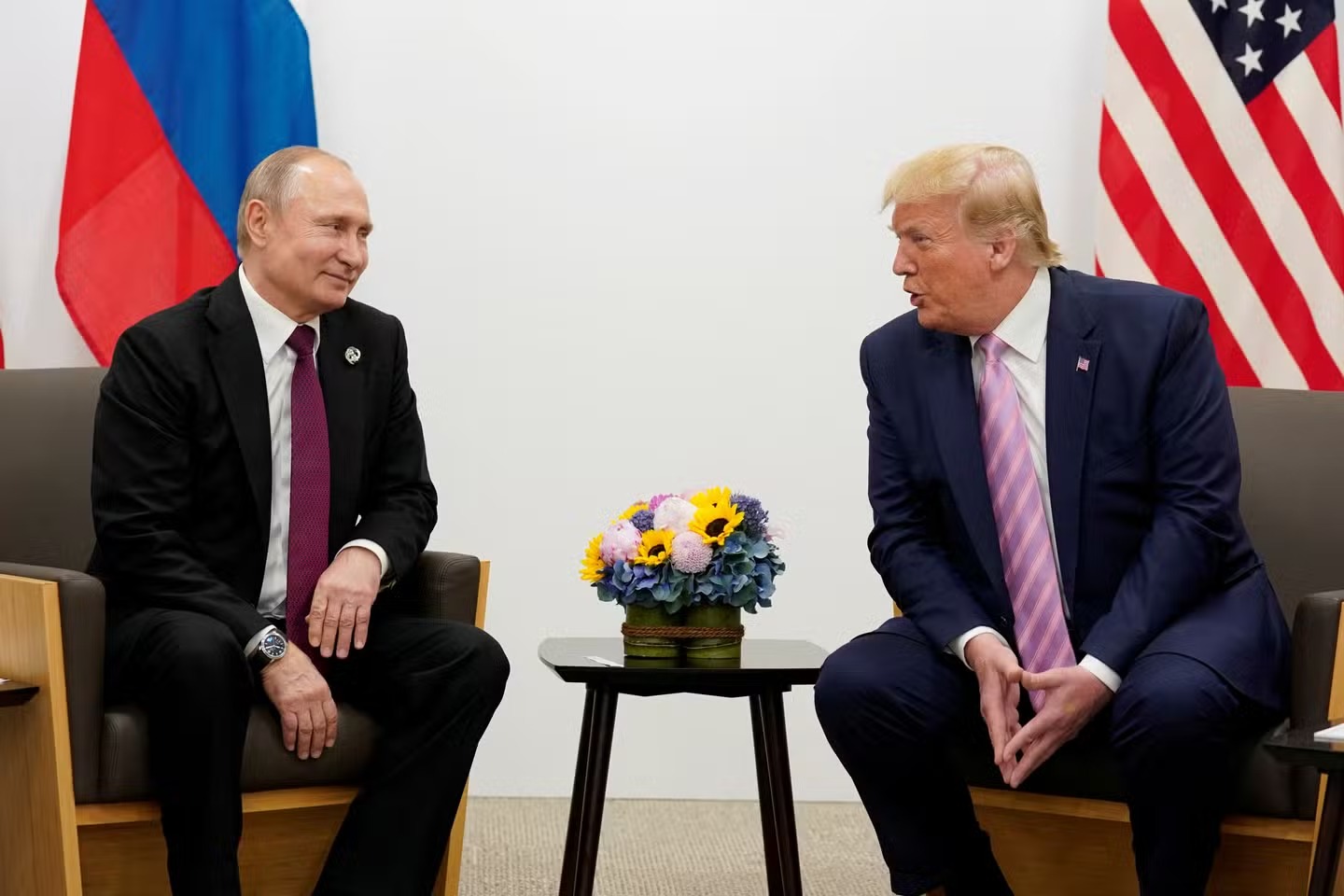
Trump says he will meet Putin in Hungary for Ukraine talks after ‘very productive’ call

WASHINGTON : US President Donald Trump says “great progress” was made during a phone call with Russian President Vladimir Putin on Thursday, with the pair agreeing to face-to-face talks in Hungary.

He said the call, the first with Putin since mid-August, was “very productive”, adding that teams from Washington and Moscow will meet next week.

Trump did not confirm a date for his meeting with Putin in Budapest. The Kremlin said work on the summit would begin “immediately” after the “extremely frank and trustful” call.

The talks came a day before Ukraine’s President Zelensky was to visit the White House, and with Trump weighing whether to arm Ukraine with Tomahawk missiles capable of striking deep into Russia.

Sarbananda Sonowal marks eight maritime projects as NMPA marks Golden Jubilee

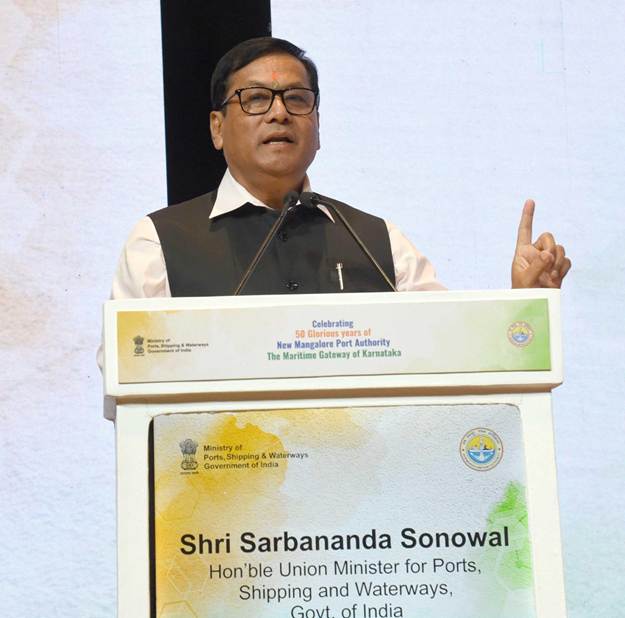
NEW DELHI : The Union Minister for Ports, Shipping and Waterways Shri Sarbananda Sonowal inaugurated the Curtain Raiser Ceremony of the Golden Jubilee Celebrations of the New Mangalore Port Authority (NMPA) at Bharat Mandapam on Wednesday.

To mark the milestone, the minister launched eight major maritime development projects aimed at boosting India’s port infrastructure, logistics efficiency, and sustainability. The projects include a state-of-the-art cruise terminal, modern covered storage facilities, a 150-bed multi-speciality hospital, expanded truck terminals, and upgraded port access infrastructure designed to improve user experience and operational capacity.

Shri Sarbananda Sonowal also launched a commemorative postal stamp, a commemorative coin, and the official Golden Jubilee Anthem of NMPA to celebrate the port’s five decades of contribution to India’s maritime trade and regional growth.

Speaking on the occasion, the Shri Sonowal said, “Today marks a momentous milestone for all of us. The New Mangalore Port, our ninth major port established in 1975, has evolved into a key hub for importers and exporters in the region. From handling just a few thousand tonnes of cargo in its early years, it has grown to handle 46.01 million tonnes in the last financial year, with a total capacity of 104 million tonnes per annum. A new deep-draft general cargo berth is also under construction and will commence operations soon.”

Reflecting on India’s long-term goals, he added, “As we move towards ‘Viksit Bharat 2047’ under the visionary leadership of Prime Minister Narendra Modi ji, our ports will play a crucial role in achieving the target of making India a $30 trillion economy. To become a ‘Viksit Bharat’ and ‘Atmanirbhar Bharat’, we must also become a Viksit Atmanirbhar Maritime Nation by 2047.”

The Ports Minister underscored the need for sustainable and environmentally responsible growth, commending NMPA’s efforts toward green operations. “The economy should not grow at the cost of ecology and environment. The green initiatives undertaken by NMPA are commendable. The port has embraced sustainability as a guiding principle and continues to integrate environmentally conscious practices in its operations,” Shri Sonowal said.

The Minister highlighted that India’s ports are transforming into smart, sustainable, and technology-driven gateways in line with global standards. Initiatives such as the ‘Harit Sagar Guidelines’, ‘Green Tug Transition Programme’, ‘Harit Nauka Scheme’, and ‘Green Shipping Corridors’ are accelerating India’s transition toward a clean-fuel, electric-vessel, and green maritime ecosystem.

Recounting a decade of transformation in the maritime sector, the minister said India has made “unprecedented progress” under Prime Minister Modi’s leadership. The Maritime Amrit Kaal Vision 2047, aligned with the principles of the Blue Economy, charts a long-term roadmap to strengthen India’s maritime capabilities, with planned investments of ₹80 lakh crore projected to generate millions of jobs through the Sagarmala Programme.

Under Sagarmala, 840 projects worth ₹5.8 lakh crore are being implemented by 2035. Of these, 272 projects worth ₹1.41 lakh crore have been completed, while 217 projects worth ₹1.65 lakh crore are currently underway.

The eight new projects launched under NMPA include:

• Construction of two covered storage sheds (14,000 MT capacity, pre-engineered design)

• Construction of a dedicated cruise gate for international tourists

• Modification of KK Gate entrance and exit with RFID-enabled cargo handling, Customs, and CISF facilities

• Expansion of truck parking terminal (Customs House) with a capacity for 50–80 trucks per day

• Construction of PQC roads at MDL Yard (675 meters, with drainage facilities)

• Development of truck parking terminal at Baikampady (20,000 sq. m., capacity for 180–200 trucks)

• Establishment of a 150-bed multi-speciality hospital under PPP mode with an investment of ₹107 crore

• Launch of a dedicated medical app for beneficiaries

The Golden Jubilee of NMPA will be celebrated later this year, marking 50 years of the port’s role in advancing India’s maritime trade and regional development.

The event was attended by senior officials from the Ministry of Ports, Shipping and Waterways, including R. Lakshmanan, Joint Secretary (Ports), and Dr. Venkata Ramana Akkaraju, Chairman, New Mangalore Port Authority (NMPA), along with other senior officials as well as dignitaries.

Mormugao Port Authority to sign 24 MoUs worth Rs 3000 cr at India Maritime Week 2025

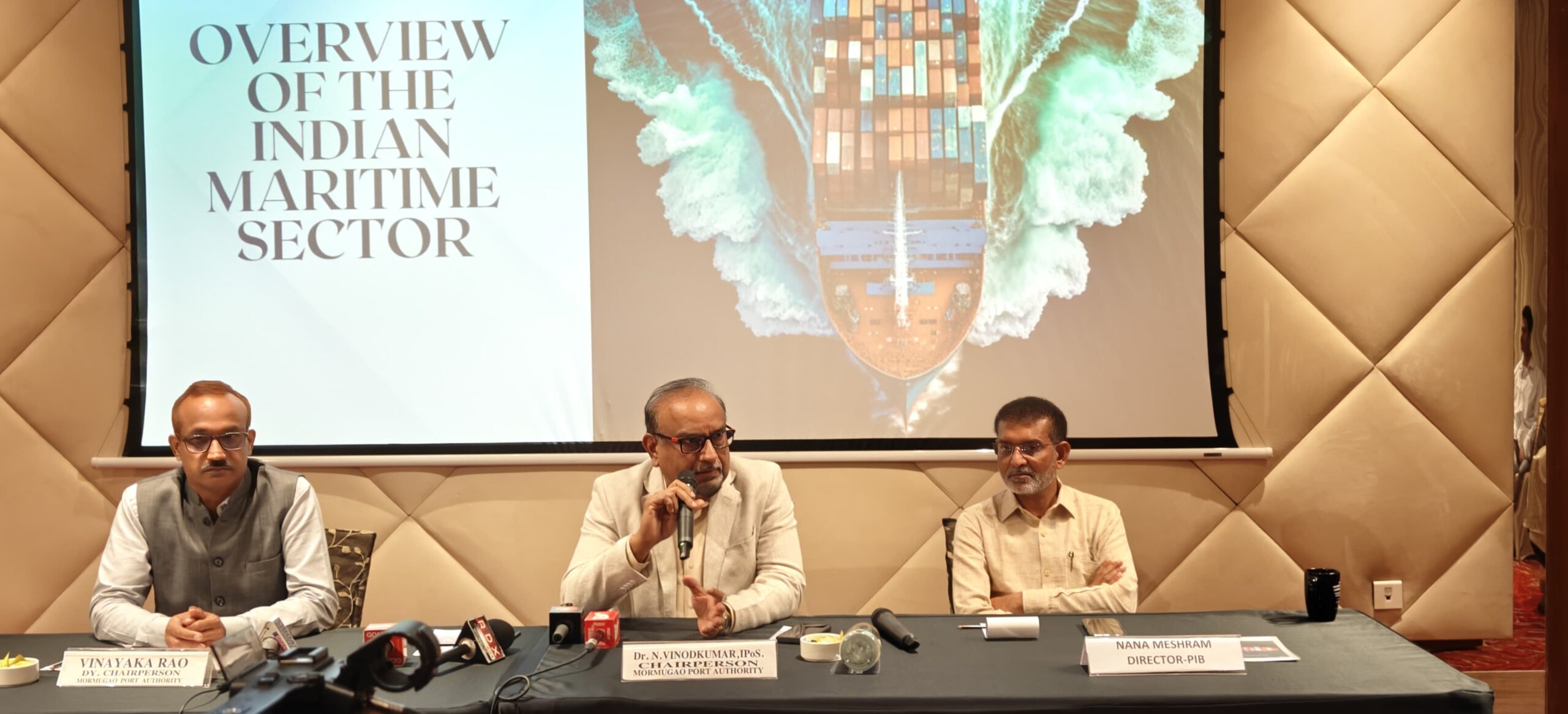
PANAJI : Mormugao Port Authority (MPA) will sign 24 Memorandums of Understanding (MoUs) worth Rs 3,000 crore at the India Maritime Week 2025 event, the flagship event of the Ministry of Ports, Shipping and Waterways, at the Bombay Exhibition Centre, Mumbai, from October 27-31.

MPA Chairperson Dr N Vinodkumar was addressing a news conference in Panaji on Wednesday, ahead of IMW 2025.

With participation expected from over 100 countries and more than one lakh delegates and over 500 exhibitors, India Maritime Week 2025 is set to be a global catalyst for investment, innovation and policy advancement, he said.

“The event is expected to create investment opportunities worth over Rs 10 lakh crore. MPA will be signing 24 MoUs worth Rs 3,000 crore at the event, which will include the renovation of some berths and solar projects at the Port. Besides, Goa will hold a State Session at the event on October 27, projecting the maritime prospects of the State,” said Dr Vinodkumar.

Stating that India was poised to become a superpower in the maritime sector by 2047, the chairperson said that Mormugao Port would also witness several developments in the coming years.

“As part of the overall development of the maritime sector in the country, Mormugao Port is expected to host container vessels in a month or two. The feeder vessels will arrive from Mumbai and will be connected to Mundra Port in Gujarat,” said Dr Vinodkumar.

“The MPA is already a green port as we are producing 3 MW of power through our in-house solar power plant, which is taking care of 100 percent of our consumption. However, we are going ahead with another solar plant project to produce 2 MW of power, as we will require more power once the new cruise terminal is functional.”

The five-day event will bring together global leaders, policymakers, investors, and industry stakeholders for thematic sessions and high-level dialogues, all focused on India’s maritime transformation.

Prime Minister Shri Narendra Modi is also expected to attend the IMW 2025, where he will deliver the keynote address at the Global Maritime CEO Forum.

MPA is giving wide publicity to IMW-2025 across Goa, to apprise the general public about the upcoming mega event. The Port is also stimulating its stakeholders for participation in the mega event in Mumbai. In September 2025, the MPA had organized a Mega Roadshow in Panaji as a curtain-raiser to the IMW 2025, which was attended by Dr. Pramod Sawant, Hon’ble Chief Minister of Goa and Shri Mauvin Godinho, Minister for Transport, Industries, Trade and Commerce, Goa.

The MPA has been declared the first green port in the country under the Green Port Certification Programme. The accreditation was granted by the Centre of Excellence on Environmental, Social and Governance and Circularity, Mumbai. The Port is also preparing to become a smart port, introducing technologies like 5G to enhance operations and communication, he said.

MPA Deputy Chairperson Vinayak Rao was also present at the press conference.

MPA will showcase its modernisation journey, cargo-handling capabilities, cruise terminal development and sustainability initiatives at a dedicated pavilion within the IMW 2025 venue.

The State’s evolving maritime infrastructure will be prominently featured, reinforcing Goa’s role in national maritime growth.

India Maritime Week 2025 serves as a dynamic platform to showcase the latest advancements in maritime technology, port development, logistics and sustainability. The summit aims to foster collaboration, drive innovation and strengthen international partnerships to shape the future of India’s maritime sector and its role in global trade and blue economy growth.

Jeena & Company celebrates 125 years as India’s logistics pioneer

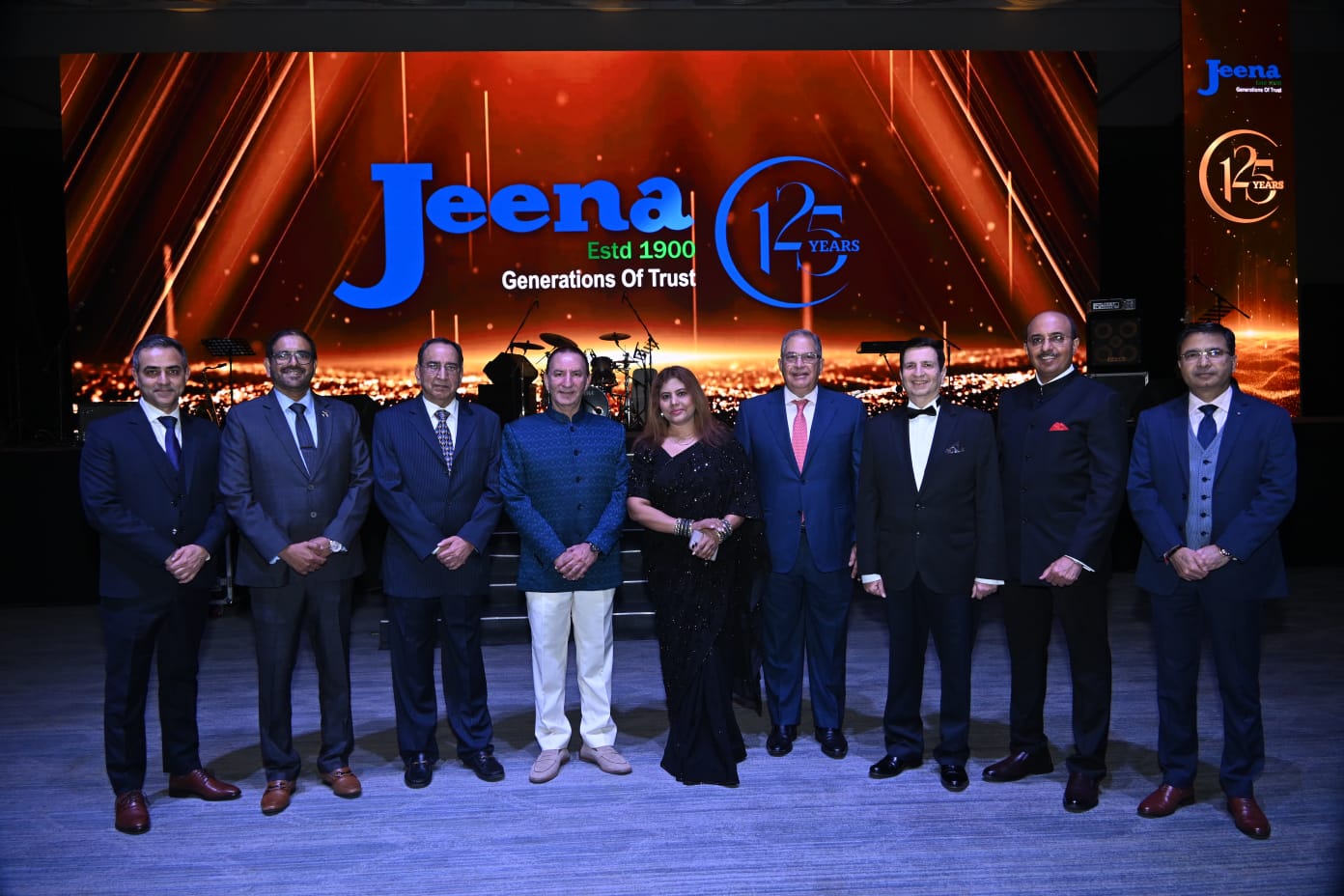
MUMBAI : Jeena & Company, a leading player in freight forwarding and supply chain solutions, celebrated its 125th anniversary with a grand gala that brought together five generations of leadership, decades-long partners, and employees who collectively represent more than a century of service excellence.

The anniversary celebration was both a reflection on the company’s journey from a single-office operation in 1900 to its present-day global presence and a bold declaration of its vision for the next 125 years. The gala highlighted enduring relationships that define the company, including a Germany-based client partnership spanning over 40 years.

Reflecting on this massive milestone, Sam Katgara, Partner, Jeena & Company, said, “As we celebrate 125 years of Jeena, we continue to honour our legacy of service excellence, built on passion, integrity, and generations of trust. Our strength lies in the loyalty and dedication of our people, with over 25% of our colleagues serving for more than 15 years, reflecting our deep belief in nurturing growth from within. Through challenges and new beginnings, we have remained guided by our values, standing firm not to be the biggest, but to be the fifth-generation siblings Ayesha, Nari, and Jeh Katgara step into leadership, they bring fresh perspectives to time-tested foundations. The company has already embarked on significant transformation initiatives, partnering with global technology leaders to modernise its operations while maintaining its customer-first approach.

Speaking at the occasion, Prediman Koul, Chief Executive Officer, said, “Today, we are not only celebrating 125 years of Jeena’s presence in the industry, but also honouring the service, trust, and dedication that have brought us here. As we raise a toast to the future, we look forward to the next 125 years of delivering excellence, embracing digital transformation, and building more sustainable logistics solutions for our customers worldwide. Very few companies have the privilege of such a legacy, and even fewer get the opportunity to transform themselves for the next century — Jeena is proud to be among them.”

While few companies reach 125 years, even fewer successfully transition into their next century of growth. Jeena & Company, one of India’s largest logistics firms, is the first freight forwarding company to transition from paper-based documentation to fully digital operations. As the company steps into its next century, it continues to set new benchmarks in global logistics through innovation and digital transformation.

Building on 125 years of legacy and excellence, the company is now charting the course for the next century with innovation, digital transformation, and a vision to serve global customers for generations to come.

jeena co Jeena & Company celebrates 125 years as India’s logistics pioneer

Notes to Editor – additional quotes by fifth generation

Ayesha Katgara, the Head Transformation Office, said, “We take immense pride in our legacy of trust, goodwill, and partnerships. This milestone is not just a reflection of our past, but a commitment to the future. With technology, digital transformation, and our people at the core, we are determined to carry forward this heritage while shaping a future that is agile, innovative, and global.”

Nari Katgara: “At Jeena, we do not measure headcount; we measure heart count. Eleven percent of our workforce has been with us for over 15 years – they carry our history and values forward. We are proud to honour our legacy while shaping a future that is global, innovative, and people-driven. With fresh ideas and bold ambitions, we are committed to carrying this story forward for the next 150 years, and beyond.”

Jeh Katgara: “Every successful business relies on contributions from all levels and core values established at the beginning. As we prepare to lead Jeena into its next chapter, we feel both the weight of responsibility and the excitement of possibility.”

About Jeena & Company:

Founded in 1900, Jeena & Company is a leading global logistics and supply chain solutions provider with operations across 60 countries, six continents, and 27 offices in India.

A trusted legacy brand with a customer-first approach, Jeena specializes in retail, pharma, life sciences, automotive, and engineering goods, defense, and project logistics, offering air and sea freight, last-mile delivery, warehousing, customs clearance, and documentation services.

As one of India’s largest national customs brokers, Jeena has pioneered industry-first innovations, including paperless documentation. With recent expansion into Sydney, Australia, the company is strengthening its global footprint in other parts of the world in the years to come!

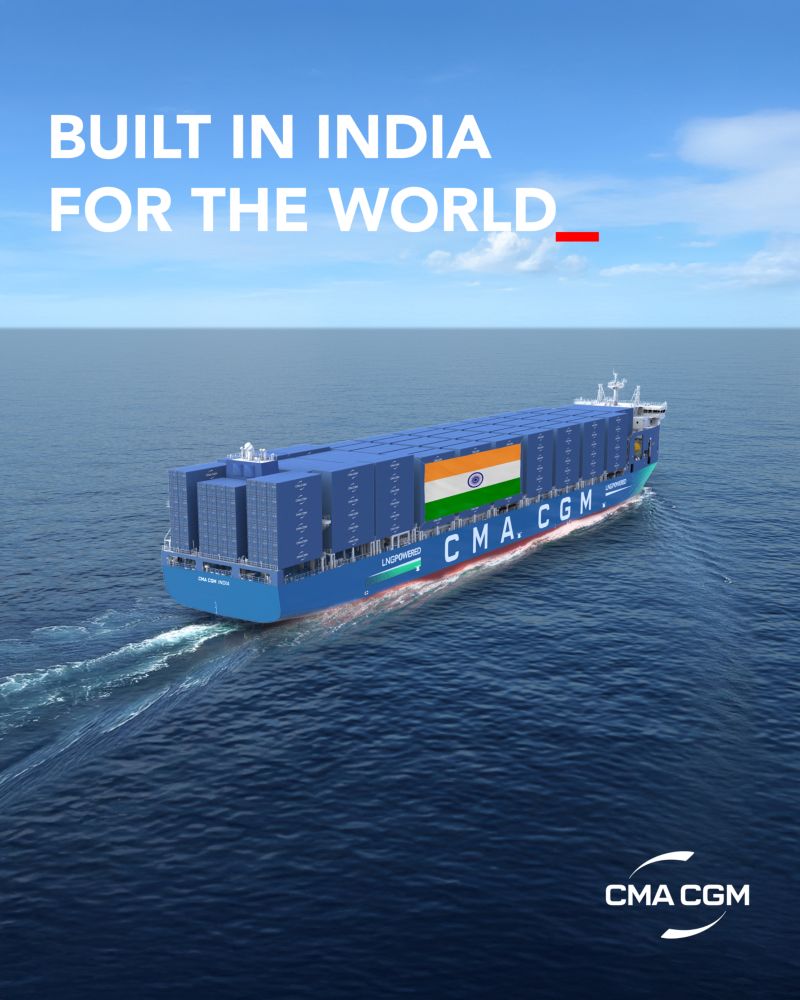
CMA CGM Group signs a letter of intent for six new 1700 TEU Dual-Fuel LNG Containerships built in India

MARSEILLE : CMA CGM Group becomes the first major international container shipping company to enter into an agreement for six new LNG-powered vessels built in India by Cochin Shipyard Ltd (CSL).
Fully aligned with India’s maritime development vision, the Group already reflagged four vessels under the Indian registry in 2025, will have recruited 1,000 Indian seafarers by the end of the year, and plans to hire an additional 500 seafarers in 2026.

The new-built six 1,700 TEU LNG-powered containerships will be registered under the Indian flag, underscoring CMA CGM’s strong willingness to support the Indian Maritime policy implemented by the authorities under the guidance of PM Modi, advancing towards a sustainable maritime future.
The CMA CGM Group, a global player in sea, land, air, and logistics solutions, has signed a letter of intent for six state-of-the-art LNG-powered containerships to be built at Cochin Shipyard Limited (CSL), India. This strategic move makes the Group the first major foreign carrier to commission LNG vessels from an Indian shipyard. All six vessels will be registered under the Indian flag.

The newbuilds, each with a capacity of 1,700 TEUs (Twenty-foot Equivalent Units), demonstrate CMA CGM’s commitment to a more sustainable shipping as they can run on LNG and are ready for low-carbon fuels, significantly reducing greenhouse gas emissions, aligning with the Group’s ambition to be Net Zero Carbon by 2050. The project at Cochin Shipyard will also be run with the technical cooperation of Korean shipbuilder HD Hyundai Heavy Industries.

This initiative underscores CMA CGM’s strong commitment to India’s maritime vision and strategic national priorities, including Make in India1 and Atmanirbhar Bharat2. The Group is actively investing across the Indian maritime value chain, spanning strategic terminals, maritime services, and shipbuilding, while also reflagging vessels under the Indian registry. At the same time, it is enhancing local maritime employment through expanded crewing and manning operations in India. CMA CGM will reflag four vessels under the Indian registry in 2025 and aims to recruit 1,000 Indian seafarers by the end of the year. In 2026, CMA CGM plans to hire an additional 500 Indian seafarers.

Rodolphe Saadé, Chairman and CEO of the CMA CGM Group, stated: “I am pleased that CMA CGM is the first international shipping company to order LNG vessels built in India. This milestone reflects the trust we place in India’s industrial and technological capabilities and supports Prime Minister Modi’s ambition to make India a global shipbuilding power. India is a strategic country for CMA CGM, where we invest, train, and innovate. Beyond shipbuilding, we are strengthening our partnerships in logistics, maritime training, and sustainable transport to support India’s growth and contribute to the decarbonization of global trade.”

The partnership between CMA CGM and Cochin Shipyard underscores a mutual dedication to innovation, sustainability, and global maritime excellence. Vessels will be delivered from 2029 to 2031, in line with the Group’s fleet renewal and energy transition strategy.

Madhu S Nair, CMD of Cochin Shipyard, stated: “We are pleased that CMA CGM has chosen CSL to be part of this land mark initiative. CSL is committed to deliver high quality vessels with sustainable solutions to meet the market expectation of the future shipping. This project is also of great significance to CSL as we are collaborating with the largest shipbuilding group HD KSOE as the major partner, which further reinforces our commitment to bring the best in class solutions through partnerships, to serve clients across the globe.

India represents a strategic market for the CMA CGM Group, holding a pivotal position within the Group’s global agency network. With a 34-year presence in the country and a workforce of approximately 17,000 employees, CMA CGM plays an essential role in connecting India to global markets through 19 weekly maritime services.

Beyond its core shipping operations, the Group is actively investing in India’s port infrastructure, with significant strategic stakes in terminals at Nhava Sheva Freeport Terminal (NSFT), near Mumbai, and Mundra Port.

The CMA CGM Group also established in India, in Chennai, Tamil Nadu, the headquarter of its Global Business Services (GBS) organization, operating as a strategic hub supporting a wide array of functions across shipping, logistics, finance, legal, customer care, and transformation. With a dedicated workforce of over 9,000 employees, GBS supports 160 agencies across the globe, overseeing 261 processes and 158 departments, delivering over 60% of the Group’s main transactional business processes.

CEVA Logistics, CMA CGM’s logistics subsidiary, operates across 105 sites in 31 Indian cities, managing around 900,000 square meters of warehouse space. The acquisition of Stellar VCS in 2023 further strengthened CEVA Logistics’ role in India’s contract logistics sector, offering global expertise and innovative solutions to enhance operational efficiency.

Cochin Shipyard as the leading shipbuilder in India is pioneering the efforts of the Government of India’s vision to develop the country into a global maritime hub under the Maritime India Vision 2030 and the Maritime Amrit Kaal Vision 2047 and this project is a perfect example to demonstrate such initiatives.

1: Make in India is a government initiative launched to promote manufacturing in India and attract investment by encouraging companies to produce goods locally.

2: Atmanirbhar Bharat is a government initiative aimed at making India more self-reliant by promoting local production, innovation, and reduced dependence on imports.

“India will not only meet but exceed IMF’s estimates”: Piyush Goyal on GDP growth

NEW DELHI : Union Minister of Commerce & Industry, Shri Piyush Goyal highlighted on Wednesday the International Monetary Fund’s (IMF) recent revision of India’s growth estimate, which increased from 6.4% to 6.6% for this year, stating that this upward revision is an indication to India’s strengthened economy, driven by increased consumer spending, accelerated investment in infrastructure, and a confident business atmosphere.

He also attributed the growth to the government’s proactive measures, including reduced GST rates, which have led to increased consumer spending and GST collection. Goyal futher showed optimism, stating that with a 7.8% GDP growth in the first quarter, India is set not only to meet but possibly exceed the IMF’s estimates, firming its position as one of the world’s fastest-growing economies.

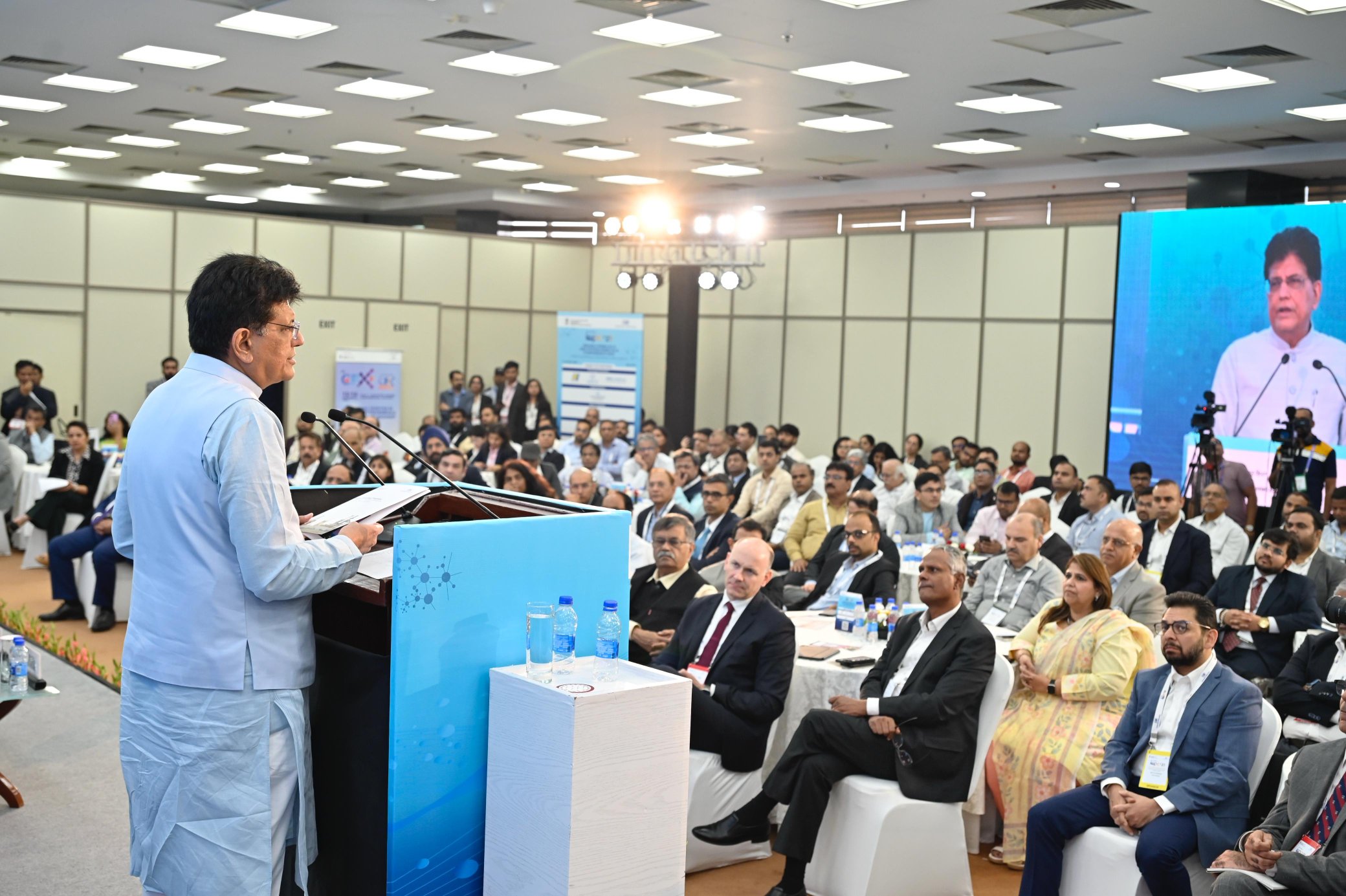
While speaking to reporters outside the Indian Chemicals and Petrochemical Conclave 2025 held at Bharat Mandapam, Goyal said, “The International Monetary Fund (IMF) has recently revised its growth estimates for India, increasing the projected growth rate from 6.4% to 6.6% for this year. This reflects India’s strengthened economy, the country’s confident atmosphere, increased consumer spending due to reduced GST rates, and accelerated investment in infrastructure. While global growth is expected to weaken to 3.2% this year, India’s growth is nearly double that rate. The first quarter saw a 7.8% GDP growth rate, and it is anticipated that India will not only meet but possibly exceed the IMF’s estimates, continuing to be one of the world’s fastest-growing economies. PM Modi’s vision for a developed India by 2047 seems promising.”

Goyal also highlighted the recent surge in GST collection in September, following the rate cuts, and attributed it to Prime Minister Modi’s vision for a developed India by 2047. “Despite initial concerns about reduced spending and GST collection in August due to anticipated GST rate cuts, September saw increased GST collection, and the market witnessed a surge in consumer spending post the rate cuts. PM Modi has gifted the Indian consumers, especially the lower and middle classes, with these economic benefits.” Goyal added.

On Wednesday, Minister Goyal addressed the distinguished captains of industry at the Indian Chemicals and Petrochemical Conclave 2025 held at Bharat Mandapam, New Delhi, emphasising India’s pathway to global leadership through innovation, technology, and competitiveness. Applauding the sector’s vital role in nation-building, Goyal said that the chemicals and petrochemicals industry is “omnipresent in every facet of modern life, from agriculture to automobiles, healthcare to infrastructure and must be at the forefront of developing cutting-edge solutions that power India’s growth.”

Reflecting on India’s vision for Viksit Bharat @2047, the Minister called upon industry leaders to set ambitious goals, urging the sector to aspire to become a USD 1 trillion industry by 2040, thereby contributing significantly to India’s target of a USD 35 trillion economy by 2047.

“Our biggest challenge as a nation is that we often don’t aim big enough,” Goyal said. “Innovation, science, and research must be the backbone of India’s progress. The chemicals and petrochemicals sector has the potential to be a global champion in technology-driven growth and sustainability.”

He noted that advanced nations have achieved prosperity through long-term investments in research and development, and India must similarly anchor its growth in innovation. Goyal highlighted that even oil-rich nations are diversifying into renewable energy and clean technologies, recognising that the future belongs to value-added, sustainable industries.

Acknowledging the industry’s strategic importance to the economy, he emphasised collaboration across the value chain and the need for greater self-reliance in critical materials, while also integrating with global markets to enhance competitiveness.

“We must support each other within our value chains, strengthen domestic capabilities, and at the same time, engage confidently with the world,” the Minister added. “A vibrant, innovative chemicals and petrochemicals sector will be central to India’s journey toward becoming a developed economy.”
CII s report on “People Powering Progress: Building India’s Chemical Workforce for a USD 1 Trillion Industry” was released during the Special Plenary Session with Piyush Goyal, Hon’ble Minister of Commerce and Industry, at the 7th edition of Indian Chemicals and Petrochemicals Conference 2025.

The report captures insights on the transformative potential of India’s chemical industry with projections to reach USD 400-450 billion by 2030 and potentially USD 850-1,000 billion by 2040, driven by global supply chain dynamics, domestic demand, and technological advancements. The sector, contributing 7% to India’s GDP and 14% of industrial output, serves as a catalyst for growth across a wide range of sectors.
R Mukundan, President Designate, CII; Chairman, CII National Committee on Chemicals and Petrochemicals; and Managing Director & CEO, Tata Chemicals Ltd., underlined the role of trade and technology partnerships in shaping the sector’s global positioning.

Opportunities opened through Free Trade Agreements (FTAs) enable the strengthening of the ecosystem for R&D, technology partnerships, and trade linkages. These efforts foster customer development and position the chemical industry as a resilient, future-ready global player. Collaboration and partnerships in research and technology will power India’s next leap, strengthening our ecosystem for R&D and global collaboration to make India a chemical manufacturing powerhouse.

Salil Singhal, Chairman of the CII Indian Chemicals and Petrochemicals Conference, Member of the SCALE Committee, and Chairman Emeritus of PI Industries, welcomed recent policy reforms that support the industry. The unveiling of the HSN Code Mapping Guidebook, along with simplified regulatory pathways, strengthened credentials, and empowered MSMEs, marks a landmark reform.

These initiatives bring clarity, precision, and responsiveness to policy frameworks, creating opportunities for meaningful participation in India’s growth story, particularly in the chemical sector. Chandrajit Banerjee, Director General, CII, highlighted the critical role of government initiatives in strengthening the sector’s competitiveness. The chemical sector’s significant contribution to manufacturing is widely recognised. Within the broad spectrum of Make in India, initiatives such as the Production Linked Incentive (PLI) scheme, PM Gati Shakti, and the National Logistics Policy have played a crucial role in integrating the chemicals and petrochemicals industry into India’s broader manufacturing ecosystem.

Source : ANI