Home Blog Page 607

India aims to remain fastest-growing large economy for next 20 yrs: Piyush Goyal

NEW DELHI: India wants to remain the fastest-growing large economy for at least another 20 years, said Union Commerce and Industries Minister Shri Piyush Goyal on Thursday.

Speaking at the India-Brazil Business Dialogue in Delhi, Goyal said that the IMF has recently increased India’s GDP growth forecast from 6.4 per cent to 6.6 per cent, adding that India has consistently maintained this position over the past four years.

Speaking at India-Brazil Business Dialogue in Delhi, Goyal said, “IMF has recently increased the GDP growth forecast for India from 6.4% to 6.6%. April to June quarter 2025 the GDP grew by 7.8% the fastest growing large economy in the world. And we’ve continued to be the fastest growing large economy over the last four years, and our effort is to continue to be the fastest growing fastest growing large economy for at least another 20 years.”

“Our effort has been to create strong macro economic fundamentals, so whether it is keeping inflation low, whether it is consistently strengthening our growth, whether it’s strengthening and fortifying our banking systems, whether it’s ensuring that our foreign exchange reserves are strong and with $700 billion foreign exchange reserves, even amongst the top five countries with large Forex reserves, the strong macroeconomic fundamentals sets a threshold on which we can be ambitious in our growth targets, in our effort to promote faster growth,” Commece Minister added.

Goyal further added that the second pillar of our growth story is the development of modern, high-quality infrastructure, reaching even the most remote corners of India to ensure inclusive and equitable growth across the entire country.

“We believe good infrastructure will help us become more competitive, bring down our logistics cost and strengthen the ability of India to grow our businesses, provide opportunities for our young men and women to contribute to nation building,” Minister added.

Highlighting the importance of the rationalisation of the Goods and Services Tax (GST), Goyal said the purpose of the reforms is to simplify business processes and promote the ability of our people to spend more and look for a better quality of life.

Source: ANI

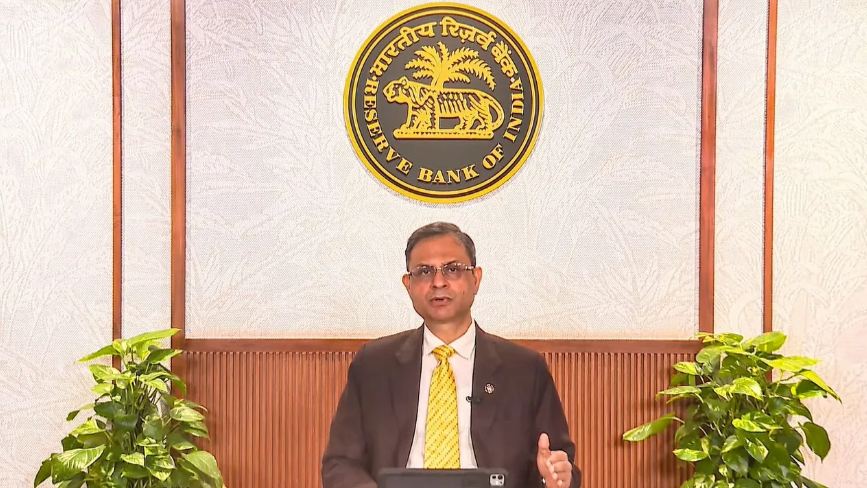
RBI Governor showcases India’s Digital Public Platforms at IMF-World Bank meetings in Washington

WASHINGTON : Reserve Bank of India (RBI) Governor Sanjay Malhotra shared a brief overview of India’s Digital Public Platform (DPP) ecosystem on the side-lines of the Annual Meetings of the World Bank and International Monetary Fund (IMF) in Washington, D.C. According to an official statement by RBI, a “High-Level Dialogue on Forging Economic Resilience through Digital Public Platforms” was organised by the Reserve Bank of India on October 14, 2025, during the Annual Meetings.

The dialogue aimed to share India’s experiences, learnings, and explore opportunities for international collaboration in building resilient and inclusive digital systems. RBI stated “Governor, Reserve Bank of India, Sanjay Malhotra, gave a brief overview of India’s DPP ecosystem and their role in digitalisation and financial inclusion, especially in Government transfer payments”.

During his address, RBI Governor Sanjay Malhotra provided an overview of the evolution and functioning of India’s DPP ecosystem and highlighted their role in advancing digitalisation and promoting financial inclusion.

He particularly noted their contribution in streamlining government transfer payments and ensuring that benefits reach citizens directly and efficiently. India’s Digital Public Platforms have emerged as a powerful catalyst for inclusive growth and innovation. Foundational platforms such as Aadhaar for digital identity and the Unified Payments Interface (UPI) for real-time payments have demonstrated how large-scale, resilient, and cost-efficient public service delivery systems can be developed to serve millions effectively.
These platforms have become central to India’s digital transformation, enabling faster, transparent, and secure financial transactions while improving access to government services.

The event saw participation from central banks of 38 countries, including 22 Governors and other senior decision-makers, reflecting the growing global interest in India’s digital journey. Malhotra emphasised that India’s approach to digital public infrastructure is guided by the spirit of Vasudhaiva Kutumbakam, the world is one family, and reiterated India’s commitment to sharing its experiences and collaborating internationally to support the global digital transformation agenda.

Source : ANI

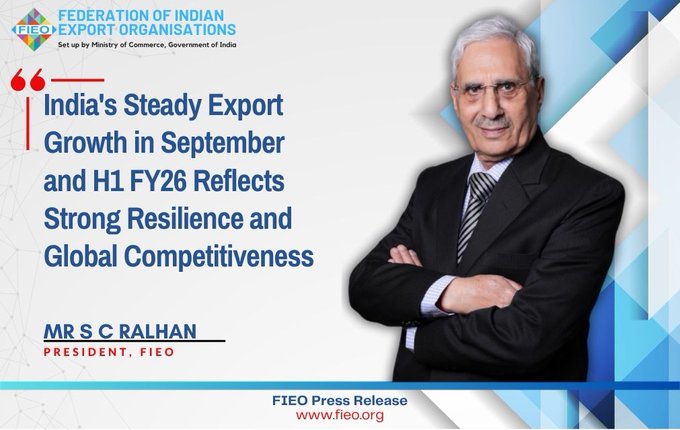
India’s steady export growth in September and H1 FY26 reflects strong resilience and global competitiveness: President, FIEO

NEW DELHI : The Federation of Indian Export Organisations (FIEO) has lauded the continued growth in India’s merchandise and overall exports for September 2025 and the first half of the financial year 2025–26, calling it a testament to the resilience, adaptability, and competitiveness of Indian exporters in navigating a challenging global landscape. Despite persistent geopolitical tensions, elevated interest rates, and sluggish demand across major economies, India’s export sector has shown remarkable strength and consistency. According to official trade data, merchandise exports in September 2025 rose by 6.74% to USD 36.38 billion from USD 34.08 billion in the same month last year, highlighting the determination and resourcefulness of Indian businesses, said Mr S C Ralhan, President, FIEO.

While merchandise imports increased sharply by 16.6% to USD 68.53 billion, leading to a trade deficit of USD 32.1 billion for the month, this surge also reflects strong domestic demand and buoyant manufacturing activity, driven in part by elevated commodity prices and rising input costs. Overall exports, including both goods and services, reached USD 67.20 billion in September 2025, up slightly from USD 66.68 billion in September 2024, whereas overall imports climbed to USD 83.82 billion from USD 75.28 billion. This resulted in a total trade deficit of USD 16.61 billion for the month. FIEO noted that while the trade gap remains a concern, the resilience of the services sector continues to offer balance and stability.

For the April–September 2025 period, cumulative merchandise exports registered a growth of 3.02%, reaching USD 220.12 billion, while merchandise imports rose by 4.53% to USD 375.11 billion. Overall exports (goods and services combined) during the same period increased by 4.45% to USD 395.71 billion, while total imports grew by 3.55% to USD 472.79 billion. Significantly, the overall trade deficit narrowed by 2.28% to USD 59.48 billion, a positive development that reflects the continued strength of India’s service exports and improving trade dynamics.

FIEO President, Mr S C Ralhan emphasized that the consistent growth in exports, despite formidable global headwinds, underscores the commendable efforts of Indian exporters and their growing competitiveness on the world stage. At the same time, the increase in imports calls for a renewed focus on building domestic manufacturing capabilities in critical sectors such as electronics, machinery, and intermediate goods. Mr Ralhan urged the government to take bold steps toward import substitution by encouraging local production and enhancing global competitiveness through innovation and scale.

He added that while the United States continues to be India’s largest export destination, followed by the UAE, Netherlands, China, the UK, and Germany, there is substantial untapped potential in regions such as Latin America, Africa, and ASEAN. With well-targeted export promotion strategies and market diversification efforts, India can deepen its global footprint and reduce overdependence on a few markets.

To ensure continued momentum, FIEO called for enhanced policy support to address key concerns faced by exporters. Mr Ralhan stressed the urgent need for greater availability of export credit at competitive rates, particularly for MSMEs, which form the backbone of India’s export sector. Reducing logistics and compliance costs through modern infrastructure, simplified processes, and quicker refund mechanisms would significantly enhance exporter confidence. He also advocated for supporting high-value sectors like electronics, green technology, and processed food, which offer immense potential for long-term value creation and job generation. Labour-intensive sectors, which are bearing the brunt of high tariffs from markets like the US, also require strategic support to stay globally competitive.

FIEO strongly recommends fast-tracking of the ongoing Free Trade Agreements (FTAs) with the European Union, United Kingdom, Latin American countries, and the GCC to enhance market access, reduce trade barriers, and strengthen India’s position in global supply chains. Mr Ralhan reaffirmed FIEO’s commitment to working hand in hand with the government and industry stakeholders to unlock new markets, leverage shifts in global supply chains, and realize the nation’s ambitious export targets. He concluded by expressing confidence that with the right mix of policy support, innovation, and global engagement, India is well on its way to becoming a leading force in international trade.


Efforts are being made to augment exports of railway equipment: MoS Ravneet Singh Bittu

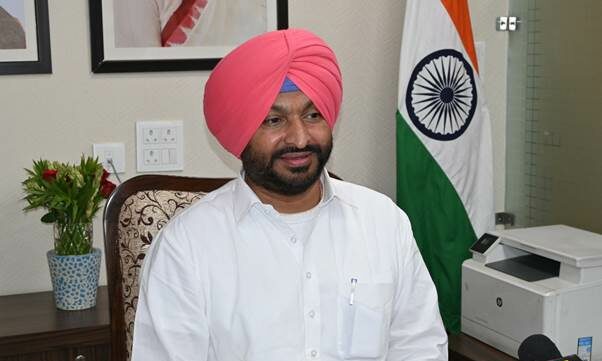
NEW DELHI: Minister of State for Railways, Ravneet Singh Bittu, on Thursday highlighted the Centre’s efforts to augment the exports of railway machinery.

Speaking with ANI, the MoS said that all firms and railway PSUs are being asked to participate both within and outside the country and submit tenders.

“We are preparing for exports. Why shouldn’t our machinery be exported? It will only benefit us by bringing in foreign currency. All firms and railway PSUs are being asked to participate within and outside the country and bring in tenders,” he told ANI on the status of exports of railway machinery and Vande Bharat trains.

He addressed the media after taking stock of the 16th International Railway Equipment Exhibition in New Delhi.

“Our railway wagons and coaches are already being exported to many countries,” he said, adding that the railway industry already has big export orders.

Regarding the modernisation of platforms under the PPP model, the minister stated that highways had previously adopted the PPP model, but railways had not.

“Now, we are opening up for the railway also. Railway stations are being developed from Rs 20 crore to 3000 crore,” he said.

The department has improved everywhere from catering to the technique, he said. In the Cabinet meetings, funds of a minimum of Rs 10,000 crore for the railways have been allocated frequently.
“So a lot of work is being done under the PPP model in the modernisation of railway platforms,” he said.

Regarding the Kavach, he stated that, in addition to Kavach 4.0, work is also underway on Kavach 5.0.
“Safety is paramount in railways and that’s the vision of the government also. When we are planning to increase the speed of the trains, we have to focus on the safety equally,” the minister said. The aim is to implement Kavach at the Zonal level also.

Kavach is an indigenously developed Automatic Train Protection (ATP) system for Indian Railways designed to prevent accidents caused by human error and overspeeding. It acts as a safety layer by automatically applying brakes in case a loco pilot fails to do so and provides real-time signalling information on the dashboard, especially useful in fog. The system is being implemented in a phased manner across the network, with ongoing deployment on key corridors, such as Delhi-Mumbai and Delhi-Howrah.

“The ministry is putting in full efforts in this regard to speed up the work of Kavach. Earlier, there were a couple of companies working in this direction, and now many other companies are joining in,” he added.

The goal of running a bullet train remains in place. Japan’s Minister recently visited India and stated that Japanese engineers have learnt a great deal from the bullet train project between Ahmedabad and Mumbai.

“There were some land issues in Maharashtra. But you will see running of bullet trains in some parts by 2027,” he added.

Source: ANI

Gateway Distriparks successfully completed first double stack Train Service from MMLP Ankleshwar to ICD Garhi

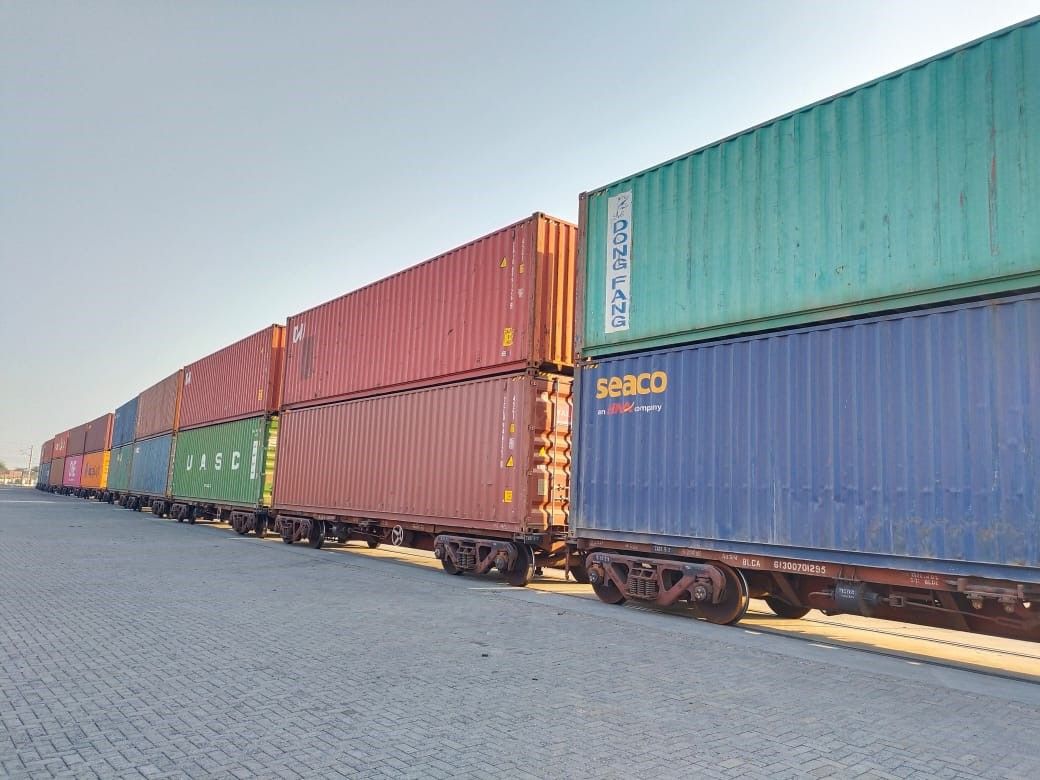
NEW DELHI : Gateway Distriparks Limited (GDL) has successfully completed its first double stack Train Service from Multimodal Logistics Park (MMLP) Ankleshwar to Inland Container Depot(ICD) Garhi on October 15, 2025.

The inaugural train carried a mix of EXIM and domestic containers, operating under a hub-and-spoke model that connects cargo movements from JNPT to ICD Garhi via Ankleshwar.

This milestone marks Gateway Distriparks Limited foray into domestic services from Ankleshwar to North India, further strengthening the company’s integrated logistics network.

By linking western and northern industrial hubs, GDL continues to enhance multimodal connectivity and operational efficiency.

“There is tremendous potential to expand this service, and we are truly excited for what lies ahead,” said Samvid Gupta, Joint Managing Director, Gateway Distriparks Limited. “This initiative reinforces our commitment to providing seamless, cost-effective, and sustainable logistics solutions across India.”

Looking ahead, EXIM operations from Ankleshwar are expected to commence by the start of the next financial year, coinciding with the Dedicated Freight Corridor (DFC) connectivity to Nhava Sheva.

This development will further boost double-stack capability and enable faster, more efficient cargo movement between ports and industrial centers.

Cochin Shipyard to launch three advanced vessels

KOCHI : Cochin Shipyard Limited (CSL) will launch an Anti-Submarine Warfare (ASW) Shallow Water Craft, a hybrid electric methanol-ready Commissioning Service Operation Vessel (CSOV), and a trailer suction hopper dredger on Saturday (October 18, 2025).

The ASW Shallow Water Craft, to be commissioned as INS Magdala for the Indian Navy, is the sixth vessel in a series being built under a contract for eight vessels signed in April 2019. Designed and built indigenously, the 78-metre-long, 896-tonne craft is capable of achieving speeds of up to 25 knots. It is equipped with advanced underwater sensors, lightweight torpedoes, ASW rockets, and mine-laying capability. The vessel can also conduct low-intensity maritime operations, coordinated ASW missions with aircraft, and search and rescue operations in coastal waters, CSL said in a release.

The ASW Shallow Water Craft class will replace the Indian Navy’s Abhay-class corvettes, significantly strengthening India’s near-shore anti-submarine capabilities with enhanced automation, manoeuvrability and endurance, the release added.

The 93-metre-long, 19.6-metre-wide hybrid electric methanol-ready CSOV will support the commissioning, installation, and maintenance of offshore wind turbines. Equipped with hybrid-electric propulsion, methanol-ready engines, large lithium-ion battery packs, dynamic positioning (DP2), and a motion-compensated gangway system, the vessel ensures safe and efficient operations even in rough seas. It will also serve as a “floating hotel” for offshore technicians, according to the release.

The DCI Dredge Godavari, to be launched for the Dredging Corporation of India (DCI), will be India’s largest and most advanced dredger, according to CSL. Built in collaboration with Royal IHC, Netherlands, the 12,000-cubic-metre trailer suction hopper dredger, with a length of 127 metres and a dredging depth of 36 metres, will enhance DCI’s capacity for port deepening, reclamation, and maintenance dredging. The launch comes ahead of India Maritime Week 2025, which begins on October 27 in Mumbai.

Great Eastern Shipping Company takes delivery of 2016 built Kamsarmax Dry Bulk Carrier ‘Jag Anjali’

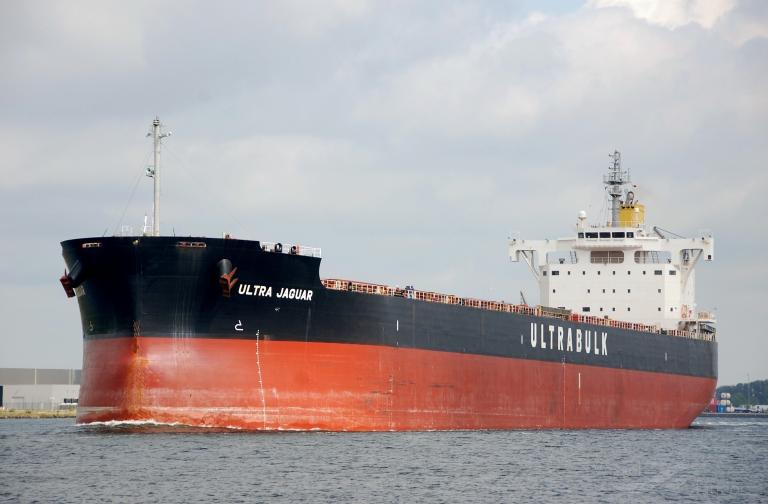
NEW DELHI: Great Eastern Shipping Company has taken delivery of a 2016 built Kamsarmax Dry Bulk Carrier Jag Anjali of about 81,922 dwt. The company had contracted to buy the vessel in Q2 FY26. This vessel is financed entirely from internal accruals.

The Company’s current owned fleet stands at 40 vessels, comprising 26 tankers (5 crude carriers, 17 product tankers, 4 LPG carriers) and 14 dry bulk carriers aggregating 3.21 mn dwt.

Source: Capital Market – Live News

Kuehne+Nagel accelerates India growth with 100,000 sqm fulfilment centre expansion

SCHINDELLEGI : Strategic expansion across tier-1 to tier-3 cities, growing fulfilment centre capacity to nearly 500,000 sqm
Achieving a 75% surge in peak order handling through advanced automation and optimised space
Generating over 1,500 new jobs across India
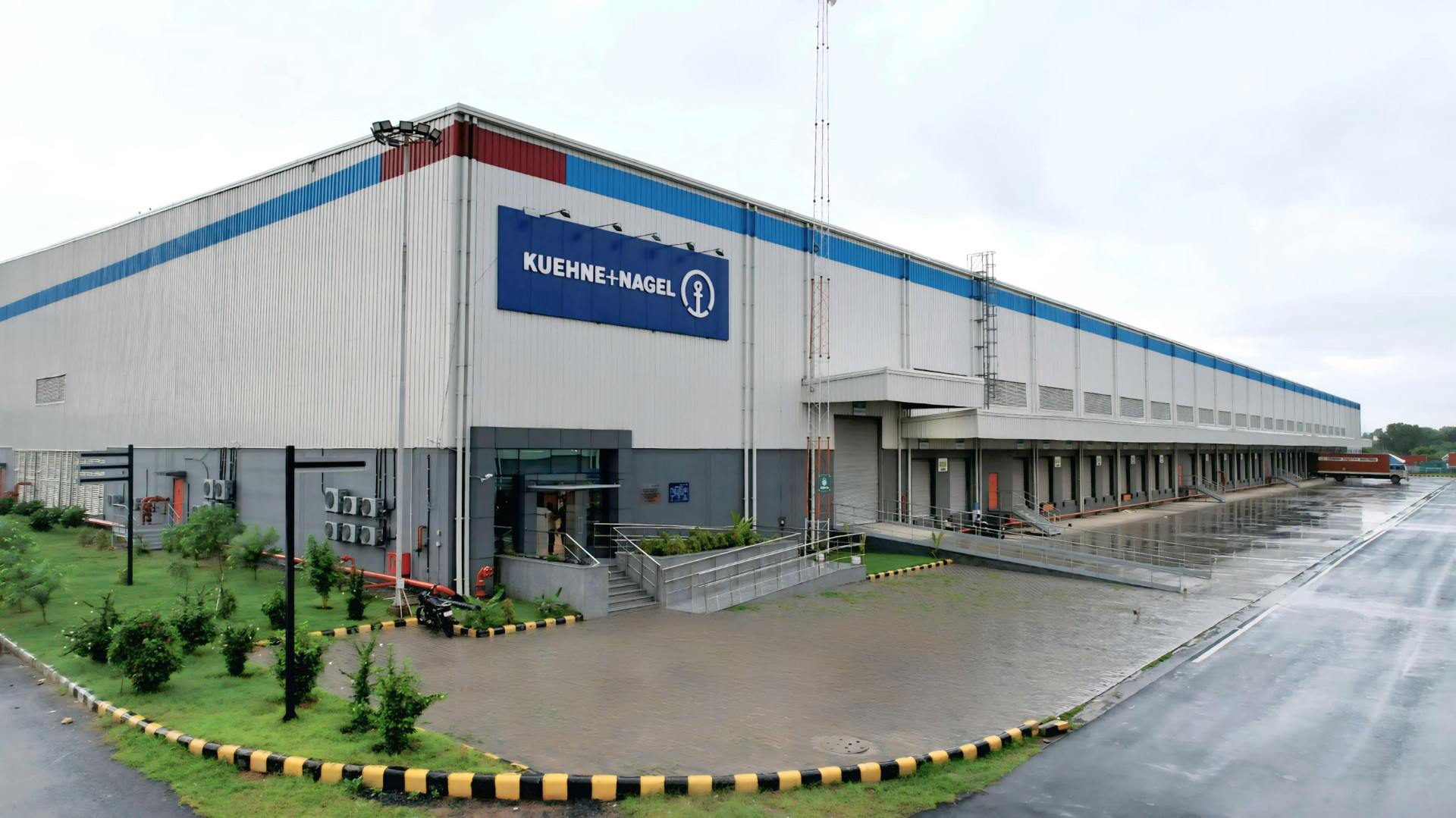
Kuehne+Nagel is investing in five new fulfilment centres, adding 100,000 sqm of capacity, located in Gurgaon, Kolkata, Nagpur, Mumbai and Rajpura. This expansion increased the company’s total fulfilment centre footprint in India to nearly 500,000 sqm and will generate more than 1,500 new jobs nationwide, contributing to the growth of the local economy.

India is projected to become the world’s third-largest economy by 2030, with strong growth across high-tech, automotive, consumer goods, and healthcare sectors. Rising demand in these industries is driving the need for scalable, high-performance logistics infrastructure.

The new fulfilment centres are equipped with automation technologies, including telescopic conveyors and high-performance sorting systems, enabling a 75% increase in peak order handling capacity.

The locations span tier-1 cities Mumbai and Kolkata, tier-2 hubs Gurgaon and Nagpur, and Rajpura in tier-3 — aligned with India’s multi-city industrial growth. Gurgaon and Nagpur continue to evolve as growth hubs for multiple industries, while Rajpura, is gaining traction in manufacturing and distribution.

“India is a key growth market for Kuehne+Nagel,” said Damian Raczynski, Senior Vice President, Contract Logistics, Kuehne+Nagel Asia Pacific. “We invest where our customers are — and this expansion strengthens our ability to serve high-demand sectors like consumer and healthcare with speed, reliability, and flexibility.”

About Kuehne+Nagel

With more than 82,000 employees at almost 1,300 sites in close to 100 countries, the Kuehne+Nagel Group is one of the world’s leading logistics providers. Headquartered in Switzerland, Kuehne+Nagel is listed in the Swiss blue-chip stock market index, the SMI. The Group is the global number one in air and sea logistics and has strong market positions in road and contract logistics. Kuehne+Nagel is the logistics partner of choice for 400,000 customers worldwide. Using its global network, logistics expertise and data-based insights, the Group provides end-to-end supply chain solutions for global companies and industries.


Executive Vice President of the Singapore Economic Development Board visits NX Group

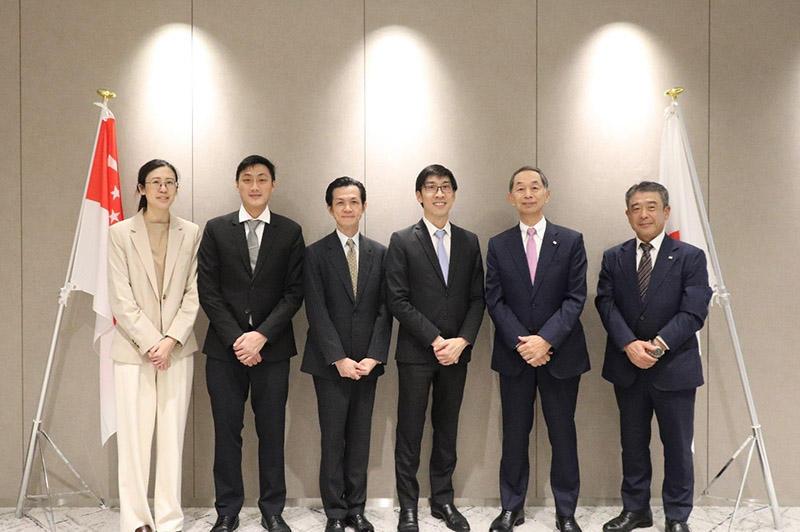
SINGAPORE : NIPPON EXPRESS HOLDINGS, INC. received a visit from a four-member delegation led by Executive Vice President Chan Ih-Ming of the Singapore Economic Development Board (EDB) at the NX Group Building on Thursday, September 25.

Established by the NX Group in 1973, its local subsidiary in Singapore celebrated its 50th anniversary in 2023. The Group has also established Nippon Express (South Asia & Oceania) Pte. Ltd. in Singapore as its regional headquarters, positioning the country as an important hub for the South Asia and Oceania region. Offering a wide range of services including ocean and air forwarding, logistics, and heavy haulage, the company has long supported the supply chains of customers both within and beyond the region.

The purpose of the EDB delegation’s visit to Tokyo was to exchange views on Singapore’s market and investment environments with the management teams of Japanese companies. EDB representatives including Executive Vice President Chan Ih-Ming and EDB Senior Vice President and Head of Region for Japan and Korea Clarence Chua were received at the NX Group Building by NIPPON EXPRESS HOLDINGS President Satoshi Horikiri and NX South Asia & Oceania President Katsuhito Kobayashi.

The meeting participants exchanged opinions on the NX Group’s global strategy going forward and the possibility of business expansion based out of Singapore, taking into account the importance of Asia in global supply chains. They also discussed the possibility of leveraging Singapore’s geographical advantages and business environment to position it as a candidate location for the deployment of global strategic functions. All in all, the gathering proved a valuable opportunity for further advancing business cooperation between the EDB and the NX Group.

The NX Group remains committed to enhancing its global network to provide high-quality logistics services to customers around the world.

Port of Antwerp sees temporary relief from strikes as backlog reaches 160 ships

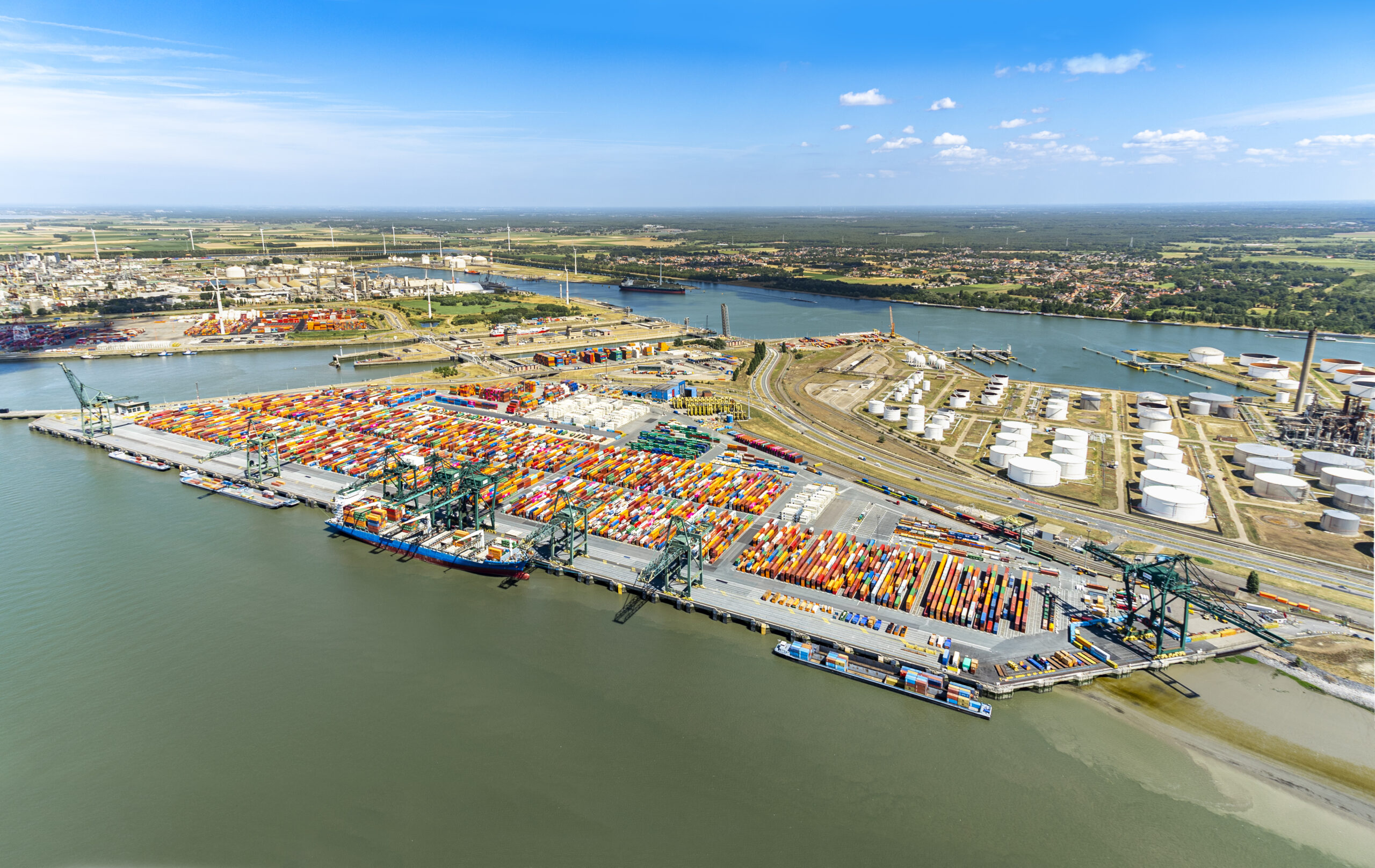
ANTWERP: Belgium’s key ports of Antwerp and Bruges have secured temporary relief from industrial actions, the port authority said Oct. 15, with maritime traffic expected to resume gradually in the coming days.

While National Strike Day, which fell on Oct. 14, was over, Flemish pilots’ union BVL has also suspended strikes until Oct. 24, according to the Port of Antwerp-Bruges.

“A gradual improvement will therefore become noticeable,” the port authority said on its website, adding that more than 60 ships were waiting to depart and around 100 ships were queuing to enter the port complex.

“It is too early to estimate how quickly the situation will improve,” it said in a web statement. “Clearing the backlog will take several days.”

The port authority said it was not immediately clear whether other organizations within the Pilots’ Front would also suspend their industrial actions. The unions have been protesting against the federal government’s planned pension reform, resulting in traffic disruption since Oct. 5.

“Pilot strikes [are] causing delays, with [the] port of Antwerp being the most affected,” bunker trader KPI OceanConnect said in a note.

“We have some people diverting from Antwerp to Rotterdam, but it’s not that easy to solve in the prompt,” a Europe-based jet fuel market player said, adding that there was congestion in Rotterdam too.

Platts, part of S&P Global Commodity Insights, last assessed the delivered bunker price for very low sulfur fuel oil at $432/metric ton in Antwerp on Oct. 14, compared with $434/mt on Oct. 6.

Market participants said earlier that the strikes were slowing down arrivals into Europe, with Antwerp being a major discharge location for jet fuel and diesel.

Antwerp, Europe’s second-largest port in cargo volumes and bunker deliveries, has faced several strikes in recent quarters. Past disruptions usually lasted for days and were limited, as ample notice was given.

Rotterdam operations
Separately, Rotterdam’s container terminals have resumed normal operations since Oct. 13 after lashers suspended their industrial action due to court intervention.

The dockworkers that fasten and unfasten containers, who began their strike Oct. 8, have the right to stop working Oct. 17 if they can’t reach a new collective labor agreement with their employers.

“The chosen solution is not ideal, but it will allow the port to reopen and the Netherlands to be resupplied,” the Port of Rotterdam said in a statement. “This will enable backlogs to be cleared to some extent and container ships to be handled over a four-day period.”

The industrial action has affected the Dutch port’s container operations but not its liquid, dry bulk terminals and bunker operations.

Rotterdam, Europe’s largest cargo and bunker port, reported a 2.7% year-over-year growth in container throughput to 7 million twenty-foot equivalent units in January-June.

Source: Platts