Home Blog Page 612

IMF revises India’s FY26 growth forecast up to 6.6%

NEW DELHI: The International Monetary Fund (IMF) on Tuesday revised India’s growth forecast for the fiscal year 2025-26 (FY26) upward to 6.6%, a 0.2 percentage point increase from its previous estimate of 6.4%.

This revision is largely due to India’s strong growth momentum in the first quarter of FY26, which saw the economy grow at a rate of 7.8%.

The upward revision is attributed mainly to the carryover effect from a strong first quarter, rather than any offsetting of recent US tariffs.

However, the IMF has lowered its growth forecast for the next fiscal year (FY27) by 0.2 percentage points to 6.2%, citing the impact of increased tariffs. The IMF has also downgraded its global growth forecast, expecting global growth to slow from 3.3% in 2024 to 3.2% in 2025 and 3.1% in 2026.

“In India, growth is projected to be 6.6 per cent in 2025 and 6.2 per cent in 2026. Compared with the July WEO Update, this is an upward revision for 2025, with carryover from a strong first quarter more than offsetting the increase in the US effective tariff rate on imports from India since July, and a downward revision for 2026. Compared with the pre-tariff forecast in October 2024, growth is projected to be cumulatively 0.2 percentage point lower,” the IMF’s October edition of World Economic Outlook added.

The World Bank has also raised its India growth forecast for FY26 to 6.5% from 6.3%, while trimming its projection for the next fiscal year by 20 basis points to 6.3%. The IMF’s forecast is higher than S&P’s estimate of 6.5% but lower than Fitch’s estimate of 6.9%.

In 2024-25, the Indian economy grew by 6.5% in real terms. The government has maintained the GDP forecast at 6.3-6.8 per cent for 2025-26, even as US tariff uncertainty looms, affirming confidence in the country’s robust domestic consumption.

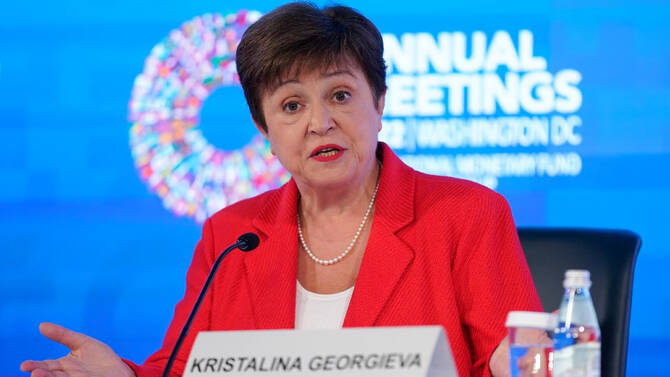
IMF Managing Director Kristalina Georgieva stated that India is becoming a key engine of global growth, speaking ahead of the 2025 IMF-World Bank Annual Meetings.

In September, Global rating agency Fitch revised India’s growth outlook for the fiscal year ending March 2026 to 6.9 per cent from its earlier projection of 6.5 per cent in June Global Economic Outlook (GEO).
Another major credit rating agency, Crisil, has maintained India’s GDP growth forecast for the current fiscal year, 2025-26, at 6.5 per cent, even as it sees downside risks emanating from US tariffs.

Source: ANI
Inaugural edition of the India-Republic of Korea Navy Bilateral Exercise

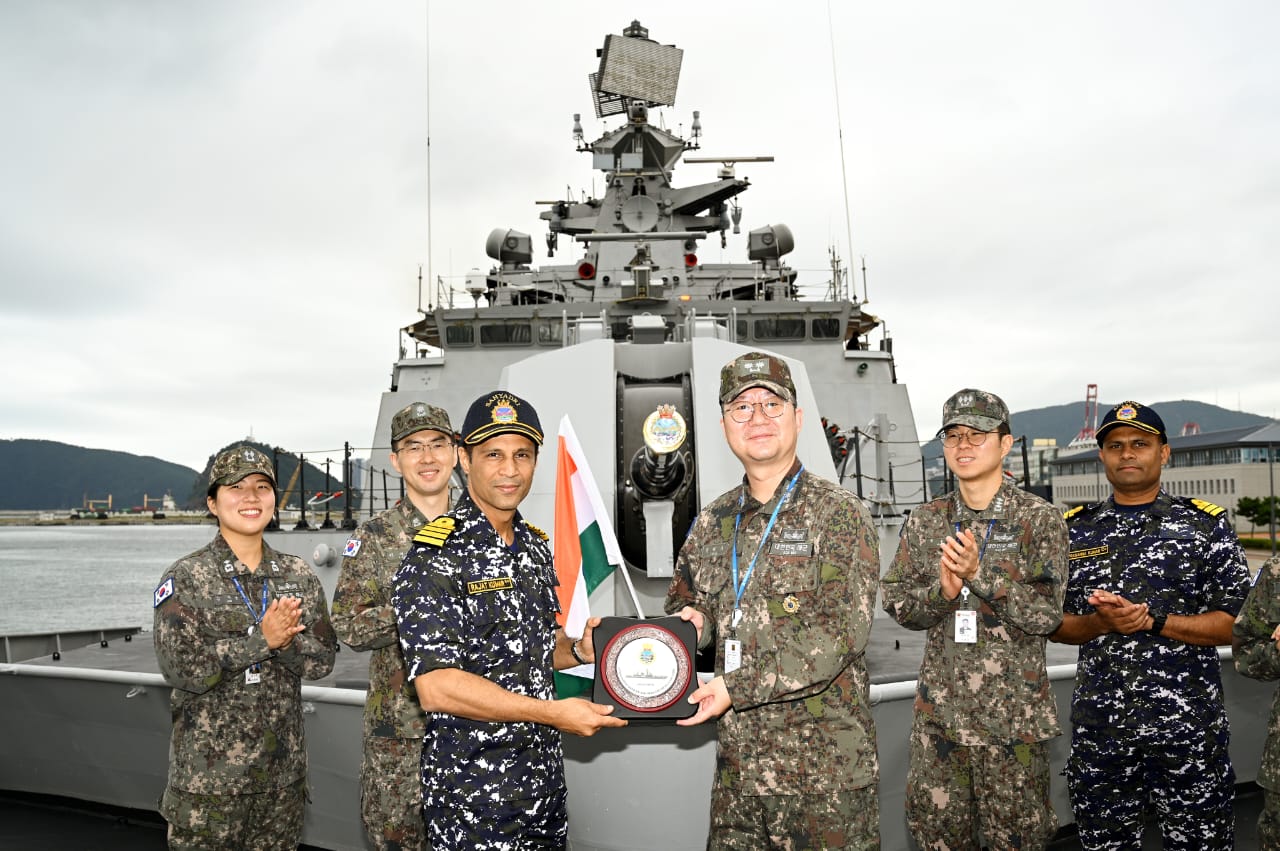
BUSAN : Indian Naval Ship Sahyadri, as part of ongoing operational deployment to the South China Sea and Indo-Pacific made a port call at Busan Naval Harbour, South Korea, on 13 Oct 2025 to participate in the maiden Indian Navy (IN) – Republic of Korea Navy (RoKN) Bilateral Exercise.

The RoKN extended a warm welcome underscoring the burgeoning Navy-to-Navy interactions and Strategic Partnership between the Governments of India and the Republic of Korea.

Indigenously designed, constructed, and commissioned in 2012, INS Sahyadri is the third ship of the Shivalik Class Guided Missile Stealth Frigates. The ship is a shining example of India’s ‘Aatmanirbhar Bharat’ vision and has been part of several bilateral and multilateral exercises, as well as operational deployments. The ship is based at Visakhapatnam as part of the Eastern Fleet under the aegis of the Eastern Naval Command.

During the visit, the ship’s crew will participate in the harbour and the sea phase of the inaugural edition of the IN-RoKN Bilateral Exercise. As part of the harbour phase, IN and RoKN officials will engage in reciprocal cross deck visits, sharing of best practices, cross-training sessions, and sport fixtures. The Commanding Officer will call on senior RoKN officials and local dignitaries. The harbour phase will be followed by sea phase, wherein, INS Sahyadri and ROKS Gyeongnam will undertake joint exercises.

With the ever-increasing significance of the Indo-Pacific in the geopolitical seascape, both nations have increasingly recognised the importance of building partnerships, based on mutual interests. The Navy-to-Navy interactions between India and South Korea have grown significantly in recent years, along with their strategic partnership. The ongoing inaugural IN-RoKN bilateral exercise is the culmination of years of discussions and planning between the two navies.

INS Sahyadri’s ongoing operational deployment to the South China Sea and Indo-Pacific, underscores India’s stature as a responsible maritime stakeholder and Preferred Security Partner.

GIFT City rises in GFCI rankings, reflecting India’s momentum as a global financial hub

GANDHINAGAR : Gujarat International Finance Tec-City (GIFT City), India’s maiden International Financial Services Centre (IFSC) and a project of national importance, has further strengthened its position on the global stage, climbing three places to 43rd in the thirty-eighth edition of the Global Financial Centres Index (GFCI 38) rankings.

GIFT City’s overall rating improved, underscoring increasing confidence among global investors and institutions in India’s emerging international financial ecosystem. It also made a significant gain in the FinTech Index, where it rose five positions from 40th to 35th — reaffirming its growing strength as a centre for innovation and technology-driven financial services.

In regional terms, GIFT City continues to feature among the top 15 financial centres in the Asia-Pacific region — and is the only Indian city to be part of this group. This reinforces its role as a rising player in global finance, offering a compelling combination of modern infrastructure, business-friendly regulation, and a talent-rich environment. It has also been featured among “The 15 Centres Likely to Become More Significant” globally in the GFCI 38 report, highlighting its rising international prominence and future potential.

Mr Sanjay Kaul, Managing Director and Group CEO, GIFT City, said, “GIFT City’s steady climb in the Global Financial Centres Index reflects India’s growing influence in international finance. Our progress — both in the overall and FinTech rankings — highlights the city’s ability to combine innovation, regulatory strength, and operational efficiency. This upward momentum is a reflection of the trust global institutions are placing in GIFT City as a competitive, future-ready financial hub.”

He further added, “As we continue to strengthen our ecosystem and attract global players across banking, insurance, funds, FinTech, and capital markets, GIFT City is poised to anchor India’s ambition of becoming a strategic centre for global finance.”

Mike Wardle, CEO, Z/Yen Group, said, “GIFT City’s advancement in the Global Financial Centres Index reflects the growing confidence in India’s evolving financial ecosystem. Its consistent progress across both overall and FinTech rankings highlights a strong balance of innovation and regulation, positioning it as an increasingly important player in global finance.”

The thirty-eighth edition of the Global Financial Centres Index (GFCI), compiled by the Z/Yen Group, evaluated 135 financial centres worldwide using more than 140 instrumental factors provided by third-party organisations, including the World Bank, Organisation for Economic Co-operation and Development (OECD), and the United Nations. Out of the 135 financial centres, 120 have made it to the mail index. The index assesses financial centres across parameters such as business environment, infrastructure, human capital, financial sector development, and reputational advantage.

GIFT City, India’s first operational smart city and maiden International Financial Services Centre (IFSC), is a global financial and IT services hub, a first of its kind in India, designed to be at or above par with globally benchmarked business districts. As a leading Central Business District (CBD), GIFT City offers significant advantages such as reduced operational costs, favourable tax policies, and a vibrant community, making it the top choice for global and domestic companies in BFSI, IT/ITeS, fintech, international education, and other service sectors.

Source : ANI

WISTA International and BIMCO sign MoU to strengthen collaboration for a sustainable maritime future

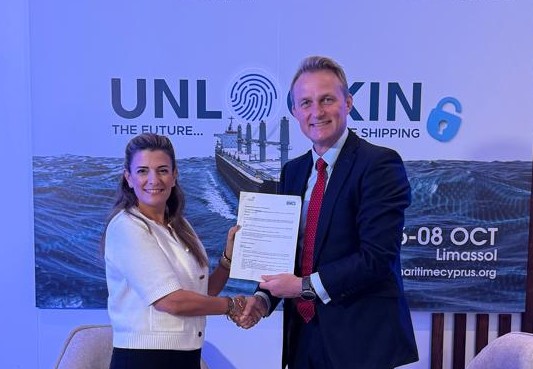
LONDON: The Women’s International Shipping & Trading Association (WISTA International) and BIMCO, the global trade association whose members represent 64% of the world’s tonnage, have signed a Memorandum of Understanding (MoU) to formalise collaboration in promoting diversity, sustainability, and professional excellence across the maritime industry.

WISTA BIMCO 2 WISTA International and BIMCO sign MoU to strengthen collaboration for a sustainable maritime future

Working together, WISTA International and BIMCO aim to address shared industry challenges and create opportunities for professionals throughout the global shipping sector. The MoU establishes a framework for cooperation in key areas including:

  1. Research and Development: Joint initiatives, studies, and projects relevant to shipping and maritime innovation.
  2. Information Sharing: Exchange of publications, data, and insights beneficial to the members of both organisations.
  3. Training and Education: Development of joint training programmes, seminars, and educational initiatives aimed at enhancing professional skills and industry knowledge.

Elpi Petraki, President of WISTA International, said: “We are delighted to align with BIMCO, an organisation that shares our commitment to advancing a sustainable and inclusive maritime industry. In joining forces, we can amplify our impact by promoting knowledge exchange, professional development, and the collaboration that benefits the entire shipping community.”

BIMCO’s mission – to foster standardisation, transparency, and professionalism – complements WISTA International’s goal of driving positive change for inclusivity within the sector. Together, the two associations will develop collaborative initiatives built on shared values and a mutual vision for a resilient and forward-looking maritime industry.

SeaLead Strengthens 5CX Service Connecting Far East and the Mediterranean via Suez Canal

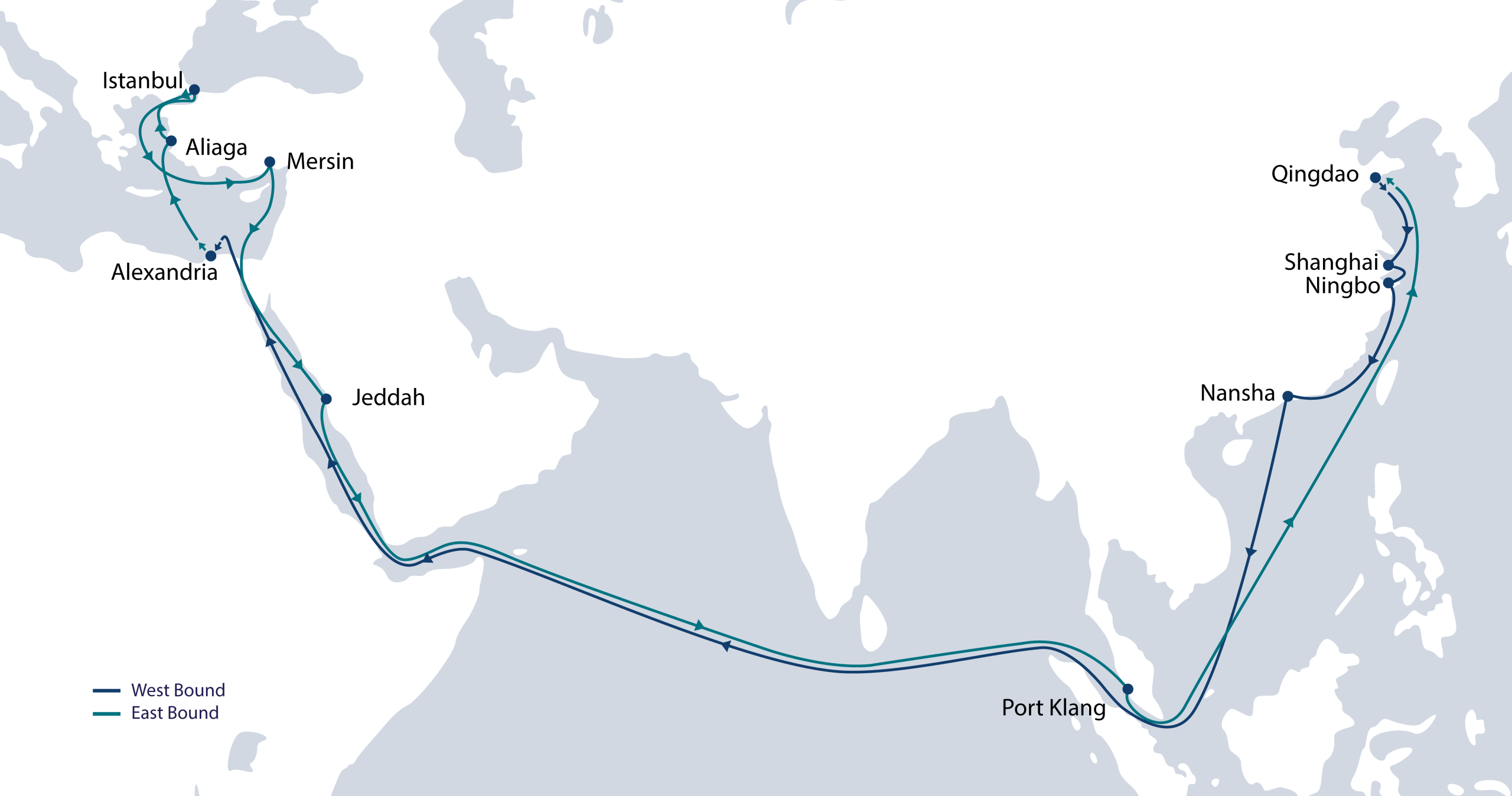
SINGAPORE : SeaLead, a fast-growing global shipping line, Tuesday announced the revamp of its Five Seas Express (5CX) service with a new routing structure. The newly revamped weekly shipping service will be jointly operated and will connect key ports along the Far East and the Mediterranean trade lane via the Suez Canal.

This strategic move will strengthen SeaLead’s presence in the region, supporting growing trade flows between Asia and the Mediterranean, while reducing transit times for customers. The port rotation covers Qingdao, Shanghai, Ningbo, Nansha, Alexandria, Aliaga, Istanbul, Mersin, Jeddah and Port Klang before returning to Qingdao. The inaugural sailing is scheduled to depart from Qingdao on 27 October 2025.

In addition to its speed and reliability, the service offers extensive coverage to key markets across North Africa, the Black Sea, and the Mediterranean via Aliaga, creating broader market access and enhanced connectivity for customers.                

Key features of the revamped 5CX service:

  • Weekly dedicated service connecting China, Egypt, Türkiye, Saudi Arabia and Malaysia
  • One of the fastest transit times from the Far East to the Mediterranean via Suez Canal
  •  Seamless connectivity with SeaLead’s existing network across the Mediterranean and Asia

The revamped weekly service, featuring a new routing structure, delivers greater value to customers through enhanced service reliability. This joint operation further strengthens schedule integrity, broadens network coverage, and improves access to key markets by leveraging the collective expertise and reach of partners.

DoreenYeoChiefCommercialOfficerSeaLead SeaLead Strengthens 5CX Service Connecting Far East and the Mediterranean via Suez Canal

Ms. Doreen Yeo, Chief Commercial Officer, SeaLead, said: “SeaLead remains committed to enhancing our service offerings as part of our ongoing efforts to strengthen global trade connectivity. By regrouping the 5CX service, we are working closely with our partners to deliver a more reliable and efficient network. This strengthened collaboration enables us to enhance service quality while maintaining coverage across Asia and the Mediterranean, providing customers with greater access to key global markets.”

KadirOrucRegionalManagingDirectorEuropeandMediterreneanSeaLea SeaLead Strengthens 5CX Service Connecting Far East and the Mediterranean via Suez Canal

Mr. Kadir Oruc, Regional Managing Director, Europe and Mediterranean, SeaLead highlighted: “With weekly sailings and a time-saving route, the revamped service offers faster, more reliable, and efficient shipping solutions. By reducing transit times and enhancing schedule dependability, this service enables our customers to plan more effectively and optimise their supply chains.”

With the launch of the revamped 5CX service, SeaLead continues to strengthen global connectivity and deliver customer-focused shipping solutions across key international markets.                    

Helm Operations announces Leadership Transition: James Wadsworth appointed CEO, Nolan Barclay named Chairman

VICTORIA : Helm Operations, the leading provider of maritime operations and crew management software, today announced a key leadership transition as James Wadsworth assumes the role of Chief Executive Officer (CEO). Nolan Barclay, Helm’s first employee and most recent CEO, will continue to support the company as Chairman.

Wadsworth brings more than two decades of maritime industry experience and visionary leadership to the role. He joined Helm a decade ago after nearly ten years with ClassNK in Japan, where he played a pivotal role in expanding the organization’s international footprint and establishing it as the world’s largest classification society.  Since joining Helm, Wadsworth has been instrumental in driving the company’s evolution into a global leader in maritime software. Under his leadership, Helm has expanded its operations across North America and into new international markets, empowering over 400 customers managing nearly 12,000 vessels to operate more safely, efficiently, and profitably.

“It’s an incredible honor to step into this role and build on the strong foundation that Nolan and our team have created,” said Wadsworth. “Helm’s mission has always been to help maritime companies operate more effectively, and I’m excited to continue advancing that mission as we grow with our customers around the world.”

Outgoing CEO Nolan Barclay expressed confidence in the transition: “James has been at the heart of Helm’s growth and success for the past decade,” said Barclay. “His deep understanding of our customers, our technology, and the maritime industry makes him the ideal leader to guide Helm into its next chapter of innovation and global expansion. As Chairman, I look forward to supporting him and the entire team as we continue to transform maritime operations around the world.”

This leadership transition marks a natural evolution for Helm Operations, reinforcing its long-term commitment to customer success, product innovation, and the continued advancement of the maritime industry.

About Helm Operations
Since 1999, Helm Operations has been developing software to help maritime companies better manage their vessel maintenance, compliance, personnel, and operations. Its flagship product, Helm CONNECT, has emerged as the leading software platform for maritime operations and fleet management. Today, more than 400 customers and nearly 12,000 assets around the world use Helm CONNECT, including top companies in industries such as passenger vessel, harbor towage, barging, and offshore support.

Deendayal Port Authority organises Maritime Festival-cum Roadshow under India Maritime Week 2025

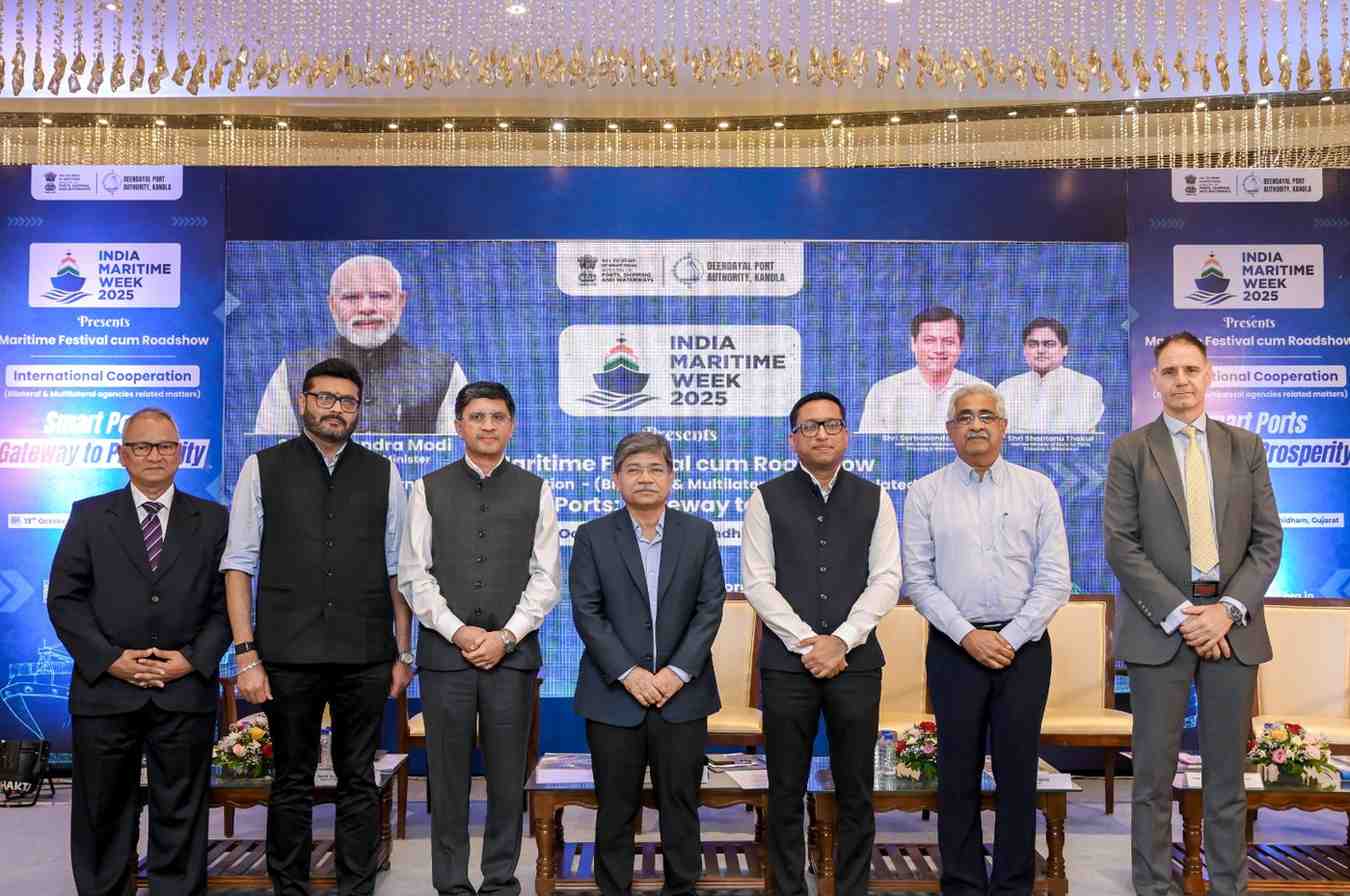
GANDHIDHAM : Deendayal Port Authority, Kandla, organized a Maritime Festival-cum-Roadshow at Gandhidham, Gujarat, as a precursor to the upcoming India Maritime Week 2025.

The event was held on the theme “International Cooperation – Smart Ports: Gateways to Prosperity,” focusing on India’s growing leadership in the global maritime domain and emphasizing the need for smart, sustainable and technology-driven transformation across ports and logistics sectors.

The programme commenced with a welcome address by Shri Sushil Kumar Singh, IRSME, Chairman, DPA, who highlighted India’s maritime progress under the visionary leadership of the Hon’ble Prime Minister and urged stakeholders to actively participate in the forthcoming India Maritime Week 2025, to strengthen cooperation and collaboration across the maritime value chain.

The Keynote Address was delivered by Shri Rajkumar Beniwal, IAS, Vice Chairman & CEO, Gujarat Maritime Board (through VC), who underlined the importance of innovation, efficiency and synergy between government and industry stakeholders to modernize India’s ports and boost competitiveness in global trade.

The highlight of the programme was the Panel Discussion on the theme “Smart Ports: Gateways to Prosperity”, moderated by Shri Nilabhra Dasgupta, IRS, Deputy Chairman, DPA. The session witnessed participation from eminent industry leaders and maritime experts who shared valuable insights on the technological, operational and sustainable evolution of smart ports.

The distinguished panelists included:

• Shri Rahul Modi, Member, National Shipping Board – who spoke on how port automation and modernization are reshaping

PM GatiShakti marks four years with launch of transformative initiatives : Piyush Goyal

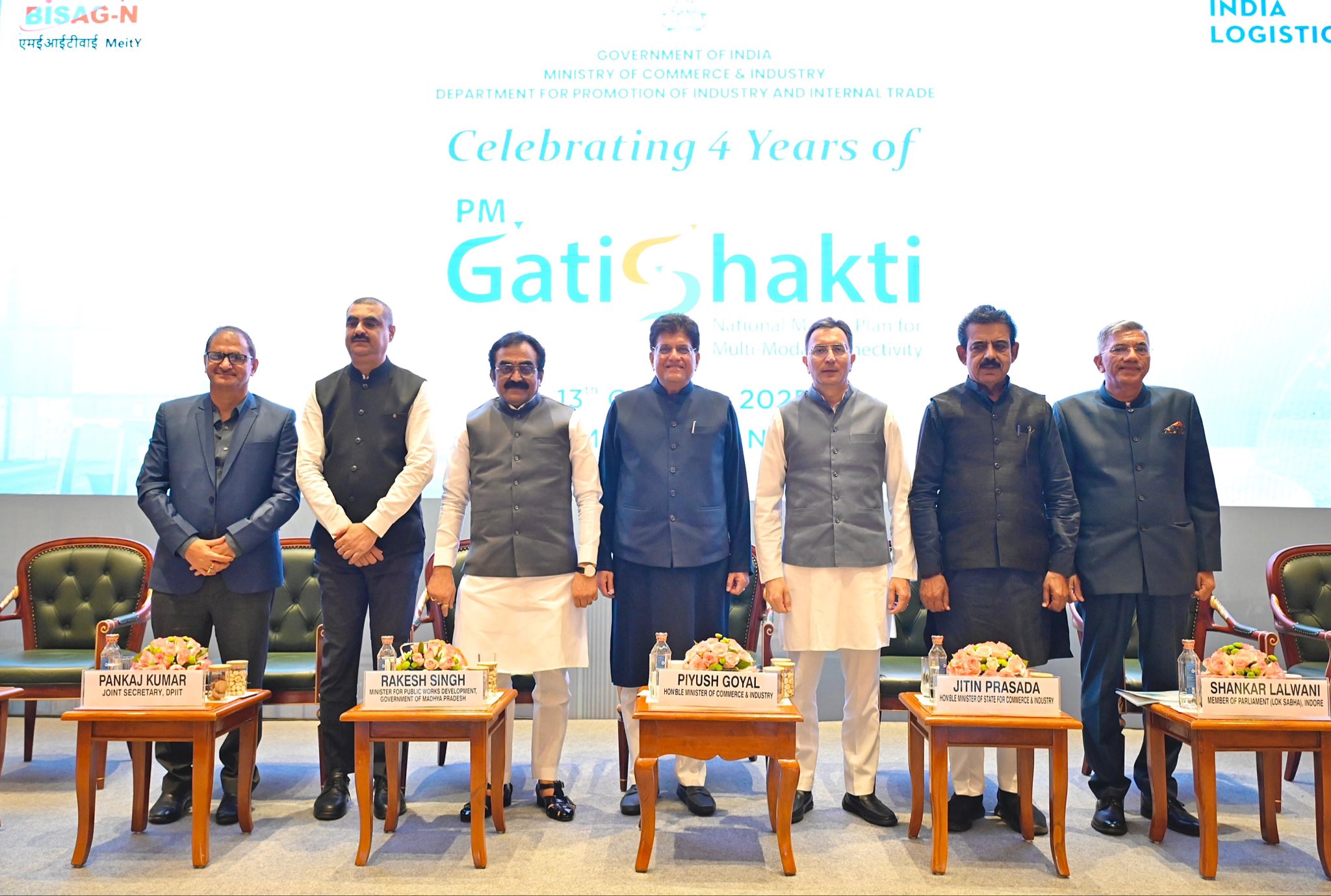
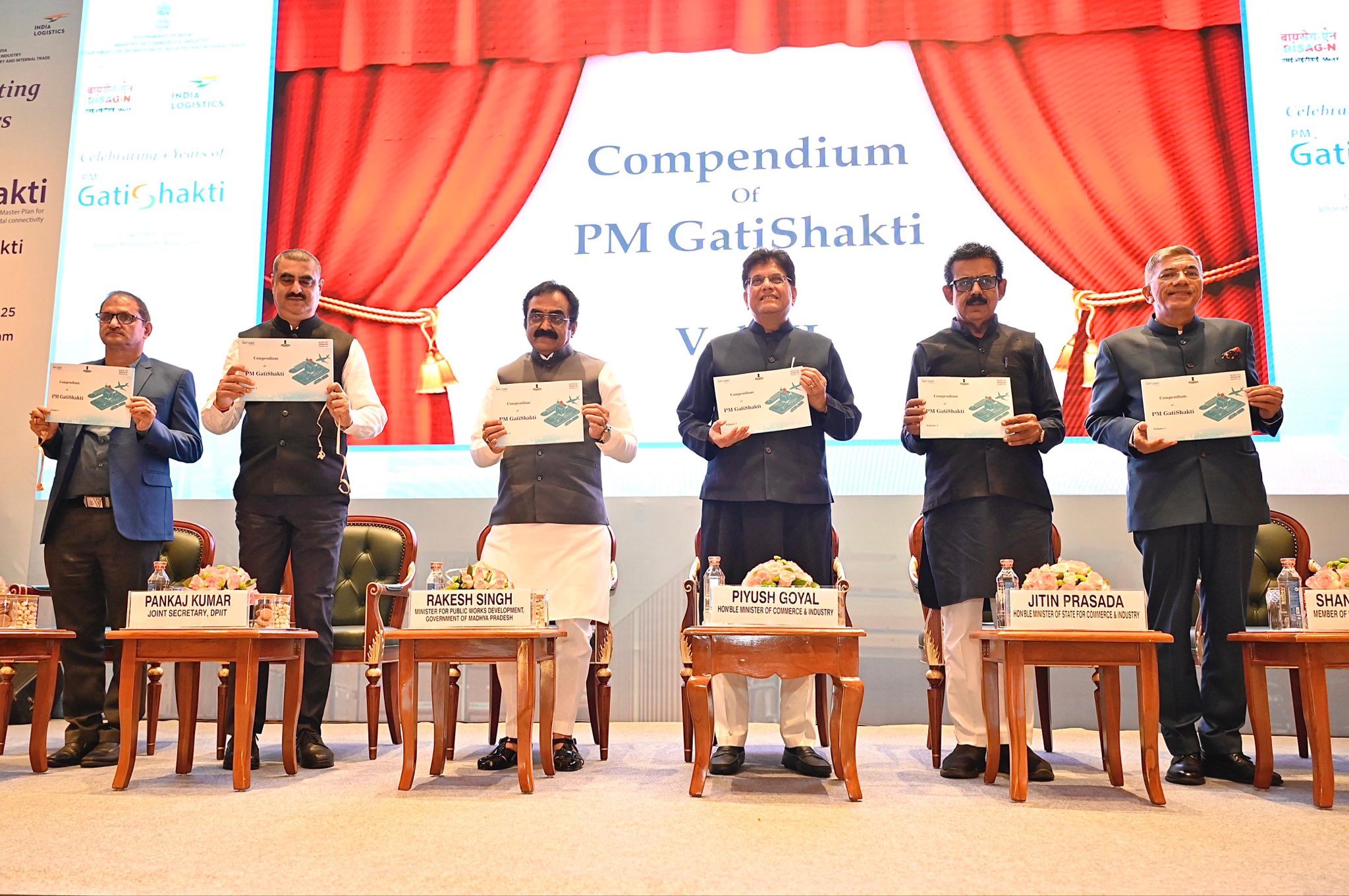
NEW DELHI : On the occasion of celebrations marking four years of PM GatiShakti National Master Plan (NMP), the Union Minister of Commerce and Industry, Shri Piyush Goyal, on Monday launched a series of transformative initiatives by the Logistics Division, Department for Promotion of Industry and Internal Trade (DPIIT). These initiatives aim to drive socio-economic development by strengthening infrastructure planning, enhancing last-mile connectivity, and ensuring adequate infrastructure to support holistic growth.

Shri Goyal highlighted that the Government had developed and launched the PM GatiShakti District Master Plans (PMGS-DMP) for 28 Aspirational Districts in October 2024. The plans facilitate geospatial-based planning for critical social and economic infrastructure such as schools, health centres, anganwadis, roads, and water pipelines using the PM GatiShakti platform.

To enable effective planning, five sector-specific tools were developed for schools, health centres, anganwadis, roads, and water pipelines. Comprehensive capacity-building training for district teams was conducted at BISAG-N, Gandhinagar, Gujarat, in December 2024, followed by regular regional workshops and online sessions for officers across districts and States.

Districts have already begun developing practical use cases for area development, including road widening projects such as the Damoh–Jabalpur road from two to four lanes, solar park site selection in Damoh, administrative boundary planning, drinking water provision under the Jal Jeevan Mission, electrification of unelectrified villages, road connectivity for unconnected habitations, and watershed management planning in Baran district.

Building on these successes, the PM GatiShakti District Master Plan is now being progressively rolled out across all 112 Aspirational Districts, enabling data-driven, integrated planning for social and economic infrastructure development nationwide.

Shri Goyal also launched a series of transformative initiatives under the PM GatiShakti National Master Plan, aimed at enhancing infrastructure planning, data-driven decision-making, and cross-sectoral collaboration. The launches include the Knowledge Management System (KMS), Decentralized Data Uploading and Management System (DUMS), PMGS NMP Dashboard as part of the Comprehensive Multi-Sector Reporting System, and PM GatiShakti Compendium Volume-3.

Shri Goyal noted that over the past four years, numerous Ministries and States have undertaken innovative measures, developed digital tools, and created use cases demonstrating how geospatial planning can be leveraged to improve infrastructure development and decision-making. The Knowledge Management System serves as a centralized repository of digital tools, use cases, SOPs, compendiums, and training resources, promoting replicability, scalability, and cross-learning across Ministries, Departments, and States/UTs.

At the core of the KMS is the integrated NMP Dashboard, which provides real-time insights into onboarded data layers, registered users, planned projects, and reported issues through the Issue Management System, forming the basis of the Comprehensive Multi-Sector Reporting System. Complementing this, the Decentralized Data Uploading and Management System ensures accurate, uniform, and accountable data management through a three-stage workflow of data upload by designated managers, review by nodal officers, and final publication by BISAG-N, enhancing transparency, operational efficiency, and multi-sectoral coordination.

The launch of PM GatiShakti Compendium Volume-3 showcases a wide range of on-ground success stories across infrastructure, social, and economic sectors, demonstrating the transformative impact of PM GatiShakti in driving integrated development, improving connectivity, and fostering inclusive growth across India.

With these initiatives, PM GatiShakti continues to set new benchmarks in integrated infrastructure planning, data-driven governance, and inclusive development, reinforcing India’s vision of a modern, connected, and resilient nation.

PM GatiShakti – Offshore launched to strengthen integrated offshore planning and boost India’s Blue Economy

NEW DELHI : The Logistics Division, Department for Promotion of Industry and Internal Trade (DPIIT), Ministry of Commerce and Industry, launched “PM GatiShakti – Offshore” during the commemorative event celebrating four years of the PM GatiShakti National Master Plan (NMP) at New Delhi on Monday. The event was chaired by Union Minister of Commerce and Industry Shri Piyush Goyal.

PM GatiShakti – Offshore is a pioneering initiative under the PM GatiShakti Programme, developed as a digital platform for the integrated planning and management of offshore development. The platform provides a unified geospatial interface that consolidates critical datasets from multiple government ministries and departments to enable data-driven decision-making for projects such as offshore wind farms, marine resource exploration, and coastal infrastructure development. It aims to strengthen India’s Blue Economy and support the nation’s transition toward green energy and sustainable coastal growth.

The platform embodies a Whole-of-Government approach by integrating datasets from key Ministries and Departments, including the Ministry of New and Renewable Energy, Ministry of Environment, Forest and Climate Change, Ministry of Petroleum and Natural Gas, Ministry of Ports, Shipping and Waterways, Department of Fisheries, Ministry of Mines, Ministry of Power, and Department of Telecommunications. This seamless inter-ministerial integration facilitates holistic planning and efficient utilization of India’s vast offshore potential.

The portal hosts an extensive repository of geospatial layers categorized under domains such as Energy and Resources, Environment and Ecology, Infrastructure and Logistics, and Oceanic and Hazard Data. These include detailed datasets on offshore wind, solar, tidal, wave, and ocean thermal energy potential; oil and gas fields and pipelines; bathymetry and sedimentary basins; coastal regulation zones; coral reefs, mangroves, and marine mammal areas; ports, airports, power infrastructure, and fish landing centers; along with oceanographic and hazard indicators such as surface currents, wave heights, and earthquake risk zones. Collectively, these layers provide planners, regulators, and investors with critical insights for sustainable and technically sound decision-making.

The platform offers significant advantages for diverse stakeholders involved in offshore development. It enhances visibility of potential infrastructure overlaps and regulatory hurdles in coastal regions during the planning stage, thereby minimizing project delays and risks. It enables a holistic, data-driven approach to offshore area management and resource allocation, streamlines environmental assessment and clearance processes, and serves as a centralized repository of authentic geospatial data from verified government sources.

For example, while planning offshore power transmission routes, the platform can integrate datasets from multiple ministries, including the Ministry of Power, Ministry of Petroleum and Natural Gas, Ministry of Environment, Forest and Climate Change, and the Department of Telecommunications. In the case of a proposed High Voltage Direct Current (HVDC) subsea link connecting the Indian mainland with the Andaman and Nicobar Islands, bathymetry data can be analyzed to identify optimal seabed depths for cost-effective cable laying, while ecological layers such as coral reefs, mangroves, and turtle nesting zones can help avoid environmentally sensitive areas. Similarly, overlays of hydrocarbon exploration blocks, optical fibre routes, and marine traffic corridors can guide the selection of technically feasible and environmentally compliant alignments.

By enabling such multi-layered analysis and visualization, PM GatiShakti – Offshore ensures precision, transparency, and sustainability in national offshore planning. The platform stands as a testament to India’s growing capability in leveraging geospatial intelligence for strategic infrastructure development, promoting balanced growth of the Blue Economy, and advancing the national vision of Viksit Bharat by 2047.

NITI Aayog releases report on “India’s Blue Economy: Strategy for harnessing Deep-Sea and offshore fisheries

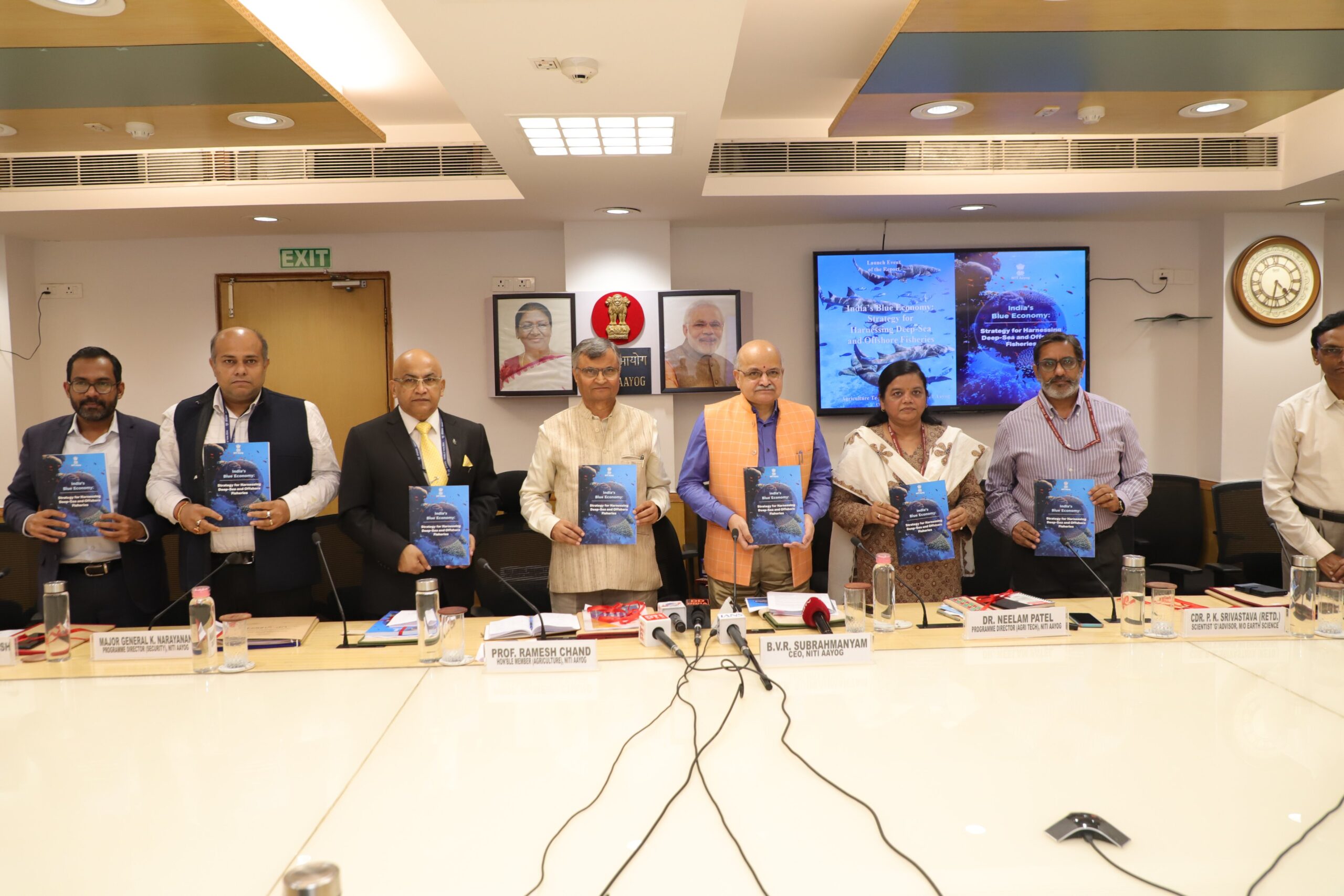
NEW DELHI : NITI Aayog on Monday released a report on “India’s Blue Economy: Strategy for Harnessing Deep-Sea and Offshore Fisheries”. This report was formally launched by Prof. Ramesh Chand, Member (Agriculture), NITI Aayog, and Shri B.V.R. Subrahmanyam, CEO, NITI Aayog, in a special event attended by representatives from the fisheries sector, maritime states, and stakeholder organizations. A detailed presentation on the report was made by Dr. Neelam Patel, Programme Director (Agriculture Technology Division), NITI Aayog.

India is the second-largest fish-producing country in the world, accounting for 8% of global production. India’s fisheries sector supports nearly 30 million livelihoods and contributes significantly to exports, with fishery products earning ₹60,523 crore in FY 2023–24.

India’s Exclusive Economic Zone (EEZ) of over 2 million sq. km, deep waters beyond the continental shelf, and11,098 km coastline across nine coastal States and four Union Territories, provide immense potential to expand its marine fisheries into the deep seas. Despite a thriving fisheries sector, the deep-sea fishery resources beyond the continental shelf remain largely unexploited. The EEZ has an estimated potential yield of 7.16 million tonnes, including both conventional and non-conventional resources. The report highlights that responsible utilization of deep-sea and offshore fisheries can enhance seafood exports, generate employment opportunities, and reduce pressure on coastal fisheries, while ensuring ecological sustainability.

It presents a comprehensive framework covering the deep-sea fishing sector within India’s Exclusive Economic Zone (EEZ) and international waters accessed through regional fisheries agreements. This framework adopts a science-based, technology-enabled, socially inclusive, and ecologically sustainable approach to harnessing India’s deep-sea fisheries potential.

The report identifies six key policy interventions on overhauling policies and regulations; strengthening institutional and capacity building; modernizing fleets and upgrading infrastructure; promoting sustainable fisheries management; mobilizing resources and financing; and enhancing local community participation and partnerships. Recognizing the capital-intensive nature of deep-sea fishing, the report also emphasizes inclusive fleet development by supporting fisher cooperatives and cluster-based approaches, enabling collective ownership, operations, and access to modern technology. It also outlines investment priorities and monitoring mechanisms necessary to ensure long-term ecological and economic sustainability.

An indicative costing framework for the three phases has also been provided by considering the convergence of centrally sponsored and central sector schemes related to fisheries – Phase 1: Laying the foundation and fostering early growth (3 years| 2025-28); Phase 2: Scaling up and achieving global competitiveness (4 years| 2029-32) and Phase 3: Global leadership in sustainable deep-sea fisheries (8 years and beyond | 2033 onwards).

Building on the sector’s strong growth trajectory, the report offers a roadmap to strengthen governance, foster innovation, and enhance participation of stakeholders. Through integrated interventions in policy reform, infrastructure development, sustainability, financing, and community empowerment, the initiative aims to make India a global leader in sustainable deep-sea fisheries, ensuring prosperity for coastal communities and contributing significantly to the Blue Economy vision of the nation.

Alongside the report release, NITI Aayog organized a workshop which witnessed the participation of 18 institutions. The technical session on “Strategy of States and Way Forward towards Harnessing Deep-Sea Fisheries and Export” included presentations from coastal States such as Goa, Gujarat, Lakshadweep, Maharashtra, Odisha, and Tamil Nadu. This was followed by a panel discussion on “Advancing Resource Management through Regulatory Reforms, Research, Financing and Capacity Building” with distinguished panelists.