Home Blog Page 611

Adani and Google partner to build India’s largest data centre campus in Visakhapatnam

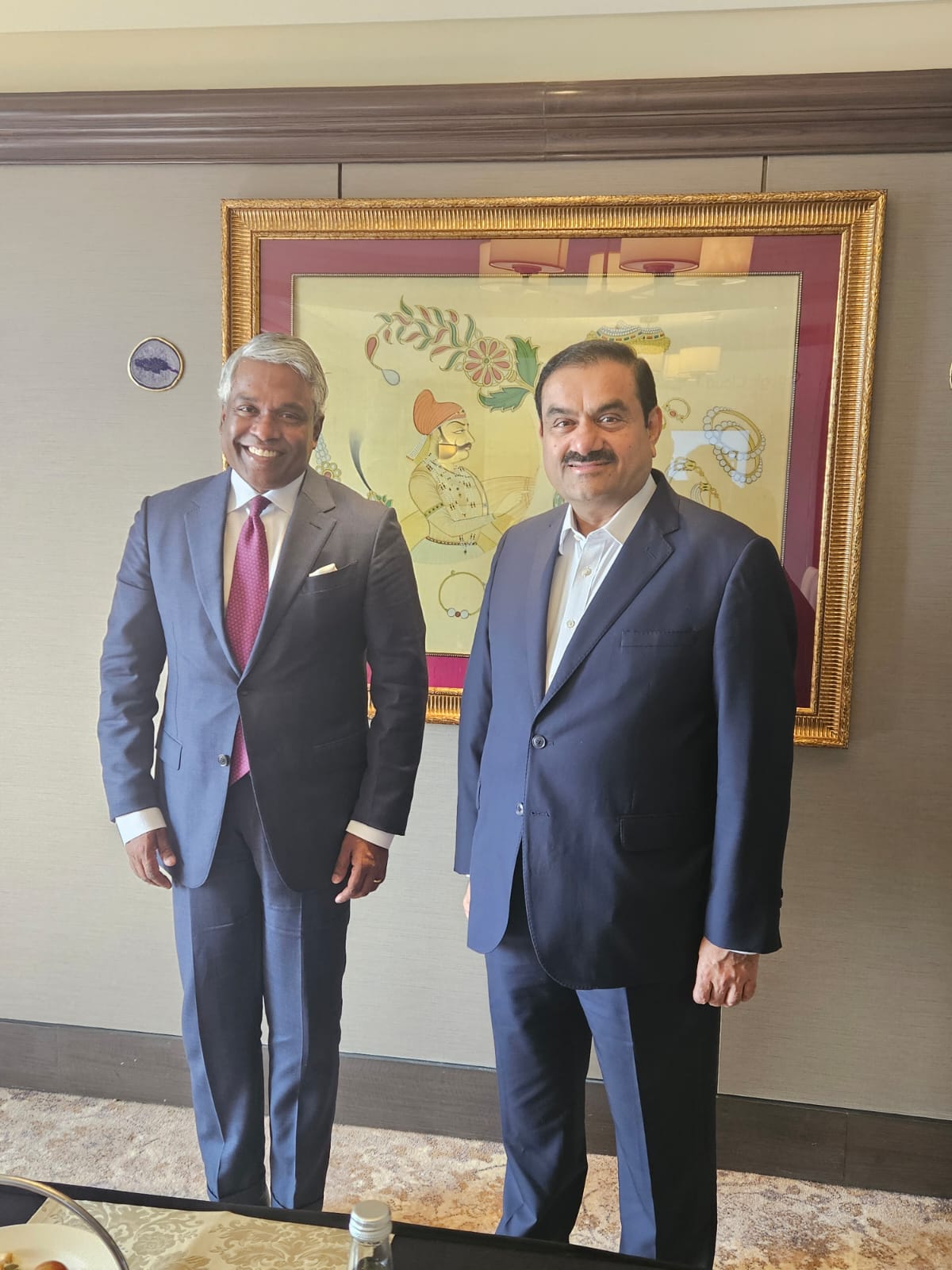
VISAKHAPATNAM : Adani Enterprises, through its joint venture company AdaniConneX, and Google on Tuesday, 14th October announced a landmark partnership to develop India’s largest AI data centre campus and new green energy infrastructure in Visakhapatnam, Andhra Pradesh.

Google’s AI hub in Visakhapatnam is a multi-faceted investment of approximately USD 15 billion over five years (2026-2030), comprising gigawatt-scale data centre operations, supported by a robust subsea cable network and clean energy, to drive the most demanding AI workloads in India. It will be brought to life in close collaboration with ecosystem partners including AdaniConneX and Airtel.

The foundational pillars of the Google AI hub developed in collaboration with AdaniConneX include purpose-built AI data centre infrastructure in Visakhapatnam that will add significant compute capacity to help pioneer a generational shift in India’s AI capabilities.

The project also builds on both companies’ commitment to sustainability, and will see co-investment in new transmission lines, clean energy generation and innovative energy storage systems in Andhra Pradesh. This will not only support the data centre’s operations but also enhance the resilience and capacity of India’s electricity grid.

“The Adani Group is proud to partner with Google on this historic project that will define the future of India’s digital landscape,” said Mr Gautam Adani, Chairman of the Adani Group, “This is more than just an investment in infrastructure. It is an investment in the soul of a rising nation. This partnership is a testament to our shared vision of nation-building and our commitment to empowering every Indian with the tools of the 21st century. Visakhapatnam is now set to become a global destination for technology, and we are thrilled to be the architects of this monumental journey.”

“To unlock India’s massive potential in the AI age, we are investing in the Google AI hub, which will provide the critical foundation to drive growth and enable businesses, researchers, and creators to build and scale with AI,” added Mr Thomas Kurian, CEO, Google Cloud. “Working with Adani, we will bring our cutting-edge resources closer to communities and customers alike, and offer them the performance, security, and scalability to innovate and thrive on a global stage.”

The development of this AI hub and connectivity gateway will create a powerful engine for economic growth in Visakhapatnam, the state of Andhra Pradesh, and thereafter the entire nation by driving digital inclusivity and creating tens of thousands of jobs in technology, construction and clean energy.

About AdaniConneX

AdaniConneX, a 50:50 JV between Adani Enterprises and EdgeConneX, was founded with a vision to redefine the data center landscape in India. AdaniConneX envisions to build an environmentally and socially conscious 1GW data center infrastructure platform by leveraging the complementary capacity of the Adani Group, India’s largest infrastructure player, and EdgeConneX, one of the largest private data center operators. In a land of innovators, data center solutions need to be ahead to accelerate ambition and AdaniConneX mirrors this vision of Digital India.

About Google Cloud

Google Cloud is the new way to the cloud, providing AI, infrastructure, developer, data, security, and collaboration tools built for today and tomorrow. Google Cloud offers a powerful, fully integrated and optimized AI stack with its own planet-scale infrastructure, custom-built chips, generative AI models and development platform, as well as AI-powered applications, to help organizations transform. Customers in more than 200 countries and territories turn to Google Cloud as their trusted technology partner.
Cochin Shipyard bags landmark CMA CGM Order, Marking India’s Entry into Global Boxship Construction

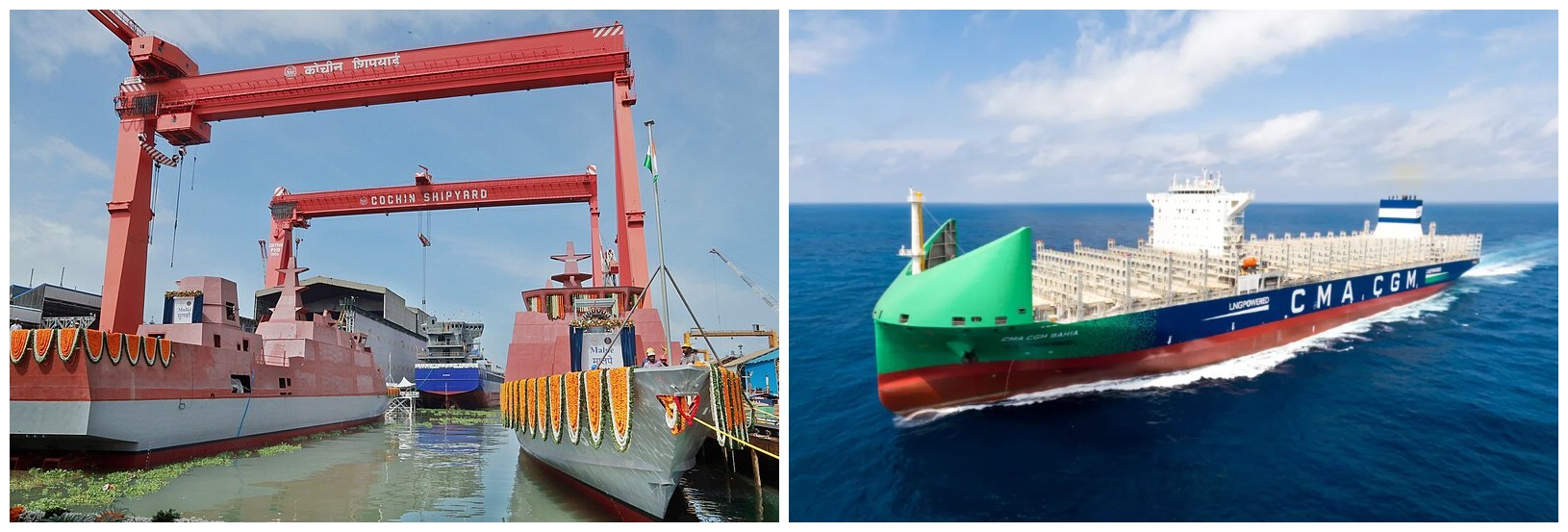
NEW DELHI: India’s ambitions to emerge as a global shipbuilding powerhouse have received a major boost, with Cochin Shipyard Limited (CSL) securing its first-ever international order for ocean-going containerships. The milestone marks a turning point in the country’s drive to position itself among the world’s leading shipbuilding nations.

In a regulatory filing, Cochin Shipyard confirmed the signing of a Letter of Intent (LoI) on October 14 with a “prominent European client”, describing it as a mega order valued between $225 million and $300 million. Though the client was not officially named, media reports have identified the buyer as French shipping giant CMA CGM.

This development follows a series of high-level engagements between CMA CGM and Indian authorities. Earlier this year, CMA CGM Group Chairman and CEO Rodolphe Saadé met with Prime Minister Narendra Modi and French President Emmanuel Macron in France to discuss cooperation in shipbuilding and maritime development. Subsequent discussions in India led to CMA CGM reflagging some of its vessels under the Indian flag—beginning with the CMA CGM Vitoria in April 2025, a first for a major international carrier.

Under the agreement, Cochin Shipyard will design and construct six LNG-powered feeder container vessels, each with a capacity of 1,700 TEUs. While the construction timeline is yet to be disclosed, reports suggest that these vessels could also be registered under the Indian flag.

Cochin Shipyard, India’s largest shipbuilder, has a strong record in defence and specialised vessel construction. It built INS Vikrant, India’s first indigenously designed aircraft carrier, and is currently executing international contracts for Service Operation Vessels (SOVs) with North Star and Pelagic Wind Services. The shipyard recently entered into a strategic cooperation agreement with South Korea’s HD Hyundai, aimed at advancing its commercial shipbuilding capabilities.

India currently ranks 16th globally in shipbuilding, but the government has laid out an ambitious roadmap to enter the top 10 by 2030 and top 5 by 2047. To achieve this, the Ministry of Ports, Shipping and Waterways has rolled out a series of fiscal incentives and policy measures to promote domestic shipbuilding and repair clusters.

The government has also held discussions with global majors Maersk and MSC Mediterranean Shipping Company, showcasing India’s growing capacity in shipbuilding and maintenance. With Cochin Shipyard’s landmark order now on record, industry analysts believe this could pave the way for more international collaborations and large-scale orders in the near future.

Global Shipping faces Decisive Moment at IMO’s MEPC ES.2

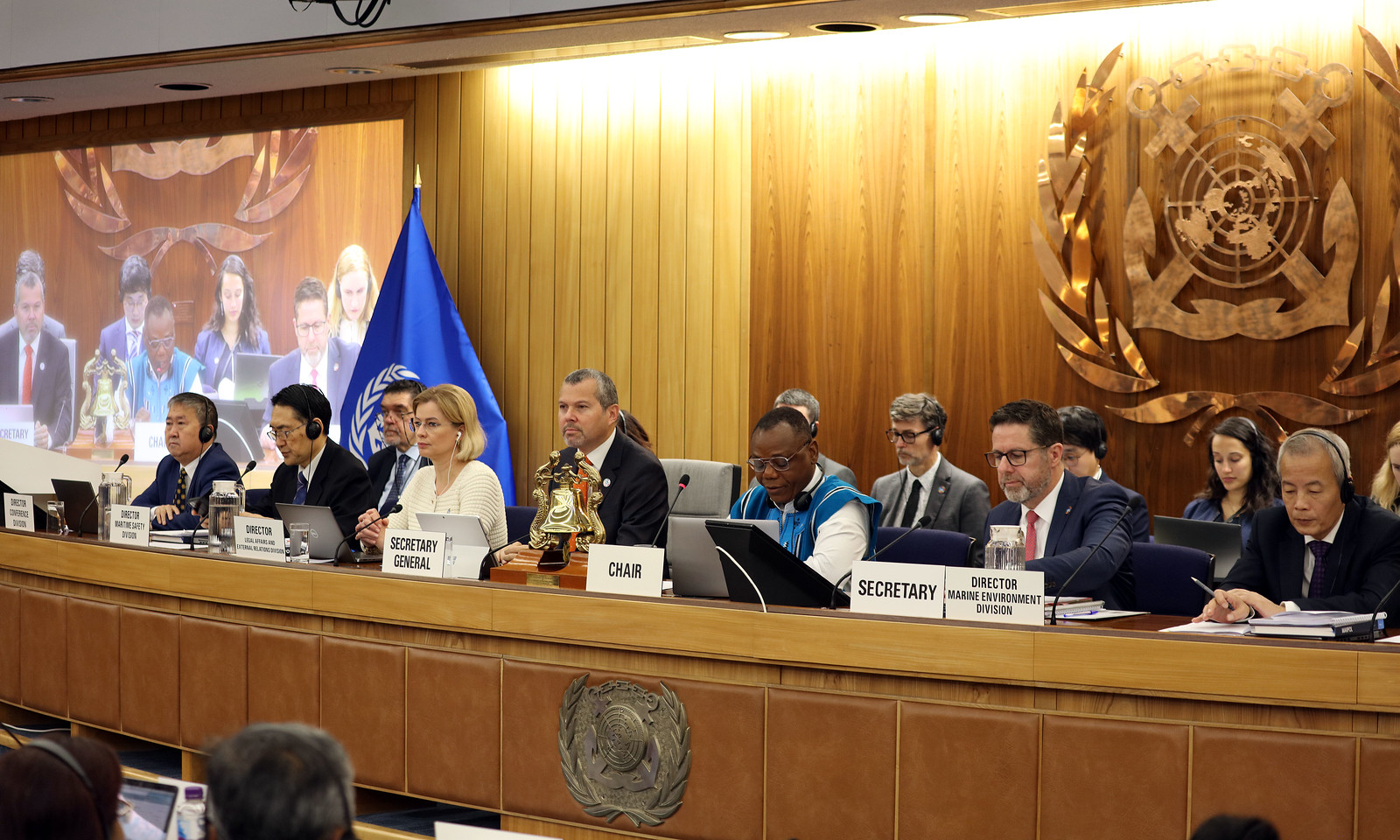
LONDON: The International Maritime Organization (IMO) kicked off its second extraordinary meeting of the Marine Environment Protection Committee (MEPC ES.2) on Tuesday, with Secretary-General Arsenio Dominguez highlighting the critical need to lock in mandatory rules through the IMO Net-Zero Framework (NZF). Scheduled to wrap up on October 17. 

This four-day gathering seeks to approve changes to MARPOL Annex VI, turning the ambitions of the 2023 IMO GHG Strategy into concrete obligations effective from 2027. Given that maritime transport contributes almost 3% to worldwide greenhouse gas emissions, which reportedly equates to 0.00012% of global CO2 in the atmosphere, this event marks a turning point in greening an industry valued at $14 trillion.

Speaking from IMO’s London base, Dominguez greeted participants and stressed the gathering’s exceptional significance. He reviewed the extensive, collaborative discussions that have shaped the NZF, which gained endorsement during MEPC 83 last April as a fair middle ground. At its core, the NZF outlines flexible targets for cutting GHG intensity (GFI)—aiming for 20-30% drops by 2030 and 70-80% by 2040—coupled with an international fuel benchmark and a system for pricing emissions. 

Dominguez openly conceded, “The IMO Net-Zero Framework is not perfect,” pointing out clashing opinions where certain groups call for bolder environmental goals, and others criticise the tough standards as too heavy a load.

He tackled worries about alternative fuel supplies and adherence head-on, remarking, “Some of you are of the view that there will not be sufficient alternative fuels available, whilst others believe that robust global regulations will send a clear demand signal to fuel and energy producers.” Dominguez cautioned that postponing approval might trigger a patchwork of local and national policies, reduced funding and weakening trust in the IMO. By staying neutral on technologies, the NZF opens the door to various fuels and advancements, with incoming suggestions on incentives, verification processes, full-lifecycle emission calculations, and funding mechanisms poised to iron out unresolved matters.

Led by Liberia’s Harry Conway as chair, the proceedings centre on two main goals: ratifying the updates and mapping out a roadmap for rollout in 2027. Dominguez spotlighted the arrival of David Osborn as the new director of the Marine Environment Division, taking over from Heike Deggim, and reminded everyone of the IMO Code of Conduct promoting “diplomatic and respectful” exchanges. Wrapping up positively, he said, “Remember, this is IMO. Here, we… take steps forward.”

Yet, input from various parties reveals rifts, particularly from Greek shipping magnates who stand out as strong opponents. Commanding roughly 20% of the world’s vessels, Greek entities have fiercely opposed the NZF’s penalty systems for emissions and its quasi-tax features. 

A “revolt” letter sent to the IMO in September 2025 by key operators such as the Angelicoussis Group and TMS Group highlighted how charges reaching $380 per tonne of CO2 equivalent might rack up billions in expenses, undermining market edge due to scarce eco-friendly fuels. Melina Travlos, head of the Union of Greek Shipowners (UGS), in a speech on October 13 and a Lloyd’s List discussion, called the spring agreement an unexpected shift away from the sector’s preferred straightforward “pay-as-you-emit” model.

This opposition resonates with wider sector concerns, voiced by leaders like Frontline’s John Fredriksen and Capital Maritime’s Evangelos Marinakis, focusing on upgrade difficulties and calls for adaptability. Publications such as Splash247 have portrayed the NZF as navigating a “political storm” driven by this advocacy. Real-time reports on X from the first day described a “divided room,” where the U.S. and oil-rich nations like Saudi Arabia echoed worries about financial equity, subtly reinforcing Greek stances on readiness shortfalls.

Even with this backlash from owners, Greece’s official representatives back the plan, joining the EU-led coalition of 63 nations that approved it in April. The European Commission lauded it as a ‘significant milestone,’ vowing to harmonise its own Emissions Trading System (ETS) and FuelEU Maritime initiatives afterward to ensure even competition. Environmental groups, such as the Clean Shipping Coalition, are pressing for immediate progress on fuel norms and charges, pondering whether global resolve matches the urgency of shipping’s environmental footprint.

In his speech, Dominguez affirmed these conflicts, underscoring the NZF’s support for vulnerable countries and pioneers, features that Greek stakeholders promote to ease financial strains. Ideas like bonuses for e-fuels and fair distribution of proceeds from the Net-Zero Fund, which could yield over $40 billion yearly, might soften the blow of fines, Travlos stressed.

Approval demands a two-thirds vote; if achieved, it could prevent solo actions like those from the EU, spurring breakthroughs despite projected $1.3 trillion expenses for shifts through 2050. 

With virtual involvement from more than 170 member countries, eyes are on the outcomes. A Q&A session with Dominguez is planned for later today, followed by a wrap-up briefing on Friday. This assembly holds the potential to align international maritime operations toward zero emissions, weighing fiscal concerns against ecological needs—or face splintering should rifts, notably from Greek quarters, escalate.

Source: GCaptain

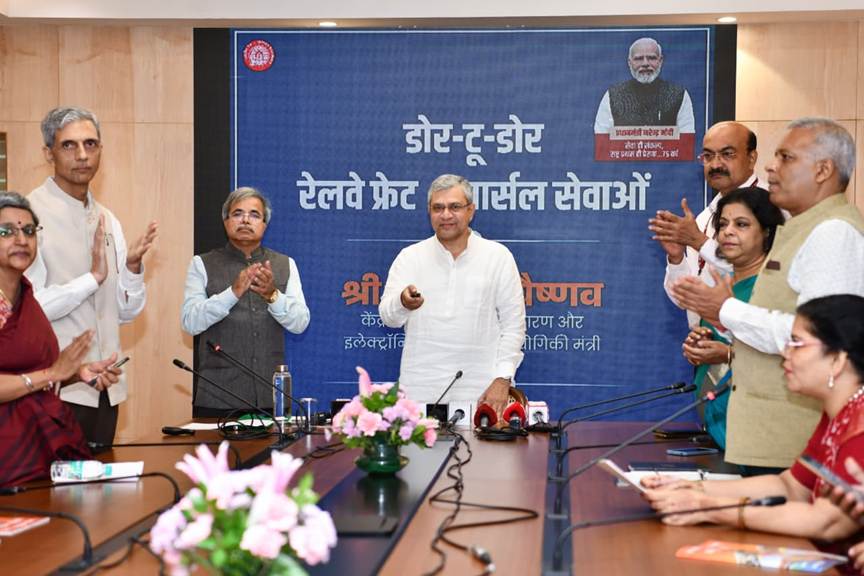
Ashwini Vaishnaw inaugurates Sonik Integrated Logistics Hub and flags off two new Door-to-Door Freight and Parcel Services

NEW DELHI : Shri Ashwini Vaishnaw, Union Minister for Railways, Information & Broadcasting, and Electronics & Information Technology, virtually inaugurated the Sonik Integrated Logistics Hub and flagged off two new Door-to-Door Freight and Parcel Services on Tuesday.

The Union Minister said that door-to-door services are essential for the country, as they will enhance efficiency and significantly reduce logistics costs. He highlighted that industries can now send a specific number of containers without the need to fill an entire rake to their destination. Shri Vaishnaw added that the logistical gap between factories and the loading/unloading points of trains will now be bridged by Indian Railways through comprehensive door-to-door services. He further said that goods sheds or logistics terminals will be equipped with facilities for stuffing and de-stuffing containers, allowing customers to fully benefit from the new service model.

image002861G Ashwini Vaishnaw inaugurates Sonik Integrated Logistics Hub and flags off two new Door-to-Door Freight and Parcel Services

The Union Minister mentioned that Sonik has become the first integrated logistics hub offering this facility. Under the Gati Shakti Cargo Terminals initiative, 115 terminals have been developed to provide multimodal services, delivering substantial benefits to customers.

Starting with the Mumbai–Kolkata corridor, more services will soon be operational to ensure the smooth movement of goods and expand connectivity to more cities. The Minister added that another experiment has also proven successful—transporting equipment such as tractors at affordable rates to benefit farmers. Just as car cargo is moved efficiently, similar transportation facilities will now be extended for tractors and heavy construction equipment(JCB).

Shri Satish Kumar, Chairman & CEO, Railway Board emphasized that the door-to-door delivery initiative represents a paradigm shift in rail-based logistics—where a consignee’s consignment is picked up directly from the warehouse or factory and delivered to the final destination by Indian Railways. Aligned with the logistics vision of Viksit Bharat, this initiative signifies the beginning of Indian Railways’ transformation from being a transporter of goods to becoming a complete logistics service provider for freight customers.

It is noteworthy that Bhartiya Rail (Indian Railways) is the world’s second largest freight carrier, transporting 1.6 billion tonnes of goods annually.

Details of Logistics Hub/Services:

  1. Railway Goods Sheds as Integrated Logistics Hub (Sonik, Lucknow Division)

Strategic Location: The terminal is situated approximately 50 km from Lucknow and 20 km from Kanpur, effectively bridging the capital city and a major industrial center.

Comprehensive Services: It will cater to the burgeoning logistics needs of the Kanpur and Lucknow regions, offering end-to-end solutions including Door-to-Door logistics to customers, distribution hubs for cargo, and inventory management services.

Operational Management: Container Corporation of India Ltd. (CONCOR) will manage all terminal operations and provide crucial First & Last Mile connectivity, ensuring seamless cargo movement.

Cargo Profile: The terminal is poised to handle a diverse range of commodities, including Fertilizer, Food-grains, Cement, and Tractors.

Infrastructure: The facility boasts state-of-the-art infrastructure, including warehousing, Door-to-Door services, and essential amenities for both customers and laborers.

  1. Assured Transit Container Train Service (Delhi to Kolkata)

Objective & Route: This premium service guarantees transit times, providing a reliable alternative to road transport. The route connects Delhi – Agra – Kanpur – Kolkata.

Key Service Parameters:

· Assured Transit Time: 120 hours.

· Frequency: Bi-weekly departures (every Wednesday and Saturday).

Operations: The service includes loading and unloading (Lift on/Lift Off) operations at intermediary terminals, including Tughlakabad (Delhi), Agra, Kanpur (ICDG Siding), and Kolkata (ICDG Siding), with a standardized dwell time of 6 hours at each location.

Flexible Booking: Customers can choose from multiple booking options to suit their supply chain needs: Door-to-Door, Door-to-Terminal, Terminal-to-Door, and Terminal-to-Terminal.

Digital Integration: First Mile and Last Mile services for the assured transit service can be easily booked and managed through the user-friendly CONCOR e-Logistics Mobile App.

  1. Door to Door Parcel Service by Utilising Railways Parcel Van (Mumbai to Kolkata)

Service Model: This integrated service is a three-part process:

· First Mile: Handled by CONCOR’s certified Business Associates.

· Middle Mile: The core transport is done via Indian Railway’s Parcel Train service, with an impressive runtime of 48 to 60 hours.

· Last Mile: Final delivery is again fulfilled by CONCOR’s Business Associates.

Pilot Route & Clients: The service is currently operational on the Mumbai (Bhiwandi Road) to Kolkata (Sankrail) route, spanning 1930 km. It successfully handles consignments for major brands including Castrol India (Lube oil), VIP Industries (Bags), Godrej & Boyce Mfg. Ltd. (Refrigerators and Consumer Durables), and Nestle (FMCG products).

Infrastructure Support: The service is backed by a substantial 5400 CFT cargo storage facility at both the Mumbai and Kolkata hubs.

Compared to road transport, the Rail Parcel service results in a 7.5% reduction in logistics costs. Additionally, rail transit is significantly faster, offering nearly a 30% saving in transit time.

Hon’ble Supreme Court declines interim relief plea ; JNPA to proceed with scheduled development of Vadhvan Port

MUMBAI : Pursuant to the Cabinet approval, Jawaharlal Nehru Port Authority (JNPA) is developing the Vadhvan Port at Taluka Dahanu, District Palghar, Maharashtra. The project, one of India’s most ambitious port infrastructure initiatives, had been challenged by certain local associations before the Hon’ble Supreme Court of India. These associations had sought interim relief in the form of restraining orders to halt any work relating to the establishment of a Major Port at Vadhvan, Dahanu Taluka.

Vide order dated 28.02.2025, the Hon’ble Supreme Court, after taking on record the development schedule of the Vadhvan Port Project submitted by JNPA, dismissed the prayer for interim relief sought by the petitioners. The Court observed that the acquisition proceedings and other related steps would remain subject to further orders in the pending petitions. As of date, there is no stay on the development work of Vadhvan Port, and JNPA continues to pursue the project in line with the approved schedule placed before the Hon’ble Supreme Court.

Speaking on the development, Shri Unmesh Sharad Wagh, IRS, Chairperson, JNPA and CMD, Vadhvan Port Project Ltd. (VPPL), stated, “The Hon’ble Supreme Court’s order reaffirms faith in India’s maritime vision and the integrity of due process. Vadhvan Port is not merely an infrastructural undertaking—it is an emblem of progress, poised to connect the nation’s western coast with the world’s trade arteries. As we move ahead, our endeavour remains guided by sensitivity and balance—ensuring that development does not come at the expense of community, but rather, in concert with it. We remain deeply committed to the well-being of local residents, striving to create an ecosystem where growth and harmony coexist, and where the benefits of progress are shared inclusively and sustainably.”

The Vadhvan Port Project is envisioned to redefine India’s maritime landscape by enhancing port capacity, catalysing regional development, and strengthening the nation’s position as a global logistics hub.
About VPPL:
Vadhvan Port Private Limited (VPPL) is the 13th major port of India, a special purpose vehicle (SPV) formed between Jawaharlal Nehru Port Authority (JNPA) and the Maharashtra Maritime Board (MMB). Strategically located in Palghar district, near Dahanu, Maharashtra, VPPL is poised to be among the top 10 ports globally. The foundation stone for the port was laid on August 30th, 2024, by the Hon’ble Prime Minister of India, Shri Narendra Modi.

Committed to sustainability, VPPL will be 100% green from inception, ensuring minimal environmental impact. The port is set to enhance trade efficiency with the capacity to handle 24 million TEUs, stimulate economic growth, and contribute to regional development. Through initiatives like the Vadhvan Port Skilling Program, VPPL focuses on empowering local communities.

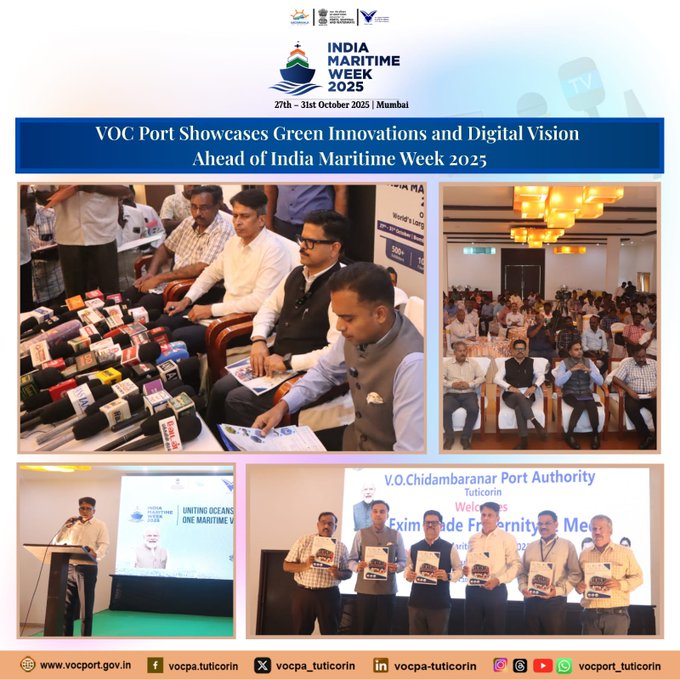
V.O.C Port Authority, hosts roadshow for IMW 2025

TUTICORIN : V.O.Chidambaranar Port Authority, Tuticorin, hosted a roadshow for India Maritime Week 2025, engaging the EXIM community and media.

Shri Susanta Kumar Purohit, IRSEE, Chairperson highlighted the upcoming green energy projects, capacity augmentation projects and major IT initiatives taken up by the Port. He also gave a comprehensive insight on the forthcoming India Maritime Week 2025.

Shri Rajesh Soundrarajan, IAS, Deputy Chairperson, underscored strategic capacity growth for sustainable development and maritime innovation.

Shri B. Vimal, Traffic Manager, presented the achievements and capacity augmentation initiatives of the Port.

Join India Maritime Week 2025 to celebrate India’s maritime strength—from green shipping to smart port technologies and witness VOC Port’s transformative voyage.

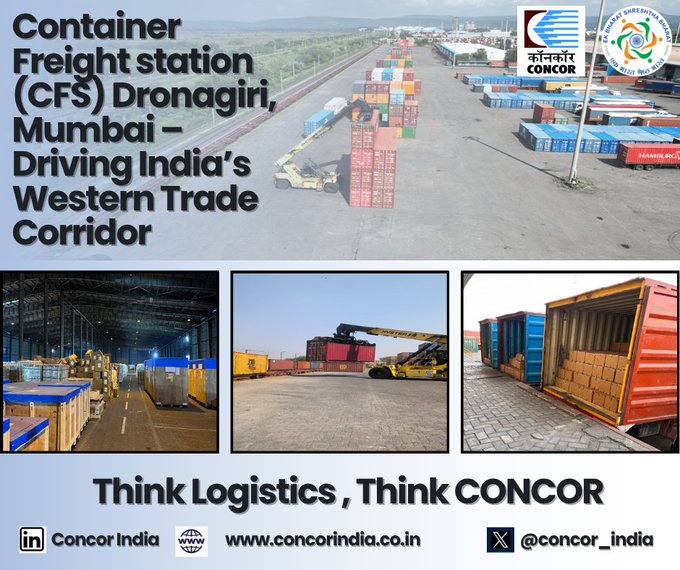
CONCOR’s Dronagiri CFS: Strengthening India’s Western Trade Corridor

MUMBAI : Container Corporation of India Ltd. (CONCOR) has developed a state-of-the-art Container Freight Station (CFS) at Dronagiri, Mumbai, designed to enhance multimodal logistics connectivity across India’s western trade corridor.

Spread across 59 acres, the Dronagiri CFS offers a handling capacity of 14,000 TEUs per month and features three full-length rail lines, enabling smooth operations of 90–100 rakes per month. The facility is fully integrated with rail, road, and warehousing infrastructure, ensuring seamless cargo movement to and from Jawaharlal Nehru Port Trust (JNPT) through daily EXIM rail services.

The hub includes modern warehousing facilities — 35,640 sqm for EXIM cargo, 4,200 sqm for domestic cargo, and 2,000 sqm of bonded warehousing, complemented by reefer plug-in points, Over-Dimensional Cargo (ODC) handling, and automobile cargo management.

With 24×7 operations, advanced CCTV surveillance, fire safety systems, and Electronic Data Interchange (EDI) for customs, the CFS ensures efficiency, transparency, and security in logistics. Importantly, over 50% of cargo movement is rail-based, significantly reducing carbon emissions and reinforcing CONCOR’s commitment to sustainable logistics.

Positioned as a high-capacity, eco-efficient logistics hub, CONCOR’s Dronagiri CFS is powering India’s trade competitiveness through innovation, integration, and sustainability.

India’s mobile phone exports cross USD 1.8 billion in September 2025: ICEA

NEW DELHI: India’s mobile phone exports have registered another strong performance, according to a press release by India Cellular & Electronics Association (ICEA). The release stated that smartphone exports crossed an estimated USD 1.8 billion in September 2025, reflecting a year-on-year growth of over 95 per cent compared to September 2024.

August and September are traditionally low-export months for the mobile phone industry due to production adjustments and seasonal shipment cycles. Despite this, exports in September 2025 remained exceptionally strong, demonstrating the robust ecosystem that has taken shape within the country.

“During April-September 2025, mobile phone exports are estimated to be USD 13.5 billion, as compared to USD 8.5 billion during the same period last year, marking a growth of over 60 per cent. This confirms that India’s mobile phone manufacturing sector continues to build scale, efficiency, and reliability – the three pillars of sustained global competitiveness,” the release noted.

The United States, UAE, Austria, Netherlands, and the United Kingdom remain the top destinations for Indian mobile phone exports. The United States is estimated to account for nearly 70 per cent of total exports during April-September 2025, compared to 37 per cent during the same period last year.
Exports to the U.S. have surged from USD 3.1 billion in April-September 2024 to an estimated USD 9.4 billion in April-September 2025, a remarkable growth of almost 200 per cent. This transformation underlines India’s growing role as a trusted source for global smartphone brands serving advanced markets.

Pankaj Mohindroo, Chairman, ICEA, said, “The sustained rise in exports reflects the strong foundation of India’s mobile phone manufacturing ecosystem. Global value chains are now deeply anchoring here. The surge in exports to the advanced economies demonstrates global trust in India’s capability to deliver quality, scale, and reliability.”

ICEA estimates that mobile phone exports will reach approximately USD 35 billion in FY 2025-26, compared to USD 24.1 billion in FY 2024-25.

“India’s mobile phone industry is firing on all cylinders. The next phase of growth will depend on our ability to sustain the scale and competitiveness achieved so far. We must continue expanding this scale to a level that anchors sustainable exports and drives the deepening of the component and sub-assembly ecosystem within the country,” added Mohindroo.

Global Maritime Leaders convene to shape Green Shipping Regulations

LONDON : The world’s largest maritime nations gathered in London on Tuesday to consider adopting regulations that would move the shipping industry away from fossil fuels to slash emissions.

If the deal is adopted, this will be the first time a global fee is imposed on planet-warming greenhouse gas emissions. Most ships today run on heavy fuel oil that releases carbon dioxide and other pollutants as it’s burned.

Nations are meeting at the International Maritime Organization headquarters through Friday. The Trump administration unequivocally rejects the proposal and has threatened to retaliate if nations support it, setting the stage for a fight over the climate deal.

In April, IMO member states agreed on the contents of the regulatory framework. The aim is to adopt it at this meeting.

That would be a major win for the climate, public health, the ocean and marine life, said Delaine McCullough at the Ocean Conservancy. For too long, ships have run on crude, dirty oil, she said.

“This agreement provides a lesson for the world that legally-binding climate action is possible,” said McCullough, shipping program director for the nonprofit environmental advocacy group.

“The energy and digital transition of shipping have already started. However, the absence of global regulations will increase the costs of this transition in the long run,” said Arsenio Dominguez, Secretary-General of the IMO, during his opening remarks at the meeting.

Shipping emissions have grown over the past decade to about 3% of the global total as trade has grown and vessels use immense amounts of fossil fuels to transport cargo over long distances.

The regulations, or “Net-zero Framework,” set a marine fuel standard that decreases, over time, the amount of greenhouse gas emissions allowed from using shipping fuels. The regulations also establish a pricing system that would impose fees for every ton of greenhouse gases emitted by ships above allowable limits, in what is effectively the first global tax on greenhouse gas emissions.

There’s a base level of compliance for the allowable greenhouse gas intensity of fuels. There’s a more stringent direct compliance target that requires further reduction in the greenhouse gas intensity.

If ships sail on fuels with lower emissions than what’s required under the direct compliance target, they earn “surplus units,” effectively credits.

Ships with the highest emissions would have to buy those credits from other ships under the pricing system, or from the IMO at $380 per ton of carbon dioxide equivalent to reach the base level of compliance. In addition, there’s a penalty of $100 per ton of carbon dioxide equivalent to reach direct compliance.

Ships that meet the base target but not the direct compliance one must pay the $100 per ton penalty too.

Ships whose greenhouse gas intensity is below a certain threshold will receive rewards for their performance.

The fees could generate $11 billion to $13 billion in revenue annually. That would go into an IMO fund to invest in fuels and technologies needed to transition to green shipping, reward low-emission ships and support developing countries so they aren’t left behind with dirty fuels and old ships.

The vote at the London meeting
The IMO aims for consensus in decision-making but it’s likely nations will vote on adopting the regulations.

At the April meeting, a vote was called to approve the contents of the regulations. The United States was notably absent in April, but plans to participate in this meeting.

During the opening session on Tuesday, Saudi Arabia, the U.S., Russia and a few other countries intervened to express their reservations about the meeting’s agenda, which strongly focuses on adopting the Net-zero Framework by the end of the week.

Teresa Bui at Pacific Environment said she is optimistic “global momentum is on our side” and a majority of countries will support adoption. Bui is senior climate campaign director for the environmental nonprofit, which has consultative, or non-voting, status at the IMO.

If it fails, shipping’s decarbonization will be further delayed.

“It’s difficult to know for sure what the precise consequences will be, but failure this week will certainly lead to delay, which means ships will emit more greenhouse gases than they would have done and for longer, continuing their outsized contribution to the climate crisis,” said John Maggs, of the Clean Shipping Coalition, who is at the London meeting.

Source : AP News

India’s E-Commerce market to hit USD 345 bn by 2030 as digital payments and domestic demand surge

NEW DELHI : India’s E-Commerce market is projected to grow from USD 145 billion in FY2025 to USD 345 billion by FY2030 at a CAGR of 19 per cent, driven by rising urbanisation, evolving consumer preferences, and increased adoption of digital payments, according to a report by Rubix.

In its industry insights report, the firm said that India has rapidly emerged as a global retail powerhouse, becoming the third-largest retail market in 2024. In FY2025, the country’s e-commerce sector recorded a Gross Merchandise Value (GMV) of USD 14 billion, marking a 12 per cent year-on-year growth. Despite this, e-commerce contributes only 7 to 9 per cent of total retail sales, indicating substantial room for expansion.

According to the report, the beauty segment is the fastest-growing online category, fuelled by influencer marketing, rising digital use, and demand for personalised and convenient products.
A 57.5 per cent rise in per capita net income over the last decade has supported increased discretionary spending. Since 2020, Tier-3 and smaller cities have contributed 60 per cent of new online shoppers and 45 per cent of total orders. Government initiatives like the National Logistics Policy and Digital India are improving supply chain efficiency and digital access, enabling deeper penetration.

Increased female workforce participation, rising from 23 per cent in 2018 to 42 per cent in 2024, has led to more dual-income households and higher demand for lifestyle and premium products.
As digital infrastructure improves and aspirations converge across rural and urban regions, consumption patterns are undergoing a structural transformation, the report added.

“The Indian Government is considering a policy shift to ease foreign investment rules, potentially allowing global-commerce giants like Amazon to directly procure goods from Indian sellers for export. Currently, such companies can only operate as intermediaries, without direct access to either domestic or international retail transactions. The proposed changes would introduce a third-party export facilitation model, enabling a dedicated export entity linked to e-commerce platforms to handle compliance and regulatory processes,” the report added.

The proposal, if implemented, will allow global e-commerce giants like Amazon to directly procure goods from Indian sellers for export, introducing a third-party export facilitation model, which will boost the sector, the report further added.

It stated that the move is seen as a step towards making India a global e-commerce export hub, aimed at boosting Indian exports and enabling India to emerge as a global e-commerce export hub.

Source : ANI