Home Blog Page 618

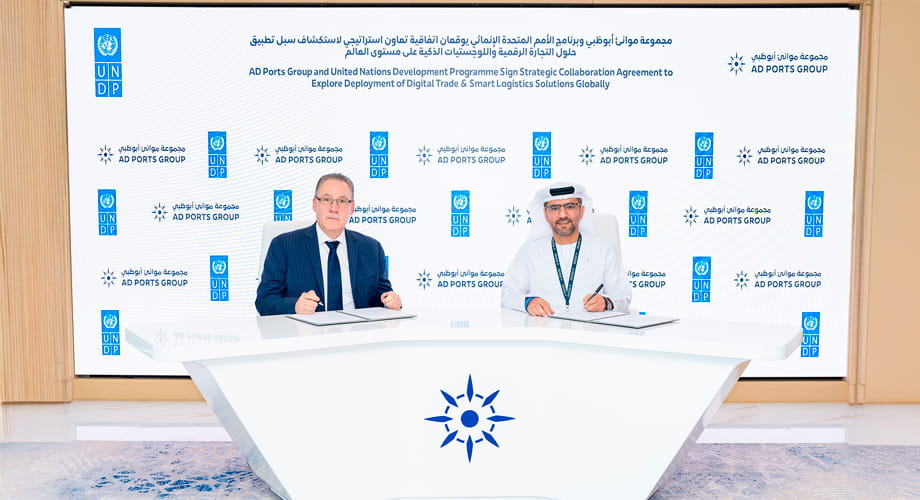
AD Ports Group and UNDP sign Strategic Collaboration Agreement to Explore Deployment of Digital Trade & Smart Logistics Solutions Globally

ABU DHABI: AD Ports Group, a leading enabler of global trade, logistics, and industry, has signed a strategic collaboration agreement with the United Nations Development Programme (UNDP), the UN’s operational arm for sustainable development, aimed at accelerating innovation in digital trade, smart logistics, and responsible automation of port operations across MENA and global markets.

The collaboration brings together AD Ports Group’s expertise in digitalisation, smart port infrastructure, and AI-enabled logistics, with UNDP’s global mandate in governance, policy, and inclusive development. The collaboration seeks to promote resilient trade ecosystems and support the achievement of the United Nations Sustainable Development Goals (SDGs).

Through this agreement, the Parties intend to cooperate across a number of mutually reinforcing areas. These include developing scalable digital platforms that enhance transparency, efficiency, and interoperability across trade and logistics systems; advancing artificial intelligence technologies to transform supply chain management, trade finance, and customs processes; and supporting the adoption of automation and Internet of Things (IoT) solutions in port operations to improve resilience, safety, and sustainability. The collaboration also envisions joint research, case studies, and policy insights to inspire sustainable innovation, alongside co-hosting conferences and high-level forums to amplify the role of digitalisation and AI in shaping the future of global trade.

Captain Mohamed Juma Al Shamisi, Managing Director and Group CEO, AD Ports Group, said: “Our collaboration with the United Nations Development Programme underscores our commitment to driving sustainable innovation in trade and logistics. By combining our expertise in smart port solutions with UNDP’s global development mandate, we aim to foster inclusive and resilient trade ecosystems that not only enhance efficiency but also support the broader UN Sustainable Development Goals. Together, we are laying the foundation for a smarter, more sustainable future in global trade.”

Abdallah Al Dardari, United Nations Assistant Secretary-General and Director of the Regional Bureau for Arab States – United Nations Development Programme, added: “Digital transformation is essential for building smart, inclusive and secure trade systems that empower communities, strengthen resilience, reduce inequalities and accelerate progress towards the Sustainable Development Goals, our partnership with AD Ports Group harnesses AI and digital innovation to transform trade, focusing on sustainability, inclusivity and efficiency.”

With presence in nearly 170 countries, UNDP partners with governments and institutions worldwide to promote sustainable development, eradicate poverty, and strengthen governance and the rule of law. Through this strategic collaboration agreement, AD Ports Group and UNDP reaffirm their shared commitment to advancing digitalisation and sustainability in the maritime and logistics sectors.

The agreement reflects a shared ambition to serve as catalysts for innovation and sustainable growth while reinforcing Abu Dhabi’s position as a global hub for trade, logistics, and smart port infrastructure.

DP World and Tashkent invest to develop Multimodal Logistics Terminal in Uzbekistan

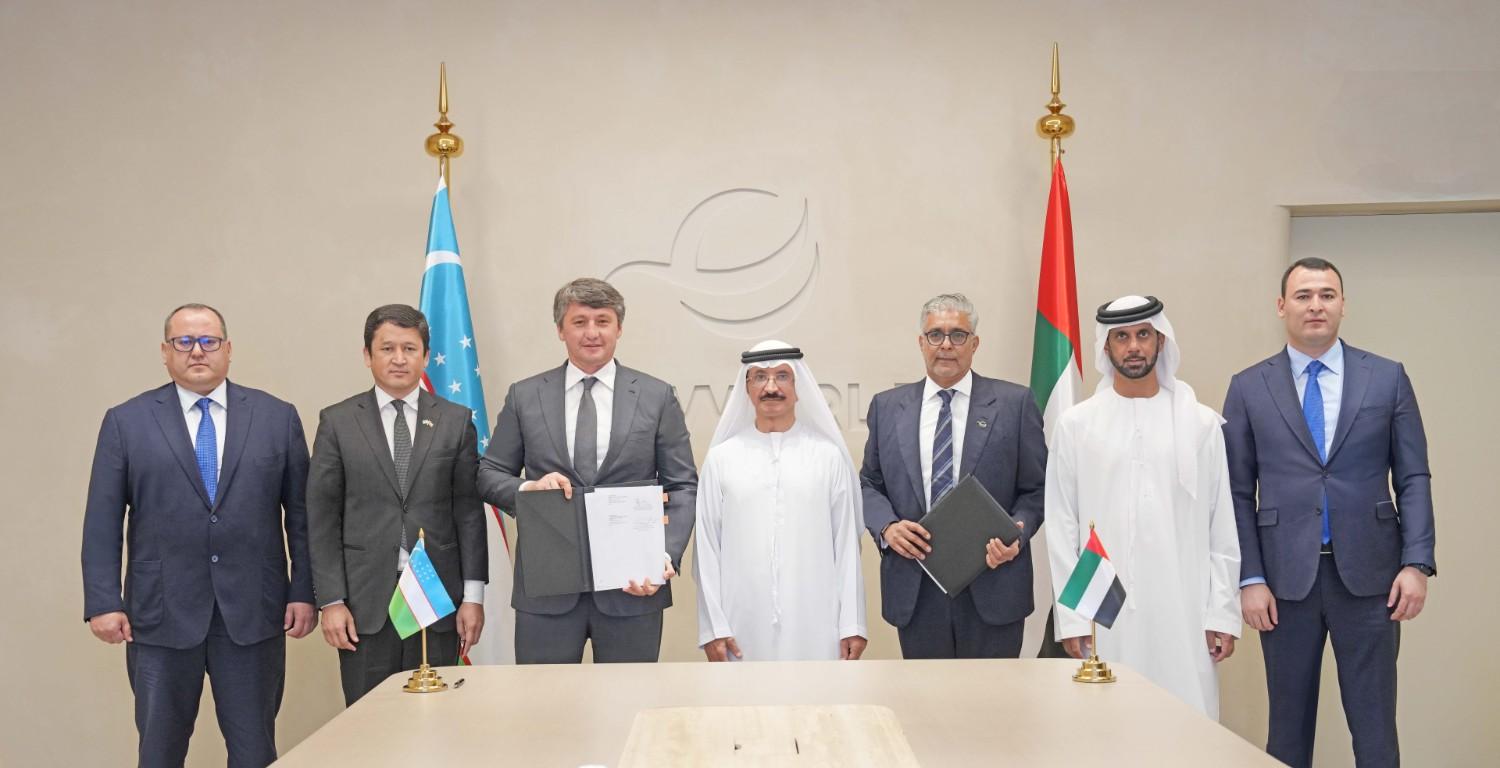
DUBAI: DP World, a leading global provider of smart end-to-end logistics solutions, has entered into a joint venture with Tashkent Invest, a subsidiary of the Tashkent City Administration, to develop and manage a state-of-the-art multimodal logistics terminal near the Uzbek capital. 

The partnership marks a significant step in advancing Uzbekistan’s logistics infrastructure and its ambition to become a regional trade hub. The new terminal in the Yangi Avlod Special Industrial Zone, located in the Yangihayot region of Tashkent will enhance connectivity, efficiency, and trade facilitation across Central Asia, contributing to Uzbekistan’s economic diversification and industrial growth. 

Under the agreement, Tashkent Invest will contribute 15% of the joint venture’s equity capital. DP World will hold the remaining 85%. The total investment in the project is over US $288 million across 3 phases. 

The joint venture company, DP World Tashkent LLC, will oversee the development of an international transport and logistics hub on a site covering approximately 82 hectares within the Special Industrial Zone. Once fully operational, the Tashkent Multimodal Logistics Terminal will include a rail connected dry port for containers and covered cargo, customs clearance zones, vehicle storage areas, truck parking, and Grade A warehouses and cross-docking facilities. 

Phase one covers the construction of a 150,000 TEU a year rail terminal and 63,000 sqm warehouse complex by end 2026/2027. Additional 163,000 sqm warehousing capacity is planned in subsequent phases depending on demand. 

The terminal will be supported by its own dedicated freight railway station, accelerating cargo handling and delivery and helping reduce logistics costs. The hub will have direct access to Uzbekistan’s national rail network, major highways, and Tashkent International Airport, allowing efficient multimodal cargo transfer between road, rail, and air. 

Located within a special industrial zone, the project also benefits from customs and tax incentives, ensuring the smooth integration between logistics operations, manufacturing, and export processing. 

Sultan Ahmed bin Sulayem, Group Chairman and CEO of DP World, said: “This partnership reflects our commitment to supporting Uzbekistan’s vision of becoming a major logistics and trade hub in Central Asia. The Tashkent Multimodal Logistics Terminal will bring world-class infrastructure and smart logistics capabilities to the region, improving the efficiency of supply chains and supporting businesses across industries.” 

“The agreement initiates the development of a transport and logistics hub, which will significantly increase the capital’s production and export potential. The partnership with DP World, a recognized global expert in logistics and port management, will provide an opportunity to introduce modern technologies in Tashkent and attract large investors. With its world-class infrastructure, Tashkent will become even more convenient for both local and global businesses,” said Shavkat Umurzakov, mayor of Tashkent. 

DP World’s investment in Uzbekistan builds on its global expertise in logistics and infrastructure development. The Tashkent terminal will serve as a vital link between Central Asia, the Middle East, and Europe, facilitating efficient cargo movement through DP World’s integrated global network. 

By leveraging its strategic location and multimodal design, the project will play a pivotal role in reducing logistics costs, enhancing supply chain reliability, and boosting trade competitiveness for Uzbekistan and the broader region. 

Drewry’s World Container Index decreased 1% last week

LONDON: For many years, World Container Index has been the go-to, independent, global reference for index-linked contracts.

Drewry’s World Container Index decreased 1% to $1,651 per 40ft container last week.

Our detailed assessment for Thursday, 09 Oct 2025

  • The Drewry World Container Index (WCI) fell 1% to $1,651 per 40ft container, marking the 17th consecutive weekly decline to reach the lowest level since January 2024.
  • Spot rates on the Transpacific trade lane remained less volatile this week, reflecting a seasonal slowdown during China’s Golden Week holidays. Spot rates from Shanghai to Los Angeles decreased 1% to $2,176 per 40ft container, while those from Shanghai to New York remained stable at $3,189 per 40ft container. 
  • Spot rates on the Asia-Europe trade lane have recorded their ninth straight weekly decline, approaching levels prior to the Red Sea attacks. The spot rate for a 40-foot container is now at $1,577 from Shanghai to Rotterdam (a 2% drop) and $1,793 from Shanghai to Genoa (a 1% drop). Drewry expects rates to continue to decline in the coming week.
  • Drewry’s Container Forecaster expects the supply-demand balance to weaken in the next few quarters, which will cause spot rates to contract.

Source: Drewry

Baltic Index heads for weekly gain on capesize and panamax strength

LONDON: The Baltic Exchange’s dry bulk sea freight index, which monitors rates for vessels moving dry bulk commodities, edged up on Friday and was headed for a weekly gain, driven by stronger capesize and panamax vessel rates.

The main index, which factors in rates for capesize, panamax and supramax shipping vessels, rose 13 points to 1,936 points. The index was up 1.8% for the week.

The capesize index rose 13 points to 2,799 points. The index logged a weekly gain of 2.8%.

Average daily earnings for capesize vessels, which typically transport 150,000-ton cargoes such as iron ore and coal, increased by $115 to $23,216.

Prices of iron ore futures climbed on Friday, and logged weekly gains, supported by expectations of stronger steel prices and improved market fundamentals.

The panamax index rose 34 points to 1,764 points. It ended the week 6.1% higher.

Average daily earnings for panamax vessels, which usually carry 60,000-70,000 tons of coal or grain, rose by $305 to $15,873.

Among smaller vessels, the supramax index fell one point to 1,402 points, its lowest since August 22. The contract saw a decline of 3.1% for the week.
Source: Reuters

PM Modi addresses the Global Fintech Fest 2025 in Mumbai

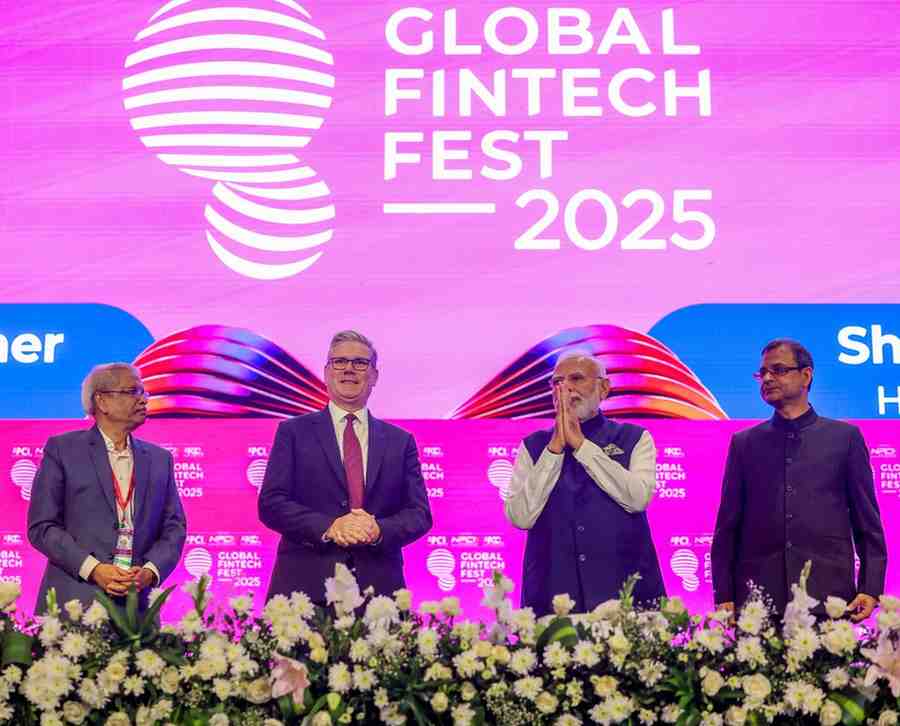
MUMBAI : Prime Minister Shri Narendra Modi addressed the Global Fintech Fest 2025 in Mumbai, Maharashtra on Thursday. Extending a warm welcome to all attendees in Mumbai, Shri Modi described Mumbai as the City of Energy, the City of Enterprise, and the City of Endless Possibilities. He specially welcomed his friend, Prime Minister H.E. Mr. Keir Starmer, and expressed gratitude for his presence at the Global Fintech Festival, acknowledging the time he took to attend the event.

Recalling that five years ago, when the Global Fintech Festival was launched, the world was battling a global pandemic, the Prime Minister highlighted that today, the festival has evolved into a global platform for financial innovation and cooperation. He noted that this year, the United Kingdom is participating as a partner country, and emphasized that the partnership between two major democracies will further strengthen the global financial landscape. Shri Modi remarked on the vibrant atmosphere, energy, and dynamism at the venue, calling it remarkable. He stated that this reflects global trust in India’s economy and growth. The Prime Minister congratulated Shri Kris Gopalakrishnan, all organizers, and participants for the successful conduct of the event.

“India is the mother of democracy and democracy in India is not limited to elections or policymaking, but has been established as a strong pillar of governance”, affirmed Shri Modi, highlighting technology as a prime example of this democratic spirit. He noted that while the world has long discussed the technological divide—and India too was once affected—over the past decade, India has successfully democratized technology. “Today’s India is among the most technologically inclusive societies in the world”, stated Shri Modi.

Underlining that India has democratized digital technology, making it accessible to every citizen and every region of the country, the Prime Minister highlighted that this has now become India’s model of good governance. He explained that in this model, the government develops digital infrastructure in the public interest, and the private sector builds innovative products on that platform. Shri Modi further emphasized that India has demonstrated how technology can serve not only as a tool of convenience but also as a means of equality.

“India’s inclusive approach has transformed the banking ecosystem”, emphasised the Prime Minister. He remarked that banking was once a privilege, but digital technology has turned it into a medium of empowerment. He highlighted that digital payments have become routine in India, attributing this success to the JAM Trinity—Jan Dhan, Aadhaar, and Mobile. Pointing out that UPI alone facilitates twenty billion transactions every month, with a transaction value exceeding twenty-five lakh crore rupees, Shri Modi emphasized that out of every hundred real-time digital transactions globally, fifty occur in India alone.

Noting that the theme of this year’s Global Fintech Fest reinforces and advances India’s democratic spirit, Shri Modi highlighted that India’s digital stack is being discussed globally, citing key components such as the Unified Payments Interface (UPI), Aadhaar Enabled Payment System, Bharat Bill Payment System, Bharat-QR, DigiLocker, DigiYatra, and the Government e-Marketplace (GeM) as the backbone of India’s digital economy. The Prime Minister expressed satisfaction that the India Stack is now giving rise to new open ecosystems. He noted that ONDC—Open Network for Digital Commerce—is proving to be a boon for small shopkeepers and MSMEs, enabling them to access markets across the country. He added that OCEN—Open Credit Enablement Network—is simplifying access to credit for small entrepreneurs and addressing the issue of credit shortage for MSMEs. The Prime Minister expressed confidence that the digital currency initiative being pursued by the RBI will further enhance outcomes. He further added that all these efforts will transform India’s untapped potential into a driving force for the nation’s growth story.

“India Stack is not merely a story of India’s success, but a beacon of hope for the world, especially for countries in the Global South”, exclaimed the Prime Minister, emphasising that through its digital innovations, India aims to foster digital cooperation and digital partnerships globally. He highlighted that India is sharing both its experience and open-source platforms as global public goods. Shri Modi cited Modular Open-Source Identity Platform (MOSIP) developed in India, as a major example, noting that over twenty-five countries are adopting it to build their sovereign digital identity systems. He affirmed that India is not only sharing technology but also assisting other nations in developing it. He underscored that this is not digital aid, but digital empowerment.

Highlighting that the efforts of India’s fintech community have given indigenous solutions global relevance, Shri Modi cited interoperable QR networks, open commerce, and open finance frameworks as key areas where the growth of Indian startups is being recognized worldwide. The Prime Minister noted that within the first six months of this year, India has emerged among the top three most-funded fintech ecosystems globally.

Sonowal : Govt to strengthen national fleet with SCI capital infusion and new tanker tenders

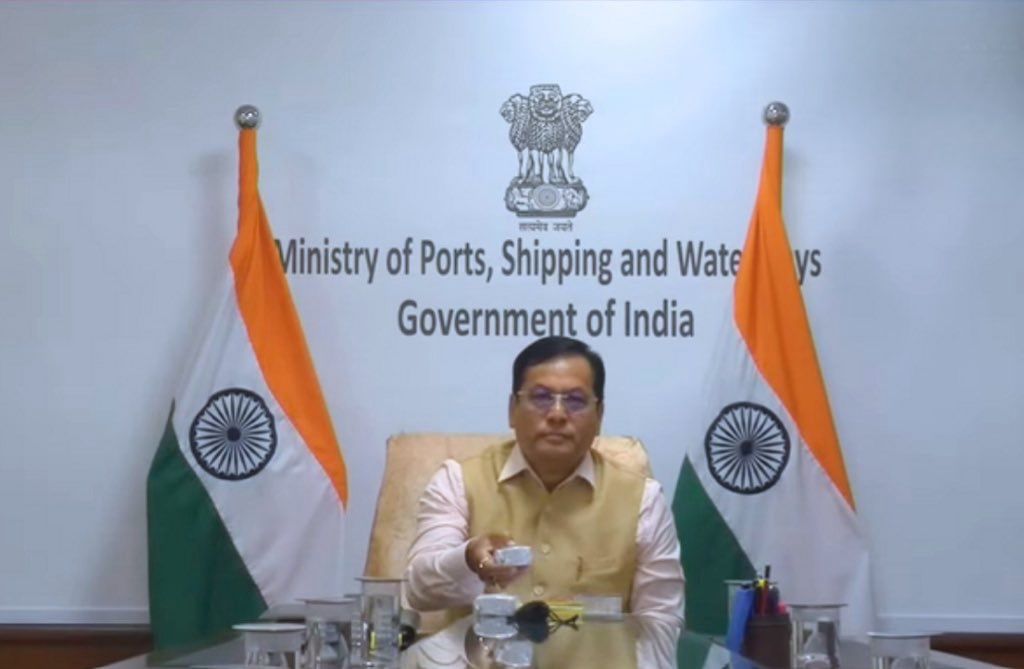
NEW DELHI : Union Minister for Ports, Shipping and Waterways Shri Sarbananda Sonowal announced that, the Government of India will infuse fresh capital into the Shipping Corporation of India (SCI) through the newly established Maritime Development Fund (MDF), aimed at expanding the national fleet and reinforcing the country’s strategic maritime capacity.

As part of this initiative, the Ministry has already floated tenders to acquire four medium-range (MR) product tankers, marking the beginning of SCI’s expansion drive under the new maritime investment framework.

Joint Ventures with CPSEs

The Centre is also planning to establish joint ventures between SCI and other central public sector enterprises (CPSEs) — particularly in the oil and dry bulk sectors — to meet India’s growing export-import shipping requirements.
“SCI is a strategic national asset,” Sonowal emphasized, noting that its significance has grown amid increasing global geopolitical and trade disruptions.

Global Disruptions Urgency

Highlighting recent global challenges, Sonowal cited multiple shocks to global supply chains, including the Covid-19 pandemic, the Russia–Ukraine conflict, rising tensions in West Asia, shipping diversions away from the Suez Canal, and recent U.S. tariff policies.
“These disruptions have led to container shortages, higher freight rates, and delayed shipments. Strengthening SCI and India’s fleet capacity is now a national priority,” he said.

In the short term, SCI will acquire second-hand vessels to boost operational capacity quickly.
In the long term, the corporation will order new build vessels from Indian shipyards, supported by joint ventures with oil and bulk PSUs. The first tender for four MR tankers is expected to be finalized within October 2025.

The capital infusion comes on the back of the Union Cabinet’s approval of a ₹69,725 crore shipbuilding revival package, which includes three major components:

Maritime Development Fund (₹25,000 crore): Long-term financial support for fleet expansion and port infrastructure.

Shipbuilding Financial Assistance Scheme (₹24,736 crore): Extended till March 2036 with enhanced support to domestic shipyards.

Shipbuilding Development Scheme (₹19,989 crore): Creation of mega shipbuilding clusters, targeting a domestic capacity of 4.5 million gross tonnage annually.

With the planned capital infusion, fleet expansion, and strategic partnerships, SCI is set to emerge as a key pillar in India’s maritime and geopolitical strategy. The initiatives also align with the government’s broader vision to make India a global shipbuilding and shipping hub over the next decade.

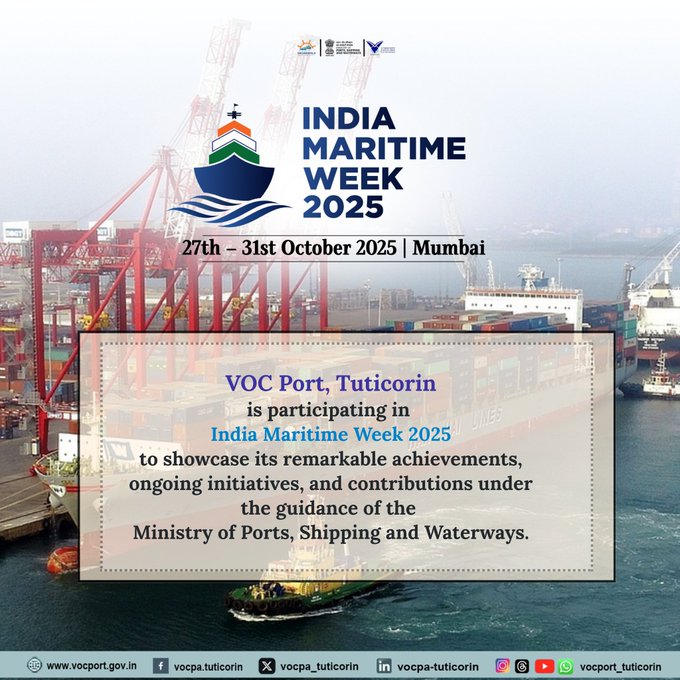
VOC Port showcases maritime excellence ahead of India Maritime Week 2025

TUTICORIN : “V.O. Chidambaranar Port Authority (VOC Port) is proud to be part of India Maritime Week 2025, a premier platform celebrating the strength and progress of India’s maritime sector,” says Shri Susanta Kumar Purohit, Chairman.

VOC Port will participate in India Maritime Week 2025, a flagship event that highlights India’s growing maritime strength, innovation, and global competitiveness.

India Maritime Week 2025 will bring together policymakers, industry leaders, and global stakeholders to discuss emerging opportunities in shipping, logistics, and port-led development. VOC Port’s participation underscored its commitment to strengthening India’s maritime ecosystem and contributing to the nation’s economic growth.

As India sails toward a self-reliant future, VOC Port continues to anchor growth, innovation, and
sustainability in the nation’s maritime journey.

British PM Keir Starmer calls for “hands-on” approach in implementing UK-India trade deal

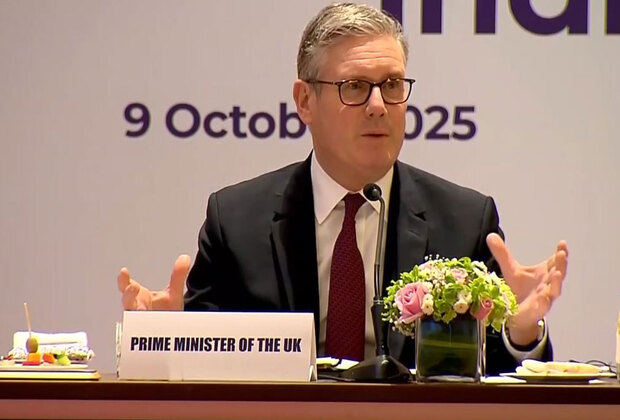
MUMBAI: United Kingdom Prime Minister Keir Starmer on Thursday called for a “hands-on” approach in implementing trade and investment deals between the UK and India, emphasising that his government aims to work closely with industry leaders to ensure tangible outcomes from the Free Trade Agreement (FTA) and other bilateral partnerships.

Addressing a high-profile business forum attended by Prime Minister Shri Narendra Modi and top CEOs from both countries, Starmer underlined the need for governments to move beyond merely signing trade deals and instead play an active role in helping businesses realise their full potential.

“Too often in the past, governments have negotiated trade deals and then left them on the table, saying, ‘Well, it’s now over to you.’ I think we’ve got to do things differently,” Starmer said.

“Governments have to provide more follow-through support, making sure the connections are in the right place. We want to be on the pitch with you not just building the stadium and walking away,” he said.

The event saw the announcement of major new contracts with Indian airlines and fresh investments from UK fintech giants Revolut and Tide, signalling renewed momentum in bilateral trade and investment relations. Starmer described these deals as a “powerful example” of the kind of cooperation that can drive shared prosperity for both nations.

Starmer, said, “… The trade deal, as I’ve said a number of times over the last two days, is of course the writing, what’s written down, what that will mean for reducing barriers to trade, whether it’s tariff or other barriers, but it’s more than that because it’s about mood, it’s about confidence, it’s about a statement of intent that goes beyond the pure words on the page. I think we can really see that. When I see the excitement and the discussions going on, I remind myself we haven’t yet implemented the FTA. I think that is evidence that formality is important, and it will make a big difference. But more than that is the coming together of two great democracies.“

“In the three months since we actually signed that back in Chequers, we’ve seen a £6 billion boost in trade and investment. That’s on top of the increased numbers over the last year already in the great ambition we have to go further, which I believe we can do as we go down this road. It includes Rolls-Royce agreeing huge new contracts with major Indian airlines. Today, we’re announcing new investments from Revolut and Tide. Exactly these sorts of connections we’re trying to build,” Starmer said.

The British Prime Minister, who was accompanied by key ministers including Business Secretary Peter and Secretary of State for Scotland Douglas, said the UK government was committed to ensuring that trade and investment agreements deliver on their promises for businesses and workers alike. “We’re here to help you maximise the potential in relation to this FTA,” he said, adding that the presence of senior ministers underscored “how seriously” his administration views the economic partnership with India.

The UK Prime Minister called on business leaders to share feedback and identify obstacles that might hinder the full implementation of trade deals.

“The world moves much more quickly now than it did in the past, and governments need to keep up with that pace. Tell us what we need to do, where barriers exist, and what more can be done to capitalise on opportunities,” he said. “All good ideas still get bogged down in the frustration of delay, and we have to unpick that delay.”

Starmer also noted that the forum itself attended by both Prime Ministers symbolised a new phase of engagement, focused on collaboration and accountability. “Today is just the start. Now the task is to follow through together. We are committed to doing that because we know the enormous benefits this partnership brings for businesses, for our countries, and for working people across both nations,” he said.

Source: ANI

India signs Terms of Reference with UK to reposition Joint Economic and Trade Committee

NEW DELHI : India and the United Kingdom have taken a major step to boost economic ties with the signing of the Terms of Reference to reposition the Joint Economic and Trade Committee (JETCO). The move aims to provide a stronger framework for trade cooperation and to push forward the implementation of the India-UK Comprehensive Economic and Trade Agreement (CETA) signed in July 2025.

CETA provides an unprecedented duty-free access to 99 per cent of India’s exports to the UK, covering nearly 100% of the trade value. This includes labour-intensive sectors such as textiles, leather, marine products, gems and jewellery, and toys as well as high-growth sectors like engineering goods, chemicals, and auto components.

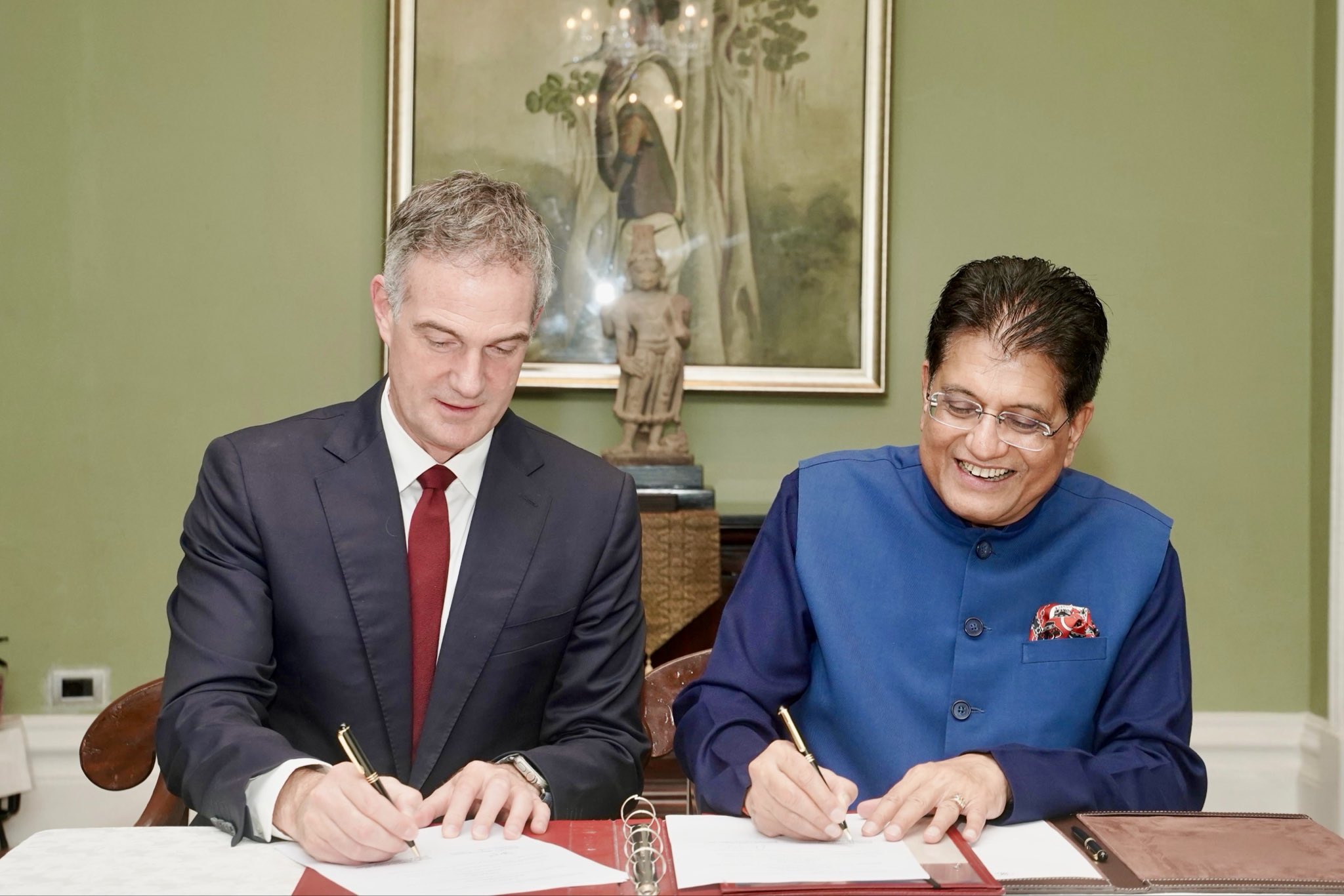
Union Minister of Commerce and Industry, Shri Piyush Goyal, shared the development on X, saying, “India-UK economic partnership enters a new phase! Thrilled to announce the signing of the Terms of Reference to reposition the Joint Economic and Trade Committee (JETCO). This institutional reset is a game-changer, strengthening our framework for strategic engagement, driving the implementation of the India-UK CETA, and boosting our joint ambition to significantly enhance our bilateral trade.”

The development comes after Goyal met UK Secretary of State for Business and Trade, Peter Kyle, earlier on Wednesday, for detailed talks on advancing trade and investment cooperation. According to a release from the Ministry of Commerce and Industry, both sides discussed repositioning JETCO to serve as the main body to oversee the implementation of CETA and to ensure timely outcomes.

Minister Piyush Goyal has also posted on ‘X’, “Addressed the India-UK Business Plenary Session along with @PeterKyle, UK Secretary of State for Business and Trade. With both sides focused on early operationalisation of the India-UK trade agreement, encouraged businesses to share feedback on ways to strengthen our partnership, ensuring that trade, investment, and economic cooperation between India and the UK continue to flourish.”

Goyal also met United Kingdom Prime Minister Keir Starmer and discussed ways to deepen trade and economic cooperation between the two nations. Sharing details of the meeting on X, Goyal wrote, “Delighted to call on UK Prime Minister @KeirStarmer. Discussed avenues to further deepen India-UK trade & economic partnership for mutual prosperity.”

The terms of reference JETCO is another step forward towards the ongoing efforts to operationalize the India-UK Comprehensive Economic and Trade Agreement (CETA), which both sides see as a key step for strengthening bilateral ties.

Source : ANI

India’s aims to achieve economic growth of USD 5 trillion by 2027: Nitin Gadkari

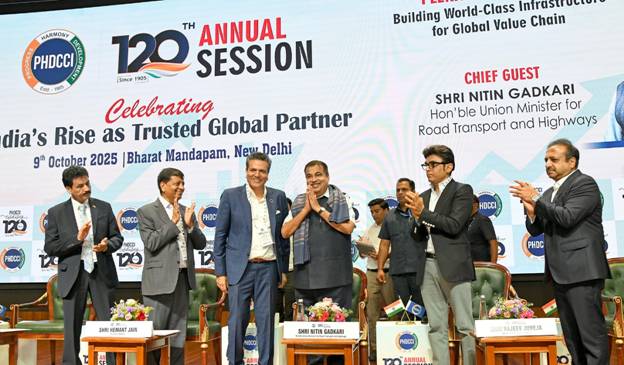
NEW DELHI : The Union Minister for Road Transport and Highways, Shri Nitin Gadkari expressed gratitude to all stakeholders for their contribution to India’s economic growth and reiterated the Government’s goal of achieving a USD 5 trillion economy by 2027 under the leadership of the Prime Minister Shri Narendra Modi. He also highlighted the national vision of making India a developed nation by 2047. Addressing the 120th Annual Session of the PHD Chamber of Commerce and Industry (PHDCCI) in New Delhi on Thursday.

120th Annual Session of the PHD Chamber of Commerce and Industry PHDCCI gadkari India’s aims to achieve economic growth of USD 5 trillion by 2027: Nitin Gadkari

Shri Gadkari emphasized that alongside physical progress, three key pillars—Ethics, Economy, and Ecology/Environment—must guide national development. He stated that ethical values are essential to maintain a healthy social and family system, and underlined the importance of integrated thinking, coordination and cooperation among all sectors.

Citing the example of the automobile industry, the Minister said that when the present Government took office in 2014, India’s automobile industry ranked seventh globally with a valuation of ₹14 lakh crore. He informed that India has now overtaken Japan to become the third-largest automobile market in the world with an industry size of ₹22 lakh crore. He expressed confidence that with advancements in research, innovation, and adoption of alternative fuels such as ethanol, methanol, bio-diesel, LNG, electric and hydrogen fuels, India could become the leading automobile manufacturing country globally within five years.

The Minister noted that the use of alternative fuels would help reduce crude oil imports worth ₹22 lakh crore annually. He explained how ethanol production policy reforms have increased the market price of maize, benefiting farmers, especially in Uttar Pradesh and Bihar, adding ₹45,000 crore to their income. He emphasized that reduced imports and increased domestic production will lead to higher growth, purchasing power, and employment.

Shri Gadkari shared the example of the recent launch of electric truck battery swapping in Sonipat, highlighting its economic viability compared to diesel. He noted that electricity costs per kilometre are significantly lower than diesel, thereby reducing logistics costs. He mentioned that due to infrastructure improvements, India’s average logistics costs have decreased from 16% of GDP and expressed confidence that by the end of this year, logistics costs would fall to single digits at around 9%.

Shri Gadkari underscored the importance of innovation, research, and entrepreneurship, stating that “no material is waste and no person is waste.” He shared examples of projects such as converting sewage sludge in Mathura into bioenergy and utilizing legacy waste for road construction. He informed that around 80 lakh tonnes of waste have already been used in road projects, contributing to environmental sustainability.

Shri Gadkari called for balanced development across agriculture, manufacturing, and services sectors. He urged the industry to give priority to the growth of the agriculture and allied sectors, noting that balanced growth was essential for reducing migration and strengthening the rural economy.

He reiterated that infrastructure development serves as the backbone of the economy, generating employment and government revenue while contributing significantly to GDP growth. He highlighted that an investment of ₹100 in national highways contributes ₹321 to GDP.

Referring to the financial models being implemented in road development, Shri Gadkari mentioned that under the Infrastructure Investment Trust (InvIT) and Toll-Operate-Transfer (TOT) models, the Ministry has successfully mobilized funds through the capital market. He said that the first InvIT bond issue was oversubscribed seven times within hours, demonstrating investor confidence. He emphasized the importance of decentralizing wealth to strengthen the economy by making small investors and workers prosperous.

The Minister also spoke about ongoing infrastructure projects including 25 Greenfield Expressways connecting major cities and ports across the country. He informed that new tunnels and corridors such as the Zojila Tunnel and Delhi-Katra-Amritsar Expressway are being constructed to improve connectivity and reduce travel time. He highlighted that the development of tourism circuits like the Buddhist Circuit and ropeways in Kedarnath will promote religious tourism and revenue generation through public-private partnerships.

Shri Gadkari concluded by reiterating that the Government’s vision focuses on creating safe, convenient, sustainable, and economically prosperous infrastructure that generates employment, boosts exports, and supports inclusive national development.

The Minister also gave away PHDCCI Business Practices & Awards 2025, recognizing Excellence in Industry.